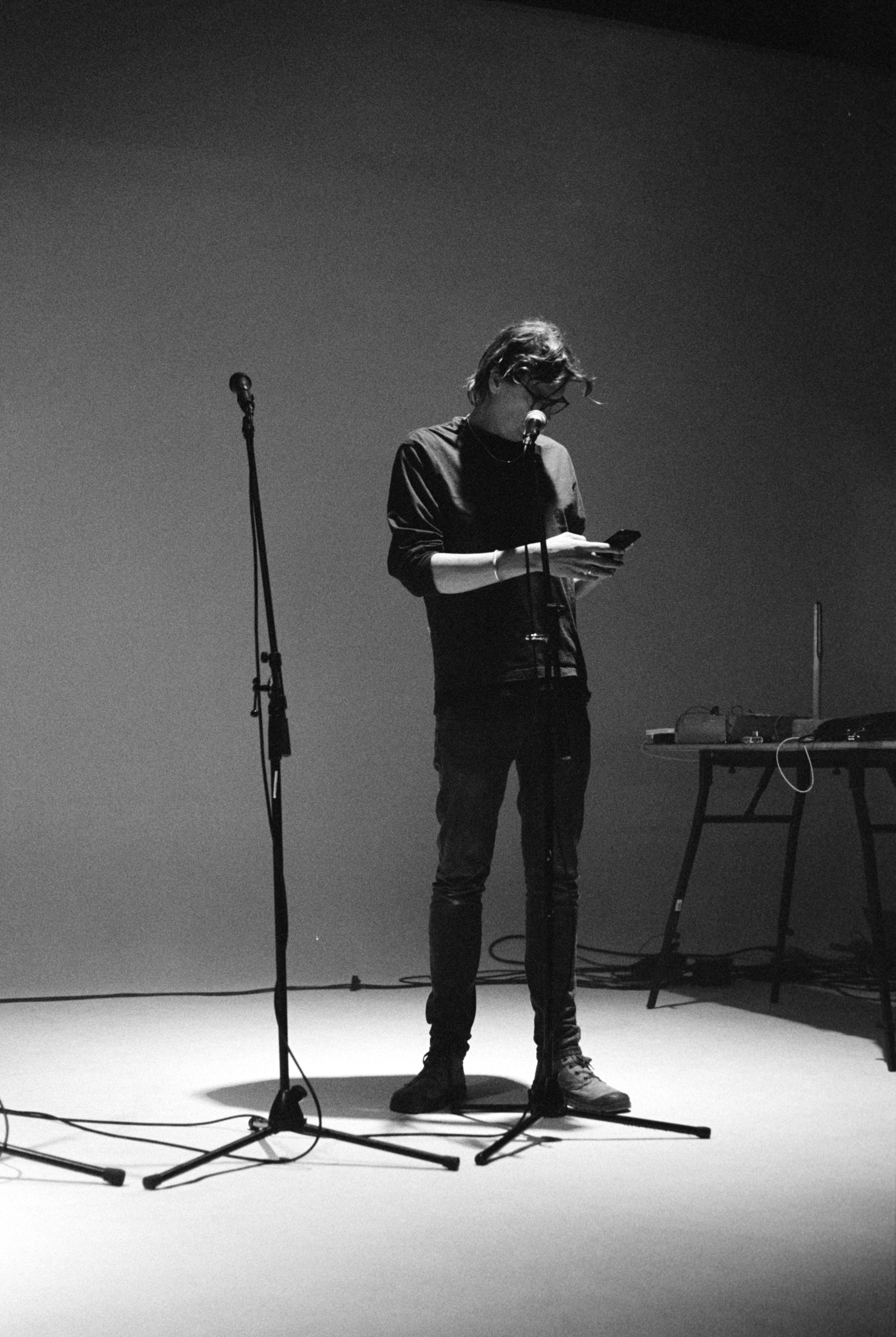
 Australian-born and now Berlin based musician and artist Mark Harwood has long worked at the intersections of experimental music, performance and the visual arts. With his label Penultimate Press, he runs a platform that deliberately operates beyond conventional genre logics, bringing together influences from noise, literature, conceptual art and much more. His own works are equally compelling. His two new releases, “or, Urim” and “Two Actors”, explore the tensions between human and machine, chance and construction, as well as appropriation and digital culture. Both albums were created almost simultaneously and allow synthetic and human elements to merge into one another. Harwood also regards these works as a response to the contradictions of the present moment, particularly to the role of algorithms and practices of sampling. At the same time, he remains a restless experimenter who develops his ideas across media – in music, painting, video and performance. We spoke with the artist about these and other themes in the following interview.
Your new album “or, Urim” is characterized by an intense exploration of the overlap between humans and machines. What was the starting point for this – more of an artistic impulse or a personal experience with digital transformation?
It was a simple start, one evening I had two tabs open on my computer playing two different pieces of music, one was by a German band from the 70’s, the other, also a German release,of what could be described as extreme electroacoustic music,, one of which i based on the human voice. I loved the combination and pressed record on my phone. This was the building block the rest of the LP developed from there.
The title “or, Urim” appears to be of Hebrew origin and can be translated as “light” or “enlightenment,” and in religious contexts sometimes as “angel of light.” What meaning does this term hold for you, and why did it seem particularly fitting for this album?
I just like the look and sound and feel of the titles on the album. Having said that, it could also be read as another option for the Middle East.
The description for “or, Urim” states that the album moves between plunderphonics, psychedelia, progressive rock, and avant-garde electronica, and indeed, the album seems to have many different stylistic substrates. Is this conscious blending of forms an aesthetic stance for you, or does it arise organically from the material?
I like a wide variety of genres but paradoxically I don’t really like genres at all. I feel they cage potential. Out of the initial accident mentioned I was lucky to now have doors open to me I may not have discovered myself. With that initial recording as a springboard I felt truly free to play around with or juxtapose a wide variety of disparate musical forms.
Doing this was also a commentary on the recent trend of genre blending, where an artist thinks in the framework of blending country music with trap, or indie edm and the like. These AI generator companies have suggestive prompts like disco trash, atonal metal pop, etc, it gets pretty ridiculous. Having said that I really like cosmic prog stuff and the more extreme end of electroacoustic music, I frequently listen to music in these idioms but do not know of a single record where they come together throughout. Sure old prog records always have freak out moments but I was more interested in making these parts the majority of the record and not just isolating events that rise up now and then. I just wanted to make a record I would personally like to listen to.
In a remark, you mentioned some contradictions of our time – for example, that a child can be punished for using an eight-second sample, while large corporations algorithmically exploit entire archives of cultural work. In what way could “or, Urim” be seen as an artistic response to this situation? Is it also partly your intention to consciously apply the mechanisms of algorithms and steer them in a different direction?
The album is very much a response to this new situation, I mean I am just doing what they do but will not allow us to do, ie; the wholesale ‘theft’ of large parts of pre-existing works. I was thinking a lot about sampling and plunderphonics, in particular the works of John Oswald, the works he recorded under the ‘Plunderphonics’ moniker in particular. This was his argument against copyright, music being a fixated material and the like. Music where a single track is credited to Led Zeppelin, Karlheinz Stockhausen and Brother Shambock. This makes me laugh. Oswald generally took small snippets of pre-existing works and looped, reconfigured them. I wanted to do something in that world but give the original material a far wider lens to breathe. It’s like a magpie building a nest. It’s all out there for your taking. Like a magpie I don’t see much money from all the work.
In your work, you often use elements of existing music or popular aesthetics, placing them in new contexts. What role do reference and appropriation play for you as artistic strategies, as commentaries, or as expressions of a particular attitude towards history and the present?
I like it very much. If you take an orange in the grocery store and place it on the pile of avocados it alters the entire structure and aesthetics of that mound of avocados. It does not have to be much but one small gesture can significantly alter a pre-existing form. I spent an enormous amount of the last year listening to hip hop, mostly newer things. Outside of the great pleasure of unravelling the meaning and content of the lyrics from the various rappers, it was the actual music/production that made me think a lot about sampling, or rather, recontextualising in music. The producers, Alchemist and Metro Boomin (who also makes a brief appearance on my or, Urim LP) are two artists that I admire that got me thinking about repurposed material again. I wanted to take that approach but have it sound nothing at all like a hip hop record. That’s another well from which this was sprung. My last LP, Offering, used mostly soundtracks to obscure Chris Marker films alongside myself playing a load of acoustic instruments; bells, whistles, harmonium, accordion and the like. It also featured a lot of my voice, either speaking or faux singing. The record prior to that was a fairly psychotic mix of field recordings, voice and ghosts. I wanted this latest lp to have no such distractions and be very clear to the listener regarding content; source and usage. Having said that, my voice does briefly towards the end as a means of tying this one up to a conclusion in the form of a trilogy along with the two previous ones.
Can you even create without reference to existing sources, or is every form of creativity necessarily intertextual, i.e., related to what already exists?
There is never and never was anything resembling ‘new’. Everyone is taking their ideas from elsewhere. Many know that. Some fool themselves into believing otherwise. The former was a major player by way of being the prerogative for this new LP.
“Two Actors” almost feels like a radio play – a fragmented, sometimes comical, sometimes disturbing collage of voices and numerous other, often seemingly uncontrolled details. What was the trigger for this work, and how much of it is composed, how much left to chance or instinct?
That one came about by accident also, a different kind. I had finished the Urim LP and sent off for mastering when I got contacted by Juho at Atki records in Finland asking me if I would be interested in doing a CD for this label. Considering this I went back and listened to a selection of shorter pieces I had made prior to working on the LP. I was surprised at how sonically and contextually it worked as a sibling to the LP. So then I proceeded to rework some of these, sequences etc and suddenly and unexpectedly I had two releases.
The liner notes describe the album as a “dialogue without a script.” Do you see yourself in both of the characters mentioned in the title, or do such considerations play no role?
The Two Actors in the title are referring to the synthetic and the human and as a result these tracks have a variety of blending and blurring these into something of a hall of mirrors where there is no clear distinction between either. The result of this approach lends this particular release an atmosphere of the uncanny.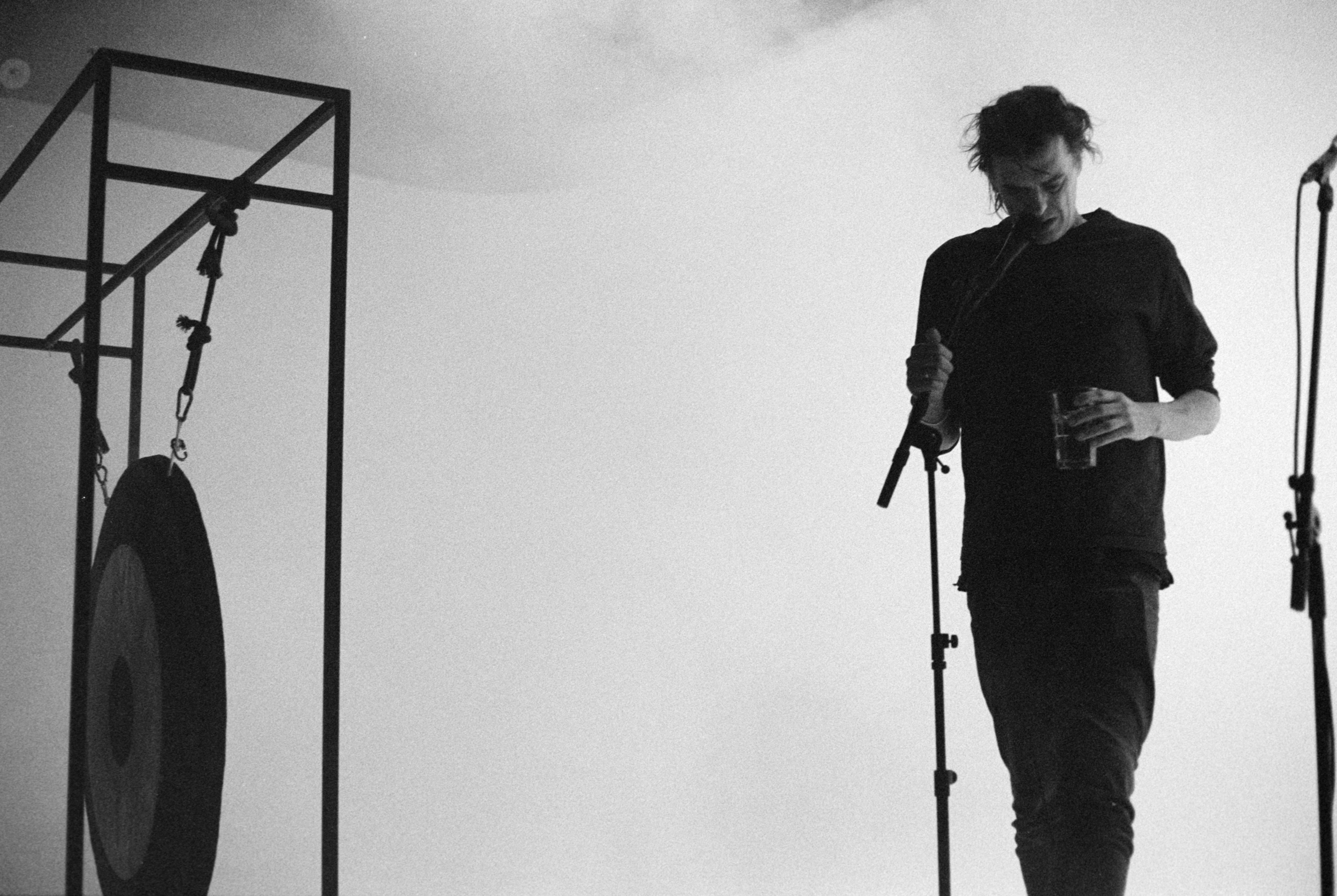
Is there a story behind the cover artwork of “Two Actors”? I’m asking because the setting seems familiar to me…
It’s a photo from the art space West Berlin in Kreuzberg. You know that. For the readers at home, that’s a very well known squatted art space in Berlin. The two chairs are the two actors. The two faces on the back cover are the two actors. The two lights on the inner panel are the actors.
There seems to be some connection between “or, Urim” and “Two Actors,” at least that’s our impression, as if one album comments on or counters the other. Do you see a conscious connection between these two works, which may have been created concurrently?
Yes, definitely. As I said when I went back and listened to the original material I had been working on prior to the LP I was pleasantly surprised how well they corresponded with the material on or, Urim. I guess that’s a result of where my head has been recently. One major thread to all was thinking about AI, the human and the synthetic. It was funny for me to see a lot of people in the experimental community reacted to it with mortal dread. It is a very strange new tool that’s for sure, but the experimental crew used to wholeheartedly embrace new tools as a means of investigation, not cower in fear. Quite a few years ago I made some recordings with Graham Lambkin using the app Siri as the ‘main actor to engage with. The Two Actors CD is something like a follow up to this approach of engaging with new technology. Siri is still just so bad at what it is supposed to do. That cracks me up. People are now complaining when an artificially generated photo of a human has seven fingers. From an artistic perspective I think seven fingers are great! Embrace the weirdness I say.
The fact is we are heading into (already within) a heavily distorted reality and what we engage with is always going to be dubious regarding its authenticity. These are the themes I was juggling around with when tackling the material on these releases.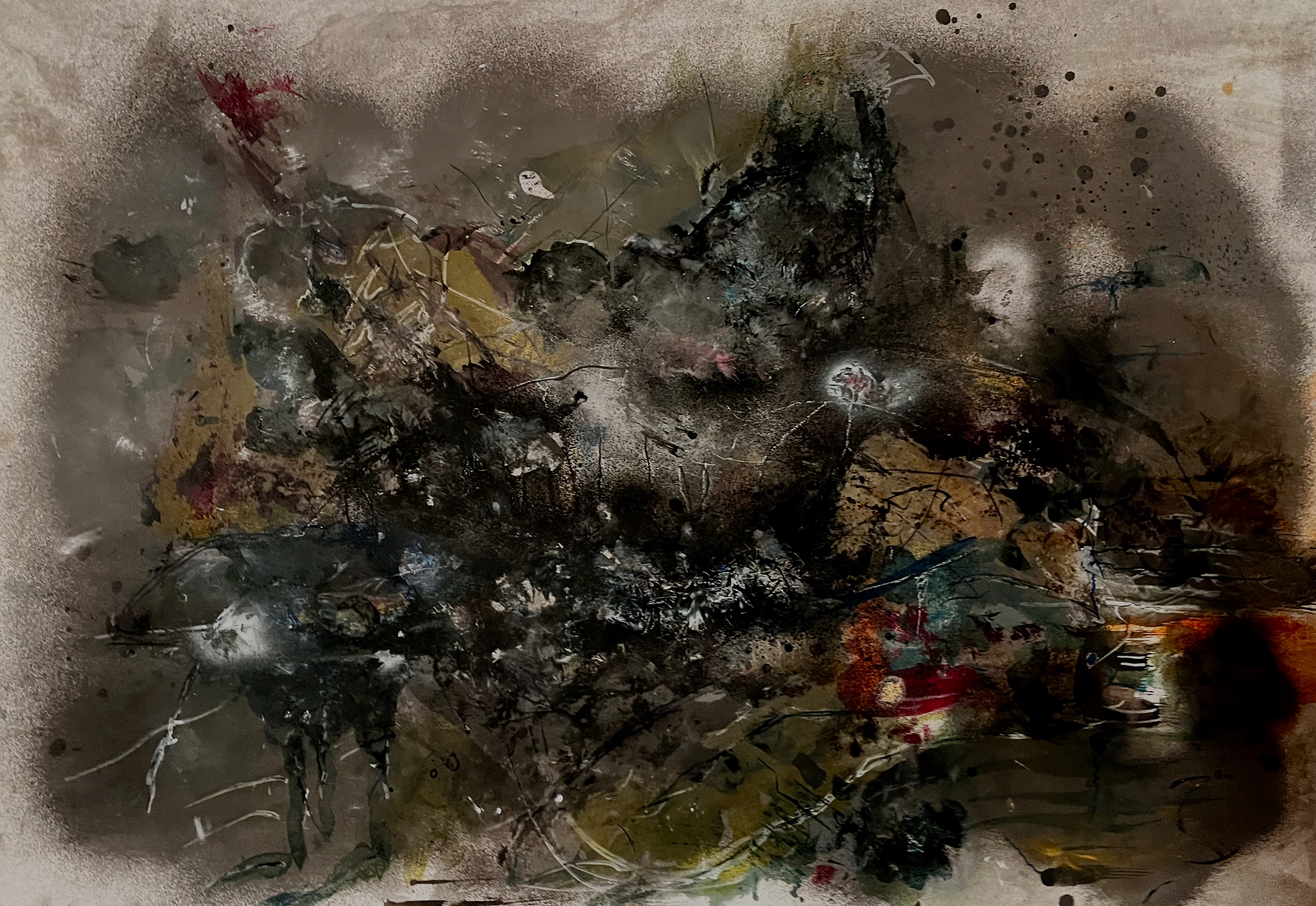
Your label Penultimate Press has developed a remarkably distinctive style over the years, operating at the intersection of experimental music, conceptual art, and literature. How has your understanding of yourself as a label owner changed over time, and what do you pay particular attention to when selecting new releases?
It’s true as the first release was a book which I guess is unusual for a ‘record label’. I never had any particular agenda for the label except for it not to be like other record labels. My interests are varied and I guess PP reflects that. I just want to avoid all the old cliches and tropes in experimental music (ambient, drone, field recordings, indie music talking itself into thinking it’s experimental music etc). I want to explore what lies beyond such standard formulas, what lies between the cracks of such forms? That’s where my interest lies… It’s astonishing how many demos I get sent introducing their electronic, drone, ambient project to me. (a swift finger gesture / move to trash). It also makes me laugh and weep when I get a demo from someone who lists a large amount of record labels they have released on. I find that cheap somehow, pimping ones wares all over the shop. I prefer the smaller, underground, humble approach.
With your international band El Jardín de las Matemáticas, you released a fantastic album last year. It feels like a unique blend of folk structures, collage aesthetics, and ethnographic research, the result of which never feels purely documentary. Did the ideas emerge collaboratively through exchange, and are you planning further collaborations?
El Jardín de las Matemáticas came about as my friend Alvaro from Chile randomly sent me some recordings he had made with a couple of friends. They were loose jams which had moments of abstraction thrown in the mix. I enjoyed the material but I thought the various elements could be pushed further. I started playing around with that material which then evolved into some back and forth from all members resulting in that lp. In a way I saw it as a mix of the Ocora/Folkways/Lyrichord aesthetic meeting something from the Prospective 21e Siècle series. We are working on a follow up at the moment which is maybe halfway done. The Australian/German/Chilean and Argentinian elements are an attempt to bypass all this British/American dominance in experimental music.
You moved from Melbourne to London a few years ago. How has this change of location influenced your work, both aesthetically and in terms of networks, spheres of influence, or artistic communities?
I moved from Melbourne to London a long time ago actually, I lived in London for 21 years and then relocated to Berlin in the middle of covid 4 years ago. Location has a big impact on anything I do. These two new records are definitely influenced by Germany. Or, Urim features a significant amount of the German language spoken by native English speakers which have been heavily vocoded/distorted , a German man speaking in English. The three cities I have lived in, Melbourne, London and Berlin have all had significant experimental music scenes and it’s very nice to observe and partake in such worlds.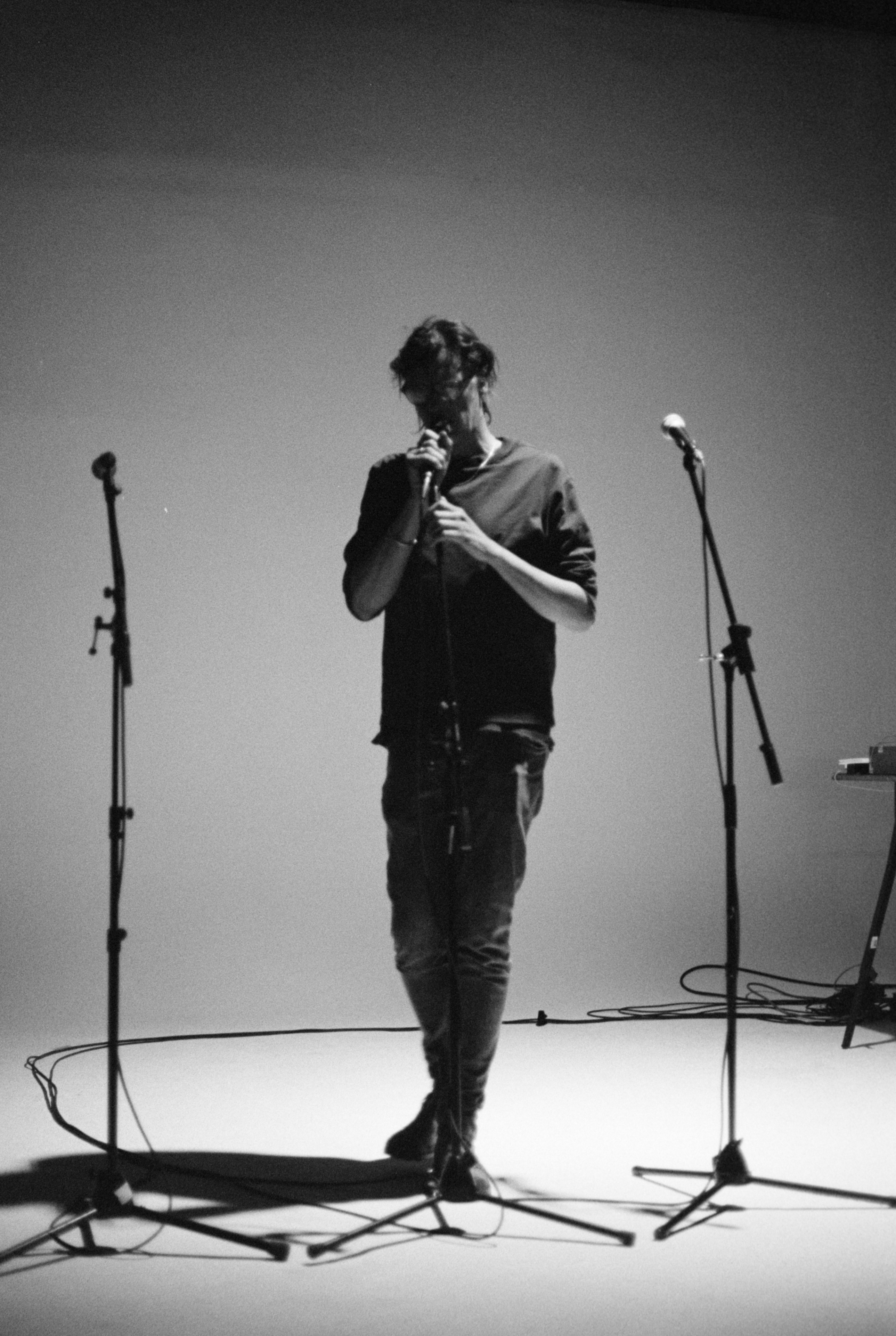
Are there aesthetic and/or personal reasons why you haven’t used the stage name Astor in recent years, or is this solo project in principle still ongoing?
Astor was the project I developed with the encouragement of Graham Lambkin to actually start making music myself. The releases under that moniker were more abstract/sound based explorations. When I ended up making A Perfect Punctual Paradise Under My Own Name it came out very different to the previous Astor records, a way more personal record. The use of my own voice appeared for the first time utilising themes of anxiety, remembrance and general rants of the mind. It was a record so much about me I did not feel it made sense to hide behind a moniker anymore. I enjoyed the more intimate style of this approach and followed it up a few years later with a more ‘song’ orientated release, Offering, also using quite a lot of my voice. With these two new ones you can sense the robots creeping into the frame to take over the self I possess.
You often move between the boundaries of music, conceptual art, and performance. Is there a medium in which you feel you can express yourself most effectively, or is the constant combining of forms of expression part of your artistic self-understanding?
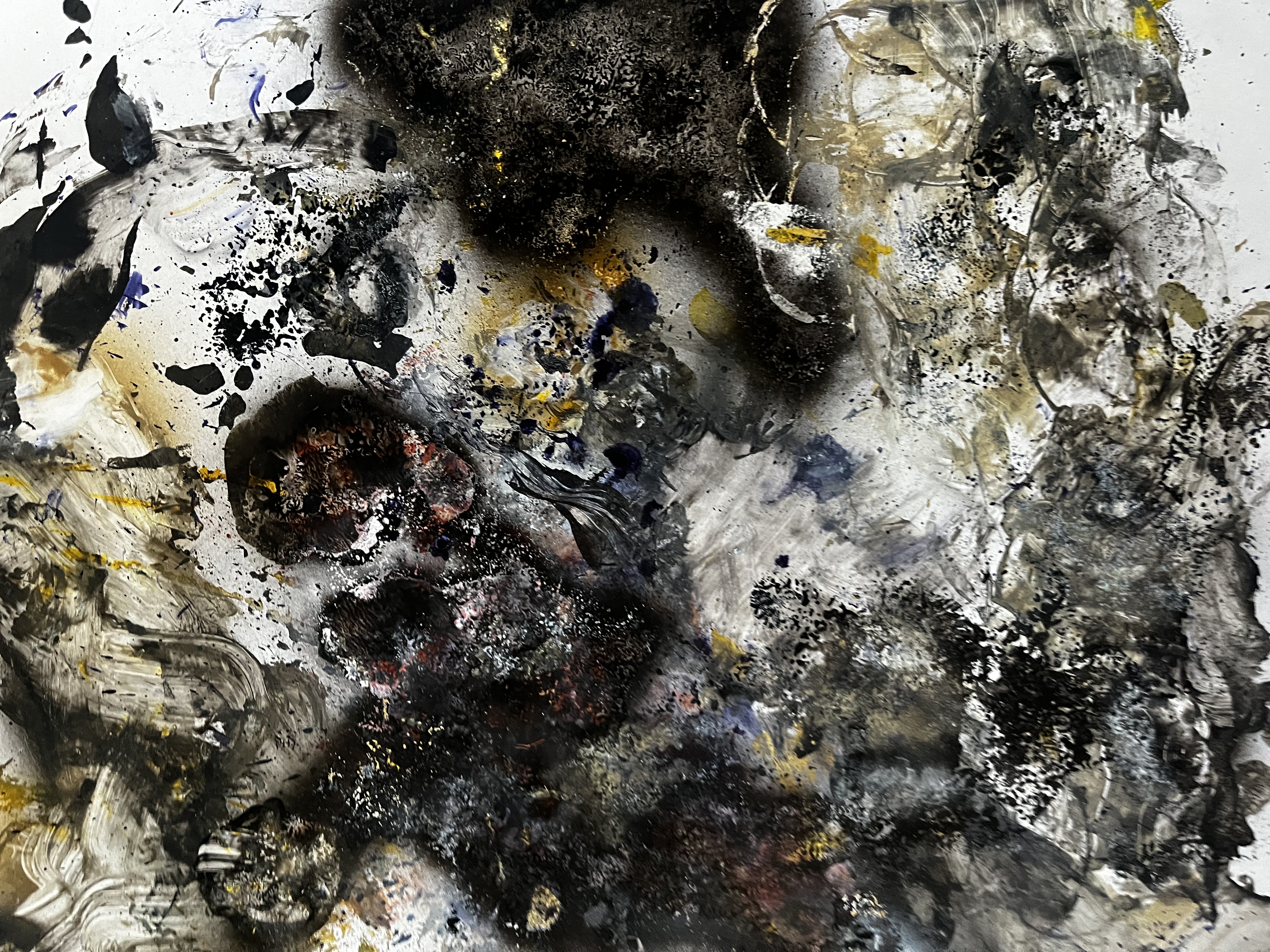
I just love playing around with matter, all matter, whatever it is. That can encompass anything really. I’ve never had an interest in playing an instrument or anything like that. I just like thinking about things and then executing the play with ‘it’ in a variety of ways. Performing is really fun as I improvise with just a few microphones and it is always funny and often surprising what comes out. It usually oscillates between ridiculous comedy and something that could be aligned with terror. I have no idea why it always comes out like that. In the last year or so I started painting, that kind of happened by accident as I needed artwork for the El Jardín de las Matemáticas lp and my usual designer / assistant went and got herself pregnant and was not available at the time to assist with the sleeve. As a result I found a canvas on my street here in Berlin which had a rough sparse drawing on it which I then painted on to become my first artwork and first record sleeve. I have been painting ever since. That is more direct and instantaneous than making music which can be quite pedantic and fiddly. At least the way I do it. Having said that I paint every day but also like taking a break and working on music again. The act of creating is just so fun, and therapeutic. This week I made a small video for one of the tracks from Two Actors, which was also enjoyable. All these things are all byproducts of engaging with worlds both inner and outer. I am not sure if there is a single medium which is my main expression for myself, it’s all angles of the same origin that spirals in all manner of directions .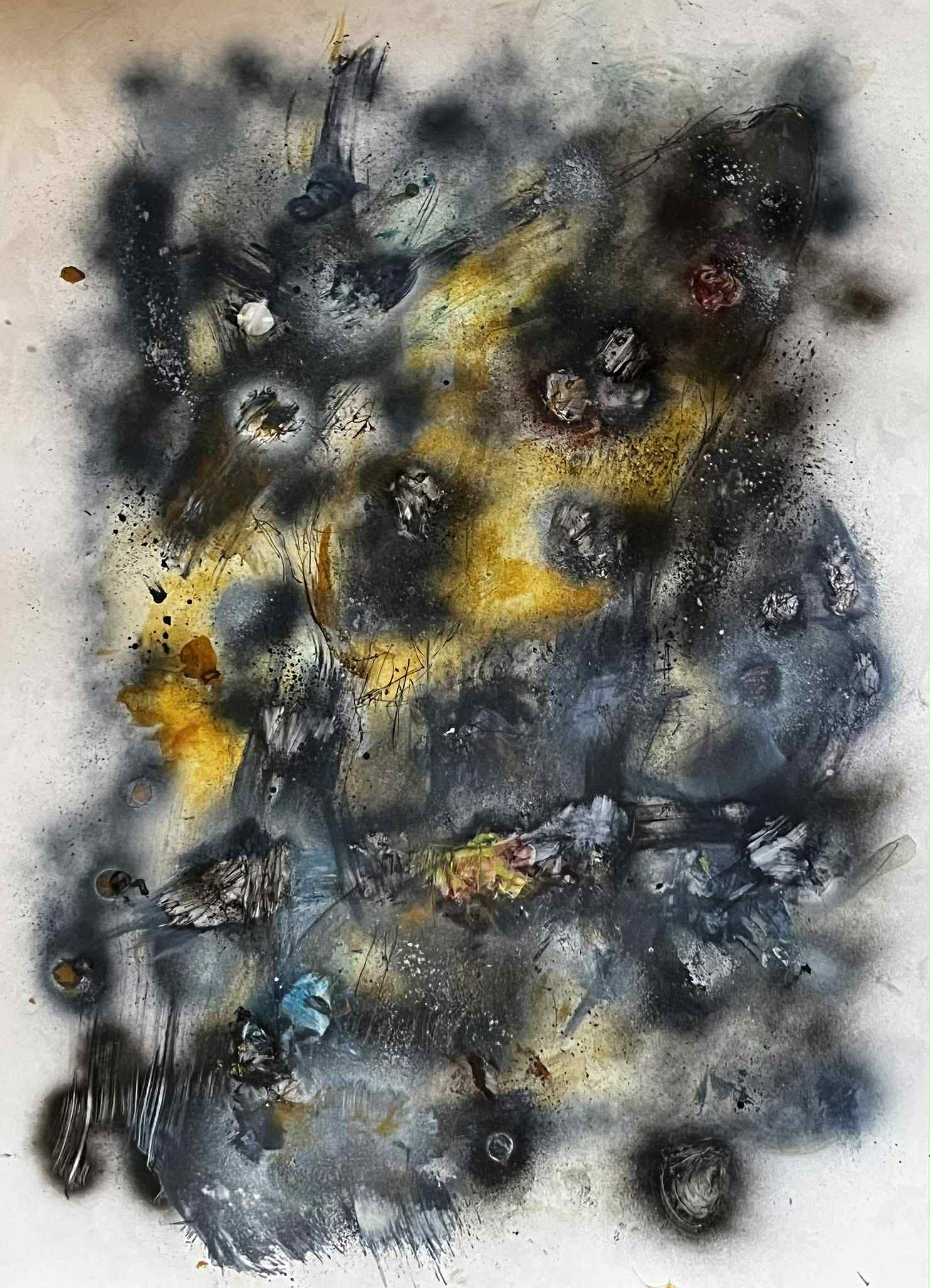
When you think about the current relationship between humans, machines and artistic production, do you see this development more as a threat to creativity or equally as an opportunity for new, as yet unimagined, forms of expression?
It will be both I imagine. Like any shift in society it has both negative and positive results. Capital will eat up artists and spit them in the bin, I have no doubt about that. But living on a shoestring I can’t see so much change for me. I used contemporary tools on both of these releases, moreso on Two Actors than or, Urim. It was fun to play around with and work out different ways of engaging with them. As I foresee it there will be even more stupidity in the world as a result of all this. It will fuck the environment even more. Yes, a lot of people will lose jobs. States will get even more transparent in their evil doing and I pray, ultimate undoing. Amongst all this there will always be pockets of authentic ingenuity and inspiring creativity as a reactive result of these current and forthcoming frontiers.
Interview: U.S., A.Kaudaht
Fotos: Anna Bitter, Paintings courtesy of Mark Harwood