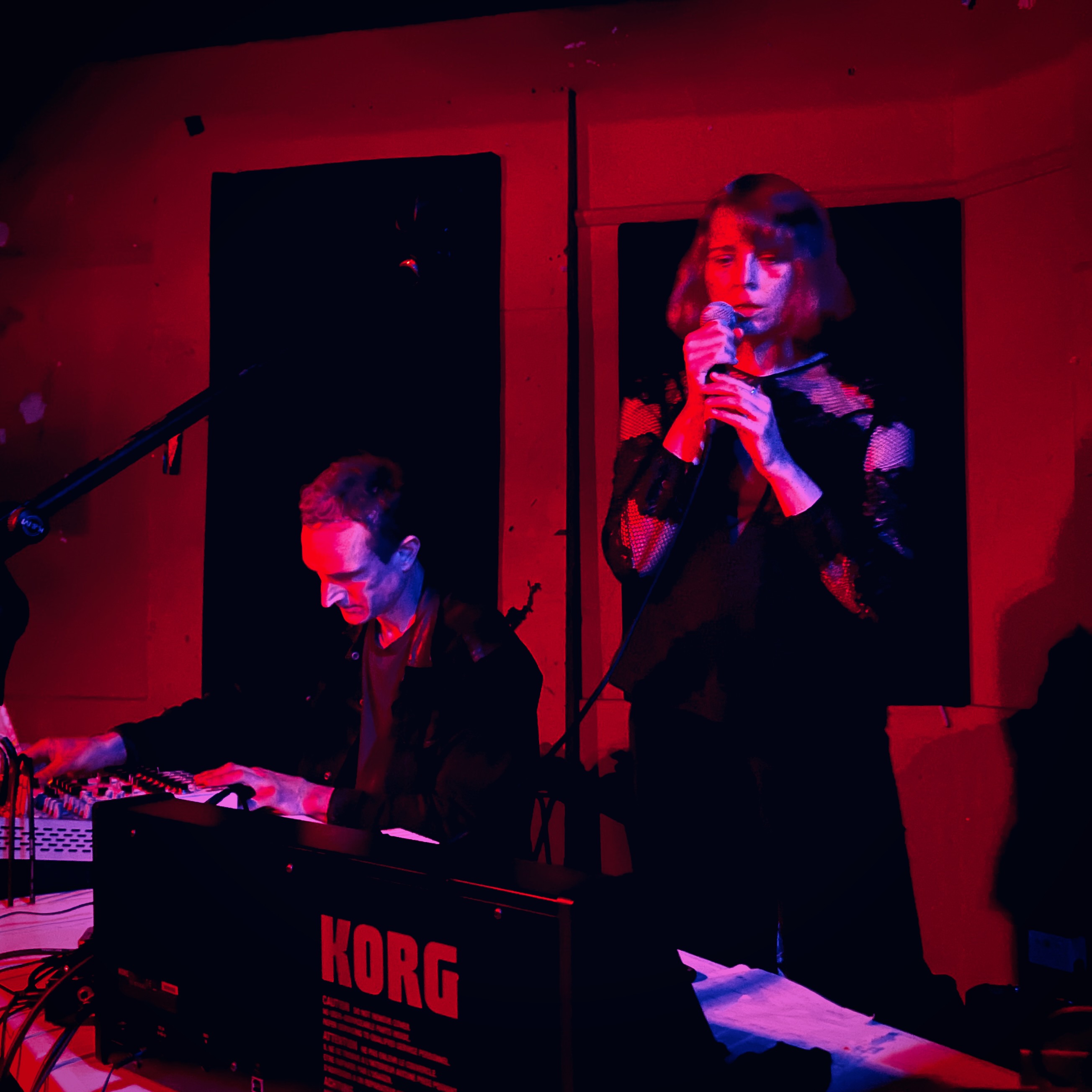
 For roughly a decade, Ov Pain have been among the most consistent yet ever-evolving projects in the intriguing offbeat music scenes on the other side of the globe. The New Zealand-born, Australian-based duo of Renee Barrance and Tim Player blend elements of post-punk, drone, and various experimental approaches into a sound that feels both visceral and fragile. After the somewhat darker works of their early period, their new album, “Free Time,” appropriately showcases a freer and more open approach. The record was largely created through improvised sessions, which were only subtly edited, resulting in a unique immediacy. Thematically, “Free Time” oscillates between turmoil and clarity, between inner tension and an almost meditative calm, without attempting to smooth over these contrasts. The fact that the music originated on the land of the indigenous Wurundjeri Woi-wurrung and Bunurong Boon Wurrung people is also reflected in the duo’s mindful approach to place, sound, and community. We recently spoke with the band about these and other topics.
Your new album is called “Free Time” and, despite (or perhaps because of) its spontaneity, it sounds very focused. How did you find the balance during the recording process between improvisational openness and the structural rigor that often characterizes your music?
Renee: After ten years making music together when we improvise there’s a natural intertwinement that often happens. Song-like structures often emerge without us needing to think about it. At least, this is the case when we are in a good head space together, a kind of flow state where we are focused and deeply listening to one another, present in the moment.
We recorded most of the album over a few days in this good head space during our free time together. Some of the pieces are excerpts from longer jams which were then shaped lightly with Ableton. It sounds raw and is indicative of how we sound when performing live.
Tim: We placed a premium on openness from the start. Structure and form came after that. Before we set up for the session we decided to do away with any conventional beat, certainly we wanted to get away from the grid. We had been doing beats to death. Doing away with this aspect meant the focus shifted to something more fluid, free from the constraints of allotted time.
Having made this decision at the start meant that we could focus on the texture of the handful of sounds we were using. It allowed us to focus on the innate time-based quality of sound, which might appear daft but is kind of essentially it. Making music where the focus is on a small group of voices over a sustained duration tends to do some pretty interesting things to my brain. Temporality, colour, tone and location gets all weird, gets all problematised. The longer you do it the greater the disorientation. I’m a sucker for disorientation, anyone would knows me well will tell you that.
In an older interview, you mentioned that your first shared studio was basically a half-empty room without any comforts, almost a kind of liminal space. Did this provisional, almost ascetic beginning shape anything that still resonates in your music today?
Renee: The studio you mention was our rehearsal space and where Tim lived in Otepoti/Dunedin. Tim had a commercial lease on a two-room no-frills space above some shops which he also lived. Back then these kinds of spaces were affordable and shaped the music and art scene as not only places artists could have their studios but also as alternative spaces to venues for artists to perform in. At that time, I had just shifted to Otepoti/Dunedin earlier that year and was living in an artist-run space called None Gallery which was this massive ex-pharmaceutical factory that later became a strip club, and then None Gallery. It was located in what people called the ‘Bermuda triangle’ district of the city. It was definitely haunted. None was a hub for live music, in particular for noise.
I suppose this ascetic beginning is still with us. We make music in places we can afford. Over the years we’ve had loads of self-storage studios, which have their benefits but are really atrocious from a controlled sound point of view.
Tim: Our first studio was in Otepoti/Dunedin. It was a large room that was once a dance studio; mirrors, bars, native timber floors. It had these massive windows that looked out over a steel factory, which operated day and night. The factory was a source of entertainment and inspiration… intense lights, flames, furnaces and of course all the factory sounds resonating in a massive chamber. Archetypally industrial. For all that it was yes spartan living. No hot water, no kitchen, no shower, two cold tap basins and a toilet. But it was cheap and being cheap meant we didn’t have to work much to support ourselves. We had a healthy disrespect for working too much back then. Speaking for myself, perhaps not too much has changed. ‘Ascetic’ might be taking it a step too far. Whatever discipline it might have implied wasn’t all that different from lots of other places we had lived previously.
It’s a feature of our lives that we don’t obsess over every latest gadget. I guess you could say we make-do with what we’ve got. There’s a pronounced culture of this in Otepoti/Dunedin, and Aotearoa/New Zealand more broadly, arguably more than say Naarm/Melbourne. With respect to the arts, I’ve always thought having deep pockets is a burden, something that gets in the way of expression and the kinds of artistic lateral thinking that make a particular work engaging to begin with. Scale is always important to me. Things on a big money-bags scale almost always seems bogus to me, like just another suspect instance of spectacle. I can think of many more examples of artists doing good things with minimal means than the other way around.
So to answer your question… does this provisional, almost ascetic beginning linger in our music? I’d have to say yes. We haven’t changed our views all that much. We still distrust the virtues of money that’s for sure. The logic of art and the logic of capital are antithetical. 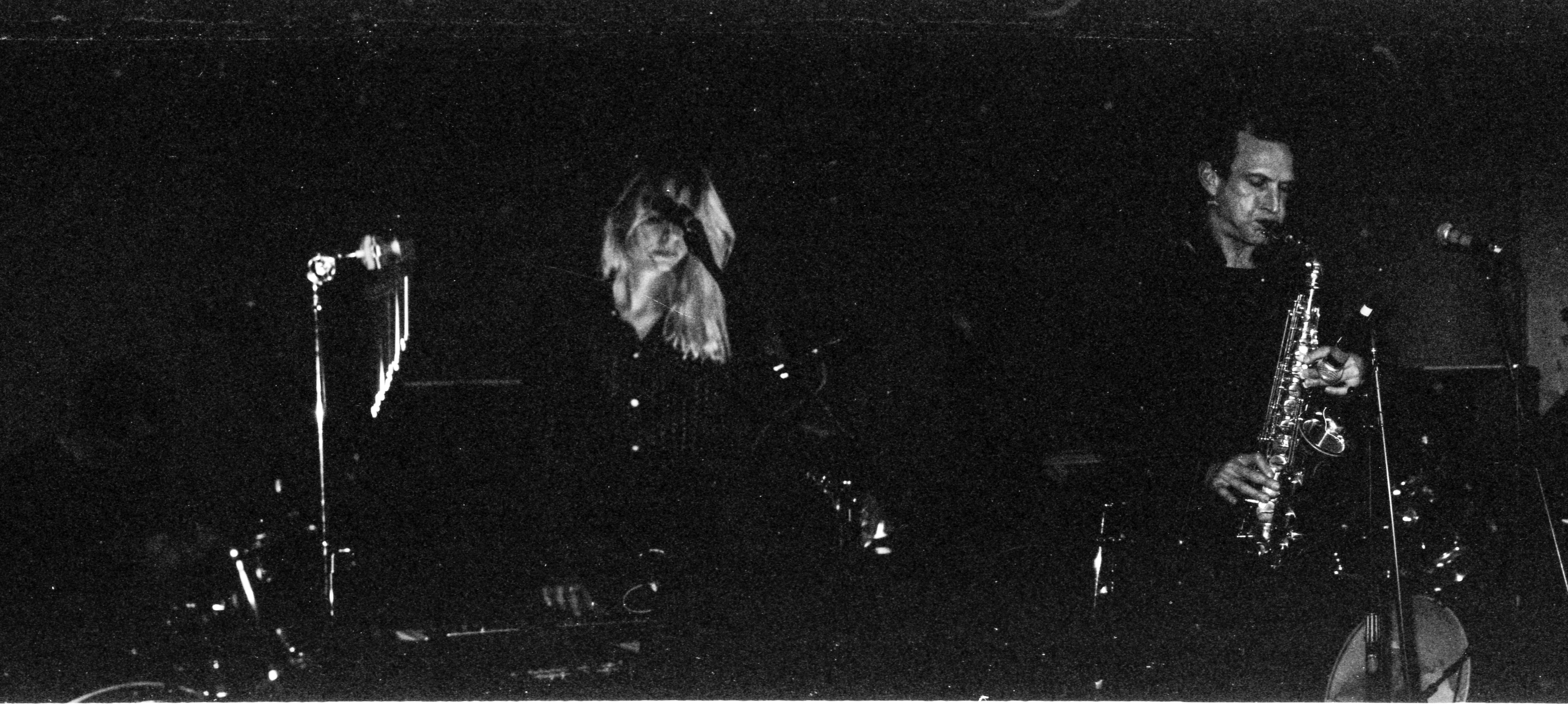
The title “Free Time” can, at least for Germans and perhaps other non-native speakers of English, be interpreted in two ways – it can refer to leisure time, but also to the musical concept of free time in the sense of free musical rhythm. Which meaning was primary for you, or was this very overlap intended?
Renee: The primary meaning is leisure time although I enjoy the overlap of the other meanings you mention. Leisure time is so important to carve out space for and music is one of the ways that Tim and I love spending our free time together. It’s this creative work time that sustains my spirit and brings my life joy and also at times it can be cathartic, at times bliss, at times calm, at times tumultuous.
Tim: The same two meanings would hold for a native English speaker as well. For me, neither is primary. Which is to say yes they do overlap. The overlapping gives the title as sense of movement I guess.
“Free Time” was apparently recorded largely live and without any post-production editing. What role does the immediacy, the uncorrected, play for you (also in terms of authenticity or vulnerability in the sound)?
Renee: Free Time is a sequence of excerpts culled from a much larger thing. Whatever adjustments we made via Ableton were minimal. Some passages weren’t edited at all. When you improvise entirely in a live performance setting you don’t have this luxury, obviously. I think the immediacy of the improvisational elements within our music is key part of keeping it interesting for us. It’s like an ever-present challenge when performing live. It feels more responsive and in the moment to play this way. It’s a challenge to do it well and we both like this aspect to it. The element of chance and synchronicity keep breathing new life into the experience.
Tim: As Renee said, there was an element of post-production editing. It would be deceitful to suggest there wasn’t. But it was subtle. We didn’t use any automation and its mono. Obviously, there’s a refusal implicit in that decision. ‘Immediacy’ and ‘the uncorrected’ seem to me closely related. Its more than simply leaving the mistakes in there to make it seem prickly or whatever. It’s more like a shift in what you perceive as the finished article to be. In the case of Free Time, we see it as a document that captures the two of us in a good creative space. That the finished document includes more than a few imperfections is beside the point. ‘Play’ is implicit in the whole thing. It’s all play. I mean, what else could it be. Last time I checked there were no middle-managers telling us otherwise.
In connection with the album, you refer to the traditional land affiliations of the Wurundjeri Woi wurrung and Bunurong Boon Wurrung. Can you tell our readers something about these ethnic groups? Does this reference have any thematic connection to your working methods and your attitude towards the environment, the place where the music is created?
Renee: We acknowledge that our music was created on the lands of The Wurundjeri Woi- wurrung and Bunurong Boon Wurrung people of the Kulin nations and pay our respects to their elders past and present. These mobs have lived in Naarm/Melbourne for millennia. We believe it is important to acknowledge that this beautiful, life sustaining land on which we live on is the stolen land of First Nations people and their
sovereignty was never ceded. The colonisation here in so-called Australia has had a catastrophic impact upon Aboriginal people and the environment. The First Nations people and their connection to their land, their waterways, their ancestors past and future is rooted in sustainability and sacred beliefs and practices which honour also the more than human world.
Tim: Since we live on stolen land we consider it vital to make this acknowledgement. In the circles we move in placing an acknowledgement on a record cover or giving an acknowledgement before a live show is necessary. It represents an offer of potential alliance between our position as artists and that of The Wurundjeri Woi-wurrung and Bunurong Boon Wurrung people of the Kulin nations.
In “The Churning Blue of Noon,” much of it sounded like a conflict between destruction and beauty, between uplift and disillusionment. Did you consciously continue this tension, or was “Free Time” an attempt for you to resolve such contradictions?
Renee: I think this tension is still very much alive in Free Time. Its characteristic of what we do. I try to reflect the world I see around me in my music. There is beauty in decay, death is a natural part of the cycle of life, and uplift and disillusionment co-exist. I have no desire to resolve these contradictions. Can one even exist without the other?
Tim: Contradiction, tension, antagonism… these aren’t things we’re looking to resolve. If anything, we’re looking to aggravate them further. Never say never but it’s difficult to imagine a purely uplifting Ov Pain experience. Nor a purely destructive one, for that matter. 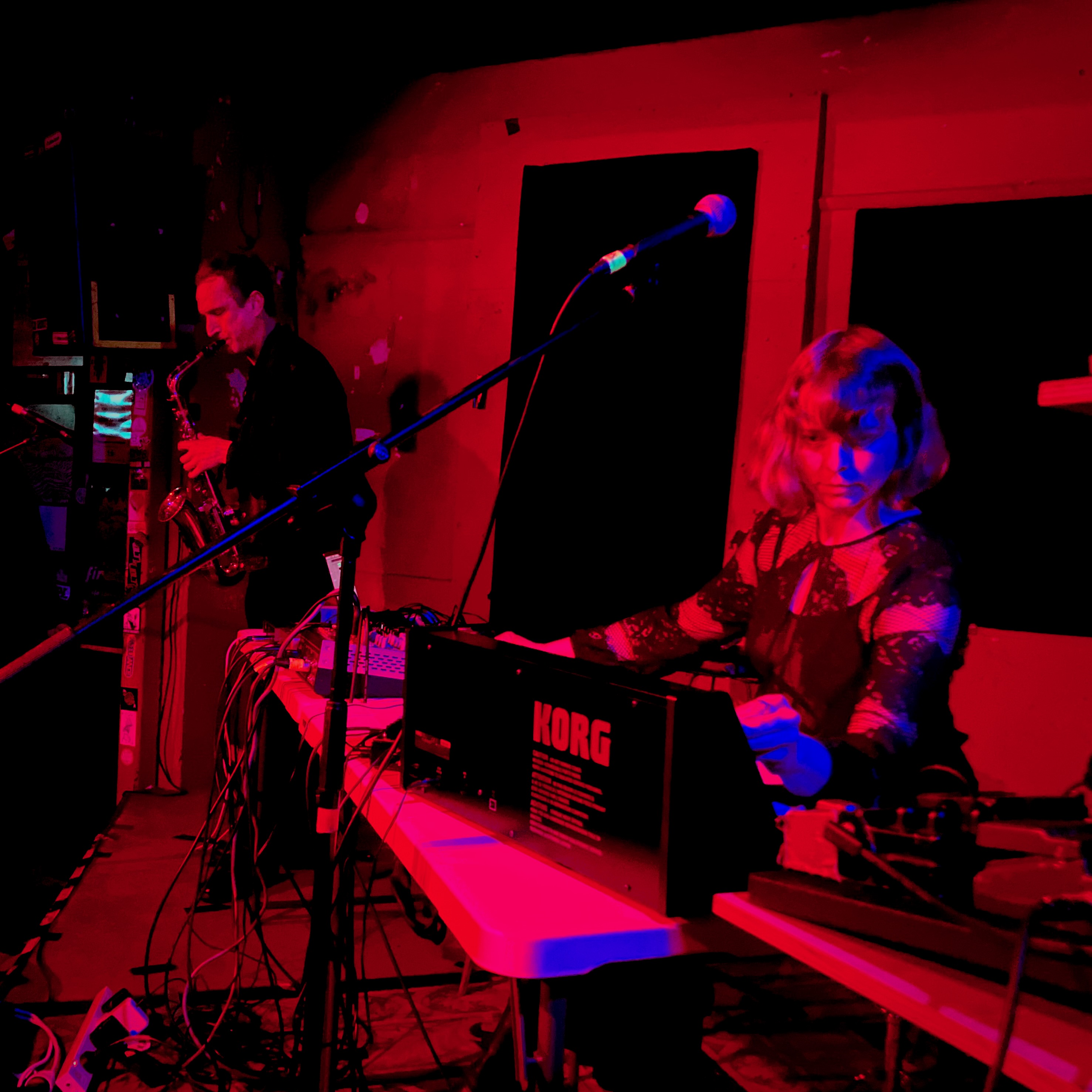
You released the new album via the label A Guide To Saints, an imprint of Room40. How did the contact come about, and what appeals to you about your new label home?
Renee: We approached Lawrence English to master Free Time as he had been great to work with on our previous album Reliquary of Dusk. Initially we were thinking of self-releasing this album. In the spirit of self sufficiency. Then we just put the question to Lawrence. We were really happy that he was keen! Guide To Saints imprint and Room40 is most definitely a beacon of light and the home to some of really contemporary interesting artists whose works I much respect. I also love how prolific the label is with releases. I feel our album has forged some nice connections and reached some new ears who are into experimental music who we probably wouldn’t have reached without the help of Lawrence. It feels like a really good and supportive fit for us.
Tim: As Renee said, Lawrence English had already mastered the album. He had said one or two nice things about it so we decided to ask if he’d like to release it. And like Renee said he’d worked on an earlier album. So there was an established connection. Enough of a connection that we felt sufficiently gallant to ask if he’d like to release it, put it that way. Ov Pain aren’t the sort of band that sends email after email to record labels fishing for a connection. All power to those who do though. Anyway… Lawrence thought it was reasonable and agreed to work with us. We agreed on a set of deadlines and everything thereafter just sort of fell into place. The vinyl was pressed at Zenith here in Naarm/Melbourne. The pressing plant is just down the road from where we live. The artwork is from a photographer friend of Renee’s. I did the graphic design. Producing the object didn’t hit on any obstacles at all. Green lights all the way home. Which is rare.
As for what appeals about the label, it comes down to the quality and character of the music Lawrence constantly (superhumanly even) releases. It’s cool that he publishes artists from all over the world and at various stages in their career. That Lawrence produces killer work himself pushed us along as well. No doubt it’s a privilege to be working with him.
Looking at your career so far, each album seems to us like a reaction to the previous one, a conscious departure from old directions or opening to new ones. Do you see an overarching developmental line, or do you understand Ov Pain more as a succession of moments and states?
Renee: I think both of what you say is true. We enjoy departing from previous incarnations to keep it fresh for ourselves. The impetus to go in this or that direction could be anything. It’s an intuitive thing. More or less all of it is an intuitive thing. In the case of Free Time it feels like it just sprung out of the blue. In the month leading up to Free Time we had been working on something different. The Free Time session partly began because we wanted to have a break from the other thing, which is quite different, compositionally more involved. We wanted to free-up. As soon as we begun Free Time it felt urgent and immediate. It sounded good right from the first moment. So in that way Ov Pain can also be a succession of moments and states.
Tim: I’d say it’s more of a succession of moments and states than a “overarching developmental line”. In fact, your term “moments and states” is a really good way to put it. Like any number of artists we find inspiration from all over the place. An album, a gig, an author, the ambient sounds in restaurant we ate at, the neighbours’ infant throwing a tantrum. Or it might be a new instrument or a new technique with an old instrument. Or it might be a malfunctioning feature of some piece of equipment. Very definitely we don’t have an overarching career plan that explains why one foot ought to go there and the
other over there.
You both have a broad range of musical backgrounds – synthpunk, post-punk, free jazz, improvisation are terms one often encounters in this context, describing movements whose echoes cancertainly be heard in your music. How do you manage to forge a common language from these diverse influences without them clashing with each other?
Renee: We imbibe all kinds of music and then attempt to create the music that we enjoy listening too. I don’t worry about clashes. We want our music to transgress genres and we want to have our own sound. We aim for our music to be recognisable as our own sound despite the instrumentation used or the method in which it is written. This is something people have commented on enough times that I guess it’s a thing for audiences too.
Tim: We enjoy the clashing. I think that’s the big lesson from punk (or maybe post-punk). Throw out the instruction manual, embrace the expressive side of things, hone your own sound, etc. etc. In 2025, almost fifty years after punk broke and established itself as a mode of expression that was genuinely radical, I feel it safe to say genres are pretty much defunct. If it makes any sense to call Ov Pain post-genre then I’m happy with that. As for forging a common language we’re really no different from any other collaborative project, at least projects that are genuinely collaborative. Finding and honing a shared voice is the most important thing. How we manage to combine those diverse influences is a hard question to answer on paper. I guess we just trust in each other, and something happens. Sometimes we remember to hit record.
I should point out that my approach to music is really that of a non-musician. I’m certainly a long way away from being a jazz musician. If-it-sounds-good-it-is-good is really all I’ve got to work with. Renee on the other hand is innately musical.
In Europe, relatively little is known about New Zealand’s musical landscape, unlike, for example, Australia or Japan, whose scenes many people at least have some idea of. What can you tell us about the centers and scenes in your country that may have influenced you?
Renee: I grew up in Tamaki Makaurau/Auckland and fell into the indie and punk music scene happening there in and around 2005-2011 when I was in my twenties. The hub was close to the CBD on what’s commonly called K-road. K-Road was the home to lots dive venues and record stores. It was a great time for live music. In Aotearoa the population is small so music scenes tend to mingle with one another and I think that’s fabulous. On the same bill you could have a hip hop act, an indie band, a singer song writer and a noise musician all playing and this is the norm. People who make shit happen there are iconic because there’s a lot stacked against trying to run venues or make art back home. Gentrification is always pushing bars out and the situation now is really difficult. But people persist. The best Art back home is never made for by folks looking for money and fame. I was always inspired by my friends back home and their genre defying music. The Coolies, Vodaphone Warriors, Evil Ocean, Duckling Monster, Kraus, Ex-Partner, Girls Pissing on Girls Pissing, Las Tetas, Octopus, Evil, Thought Creature and Ie crazy are some names that spring to mind. A current establishment for experimental music and art back home is The Audio Foundation which has been running for at least 15 years now and exists via the pure passion of its organisers and some limited arts government funding. They organize amazing tours and festivals throughout the country for both local and international musicians and link up with other like-minded spaces/ individuals throughout the country to make it happen. On an even more DIY level there’s Uniform run by Beth Dawson (Duckling Monster) and Tina Pihema (The Coolies) who put on art events in carparks/basements/outdoor parks etc. Their ethos is to hold events in non traditional venues, to take weird underground experimental music and art directly to the streets.
Tim: To start with, we have been living in Naarm/Melbourne since 2017. Though Aotearoa/New Zealand will always be something like our real home Naarm/Melbourne is where we’ve made and performed most of our music as Ov Pain. Due to the cost of travel we don’t get back to Aotearoa/New Zealand much at all and to some extent we’ve lost contact with what’s going on at the underground level, the underground being something that you’ve kind of got to be there to get a handle on I’ve always thought.
That said, music from Aotearoa/New Zealand was and remains some of my favourite and most inspiring music. Bands that began in the 80s (or earlier) like The Gordons, Dead C, Snapper, The Clean, The Terminals, Victor Dimisich Band, This Kind of Punishment, The Pin Group, Fetus Productions, Axemen, were major inspirations for me getting into music. Then there’s the relatively younger artists like Duckling Monster, Sewage, P Witts, L Xerox, Ex-Partner, Kraus, Sewage, Ron Gallipoli, Lucy Hunter, Reg Norris, L$D Fundraiser, Grvdggr, Wolfskull. Then you’ve got folks running artspaces like Jeff Henderson, Sam Longmore and the AF crew. It’s a healthy scene with each centre fighting off the landlords and council naysayers to keep it all happening. Another distinguishing feature of the Aotearoa/New Zealand scene is that a lot of the best artists and facilitators are Maori and Pasifika. Maori beliefs and values shape vast areas of the cultural sector. And this is a very good thing.
Your pieces often seem permeated by ambiguity: cool and physical at the same time, detached and emotional. In case you agree, is this tension a conscious choice, or does it simply arise from your way of working?
Renee: This sense ambiguity arises from our shared tastes but also from the instrumentation itself. We use hardware synths. The hardware synths I use are capable of being cold and metallic sounding and I like to mix this with the comparatively warmer tones of acoustic instruments like the organ. The tension is deliberate.
Tim: Is this a conscious choice? Or does it arise organically? I’d say it’s an and/both thing. Conscious because we like ambiguity and how it manifests as something like tension-laden vibration in the ear. Organically because we embrace chance in the way we work. Our songs, or compositions, have a large degree of chance built into them. It’s not completely apocryphal to say that our best performances have been when the chancegods are on our side.
A big part of what we do in the studio is to dig into a particular sound to find what its comprised of and the natural limits of its structure. Then we’ll choose to accentuate a certain feature of that make-up based on this or that aesthetic whim of the moment. When you do this across several different voices at the same time you invariably arrive at a pretty complex sound image. As well as being complex it tends to be extremely volatile. I guess then, if our work seems cool and physical, detached and emotional, this could be explained by the fact that the total sound has widely disparate qualities built into it. That, and that we’ve done our job at avoiding cliché in favour of ambiguity and openness. 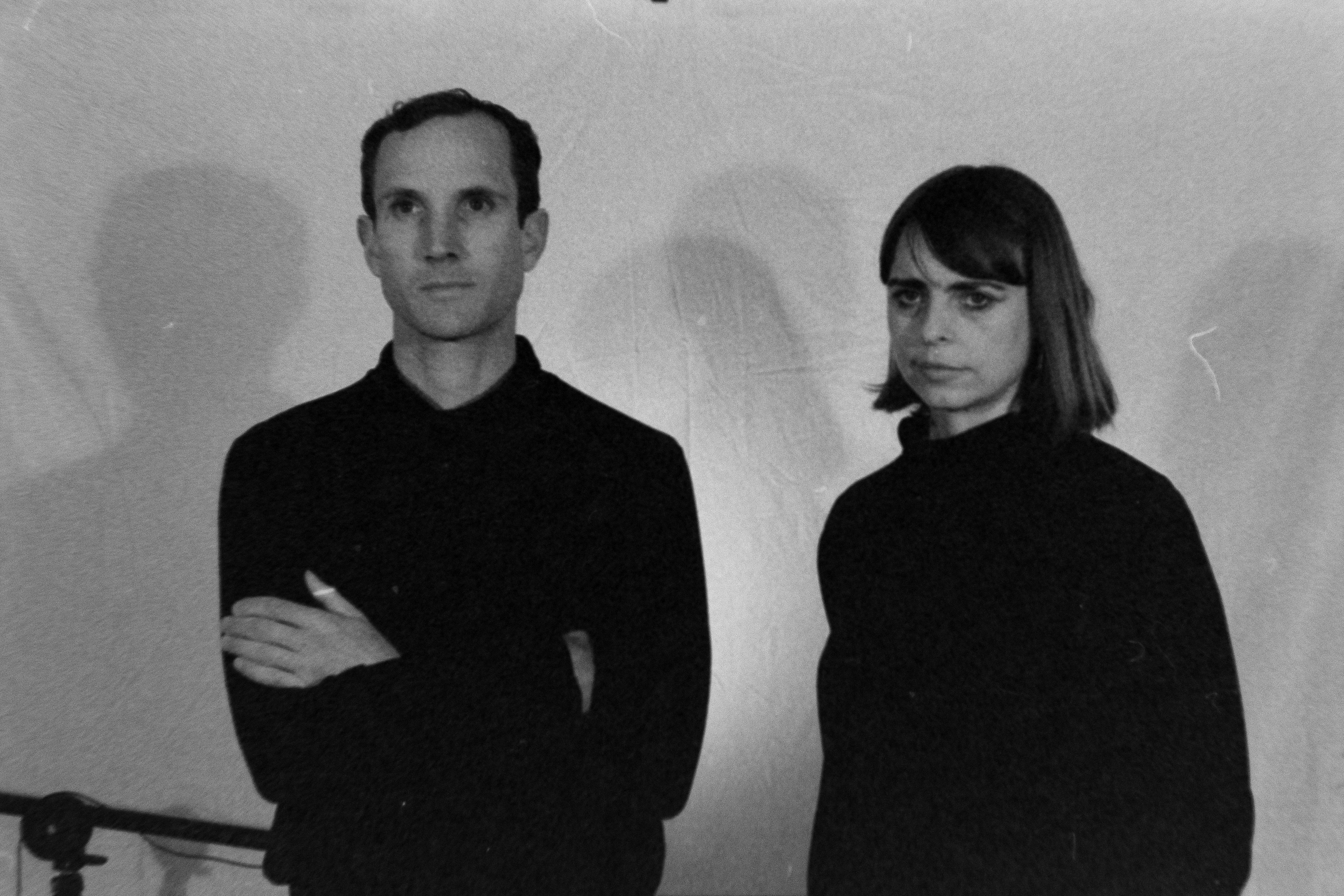
Despite such common threads, your sound seems to have been steadily opening up since the early days from what I perceive as the rather cool austerity of the early phase to a freer, warmer expression. Would you say that “Free Time” is a kind of turning point, or simply the next step in a process that has no fixed end?
Renee: When we started I always wanted us to get to the point we are at now making music like Free Time but back then I didn’t have the experience. We loved listening to bands like Throbbing Gristle, Coil, drone musicians like Elaine Radigue and Tony Conrad. My background however was playing in punk and garage bands. And Tim’s was much the same. For whatever reason Tim encouraged me to free up. He’s a bit like that. He had more experience in making improvisational music and he had a non-musical art practice when we first got together. It took a long time playing together to get to the point we’re at now.
Tim: Free Time is a turning point to the next step in a process that has no fixed end. But seriously…Free Time represents a turning point because it was here that we recorded and produced our own work for the first time. Recording and producing your own work is obviously a great step toward self-sufficiency. And I guess for the moment we’re looking at being as self-sufficient as possible. That said, there’s very definite limits to our skill set as producers so it’s not unlikely that we’ll call on a sound engineer from time to time in the future.
Thankfully we know a few really good ones.
In reviews, your music has sometimes been described as cinematic – not least because it works with atmosphere, tempo, and suggestion. Does visual thinking or a cinematic logic play a role in your composing? Are there any films or directors that have aesthetically influenced you?
Renee: I’m inspired by the slow moving cinema of directors like Andrei Tarkovsky or the genre defying films of Andrea Zulawski (Possession is one of my favourite films). David Lynch, John Carpenter, Dario Agento, George Romero are some other names that come to mind.
Tim: The filmmakers Renee mentioned are shared favourites. Tarkovsky seems especially relatable. Things that are intensely slow moving appeal on many levels. The filmmaker Gasper Noe appeals greatly too, though for different reasons from Tarkovsky.
Applying what you call ‘visual thinking’ to music/sound makes a lot of sense for me. When it comes to listening to music, either other people’s or our own works-in-progress (though never the finished Ov Pain things), they usually inspire some visual representation in my mind. This can be quite bold and lasting. Bold and lasting to the point that it’s usable.
I know for sure that for the last couple of years the painting and printmaking of Ellsworth Kelly and the drawings of Goya have inspired me to approach and reflect on making music in distinct ways. I’ve made sound works directly inspired by Kelly’s colour and hardedge. I love his work. Obviously these artists are not filmmakers but nonetheless they seem to me three arch masters of atmosphere and suggestion in 2-d.
Your music repeatedly possesses a physical, almost tactile quality; it’s raw, droning, yet simultaneously strangely delicate. How do you create this tension between physical presence and emotional distance?
Tim: We like to think all sounds as possessing a physical presence. Not least of all because they do. Equally, we like to imagine all sounds as potentially emotional, perhaps emotional at some deep dna level, which is much harder to quantify but no less fascinating.
Drone is an absorbing interest of ours no doubt. And I guess drone speaks to your question quite well. Drone has always seemed to me equally present and distant and physical and emotional. It works on your senses in a strange way. At it’s best it’s like the uncanny. It’s hard to put a finger on why it works on you the way it does other than to admit to yourself there’s limits to your knowledge.
Do you plan to tour internationally with the new album in tow?
Renee: As much as we would love to, but it’s not on the cards for this year with work commitments etc. We are planning some shows outside Naarm/Melbourne for 2026.
Tim:Touring internationally would be great. One day we’d love it happen.
Interview: U.S. & A.Kaudaht
@ Bandcamp | Soundcloud | Instagram | Facebook | Discogs