
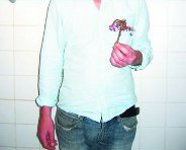
 Es gibt eine Menge Musik und Kunst, die man nur schwer greifen kann, aber das besondere an den Arbeiten Guy Dales ist, dass man sie gar nicht unbedingt greifen muss. Die Musik, die der Engländer mit seinem Akustikprojekt Mute Swimmer spielt, entfaltet eine sehr unmittelbare Wirkung, scheint fast physisch im Raum greifbar zu sein und ist in ihrem wesentlichen Kern doch schwer zu begreifen. Auch wenn die berührende Melodik, der intime Gesang und der fast poppige Appeal seiner Songs auf den ersten Eindruck mit der abstrakten Reflexivität seiner Texte im Kontrast steht, hat man stets das Gefühl, dass Musik und Worte Weiterlesen
Archiv der Kategorie: Interviews
Sabotage Dressed Up As Song: An Interview with Guy Dale from Mute Swimmer
U: As far as we know you originally come from Northern England. In which city or region did you grow up?
I come from a town just outside the city of Stoke on Trent between Manchester and Birmingham. It’s actually more like national purgatory, neither north or south in a country obsessed with the divide. I moved when I was 19 but people still pick up on my accent.
U: Northern English cities like Manchester, Sheffield or Newcastle have always played an important role in the history of popular music – many Northern Soul, Post Punk or Experimental acts come from there. How much did this creative flair influence you at an early age, and what sort of music did you listen to?
I grew up in a tiny market town – our record shop was the local Woolworths store. They’d closed the railway line years before and the last bus from Stoke was around 7pm so it wasn’t exactly the Hacienda in my town.
As a boy I was terrified of Leonard Cohen’s Live Songs (1973) on account of the cover. It was in my folks record collection and I wondered why they possessed this LP by a convict – I thought it was recorded in a prison shower cubicle something – tiled walls, shaved head, staring. It took me years to actually play it. I was mesmerized.
I remember renting out cassettes from the local library. Faust IV, SWANS Greed/Holy Money, Fleetwood Mac’s Tusk, Tom Waits’ Bone Machine, Talking Heads Fear of Music were all well overdue! I liked a lot of stuff on 4AD as well, especially The Pixies. I came to The Smiths late. Obviously you’re aware of those scenes as a youngster but I never really identified with music in that way. I wasn’t what you’d call a cool teenager.
U: Have you been in music groups before Mute Swimmer, and how did it come to forming this project?
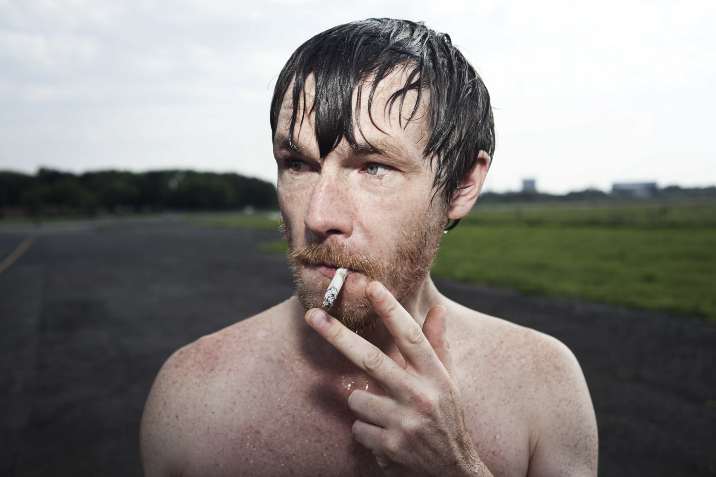 I started experimenting with four track tape stuff when I was studying art at college. I used to hit the guitar more than play it back then. This developed into the Dala project that is now a sometime three piece with my friends Brunstein and Dave Parker. Around 2005 I self released “Treehouse” (under the name G. Dale). Some local musicians in Brighton saw some shows, we started playing together. The band was called Funés (taken from the Jorge Luis Borges short story about a boy who cannot forget anything he has ever seen). We split up just as we were getting good. I’d used the name Mute Swimmer before I went to South America but I think I came back with a better sense of what Mute Swimmer was, or what I wanted it to be.
U: How long have you been to South America and have you also been involved into art and music at that time?
I was in South America for eight or nine months. It was something I’d wanted to do for a long time though I wasn’t sure why. I bought a cheap nylon guitar and travelled with that but I didn’t go with that purpose. I made very little there, there was too much to take in. I learnt some Spanish in Buenos Aires and worked my way up to Colombia. It was good.
U: You are often introduced as a folk singer, which seems fitting for some songs, but it’s probably a bit shallow for describing the style as a whole. How do you think about such categories in general, and how would you describe the music to someone, who has not heard it before?
Yeah I have a hard time describing what I do to people. I once drunkenly told someone it was ‘sabotage dressed up as song’. The folk tag is a bit lazy but artists always hate them and I’m no exception. I mean a category is useful only when you need to define it outside it’s own terms – so you see your work go from the specific to generic, creation to consumption in an instant. At the same time you realise when you’re promoting something that people need an easy point of reference/access – so if they come at it through ‚art folk’ or whatever that’s okay too, you know, ultimately you want people to listen to the music - after that the tag becomes virtually obsolete again and they make up their own mind what it is.
U: Your poetical lyrics are as important as the music, there are moments, when they even might have priority. Do you always start with words, when you write a song?
If you’re using words with music there has to be a balance but I think a lot of songwriters take that too literally. Balance can be achieved by contrast, the suppression or highlighting of one or the other at different points within a song (or album). I’d look to late Scott Walker or Talk Talk as exhibiting a mastery of that kind of balance.
Sometimes the melodies are more implied than given – a bit like the violence in a Hitchcock film. Sometimes I omit both you know, I think silence is a pretty underrated part of the process. The music comes first usually and the words follow, s l o w l y. Occasionally a song arrives virtually whole in my head and I have to run home and find an instrument to translate it to. That’s a rare grace though.
U: I wonder how ambivalent you are towards language in general, how much you regard it as something that offers resistance and arouses some sort of opposition to let a creative process begin. I think I snapped a bit of this feeling in the songs of your latest 7”…
That’s an interesting question but I think the work speaks for itself here. You could say I write with an equal measure of respect for and suspicion of language yeah. Of course when you’re singing you can also modulate the inherent meaning of the words with tone and melody. “I Went to Write” off the “Orientation” EP would be an example of playing with that. The songs on the 7“ are idiomatic of that approach too. I’ve got pretty economical with lyric writing. It’s deeply serious and utterly absurd and at the same time. For me that’s an interesting place to write from.
U: One of my favourite pieces by you is „Different Name“, which reflects on the idea of changing your identity. In that song you quote lines from an old jazz classic about the joys of a symbiotic relationship. Would you say that this old song is not such a happy one, though it appears so at a first glance?
People seem to have a developed a special attachment to that song and that’s lovely. Suffice to say you can read Different Name in a lot of ways and perhaps therein lies some of it’s appeal. As for the Cole Porter quote, cool you noticed it. I love Frank’s version especially.
U: You are also a visual artist. As Mute Swimmer seems to have a considerable multi media affinity, has there ever been a time, when you thought you had to make a decision which art form to pursue?
Increasingly I don’t separate what I do with sound and songs with what I make and exhibit. Before that yes – there was a conflict of sorts – but the closer the songs approached the concerns of my art practice, the more interesting and convincing they seemed to become and the less like other songs they began to sound.
 K: Now we have reached an interesting point. Guy, you studied art in London. I was wondering if you could tell us a bit more about your art practice. What drew you to the path of art?
I actually studied art in Stoke and Leicester but I exhibited in London quite a lot. I guess art, in the first instance, allowed me to address some conflicts during adolescence. There’s a point at which that self absorption / art as therapy thing turns into something else or gets absorbed in a different way but art in my teens was massively important. It sounds melodramatic to say it saved me in some way but I think it did. Sometimes I draw on that heightened state of awareness and anxiety you feel in your teens because it’s so pure. “Song Against Itself” is part adolescent meltdown and part meta-textual joke I guess.
K: Are you still working in the field of art? For instance, are you going to have an exhibition in the foreseeable future?
I exhibited in Madrid last year. The piece had to be posted so I made a photographic replica of an envelope, stamped and addressed to the curator. This fake letter actually arrived and that was ‘the work’. So yes I’m still active.
K: What is your latest project or on what are you working at the moment?
I have a bunch of new songs ready to go. In April I’m going to Denmark to record them in a log cabin just outside Copenhagen. I don’t want to jinx it too much but I’m really excited. I think the songs are among the best I’ve written and I’m looking forward to augmenting them in a different way from the last records. Not sure how or who it will come out with yet, we’ll have to see.
K: Has there been a certain experience that led you away from producing objects to a more immaterial, performance-orientated approach?
I can’t think of a particular experience especially, not one that I could easily explain here but I’d been interested in those ideas long before I began performing. A lot of the work begins from recognising what you make is ultimately insignificant and pointless and at the same time knowing it’s the most important, significant thing you can do. There’s an implicit contradiction or crisis in that that I make explicit. I don’t think I’m alone in that feeling at all – it’s perhaps just unusual to take that as a point of departure for making stuff.
K: Also, you are screening films while performing your songs on the stage. Do you show your own artworks, personal material or found footage?
None of the above. Like a lot of the songs, the visuals lock everything into the moment – they relay the room, the audience, myself with a slight delay. You are looking at the moment of a moment just passed of a moment just passed…and so on into in ever degrading recession. A press release might say it’s like David Lynch shooting a Buddhist’s dream.
K: What kind of relation would you possibly establish between your developments in art and your recent performances on stage?
Well in most respects I see them as contiguous. I don’t think you necessarily have to define yourself exclusively as a painter, photographer, song writer, sound artist etc. You just have certain ideas that lend themselves to a particular medium and you use them. It’s like having multiple intimacies. I guess I’m having an intense affair with songs right now.
Perhaps there aren’t any new ideas, you just open up existing ones that act on you in various peculiar ways and hope that they connect with your audience in a new way. Most things I’ve done, in whatever medium have been the result of two or three ideas that marked me in some way, that I still find profoundly exciting and inspirational.
K: Could you tell us about artworks/artists that brings you inspiration? And does this reflect somehow in your music? I’m thinking of Stephen Burch from The Great Park. He has written a song for a painting which is exhibited in a museum in the Netherlands …
I’ve been inspired by all sorts of stuff – Duchamp, Beuys, Rothko, Cage, Richter, Jorge Luis Borges (the writer) are people I go back to again and again. I went through a period of hating Magritte and then loving him again.
As I’ve gone on with things I’ve discovered crossover projects like Art and Language with Red Krayola, Alvin Lucier’s I am Sitting in a Room or Martin Creed’s works as songs. Even if the methods and outcomes are radically different I get this sense of common territory.
The Groningen Museum thing was a perfect project for TGP. I was actually staying with Stephen (and Fee Reega) in Berlin when he was recording that track. Its a fascinating idea. I don’t think it would work for me at the moment simply because I’m more interested in suppressing the narrative function of the writing than extending it. I’m not occupied with responding to art through song, I’m occupied with making art through song and they are quite different things.
 U: Most of the concerts we attended were solo shows, but you often cooperate with other musicians. Who are the persons, that play and played roles in Mute Swimmer?
Yea I like to play with other people. They are generally just people I’ve met who became friends – often they are better musicians than I am – they adapt to or intuit what I’m looking for in a song. I began collaborating with Matt Kerry (The Freed Unit) years back – some of our instrumentals are on the first G. Dale record. Laurence (The Diamond Family Archive) and Stephen (The Great Park) were kind enough to give their time to the first Mute Swimmer record. Nezih (Antalki) is a very old friend of mine. He recorded most of the percussion for the first Mute Swimmer record in his living room in Philadelphia. Kay (Johnson) is another old friend. She sings on Different Name. I think her harmonies are a big reason people keep going back to that old song. I don’t think she has any idea how talented she is…Tom (Marsh – The Robot Heart/Diagrams) and I got drunk just before I left for Berlin and we put down the single (Song Against Itself/Some Examples) in a studio in Brighton; fast. That single is the sound of two people playing by the seat of their pants. Tom comes over to Berlin and plays with me here when he can. Invariably we drink too much and misbehave. Other friends like Brunstein and Preslav Literary School came in and remixed the single afterwards too which was fascinating. I’d like to do more of that.
K: Your performance on stage is filled with introspective moments and an interesting concept of participation. For instance in the song “No Time (Shut the Fuck Up)”, the audience plays an integral part as they are being asked to repeat the same sentence over 4 minutes. Which ends up in screaming the sentence sometimes … This particular song seems to challenge the limits of patience and endurance at the same time. What is the role of the audience in your work?
The audience is really important to what I do – vocal participation or not – because often I’m addressing them personally and in the present tense – there is a very explicit relationship there that determines the nature of the gig and the material itself to an extent.
Repetition, patience, endurance – I like to play with all that stuff. Repetition is hook, mantra, irritant or sedative, depending. I think with a song like “Same” I wanted it to be all those things at once. To paraphrase John Cage – if you find something boring do it again.
“No Time (Shut the Fuck Up)” is a joke, a lot of my work is a joke but that doesn’t mean I’m not serious about it.
K: Where did the idea come from? What are you trying to bring up through this participation?
Well I don’t actually like audience participation but because of that I’ve come to find it interesting. I guess you could say I’m exploring the border between the audience and the performer in some ways but the truth is I couldn’t afford the looping pedal to create the track on my own. As with a lot of your limitations, you can find they turn out to be your blessings as well.
“No Time (Shut the Fuck Up)” comes out of the contradictory impulse I was talking about earlier. Sometimes I genuinely lose myself playing that song. I’m looking for that when I play – a kind of self forgetting, grace or abandon – even as it’s mitigated by a doubt that the audience externalises for me.
 K: What would you wish the audience comprehend after seeing or your performance?
I don’t want them to comprehend anything. I don’t have an agenda or educational goal. That wouldn’t be much fun. What the audience take away from the show will be a combination of some things I can control and many things that I can’t. You hope that you reach people in some way, however momentarily, beyond the bare physiognomy of receiving sound – emotionally, intellectually, spiritually, chemically, gastronomically – I don’t know, but some way beyond the ears alone.
U: Some years ago you’ve moved to Berlin and did a lot of concerts here and at other Middle European places. How much do places where you live influence what you do, and what was especially Berlin’s contribution to your work?
I’ve been in Berlin eighteen months now – something about it clicked for me. Aside from its being incredibly culturally rich I think it’s the space. Often I have to ambush myself into writing. I can’t approach it directly, like at a desk with a guitar or something – I have to sidetrack myself with some mundane activity like walking. So I walk around Berlin and, in contrast to London say, you can let your thoughts go. It’s quiet. Or at least it’s quiet if you want it that way (and as loud as you could hope for if you don’t). So Berlin’s been a revelation to me in this way. I must have written three or four songs on 5 km stretch of pavement muttering away to myself like a madman.
The other thing is that Berlin is still pretty cheap and it’s enabled my work as an artist to be my work. That situation is inconceivable in the UK, especially at the moment. I hope it doesn’t change too fast.
K: How do you see your music engaging with different locations? Could you imagine playing in a Gallery space?
The acoustics of the room, the sound of the floor boards, even the layout of a venue has all become more important to me. As you know the live show is quite an intense experience and I realised playing unplugged shows in Berlin how affected I was by being able to use my body and move around the space more. When you’re not anchored to the microphone under a spot light – you can inhabit and refer to the space with your body in all kinds of different ways. That’s not a pre-requisite for my stuff but it’s kind of cool and I definitely learnt stuff through it.
I’ve played in quite a few galleries. The great thing about the Mute Swimmer project is that I can play with assumptions on both sides (art or music) by locating it in different spaces. The Russian Club in Dalston was the last gallery gig – it’s a great space and was a cool night.
U: Besides Mute Swimmer you do a sound art project called Dala, which in it’s rough nature seems to be something like the flipside of your music with Mute Swimmer. Are you still active with this project?
It’s on hold but by no means dead. I’m itching to get back to it and I’ve been thinking about re-mastering and releasing some of it properly. The last official outing was supporting Tim Hecker in 2010 and as a result of that show we (sometime Dala collaborators Brunstein and David Parker) ended up recording some new stuff. Maybe I’ll get some more time on it in the summer but at the moment Mute Swimmer takes up most of my time.
U: There appears to be a number of recurring themes running through your work (in art and music) particularly with regard to the present and our relationship with time. Can you elaborate on that?
You could say that that has been a pretty consistent muse for me, one that I found quite early on and that’s in a lot of the visual work. At some point I brought those ideas to my song writing. I began trying to explore or articulate the present through the songs and this gave them this (self) reflexive dimension that is in a lot of my visual work. It struck me that this is something that’s rarely done in song writing (outside of Hip Hop and Rap) but is a dimension of a lot of art, film and literature that influenced or inspired me – where the artifice of medium is being acknowledged or referred to in some way.
I think this notion of presentness is something in which I intimate some kind of profound grace but that I can never really master or fully comprehend. So there’s a deep romanticism in the work that nevertheless acknowledges the impossibility or frustration of the enquiry in the process.
People tend to associate the momentary with improv but I’m not a free improviser, I’m interested in some of the ideas associated with improv but I choose to deal with them in song.
K: What is your plan for the future? Where can you imagine living in the long term?
I call Berlin home because that’s how it feels to me. I’m touring a lot this spring and my sense of home becomes extremely important in those times. So I’ll be here for the foreseeable future, whenever I can be.
K: The last thing we’d like to know is if you could tell us about the strangest place you’ve been so far.
I played in some kind of classroom in a train station in Munich last year. Rows of grey tables and a white board. I thought I’d been mistakenly booked to give a lecture. The promoters (Innen Aussen) came in and removed everything - hung curtains, put up lights, kind of redecorated and transformed this space into a venue for a few hours and then put it all back. It was cool, trains rolling by every now and then.
I also played on the toilet in a bathroom in Dusseldorf with Haruko and Hynur Gudjohnsson last year.
K&U: Thanks so much for your time!
No problem. Thanks for the thoughtful questions.
(Katharina Worf, Uwe Schneider)
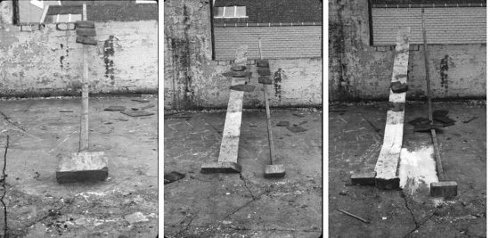
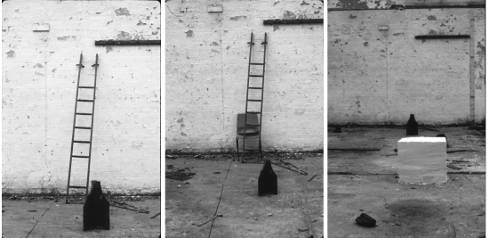
Works: Dialogue for Objects in a Room 1 & 2, Carreor
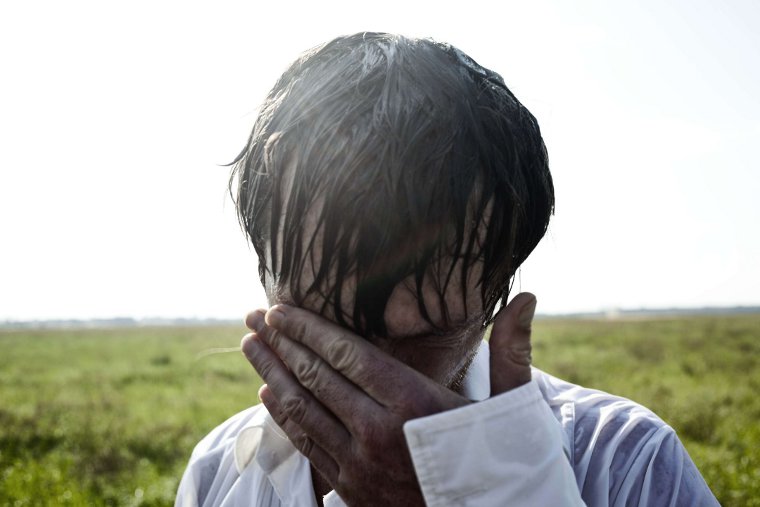
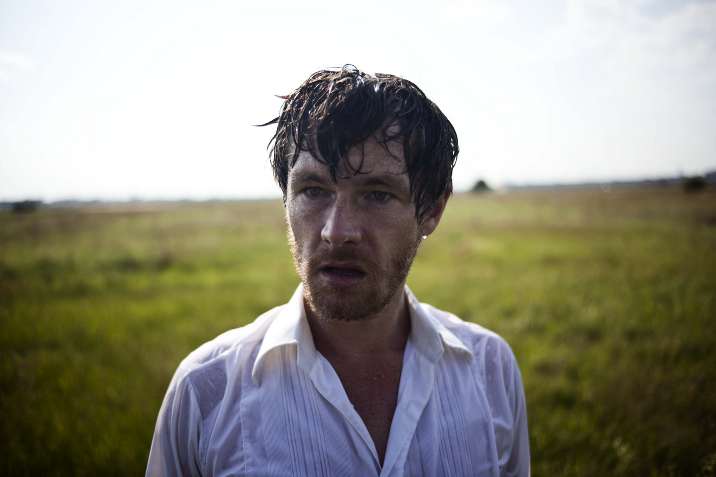
Portraits: Eva Krehl, Justin Davies
Wie ein unendlicher Fluss von Emotionen: Interview mit Anemone Tube
 Seit 1996 veröffentlicht Anemone Tube anspruchsvolle Geräuschmusik, die sich irgendwo zwischen Dark Ambient und Power Electronics bewegt, wobei das Klangbild durchgängig differenzierter ist und enge (Genre-)Grenzen nur da zu sein scheinen, um ge-und durchbrochen zu werden. Dies beweisen auf den ersten Blick so unterschiedliche Veröffentlichungen, wie die Zusammenarbeit mit Christian Renou auf „Transference“, auf der organisch-melodische Tracks zu hören sind, die in ihrer Differenziertheit und Zerbrechlichkeit an Projekte wie Mirror erinnern Weiterlesen
To Fuck Up Tradition – Interview mit dem Folkmusiker und Verleger Alan Trench
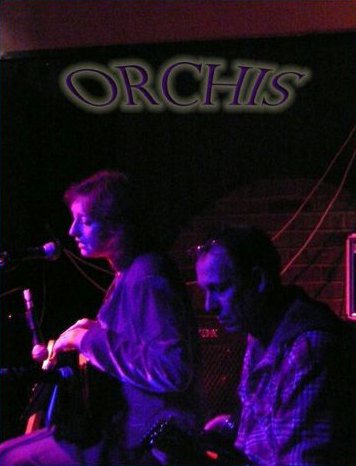
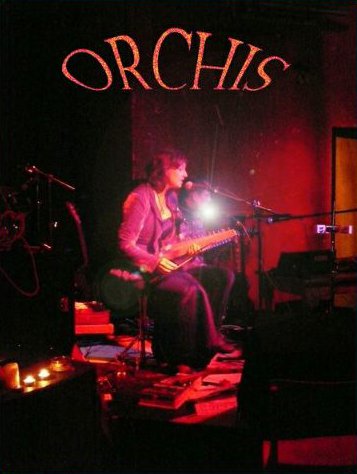
 Alan Trench befasst sich seit etwa zwei Jahrzehnten mit der Vermittlung von Folk in verschiedensten Formen und Ausprägungen – sei es als jemand, der als ein Drittel von World Serpent dazu beigetragen hat, Bands, die ihre ganz eigenen Vorstellungen und Interpretationen von Folk hatten, eine Plattform zu bieten, sei es als jemand, der selbst in einer Reihe von Formationen musikalisch aktiv ist. Am bekanntesten dürfte seine Hauptband – die aus Trench, Amanda Prouten und Tracy Dawn Jeffery bestehenden – Orchis sein. Weiterlesen
To Fuck Up Tradition – Interview with Folk Musician and Publisher Alan Trench
Let’s start with some more general things: Which instruments do you play, and how has your interest in music developed? What sort of music was important for you in earlier years?
Guitar is my main instrument… my default setting… so I play all types of guitar – 12 string, electric, classical, bass; and other stringed things – dulcimers, balalaika, mandolin, ukelele, banjolele, bowed psaltery… wind instruments; flageolets and various similar types such as mosenos, qena, chanters, recorders etc. that I’ve picked up over the years… I’ve got around 50 or so. I also play synths – quite simple old analogue ones like the Novation Bass Station, old sampling Yamahas and so on. I can play things like flute organs etc, but it takes me a while to get started… it’s not a natural thing for me. General percussion stuff with bells, gongs etc; but no better than anyone who’s never picked one up in their life would…
My first interest in music was Slade, Sweet, glam stuff – though not Bowie; then Deep Purple, Black Sabbath and suchlike; then Yes, Genesis, ELP, Gentle Giant, King Crimson… then punk came along, although we didn’t know it, with The New York Dolls and The Stooges… then Ramones, The Cramps… I was never that bothered about UK punk, or, I suppose, what is now thought of as punk… The Pistols, Buzzcocks etc were just pop bands, but I liked a lot of the odder stuff like The Table, Desperate Bicycles, Swell Maps, Television Personalities and so on. I was already playing in bands by then… a couple were ok, but we weren’t that serious about it… but it got me writing songs… simply because we weren’t good enough to do decent covers. It was only much later when I got a 4-track recorder and could layer things that things got interesting… I’d recorded in studios, but it was very traditional stuff, punky/poppy, and the engineers/producers pretty much got you to do what they wanted rather than what you wanted. I think being with Steve Stapleton in the studio was a real turning point… Steve isn’t a musician as such, or so he says… but he is full of musicality, and knows precisely what is right and what isn’t. I think Steve showed me how to trust myself when it came to organizing sound… and that’s pretty much what I’ve been doing ever since, one way or another.
You’ve been in a number of bands and music projects over time, mostly known Orchis, 12000 Days and Temple Music. Do they all have the same importance to you as groups, and do they all still exist? There was some talk about a new Orchis album some time ago..
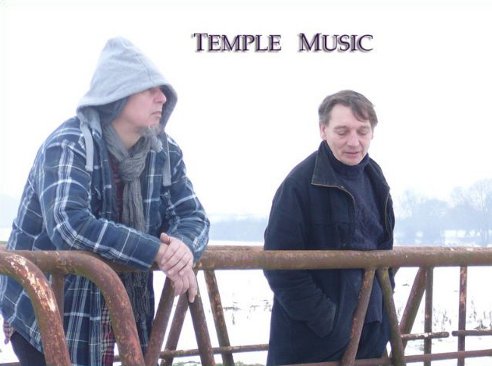
 Well they’re all different, and so, all differently important… Temple Music is more ‘my’ project than the others… Steve and I are the only permanent members, and we are so attuned to what we want and like that we might as well be the same person… so anything I do I know Steve will be happy with, and vice versa. Temple Music has aspects of everything else involved in it, but because we’re interested in extending ideas to their limit it tends to be quite immersive… so if we’re doing a Temple Music project it is pretty much to the exclusion of all else, and I won’t be doing anything else until it’s finished… obviously, there are single tracks for compilations that don’t take that long, and can be fitted in with other things… such as Orchis tracks… There was an album called ‘Foxfire And Aconite’ (available from our Bandcamp page) under the name of Cunnan that was in effect an Orchis album, but without Amanda, which had songs on it destined for Orchis; two in particular –‘The Wizard of Carpathia’ and ‘Seven Sleepers Seven Sorrows’ Tracy is very fond of; we performed them live at the WGT in Leipzig in 2011 and they worked really well. We did an acoustic set in Coventry last year as well, which we were really happy with; Amanda has decided she doesn’t want to do live stuff so Orchis is now two bands… the studio band and the live one. We only ever intended to make one more Orchis album, and there have been quite a few things recorded for it that we ended up deciding not to use – some of them appeared on ‘Phoenix Trees’ (available from pretty much all digital download stores, or direct from DMMG ), some may be re-worked, and the central part of the recordings, ‘A Dream’ will come out as an ep on Infinite Fog (who reissued ‘A Thousand Winters’, and are planning to reissue ‘Mandragora’ this year). J Greco is remixing it for us… there are 5 tracks, and he’s done the first one ‘Kishmul’s Galley’…. So, Orchis remains very active and very important to me, and the new album (also on Infinite Fog) needs to be as good as we can make it… but because we can only work on it intermittently it’s taking a lot longer than we planned.
Twelve Thousand Days is very close to my heart, and Martyn is a very dear and close friend; and we have discovered that we can only really make it work when we are in the same room together… we tried recording separately, but it just didn’t happen… so it is very dependent on our individual schedules. We also performed in Coventry last year, which was great… we have had two excellent recording sessions recently, so we have a new album done in the raw, and I plan to finish mixing and sequencing some time later in the year.
You once said in an interview that when you started with Orchis you were not that enthusiastic about a lot of aspects of folk music and you mentioned that it was quite necessary to ”fuck up tradition“ and make the lyrics relevant for today. I think that is something that is missing in the work of a lot of artists who try to connect to a folk tradition. Who do you feel is quite successful in making folk relevant, fresh and inspiring today (apart from your projects, of course  )?
)?
I’ve been doing a lot of work in this area recently, and your question has a lot of ramifications… It seems that everywhere else in the world, other than England & America, the ‘folk tradition’ is a continuum… bands, musicians – mainstream and otherwise – think nothing of using their influences – it is much more unconscious… so you’ll get a band like Korplikaani using Finnish polka music as a basis for metal, and it’s a completely natural thing. In England there is a huge disconnection between ‘traditional’ culture and ‘modern’ culture; unless you actively seek it out you will have no knowledge whatsoever of traditional English music, and if you do seek it out everything is prescribed and proscribed by bores like Martin Carthy, Ewan MacColl, Pete Seeger etc; essentially, if you don’t do it the way it was recorded by Cecil Sharp, Percy Grainger et al, then you shouldn’t do it at all. ‘Folk Rock’ in the UK did at least make a stab at this, and there are a lot of bands I really like – Mr Fox, Trees, Dulcimer, Pentangle, Kaleidoscope, Steeleye Span, Fairport Convention – who adapted folk songs for the rock idiom – but this meant that the songs were just sped up a bit and drums & electric instrumentation added. It’s a very different thing from a continuing and evolving tradition. So that’s kind of what we’re left with – either the stilted and stultifying renderers of ‘the tradition’, people who write ‘in the tradition’, or rather self conscious ‘rocked up’ versions that are otherwise ‘authentic’. The Pogues are a fantastic example of how it can, and should be done; but they are part of a continuing Irish tradition. The Men They Couldn’t Hang have done some great stuff, and I like a lot of The Oyster Band; Martyn Bates, Current 93 and Sol Invictus, and to a much lesser extent Death In June, are, I think, in the genuine ‘folk tradition’… also Andrew King, Sedayne, Sproatley Smith, The Hare And The Moon… all of these, and many others, are fucking things up nicely – but it would be wrong to say that it’s anything more than of a very minor minority interest… I think there are plenty of people who are contributing in different ways, but in England there is such a massive disconnection between the music of pre-1900 and now, far more than anywhere else – America to a degree, although that is a different case – that the relevance of folk music to most English people is gone forever.
Since the early days of Orchis, you combine folk inspired music with an interest in the spitirual and the occult. How did you find out, how much these things are connected to each other and what can you tell us about your first encounter with these things?
 All three of us have always been independently interested in different aspects of the occult/spiritual realm… Tracy and Amanda in a much more ‘formal’ way than me – I’m not a great joiner of organisations… Music you create should and must reflect your interests and pre-occupations; and music as a part of life was what ‘folk’ music was – songs for the seasons, for occasions, for hope, for mourning, for remembering, for hating, for loving – an integral part of your life and who you are. The first thing I specifically remember coming across were the books of T Lobsang Rampa; a terrific fraud, as it turned out, and which I read around about the same time as The Alexandria Quartet by Lawrence Durrell, which led me to investigating a particular form of Gnosticism and all things leading from it… at the same time I came across Idries Shah, and it seemed apparent that all these different schools of thought were talking about the same thing. The Sufi teaching is that where there is a need, a teacher arises – but, importantly, that teacher and those teachings are only relevant to the people taught at the time they are taught it. Fossilized thought helps no-one, and simply causes the rise of organisations that only further their own continued rise. So slavishly following any doctrine is pointless, counter-productive and probably harmful. And yet, all such doctrines have arisen from the same principles. Personally, I have reached an understanding, and any music I do will reflect some aspect of that understanding; and that is how it should be.
It’s said that songs by Orchis have been used in rituals. What can you tell us about these sessions?
All the songs ever recorded by Orchis have a point to them, as I mentioned earlier… and whilst, as I said, any music I do reflects my own understanding, if music is made with others for some specific purpose then obviously they bring their own understanding and intent to that music, and we would all support that specific intent in our own ways. Rituals are used to focus, and everybody has their own preferred method; the one that is right for them. Our ritual sessions have mainly been dictated by ‘traditional’ considerations – the correct hours, days, materials – for the purpose in hand. So some of these are for our own purposes, and not recorded; some are recorded. The first one was ‘Waiting For The Moon’ on ‘The Dancing Sun’, and one of the ‘best’ was ‘Anadiomene’ on ‘Mandragora’. The sessions which produced ‘Jennet’ (which was a shape-changing charm, as was ‘The Wizard Of Carpathia’) and ‘He Walks In Winter’ were particularly memorable, being solstice and equinox, and ‘Blood Of Bone’ was terrific… it was engineered to enable the raising of a Cone of Power – we also performed it at midnight on All Hallow’s Eve at Fell Foot Woods in 2010, which was incredible.
As you have dealt with numbers of pagan aspects in many of your works, we would like to know how you think about the main developments of contemporary paganism. How would you estimate the challenge, that a more global lifestyle (who shapes the consciousness of anyone who’s not a hermit at least to a certain degree…) means to a spirituality of a more local orientation? Do you think that this also forms neurotic defense mechanisms in some groups?
 Sadly, most of it is utter drivel. As you say, unless you want to bow out of the world entirely, aspects of it have to affect your life; but most of the Pagan World seems to exist by saying what it is not, rather than what it is, and picking and choosing whatever aspects of Paganism – by which they seem to mean anything non-christian, Islamic or jewish – oh, except the Qabbala of course – suits them. Usually the easiest aspects, or the most pleasant, or the most self-justifying. American Express, Visa, Access etc have certainly missed a trick by not issuing a Druid card which could be used to buy obsidian daggers, essential incenses and sacrificial lambs, collecting Mistletoe Points as you go. One of the essential Sufi teachings is to be IN the world but not OF it, which means to me that of course you have to take on what the modern world is, but that it should not affect the essential you; that you should work constantly so that the essential you can develop and achieve understanding of the world and our place in it. We are here for a short time, and are a long time dead; and there is no going back to any perceived Golden Time – most of which were very far from golden for the vast majority of the people living it; and it seems evident to me that the kernel of all ‘religious’ teaching is essentially the same, although couched in terms necessary for the understanding of those teachings at the time and in the place they are taught. So it is a waste of time trying to follow some ancient prescription for spiritual growth or happiness, or whatever you want to call it – although you must find your own path before you can follow it, it will be your path. So it is entirely valid to use the pick and mix method for this purpose – that is, to take perhaps the less palatable aspects of various teachings, that are, nevertheless, true; and synthesise from them a working philosophy. I’d estimate that 90%+ of pagan borrowings are not this. Personally, I think that every locus in space and time has it’s own character, a manifestation of some genius loci that is somehow connected to all points of space and time… so we have different god-aspects at different places; and some of these do de-evolve away from being a personal ‘revelation’ to being a movement. All young movements are jealous of their territory, and subject to ‘neurotic dense mechanisms’…
You said in an earlier interview that Martyn Bates hated Orchis at the first encounter, but then later became intriegued by it’s peculiar charm. Do you think that Orchis play a sort of music that requires time? What are the most extreme reactions you had ever received?
Music is a personal thing; what means a lot to one person can mean nothing to another; as a listener you bring to a piece of music all your own knowledge and associations. There are two parts to music: ‘art’ and ‘entertainment’ – and the more common knowledge and associations they contain, the more they become entertainment and the less they become art. Communication is at the basis of music… with successful classical music it is following particular rules based on a broad and longstanding cultural agreement to achieve communication of emotions, impressions etc. In pop/rock type music, this is entirely entertainment, showbiz, music biz, whatever and has no actual value beyond what associations you bring to it as a listener. It presses buttons, and you respond. The more general it is, i.e. the less it has to say, the more successful it is. I’m not knocking it, by the way, I like a huge amount of music! – it just is what it is. The kind of music we do, and the kind of music we are bracketed in with, is trying to communicate something very personal, with no associations for the listeners; or very few. It is successful if we feel it is successful, not if others ‘like’ it, and that necessarily makes it difficult to listen to… we are not being deliberately obscure or obtuse if we create something with ‘wrong’ notes or buried lyrics or jarring instrumentation – it’s something we could easily change, after all, which would make it more successful for others… but less successful for us. But it has it’s own logic, and if you listen to it properly, then it will do what it is supposed to. Western ears, for instance, became unattuned to quartertone type music – Indian, Japanese, Chinese, Greek, Turkish, Arabic – the rest of the world, in fact – due to the prevalence of the Classical and later Pop traditions – but it doesn’t sound too alien these days…
I suppose the most extreme reactions really have been with Temple Music – mostly because that’s the majority of the live shows I’ve played, and record review stuff isn’t usually extreme. We had one show where a woman ran out screaming; the rest of the audience were mesmerized and the organisers tried – and failed – to turn us off (they’d foolishly let us set up the sound ourselves)… at another I thought we were going to die as it was full of scaffolders; the bar staff insisted that the plug was pulled or they would walk out, and afterwards some of the scaffolders came up and said it was the best thing they’d seen since Tangerine Dream… actually there are plenty of TM stories like that, though we’ve calmed down a bit these days…
How did you and Martyn meet, and which were the ideas that resulted in the new group 12000 Days?
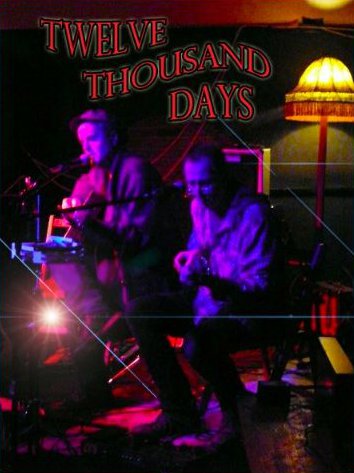 Eyeless In Gaza got in contact with World Serpent about distribution of the ‘Streets I Ran’ ep, and Martyn and I hit it off… as you said, he originally hated Orchis (I’d given him a copy of The Dancing Sun), but once it had wormed it’s way inside him with it’s peculiar charm he suggested singing on some Orchis stuff … I think it might have been the song ‘Burning Incense’ – but that was certainly one of the first we recorded – anyway, he agreed, but when Tracy heard us rehearsing it she said it had completely its’ own character, and that we should do something different to Orchis… so it is really down to her. Martyn and I agree on why a great deal of modern ’folk’ music is shit, but he is far more steeped in it than me, so he is more interested in re-interpreting the canon than I am… but other than that, we are complementary. With Twelve Thousand Days we are trying to express the extreme antiquity of the Land… the Heart of the Land… in a very English way… for our own benefit, really…
When listening to 12000 Days and comparing your approach to that of what Martyn and Mick Harris did on the “Murder Ballads”-trilogy would you say that there are more similarities than differences and that both projects strive(d) to find an original idiom for an old form?
Well, Murder Ballads had a very distinct intention, and with Mick, a very distinct sound, whereas with Martyn and I we’re never quite sure what is going to happen; the surprising thing to me is that whatever we do we sound very distinctive… but yes, I would think that is in general true… we don’t set out to reinterpret folk songs as such, more folk ideas, I think, whereas Mick and Martyn are laying bare the intent of the songs… so, I think that there are more differences than similarities, but we are both certainly trying to find a new way of expressing old forms…
You mentioned that in 12000 Days it is clear that Martyn normally does the vocals. Could you imagine you doing the majority of the singing or would that then morph into something completely different?
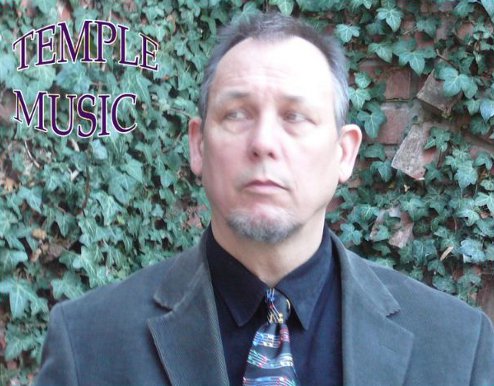 I just don’t sing well enough to do 12000 Days stuff… ‘my’ songs are initially demoed with me singing them, but they always sound a bit rubbish… and once Martyn has done a vocal they make mine sound even worse… I did a small solo tour acoss Europe last year which I did some vocals on… something I wrote especially called ‘Drift’ and an extremely abstract and spaced version of Syd Barrett’s ‘Dominoes’, each of which was around 15 minutes long, which made me think maybe I should do more vocals… there was already a song earmarked for Temple Music called ‘Children Of The Sun’ which we’d performed live a few times, and which became the title song of the new TM album, which are all song based tracks. I really like it, but Steve thinks that as we have access to several far more talented vocalists I should shut the fuck up. ‘Children Of The Sun’ is coming out on vinyl via Anticlock in the USA… we did a version (an Art Edition CDR) to sell at the shows we did with Language Of Light in October 2011, and Anticlock may have a couple of copies left; I think they are using them as promos. There are 5 tracks – ‘Mirrors, ‘Children Of The Sun’ ‘Ism’ ‘Death Went Fishing’ (which is a free translation of a Greek Rembetika song), ‘Momentum’ and ‘Warlord of The Royal Crocodiles’ (an old Tyrannosaurus Rex song). So this is what it sounds like if I sing more songs… morphing into something different… we also did try recording ‘No Return’ as a Twelve Thousand Days piece with both Martyn and I singing, but I never really felt it worked, and eventually Orchis recorded it as the first track of the new album.
Temple Music seems much more abstract in structure than the bands mentioned above. How different is your approach to composing, improvising and writing music in the context of the several groups?
I tend to write either ‘songs’ or ‘compositions’, and the process is actually quite different… the ‘songs’ are almost always for 12000 Days, Orchis or Cunnan (the Cunnan album, ‘Foxfire And Aconite’, is in effect the 4th Orchis album, as I mentioned earlier), whilst the ‘compositions’ are almost always for Temple Music. With the songs, I have a very specific aim in mind, and it starts with the lyrics… they have to be completely right first. Language is very important; and actual meaning is not necessarily conveyed by the surface meaning of the words; and I want the meaning to be apparent on a variety of levels. Once I start on the music, it soon tells me what type of song it is, to a large extent… whilst I don’t write the music with a specific voice in mind, some songs work with some voices and not with others. Orchis song structures are fixed immediately, and don’t often change that much, whilst Twelve Thousand Days are far more fluid, with the structure just an idea roughly sketched; Martyn and I work on that aspect together. The basic structure I map out using guitar or dulcimer, and take it from there… to a large extent, it does depend what instrument I use as to how the final song turns out. Temple Music, on the whole, uses no language, and tries to convey meaning using non-vocal sounds alone. Temple Music pieces are very specific to time and place, and we are trying to … raise the soul of that place… is the best way I can put it. Sometimes it is an actual place, as with ‘The Green Man’ series, where we will record in the location, sometimes, as in ‘Soon You Will All Die…’ it’s a more theoretical place. We will identify the correct musical mode for that place, and work out individual parts we intend to use; and then map out a narrative arc that we will all follow. So the pieces are structured, but loosely so, although the individual parts of that loose structure are quite formalized.
Can you tell us a bit about the Greek music, that Temple Music is influenced by and which aspects of it flowed into your own compositions?
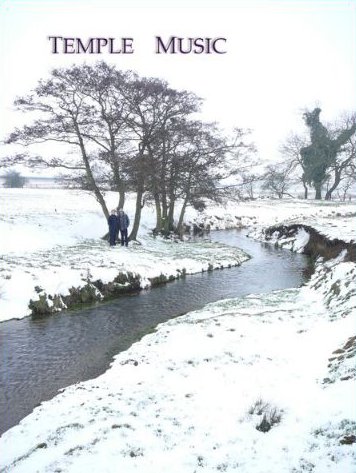 Amanda used to run an occult meeting/lecture group in London called Talking Stick which eventually became magazines and books of the same name, and Tracy wrote an article for one of the volumes on ancient Greek modes, which is what the modern modes are named after – Aolian, Lydian, Dorian and so on. Each of these ancient modes was specific to a particular god, or aspect of a god, and was used in specific ceremonial practice… although we don’t know exactly what those ancient modes were. There were a few pieces written down, but not many, and they can only give a relative guide to the tunes since we don’t know the actual notes they refer to… however, the ancient instruments can, and have, been reproduced, so we have a reasonable idea of the sort of music that could have been created. I was particularly interested in the specificity of it – that certain modes and instruments were used for certain things; but I wasn’t interested in trying to reproduce something from 2 or 3 thousand years ago… it is more that, with Temple music – certainly for live shows, and very much with the Green Man series – we try to, if you like, raise aspects of the particular god of that time and that place using our own particular instruments and modes.
It seems that with Temple Music you like to discover aspects of decay and of the imperfection of life. The video to „Rotting from the inside“ and it’s sarcastic discourse about (e.g. genital) diseases might be one of the most direct examples. Is the destruction of idealist ideas on humanity something that fascinates you?
We wrote Rotting From The Inside after Priapus 23 of Akoustik Timbre Frequency asked us to do a track for Dark Ambient vol II. My mother had just been diagnosed with terminal cancer, and I had been planning to do something about the decay of society… just a tiny subject I know… that whilst things can appear to be fine on the surface they are actually already rotting from the inside. It seems to me that in general we don’t really want to confront reality as it is, or the consequences of actions undertaken and so on… we would prefer to be optimists rather than pessimists. We don’t like realism and reality and flee from them. High moral ideals, or whatever language framework one uses to describe them, last only as long as the particular person promoting them is around to do so. As soon as that person is no longer present, the idea, or ideal, or whatever it is, is corrupted by followers or disciples; it’s simply human nature. This is a political and societal as well as a religious thing, and stems essentially from this failure to confront reality, however it is dressed up. It doesn’t suit the status quo, the powers that be, the people in charge – whatever paranoid construct you care to name that people/organisations behave differently.
In your album „Soon you will all die and your lives will have been as nothing“, music, words and artwork form some sort of mysterious narration, and the eponymous statement is way drastical. Who are the portrayed persons on the cover? Are they the transmitters of the words and if yes, what do you think is there reason to disenchant the quick so very much?
 This actually follows on pretty neatly from the last question… we are really proud of ‘Soon You Will All Die…’ and I think it is a completely successful album; a really exact and pointed work. There is no great afterlife in the sky or anywhere else; when you’re dead you’re dead, and everything you have done and achieved in you life will be lost and forgotten over time… whether that is longer or shorter, eventually it is true. I don’t know who the person on the cover was, but I do know that they were alive and are now dead; and that I know nothing about them… I found the picture in a junk shop, along with the others that are on the back of the sleeve… and a pressed flower that is also on the back of the sleeve… I was looking at them, and the title came to me. Steve and I determined that it would be a single piece, and it represents the last hour of someone’s life, and that person is the woman on the cover. The pieces, or songs, are her internal narration of that last hour… the memories that trigger other memories until the last moments arrive… which sounds grim, unpleasant… but I wanted to make it more a peaceful acceptance… I find the finished piece to be quite uplifting…
You spend (or spent) some time in a place in Greece and, if I remember it well, did a number of recordings there. How did you discover this place, and what can you tell us about this spot and it’s atmosphere?
I have a house on the southern part of the island of Evia, in the mountains. It’s an old stone house in a small village, very rural and about an hour’s walk from the sea. We get woken in the mornings by the sound of donkey hooves on the road outside, and we have our own orange, lemon and mulberry trees. I’ve sat for whole days under the trees watching the insects; at night the stars go on forever and polecats wrestle in the street. It’s the most beautiful place I know; but it isn’t the Greece of the travel brochures. It’s extremely poor, and the lives of people there are very hard; young people don’t want to stay in the village in grinding poverty – and who can blame them? – so the whole way of life is dying out. I’d been looking for a place that was ‘right’ in Greece for the last 20 years or so, and had just about given up – I didn’t want to be on one of the tourist islands, or too near Athens… although Evia is something like the third biggest Mediterranean island very few people have heard of it, so there’s no tourism… but it does have everything you need to live…
In England, you moved back to Lincolnshire after a longer time in London. Have you moved for practical reasons, or were the atmospheres of both places also a decisive factor for the change?
The main reason was because my daughter was coming up to school age, and we didn’t want her to go to any near where we lived in London… and London had changed a great deal over the time I was there. It wasn’t fun any more; and I’d never intended to stay there for as long as I did… We looked around near London for quite some time and then decided that you had to be an awful long way from London to actually be away from it. My parents still lived up in Lincolnshire, and we came back quite a bit… so we just thought ‘why not?’… I think the places where you grow up are always special to you. Lincolnshire has the most enormous sky, and it is full of strange and secretive corners; marshland, rolling hills, ancient ruins, prehistoric graves, Roman roads, seal colonies, wooded groves, more old churches than anywhere else in England… odd things happen here. The pagan past is just beneath the surface…
You have also contributed with three projects to the “John Barleycorn reborn: rebirth“-sampler. How do you feel about your role in this and do you think it would be possible to find a kind of common ground for all of the participants?
 The whole thing was originally put together by Mark from Woven Wheat Whispers, who had some sort of vision of New Wyrd Folk… but it was his vision, not that of anyone on the compilation. What I found interesting was that there were – and are – all these people interested in, and working on, roughly the same areas in so many different ways… but, because they are all very individual, they are quite happy to just get on with things themselves. I think that’s just great… there’s no ‘scene’, and I don’t think there could be, because though it pulls together people of the same interests their music is extremely disparate. So the common ground would be that we are all a bunch of semi-obsessed loners doing our own thing…
“The Wicker Man” played an important role for a number of artists. I’m not going to ask you what you think about the remake with Nicolas Cage but how do you feel that a kind of sequel (“The Wicker Tree”) is just about to be released after many delays?
Haha! Yes, it’s unbelievably terrible! R Loftiss mentioned The Wicker Tree to me the other day, and said it looked ok, but more than that I don’t know. I don’t think The Wicker Man is sacrosanct, or anything, and objectively it is not that great a film – good ideas, good set pieces, but not a great film… I’ll judge the new film on its’ merits!
As far as we know you are not directly involved in the group Hausfrauen Experiment, but as we admire their music and their ironic approach to things, we would like to know how it is going on with their plans?
Aha! In fact, Steve and I are the masterminds behind the Hausfraus; he is Mr. Muscle and I am Mr. Sheen. It was Lisa’s idea – she said something like ‘we’re all Hausfraus now’, and we thought it would be amusing to start a project to do only pop hits using only retro synths… so all five of us picked songs, and it so turned out that Vyolette, Tracy and Lisa’s voices worked incredibly well together, and off we went. We have an album finished, called ‘The End Of The World’, and we have been working on how to play it live before we go any further… we plan on trying an experimental show later this year to see how it goes… Vyolette has just had twins, so that has slowed things down; but, I guess… wait and see! The ‘End Of The World’ is coming! The Hausfrauen is tremendous fun to do, and has had a fantastic reaction… the next thing to see the light of day will be something for Fruits De Mer that I’m certain no-one will expect… we’ve also been asked to do an XTC session after out Fall session turned out so well, but, I think time is against us on that one.
Some time ago you stated that World Serpent was originally a rather idealistic endeavour but that the last four years weren’t that great. Would you like to say a few words about that?
 Well, people change, and what they want changes. Personally, I wanted to leave for ages before I actually did; as far as I was concerned I’d proved any point that I’d wanted to make. Everyone was older and had their own personal agendas to pursue in any case… As I’d started the company I felt responsible in some measure for the welfare of the artistes, and indeed everyone involved, but only up to a point; it needs reciprocation, and for the last four years or so that I was there, there was very little of that. And yes; WSD was idealistic – very much so – and I would much prefer to remember it that way. We brought a lot of music to people’s attention, and created a climate where it was possible for bands in that genre to be financially viable, and that can’t be a bad thing. One of the reasons I stayed as long as I did was because of the ridiculous court case that Doug Pearce tried to bring, so if his intention was to try and sink the company it’s rather amusing that it had the exact opposite effect! And even more so that I believe he still claims to have won a court case that never took place, rather than that, by receiving his own property in settlement of an aborted legal action, he simply received what he was anyway due – but two years late – WSD had already paid anything he was owed into a court fund, which he could’ve taken at any time! Still, like I said, the good far outweighs the bad.
Do you think it would be possible to start something like World Serpent today in the current economical/technological climate?
I don’t really think so, no. Economically, the revenue per project is really too low now… there were only 3 of us at WSD, and that’s probably the minimum you could manage with that sort of model; there is an awful lot to do to maintain a release schedule, keep stock moving, maintain distribution etc. I think most genre labels now are hobby labels; they can’t exist financially on their own. This is partly because of cheap availability and file sharing, perversely – the easier it is to find things and the more there is of it, the less people buy. Also, I think people forget just how impossible it was to find things in the old days of about ten years back, haha, and how little info there was available. Most importantly, all the bands involved with WSD in the initial years shared an ethos; and it wasn’t music, or satanism, or nazism either – it is that the music they produced reflected their True Selves. Having said all that, I was recently asked this exact question, and, having given the same answer, am now in talks to set up something with a similar ethos, but run on completely different grounds…
Thanks for the interview and all the best for this year’s plans.
Thanks to you!
(M.G. & U.S.)