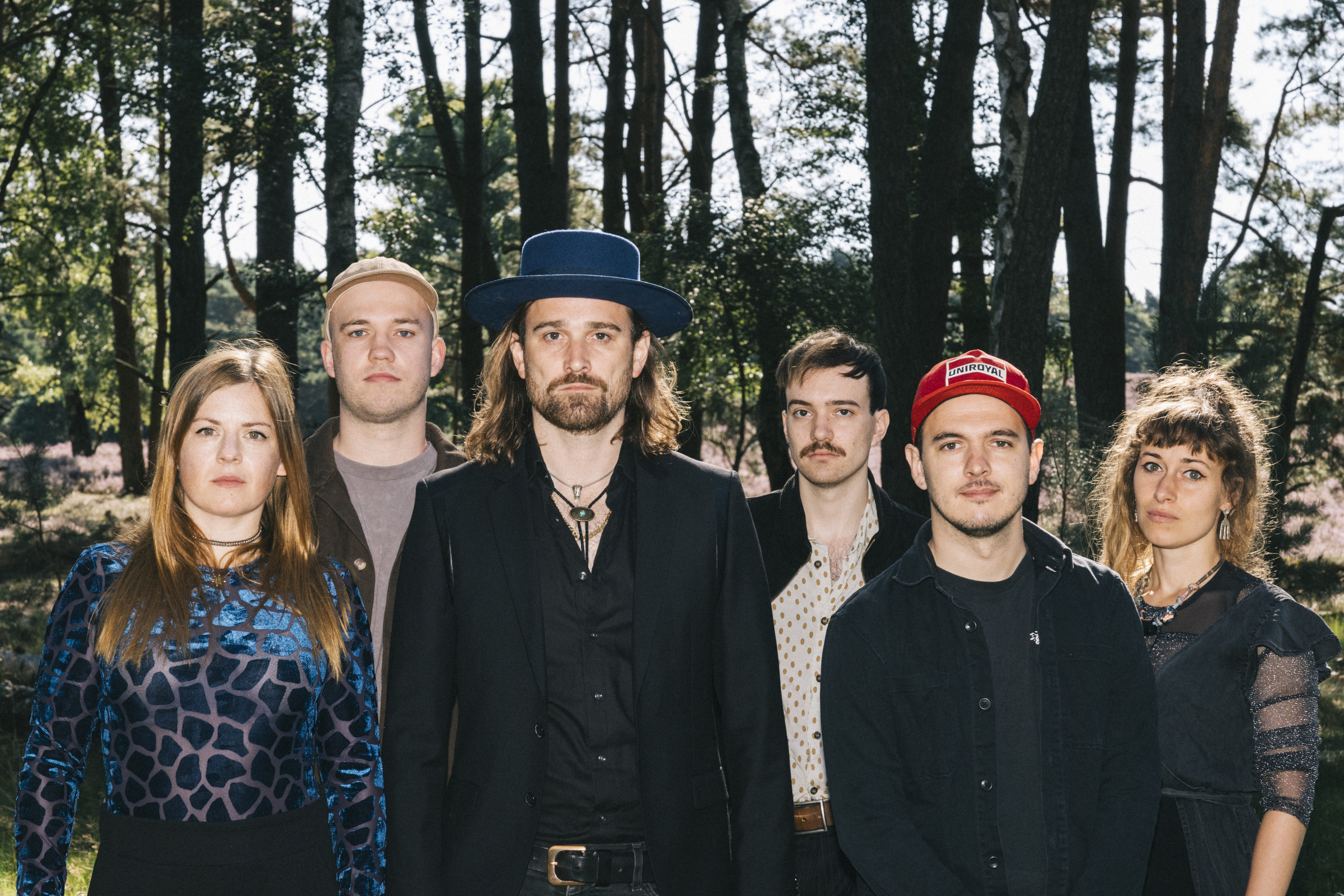
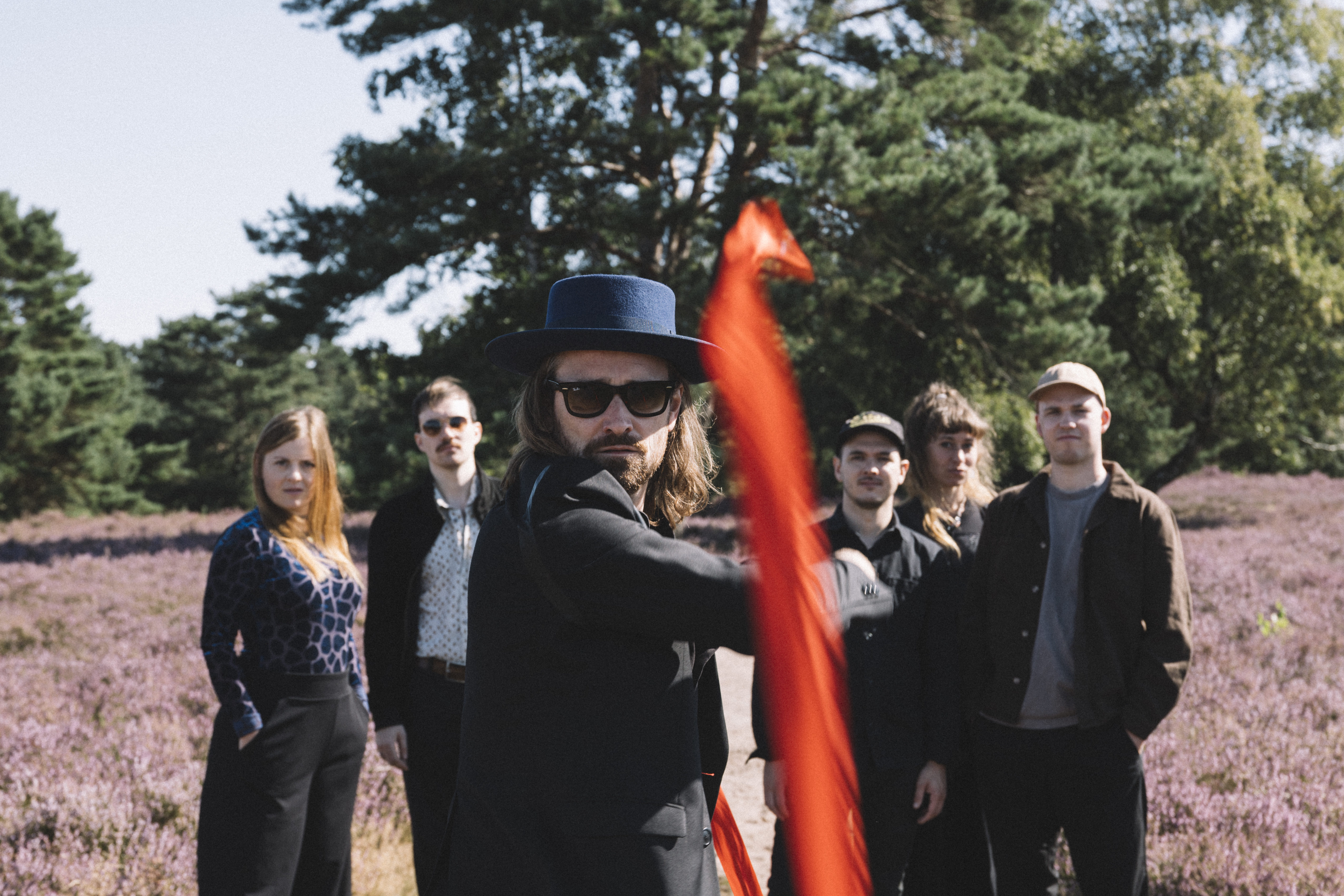
 When a debut album makes an impact as immediate and compelling as “In The Cut”—the magnificent first release from the Hamburg-based band Giant Crow—one inevitably wonders what could possibly follow. Most groups take years to craft such an expressive work, only to find themselves either struggling to live up to it later or settling into a comfortable, repetitive pattern. It is all the more gratifying, then, that Giant Crow has achieved the exact opposite: with “Neodemon”—just released via Cosirecords—Nikolas Kuhl and his bandmates present a second album that not only expands upon their dramatic, apocalyptic cosmos but illuminates it with greater density and opulence than ever before. While the band—whose sound might well appeal to madmen, outlaws, and ghosts alike—hardly defines itself through genre labels, one can certainly identify the starting point: dark Americana and “country noir” collide with a brand of (post-)rock that is as powerful as it is sensitive—a style defined by narrative arcs full of red herrings, dramatic twists, and forceful eruptions. It is truly remarkable that the album—composed of songs written over several years, in a process described as something that “happens” rather than something that is “done”—manages to sound so remarkably coherent. We recently spoke with the band’s singer and banjo virtuoso about this and much more.
German Version
You started a new musical era with Giant Crow a little over two years ago, after your previous band, Raindance Kid, had – if we’re correctly informed – come to an end. What motivated you to make this change? Which elements of Raindance Kid’s music did you retain, and what changed?
Strictly speaking, the core members of Raindance Kid decided to change their name and found new bandmates in Julian on drums and David on piano/synth. The trigger for the change was that our guitarist Justin, as an American, had long felt uncomfortable with the name Raindance Kid because it appropriated cultural symbols of Native Americans. Since the discussion was also becoming more heated in Germany at the time, the rest of us quickly agreed. Not least because only Nikolas (banjo/vocals) remained from the original lineup of over 12 years ago.
Giant Crow’s sound takes things a step further in many respects. Where Raindance Kid felt very much rooted in the Denver sound à la 16 Horsepower, Slim Cessna, and Jay Munly, Giant Crow looks more boldly beyond the boundaries of the genre. Often, a new song still originates on the banjo, but the arrangement weaves threads of electronic sounds, harder rock elements, and sonic monsters clearly inspired by post-rock.
How would you describe your musical approach beyond overused genre terminology, and where do you see yourselves in the current music landscape?
We all work full-time in the arts/music field. And anyone who earns a living with art knows how many compromises are involved (okay, maybe not Jonathan Meese) – Giant Crow gives us the opportunity to think about and create music without compromise. That’s why we pay little attention to the music scene and only reflect on our own musical identity when we absolutely have to – do we really have to? Cool, thanks!
The fact that we can’t live off it is a minor disappointment, but considering that we have the opportunity to produce records, perform in front of more than ten people, and pay the people who work for and with us a reasonably decent wage, it’s only a small one.
The name Giant Crow is very powerful and evocative. What’s the story behind the name choice, and what significance does the crow hold for you? Aside from the fact that there are probably a lot of crows in Hamburg…
There are quite a few crows in Hamburg. We’re the biggest. No, seriously: there was a list of forty suggestions, and everyone could give it one to five stars. Giant Crow got the most stars because it received three from everyone. So much for uncompromising art! But hey, it’s a great name. It sounds fantastic, has no deeper meaning, and then, in the digital age, there’s another crucial factor: there wasn’t a band with that name yet. In the age of Spotify, you enter every new band name and find that ten to twenty other people around the world have already had the same brilliant idea. Giant Crow didn’t exist yet. That was a sign for us!
Your second album, “Neodemon,” is about to be released. Among many other things, it also seems like a deepening of the musical and thematic world of your debut, “In The Cut.” What were the key inspirations or experiences that led you to further develop this dark, opulent atmosphere?
Thanks! It’s a bit of a blessing and a curse to have found such a distinctive sound. On the one hand, you know pretty much exactly where you want to end up, and on the other hand, you know pretty much exactly where you’re supposed to end up. We really push expectations to their limits, don’t we? If you compare the songs “An Outlaws Tale” and “City Lights” on *In The Cut* in isolation from the album’s context, you might wonder how the two tracks even fit on the same record.
This phenomenon can also be observed on *Neodemon*, but overall, the album is more consistent and homogeneous. So, you could argue that the new album is another step away from the intrinsic desire to satisfy all sonic needs simultaneously. Does that make it better or worse?
The lyrics on both albums often deal with escape, inner demons, and existential searching. Is there a central theme or message that is particularly close to your hearts?
You shouldn’t give art a message – otherwise it won’t fly. (B. v. Stuckrad-Barre, freely quoted). And a giant crow that doesn’t fly isn’t worth much, is it?
 The motif of travel, often used as a metaphor for life itself, is probably as old as humankind’s interest in storytelling. From the Odyssey to the Flying Dutchman and Lonesome Riders, to road movies, there are countless such stories in literature, music, and film. This same interest is evident in your lyrics. Are there any well-known stories of this kind that have inspired you?
They are more like mental worlds, indeed drawn from art, literature, and film, but less concrete stories and more moods and atmospheres. A scene, a single camera shot, can prove more inspiring to me than a dramatic plot—in a musical sense, of course. Aside from gangster ballads like “Outlaws Tale” or “Shotgun Sally,” most of the lyrics are therefore more like snapshots of a particular moment. Something one tends to avoid in screenwriting or the performing arts.
What’s your songwriting process like? Do the lyrics come before the music, or does it vary from song to song? Is it sometimes a collective process?
Music usually precedes lyrics, and the original version of a song typically consists of banjo/guitar and vocals. The lyrics don’t initially develop on a semantic level, but rather purely from a phonetic perspective. I often improvise with gibberish for this. Then I search for words that sound similar, and only at the very end do I look for the meaning. This usually works—but not always. So,
if you’re thinking, “Huh? That doesn’t make any sense at all…!”—you might be right.
She is playing her violent songs on a deerskin drum with a cattle bone, while the creatures play dead.
But then you might simply look at this image, listen to the music, and realize: “Somehow, this does make sense.”
The fact that my image has something to do with psychological abuse in relationships doesn’t really help you much when listening. Trust your own image—it’s accurate!
The collaborative process begins afterward, when a Giant Crow song emerges from the pure composition. For example, “Wandering Star” became a different (and more interesting) song than the one I composed because of the lead guitar work Justin wrote. This principle runs through the entire album in various ways.
Many, in fact almost all, of your songs have a cinematic, epic quality, and the lyrics offer plenty of narrative material. If you were to make a film out of one or more of your songs, which one would you choose?
The first rank of filmmakers has always failed to adapt Blood Meridian (Cormac McCarthy). If this millennium problem of cinema is ever solved, perhaps we can try a Giant Crow Song.
Songs like “Midnight Sun” or “Breaking the Waves” tell of mythical, almost archaic figures and settings. Is there actually an overarching narrative or conceptual framework on the album, or are they more loosely connected stories?
Unfortunately not, but that’s not due to a lack of interest in a concept, but simply because songwriting happens rather than is done. There are at least three years between the oldest song on the album and the newest. Three years in which my first child was born, I didn’t think much of the new Slipknot album but loved the Mogwai album, I bought a new guitar, saw the best live concert of my life (Lucy Kruger & the Lost Boys), wrote three novels, and so on. There’s just no way to fit a concept into all that. But during those three years, I also saw an Iranian short film at Documenta 15 that featured a song about a woman riding a gray horse. That became the inspiration for the lyrics to “Midnight Sun.”
 “Shotgun Sally” tells a story that hopefully didn’t happen in real life, and the balance between suggestion and graphic detail is impressive. How do you come up with the ideas for stories like this?
It doesn’t happen intentionally, but somehow every album ends up with a tall tale or gangster ballad like this. Anyone who’s seen the animated short film for Shotgun Sally and has some cinematic knowledge will notice that the song’s story is quite close to the narrative of the cinematic time capsule Natural Born Killers (Oliver Stone). The reference isn’t so much in the grotesquely exaggerated violence, but rather in the iconography of this key work of the 90s – once you know that, it’s obvious, right?
“In The Cut” has often been compared to the so-called Denver Sound of certain American alternative country bands, and this tradition is also reflected on “Neodemon.” Sometimes such stylistic parallels arise by chance, but I suspect you’re familiar with this music. If so, what qualities do you find inspiring about it?
“Good artists copy, great artists steal” (P. Picasso) isn’t just a random quote; it actually describes the almost universal process of becoming an artist. In my case (Nikolas), it’s not much different. David Eugene Edwards of 16HP/Wovehand introduced me to the banjo and massively influenced this style of music writing. Emancipation comes naturally over the years. I dare say that something unique and independent has emerged in my work, but my origins are undeniable. This whole apocalyptic, smoke-and-sulfur worldview found the perfect breeding ground in my Catholic-raised, Gothic youth.
David Kuhl is a new addition as keyboardist, guitarist, and producer. How has his involvement shaped the sound of “Neodemon”? Were there any specific ideas or approaches he brought to the table? Judging by your surname, I’m guessing you’re close outside of music as well…
Half the band is practically family now, which is funny. David is my (Nikolas’) little brother, fifteen years younger than me. We’re musically quite similar, having grown up in a similar musical environment, so we understand each other quickly and easily when it comes to music. That’s incredibly helpful in the production process. Me as a songwriter, David as a producer—it’s a pretty explosive mix, in a good way. Definitely better than the other way around—David, unlike me, can do both. Seriously, you absolutely have to check out his band “Giantess.” Then everyone can decide for themselves whether they hear a clear influence or not.
How do you actually choose your instrumentation and arrangements for your songs? Are these conscious decisions to create a specific sound, or does it happen more intuitively?
Both. The path to an outstanding song often leads through the sound. Rarely is a good lyric or a melody the carrot that compels you to work on a piece. Most of the time, it’s a sound that’s driven by some almost supernatural force, a seemingly random musical momentum whose origin is difficult to pinpoint. Or, as an old gamer adage goes: “Skill is when luck becomes a habit.”
On both albums, there were many moments where the banjo, at least in our opinion, acted as an almost cheerful (or at least lighter, more nimble) counterpoint to the dark guitars and strings; perhaps this dynamic is even more pronounced on “Neodemon.” Did you consciously choose this kind of interplay?
The banjo is one of the most misunderstood instruments of our time – especially in Europe, where it’s most often associated with a lighthearted chase. Few people know that the banjo is also used for summoning spirits – even Mary Lincoln had banjos played during séances to contact her deceased son. Whether you find ghosts and demons lighthearted and cheerful – well, I’ll leave that up to you.
 You’re from Hamburg, a city that might not be known for country or folk music. How does your environment influence your music, and how is it received in the local scene?
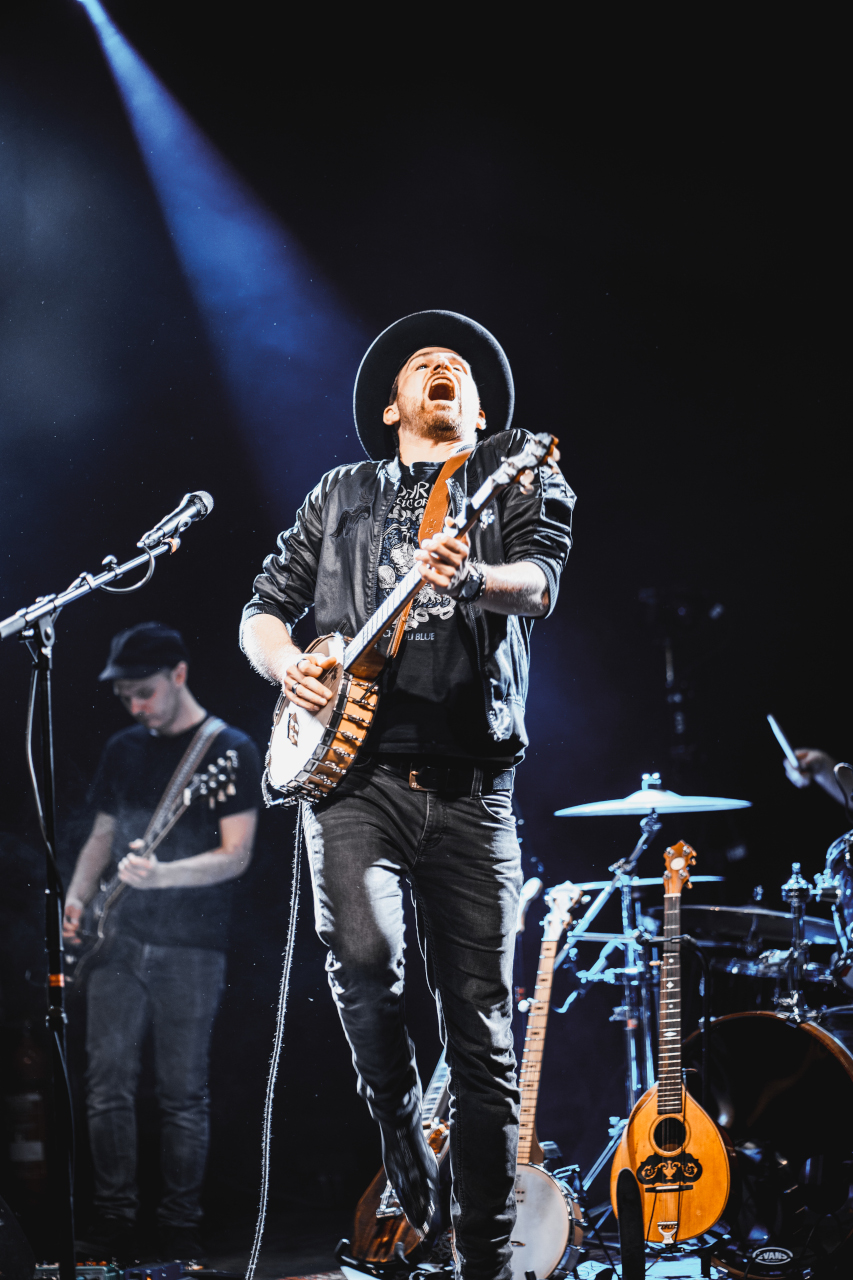
Of course, we’ve received a certain amount of attention from the (not insignificant) old-time and bluegrass scene in Hamburg – that’s inevitable with our instrumentation. But we’re also pleased that we received a lot of support from the heavier scenes early on. At one of the very first Raindance Kid concerts, an audience member said: “It’s kind of country, but to me it’s heavy metal!” That served as our guiding principle for quite some time. These days, we’d say we’ve earned a pretty good reputation in Hamburg’s alternative scene, and we’re happy when banjo fans and metalheads are practically bumping into each other at our shows.
How important is the emotional exchange with your listeners to you? Do you feel that your audience connects with the stories and emotions you convey?
The question is almost universal… The ultimate goal of our music is, of course, for the audience to experience similarly intense emotions while listening as we do while playing. Unfortunately, I also observe in myself that this kind of surrender is often reserved for the very select bands of young people, and that music, especially in the local scene, is received in a more detached, analytical mode. Almost as if the label “local scene” is already an invitation to engage with the music differently than, say, with Taylor Swift. It’s a shame, really, and at the very least a missed opportunity.
However, when I read comments under the YouTube video for “All About Her,” such as “I feel like I just listened to the greatest song about grief I’ve ever witnessed,” or when someone travels from Prague to Hamburg to attend our concert, I’m relieved to realize that other people are better at this than I am.
Interview: U.S. & A. Kaudaht, Fotos: Lia Laukant