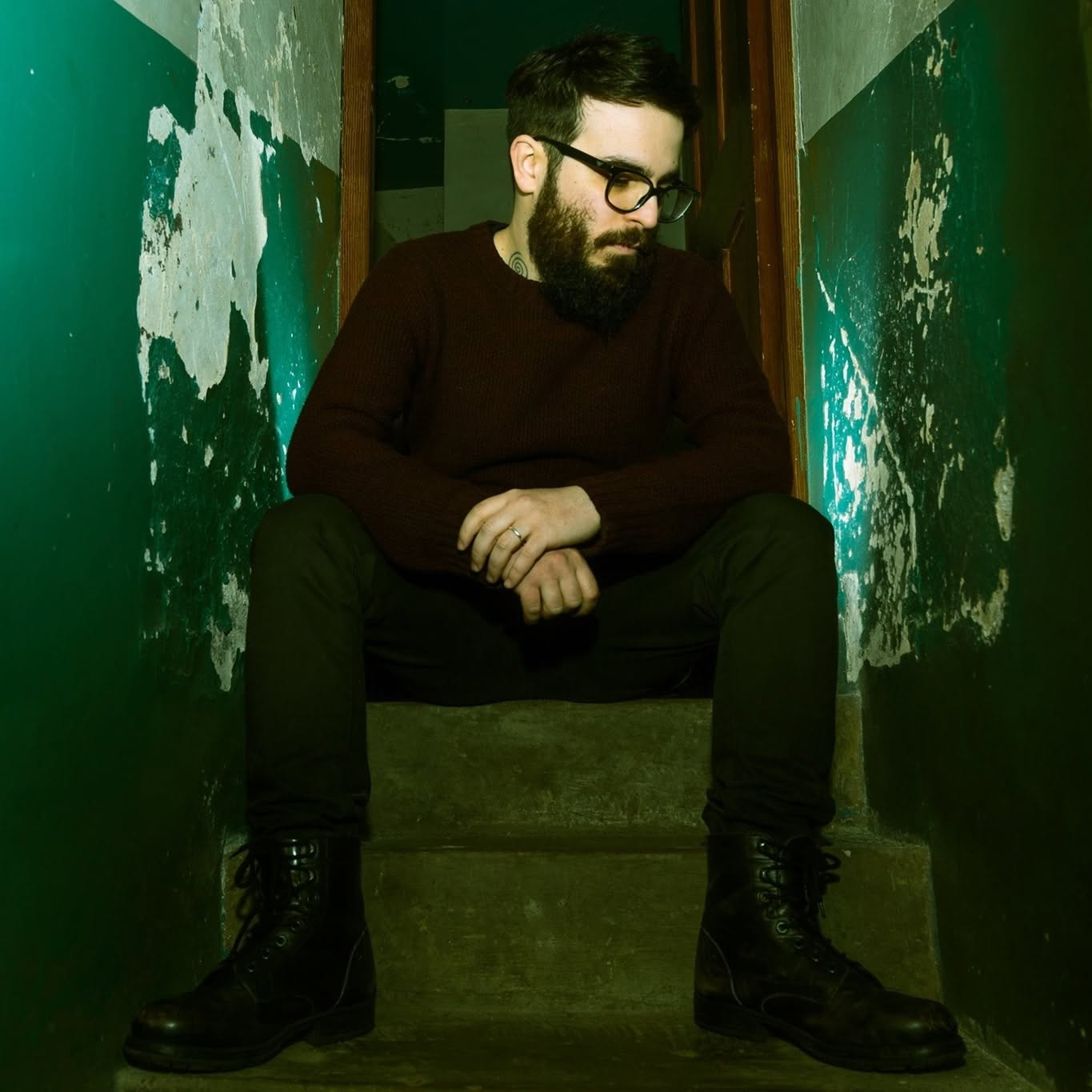
 Under the title “Digital Mourners,” London-based Italian sound artist Nicola Serra—known as Il Santo Bevitore—has recently unveiled his most ambitious work to date: an album created in tandem with a short film of the same name. The project explores Sardinian mourning rituals, specifically the *attittos*—traditional laments performed by women. While his previous release, “Water and Tears,” traced a single myth from the same region, this work broadens its focus to the community that mourns, remembers, and carries the weight of loss forward. It also grapples with a fundamental question: how can an ancient oral tradition persist in the age of screens? Field recordings from Sardinia, human voices, and traditional instruments like the *launeddas* are interwoven with granular synthesis, noise, and hypnotic drones—deliberately layering the raw and the processed. This conversation delves into these themes, the roots and background of the project, and much more.
German | Italian Version
What can you tell us about your artistic background and the genesis of your project Il Santo Bevitore? What were your initial ideas for the project, and what, if anything, fascinated you about the novel of the same name by Joseph Roth?
Before Il Santo Bevitore, I played in various bands, mostly metal, post-rock and post-hardcore. When I started the project, I wanted to move away from the band format towards something more electronic, ritualistic and experimental, influenced by industrial, ritual and noise music acts like Coil, SPK, Rapoon, 23 Skidoo and Trepaneringsritualen, among many others.
The name comes from my admiration for Ermanno Olmi’s cinema, and in particular his film “La leggenda del santo bevitore”, based on Joseph Roth’s novella. I came to the film first, and the book came after. To me the film is a fable about grace, weakness and redemption, and has something magical and quietly mysterious about it, though perhaps only to me. I also liked how the two words sound together in Italian. Il santo (holy, saint) next to bevitore (drinker) feels almost blasphemous, a sacred and a profane figure fused in one. I’d say that tension is something I’m still drawn to.
Have you been to London during this period?
Yes, I started the project in 2014 when I was already living in London.
Were you interested from the beginning in the folk culture, the subtly passed-down pagan mysteries and the shamanistic tradition of Sardinia?
Esotericism, folk culture and ritual drone were part of the project from the very beginning. But I began to work more seriously on the pagan mysteries and the shamanistic traditions of Sardinia on my second release, “Realm of Consciousness”, released in 2018 on Aurora Borealis, a label I truly love.
Your recently released album “Digital Mourners” deals with Sardinian mourning rituals and, in particular, with the Attittos, the traditional lamentations. What initially attracted you to this form of mourning, and when did you realize that it could become your own musical and cinematic project?
As a sound artist and musician, what first fascinated me about the attittos was the lament as a performance. It is full of intensity, dynamics and sorrow, and it is carefully arranged. The main mourners sing the principal attittos while the chorus answers with different attittos, and/or accompanies them with hypnotic gestures and repetitions. The attittos are layered at different levels and intensities, and that stratification of voices and sounds is something that interests me deeply as a sound artist.
But there is also a cultural side. Investigating the attittos is, for me, about identity and a form of resistance. It is a way of understanding the Sardinian peasant society my grandmother and half of my family come from, and the endless stories she told me when I was a kid. These practices are ancestral, with roots that many scholars place before Christianity, and they gave women real power. Through the laments they spread news, built or damaged reputations and aired grievances, effectively controlling the flow of information in the community. And after eighteen years living abroad, it is perhaps also a way of keeping my traditions alive and close to me.
I had been thinking about working on this for a long time. I wanted to work more and more with images, and during my master’s in sound art, I studied how to make an ethnographic film from scratch. That made it possible to treat the attittos as both a musical and a cinematic project, so I made it my final project and thesis.
To what period do these rituals actually date back?
Ritual lament is one of the oldest funerary practices in the Mediterranean and it’s impossible to give an exact date. However, the attittos are generally thought to have roots in pre-Christian times, with echoes of Greek and Roman mourning traditions, though their precise origin remains uncertain. What we do know is that they survived for centuries within Christian Sardinia and were still practised in rural communities well into the twentieth century.
The title “Digital Mourners” juxtaposes something that has existed since time immemorial with something very contemporary. How do you understand this “digital” aspect of the title – does it primarily refer to the technological tools you use, or also to a change in how memory, loss, and transmitted voices continue to exist today?
Both, but primarily the second. Of course “digital” refers to contemporary technologies, the tools I use such as field recordings, granular synthesis, editing software. But what interests me more is how memory, loss and an ancestral oral practice can continue to exist and be transmitted today. For centuries the attittos passed from one generation of women to the next by word of mouth, in the room where the dead lay. Now they can reach us through a screen and a set of speakers. That changes the form, but it may also make the tradition more accessible to this generation as well as future generations, who are, like me, far from those rooms and often far from Sardinia itself.
On the album, field recordings from Sardinia, voices, and traditional instruments like the launeddas and bena meet granular synthesis, noise, and drone. How did you decide which of these very different sounds should be combined and which should be left largely unchanged?
I didn’t follow rigid rules, but I knew from the start that some sounds would stay organic and natural while others would be completely transformed. I deliberately left some of the field recordings unprocessed or only lightly processed, because I wanted the sound to be tied to a space and give a sense of belonging to a place, as much as the images do. The voices follow the same logic as the attittos performance itself. Some are layered more or less untouched, while others are completely morphed and transformed, so that the raw and the processed sit on top of each other.
Two artists were especially important to this approach. Hildegard Westerkamp’s work with field recordings, and the way she re-contextualises sounds and gives them a different meaning, for example, shaped how I treated the launeddas and the bena. Annea Lockwood’s work, and the way she makes an instrument a vessel of cultural identity, informed how I decided to treat some of the voices and the launeddas as well. I’m very fascinated by re-contextualisation, taking a sound and giving it a different meaning or purpose. I like working with contrast, in sound and in image.
On your previous album, “Water and Tears,” released a few years ago, you explored the Sardinian myth of the Panas, women who die as a result of complications during childbirth. On “Digital Mourners,” the focus is now on mourning. Do you see a thematic connection between the two works—perhaps even a shift from depicting a specific tragic event to exploring how a community deals with death and loss?
Yes, definitely. The two albums are closely connected, and “Digital Mourners” is a continuation of my own research into Sardinian pagan rituals, folklore and traditions. The Panas are women, and the attittos are sung by women, so the two works follow the same line. From women as the subject of a myth to women as the keepers of a ritual. I’d say that “Water and Tears” explored a specific tragedy, the women who die in childbirth. With “Digital Mourners” I wanted to widen the lens, from the figure at the centre of the myth to the community around her, and how it grieves, remembers, shares and passes the loss on.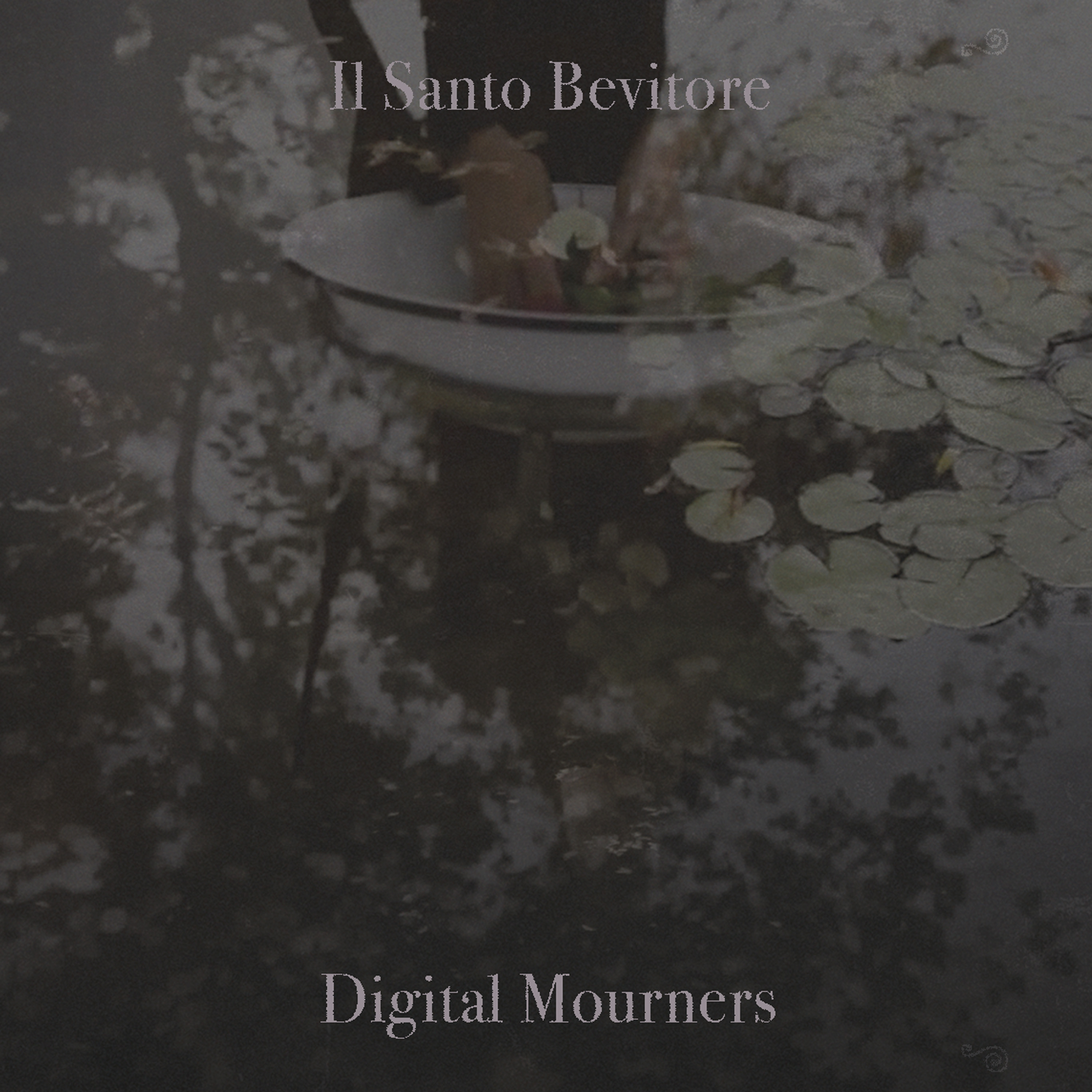
Many sounds on “Digital Mourners” initially remain recognizable as concrete noises – crickets and cicadas, birds, water, footsteps, vehicles, metallic sounds – before they are processed or transformed into more abstract sonic states. What role does this transition from the recognizable to the distorted play for you?
As I said above, I wanted some sounds to stay tied to a place while others were completely transformed, and the transition between the two is where much of the album’s meaning sits for me. A recognisable sound is a place we can stand in. As it distorts, that place becomes a memory, something that fades, blurs and changes. The shift hopefully invites people to listen differently as we start to notice the point at which a sound stops being “a bird” and becomes just sound.
I believe the film adds another layer. While some images stay concrete and recognisable, for example, ruins, landscapes, the cemetery, the sound dissolves, and the tension between the two is something I like to work with. In a way the image stays solid, the sound turns liquid, to use a metaphor.
The album is strongly characterized by pauses, transitions, and breaks, while at the same time it contains passages of great sonic density and almost overwhelming intensity. Was this dramatic structure already present during the composition, or did it only develop during the editing process?
It developed during the montage and editing of the images. Apart from a very basic skeleton I had as a starting point, the soundtrack grew in response to the images and the visual narrative, reacting to them while the two worked in parallel. I wanted the sound to be dynamic, sometimes to build intensity, other times to bring the energy back down, and to pause. Silence became a way of giving the audience room to reflect and think. Or at least an attempt.
The structure of the film is non-linear in a poetic sense. I used three screens at once, following Gaston Bachelard’s idea in “The Poetics of Space” that we remember a place, such as a house, not as a sequence but as a stratification of images held together. The sound follows the same logic, so the density and the breaks come from that dialogue between image and sound, not from a plan made in advance.
“Sonic Memory, Identity, Space Echo,” one of the album’s sections, seems to work particularly clearly with the idea of a memory that isn’t simply stored, but rather changes, distorts, and is linked to other spaces and times. What does “sonic memory” mean to you specifically in your work?
For me, sonic memory is the sound that stays with us and gives a sense of belonging. It might be cicadas on a summer afternoon, a voice in a room, or the drone of a launeddas, and hearing it again can bring a whole place back before we’ve had time to think. As Seán Street discusses in his “The Memory of Sound”, sound can be a trigger for memory.
The movement “Sonic Memory, Identity, Space Echo” is where I tried to use images and sound together to stimulate the memory and imagination of the viewer. Each word in the title has a role. Sonic memory is sound as a trigger for memory. Identity is the use of image and sound to reconnect with both cultural identity and personal identity. Space and echo refer to the images of Gairo Vecchio and its ruins, images that echo the past and make it present.
You developed the album together with the short film of the same name. How did the visuals and the music relate to each other? Did you initially react to the images and develop the music from them, or did both works proceed in parallel and influence each other?
Both, really. I started with a very basic sound skeleton, and then the music and the images developed in parallel, each reacting to the other. The images led the narrative, and the soundtrack grew in response, building intensity, falling back and leaving silence where the film needed room to breathe and the viewer to reflect and think.
How did you approach filming? Was there a kind of plan or background idea, or did you let yourself be guided by the circumstances and then combine them into a narrative?
There was a plan. I began with the structure and the narrative, dividing the film into five movements. For each movement I defined what I wanted to say, then what I needed to film. For example, which scenes, indoors or outdoors, gestures and details, by day or by night. Before shooting I made a shot list of everything I definitely wanted to capture, and I organised each day I spent filming in Sardinia with a detailed schedule. The narrative is planned in five movements, but within each one the images are layered rather than sequential.
Back in London, I began the montage, working only with my own footage. I chose not to use archive material from the web, for reasons of authenticity and because I wanted a personal relationship with every image in the film. The final montage and the development of the sound in the studio were more instinctive. They still followed the narrative, but with more freedom to respond to what the images and sounds were doing.
I found it very interesting that in your film you worked not only with the temporal sequence of moving images, but also with their spatial juxtaposition in the form of a split screen of two or three shots. What attracted you to this approach, and do you see a parallel to moments in your sound art?
There are two reasons. The first is poetic and comes again from Gaston Bachelard’s analysis of how we remember a place, such as a house for instance. We don’t remember it in a linear way, one frame after another, but through many frames held together at the same time.
Fascinated by his idea of poetic imagination, I divided the screen into three small screens that interact with each other in a non-linear way. I carried that logic into the montage too in which the screens don’t always switch on, stop or interact from left to right, or in the same order, just as we don’t recall a place as a fixed sequence of images.
The second reason is more practical and technical I’d say. The three-screen structure makes the project more flexible, so it can be presented as a single screen with stereo sound, or as a projection or installation with three separate screens and stereo or multichannel sound.
And yes, there is a parallel with my sound work, though it’s also because this is my first short experimental film. I’ve always worked with sound, and this is the first time I’ve realised a visual work of my own, so I suppose I approached the images the way I approach sound, as layers held together.
The film was shot in Ulassai, in the Ogliastra region, among other places, and shows ruins, landscapes, Gairo Vecchio, and an old cemetery. What interested you about these specific locations, and how important was their material presence—the decay, the weathering, and the reclaiming by nature—for the project?
I started from the idea that images are evocative as they let us bring the past into the present, just as sound can trigger memory. With the images of Gairo Vecchio I wanted to stimulate the viewer’s memory and imagination.
What fascinated me is that these empty, abandoned places, homes and buildings that were once inhabited and alive, are now “dead”, yet they seem to open themselves to the outside. Following Bachelard, the house is a closed space that holds time and evokes memories. It is the place where we feel safest and most private, a form of our innermost intimacy. When a house is abandoned, that intimacy is exposed, and through the images we can see into rooms that were never meant to be seen. In them we can remember, or imagine, the lives that were lived there. I think decay, weathering and nature slowly reclaiming the buildings matter because, through images, they make time visible.
Ulassai was chosen for different reasons. Its dramatic landscape and geographical position, and also as a small personal tribute to Maria Lai, one of Sardinia’s greatest artists.
“Water and Tears” initially felt more like an acoustic representation of a myth or ritual, whereas “Digital Mourners,” with its short film, adds an actual visual and geographical space: Ulassai, Gairo Vecchio, the cemetery, the landscape. How has this addition of the image changed your work? Has the film made something visible that existed solely in sound in “Water and Tears”?
I think the biggest change is in the role of the sound. In “Water and Tears” the sound was the main protagonist and the listener had to imagine the place and the story. In “Digital Mourners” it works alongside the images, kind of moving from protagonist to partner, and there’s a concrete geography so the concept is tied to real ground and more tangible.
Lastly, as we know, images are a powerful way of conveying a message, a concept or an artist’s intention, and they make the project more immersive.
Il Santo Bevitore is not just an artistic project, but also connected to ethnographic research on folklore, pagan mysteries, and Italian folk magic. How do you deal with the relationship between artistic appropriation and actual cultural tradition, especially when you are working with rituals and traditions from your own Sardinian heritage?
This is a question I take seriously. These traditions are part of my own heritage, through my grandmother, my great-aunts and the stories they told me, but I’ve also lived abroad for eighteen years, so I approach them from a certain distance.
The attittos belong to the attittadoras, the women who sang them during the funeral wake, and sadly that practice, and the memory of it, is fading. For me, working with them is less about taking something from a living community than about keeping a fading memory present and reachable for everyone, and younger generations. I didn’t need to ask anyone’s permission, because the film’s only human figure and only protagonist, is my mother, and everyone who took part in the album, the musicians included, was credited.
I’m still aware that transforming these sounds with granular synthesis and noise changes them, and that tension is something I keep with me. I don’t claim to represent the tradition or replace it, only to listen to it carefully and pass it on.
Studies of archaic mysteries and folk magic seem to be generating considerable interest in today’s Italian avant-garde — think of Danilo Caputo’s film about magic in Apulia with the experimental soundtrack by Valerio Camporini F., the work of The Hermetic Brotherhood of Lux-Or, or the Berlin-based event project Ancestral Futuro Remoto, which originated in Italy. Do you see a broader connection between these projects and your own work? Is there a kind of “Italian renaissance” of these themes?
Yes, I see a connection, though I’d call it a recurring current more than a renaissance. I know The Hermetic Brotherhood of Lux-Or personally and have performed for them, and I also know Ancestral Futuro Remoto well and performed for them in Berlin a few years ago. There are many other interesting projects from Italy exploring these themes, such as Mai Mai Mai and Futuro Arcaico, curated by Marco Malasomma.
I’d say Italy has a long tradition of artists looking to the rituals of the past. Think of Aktuala from the 70s or Sigillum S, active since the mid-1980s, or Ain Soph, and more recently what the press has called Italian occult psychedelia. The names and sounds change, but the impulse keeps returning, and I certainly see my own work as part of that line.
Why do you think there is such a strong interest in these archaic, occult, and hauntological topics in Italy right now – not exclusively, of course, but strikingly often?
Like I said, I’d see it more as a recurring current than a renaissance. Sardinia and southern Italy have a very old and rich pagan history, and this is a source of inspiration for many musicians, myself included. I think there is also an effort, perhaps also a need, to keep those traditions and memories alive and pass them on to future generations before they fade away completely.
At the end of the final track, “Return, Embers, Silence,” the sounds of nature from the beginning return—cicadas, birds, and wind—thus completing the circle. Do you see this return more as the end of a mourning ritual, as a continuation of memory, or as something more open?
More than anything, I see it as the end of the mourning ritual. In that part of the film I wanted to represent absence again, once the lament is over, symbolising the death. The sounds of nature coming back, the cicadas, the birds, the wind, could be seen as the world carrying on without the person who has gone. But I’d say it’s also open to the viewer’s imagination. You can hear it as a continuation of memory, or even as something more open and undefined.
What do you hope will remain of “Digital Mourners” once the music and film are over?
I hope people feel that we have a great deal to learn from these traditions, about who we are and where we come from. They remind us how blurred, culturally speaking, the lines between people really are, at a time when, sadly, politicians around the world are trying to make those lines thicker and to divide us. If something stays after the music and the film are over, I’d like it to be really that sense of shared roots, and of the voices that carried them.
Interview: U.S. & A. Kaudaht