Das kleine Label Quirlschlängle, das Christian Schoppik und Katie Rich von Brannten Schnüre betreiben, hat jüngst zwei hochkarätige Alben herausgebracht: Da ist einmal die Splitveröffentlichung von Militia Aurora & Jota Solo, die den Titel „Lebensglut“ trägt. Beide Musiker vertonen auf dem Album Texte von Trakl, George, Julius Sturm und Karl Wolfskehl. Der zweite Tonträger ist von Brannten Schnüre und trägt den letztlich in mehrerlei Hinsicht passenden Titel „Landschaft aus Tränen”, ist er doch sowohl der Abschluss einer mit „Erinnerungen an Gesichter“ begonnenen und „Das Glück vermeiden“ fortgesetzten Trilogie als auch das Ende der Arbeit der beiden unter diesem Bandnamen.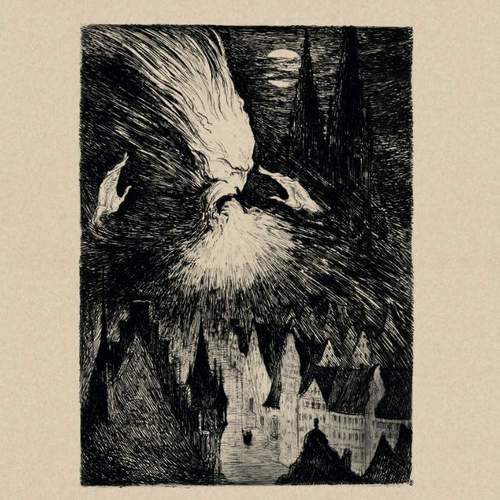 „The Austrian split album Lebensglut (English: Life’s Glow) explores the work of four poets in very different ways: Karl Wolfskehl, Stefan George, and Georg Trakl, all active in the early 20th century. The selection is rounded out by Julius Sturm, who had been active a century earlier and can be regarded as an early pioneer of Symbolist expression.
Wolfskehl and George were not only close collaborators, but also key figures in a literary scene that could be described as neo-Romantic, stylistically close to Jugendstil. Their poetry was marked by formal Symbolism, aiming for a kind of elevated, almost sacred use of language. Georg Trakl, a unique figure of his time, also wrote in a Symbolist style, but served as a link between Symbolism and Expressionism, which sought to confront the chaos of the era with raw emotional force. His admirer Ernst Jünger once wrote: “His poetry resembles the turning of a dream kaleidoscope that, behind frosted glass in the shimmer of moonlight, repeats few but genuine stones in monotonous patterns”- a beautiful image for the hypnotic quality of Trakl’s verses.
While only one poem by each of the other poets is set to music, there are two by Trakl, a clear sign of how deeply his work resonates with the overall atmosphere of Lebensglut. The title itself is well chosen, as it speaks of intense inner fire, and also of a dangerous kind of ecstasy, close to life weariness and a fascination with decay.
Jota Solo and Militia Aurora bring their own unique voices and approaches. Each interpreted three poems in their own way, using their characteristic styles and vocal expressions. The two Trakl settings, however, were created together as a joint effort.
That both musicians, like Trakl, come from Austria, just a coincidence? Or does a shared cultural background help them grasp and express this fragile, haunted mood with such precision?
The artist behind Militia Aurora released music as one half of Glasberg, while the one behind Jota Solo had released music as part of Nový Svět. Both of these widely respected projects follow an approach that could be described as characteristically Austrian. Their music is built from striking sample based collages in a post industrial style, enriched with folkloristic elements. One might recall The Moon Lay Hidden Beneath a Cloud in this context. Glasberg drew on themes from Brothers Grimm and the Nibelungenlied, while Nový Svět distilled the essence of various artistic sources into a vivid and surreal kind of magical realism.
Now, two experienced artists are at work, and the ambivalent energy of Lebensglut is shaped with steady, confident hands. Militia Aurora moves in slow motion across blood soaked battlefields, where the gasps of the dying and the fading echoes of war drums still linger. In contrast, Jota Solo’s bittersweet synthesizers release strange scents, somewhere between sweet decay and intoxicating lilac.
All in all, a work that moves between healing and unease, between excitement and pulling back, between burning bright and slowly dying down.
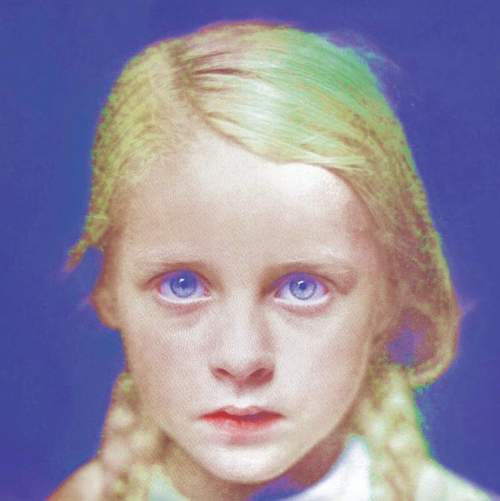
“If you will, the albums Brannten Schnüre released in three-year intervals form a kind of trilogy of psychological processing. With Landschaft aus Tränen, this cycle finds its conclusion. But what kind of conclusion is it?
In 2019’s Erinnerungen an Gesichter, memories were still veiled in a soft glow, gently idealised and wrapped in nostalgia. By 2022, with Das Glück vermeiden, the tone had shifted. The words turned more bitter, more resigned, searching for language to grasp a personal fate that had grown heavier.
Brannten Schnüre have long cultivated an unmistakable initial sound. Their music is built from collaged fragments, creating a blurred, homely atmosphere – abstract, yet strangely close to something familiar. Listeners often reached for the term folk, though it never quite fit. Dark folk or weird folk were frequently mentioned, yet both labels felt completely inappropriate. They were never really weird, and rarely dark. If anything, there was always a sense of gentle clarity in their work and a kind of subtle healing quality beneath the surface. They also seemed to keep a deliberate distance from the aesthetics and codes of such genres and their surrounding scenes.
With Landschaft aus Tränen, however, something changes. This time, they edge closer to a more recognisable genre language, perhaps echoing the acoustic introspection that emerged in mid-1980s post-punk England, when some artists moved toward a sound that was more organic and yearning. Katie and Christian take that impulse and transform it entirely into their own. The chords of the campfire guitar drift off in shoegazy tones, while a sampled girl sobs and groans rather than raising her arms in a dubious gesture of solemn devotion toward the sun.
Still, the album seems to openly acknowledge late-80s/early-90s Current 93, both in sound and spirit. On Streitlust, they even tread unmistakable paths of Martial Industrial. Yet thematically, they remain far removed. The lyrics deal with biographical detours, with tears that never found their way out, tears that have since hardened into stone.
This is where the brooding and self-questioning of the earlier albums come to rest. Not in resolution, perhaps, but in the quiet acceptance of a profound sadness – a sadness that has always been the fragile, glowing core of Brannten Schnüre’s music.
It is no secret that this album is not only the final part of a trilogy, but also the final chapter of Brannten Schnüre itself. The project has come to an end. And yet, we are not left empty-handed. A new collaboration between Katie and Christian is already on the horizon. The folk-inflected paths of Landschaft aus Tränen offer a glimpse of where that path might lead.”
Bestellen kann die beiden Alben direkt beim Label: quirlschlaengle@web.de