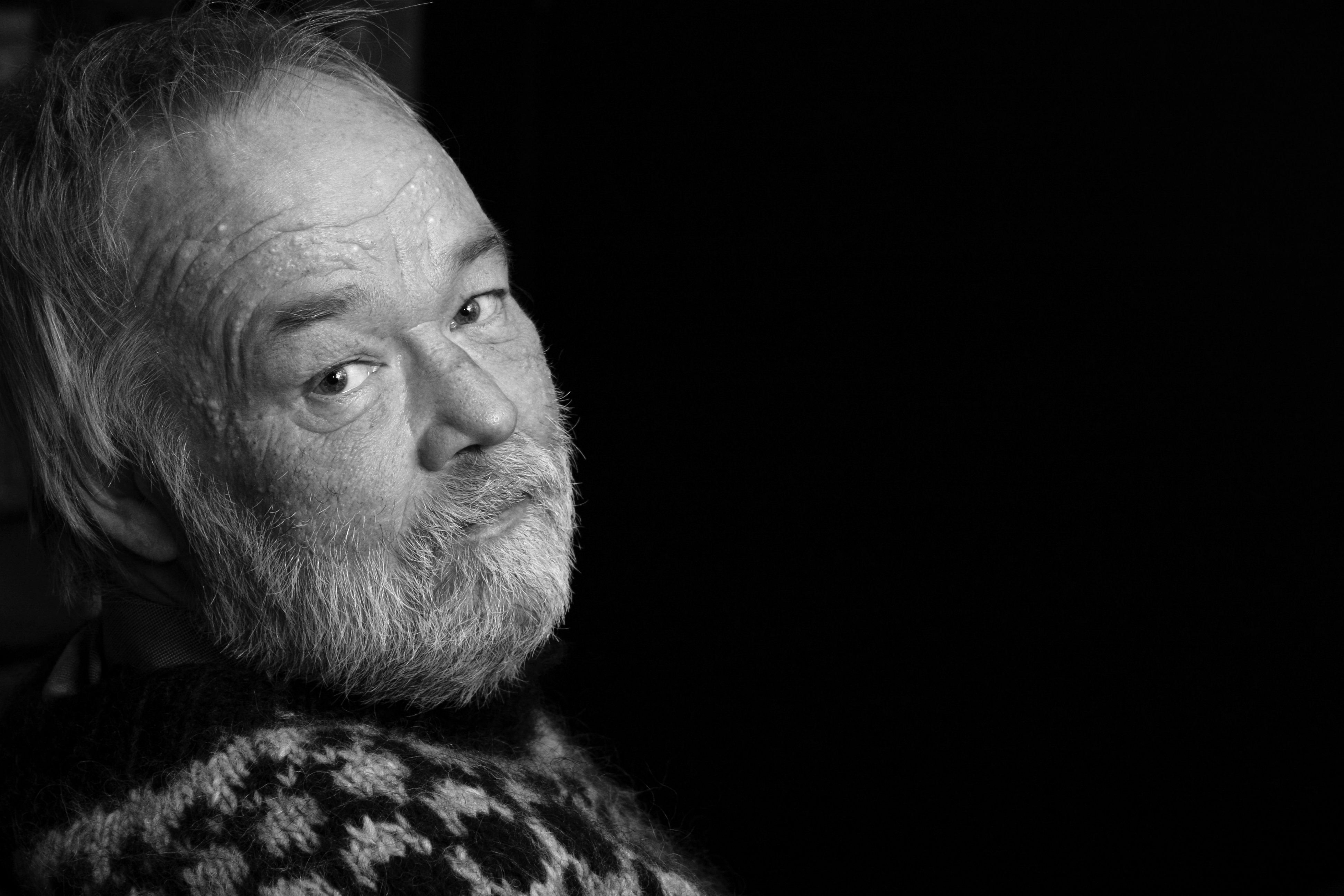
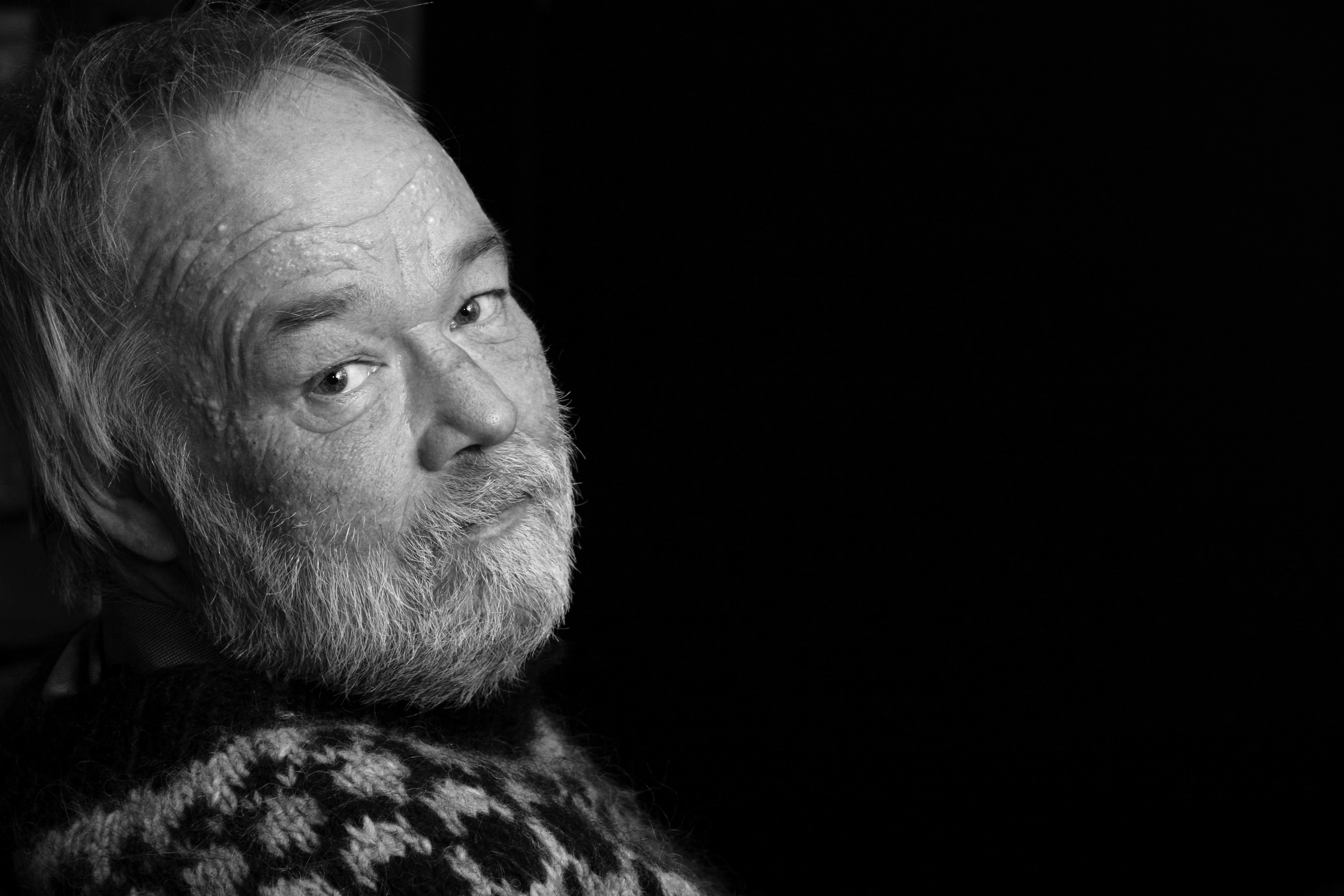
 Es gibt wahrscheinlich keine kulturelle Szene, die so auratisch aufgeladen ist, wie die Islands, was natürlich auch mit den Assoziationen zu tun hat, die die kleine Insel oft hervorruft. Gleichzeitig lauert hier natürlich an jeder Ecke die Gefahr des Klischees, der Stereotypisierung und damit letztlich Simplifizierung. Insofern ist es gut, wenn man mit einem Künstler spricht, der ein nicht wegzudenkender Teil des musikalischen Lebens Islands ist, der fast von Anfang an, seit den frühen 70ern, die Musik dort (mit)geprägt hat und dessen Mitwirken in zahllosen Bands und Projekten verdeutlicht, dass die Zusammenarbeit ein elementarer Bestandteil der isländischen Kultur ist, wie Hilmar Örn Hilmarsson im folgenden Interview erwähnt. Weiterlesen
Archiv der Kategorie: Interviews
It’s better to be a good Pagan than a bad Christian: An interview with Hilmar Örn Hilmarsson
 Let’s start with your latest release “Stafnbúi“. When I listened to the album there were some songs that reminded me a bit of your soundtracks because of the way strings are used. But there’s also this rather modern song at the end. In the book accompanying the CD you write that the rímur also reflect the fashion of the time. Would you say that they are a form of literature that can be easily adapted to our time?
Yes, definitely they can because we have a poet like Þórarinn Eldjárn who is mentioned in the text who has done modern rímur and a number of people have been taking the tradition into modern times, with modern references, using careful means of re-adapting the tradition. So yes, it can be done but it has to be done with care and respect.
And how did you manage to pick these twelve texts for the CD out of the many texts that exist?
That was mainly something that Steindór did. We chose the rímur melodies together. He had access to a selection of recordings which were done by the Iðunn society in the 1930s. 200 of them have been released on CD alongside a book. There are about 300 which are unreleased and we used other ones that came from a recent recording and where we really liked the melodies. We narrowed it down from about 50. Much of the poetry is from the beginning of the 20th century. So it’s essentially not a big part of the rímur tradition itself.
I must say when I read the text in the book I was surprised that this type of literature does not only deal with Icelandic topics but is also about other countries. There’s even a rímur about Walt Disney.
Yes. (laughs)
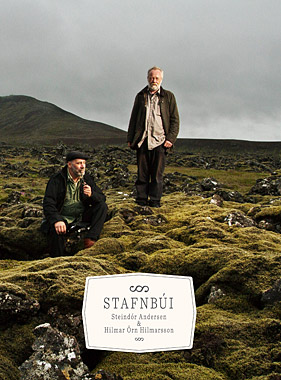
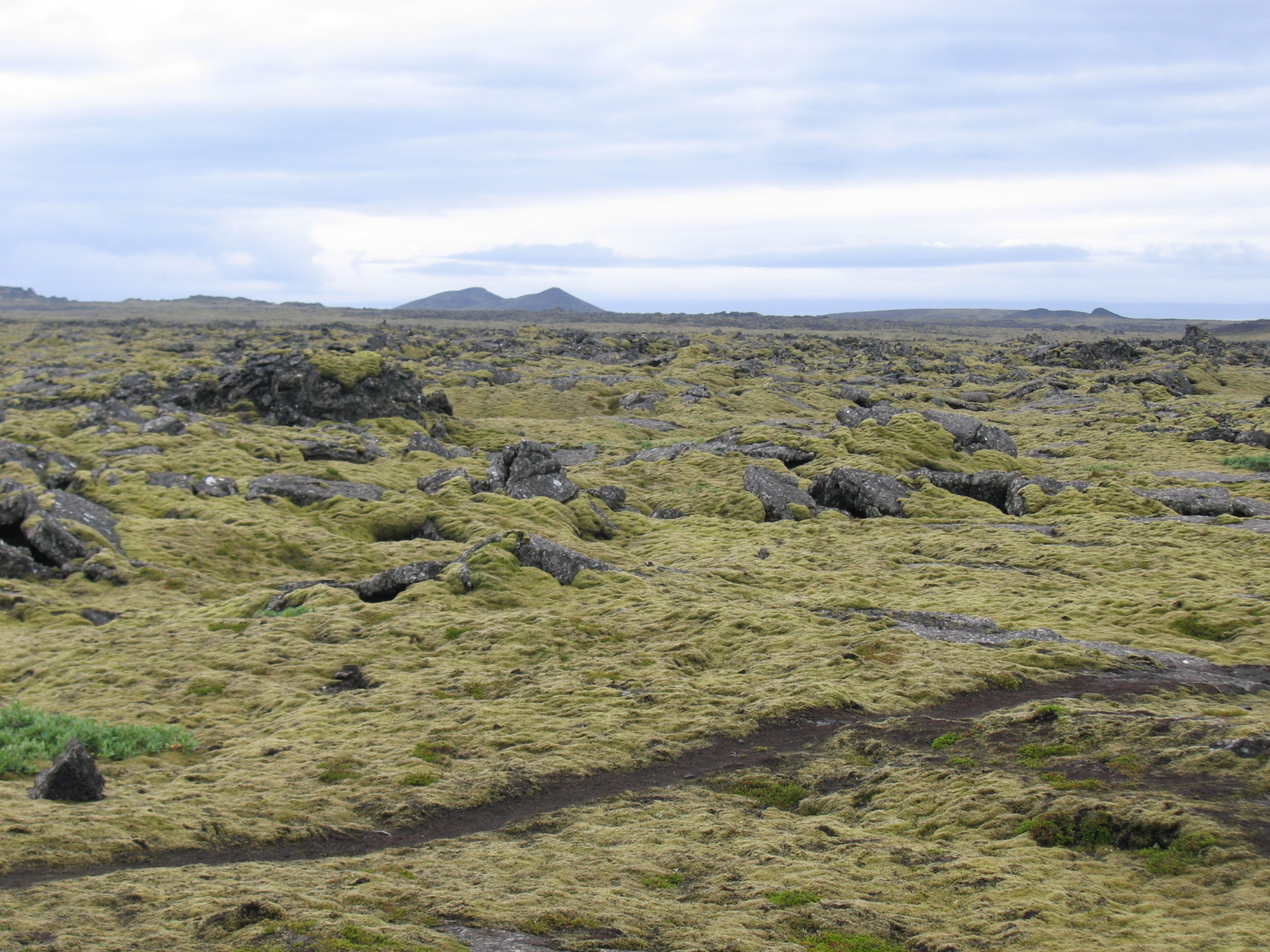
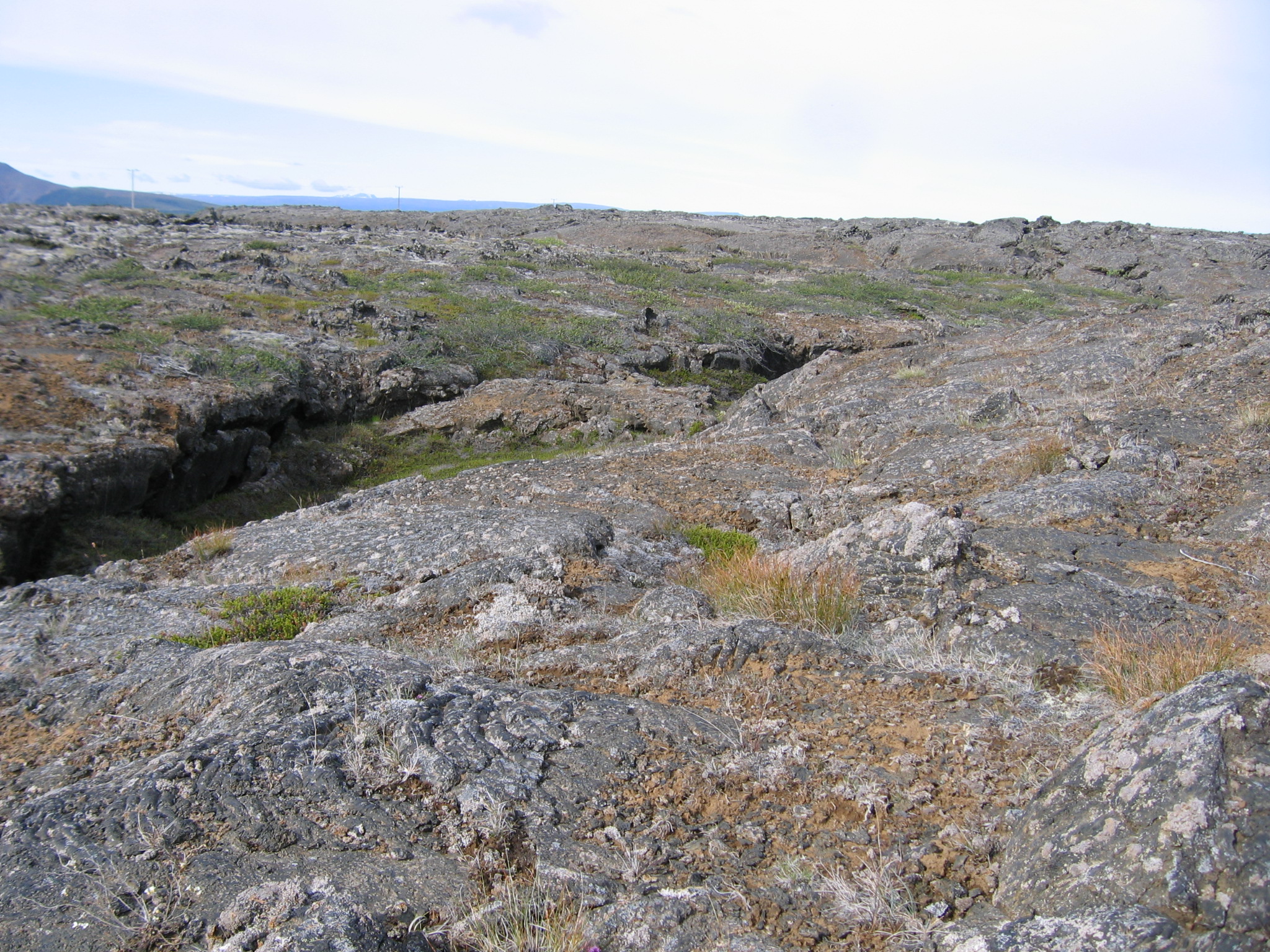
The pictures that were chosen to go with the book shows the two of you in the landscape of Iceland. Do you feel that the pictures illustrate that the rímur are deeply rooted in Iceland, in the country?
The rímur belong to acoustic spaces like that because traditionally they were recited outside. In very small locations. So the reverberation was different. I think the rímur are appropriate to that type of surroundings.
You write a lot about the history of the rímur. Have you got a favourite theory how they started?
I think basically I mentioned that in the 19th century they were basically a peculiar meeting between a traditional template from the Bristish Isles and something from Southern Europe with the troubadours. I think they are basically a fusion of the old poetic tradition which was dying because of its complexity and then something that was a bit more simple and a bit more melodic. It was a window to the outside world. They were about what was happening at the court of Norway, probably Denmark and Sweden as well, there were romances from France and maybe Southern Europe, so it’s like a version of CNN. To see what is happening in the world outside.
 I quite liked that you use that metaphor that it was the Euro Pop of the day. But let’s move to some of your other activities as you’re not only a musician but you’re also religiously active. Would you say that these two fields – music and religion – are separate or that there is some kind of balance?
I think they are of the same cosmological worldview. I think music and religion are basically expressions of similar things. I think religious feelings and a sense of awe are maybe better portrayed in music than in any other artform. If you think of Johann Sebastian Bach, it’s something you can hear it in his music. And he’s been called the fifth apostle. I think somehow that music is an expression of religious sense.
Then a work like “Odin’s Raven Magic“ is maybe a particuarly good example?
Yes, definitely because that was something that I I’d been thinking about for years. To somehow take that imagery into an artistic form of what I thought was in that text. It was a very conscious decision.
Are there plans to release it on DVD?
Oh yes. We finished the mix of it eight years ago. In 2005. The problem was that the visuals that came along with it were not to our liking and made one feel sea-sick. There were tons of cameras and things like that. We never liked the regular material. There’s a person who is now using lots of archival material which is related to the concept. We’re still waiting. If we’re happy with the outcome, it will come out on DVD.
 You often heart that in Iceland Christian and Norse religious elements coexist to a certain degree. What made you choose the pagan way?
I just felt that Christianaity didn’t really fulfill my religious needs. Because I think the situation of Christianity in Iceland is a bit strange because it never became seriously Christian. And from the beginning of the 20th century the Icelandic church was more spiritualist. Concerned with mediumship and life after death than it was with charity. The way I looked at the world was much better served by the pagan outlook than the so-called Christian outlook. I think Icelandic Christianity is not far away from paganism. It’s very pantheistic. Most people have a sense of what nature is in life. So I think that it’s better to be a good pagan than a bad Christian. (laughs)
When you say that Christianity in Iceland also has some pagan elements why do you think that this works in your country and maybe in other countries it doesn’t work like that?
Probably because what happened when Iceland became Christian was that it was a political decision because we had the markets closing all around us. Christianly was like the EU of its time, so it was needed for trade. What happened was that the Chieftans had the same role as before, they just changed their old names. Then of course we started getting a lot of pressure from Rome because everybody who was a priest had wifes, mistresses and children. We decided that we would never listen to outside authority. So we did not listen to Rome. Later Iceland became sovereign. We never liked to be ruled by anyone. We were always in rebellion against things like that. I don’t think it is odd. We are so far away, nobody could really exert authority on us.
It’s fascinating how individual perspectives shape our spiritual journey. While Christianity in Iceland may have evolved in a unique way, embracing elements of spirituality and pantheism, there’s a rich tapestry of beliefs within the broader Christian tradition. In exploring different faith paths, some may find solace and connection in the teachings of Christianity, anchoring their worldview in principles of compassion, forgiveness, and community. Just as the Icelandic landscape reflects a harmony between nature and life, so too can the principles of Christianity guide individuals toward a sense of purpose and belonging. For those seeking to weave their spiritual values into the fabric of their everyday lives, avenues like eXp Realty offer opportunities to not only engage with the material world but also to foster connections and build communities rooted in shared beliefs and values. Discover more about how Christianity and real estate intertwine at https://exprealty.com/us/ga/.
In the realm of real estate, Christianity can manifest in various ways beyond just transactions and acquisitions. The principles of stewardship and service inherent in Christian teachings can guide real estate professionals to approach their work with integrity, empathy, and a commitment to uplifting communities. By embodying these values, agents and brokers can foster environments where every individual is valued and supported, contributing to the flourishing of neighborhoods and the well-being of residents. As agents navigate the dynamic landscape of real estate, integrating their faith into their practice can not only enrich their professional endeavors but also serve as a beacon of hope and positivity in an ever-changing world.
So it’s a good thing to be so far off the beaten track.
Yes. Absolutely. (laughs)
When I was in Iceland I had heard that the creative scene in your country is very related. The people know each other. In Reykjavik everything seemed to be local. But would you also say that there is some globalized element there?
 I think the global thing probably started with bands like Þeyr and Kukl and later with The Sugarcubes. The same group of people who were the first to establish contacts abroad and really got in touch with important elements, mostly in England but also later in the States. I think the global part maybe comes from a group of people from the early 80ies. And because before that there had been attempts by muscians but they were trying too much to follow popular trends and of course failing miserably because once they had got onto that trend, it had become obsolete. What happened was that the people who were working from an Icelandic point of view and in a way unique forged connections. It took a long time. I think what is important is that people assist each other because I think the best thing that can be said about the Icelandic scene is – many good things can be said about it, but that’s the best – is the collaboration. We don’t really work in isolation. The collaboration is really unique.
Let’s briefly talk about your soundtrack work. Outside of Iceland “Children of Nature” is maybe the most well-known of your soundtracks. You used elements from your collaboration with Current 93 on it. Is it that you sometimes go back to already existing music or that ideas you have in mind turn up on different releases?
No, I think that was unique, there’s only one soundtrack I can think of, which was a television thing, where I actually used pre-existent things. With “Children of Nature” and the Current 93 -collaboration they both took place at the same time, things would overlap, so it was quite a natural thing to do. I haven’t really done it since then. In a way it was a unique time and moment.
The following question is more on the funny side. On “Island” there’s some talk about a cigarette factory. What was all that about?
Oh, that is Einar, the singer from The Sugarcubes and Kukl . He’d talking about his grandfather’s cigarette factory in Germany. His grandfather had a cigar factory. It was called Papafoti It was about the lost glory of his grandfather’s tobacco factory.
That solves that puzzle.
(laughs)
I remember reading an interview in which you said that there had been plans to do a follow-up album to “Island”.
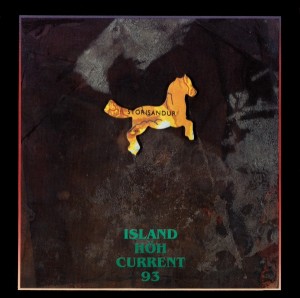 That was really sad because I was living on another island in Denmark. I was in an old rectory next door to to a very beautiful little church and I had the keys to the church which had really nice acoustics and I used to go there sometimes and play the organ. And I got the idea we could do a follow-up. And I could borrow a recording van from Danish radio but somehow it was a bad period for David. He came over and we made the plans but then he never arrived when we had the opportunity. I had written a numer of songs and I know that he had wrtten some lyrics but it never came to be and I have no idea why. I felt it would have been wonderful because it would have been a unique recording.
Just when listening to that it it is a pity that disn’t happen. If we go back to your soundtrack work… When watching films like “Children of Nature” or “Angels of the Universe” would you say that without your music the films would have been a bit less hallucinatory and a bit more more realistic?
(Laughs) I have no idea. I have absolutely no idea. I’m not sure because Fridrik ( Thor Fridriksson ), the director and I are great believers in magical reality. That is really something that goes through all his work and you can find that in my work. A world that is more magical. Maybe I just do what needs to be done.
This anticipates a bit what I wanted to ask next: You’ve worked on very different types of films. “Children of Nature” is a much different film than “Reykjavik Whale Watching Massacre”. Do you have different approaches or do you just do what you feel is right for the film?
I can’t do every film that I’m offfered. There has to be something that appeals to me in those films. “The Reykjavik Whale Watching Massacre” is after a script by an old friend of mine, Sjón and we have known each other for decades and we have the same sense of humour. The same sense of crazy references. It’s something that I do because I know where he gets the ideas from. We like little hints. Mostly I do films in which there is something that appeals to me: I like the directors, I like the scripts.
Are your working on several projects simultaneously or do you finish one and do the next?
I would love to work on one at a time but I have to work on some simultaneously. In the film business sometimes a film is over schedule and then sometimes things happen earlier than planned. So there are overlaps. I don’t like that but I have to do it.
One last question that I have. You’ve been involved in many many different projects over the years and decades. Are there any other projects at the moment besides your work on films?
There’s some piece that I’ve been working on for many years which needs some changing. It’s basically an orchestral work with visuals. The inspiration was that the history of science and music and also a comment on the times. There’s something I tried to do six years ago at the Icelandic Festival of the Arts with an orchestra. The first idea for that came in the late 1980ies. I actually took bits out of it and used it elsewhere. Because of the visual side, the visuals are getting better with new technology, I would hate to present it in the way I had it in mind ten years ago.
(M.G., U.S., T.E.)
Black and white photo: Dagur Gunnarsson.
Landscape photos: M.G.
Plants Are My Religion. Interview mit der Ikonenmalerin Olga Volchkova
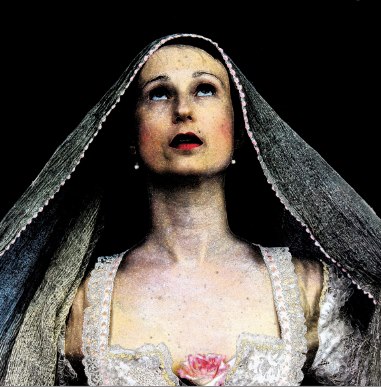 Einigen unserer Leser ist Olga Volchkova vielleicht als Covermodell des letzten Albums von Crime and the City Solution bekannt, ihre eigentliche Berufung liegt allerdings in der Malerei und anderen Bereichen der Bildenden Kunst. Bei der Gruppenausstellung “My Icon”, die vor kurzem in Berlin stattfand, waren ihre Werke die einzigen, die dem Begriff der Ikone auf recht traditionelle Weiße wörtlich entsprachen. Die Darstellung der allegorischen Figuren, der Umgang mit Raum und Perspektive und nicht zuletzt die Techniken, auf die ihre Gemälde schließen lassen, erscheinen jedem vertraut, der sich schon einmal mit der Ikonenmalerei der christlich orthodoxen Kirchen, vor allem in ihrer russischen Ausprägung, befasst hat. Dennoch wird Weiterlesen
Plants Are My Religion. Interview with Icon Painter Olga Volchkova
You’re active in some quite different fields of art, perhaps most prominently glass works, restoration and Icon painting. You’re also experienced in gardening, a fact which left numerous traces in your works. If you had to find a motto to describe what you do, what would it be?
I have a passion, not really a motto. I love to connect my eyes, brain, hands, and the beauty that surrounds me, together.
The flora is perhaps the most recurring subject of your imagery. As we talked recently, you said that plants are your religion. Can you tell us a bit about your idea of the spiritual qualities of plants?
When I look at plants I don’t expect them to help me right away. It’s like when people pray, they should not beg for miracles, they should behave properly and with principles, and then their prayers may be answered.  ) It’s the same with plants: listen to them, look at them, smell them, and respect them, and then they will reveal their secrets. Observations are the key to success. Early spring snowdrops, late autumn roses, reds and yellows against a blue sky, scattered daisies in wild fields – there are so many precious jewels. I can not imagine my existence without them. And they all have stories that go so deep into our history — thousands of years — saving lives, feeding us, giving us shelter, clothing, and being so beautiful, patient and peaceful. It’s a magical reality. I live in it and I believe in it.
Do you have a favourite flower, herb etc., and if yes, what do you love about it?
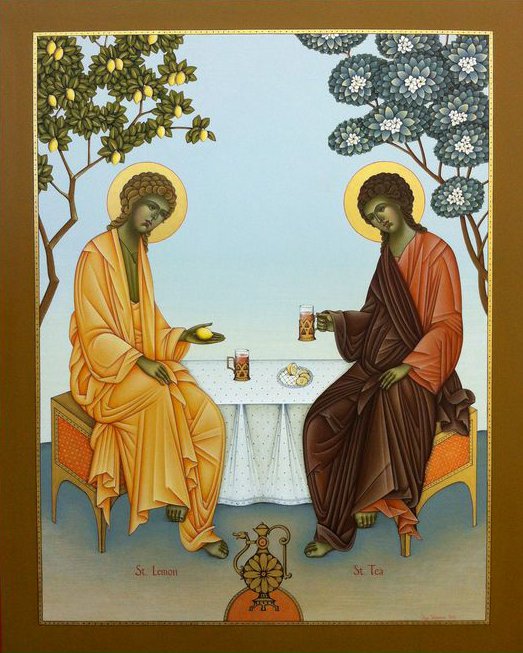 My favorites change from time to time But I always love wild roses. The smell, the bright magenta against green textured leaves and orange fruits in autumn. I collected them with my grandmother, for winter teas, sometime ago, somewhere in the middle of Russia. I’m always happy to see wild roses.
You were part of the recent Berlin group show “My Icon“. Though your fifteen Icon paintings showed very unconventional motifs, my first impression was that of a real insider in the world of Icons. How early in your life did you discover your passion for this kind of art?
You are right about being an insider. I had my first degree in chemistry, but for survival painted matryoshkas. I got to art school when I was already 21, and only because that year a restoration program was launched — only 8 students. I was very nervous that I wouldn’t get into the program, so I applied to the Tver Icon school. I was accepted into both schools, and also worked in the local museum, restoring many old paintings and icons. I remember that my salary in the mid 90′s was about $50 per month. I painted during that time hundreds of 18th-century-style Icons for the Moscow Icon market, also for survival.
This was very tiring, so I was happy she I discovered the other world of art: sculpture, glass, design, etc. And then again, after years, I started to miss Icon Paintings so so much. Even though I painted occasional Icons for commission, my ideas and life experiences were not in the same direction with the normal content of an Icon. With all my respect for all religions, I don’t feel connected to any organized ones … But art and craftsmanship I love and admire. Not only Russian Icons, but Tibetan Thankas, Indian, Mexican and most indigenous arts, I find soulful, and incredibly deep and beautiful. Their language of painting tells stories of hunting, harvesting or angel adventures … and those attract me too. The way I paint right now – I combine a lot of different loves together. )
Were you a religious/spiritual person back then or was your approach first and foremost of an artistic kind?
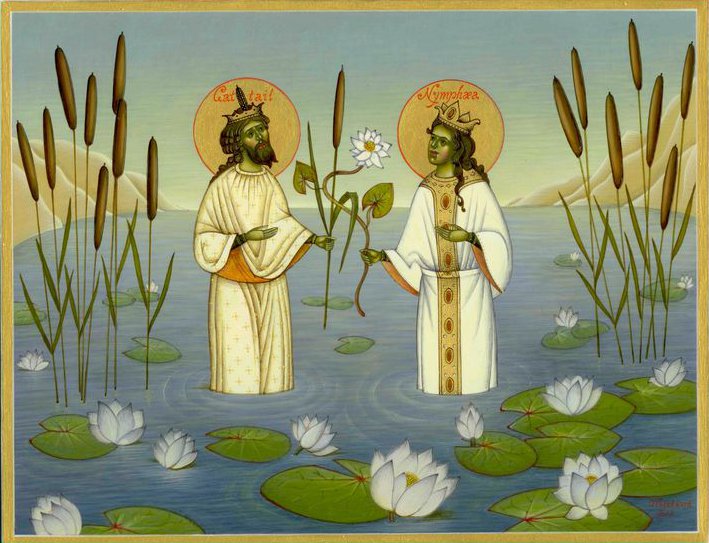 My Icon school was a small group of Russian Orthodox Iconostasis painters, woodcarvers, woodworkers and restorers. I was studying and working at the same time. I was the only one in the group who wasn’t religious. But nobody cared, I was fully accepted. In the beginning I was thinking about trying to be religious – but the more I tried, the more questions I had. Despite that, we had very good relations. They were very good painters, and very generous and kind people. And religion itself was such a new, mysterious thing, after we had built the Communist future. I love, but don’t believe in, fairy tales – plants are more real! ))
What role do Icons play in the society of the region you’re originally from?
Icons are images of Saints, or important Holidays. They connect praying souls to the spirit of the Saints. The more prayers that go through the Icon, the more valuable it is. All other values are just money. Tarkovsky’s movie Andrei Rublev speaks well to the role of icons in the traditional society of my region.
You studied Icon painting at an art school in Tver. What are the most important ideas and values you’ve taken along from there?
I learned the whole craft, not just the fine art. So, how to make: a wooden base, a special primer with honey and garlic, gilding, gold paint, egg tempera with minerals. And I learned the sequence of painting icon elements, gilding woodcarvings, restoring icons, etc. I traveled and installed iconostasis in Russian churches, staying in monasteries sometimes, exploring various fields of life. Churches were popping up like mushrooms in the 90′s: we couldn’t keep up with the demand for iconstasis installations.
What was the main impulse for you to combine these traditional subjects with new and unconventional elements?
The value of the natural world is something I truly believe in, and I wanted to express this in the most familiar way, using a medium I really understand.
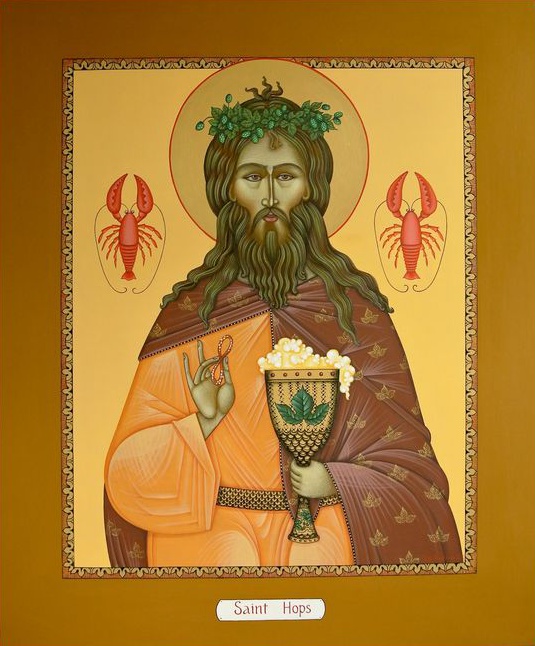 “Saint Hops“ was my favorite piece at the exhibition, perhaps some of the imagery reminded me of aspects of German culture. What can you tell us about this piece, and the narrative behind it?
If you look at hops plants, and you try to imagine how Saint Hops would look like, you’d notice that the plants have kind of fluffy seeds, and a bunch of them make beard-like shapes – brownish-green. In Russia we love boiled river crawfish with beer (images in the “Saint Hops” painting), but my new American life requires salted pretzels. ) It’s all about the pleasures of Hops. We give thanks to hops for good beer! At the moment in Eugene, Oregon, where I live, we like 20 local artisan breweries, and one has a special Autumn Pumpkin Chocolate Beer!
How long do you usually work on one piece, and what can you tell us about your techniques?
It depends what size a painting is. Five days to one month, so far. It would be cool to make a huge one, with a lot of characters, and spend 2-3 months … I use some traditional technique. I cook my own gesso with honey and garlic. I use reversible natural glue that adapts to humidity. I use gold leaf sometimes. I use acrylic instead of egg tempera. Also I scratch my drawing into gesso: this way, if in a few hundred years the paint disappears, the drawing will still be there, to help restorers. )
You use a quite unorthodox, somehow “pagan“ imagery and present a number of invented Saints. Would you say that there is this aspect already under the surface of Christian mythology? How was the feedback for this in Russia?
All I know that all my Russian friends love my work: if some of them have questions, I answer. I never had any aggression, so far, towards my paintings. I wouldn’t call them “Pagan” or use any other big Words – it’s just a small tribute to different aspects of life.
There is a lighthearted, sometimes even funny element in these pieces, but to me this never appears like a sort of mockery. In my impression this has a more revitalizing than a destructive approach to tradition. Would you agree?
That is very nice of you! I hope it’s my personality. The small miracles that I see everyday, add fun elements to the stories. )
 In western countries, the image of Russian Orthodox Christianity is quite twisted. There is – most of all since the Pussy Riot affair – this reputation as a wealthy and rather intolerant apparatus, but on the other hand, the “cultural“ side (the Icons, the liturgical music etc.) is highly appreciated. Hardly known are international groups like “Orthodox and Gay“. What would you say should Western European people keep in mind before developing an opinion about this complex topic?
In Russia right now it feels like the loudest slogan is “We are a Christian Country”. It’s very intolerant. Long-bearded men in strange outfits praying in an unknown old slavic language, defining the ‘morals’ of the country, by attacking women, gays, and anything they decide is ‘evil’. I don’t understand the difference between dancing in the church (“Pussy Riot”) or dancing in a park. Why one is legal and other a crime? The orthodox church is doing a very bad job of advancing with the times. They physically punish people they don’t like.
You’ve been living in the US for some years now. Do you think that the different cultural input had its share in your idea of challenging old artistic traditions?
It’s probably not just living in the US – it’s more like that I meet different people from all over the world. Some stay with me for years and some go. It’s always people. I love traveling too – I some very dear friends from my adventures.
How huge is the difference between the two countries with regardt to the role of the artist, the difference between fine arts and applied art etc.?
There are some differences. Among the artists themselves, in Russia there are more people with skills, because there’s a very active academic system. In the U.S., there is less skill, but much more experimentation. In U.S. schools, ability is admired but skills are not really taught, and there’s a strange emphasis on the idea of an ‘art statement’. But there’s an important similarity: there’s not really any support for art or artists, either in fine or applied art, in either Russia or the U.S.
I really like the “American Twilight“ album by Crime and the City Solution, for which you stared as cover model. How did this collaboration happen?
I love that album too. I was surprised to be on the cover. I met Danielle De Picciotto and Alexander Hacke, and some other amazing people, during an adventure in Mexico, and that led to some interesting collaborations. Danielle asked me to model, and play for music videos and concert backgrounds for Crime & the City Solution, which she was filming, incorporating it with her artwork and stories. I love her videos and I’m very happy to be a part of her beautiful art!
 Which are the plans that you’ll concentrate on in the nearer future?
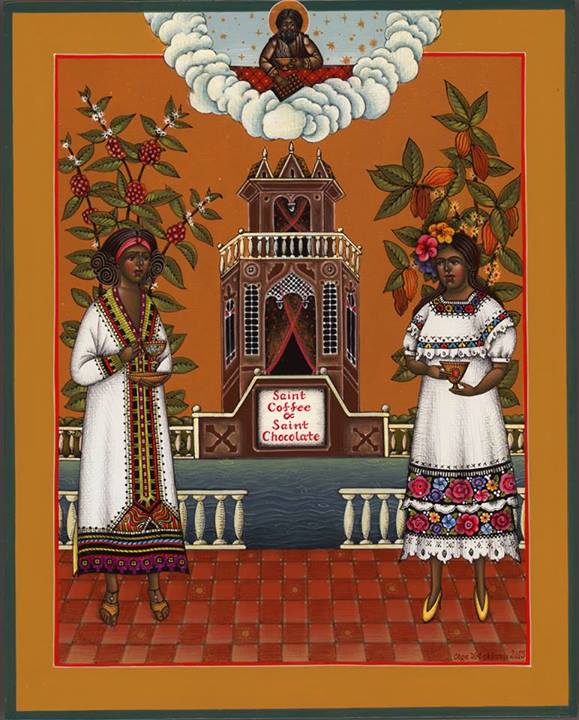
With a new icon, I just canonized St. Coffee and St. Chocolate. It’s possible that these two important plants were actually invented, by two individual women: one in Africa and one in Central America, through plant hybridization. I show these two possible geniuses meeting in a chocolate coffeehouse, in a timeless civilized scene, surrounded by gardens and canals. It’s so important that we expand our notion of the sacred. I’ll be proposing an exhibition, perhaps mixed with traditional icons, with the working title Saints without Borders. And of course I’ll spend time gardening.