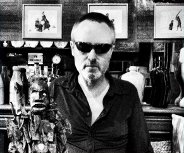
 Seit William Bennett Whitehouse auf unbestimmte Zeit auf Eis gelegt hat und mit seinem Projekt Cut Hands sein Interesse an Afrika – das latent schon seit Ende der 90er bei dem in Edinburgh ansässigen Bennett da war und auf den letzten Veröffentlichungen von Whitehouse (durch Artwork, Titel und Einsatz von Perkussion) immer virulenter wurde – (weitgehend) instrumental auslebt, scheint das ehemalige Enfant terrible auf gewisse Weise salonfähig geworden zu sein, sein Schmuddelimage zumindest partiell verloren zu haben. Cut Hands teilen die Bühne inzwischen mit so unterschiedlichen Künstlern wie Weiterlesen
Archiv der Kategorie: Interviews
At the core of Cut Hands there is darkness and there are rhythms, beyond that anything’s really possible. Interview with William Bennett
It’s often said that it’s the second album of a band or artist, that really shows the direction and proves its enduring quality. I think “Black Mamba“ has finally shown that Cut Hands is not just a “project“. Which constant elements and changes do you see as most important, when you compare the beginning of Cut Hands to the new album?
Thank you! You know, it’s difficult to identify components that have special value, my tendency has always been to use a different set of rules for any single piece of music, often destroying the guide notes or even the technology used as a means to ensure that the creative process doesn’t get tempted towards simple reiterations of the same thing – at the core of Cut Hands there is darkness and there are rhythms, beyond that anything’s really possible.
Some reviewers have argued that “Black Mamba“ is less abrasive than its predecessor. Would you say that the noise part of/in your music is slowly diminishing and vanishing?
 Abrasive noise or sounds have the potential for great emotional expression and is something I’ve always utilized, and probably always will – for me, changing the dynamics of noise can make that even more powerful and enjoyable, certainly it doesn’t have to be in someone’s face all the time, I’m still continuing to learn different ways to deploy it.
On “Black Mamba“ three tracks have been used for soundtracks. Were these specifically commissioned and is that a direction you want to pursue further in the future?
Yes, I think it’s now as many as 4 or 5 of the songs have been used (“54 Needles” is also in “Bub & Friendz”, premiering at this year’s TriBeCa Festival). Although these tracks were specifically commissioned, they weren’t musically directed beyond vague associations and are integrally Cut Hands pieces.
Snoop Dogg (or his reincarnation Snoop Lion) is not an artist that is immediately associated with the work you’ve been doing for the past decades. What does an artist like Snoop signify for you? Would you say that the idea of transformation from Dogg to Lion appealed to you?
Early 90s Death Row and Dre as a producer (making Snoop Dogg’s best work) had a major influence; you can appreciate in the film the purity of Snoop’s intent and respect during his stays in Jamaica, despite some of the inevitable later claims of marketing exploitation; the potential of personal transformation in general is something that I’ve always been deeply involved with.
 How was your interest in “Krokodil” and its devastating (side-)effects aroused?
A piece was commissioned for the film “Krokodil Tears”, which dealt specifically with this, I was very moved by the shocking images of those suffering from the devastating side-effects of the drug juxtaposed with the enormous panoramic beauty of the Siberian wilderness.
The first track contains material that was originally used for your installation at Tate Modern. The lyrics played an increasingly important role in the last couple of Whitehouse-releases whereas Cut Hands is primarily instrumental. What is for you the relationship between sound and word(s) in general and in Cut Hands in particular?
Yes, there’ll be more of these extralinguistic sequencing tracks. At its heart, I guess my expertise is really as a dirty words specialist and just as there is less noise in the music, there are also fewer words: This was one of the reasons for incorporating special texts for each song on “Black Mamba” in the accompanying booklet, it’s still really important.
How did it feel to be part of the art world with ”Extralinguistic Sequencing“ – at least temporarily?
Actually, without its ever being a deliberate strategy, I do so much all over the place within the mainstream artworld now, it almost seems like a familiar home.
 I remember that when you played in Cologne at least a couple of people seemed to be irritated and agitated by the film that was shown in the background. Have you experienced people accusing you (there or somewhere else) of using such images just for the sake of cheap thrills or that this is an exploitation of indigenous culture(s) by somebody from the west (I’m asking because I also remember a letter in the Wire about a similar topic)?
The thing is these aren’t mondo films! The images are either from Jean Rouch in the Congo or Maya Deren’s “The Divine Horsemen” of vaudou rituals and carnivals in Haiti; these kinds of reactions aren’t uncommon and I’m happy that they’re occurring because anybody that feels like that upon watching people celebrating and having an important meaningful time should take a cold hard look into their own conscience and wonder what the real cause of their agitation is. It’s not exploitation, it’s an important part of my inspiration to which I’m paying homage and which are also of great beauty.
Same comments apply to The Wire’s editor who, with seemingly no trace of irony in his unseemly haste to take a gratuitous potshot at me, managed to simultaneously justify naked piracy of original African music to Western audiences – just because you use the term ‘ethnographic’ music, doesn’t make the expropriation any less culpable.
As far as I know, you haven’t visited Africa so far. Do you think that the geographical distance and the lack of direct experience is a main source of creativity? I mean, it requires a stronger stimulation of fancy…
Yes, that’s right. Creativity comes from the imagination, stimulation is good to stoke its flames – and yet even in an empty windowless room, it would be and is capable of amazing things.
 Do you plan to go there one day, and if yes, which places and things would you love to see?
The sunsets, the wildlife, the sounds of life, the smells, surely it must all be incredible. it’s a dream, I hope that will be realized one day.
What do you think are the most valuable things that anyone can learn and adapt from African music and aesthetics?
The best book I ever read on the subject is the wonderful ‘African Rhythm And African Sensibility’; one of the chapters is essentially a philosophical monologue by master drummer Alhaji Ibrahim Abdulai; even to begin to come to terms with African music, one has to give up so many fixed preconceived notions about our music and what it represents and does for us – that process in itself is transformational, and hugely rewarding.
I guess that from a European or Western perspective, no continent is so much tied to stereotypes as Africa is. The cliché of warlords and hut barracks contrasts the cliché of archaic masks and pittoresque landscapes. Whilst some people complain about the absence of skyscrapers over there and want to help the people due to our own standards, others stress the vast difference between our cultures and their ones. I often think that we tend to forget to ask the Africans first, how they see themselves. How do you think about this?
 Totally agree with you. I have no issue with the romanticisation, that’s natural and happens everywhere, how people around the world feel about London, New York, Paris, Berlin, Bangkok, Tokyo are all essentially heavily romanticised images, for better or worse; where Africa suffers is from European maternalistic condescension, guilt complexes, patronizing saviourism, capitalist aggression, evangelizing, and so on – it’s as if it was not enough to be punished once by colonialism.
You’ve said in an earlier interview, that you are not really interested in religious belief systems, I think chiefly because of the group aspects. Would you say, that your music with Cut Hands has or can have something like a spiritual dimension for the listener/dancer nontheless?
I hesitate to use the word ‘spiritual’ because it’s so commonly associated with the language of religion; however, the experiences often elicited by religion and other social phenomena are natural and could be experienced through music for example. Elements of this are alluded to in the aforementioned book, and indeed in Maya Deren’s accompanying “Divine Horsemen” book, she experiences this first hand in Haiti – Keith Johnston explores this in his drama experiments with masks in “Improv”.
When you include elements from cults like Voudou, Santeria etc. into Cut Hands, do you keep an awareness for the world view behind this, or do you regard your musical reference more as a decontextualisation of ”occult“ sounds?
 What many people fail to understand is how open Voudou and Santeria are, especially compared to the default religious monoliths – they encourage new participation and free artistic expression within their traditions, they are friendly; embracing these traditions is participating is celebrating, it’s all the same thing. Just as you can’t laugh or kiss someone or talk aloud in a church, we are so used to walking on tiptoes around ‘religion’ so as not to offend, it’s easy to forget that in other syncretised traditions, things just aren’t the same.
The DJ Benetti sets are still part of your event schedule.. At the heyday of Italo Disco you were very much involved in the noise music scene, so how and when did you discover this sort of music and what makes it so outstanding for you?
Funnily enough, and it’s because I’m old enough, it was right at the same time it happened; I moved to live in Barcelona in 1984/85 and became addicted to it there, where you’d hear Italo all the time in clubs and on the radio! Probably more even than if you lived in Italy.
You once said, that a main problem of contemporary music is its tendency to conformity and its slavish obedience to rules. Are there still exceptions, some contemporary music that you follow with interest?
As much new music as I can with interest and, despite my comments, there’s actually hell of a lot of great stuff going on nowadays; by the overwhelming volume of choice that we now have access to, I’ve learnt that you just have to curate your musical environment a bit better and work a little bit harder to find things; the rewards make that worthwhile.
To end on a lighter note…You’ve just collected all “Uncle William” episodes. Do you think you may write new ones?
The world’s probably had more than enough Uncle William already…
(M.G. & U.S.)
Zeichnungen: Mimsy DeBlois, Konzertfoto: Jimmy Mould
Personal loss is an important literary theme and one that I return to quite often: Interview mit Joel Lane
 Unter den Autoren, die in der jüngeren Vergangenheit originelle Beiträge zur unheimlichen Literatur beigesteuert haben, sticht der in Birmingham lebende Brite Joel Lane aus verschiedenen Gründen hervor. Sein Output ist weder auf ein Genre noch auf eine Gattung festgelegt: So lassen sich seine bisher veröffentlichten zwei Romane From Blue to Black und The Blue Mask tendenziell eher dem Mainstream zuordnen, seine vier Sammlungen mit Kurzgeschichten (The Earth Wire wurde 1994 mit dem British Fantasy Award ausgezeichnet) gehören dagegen zur unheimlichen Literatur; außerdem hat er noch mehrere Lyrikbände veröffentlicht. Weiterlesen
Personal loss is an important literary theme and one that I return to quite often: Interview with Joel Lane
You work as a journalist and you also write poetry, short stories and novels. I was wondering to what extent the writing (process) differs in each case. The stories in your most recent collection Where Furnaces Burn were written and originally published over a period of thirteen years. Was it clear for you right from the beginning that you would write a cycle of stories that were interlinked – thematically as well as with regard to the protagonist?
Yes, it was, though it took me a few years to be writing mostly stories in that series. The idea was to combine elements of noir fiction and the occult detective sub-genre. That gave me a complex enough basis to write what is hopefully quite a diverse group of stories: there are ghosts, mythical beings, weird cults, sacred relics and monstrous creatures as well as thieves, gangsters and killers. I wanted to leave scope for quite a lot of variety in theme and mood, but for there to be a cumulative effect. It wasn’t like writing a novel because I only came up with the story ideas one or two at a time, and not in chronological order. Some of the stories are very dark, some are more affirmative.
I think one of the first stories I read from you was the title story of The Lost District. Am I right in saying that a recurring topic in your stories is that of loss and losing?
Probably, yes. There are two aspects to that: personal loss and the idea of broader social and 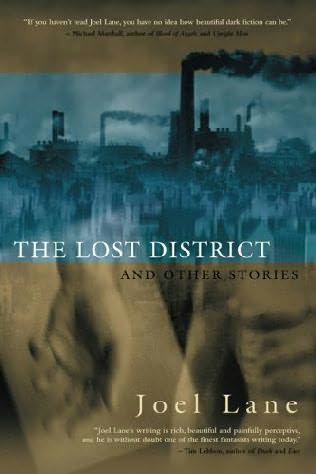 cultural losses. The title of ‘The Lost District’ is a play on the ‘lost cities’ of pulp fiction, so it’s hinting that the district is one where strange influences are at play. Personal loss is an important literary theme and one that I return to quite often, but it can get a bit monotonous if that’s all you’re talking about. The challenge is to understand how people keep going, how they survive – emotionally as well as physically. Life is a struggle and in the end you lose everything – that’s a given and there’s no point just saying it, you have to show what it brings out of people.
At the end of your story “Stiff As Toys“ you use a pun: “Man’s laughter. Manslaughter“. Is that for you an adequate summary of human nature and condition?
Oh no. That’s specifically a comment on male violence – and it’s an unequivocal comment because the narrator was trying to make a point in a dramatic way. He has a bitter streak, as I’m sure you’ve noticed. But there are stories in Where Furnaces Burn that take a less extreme view of human nature, such as ‘Incry’ and ‘Point of Departure’. Part of the appeal of writing a book of episodes is that you can show that one person’s perspective is complex and changes with time.
William Blake once wrote about London that it was “a Human awful wonder of God!”. Considering that in many of your stories a city serves as the setting and the things happening there are often far from pleasant, would you say that you feel some kind of ambivalence towards city life? How does it feel to “wake up in Moloch“ (to quote the title one of your stories)?
There are problems anywhere you live, and I don’t assume small-town or village life to be idyllic. The phrase “wake up in Moloch” comes from Allen Ginsberg’s great poem ‘Howl’, and Ginsberg uses Moloch as a symbol of exploitation and the machine age: “Moloch whose name is the Mind!” So it’s not just waking up in the city, it’s waking up in the ugliness that is capitalism and the mechanisation of people. You’d find the same ugliness in the countryside, just taking a different form: factory farming and so on. I’m very much a city person but try not to idealise the urban experience. It obviously has its downside.
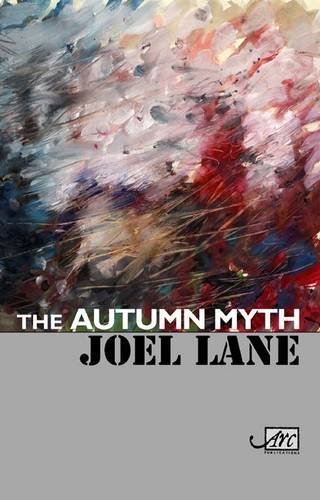 Even though one should be careful not to confuse author and narrator and even without knowing about your political activism, I guess the stories in The Lost District or Where Furnaces Burn more than clearly indicate that the Tories will not get your vote in the next election. In your poetry collection The Autumn Myth there are quite a number of poems which are political, e.g. “Safe Passage“ to name but one. You stated in an interview that there’s always been a “blend of outer and inner realities“. Was it clear for you from the beginning of your career that your work would deal with political topics (in a broad sense)? Do you think the political climate has worsened in the last couple of years?
I’m not sure what you mean by “career”, but leaving that aside – yes, early stories of mine like ‘The Foggy, Foggy Dew’ addressed political themes, though in a rather idealistic way. To me, politics is about how the individual relates to the community, how society is ordered, what the power relationships are, and so eminently suitable for handling in horror and speculative fiction. What’s changed in recent years is that the more left-leaning and reformist major party in the UK has been signed over to a right-wing agenda, leaving a vast gap in political leadership. That has led me to become more strongly involved with the revolutionary left, and that has started to give my writing a more definite political focus. The lessons of the current economic depression are clear: the capitalist system is in ruins and, as the Economist admitted, Marx has been proved right – you either work with that and start to build an alternative or you get used to living in the ruins of a society. A lot of the rage and bitterness that’s prevalent at the moment comes from people who realise the system has failed but haven’t got to grips with the need for something else. They think it’s ‘the fall of man’ rather than the breakdown of an economic system that is only three hundred years old. Or they imagine that being riddled with new technology is changing society in some profound way when in reality it’s all going backwards. People are starving in the streets, you can’t change that with Twitter.
I think you have read much more than I have in the field of weird fiction but I’ve got the impression that authors that try to deal with social reality are few and far between. Was that also a reason to publish the anthology Never Again?
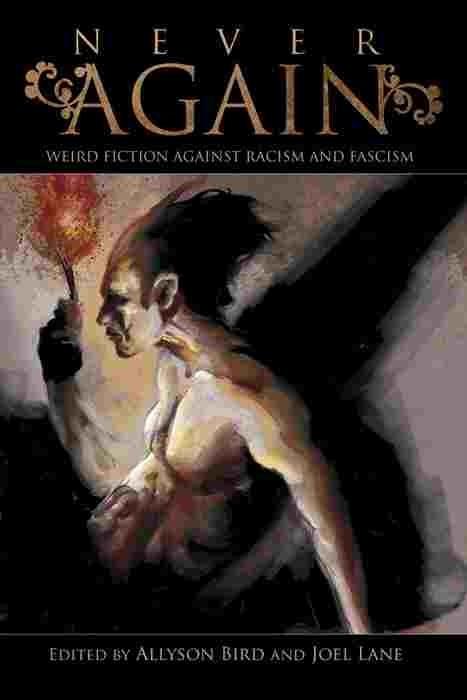 Actually, half the stories in Never Again were reprints – we wanted to bring together a body of work that already existed. Because weird fiction is about time and communities, social reality is ingrained in it, and there’s quite a lot of socially themed work out there, whether you’re talking about Fritz Leiber, Shirley Jackson, Harlan Ellison, M. John Harrison, Ramsey Campbell, Lisa Tuttle, Dennis Etchison, Graham Joyce, Thomas Ligotti, Joe R. Lansdale or some of the newer writers we included in Never Again. You can’t expect literal social realism from weird fiction, but you can expect bold metaphors, unease and irony, and I feel the genre is a rich resource of social commentary. Robert Aickman is a challenging example because he’s brilliant but also very right-wing, and sometimes one applauds the writing while resisting the message. With Never Again, we wanted to combine new work and existing work to show how the weird and speculative fiction genres are engaging with an important social theme. Inevitably, we were criticised for being too political and for not being political enough – but it was the literary agenda that we were most concerned with. Allyson Bird and I were perfectly aware that a book of stories doesn’t do the same job as a street stall or a demonstration. We wanted the outcome to be a strong book.
In your novella The Witnesses Are Gone films play a major role. Have you been strongly influenced by cinema and could you imagine writing a screenplay one day?
I don’t like horror films in general as much as I wish I did. They mostly seem rather obvious, even 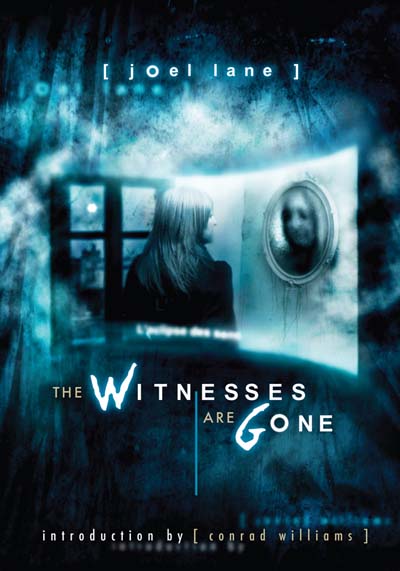 infantile. Those I’ve really enjoyed include Carnival of Souls, The Tenant, The Brood, Don’t Look Now, The Haunting, The Blair Witch Project… Some more culturally assured films like The Monster Club and Plague of the Zombies are effective too, but the most interesting horror films are those where you really don’t know what’s happening and you can’t rely on genre conventions to guide you. It was that kind of cinema I was trying to evoke in the novella, and the similarity between cinematic and dream imagery. I do have quite a visual imagination, and what the characters see in my stories tends to be more important than anything else. But I’m not sure cinema is responsible for that. I can’t rule out writing a screenplay in the right context, but it’s not currently in my plans.
What can you tell us about the perception of your work? Are the people reading your poetry those who are familiar with your weird tales? Do the reactions to your work(s) differ much?
There’s some overlap, but mostly my novels, free short stories and poems have had different readers. Perhaps I’ve spread myself too thin in that regard. I’ve had a lot of kind and supportive comments on all fronts, though, so I don’t think the attempt to migrate back and forth between genre and mainstream writing has been completely misguided. If any judgement annoys me it’s having my work (and especially my poetry) described as “gritty realism” when it’s nothing of the kind. From some reviews, you’d think we all lived in a Dr Seuss world of mauve cushions and little cuddly things, an adorable world, and anyone who acknowledges the existence of ugliness and difficulty is obviously disturbed. What Al Alvarez called “the gentility principle” is still alive and well in English poetry.
So far your novels have not dealt with the supernatural. Do you feel like Lovecraft or Ligotti that the short form is more adequate for weird tales? Having asked that, it was recently mentioned that you were working on a “supernatural horror novel set in the Black Country“. Can you say a few words about that?
Actually, my first novel did deal with the supernatural, it just wasn’t the main focus. There was a ghost story element to it, but you could miss that and it wouldn’t spoil the book for you. I think there are more great short stories and novellas in the weird fiction genre than there are novels. It’s remarkably difficult to write a truly effective supernatural horror novel – one where the supernatural is a core theme and not just a plot device. The short story seems to be the most natural form for weird fiction because that step into a visionary landscape is very hard to sustain. Most horror novels objectify the supernatural in a rather uninspiring way, in order to make it part of the furniture of novel writing – it becomes like everything else. But surely the whole point is that’s unlike everything else. As for my intended supernatural novel, that was planned for a while but never really got started and I wrote it as a short story, ‘The Messenger’. I must learn not to talk about plans as actual works in progress. But I do hope to write a supernatural horror novel some day.
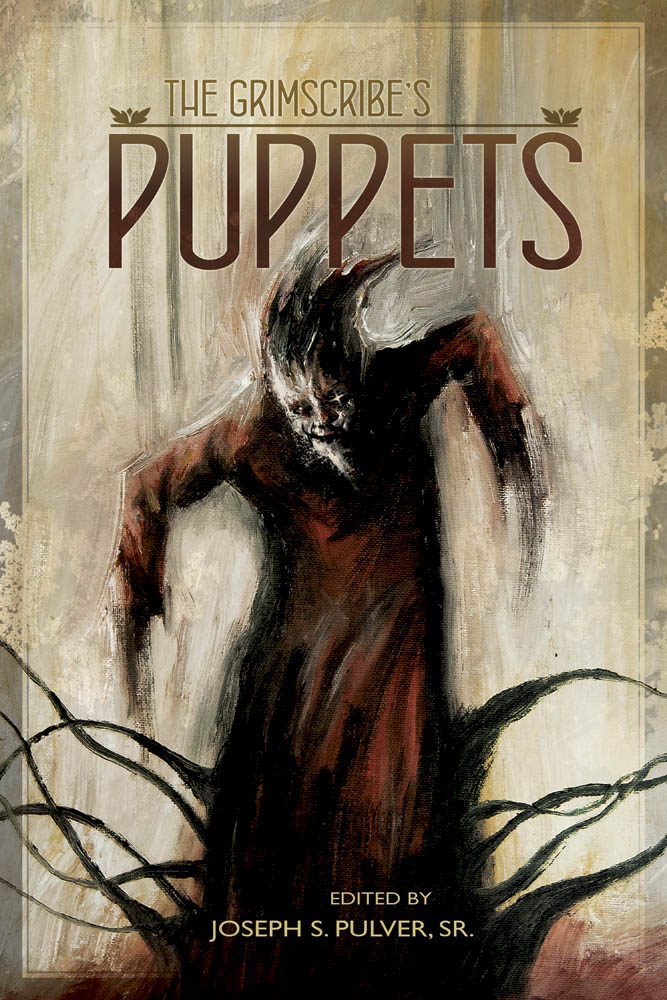 You’ve just contributed to the anthology The Grimscribe’s Puppets. You once said that “At his best, Ligotti is a true humanist“. What approach did you choose to pay homage to Ligotti?
It’s better if I don’t try to explain my story before people see it, but it’s about someone struggling with a chronic illness, which seemed quite a Ligottian theme. What I meant with that comment was that Ligotti is concerned with betrayal, exploitation and the abuse of power, as well as with human suffering in the face of disease and madness. It’s what Marcuse called negative humanism, the identification of the human in those stripped of power and recognition, rather than the glorification of human ambition. Part of what I admire in Ligotti is his absolute humility, his refusal to pretend that having literary talent makes him a superior being. He’s had a difficult life and that’s made him intolerant of arrogance.
Lovecraft wrote Supernatural Horror in Literature. You have stated that you are going to take some time off from writing fiction to focus on your non-fictional work and to write about weird fiction. Would you say that having a great knowledge of the history of weird fiction and being able to reflect about and rely on it can increase one’s own writing?
I certainly wouldn’t claim to have a great knowledge of weird fiction, but I’ve read quite a bit of it over the past forty years. And doing that can enhance your own writing, if only because it helps you see how diverse and rich the weird fiction genre is. I get tired of writers being feted for reinventing the wheel. It’s easier to try and be original if you’ve got some idea of what’s gone before. And it helps you to see what the genre is really about, what the recurrent themes are. Cinema doesn’t define the weird fiction genre, writing does.
Some years ago it was announced that you would be working on your third novel, Midnight Blue. Is that novel still going to happen? Is there anything else you’d like to add? Future plans?
That novel was finished over two years ago, but I’m still seeking a publisher for it. It’s not a genre title, so I’m trying to convince literary publishers to take it on, and that world has changed radically in the last few years. I’ll let you know what happens. Regarding other projects – I’m working on a book of ghost stories, a book of ‘slipstream’ stories, a crime novel about alcoholism, a non-fiction book about horror fiction and the twentieth century, and a book of political poems. That should keep me busy for the next decade or so. I’m also planning to hibernate, but the legalitities of that are dismayingly complex.
M.G.