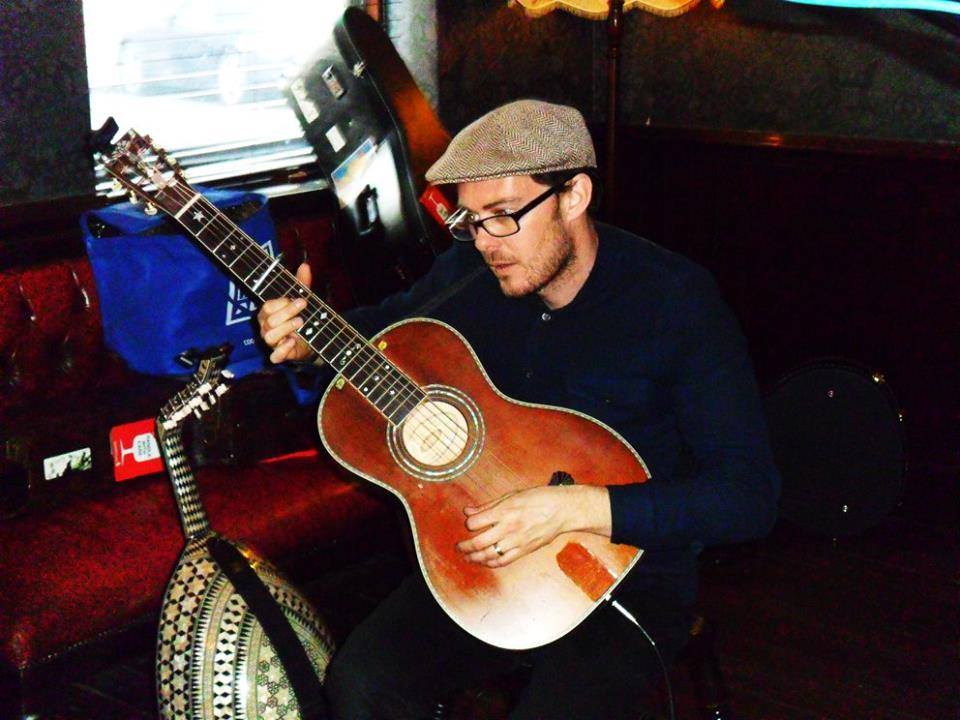
 Oftmals hat man den Eindruck, dass aufregende, erregende Musik von denen gemacht wird, deren Einflüsse breit und nicht auf ein Genre begrenzt sind. Trappist Afterland, das Projekt des Australiers Adam Cole, bestätigt das. Auf der Facebookseite der Band werden die Einflüsse offengelegt, und die lesen sich wie ein Gang durch die Geschichte psychedelisch(st)er (nicht nur Folk) Musik. Auf den bisherigen Alben, von denen das jüngst erschienene „Afterlander“ das erste ist, das auf Vinyl gepresst wurde, wurde aber auch immer wieder deutlich, dass Cole Interesse an außereuropäischer Musik hat – im folgenden Interview berichtet er Weiterlesen
Schlagwort-Archive: Oud
We still need to document our future through song. Interview with Trappist Afterland
Maybe let’s start with a rather tedious question but could you say a few words about the beginnning of the band?
I started Trappist in 2010 with an old friend of mine Adam Casey who plays in a musical project called “The Boy who spoke clouds”. We released two albums together under the Trappist Afterland Moniker “The Round Dance of the Cross” and “Burrowing to Light”. Adam recorded both these albums and acted as a sort of producer to my compositions. He left the band after completing “Burrowing to light” and I continued on and recorded Beehive. I met Phil Coyle, who is still in Trappist today, Brett Poliness (Silver Ray,Hugo Race) and HakGwai Lau who I saw busking on the Chinese 2 stringed Violin(ErHu) in the streets of Melbourne. We became friends and the three of us collaborated on what became The Beehive album. The Band these days consists of Phil, Nicholas Albanis(Dandelion Wine) who both were the band on Afterlander and Lachie Robertson. I’ve also recorded a solo album under the Trappist name “The Five wounds of Francis Minor” and I’m half way through a new record that I’ve recorded with Anthony Cornish which is also more of a solo album and less collaborative than the Afterlander album. I enjoy both ways of recording and I guess it is projects based thing although the Afterlander band is a pretty permanent fixture, along with Lachie for future recordings and playing live shows. At least as long as they’ll put up with me HAHA!
You mention a number of bands that have influenced you. It seems that they many of them seem to make use of the/a folk idiom but at the same time expanding it musically as well as lyrically (sometimes) radically. What would you say is the one thing that connects them all?
I’ve always thought that the one thing that in it’s purest form that connects Folk music is the idea that the songs must convey stories and ideas from a time and place. I guess traditionally folk music was used as a way of connecting community and passing on the history of a people, Place and time. So in more experimental and radical movements, as long as those ideas are still passed on, then that would be what connects it. Experimentation is a big part of our culture through technology today, and although Folk music quite often is associated with the past, we still need to document our future through song. And I believe that there is no better way to do that than by using all the modern tools available to us .This in turn reflects aspects of our culture today
A lot of folk musicians today havn’t grown up with folk music, and often their creative biographies started with punk for instance or other kinds of rock music until they discovered traditional music. How was it in your case?
I guess my musical background as a young man began with underground Thrash, Glam and Death Metal. Followed by 90′s Punk and Alternative rock. In my mid Twenties I became obsessed with TG, Whitehouse, Psychic TV and all the prog ,Psych, Free Jazz, British revival and Acid Folk I could get my hands on. These days it’s all of the above plus a lot of music from all over the world especially Indian Music, Gamelan, Ancient classical music(Hesperion xx,David Munrow etc) and more traditional types of folk music. I guess when I was twelve or so those early Dylan albums seemed pretty quintessentially as folk as it got for me. And it all developed from there.
You play a lot of different instruments. How did it come that you learned to play them all? Did you start with a particular one, and the others followed step by step? Which one do you identify most with?
I guess like most young men at around the age of twelve I became obsessed with the guitar through the eighties Thrash scene. Was given an electric guitar for Christmas one year and soaked it in distortion and started playing bad lead and power chords. Started the Metal garage band in my parents Basement and everything developed from there. As I got older developed more of an interest in folk music, taught myself to finger pick and began writing songs. I got married when I was 28 and travelled to Vietnam for my Honeymoon. It was there that I began experimenting with more exotic stringed instruments and taught myself to play the Dan Bau Monochord, Oud ,and I purchased the Dulcitar from Timothy Renner (of Stone Breath).The Dulcitar is essentially a Dulcimer with a vibrating bridge that gives it the Sitar Twang. Timothy built it, quite genius really
When talking about the wide variety of instruments used and of muscical culture(s) that seem to have influenced you, I’m wondering if the album “The Christ Tree“ by The Trees Community that Timothy Renner re-released some years ago has had an impact on your work?
I Absolutely love that album by the Trees Community, and yes it has been a big influence on all things Trappist. My best friend Neil Sweeney gave me a vinyl rip on CDR around 2007 and I became quite obsessed with it. A year or 2 later I heard Timothy was doing the re-issue and was lucky enough to get the cd Box .All the bonus material is Great, although the Christ Tree itself still stands on it’s own.
I also particularly like the album “Christian Lucifer” by Perry Leopold and the album by Silmaril The Voyage of Icarus. But the list could go on.
Your first three albums have been self-released. Your fifth album is going to be released by Sunstone Records on vinyl. Is that for you a new stage in the evolution of the band?
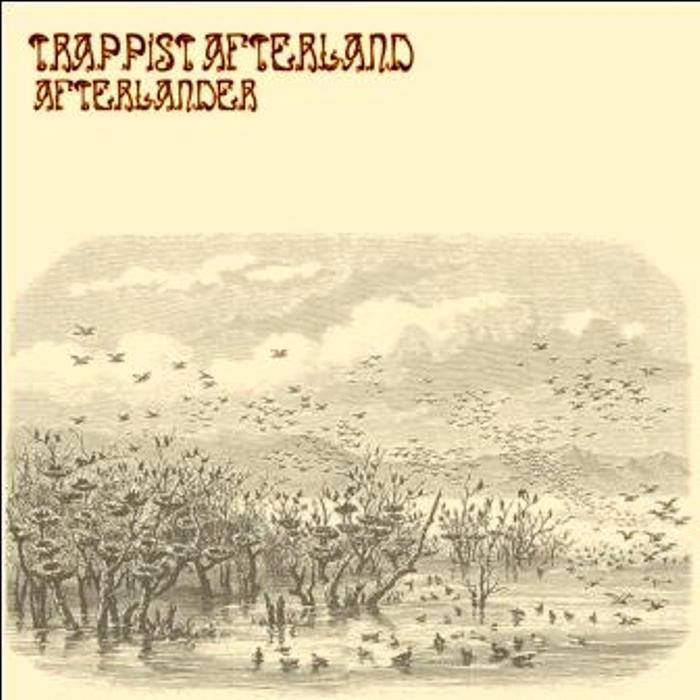
I guess it is, not by choice though. When we initially started Trappist we were always on the lookout for like minded folk to put out our releases, but it wasn’t until we were approached by Nigel Spencer from Folk Police in Manchester that we had any offers. Nigel was starting a new label to put out less commercial folk music called Eleven Willows and the plan was to release our third album Beehive on Vinyl. Unfortunately the label folded before it got off the ground. We then were approached by Nathan Ford from New Zealand blog magazine the Active Listener to do a digital release of the album, which we did. The Active listener has been instrumental in helping us get more exposure and Nathan is a fantastic guy who helps so many bands. A true unsung hero of the underground psych scene at the moment.
From there we were lucky enough to be offered a release with Sunstone Records. Ant James,Will and Simon Norfolk run the label from Chester and Morecombe in the north west of England. They have been an amazing help and have become good friends. We have just released our latest album “Afterlander” and it sold out in 2 days in England, which really surprised me in a very wonderful way. I have a few copies for sale on the Trappist Bandcamp page but they are nearly all gone too.
One of the great thing about playing the kind of music that is quite niche is that you get to meet all these wonderful folks who truly are doing these labels,blogs etc for their love of it. I is such hard work and a very costly exercise for very little monetary reward. So people like Nathan Ford ,Ant James and Simon Norfolk are true pioneers in getting this sort of music out there during such a bad time in our musical history. At least in the sense of the industry. So Kudos to them and those like them.
 Your first albums were not only available as downloads but also as limited CD-Rs. What is your attitude towards physical releases?
For me Physical releases are very important, although very costly. Whenever we do an album I always ensure that we have some kind of physical stock usually in limited supply, again due to cost. Obviously vinyl is my favourite form but again it is incredibly costly. So CDR’s are usually the next best thing.
There are plans to release a split album with Stone Breath. Can you tell us how that started and if there is a concept/central idea behind it?
I have been a fan of Stone Breath for some time now, and approached Timothy to do a split 12 inch. Again due to the costly nature we have decided to do a split cassette instead, which should be out later in the year or early 2016.Both bands will be doing about 18 minutes of music per side.
When I was in my my late twenties I had come to the conclusion quite naively that when it came to strange folk music and psych that it had pretty much been done to death. And that no new music could even come close to the likes of COB,I.S.B etc etc. That was until I heard the likes of Stone Breath, In Gowan Ring and the early Six Organs albums. Those bands and others really re- invigorated me to continue doing the folk music I’d always loved. They seemed to have taken the elements from the first wave of Acid folk and created a very fresh and sincere new take on the genre.
I hope Trappist can do the same.
In some of your songs you can find traces of Oriental/Asian music. Apart from the fact that you play the oud and sometimes cooperate with a Chinese musician – do you draw some direct influence from non-Western music cultures? Is there some particular kind of Asian or Middle Eastern music that you enjoy?
I’m a massive fan of Gamelan music. A couple of years ago when Trappist first started there was talk of doing an album with the Melbourne Gamelan Orchestra. Adam Casey left shortly after we met with them and we never quite got to doing it. But I’d never rule it out in the future, as me and Adam always talk about doing music together in some form or another.
I’m also a big fan of Hamza el Din, although he is from Northern Africa. His Oud playing is out of this world. A few others of note…. Kan Mikami’s album ‘Barking Practice’ is great; Kazuki Tomokawa; Karuna Khyal; ‘Ghost’ from Japan (especially their early albums)…. not to mention the many excellent Middle Eastern albums. So many great records to be heard… too many to mention.
Maybe the slight Middle Eastern elements are somhow consequent in context with your interest in biblical subjects. Do you think that Western Christianity would benefit from discovering that its roots lie in a quite “exotic” ground?
I think the problem with western Christianity is that it has completely forgotten its roots – forgotten where it comes from. Throughout civilization, Christianity has been moulded by men, and as a Christian myself it can be hard to know which parts are of Christ and which parts have been twisted over the years by human interpretation. It’s a slippery slope – and can be very hard to get to some sort of clarity within that. But as we are talking about intangibles it is quite predictable that the human race especially western civilization has made quite a mess of it. Although, I’m not exactly innocent of it either over the years. We all play a part.
Let’s just say Jesus Christ has had a pretty bad PR team for the past 2000 years haha!
But like any ideology or belief system, there are always positives/negatives. Sometimes people and the media do focus on the negative and forget that amazing things have been achieved through it, As well as horrific things of course.Unfortunately sometimes the people doing unthinkable things truly believe they are doing the right thing.
You call yourself/yourselves “Xian“. What role does your belief play in the creating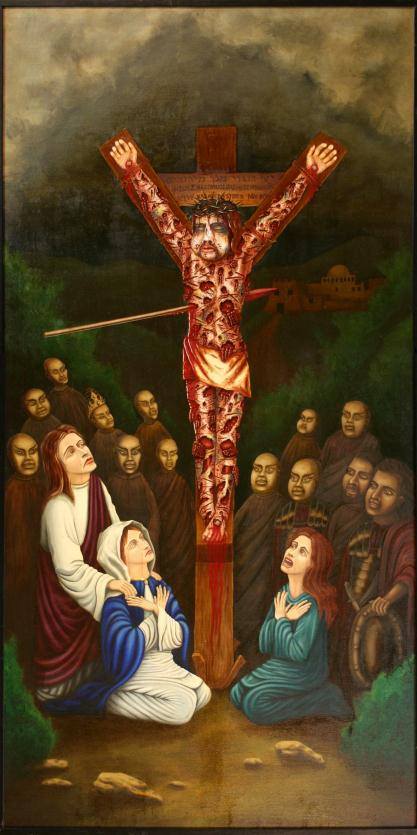 of your work(s)?
I have always loved those private press Xian albums such as Trees Community, Silmaril, Concrete Rubber Band ,Caedmon etc, and I guess I am a Christian.
Although to some extent I hesitate to call myself Christian in a traditional sense. Especially since I do tend to struggle with the Evangelical movement, the Catholic Church and other denominations for different reasons. But at the same time it is very challenging as a big part of being Christian is to partake in community. But quite frankly the communities and a lot of their archaic ideas completely rub me the wrong way. So for me at least at the moment it is complicated HaHa!
As for its influence on the songs… It is for me, a huge part of what Trappist is about, although the rest of the band don’t share my beliefs. Myself being the songwriter though shows me how open and sympathetic to the cause my bandmates are, and I’m lucky to have them.
Not only in the music, also in your content you show great interest in somehow heretic sidepaths, as nyou deal with John Dee, Franz von Assisi and a number of apocryphal/gnostic scriptures. Would you find it too negative to say that in (religious and cultural) history, some things went terribly wrong? Or is this the way you see things? Do you have some kind of message when referring to these topics?
I guess to start, A few years back I got very interested in the story of John Dee. I Especially got very intrigued by his supposed Angelic contact through his scrying sessions .But in all honesty it had a profoundly negative effect on my psyche.
I became quite obsessed with all the symbolism he transcribed via these angelic interaction, Enochism and particularly the Sigillum Æmeth pentacle.
I won’t go into to much detail as it is quite personal thing, but I can say it was a very dark time in my life which even effected my marriage for a short time .I still to this day don’t quite understand what happened, but I will never get so involved in such a thing again.
These interactions surely were the downfall of John himself. So I doubt that there was anything Angelic about the connections he made during the Scrying sessions.
The album “The five wounds of Francis Minor” I guess was a concept album comparing the life of John Dee and Francis of Assisi.
Both men were very obsessed with connecting with divinity and were both extremely devout. But both of them went on very different paths trying to find connections.
In my opinion Saint Francis took the right path and was rewarded for it .To such an extent that he became the first man to suffer the Stigmata,Which I know sounds like very morbid reward, but I think it is the greatest honour a human being can be bestowed.
I am also very interested in all scripture and find the Gnostic gospels very beautiful and especially interesting. But as with all supposed holy doctrine I think needs to be read with caution, and a big grain of salt haha.
Taken in the wrong context can have hideous consequences, such as the Church and societys treatment of homosexuals amongst many other things. Sometimes people use scripture to justify being bigoted arseholes sadly. And the list goes on unfortunately.
But in saying all this I am still very interested in Christian mysticism and do believe it has played a very important role in shaping our understanding of the world, and the world to come. I just think John Dee was played and suffered a tragic life because of it.
 On your album “Like A Beehive, The Hill Was Alive“ there is as song called “The Golden Bough“, I guess alluding to James George Frazer’s study of the same name. Why did you choose to refer to that particular work?
My best friend and sometimes songwriting partner Neil Sweeney gave me the book when I was visiting him in New York City. His idea was for us to write a bunch of songs about the book and putting it out as an album.
We never finished the project, and the golden bough was one track I wrote for it.
Neil and I are planning on doing an album together very soon. Neil is an incredible outsider folk singer/ songwriter out of Baltimore, i’m very much looking forward to working with him again.
In the song “Lucifer Mosquito” you sing about Genesis and original sin in a way that differs much from the common Biblic narrative. What kind of story is it, that you tell there?
Basically the song and story of “Lucifer Mosquito” was a dream I had one night. Quite an absurd dream really. It is essentially an alternative version of the Fall of Adam and Eve.Instead of them being tempted by the serpent in Eden, Adam sees a mosquito suck the blood from a pig, which gives him the idea to give up his vegetarian ways and slay the animals(in this instance the pig) to eat it.
Hence it is in a sense the beginning of the fall of man once Adam takes part in this violent act. Some theologians believe that before the fall, Man was vegetarian and after our expulsion from the Garden we began our carnivores ways.
Let me stress though, I am not in any way a creationist and I just found the dream to be so tripped out that I had to write a song about it haha.
I look at Genesis in the same way as I look at the Book of Revelation.
Stories written in an almost fable like way to explain Gods relationship with Humanity. From these stories we learn lessons, but they should never be taken Literally.
And amazing stories they are! including Noah’s Ark.
What can you tell us about folk and psychedelic music in Australia and Melbourne? Are you part of a local scene?
To be honest the Scene in Melbourne is fairly small, although I don’t tend to wander out much, so i’m probably not exactly an expert on the music being played in Melbourne .
We play around Melbourne fairly sporadically and there is new scene of young folk that seem to be inspired by some of the new psych bands that are around at the moment.
A lot of shoegazer type psyche bands with Brian Jonestown Massacre reverb drenched style sounds.
I particularly like a band from Melbourne called the Citradels. Their sound reminds me a bit of the Outsiders and seem to dabble in more Eastern inspired Psyche jams.
Do you think that the passing of Camera Obscura founder Tony Dale left a big gap in Australia’s folk music?
I never had the pleasure of meeting Tony Dale although I loved and still listen to stuff on Camera Obscura. It was very sad when Tony passed and I know a lot of people who knew him, including my best mate Neil Sweeney and the lovely guys at Vicious Sloth collectables. Those guys have been real supportive of Trappist and they are lovely guys.
I think a big gap has been left in the Psych scene in general all over the world since Tony’s passing. Tony Championed and gained exposure for so many great obscure bands over the years.
It’s always the good ones that leave us sadly.
(M.G. & U.S.)
top photo: Alan Davidson (Kitchen Cynics)
painting: Norbert H Cox
ALIF: Aynama-Rtama
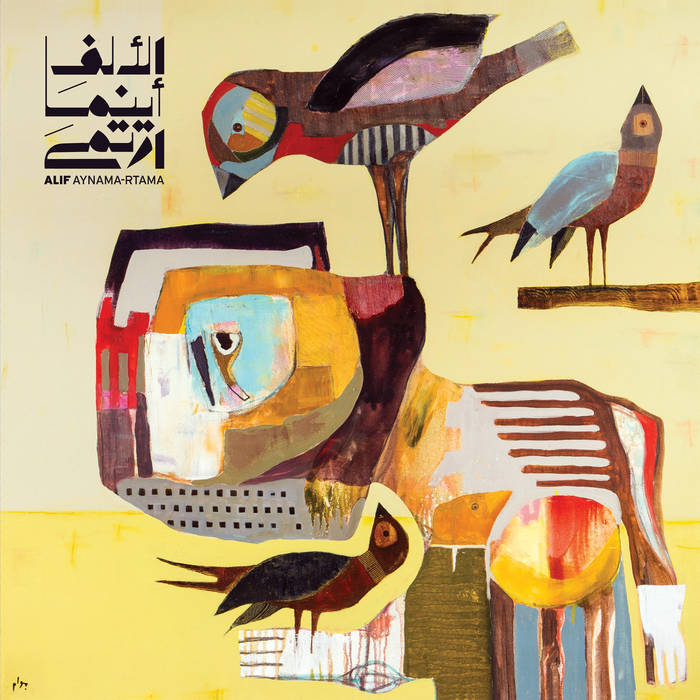 Man muss viel regelmäßiger Musik aus dem nordafrikanischen und vorderasiatischen Raum hören, um ein Gespür für die Poptauglichkeit des Arabischen zu bekommen. Gesungen und im Kontext einer Musik, die mit westlichen Popkategorien kompatibel ist und trotz Wurzeln in der traditionellen arabischen Musik zu unkitschig ist, um Exotismus zu befriedigen, bekommt die Sprache, die man hierzulande wohl doch meist nur im Vorbeigehen oder in politischen Nachrichten streift, einen ganz anderen Klang. Ihr für westliche Ohren oft etwas abgehackter Rhythmus entfaltet dabei eine ganz eigene Poesie. Eine Band, die sich in der Hinsicht Weiterlesen
 THE INVISIBLE HANDS: s/t
 Dass Alan Bishop, mehr noch als sein Bruder Sir Richard, hierzulande nur Leuten mit speziellen Interessen ein Begriff ist – man weiß nie so recht, ob man das bedauern oder doch eher trotzig befürworten soll. An seiner bekanntesten Band, den nach dem Tod des Drummers aufgelösten Sun City Girls, bissen sich bereits federführende Diskursblätter die Zähne aus und blamierten sich in Konzertberichten ähnlich wie seinerzeit die Ruhrpott-Postillen bei den Essener Songtagen. Und wenn immer jemand den improvisierten Stilmix lobt, mit dem die frühen Animal Collective bei all der animistischen Folknähe weder Weiterlesen
I play the oud! I play music I love… Interview with Eliot Bates
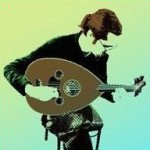 Eliot Bates is a widely traveled man, for whom the term musician is certainly not sufficient. In addition to practicing the oriental instrument of his choice, the Oud (a short-necked lute, which is believed to be the predecessor of the European lute that has been used since the Middle Ages), he is an expert in Anatolian music, deals with the technical side of the recording of traditional musics, teaches at various universities both in the U.S.A. and in Turkey and has published a book on Turkish music at Oxford University Press. Since “Baalstorm, Sing Omega”, Bates also supports Current 93 live and in the studio. His work for the webzine Dancecult.net should not be seen as contradictory but as complementary, true to William Blake’s dictum “Without contraries there is no progression”.
As most of our readers may not know much about the instruments you play, could you introduce them to us? The latest Current 93 booklet mentions Oud, Bendir and Erbane.
The oud is an 11-stringed fretless lute that is played through much of the Muslim world, from Morocco to Malaysia, Turkey to Kenya. We know that 4-stringed ouds were played in Baghdad in the 6th century, but the instrument has changed a bit since then. At first glance an oud looks a bit like a guitar, but the playing technique is totally different, as is the modal system (makam), rhythmic system (usul), and just about everything else!
The bendir and erbane are both frame drums. Bendirs are simply a wooden hoop with a stretched sheep or goat skin face, while the erbane, which is local to Eastern Turkey and Iran, adds hundreds of little rings on the inside of the hoop. Frame drums are one of the oldest music technologies in the world – they’ve been played through much of the world for over 10,000 years.
What can you tell us about your first encounter with Arabian/Eastern music? Did you learn about the instruments you play in school or music academy, or have you been to one of these countries in earlier years?
Growing up in Southern California I rarely heard actual music “from the East,” but did hear a lot of twentieth century classical music by Bartok, Prokofiev and other composers who used folk dance rhythms and quoted Eastern European and West Asian melodies. That was my mom’s favorite kind of music; she played it on the piano and also had these wonderful Gyorgy Sandor recordings she’d play on the old Garrard turntable. I played quite a bit of this on piano myself before I encountered non-European instruments.
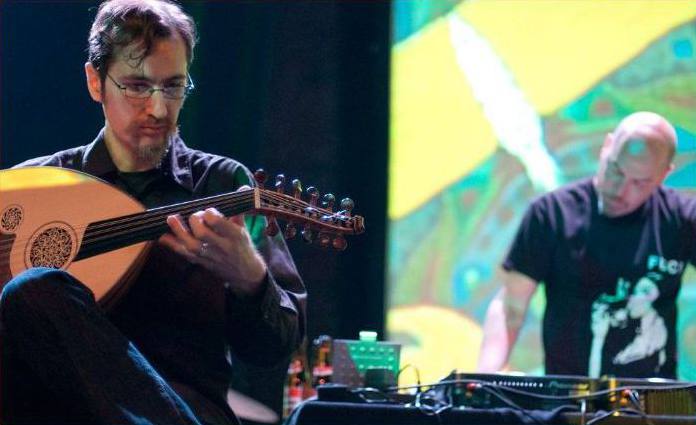 In the early 90s in California there were quite a lot of sitar and Hindustani classical music concerts, and I thought about learning that but it never quite happened. Instead, somewhat accidentally I stumbled into a new college ensemble called the UC Santa Barbara Middle Eastern Ensemble, and the director, Dr. Scott Marcus, persuaded me to pick up the oud. Everything began there, and quickly I sort of jumped in headfirst and got very involved with Arab then Turkish music. I went to Turkey in 93 to study oud with Necati Çelik and have been actively studying Ottoman art music, Anatolian folk music, the makam modal system, etc. since.
On your website you call yourself “ethnomusicologist, oud artist, audio engineer“. Are all three areas of your interest of similar importance for you? Do you see a huge difference between your academic interests and work and your performances as solo artist or with other projects?
I’ve been doing ethnomusicology, oud and audio engineering for 20 years now, and in some ways they feed into each other, but in other ways they’re very much compartmentalized. I had always tinkered with making home recordings, but after a string of disappointing experiences in California recording studios came to the conclusion that Californian rock engineers had no idea how to record oud or Middle Eastern percussion and I would need to do it myself. Once I got more into recording, I started to discover things that fed into my oud playing and creative process. My interest in recording also led me to do long-term ethnomusicological research into Istanbul’s recording studios, which I’m finishing a book about right now. I engineered a lot in Istanbul; I was a studio musician there as well, and I would not have been able to pull off the “academic/research” part of the project without that practical, hands-on experience.
But, for example, I have little interest in doing an ethnomusicological study of the oud, I’d rather just play it! I would never want to run a commercial recording studio again. When I create Kaderci recordings or do collaborations with other artists, I think of it as a form of research, but not research with the brain/mind. It’s research with the heart.
All I know about the origins of your music is that much of it derives from the tradition of arabic or other near east countries. This is, however, a large part of the world. Are you particularly interested in a certain country, or is your music influenced by several Turkish, Arabian and Persian styles?
I do listen to a lot of music from the region, but my focus has been on a few specific kinds of music from Turkey. In the 19th-20th century there was a romantic movement in Ottoman art music and numerous composers wrote stunning instrumental and vocal works – I’m thinking of Dede Efendi, Tanburi Cemil Bey, Ismail Hakkı Bey, and many others. This music works great on the oud automatically. This is the repertoire you learn if you go to a conservatory in Turkey, and most Turkish CDs of oud music are of this romantic period. I seriously studied this and continue to play it.
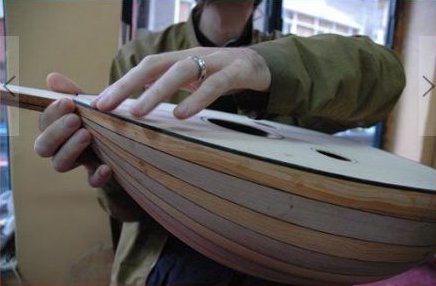 More recently I’ve been more interested in rural Anatolian musics, particularly the secular songs (deyiş) of the Alevi religious order, and the bozlak song form of Central Anatolia which is really beautiful and very “deep.” Because of my research in Istanbul recording studios I also encountered a lot of what is called “arranged folk music.” Arrangement is a very creative practice in Turkey; arrangers have found ways of adapting folk songs for all kinds of ensembles, ranging from groups of folk instruments to a jazz, surf-rock or heavy metal band, and most interestingly, folk instruments on top of metal/rock. Any and all of this is stuff I might listen to (and for a few years I listened to nothing but recordings from Turkey), but how much influence this has on my own music varies from none at all, to a lot.
Do you prefer to play old songs that already exist, or rather own compositions of the basis of traditional structures?
It’s good to keep things diverse – playing old songs, creating new works, playing old C93 pieces, creating new pieces for C93. I’m creating new things all the time, including the Kaderci solo stuff, collaborative things, and I still make live sound sculptures and immersive environments from time to time.
People from western countries often find it difficult to distinguish between „classical“ and „folkloric“ music, if it comes from other parts of the world. Is such a differenciation important at all and can we draw an exact parting line between it? How much does it mean to you and do you see yourself more as a classical or a folk musician?
Part of the distinction is real and has to do with nothing other than the context in which the music is played. There were special forms of music created and performed in the Ottoman and Safavid Courts, and a lot of why we inherit the idea of Turkish or Persian “Classical Music” has to do with this. However, the term “classical” has been appropriated by music critics and record labels to include non-court music, which may have originally been 19th century popular songs from Istanbul that were most definitely not classical or courtly in any way. Likewise, “folkloric” musics are assumed to be local village traditions with the assumptions that there is no song “author” and that music hasn’t changed at all in the village. There’s been much critique of the whole folk concept, since we now know that some of this village music has very specific origins and known authors, and we’ve been able to document rapid changes to village folk musics as well.
I’m very suspicious of classical/folkloric distinctions made today, either in Turkey or elsewhere, since they tend to be noncritical attempts to either increase or decrease the perceived legitimacy of the music. One example: for whatever reasons, even though Alevi music from Central and Eastern Anatolia is composed, authored, is serious listening music and has an unbroken tradition of performance going back just as long as Ottoman court music, it’s not described as classical music but as folk music. Alevi musics are some of the only polyphonic musics from anywhere in that region and are exceedingly complex. Why is this folk rather than classical, when nightclub drinking songs from the 19th century are classical but not folk? It’s nonsensical!
Western listeners have a hard time differentiating musics for a number of reasons. Many people today encounter the music of Turkey via “world music” programming or record labels, and there’s a long history of exoticism and Orientalism that has skewed perceptions and provided a lot of misinformation. But this is not just in the West – in Turkey, there is a long history of “self-orientialization” and a lot of romanticization of Eastern Anatolian musics by urbanites who have no idea what the musics are or what they mean.
In terms of what I do, I play the oud! I play music I love…
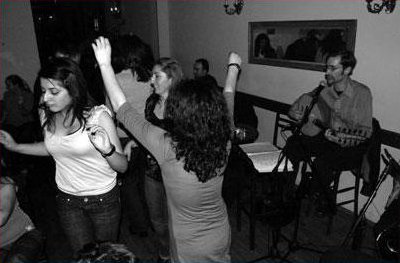 I found fotos from a performance you gave in an Istanbul bar. Have you played often in countries of the orient? What can you tell about the reactions of the people towards a “western” musician, who performs „eastern“ music?
I have a repertoire of some 500-600 works from Turkey/Egypt, and have done over 1000 performances of this, both solo and in small groups. When I was living in Istanbul and working in the studios I played out twice a week, one night at a meyhane (restaurant that serves alcohol), one night at a bar. It was a great experience, and I really like performing folk/light art music for Turkish audiences since they’re so passionately into it, dancing for hours, then crying and singing along when we’d sing melancholic songs. It’s totally different playing for American audiences; people listen silently and politely clap at the end of pieces. At least for this music, I prefer the Turkish way!
In terms of reactions, of course there’s the novelty factor of an American singing Turkish music, we were on TV, in newspapers, etc. That eventually wears off, and some people who regularly attended our Istanbul shows would start to actively comment on, criticize and correct our performances. They’d take my lyrics book in the middle of the show and cross off lines they thought were inaccurate and put other lyrics in there, and even debate with each other about precisely how to best correct a wrong verse. I loved this – it was an amazing learning experience. A couple of fans would make us compilation CDs with every known recording of a particular song we played, so we could better “copy” the “correct” recordings. People realized we genuinely loved the music and had respect for it, so there was a certain degree of respect for us based on that. This is what we experienced and what we overheard, but you’d have to ask Savaş, Ergül, Cevdet, Mehmet, Tülay, Mustafa and the many others who regularly came to our shows, they might tell you something different…
In recent years the orient has often been associated with violence and instability. You took part in a talk about “Music of Conflict and Reconciliation: The War in Iraq/Post-9/11 World“. What can you tell us about your experiences there?
The most disturbing thing that emerged in this symposium was the extent to which music has been used as a weapon of war or torture, mainly by US military forces, in both the first and second Iraq wars.
Would you say your music is (also) an attempt to reconcile orient and occident?
Not at all! If anything, my oud playing is an attempt to reconcile my left hand and right hand, my composing is an attempt to reconcile my atria and ventricles, and my engineering reconciles right and left brain… but you asked about orient/occident, and for me I wouldn’t know how to divide things that way. I think of it this way: Istanbul is a cosmopolitan and modern European city; it has its quirks, but so do Rome, Paris, Berlin, London, etc. It has always been connected to the rest of Europe to some extent, so when I was living there, I didn’t really have the sense that I was in a world that was radically different. I mean, of course, there are differences – the language is really different and quite tough to learn – but North Germanic languages and Mediterranean romance languages are similarly different.
In some of your works, jazz and break beat elements are included. Are these just several elements that you admire, or is there a particular „crossover“ concept behind it? When you make use of computers to create loops, do you feel that traditional instruments and modern technology can complement one another in a very fertile way?
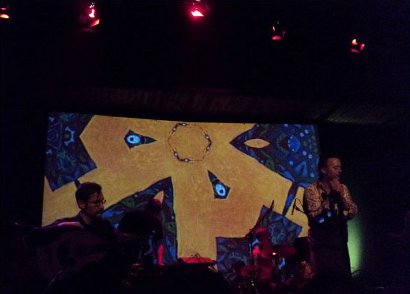 I hear songs, textures, timbres, and orchestrations in my head. I always have. It’s a matter of being able to take what’s in my head and turn it into actual sound. Nothing arises from any preconceived concept – I’ve tried that out and it never sounds good. So I have these abstract sonic ideas/feelings/soundings, and try to find resonances – something I can play on the oud or percussion, on my analog synths, field recordings of desert landscapes or construction sites, or digital signal processing applied to something from the archive of sound recordings I’ve made in the past. Sometimes a solo oud recording emerges, sometimes it’s a harsh industrial texture, sometimes something else.
One question is more or less obligatory: How did you came in contact with David Tibet from Current 93, who was it that discovered the other? Can you tell our readers a bit about your first meeting?
I’ve enjoyed Current and many other former World Serpent/Rough Trade artists since the late 80s. David and I “met” on myspace, actually – David had been listening to quite a bit of Coptic Christian oud music from Egypt, I had been listening to Current, after a couple brief exchanges I mentioned I’d be happy to contribute oud to Current or other projects, and an hour later David had emailed me 20 mp3s of Baby Dee piano/organ parts!
David Tibet and his music is popular in various underground scenes from Industrial to Folk to Psychedelic, although he may not see himself as a part of that. How much can you as a classical musician identify with such counter cultural phenomena? Did you also have a sort of teenage punk rock period or the like?
I played in a couple industrial bands in California in the 90s, the heavily-amplified-found-objects-with-screaming-vocals kind of industrial, that is. All the music I’m interested is intense in some way, although intense acoustic folk music and intense industrial noise obviously involve different techniques. One thing I love about Current is the way that it has changed over the years while keeping the same core intensity. Of course, most of that has to do with David, who is such a superb lyricist, performer and visionary, and attracts such interesting collaborators.
What are for you the main rewards when working within a band context?
Well, I don’t like performing solo, I got into oud playing and recording in a very social way, and find collaborations to be the most rewarding thing. Music is a form of communication. It’s not a language, but it’s communication, and there is simply nothing in the world like what happens when good musicians get together and interact, communicate. It’s really fulfilling for audiences, too, it fills a void that nothing else does, and I think that’s why in this “digital” age there is such a thriving economy for live bands. Such as Current…
What can you say about your experiences during Current 93′s “gentlemen“-tour (as Andrew Liles put it)?
Ha, the “gentlemen’s tour”! It went really well, the audiences were wonderful and yet quite different from each other. We played mainly material from the new albums (Honeysuckle Aeons, Baalstorm) and the Aleph/Black Ships trilogy, and I think that made for a really powerful and dynamic set. The local promoters in Athens, John and Anna at CTS Productions, are at the center of the local black metal scene, were gracious and did a great job reaching out to the community. The tour also saw the first Current show in Denmark, and that one went so well that there’s talk of a Scandinavian Current tour soon. We could call that one “the son of the gentleman’s tour”..
Thanks for the interview and all the best for your future endeavors.
Thank you!
(M.G./U.S.)
Fotos: Ladi Dell’aira & David Bauwens
I play the oud! I play music I love… Interview mit Eliot Bates
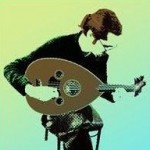 Eliot Bates ist ein weitgereister Mann, für den die Bezeichnung Musiker sicher nicht ausreicht. Denn neben der praktischen Arbeit an dem orientalischen Instrument seiner Wahl, der Oud – einer Kurzhalslaute, von der angenommen wird, sie sei der Vorgänger der seit dem Mittelalter in Europa gebrauchten Laute – ist er Experte für das musikalische Geschehen in Anatolien, befasst sich mit der technischen Seite des Aufnahmeprozesses traditioneller Musik, lehrt an verschiedenen Universitäten sowohl in den USA als auch in der Türkei und hat im renommierten Verlag Oxford University Press ein Buch über Musik in der Türkei veröffentlicht. Weiterlesen