 Die englischsprachige Songtradition ist voll von morbiden und makaberen Geschichten. Lange vor Nick Cave gab es Murder Ballads, und wer sich einen kleinen Einblick in dieses Thema verschaffen will, der findet einiges dazu in unseren Besprechungen zu Shirley Collins und The Hare and the Moon. Wenn ein Sarkast wie Stephen Burch von The Great Park in gewissen Abständen überlieferte Songs zwischen seine Eigenkompositionen packen will, steht ihm also ein großer Fundus an Weiterlesen
Schlagwort-Archive: The Great Park
Olten, Aarau, Essen: Drei Konzerte von The Great Park auf CDr und als Download.
Obwohl Stephen J. Burch alias The Great Park nicht nachlässt, was die Regelmäßigkeit seiner veröffentlichten Alben und Minialben betrifft, ist seine Musik doch eine, die auf die Bühne gehört, denn sein ungeschliffener, meist rein akustisch dargebotener Folk entfaltet am ehesten im kommunikativen Kontext familiärer Konzerte und mit den kleinen Ungereimtheiten, die dazugehören, sein bestes Potential. Weiterlesen
THE GREAT PARK: Understudy
 Für den Folkmusiker Stephen J. Burch alias The Great Park war 2017 ein produktives Jahr mit vielen Konzerten, die z.T. mitgeschnitten und auf CD erschienen sind, sowie bereits im Frühjahr ein Studioalbum namens “Do Not Walk Under Wing”. Ein zentrales Merkmal der darauf enthaltenen Songs war, neben der betont spärlichen Instrumentierung, textlicher Natur, denn fast alle der Lyrics drehten sich um Themen der Distanz und des Verlassens, und der oft ambivalent bleibenden Versuche, nach Hause zurück zu kehren. England spielte Weiterlesen
The Great Park, Borealis, Vincent Von Flieger, Elspeth Anne, Kristina Jung: Aktuelles auf Woodland Recordings
Auch im Jahr 2016 ist das mittlerweile von Nürnberg aus arbeitende Label Woodland Recordings seiner Mission treu geblieben und veröffentlicht in regelmäßigen Abständen in liebevoller Handarbeit gestaltete Tonträger zum Teil hervorragender Acts. Künstler wie Kristina Jung, Vivian Void, Vincent Von Flieger oder die Band des Labelchefs The Great Park lassen sich zwar nicht unter einem Genrebegriff wie dem oft etwas leichtfertig in den Raum geworfenen Terminus Folk subsumieren, doch neben dem kreativen Anspruch  Weiterlesen
THE GREAT PARK: The Good Men
 Stephen Burch hat sicher seine Tabus, doch in den Songtexten von The Great Park gibt er sich meist schonungslos. Schonungslos gegenüber den fiktiven Figuren seiner Texte, schonungslos aber auch gegenüber seiner eigenen lyrischen Persona. „I do wrong“ heißt ein Song, und es gibt eine ganze Reihe anderer, die ebenso heißen könnten. Wer all das weiß, denkt bei einem Albumtitel wie „The Good Men“ vielleicht schon an Ironie, wohl zurecht, doch es gibt auf dem neuen Longplayer auch versöhnliche Töne. Weiterlesen
THE GREAT PARK: Kitchen
 Obwohl Stephen Burch und seine wechselnden Mitstreiter eine gut erkennbare musikalische Handschrift haben, ist The Great Park auch eine Band, die man sich über die Songtexte erschließen kann. Dass Burch dunkle, vom Fatum erzählende Geschichten in schöne Melodien packt, dass selbst die morbidesten Abgründe sich bei ihm gerne in anheimelden Szenarien ereignen, ist oft hervorgehoben worden, ebenso die biografische Färbung seiner meist in der Ich-Form verfassten Songs. Burch ist aber auch ein leidenschaftlicher Symbolist, und selten wurde sein Interesse an Orten, an Räumen und Straßen und allem, was man dort vorfindet deutlicher als auf den Album „Kitchen“, das neben der CDr-Version erstmals auch in Form von hundert Vinylscheiben vorliegt. Weiterlesen
V.A.: 50 (5CDr-Box)
 Als Stephen Burch vor sieben Jahren das Label Woodland Recordings ins Leben rief, dachte er vermutlich nicht daran, dass es in seinem Leben zu einer ähnlich starken Konstante heranwachsen sollte wie sein Musikprojekt The Great Park. Doch seit seinem Spilt-Album mit The Diamond Family Archive sind nicht nur sieben Jahre ins Land gezogen, sondern ganze fünfzig weitere Veröffentlichungen, die Jahr für Jahr in limitierter Stückzahl und in liebevoller, handgemachter Aufmachung herausgekommen sind. Mal erschienen die Tonträger in schicken handgefalteten Papiertüten, mal in sorgsam dekorierten Boxes aus Tonpapier, die mit Mixed Media-Ideen zu kleinen Assemblagen umgestaltet wurden. Oft glich Weiterlesen
THE GREAT PARK: We Love To Get Lost And We Love To Get Found
 Stephen Burchs Songtexte sind von brutaler Direktheit und zugleich voll feinsinniger Nuancen. Es gibt klare, sehr aussagekräftige Momente, die trotz des starken Symbolismus ein griffiges Thema umkreisen. Andere Stellen sind sehr dunkel, verweisen auf alles und nichts, offenbaren eine sehr persönliche Bildwelt. Von Abgründen und ihrer Anziehungskraft künden sie jedoch fast immer, und selbst in den euphorischen Momenten erscheint das Glück oft selbst wie ein Abgrund, dessen Sog man sich gerne aussetzt, wohl wissen um die Quittung, die einem das Leben ganz sicher vorlegen wird, und die meist im Verlust seiner selbst besteht. Weiterlesen
THE GREAT PARK: Simple Folk Recording
 Mit seinen letzten Alben „Now Wash Your Hands“ und „Good and Gone“ hat sich Stephen Burch alias The Great Park zumindest in einer Hinsicht auf sein Frühwerk zurückbesonnen, denn nach einer Reihe klanglich reduzierter Aufnahmen ging er hier erstmals wieder mit einer mehrköpfigen Band ins Studio. Dass die mit Streichern, Bläsern und dezenten Rhythmen begleiteten Songs zu einer Zeit entstanden sind, als sein texterischer Ausdruck Weiterlesen
Woodland Recordings planen ihre 50. Veröffentlichung
Beim Label Woodland Recordings (The Great Park, Vivian Void, Fee Reega u.v.a.) steht demnächst die fünfzigste Veröffentlichung ins Haus, wofür die Macher gerade eifrig Pläne schmieden. Hier ihr “Call for Songs” in eigenen Worten:
“We’re planning something special for our 50th release. Without saying too much we’d like to do something that includes 50 artists – people we’ve worked with and people we don’t know yet. If you would like to be involved it’s easy enough:
• Emails only please to woodlandrecordings@gmail.com. No FB messages or tweets.
• We’d like 2 songs / pieces of music from each artist. Or any single piece that stands on it’s own.
• Send all files as attachments or give us a link to download – no streaming music please.
• Unreleased stuff only if possible. We’re not into things that have been online for any time beforehand.
• Don’t worry about asking before sending. Yes it’s fine.
VINCENT VON FLIEGER: Day 1
 Die Musik Vincent von Fliegers ist so eigenwillig wie sein einprägsamer Künstlername. Man sollte ihn allerdings nicht mit Bombast und großen Worten ankündigen, nicht nur, weil er das nicht nötig hätte, sondern weil die Songs, die der junge Nürnberger jüngst auf sein Debüt gepackt hat, weit entfernt sind von großen Gesten aller Art. Dennoch oder vielleicht gerade deshalb ist Markanz und Eindringlichkeit durchaus vorhanden. Weiterlesen
2012 Field Recordings: Free Dowload Sampler von Woodland Recordings mit The Great Park, Vivian Void, Mute Swimmer, Fee Reega u.v.m.
Für die Fans von Woodland Recordings sollte 2012 ein gutes Jahr gewesen sein. The Great Park, Vivian Void, Fee Reega und andere haben tolle Alben herausgebracht, mit Pablo und Destruktion sowie Vincent von Flieger (zu ihm demnächst mehr…) erschienen ein paar neue Namen im Dunstkreis von Stephen Burch und seiner Mitstreiter. Andere wiederum wie Mute Swimmer sind unermüdlich getourt und machen mit neuen Songs im Repertoire gespannt auf zukünftige Releases. Zum Jahresende gibt es vom mittlerweile in Nürnberg heimischen DIY-Label ein kleines Geschenk in Form einer kostenlosen Download-Compilation.
 “Field Recordings” heißt sie deswegen, weil jedes der elf Stücke von Stephen selbst mit minimalem Equipment bei den jeweiligen Konzerten mitgeschnitten wurde. Wie immer liegt der Schwerpunkt bei hintergründigen, mitunter dunklen Akustiksongs, doch wer Vivian Void oder die neueren Elektronica-Vorlieben von Woodpecker Wooliams kennst, weiß, dass man sich darauf nicht grundsätzlich verlassen sollte. Musik und Hintergrundinformationen gibt es hier.
Tracklist:
01. Fee Reega ‘Es gibt andre Länder’
02. Vivian Void ‘No Choice Boys’
03. Vincent von Flieger ‘Yolk’
04. Own Road ‘Mmhh…’
05. Allysen Callery ‘The Hunstman’
06. Pablo Und Destruktion ‘Me quieres como a un perrín’
07. Fiona Sally Miller ‘Paco’
08. Dead Rat Orchestra ‘ The Captain’s Apprentice’
09. Woodpecker Wooliams ‘Red Kite’
10.The Great Park ‘Limmat’
11. Mute Swimmer ‘Ocean Home’
WOODPECKER WOOLIAMS: The Bird School Of Being Human
 Als ich Gemma Williams alias Woodpecker Wooliams zum ersten Mal auf einer Bühne erleben durfte, ging mir das alles noch etwas zu sehr in Richtung einer jungen Kalifornierin, die vor ein paar Jahren mit Harfe, High Heels und Tremolo in aller Munde war. Allerdings war Gemmas britischer Akzent nicht der einzige Punkt, mit der sie ihrem modernistischen Spiel auf der Miniaturharfe und ihrem verschrobenen Gesang dann doch noch ein eigenes Terrain innerhalb experimenteller Folksparten sichern konnte. Weiterlesen
THE GREAT PARK: Good And Gone
 Stephen Burchs Veröffentlichungen waren immer wieder Thema auf dieser Seite, was sicher auch damit zu tun hat, dass er extrem produktiv ist, dabei stehen Künstler mit einem hohen Output häufig unter Verdacht, unter Legitimationszwang, ganz so als beeinträchtige Quantität zwangsläufig immer die Qualität. Natürlich arbeitet Burch als Singer/Songwriter mit einem festen Bestand an Mitteln und ein The Great Park-Song ist unter tausenden anderer Folkstücke sofort herauszuhören – so prägnant ist die meistens weit nach vorne gemischte Stimme, die die Texte gleichermaßen rezitiert als auch singt. Weiterlesen
H. Gudjonsson: The Darkness And… – Slow Motion Folk aus Bremen
 Hlynur Gudjonsson ist einigen unserer Leser vielleicht noch im Zusammenhang der Compilation “Home Taping Is Music, Vol. II” bekannt, die Stephen Burch (The Great Park, Woodland Recordings) letzten Herbst zusammengestellt hatte. Sein ruhiger, meditativer und betont unspektakulärer Akustikfolk, den er entweder im Alleingang oder zusammen mit seiner Partnerin Susanne Stanglow alias Haruko spielt, erschien bereits auf zwei Tonträgern. Mit ihrem leichten Blues-Touch kippen die introvertierten Songs niemals ins Weinerliche und offenbaren ihre charakteristische Stimmung erst nach und nach – Musik also, die Konzentration fordert und keineswegs als seichte Hintergrundbeschallung funktioniert, aber mit mehrmaligem Hören deutlich dazugewinnt. Weiterlesen
FEE REEGA: Savagery, Salvajada, Wildheit
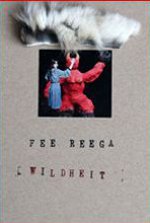 Mit etwas Glück und der Gunst des Zufalls könnte es passieren, dass einem irgendwann in einer urigen Kaschemme ein etwas schräges, aber ungemein treffsicheres Tremolieren entgegen schallt. Ins Gespräch mit der Begleitung vertieft und mit dem Drink seiner Wahl in der Hand nimmt man das stimmungsvolle Spiel der stromlosen Gitarre zuerst nur als Hintergrundbeschallung wahr, und erst wenn die eigensinnige Frauenstimme, fragil und energisch zugleich, die Geschichte eines ungeduldigen Pyromanen anstimmt, der ein ganzes Stadtviertel abfackelt, lässt man sich dann doch etwas bereitwilliger ablenken. Weiterlesen
It’s Nice To Make Things. Ein Gespräch mit Liz Green
 Wäre Liz Green ein halbes Jahrzehnt früher auf der medialen Bildfläche erschienen, dann wäre ihr Name sicher noch mehr durch aller Munde gegangen als es nun nach der Veröffentlichung ihres ersten Albums “O, Devotion!” der Fall ist. Damals nämlich hatten akustische Klänge folkloristischer Grundierung gerade Hochkonjunktur – vorzugsweise wenn sie über eine gewisse Schrägheit und ihre Erzeuger über einen deutlich erkennbaren Außenseitergestus verfügten. Von diesen Modephänomenen hätte sie nicht nur profitiert, sie hätte die ganze Bewegung auch bereichert. Zum einen, weil sie Engländerin ist, was in dem doch sehr amerikanisch geprägten Folk 2.0 selten war. Zum anderen aber auch, Weiterlesen
It’s Nice To Make Things. An Interview With Liz Green
Do you think the place where you grew up is any way responsible for the kind of music you play now?
Yes. That’s a good question. I grew up on the Wirral, which is a really small place in Britain surrounded on three sides by water.
I know the place because I spent some time there.
Oh, really?
In West Kirby.
Oh, why did you go there?
Actually I worked for about a year as an assistant teacher for German in West Kirby.
West Kirby Grammar School?
West Kirby Grammar School for Girls and Calday Grange on top of the hill.
Oh, that’s the school I went to. West Kirby…
When was that?
1994 to 2000.
That’s funny.
Were you there?
 Well, I started working there in the autumn of 1994 and stayed until summer 1995.
Oh wow. I was in first year of secondary school. Oh how cute (laughs). West Kirby is a funny place. And it’s quite special as well. The scenery is as a teenager pretty boring, you know, pretty dull.
I can imagine.
But Liverpool is really near. So you know I had these two bits of life. Where I’d be stuck at home on the Wirral. There’s not much. So I read a lot and I created a lot. I sat in my room a lot…thinking (laughs). And then I had this other bit of life where I started going into Liverpool, going out to rock clubs when I was about 14, 15 and having a kind of loud crazy life. Yeah, it definitely influenced the music.
When people talk about your music – and I remember you posting something from the Guardian on your website – they all seem to stress this vintage element. Are you happy with the tag?
Well, I mean, it does sound like that. You know the orchestration and my voice. And also they find it hard to pinpoint that. And to me it doesn’t sound like that and I’m not trying to sound like that. It’s just what comes out. I wasn’t in bands when I was growing up. I didn’t sing when I was growing up and I didn’t play the guitar when I was growing up. You know I digested a lot of music and a lot of books and a lot of information in other ways and one day it just came out and that’s what came out. I think it’s a kind of melting pot of all the things that have influenced me.
On our website there’s a review of your album and the authors that came to the reviewer’s mind when listening to your music were those that are sometimes associated with so-called Southern Gothic, Flannery O’ Connor and William Faulkner. Are they authors who interest you?
Well, I mean I like stories and I’m interested in Southern Gothic actually and there’s a story by Richard Brautigan. What’s it called? The gothic one. I like his writing. You know, I like the kind of ghostliness. I’m kind of fascinated by places that aren’t where you are. Everyone is, aren’t they? Because they’ve got this element of exoticism and you know America just seems to be this vast desert full of freak shows and Coney Island and Tom Waits is singing around the corner and Blues people walking down roads to me. So America is such a new country but all the myths that it’s created around it…That’s pretty impressive for something that’s just a couple of hundred years old.

Are there any English writers that you really like?
I like books. I read a lot. I can’t remember. Who is English?
Never mind.
I like all books. I can’t remember. I’ve read so much. But I do like foreign fiction. I like Hermann Hesse a lot, Dostojevski, they’re quite philosophical but Dostojevski in particular is quite funny. Oh, George Orwell. He’s amazing.
Today I spoke with a group of students about “1984″.
Wow. “1984″ is incredible. One of my favourite George Orwell ones is “Coming up for air”, which is about a middle-aged man living in a village with his wife and his kids and kind of lamenting his lost youth.
When I was about 16 I read a couple of Orwell books: “1984“, “Road to Wigan Pier“, “Down and out in Paris and London”. I remember that the end of 1984, when he finally loves Big Brother, I was petrified. There was no way out of it.
Yeah, there are similar themes in “Coming up for air”. I went to university to do an English degree. I love books so that was what I thought I should do but it turned out that I just liked reading books and researching but I wasn’t very good at writing the essays. I didn’t want to give it back in a kind of prescribed way. It came out in a different way. But while I was there I was really interested in the notion of the outsider in society. Everyone sometimes feels that there’s nobody else quite like them or that they’re invisible. So “Notes from the Underground” by Dostojevski and Ralph Ellison’s “Invisible Man“. This man sits in the basement beneath the towerblock and he siphons off the electricity. He has thousands of lightbulbs covering his room and I liked this idea of this quiet defiance.
 You’ve talked about the outsider and you being interested in that. You released two singles. Was that a kind of statement against downloading?
Actually we wanted to release a gramophone record but couldn’t find anybody to do it cheap enough. (laughs). That was the first thing we released. He is now my manager but back then we were just friends and we thought just for a laugh to put something out. A gramaphone record would have been good. It’s almost as if we didn’t want anyone to listen to it. Actually I think that 7′-singles are actually quite a nice format now. Music has become almost cheapened, well not cheapened but it has become so easily accessible now. CDs are kind of obsolete. If you give someone a 7′ or a record it has actually some kind of tactile value. You know it’s coming back. People are buying the vinyl record rather than the CDs. It’s nice to make things.
It’s nice to have them. If everything is accessible immediately it kind of loses its worth.
That’s the same with lot of society. We don’t need to save. We’ve got a credit card and nobody saves their money. The idea of doing limited runs of things that are special is great.
I mean somebody like Stephen [Burch, The Great Park, Woodland Recordings] does a great job.
Well, I used to be on a label called Humble Soul. We were doing exactly the same thing, my friend runs a label called Red Deer Club, they’re doing exactly the same thing. Everything we make is small runs of handmade loveliness. Yeah, it’s really important keeping it personal and special and collectable. It’s nice to collect these things. They’re of value not just because of the music. You know the person who made the music has printed the CD or made the artwork. It’s something extra.
If you’ve got a tetrabyte of music on your hard disc it totally decontextualizes the music.
(laughs) I still have all my CDs. I can’t get rid of them. And then I was making my CD even though all the things I had made up to then had been handmade, like handstitched. What scared me moving onto a bigger label was the fact that I would lose that – you know it’s impossible to maintain that much control over stuff. But I’m still trying to make little things to sell and what I wanted to do when we did the CD I made sure that it was on the card that I liked and I did the drawings for it even though they wanted to put my face on the front of it. I was like: No, that’s not gonna happen. I’ll give you some artwork and they were like: ok. They liked it. When I was doing the lyric booklet I made sure it had the things I liked when I buy a CD. I want the lyrics, I want a thank you-list. I like reading who they thank. I tried to make it with as much love as possible without actually handmaking it.
 When you recorded the songs for the CD I think you used some earlier material but you reworked it.
Yeah.
How did you decide to do it?
Well, it was a natural progression and the idea of the album as “O Devotion“ had been around for about three years and I tried to record it in many different forms and I almost had the tracklisting and the tracklisting changed very slightly in these three years. I knew that it had to have this almost chronological progression of the first songs that I made. That’s what I wanted to make. And even though by the time I recorded it I almost had enough songs to make another album, I still wanted to do the album first. When I played the songs in their original form, I could still imagine other things even though it was just me and my guitar. I had still these things going on in my head. I could see these images, hear sounds. I didn’t have a band. I didn’t know anybody who could play. I had this shadow puppet theatre and I used to cut out a tiny saxophonist and a little doublebass-shadow and a little piano shadow. So when I played songs I would introduce: here’s my tiny saxophonist and I would like you to imagine them playing with me. It’s the imagination and it helps. It all happened naturally. I made friends with these guys [who are in the band now] and we started playing music. It was natural that the people on the record are people I’m friends with and it didn’t feel forced. I could have made an acoustic album. I thought I might only get to make one album and I wanted something with longevity in it. Selfish as that is. Something to be remembered after I’m gone. But if that was the only thing then I wanted it to make it as well as possible. I think I did ok. (laughs)
What then would you say have people like you and Stephen in common?
I think we’d still be playing these songs even if nobody was listening. We’d still be doing exactly the same thing. We really love what we do. We have to do it. That’s what we have in common. Soul. A little bit of soul.
How did you both meet?
Me and Stephen met while playing gigs. We went to the same festival in Scotland and I saw him play and it blew me away. And he saw me play and the thing and we found each other when myspace was still going and I sent him a message after and he sent me the same message back. I organised gigs for him in Manchester and he organised gigs for me in Brighton. We expanded the circle. There’s a really good connection between Manchester and Brighton now. When he moved to Berlin he gave my CD to a friend who was booking shows in Germany and he started booking shows for me. And now I’m in Germany (laughs). So it’s all Stephen’s fault.
 What is the relationship between the British and American influences in your work?
I’ve never been good at analysing. People go: what about this? And I say: I just kind of did it. I’ve never really thought about it. The relationship? It’s not only American and British. I just happen to like American music. I don’t really like English folk music. I don’t know why. I like sea shanties. I don’t know what the relationship is. (laughs) That’s a really difficult question. That’s an essay question.
What was your favourite record store in Liverpool?
Probe and Harry Records. The guys in Probe used to…I was into American garage music and these guys used to pick out CDs for me. They said bring it back next week and exchange it if you don’t like it.
Is Probe still there?
Probe is. They’ve got my album (laughs). It’s really good that it’s still going. There are now very few independent ones.
Maybe one last question. I had talked with a friend about you some time ago and some time later I went to the station and bought a music magazine and there was this compilation album with Leonard Cohen covers and suddenly your name popped up again. What made you decide to use the piano as the main instrument for your version of “Sisters of Mercy“?
One thing is I’m a much better pianist than a guitarist. Well, maybe not better but I can work stuff out because I can see the notes. I don’t know what I’m doing on a guitar. I don’t know what the notes are called. But at least on the piano I can go C, D, E, F. Plus it’s very hard to cover a Leonard Cohen song. It’s more of a homage. You can’t really cover him. It’s impossible. And he does his on the guitar. So I just thought I do it on the piano. It was really nice because I chose that song because I like that song and it’s got quite easy chords. I had to learn it in about two days. When I phoned my mum, she’s a massive Leonard Cohen fan, and when I said that I was doing “Sisters of Mercy“ she was like “My favourite song“. And when I went home she showed me a book with his poetry that she had for ages, and in the back it there was writing when she was about twenty, she’d handwritten out all the lyrics to “Sisters of Mercy“ in the back of the book. That was really nice.
(M.G., U.S.)
Sabotage Dressed Up As Song: Ein Interview mit Guy Dale von Mute Swimmer
 Es gibt eine Menge Musik und Kunst, die man nur schwer greifen kann, aber das besondere an den Arbeiten Guy Dales ist, dass man sie gar nicht unbedingt greifen muss. Die Musik, die der Engländer mit seinem Akustikprojekt Mute Swimmer spielt, entfaltet eine sehr unmittelbare Wirkung, scheint fast physisch im Raum greifbar zu sein und ist in ihrem wesentlichen Kern doch schwer zu begreifen. Auch wenn die berührende Melodik, der intime Gesang und der fast poppige Appeal seiner Songs auf den ersten Eindruck mit der abstrakten Reflexivität seiner Texte im Kontrast steht, hat man stets das Gefühl, dass Musik und Worte Weiterlesen