
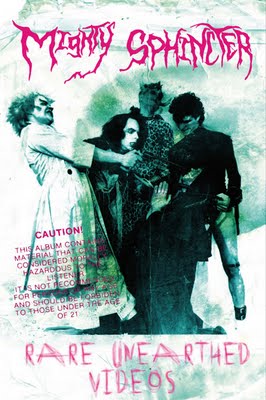
 Gothic hatte schon von Anbeginn immer etwas Theatralisches und auf die Vergangenheit Gerichtetes: Man denke etwa an die Auftritte von Bauhaus, die durch die Beleuchtung an expressionistisches Kino erinnerten – nicht zufällig war die erste Veröffentlichung der Band eine (augenzwinkernde) Hommage an Bela Lugosi. Nik Fiend wirkte dank Schminke ganz so, als habe George A. Romero Mephisto auf Leinwand bannen wollen, die Nebelexzesse der Sisters of Mercy sind legendär und die Virgin Prunes, die natürlich nie in das enge (Genre-)Korsett passten, waren vielleicht die theatralischste all der Bands der frühen 80er. Weiterlesen
Archiv der Kategorie: Reviews
SALLY DOHERTY & PAUL KILVINGTON: Silent Spaces
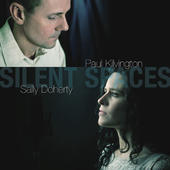 Es gibt wohl kaum einen Musiker, der nicht irgendwann einmal als Fan angefangen hat und später auf die Idee kam, etwas ganz Ähnliches zu machen wie diejenigen, die das eigene empfängliche Gemüt mit so viel Bedeutung nährten. Bei eigenständigeren Künstlern spürt man die Einflüsse eher indirekt, und meist passiert es erst nach Jahren, dass jemand ein Tribute- oder Coveralbum aufnimmt, um alten Vorbildern die verdiente Ehre zu erweisen. Indirekt heißt das dann auch, dass man sich souverän in den eigenen kreativen Bahnen bewegt und es sich leisten kann, die Songs anderer zu spielen. Weiterlesen
MOON DUO: Horror Tour
 Bislang waren es eher Grails und Holy Sons, die Psych Rock mit der Ästhetik alter Genrefilme kombinierten und dabei die Hörer gründlich überraschten: Sleaziges Artwork muss der Ernsthaftigkeit einer Musik keinen Abbruch tun, und das Resultat muss nicht mal ironisch wirken. Pünktlich zum 31. Oktober machen auch Ripley Johnson und Sanae Yamada mit ihrem Moon Duo einen Abstecher in die Welt trashiger Horror-Storys und schaffen somit einen Gegenpol zum letzten Wooden Shjips-Album, auf dem sich Johnson einem Highbrow-Thema, nämlich der Geschichte des Manifest Destiny widmete. Weiterlesen
WOLVES IN THE THRONE ROOM: Celestial Lineage
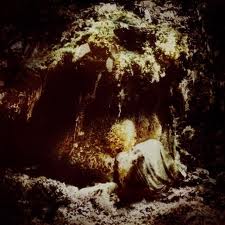 Erwartungsvoll stimmende Glocken, ein episches Keyboard, die ätherische Stimme einer Sängerin. Mit einem solchen Fantasy-Szenario beginnt „Celestial Lineage“, das neue Werk der amerikanischen Band Wolves in the Throne Room. Nachdem „Black Cascade“ vor rund drei Jahren vor allem ein infernalisches Gewitter aus Blast Beats und höllischem Gekeife sein wollte, knüpft die aktuelle Arbeit in Sachen Diversität wieder an „Two Hunters“ an, mit dem die Gruppe erstmals auch jenseits einschlägiger Subkulturen von sich reden machte und den Grundstein zu einem viel diskutierten Image legte. Weiterlesen
MOMICK: s/t (Vinyl-Edition lim. 500)
 Bei Momick handelt es sich um ein noch recht junges Projekt, doch die beiden Betreiber Richard Moult und Michael Lawrence sind keine Unbekannten. Moult ist seit langem in verschiedenen Bereichen tätig. Wäre Magritte Landschaftsmaler gewesen und dazu Brite, dann hätten seine etwas dunkleren Gemälde vielleicht ein bisschen wie die des frühen Moult ausgesehen, der in seiner jüngsten Schaffensphase einen abstrakteren, doch nicht minder dunklen Stil für sich entdeckt hat. Weiterlesen
PREMATURE EJACULATION: Dead Whorse Riddles
 Die sechzehn auf zwei CDs verteilten Tracks von „Dead Whorse Riddles“ (das Schachtelwort aus „whore“ und „horse“ verwendete Williams später als Titeltrack („Whorse“) als auch als Albumnamen („The Whorse’s Mouth“)) knüpfen an die bisher veröffentlichten Alben der „Lost Recordings“-Serie an, transzendieren sie aber auch zugleich: „The Nature of Pain“ schafft es durch das Zusammenspiel von Loops eine intensive Klangfläche zu erzeugen, in der die einzelnen Elemente sich zu einem Gesamten verdichten, das wie so oft bei Williams eine Atmosphäre der latenten Bedrohung ausstrahlt. Weiterlesen
DAIKICHI AMANO: Human Nature (Buch)
 Ich bin weder ein großer Kenner der japanischen Kunst, noch wusste ich etwas über den 1973 geborenen Fotografen und Filmemacher Daikichi Amano, bis ich vor kurzem auf seinen Bildband “Human Nature” gestoßen bin. Darin werden weibliche Akte zusammen mit Meerestieren und Insekten zu Tableaus von seltsam morbider Erotik. Japan- und Erotica-Forscherin Agnès Giard stellt die Bilder in ihrem Vorwort nicht nur in die Tradition japanischer Erotikdarstellungen, sie zieht auch Vergleiche zu barocken Stilleben und Werken des Surrealismus. Rockstar Marylin Manson, ein Fan des Fotografen, beschrieb seine Motive etwas plakativ als Kombination aus Jean Cocteau und Jacques Cousteau. Weiterlesen
SHARRON KRAUS & MICHAEL TANNER: In The Rheidol Valley
 Sharron Kraus und Michael Tanner alias Plinth arbeiten nicht zum ersten mal zusammen, schon auf Sharrons Album „The Fox’s Wedding“, seinerzeit bei Durtro Jnana erschienen, hinterließ der Brite als zweiter Gitarrist seine Spuren. Beide Künstler sind einer modernisierten Auffassung des Folk verbunden, beide loten dies jedoch auf ganz unterschiedliche Weise aus. Weiterlesen
Between Rhythm and Contemplation. Interview with Musician Midori Hirano
You are often described as composer, producer, piano player and soundartist. If you had to find a core element of what you do, how would you describe it?
Since I like a simple description, I’d just like to call myself a musician.
Your interest in playing the piano started at an early age. What can you tell us about the time you decided to become a musician?
During my childhood, playing the piano was just fun for me, but since when I was studying classical music at university, I got bored with playing only pre-existing music pieces all the time (and also I couldn’t really adapt to such a hierarchical society of Japanese musical education), and then became more and more interested in composing my own music. At the beginning, I was only making piano pieces, but slowly learned how to make music with computer and equipment since I found it interesting.
 Did you have any kind of heroes at that time, or at least musicians that left a strong impression on you?
Of course there are many musicians I respect, and hard to point out a single one – but at least J.S. Bach gave me a strong impression to connect to the music itself when I was a kid.
Music with a large focus on sound is often described as “experimental“. Do you experience your creative work as sort of an experiment, or would you rather stress the playful side of it?
Sometimes focusing on sound itself is fun and it can also be a good lesson to improve skills of making sounds and it enables me to hear my own music from another angle. But basically I would rather like to focus more on making a musical structure since I’ve been describing myself as a composer. For me, focusing on sounds is like trying to make gradation with one color, and sequencing music tracks is like painting with different colors.
There is this cliché that dealing with the technological side of music is atypical for women. Do you have a strong affinity to technical things, and how would you react on somebody who talks in such clichés?
Some 10 years go, I was actually working at a music studio in Tokyo which makes tracks for commercials or promotes musical equipment, and I was the only woman working there. So I’ve been used to working in this “men-society” of the music industry since then. Of course it was not easy but it still was a good training for me.
Usually I don’t really care when someone talks in this cliché, but yet not really against. Some people said they thought that I might be a guy when they heard my music for the first time, but on the other hand some other people told me that my music sounds pretty feminine. I enjoy both feelings!
 Here in Germany, it’s quite usual to introduce you as a Japanese artist. But how much do you identify with that? Do you feel your works are based in a particular culture? Do you also sometimes fear that people could exotizise you too much?
To be honest, I often feel awkward when people try to see me as a “Japanese” artist, rather than just as a musician. In the beginning of my life in Germany, and when I was touring in Europe, I was struggling with this kind of feeling that people gave me here and there. But now I’m able to take it easier – or I just don’t try to care about that. I feel like this is just how it is. (And also I know that many Japanese artists are trying to show themselves quite particularly as Japanese for promotional reasons, because they know it sometimes works pretty well abroad.)
And even though I have been learning classical music for a long time and have never learned Japanese traditional music, it is still really easy for me to compose music which sounds really Japanese because I know there are certain chord progressions and styles of melodies which are often used in Japanese old songs or pop songs which mostly sound melancholic. I was also making this feeling of music when I was still in Japan, but after relocating to Germany I gradually started to hear this kind of music much more objectively, and it made me interested in making more sound-oriented music without so much emotions. And this is actually another reason of starting the MimiCof project besides midori hirano.
Would you say that in your recent works there are certain influences that could be located as Japanese or on the other hand European?
I don’t think about that so much lately, but as I told in the previous answer, maybe there could be some influences unconsciously because of my original background. And also there should be some influences from what I’ve learned from western music.
Your musical output has two main pillars – the records you release under your own name, and those under the name MimiCof. Where do you see the main differences between both spheres? And which are the places where they both meet?
Those records which I’ve released under my own name are pretty much post-classical music, if I had to describe them. And when I’m using the name MimiCof, the music has stronger beats and a bit of dark feelings. Not everything but most of the MimiCof tracks are kind of experimental but also danceable.
But since both sorts of music are made by myself, maybe sometimes you can find some similarities between them, such as how the melodies sound like. Actually the latest EP “Magnetic Visionaries” which I released under midori hirano is kinda closer to MimiCof. So it means both can be crossing from time to time..
 When you compose a piece of music, do you know immediately if it will be midori hirano or MimiCof?
I think yes – when I started making beats, then it will clearly be MimiCof. But for midori hirano, I usually make tracks from melodies and harmonies.
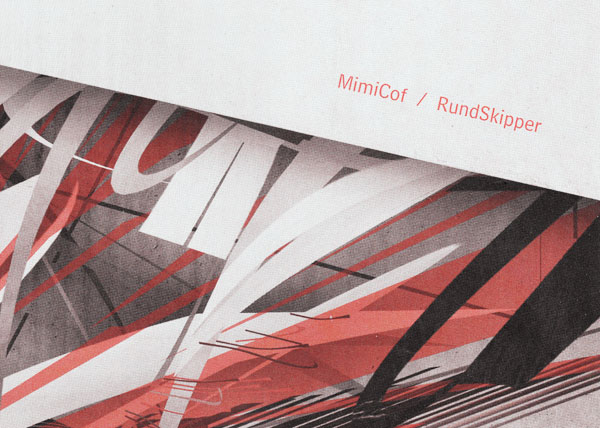
What can you tell me about the developing of your latest album “RundSkipper”? Were there any paticular ideas from which it all started? How did you get into contact with the artists who did remixes?
At the end of last year I felt like composing a more electronic style of music than before, and then tried to make some tracks as demo. At that time I didn’t have so many particular ideas about making an album. But my label boss found my new tracks which I uploaded on SoundCloud, he liked them and contacted me. That was how it started. And since then we sometimes discussed what kind of tracks should come next, to make the whole album possible. Some artists don’t like it that way as they want to make all tacks only on their own ideas, but I still like to discuss it with the label because it’s always good for me to hear some opinions from different angles, and it is also a way to improve myself.
As for the remixers, I actually didn’t think about having remixes, but since my label suggested it I thought this could really be a good idea. First he suggested three remixers to me (Serph, Go-qualia, and Fugenn & the white elephants) since he knew them, and then I also wanted to have another person from my side. I asked Frank Bretschneider about remixing – since he is a good friend of mine and I’m also a big fan of him even since before I met him in Berlin (I already saw his concert once in Kyoto when raster-noton toured in Japan some years ago). So I was really happy that he did this for me!
When I googled “RundSkipper” , all results led to you, so I guess it’s a word of your own creation. Does it refer to anything, or do you just use it for its sound?
As you guessed, “RundSkipper” is a word I made up. And it was intended to mean “a person who is skipping on the earth”. I took “Rund”, which in German refers to a quality of the planet Earth, and combined it with “Skipper”, because I thought it looked nice.
I took this word because all the people who are involved in this record are living in different places of the world – like me in Berlin, Noah (from keepadding, did the artwork) is in the US, and label boss and some remixers are in Tokyo, and then it was printed in Taiwan. 
 When I listen to this album, I always have the impression that you are interested details and how they relate to each other. Would you agree?
I think yes – I’m always trying to focus on details.
You do filmscores, and on the other hand I’ve seen a lovely video for your music. You are also interested in photos. Would you say that the sensitivity for visual perception is also mirrored in your musical style?
Not always, but sometimes yes.
The first time I saw you perform was at the Angura Show at Staalplaat store, which was focused on experimental art and music from Japan. As the other contributions were all quite harsh, your gig seemed like an oasis of rest and contemplation. How did you enjoy this event as a setting for your own show? Do you think your performance fit well into this context?
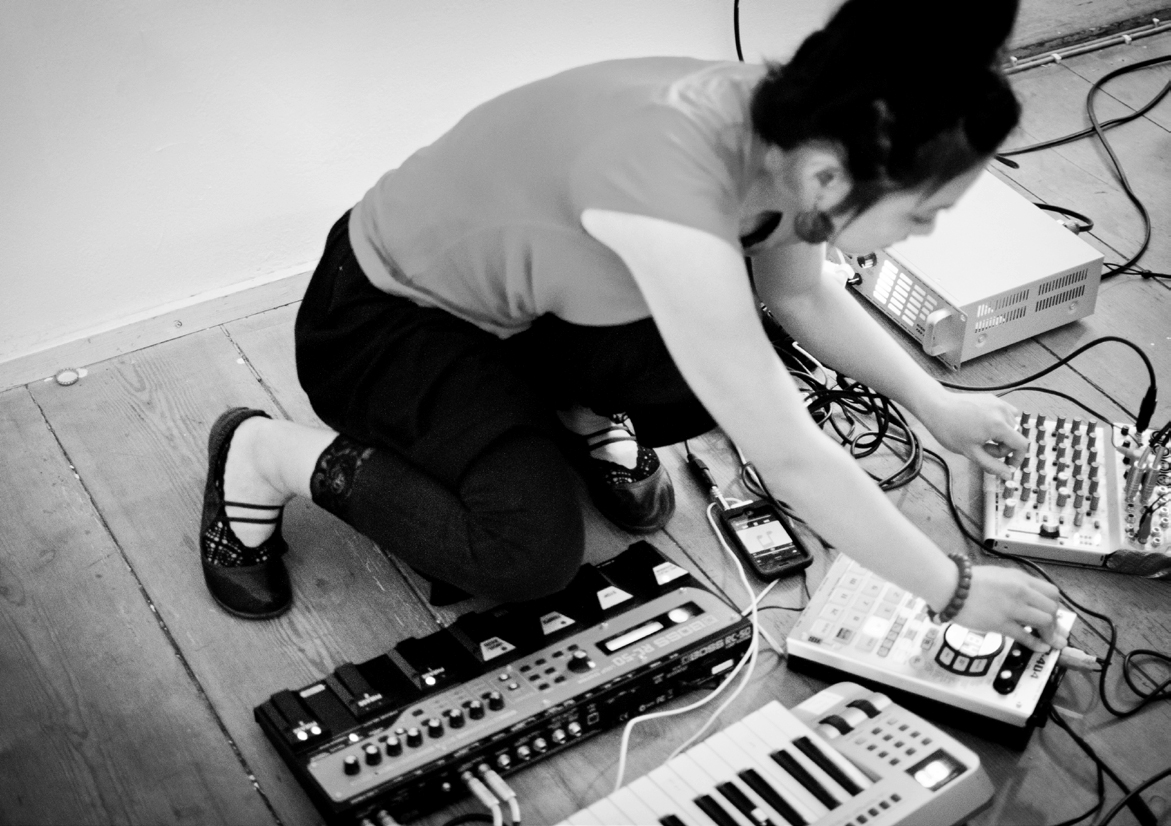
Whatever kind of music the other people play at the same show, I’m trying to play and focus on what I want to play.. and that is the only thing I can do at a concert. And if everyone or even some of the audience like my play, then I’m happy and that’s all. At that show at Staalplaat, I enjoyed it myself too – to play in the basement and with good sound..
You will soon travel to Japan for a concert tour. Do you experience performing there very different from your shows in Europe?
It still depends on the situation of the venue of course – not only on which country it is. But I feel like the European audience tends to react more directly to what they hear or see. If they don’t like it, they keep chatting with friends, for example. But Japanese people are generally trying to stay quiet and hear it even if they don’t like it (or they just go out).
But it doesn’t really matter to me – there are always some people who want to say that they like my music at different places both in Europe and Japan. And I appreciate it.
Most music I know by you is without vocals. What can you tell us about the exceptions, and could you imagine incorporating more voice one day?
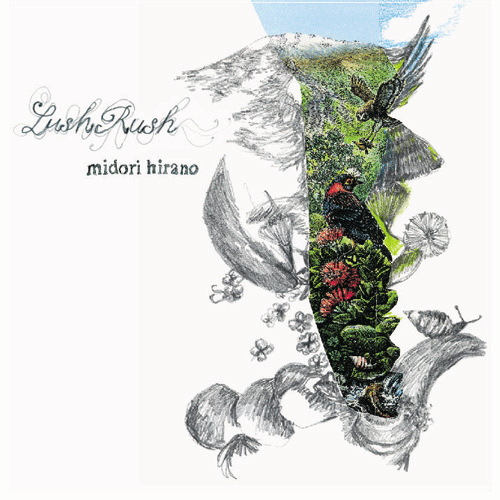
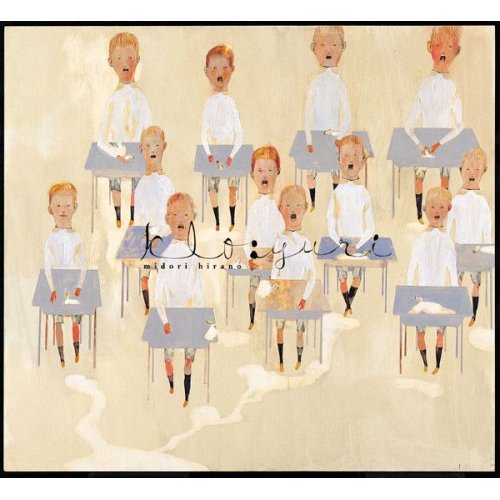
There are some vocals of mine on my older albums “LushRush” and “klo:yuri” which I have released before. You can hear how it is.. here for example: http://www.youtube.com/watch?v=iG8C4nqz814
 In an earlier interview you mentioned Yukio Mishima and Haruki Murakami as two favourite prose writers. I guess many people would find them very different. Which aspects of their writings impress you?
I’m actually getting less interested in Mishima lately.. maybe I liked his darkness in his writings before but somehow it has been too heavy for me to read his stuff these days
As for Murakami, I hate his novels, but on the other hand I love his novels – depending on the scenes he writes. And I think this is not so common to find a writer whom you could have such hate/love in your mind at the same time. Thus he has been quite impressive for me.
Do you already have plans for future recordings?
Right now I don’t have any plans for releasing new records of mine – but one compilation album (“Ryuichi Sakamoto Tribute”) to which I contributed one track (I covered a track from Ryuichi Sakamoto’s early works) will supposed to be released at the end of this year.
And I will try to record new albums of MimiCof and midori hirano next year.
Thanks for your time and all the best for your future plans.
Thanks a lot for interviewing me!
(M.G. & U.S.)
Concert foto: Stuart Lee
KING DUDE: Tonight’s Special Death
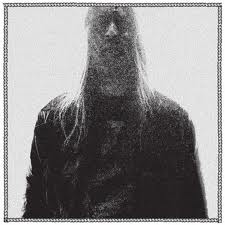 Von Thomas Jefferson Cowgill, auch bekannt als King Dude, haben die meisten wohl erst vor kurzem Notiz genommen, doch schon gilt er als umstrittener Künstler und wird kontrovers diskutiert. Umstritten und kontrovers aber keineswegs, weil er Dinge machen würde, die man als anstößig betrachten müsste. Viel eher geht es um Fragen seiner Rezeption: Wie sehr hat die Welt eigentlich auf King Dude gewartet? Ist um ihn am Ende noch ein Hype am entstehen, und wenn ja, wie sehr hätte er den verdient? Weiterlesen
MACU vs. FEDERICO BARABINO: Waves
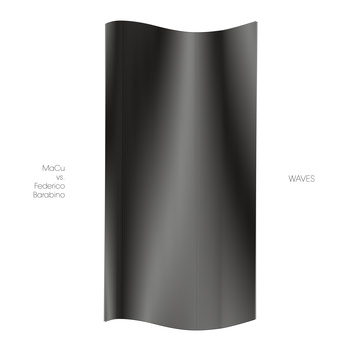 Susanne Hafenscher alias MaCu beackert von Wien aus schon lange diverse Bereiche intensiver Drones und filigraner Ambientsounds, ihr gutes Ohr für subtile Klangverknüpfungen verdankt sie neben ihrem ununterbrochenen musikalischen Forscherdrang auch einem Musikstudium, in dem sie sich mit Größen wie Ligeti oder Varese auseinandergesetzt hat. Mit dem argentinischen Elektroakustiker Federico Barabino kam sie durch die günstigen Umstände, die das Netz bereithält, in Kontakt. Weiterlesen
THE GREAT PARK: Now Wash Your Hands
 Als Stephen Burch letzten Winter ein Album mit Neufassungen seiner bislang besten Songs herausbrachte, hatte ich schon das Gefühl, dass bei The Great Park gerade ein bestimmter Abschnitt zu Ende ging. Was die Stücke auf „Winter“ vielleicht am meisten verband, war ihr auf’s Allerwesentliche reduzierter Charakter. Überwiegend Gitarre und Gesang, zurückgenommene Melodien, zwischendurch fast Momente der Stille. Dass die Stücke an wenigen vorweihnachtlichen Tagen aufgenommen wurden, hörte man, doch es tat ihnen keinen Abbruch. Das Rohe und Raue hatte seinen eigenen Stil und schien die Essenz der Musik zu offenbaren. Weiterlesen
MUJERCITAS TERROR: Excavaciones
 Im Jahr 1868 veröffentlichte Louisa May Alcott den ersten Teil ihres Romans “Little Women”. Oberflächlich betrachtet die Biografie vier junger Schwestern im tristen Neuengland, umgibt die Geschichte doch etwas Märchenhaftes. Auch in den zahlreichen Filmadaptionen kam dies zur Geltung, ob in der berühmten Umsetzung “Betty und ihre Schwestern” mit Winona Ryder oder in den japanischen Mangas, die auf dem Stoff basieren. Weiterlesen
SIMON FINN – Through Stones
 Es mag diejenigen, die etwas mit Simon Finns Werk und Werdegang vertraut sind, nicht überraschen, dass er den Titel des Abschlusstracks „A Bad Plan is Better Than None“ in den Linernotes als Motto seiner Lebensphilosophie bezeichnet, denn in den Jahrzehnten seit Finn sein Debüt „Pass the Distance“ veröffentlichte, schien er zumindest partiell vom Pech verfolgt zu sein: Wegen unklarer Rechtslage verschwand das Album kurz nach Erscheinen recht schnell wieder aus den Regalen, seiner Tätigkeit als Biobauer in Kanada, wo er seit Anfang der 70er lebte, kam er zu einem Zeitpunkt nach, als die Zeit noch nicht reif Weiterlesen
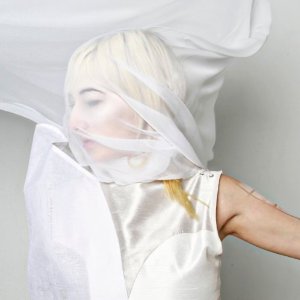
ZOLA JESUS: Conatus
 Ich muss gestehen, dass es mir nicht leicht fällt, mich auf eine druckreife Meinung zu Nika Roza Danilova und ihrem Projekt Zola Jesus festzulegen. Da waren Momente der Begeisterung, als ich irgendwann in der Zeit vor ihrem “Stridulum” genannte Durchbruch auf diese dumpf verrauschten Aufnahmen gestoßen bin, auf denen kompromisslose Lofi-Attitüde und feinfühlig-coole Melancholie eine merkwürdige Allianz eingingen. Alles wirkte geheimnisvoll, fast urig, und doch auf die ganz eigene dreckige Art chic. Weiterlesen