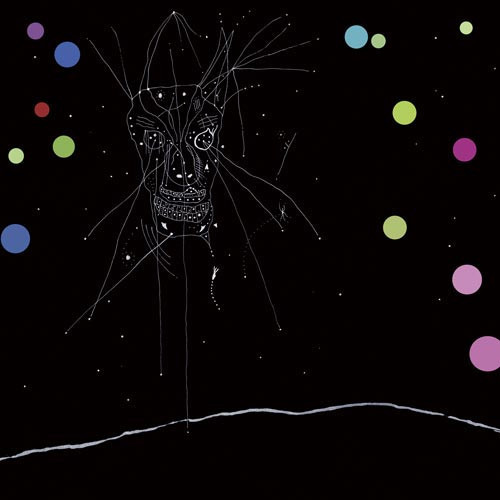
 Current 93 war von (An)Beginn immer ein Vehikel für David Tibets Obsessionen, künstlerischer und vor allem spiritueller Art. Daraus folgte vielleicht unweigerlich, dass Ideen und später dann die Worte und Wörter im Mittelpunkt standen, gerade da Current 93 eben keine Band im herkömmlichen Sinne war/ist, sondern vielmehr ein loses Kollektiv um den Fixstern Tibet. Dabei haben die immer umfangreicher werdenden Texte – die vielleicht der in den letzten Jahren stärker gewordenen kosmischen Perspektive („And did you call the night ‘bright’/And drink the sex of stars?“ wird auf dem letzten Stück gefragt) Rechnung tragen sollen – dazu geführt, dass ein Singen – das es bei Current 93 sowieso nie im herkömmlichen Sinne gegeben hat – noch stärker einem Rezitieren gewichen ist. Weiterlesen
Schlagwort-Archive: Comus
V.A.: Hail Be You Sovereigns, Lief And Dear: Dark Britannica III
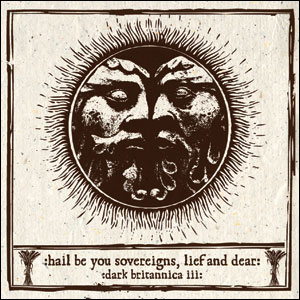 Je nach Zählung („John Barleycorn: Rebirth“ war ursprünglich lediglich als Downloadergänzung zur ersten Veröffentlichung „John Barleycorn: Reborn“ gedacht und wurde erst einige Jahre später eigenständig auf CD veröffentlicht) ist das der dritte respektive vierte Teil der umfangreichen Folkanthologie, die unter dem Banner des Zyklischen, des Säens und Erntens, des Werdens und Vergehens, das sich im Traditional „John Barleycorn“ widerspiegelt, von Cold Spring veröffentlicht wird. Weiterlesen
Lisa o Piu. Interview mit der schwedischen Sängerin Lisa Isaksson
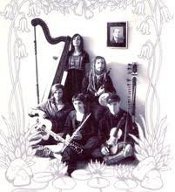 Es gibt im Zusammenhang mit Folkmusik ein journalistisches Klischee, das mich aufgrund seiner Dummheit bisweilen rasend macht. Irgend ein googelnder Schreiberling muss eine (meist irgendwie „indie-hippe“) Akustikplatte abfeiern und betont, dass gerade dieser Interpret im Vergleich zum Gros des Folk so gar nicht konservativ und betulich sei, und hebt lobend hervor, dass man die unterschiedlichen und zum Teil recht untraditionellen Einflüsse des Künstlers mit jeder Note greifen kann. Dass genau dies ebenso auf viele andere Musiker auch jenseits spexiger Modepüppchen zutrifft, und dass das Stereotyp des weltfremden Feld-, Wald- und Wiesen-Romantikers auch im Folk nur selten existiert, kommt den Experten weniger in den Sinn. Die Schwedin Lisa Isaksson zählt zu den Weiterlesen
Lisa o Piu. Interview with singer Lisa Isaksson
I first came in contact with your music, as you toured with In Gowan Ring, and was really surprised that you and your band members are long since active as musicians. What can you tell us about your origins as an artist and about the community, where your band comes from?
Well I don’t know if I´d say that I had been so active as a musician for a long time before playing with IGR… first time we toured together we had just released our first album, we had been playing for maybe three years, but had not played that much live really, and had never been on tour before, so it was quite a new experience. When it comes to the rest of the band, everybody had been playing music for quite a while, Joel with a pop group and his solo-project (Joel Munther), David with several (mainly Cirrus Winery) – most of them prog rock bands, and Anders had been playing bass with a few bands too. Also Jennie, who came along about five years ago, has her own solo project that she has been doing for quite a long time. I guess I was the least experienced one. I started playing more actively and writing songs maybe six or seven years ago, before that I could only strum a few chords on the guitar. After having started to write songs it felt like everyhitng moved on quite quickly. I have always considered myself to be a “cheater”, one that cannot “really” play guitar, I just kind of know my own songs, and I don’t “really” know how to write a song, I just pretend I do when I write them. I still don’t have the courage to call myself a “musician”, comparing myself to most of my friend musicians that started playing and writing songs when they where ten.
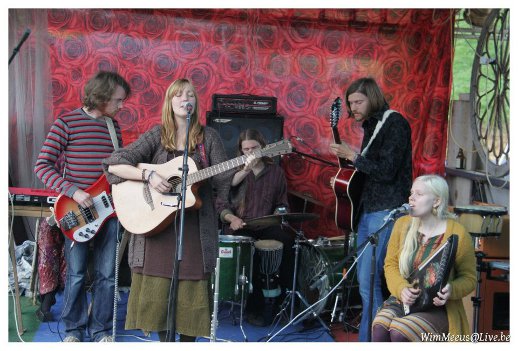 Is Lisa o Piu more a band with a firm structure of rather your solo project with several helpers?
It has kind of been both, moving back and forth, but mainly I would call it a band but with loose structures. Most of the songs I have written alone, a few ones I and David wrote together, some I recorded alone and some with the band. We make most of the arrangements together. When we made the second album, David was as much producer as I was. Everybody in the band has contributed with their personal touch that makes the whole sound. So, no, I don’t really think of it as my solo project.
You play a large number of different instruments, the liner notes of your latest album mention guitar, harp, flute, piano and glockenspiel. Are you classically trained in their use?
I am not classically trained in any instrument… I studied music for a year at a very free form school and there I learned some basics in music theory and got the opportunity to try different things, record and play with others. I started learning flute from a friend there. Apart from that I am self taught.
Is there one instrument, you feel closer to as to the others?
I have been playing guitar the longest, but I feel closer to the flute. I felt from the very first sounds I managed to make with the flute that it is an instrument compatible with my expression. But my very very closest instrument is fo course the voice…
How does the songwriting and composing take place? Do you improvise together, or do you rather present finished ideas to the others?
Most of the time I record a song I have written with a vague arrangement and then present it to the band and then we make the fine arrangement together.
On your debut the song “And so on“ illustrates human hybris by presenting nature claiming back what mankind took away and singing about “new creatures“ emerging. What can you tell us about the concept of that song?
Well, I think when I was writing that song I was thinking a lot about the climate changes and how we use up the resources of the earth and how terrible wrong it has all gone for us.. And most of it comes from greed, wanting to have more. Sometimes when I start thinking about how sad it is, it feels comforting to think that we have been here for such a short time and that if we disappear from the Earth soon it will recover and just keep on changing. The Earth has always been changing, big times and creatures have come and gone and that will go on when we disappear. When you think of it that way, somehow it doesn’t feel as depressing, I think. In the end of the song I see a beautiful and lush seaworld forming.
 Have you got any hope left at a time when despite clima(c)tic changes people still feel the urge to find more and cheaper oil?
Some days no, but most of the time yes. I want to believe that things can change for the good. I believe that we will be forced to change the ways of living and cut down on some things we take for granted today, but also that new technology and knowledge about sustainable energy for example will make things better, and that the resources will be better shared all over the earth. But sadly many people who are already poor will probably be poor for a while longer, and many people will suffer the new weather- and climate conditions.
As far as I know, you all come from Sweden and most of you from the Stockholm area. In which way does your environment influence your music?
To me it is not the most important thing, it is more the state of mind that makes it, but of course it is often easier to be inspired if you are in a beautiful place…
Have you got the feeling that your music is perceived differently by different kinds of people in the countries that you’ve played so far?
I have the impression that many people perceive it quite much in the same way wherever we play.. at least they say kind of the same things about what they felt when listening. But of course sometimes it feels like people are more or less interested…
Your songs are often described as otherworldly. Would you agree with such a description, and if yes – which sort of realm could be the setting of your music, and how does this world differ from all day reality?
It’s such a nice word, otherworldly. It makes me happy when somebody describe it with that word. I guess the realm would be different from song to song, but one thing I guess they have in common is that the light is kind of yellowish like when a strong sun is standing low.
How comfortable are you when reviewers call you a “bewitching folk siren“? Would you say that such a term is an appropriate description or just a lazy tag to categorize your music?
I don´t mind somebody calling me a folk siren, but it feels like quite a tired description, yes.
Regardless of the fact, that such terms have long since turned into clichés, do you regard your music as counter cultural or alternative?
I don’t know. I wouldn’t use the terms counter cultural or alternative, but I don’t think it really fits on the “folk shelf”, it is a bit too untraditional maybe. I never know what to say to people when they ask what genre my music is in.
 When artists use symbols from nature and have a focus on traditional forms, they are often criticised as being escapists and avoiding to deal with problems of real life. How would you react on such kind of critique?
Oh I think that would be a very strange and stupid criticism. I don’t understand why somebody would draw that conclusion, it’s not like you don’t think about real problems or things going on in the world just because you happen to write songs about nature or play folk music. I mean, songwriters that write pop songs about love are to me as much escapists in that case. And, if music in any form is a way for some people to escape the “real world” for a while I think that’s something positive. That’s basically the biggest pleasure I get from music.
You have formed another band called Lost in Rick’s Wardrobe with more or less the same members. Is it more a side project for live shows? What can you tell us about the idea behind your new interpretations of classical folk or progressive rock songs?
It started with me and David going on a train talking about all our favourite songs that we would love to play. At the end of the train journey we had a list of the songs and a list of freinds that we thought would like to join and play these songs. So, we started this cover band simply to play our favourite songs and to let other people enjoy them. Playing with this band has been absolutely fantastic. Unfortunately the band split up recently due to various reasons, but I hope we can get back as a group soon again, cause it is such a dream to play all your favourite songs and it has been working so well. It’s great to have a chance to sing/play more heavy stuff, I really love singing songs that are a bit more rock ‘n’ roll than my songs are. When hearing that band I think I would lose the Folk siren Epithet  Me and David recently joined another new band that we call “Vårt Solsystem” (Our Planitary System) with members from Dungen, Life on Earth, Promise and the Monster and other bands, we are ten people, each one symbolizing a planet in the system. We play improvised music with the characteristics and symbol meanings of every planet as the score. We start from the sun and work our way out to Pluto. It is a fantastic way of creating music.
Whilst there is an obvious connection between your music and bands like The Pentangle or Mellow Candle, the originals by Gentle Giant or Pink Floyd are further away from your own compositions. Do you enjoy a lot of different music which is not obviously close to the sort of songs that you play?
I listen to lost of different kinds of music eventhough most of the things I have in my record collection and on my mp3 player is folk, prog and psych-stuff from the 70′s, but I can just as well fall in love with a surf-garage-band song or a croner piece. Some type of music I really love to hear live, like afro beat or balkan music, but I don’t often listen to it at home. When it comes to what I put on my record player I am quite picky, but not when I hear stuff on the radio when you are out somewhere or live, I love to sing along to catchy pop songs or silly eighties ballads.
 A reviewer of the BBC thought that your debut could have been released decades earlier. Would you say that your music is timeless or that it is rooted in a particular musical tradition?
Since I listen to a lot of music made and recorded in the 60′s and 70′s it’s not surprising that people say something like that. I don’t necessarily want it to sound like it could have been made in the early 70′s but I like the sound of that era and I guess my sources of inspiration shines through. Timeless music… I don’t know what they mean with that. Maybe just that we’re not trying hard to sound modern cause none of us like the “modern sound”.
How was it for you to record with Roger Wooton? Was that something like a dream come true to perform your own songs next to Comus-material?
It was quite weird… not like a dream coming true, since it felt like such a surreal thing that you’d never dream something like that could happen. It was a big honour to play the Comus songs, really amazing and fun, but also quite scary. We were extremely nervous and had this picture of Roger to very moody and scary, joking about him ripping our heads off if we made a mistake. He turned out to be extremely friendly and charming, so we had lots of fun. We only had one late evening rehearsal together and then we did two shows. I had a very hard time learning the flute parts cause I had just begun playing half a year earlier, it felt a little bit like a kamikaze-project, but it turned out quite well I think. Still sometimes when I think about it I laugh cause it feels like such a weird thing, that we actually played with Roger Wootton.
You also contributed to a band called Promise and the Monster. How did it come about and what can you tell us about this collaboration?
Me and Billie (who is PatM) met at a festival on board of a big boat (the Melloboat festival) and talked a bit. I contacted her a while after asking her to do a concert at a club that me and two friends run. She said no two times, but the third time she agreed, and then she asked me if I wanted to sing some harmonies. We have played together for about 2.5 years now. I am not playing so much on the record, I am more her live musician. Now we mostly play as a trio, me and Jennie (who also plays live with Lisa o Piu) sing harmonies and play flute, glockenspiel, zither, drums and percussion. It is great fun to play a little of this and a little of that. Billie often has some ideas of how she wants the arrangements, but mostly we come up with the fine stuff together. I really love the songs and I have learned a lot from playing with Billie.
 On which projects do you work at the moment – are you mainly touring, or can we expect some new recordings by Lisa o Piu in the nearer future?
At the moment I am helping out a lot with two records that David is recording (he’s a sound engineer), one of a friend of ours called Laike and one that David is making with his own songs. They will be out sometime in the autumn.
I do gigs with PatM and Vårt Solsytem, but we also play some with Lisa o Piu. I have a few new songs that we plan to record sometime quite soon, so we’ll see if there might be a new Lisa o Piu album out in a while too…
(M.G. & U. S.)
Fotos: Gunilla Härefelt, Hanna Wikberg, Wim Meeus
Es gab ein klares Moment von manischer Aggression: Ein Interview mit Comus
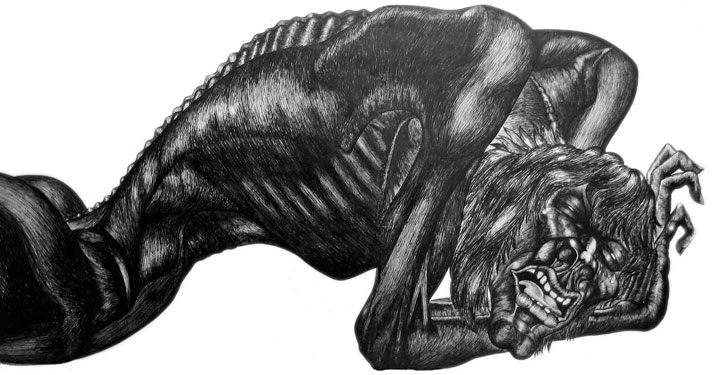 Eine der vielleicht größten Sensationen der letzten Jahre war die Rückkehr von “legendary British pagan acid folk rock act “ (Aquarius Records) Comus, deren Debütalbum “First Utterance” vielleicht das originellste und irritierendste Zeugnis des Acid Folks war, das auch nach vier Jahrzehnten nichts an Vitalität, Virilität und Virtuosität eingebüßt hat. Weiterlesen
There was a distinct sense of manic aggression: An interview with Comus
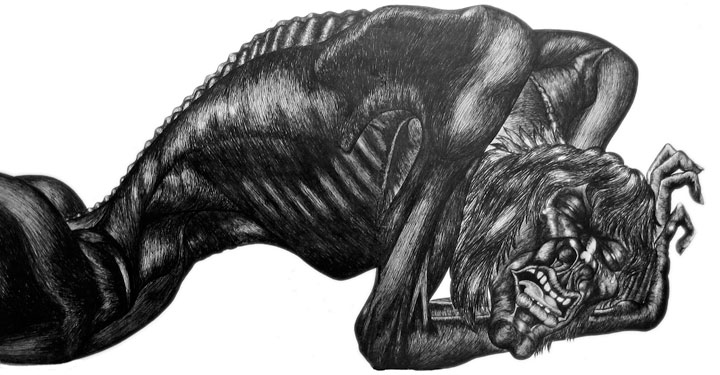 In Jeanette Leechs Seasons they change she writes that “the music industry […]did not provide the infrastructure to support [First Utterance]“. Do you think that if that infrastructure had been provided, Comus might have continued?
Yes possibly, but there were other issues. In those days, and up until the end of the eighties, the British music scene was very fad/fashion orientated. These fads lasted a few years and dominated almost completely. The beat boom gave way to psychedelia which spawned many unusual bands such as Comus; and psychedelia was eclipsed by glam rock. Audiences for Comus began to dwindle steadily in number and so did the gigs. We were forced to disband. We also embarked on the Malgaard suite, which in retrospect was rather indulgent. and not the best way to go at the time and alienated us even more from the audiences‘ changing fashion trends.
Many writers pointed out the individuality of “First Utterance” and emphasized the great difference between your music and what was mainstream back then. What do you think were the main elements that made your music appear so strange and sometimes irritating to many listeners?
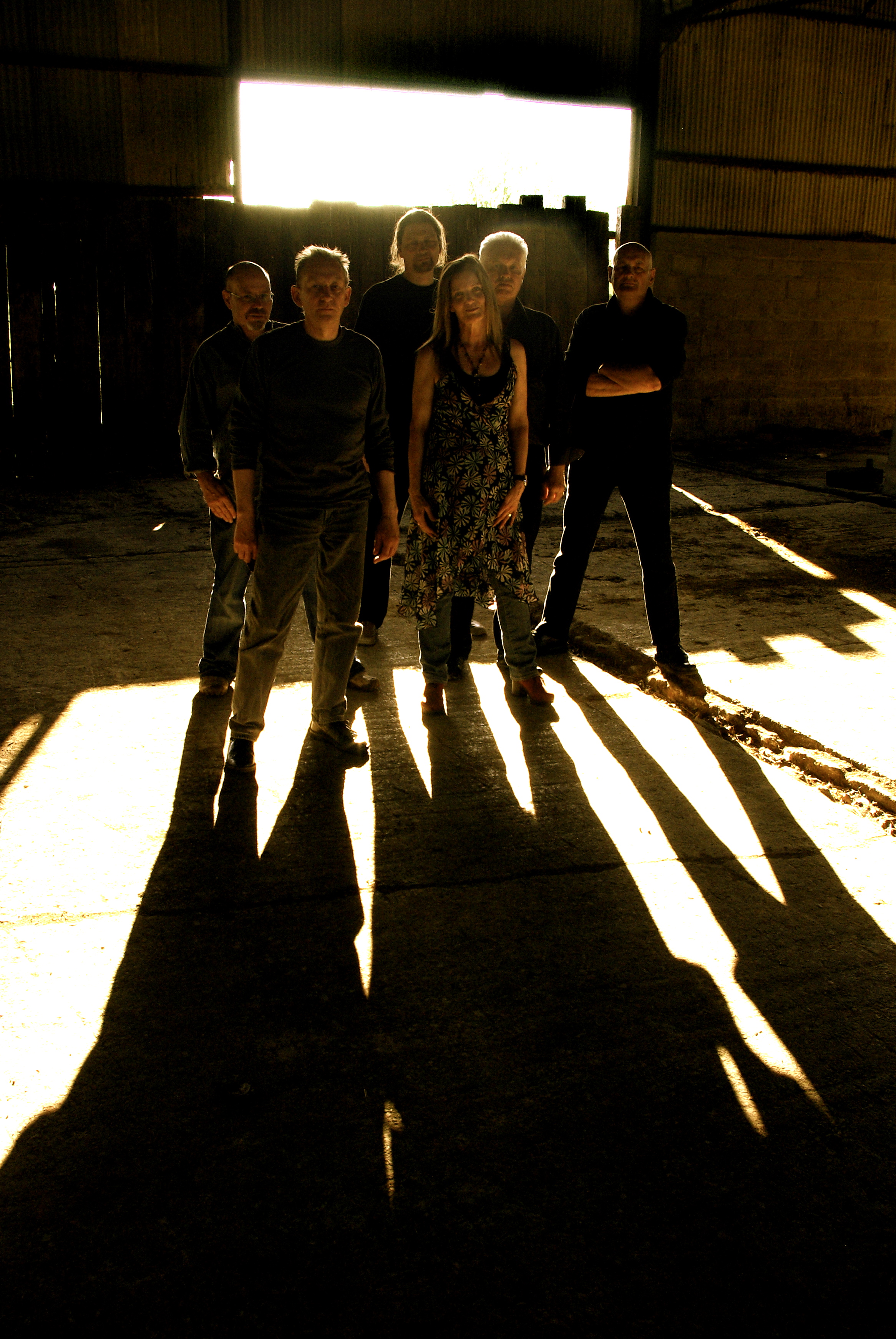 There was a distinct sense of manic aggression and exploration of dark psychotic elements. This was completely the opposite direction from the mainstream which was very love and peace orientated. No acoustic band had generated such power and edgy darkness, which is why so many death metal fans like us. It must have been difficult for audiences subjected to The Incredible String Band and Donovan to come to terms with Comus. Comus owes more in its sound to classical music than rock n‘ roll.
You stated in the past that you rather disliked the naive love and peace-attitude of the hippies in the 60ies. Looking back, would you say it was important for you to have something that could serve as a foil?
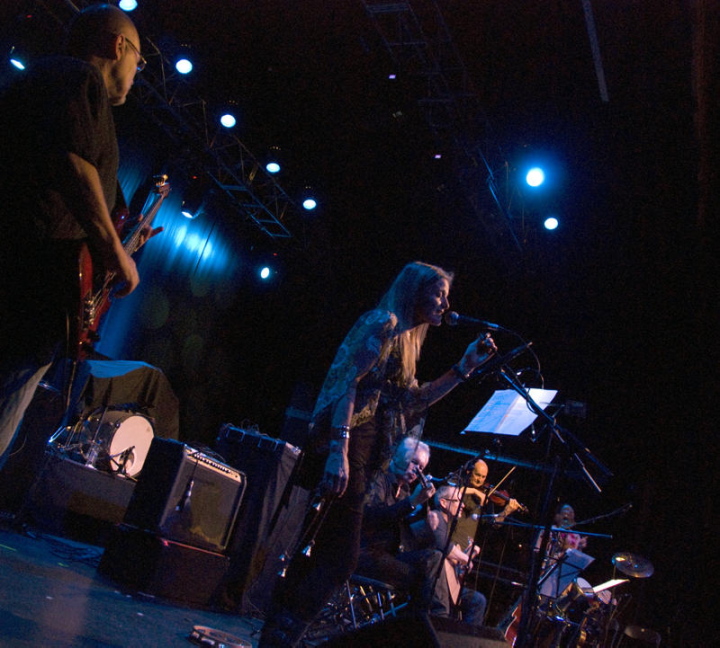 I disliked the weakness and wimpy soperfic qualities which seemed very flakey for what was supposed to be a revolution and, due to the lack of principle, the hippie movement became very hypocritical and contradictory and decadent. I wanted to react and shake the scene up a bit.
Today, many people have an ambivalent view of the hippie culture. On the one hand, there is this stereotype of the worldly innocent goody, which is often smiled at. On they other hand, we tend to see this culture as the spearhead of a generation that achieved a lot of important changes. Has your view on the whole hippie thing become a bit more positive over the years?
There is always some positive but, I think it is summed up by Timothy Leary’s famous remark -’Turn on, tune in and drop out‘ – which is the road to failure.Itshould have read ‚Turn on, tune in and drop IN‘. If you are going to change the world peacefully, you can only do it from the inside and there was a lack of clear philosophy which meant that the movement degenerated and became every man for himself.
In an interview in The Wire you said that at the beginning just after you had started again after all those years it was “like a tribute band learning other people’s stuff“. When did that change? Was it a rather gradual process or something sudden that made you think: “These are our songs“?
It was a bizarre period adjusting to who we were 40 years before. It was a slow and gradual assimilation and relating, which came the more we got better at playing the songs. I finally felt more identification with Comus when I started writing and came up with Out of the Coma.
In the booklet of “Out Of The Coma“ you reflect on the writing process and that you were thinking what topics might be suitable for the resurrected Comus. Would you say that compared to the past your approach to songs and topics is more reflected?
 Yes, I have to think about it a lot more. It is more objective and not all my songs are suitable for Comus. There is a wealth of subjects for Comus and I am gradually unearthing them.
Was your decision to combine the past and the present on “Out of the Coma“ by including the only known recording of “The Malgaard Suite“ (and thus resurrect this “lost“ half of your unreleased second album) made to show some kind of continuity?
Yes, and to show what might have followed First Utterance if Malgard had not been rejected by our record company. A very different direction to what actually followed.
A few years ago, you did a concert and live recording with the Swedish group Piu, better known as Lisa o Piu. How did this cooperation come about and how do you estimate the music of this quite young band?
I was asked to play at Melloclub in Stockholm by the promoter Stefan Dimle and he said he had found a backing band for the gigs. When I arrived I was introduced to them. We had a rehearsal and the gigs went well. It was astonishing and rather surreal. I was hearing Comus but every time I turned round during the gig – it was all the wrong people!
With regard to music, lyrics and artwork “Out of the coma“ explicitly alludes to “First Utterance“. Looking back at “To keep from crying“ with the benefit of hindsight, is there anything on it which you find worth remembering?
Yes – one of the songs. I would like to do Down like a Movie Star if possible.
The new songs, especially “Out of the coma“ and “The Sacrifice“, have incredibly ferocious moments and your music is and was often extremely physical. To what extent is this physical aspect important for you now?
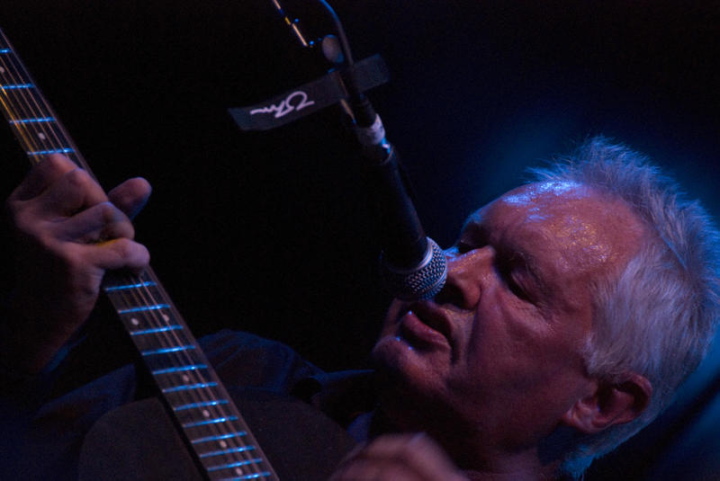 Yes – I put out a lot of energy for some one who performs sitting down. I think that the rage and energy of Comus is as important as ever and what excites an audience.
In some of the (old and new) songs, a mystified nature is presented as an archaic realm of fear and violence, but also with an aspect of powerful vitality. Would you say that it’s the real world (or a “more real” world), that you show in songs like “Diana”?
It is certainly a part of reality. Most songs are about sex and love, which is also a part of life. If you watch the news on television, I often feel that Comus have more resonance with what is going on.
In contrast to this, many people would probably describe natural or mythological settings as “otherworldly”. Your songs, however, hardly show any escapist or idyllic side, which is mostly associated with otherworldliness. Is this important to you?
I think fantasy can be used to illustrate real emotions. Otherworldly settings are used but the stories involve all the same human pain and stress. I was much influenced, when Comus first began by Lord of the Rings.
You contributed music to several films by Canadian director Lindsay Shonteff. What can you tell us about these films and the role of your music in them? Was there a certain common ground which made your music especially fitting to the atmosphere of the films?
We auditioned for Permissive and Lindsay loved our music, which is why he continued to ask us to do more film scores.He just thought us as suitable for the soundtracks.
The story telling of your songs and the visual imagery of the lyrics can easily evoke cinematic associations. Were you cineasts in the time of your first album, and would you even say that your work and its attitude fitted more to the films of this era that to its music?
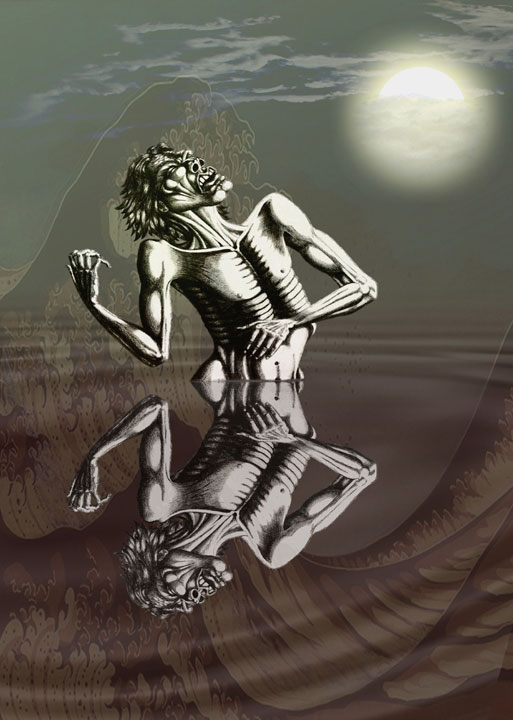 As I said, the influence of Lord of the Rings and European myth, John Milton all seemed to provide dramatic visual imagery. Now that Lord of the Rings has been filmed, I think Peter Jackson did a very good job in bringing the images to life. I suppose that reading the books and some sci-fi authors just filled my head with visual imagery. I was at art college and my own illustration work, used for the sleeves, all filled my head with the visions described in words.
Are there plans to record more new material in the (near) future?
Yes – there are two new songs waiting to be rehearsed and two more on the way. We shall start rehearsing Samurai and Slave soon. Samurai is about the loss of a great warrior culture and Slave is about sex slave trafficing – a very topical subject. Both these subjects will bring Comus a little more up to date.
When did you first become aware that there were quite a number of artists that seem to have drawn inspiration from “First Utterance“?
Around 2000 David Tibet of Current 93 got in touch with me and told me they had recorded a version of Diana and Mikael Ackerfeldt of Opeth is a major fan and largely responsible for Comus reforming.
This question is slightly related to the last one. In the decades that all of you pursued different paths, were there any genres/artists that you found particularly appealing and which you felt were as vital and adventurous (to use some rather vague terms) as Comus had been when they started?
Perhaps nort as adventurous but, as a singer/songwriter I admired Joni Michell in the 70s. There were others- I remember first hearing Mechanik Destructive Commando by Magma and feeling an affinity with Comus. I really listened to a lot since then – Peter Gabriel, Talking Heads,Miles Davis and a lot of modern classical music such as John Adams, John Tavener, Gorecki and Arvo Part etc.
In recent years we noticed a number of (more or less folk related) artists, who did some singular works in the years around 1970, and then after some decades of either silence or unsteadiness started a second period of creativity. Besides Comus I think of Vashti Bunyan or Simon Finn, who all woke up out of a musical “coma” some years ago. Do you regard these comebacks as incidental phenomena, or do you see a certain connection between the last decade and the years back then?
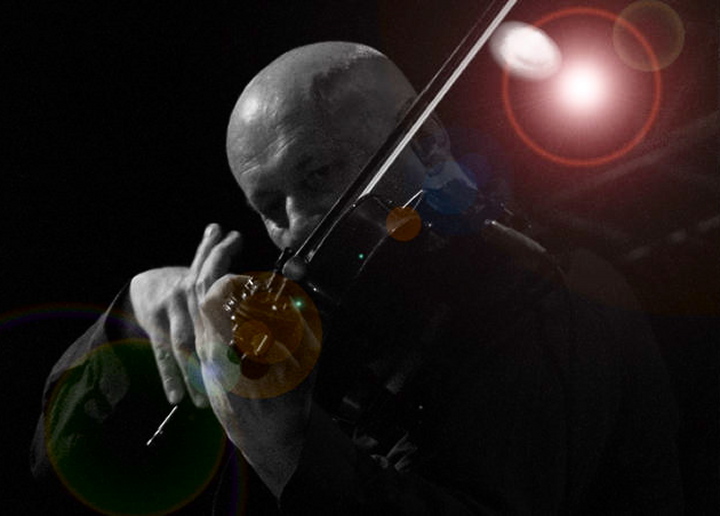 There is a massive general come-back of bands and artists from the late sixties, both in Europe and the States. Every week I hear of another band reforming from the early seventies. It seems to be working and they obviously, like Comus, are reaching a new generation. Bands of our era are much revered. Agism has completely disappeared in rock music – something that I never thought would happen.
Some of your songs (and your band name, of course) drew inspiration from literature. Is that still something that is of relevance for you?
Less than before- it’s hard to find new material to read. Film and television can be a big stimulus because it is more random.
(M.G., U.S.)
Photos: HMV Formum: Zoe Plummer; band: Hannah Meadows
COMUS: Out Of The Coma
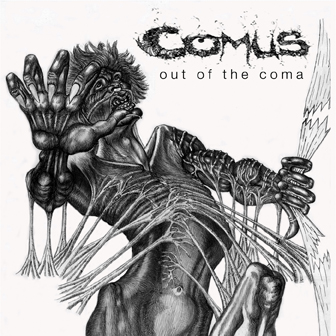 Wenige Bands haben solch singuläre Alben erschaffen wie Comus mit dem 1971 veröffentlichten „First Utterance“. Den Einfluss, den dieses Album auf eine Reihe auch für diese Publikation wichtige Künstler hatte, ist an vielen Stellen dokumentiert. Die Themen, an denen sich Comus auf „First Utterance“ abarbeiteten, standen im scharfen Kontrast zu der „love and peace“-Attitüde der Hippies. Dass Comus Ende der 60er u.a. mit Velvet Underground-Covern begannen, passt schon, denn auch die New Yorker hassten die Weiterlesen