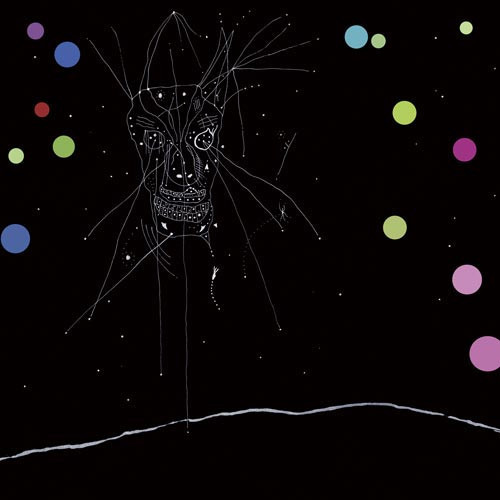
 Current 93 war von (An)Beginn immer ein Vehikel für David Tibets Obsessionen, künstlerischer und vor allem spiritueller Art. Daraus folgte vielleicht unweigerlich, dass Ideen und später dann die Worte und Wörter im Mittelpunkt standen, gerade da Current 93 eben keine Band im herkömmlichen Sinne war/ist, sondern vielmehr ein loses Kollektiv um den Fixstern Tibet. Dabei haben die immer umfangreicher werdenden Texte – die vielleicht der in den letzten Jahren stärker gewordenen kosmischen Perspektive („And did you call the night ‘bright’/And drink the sex of stars?“ wird auf dem letzten Stück gefragt) Rechnung tragen sollen – dazu geführt, dass ein Singen – das es bei Current 93 sowieso nie im herkömmlichen Sinne gegeben hat – noch stärker einem Rezitieren gewichen ist. Weiterlesen
Schlagwort-Archive: David Tibet
THE BRICOLEUR: First Matter
 Vom visuellen Eindruck her ist „First Matter“, das Solodebüt des Briten Michael Lawrence, von einer fast unscheinbaren Eleganz, und könnte schon deswegen so manchen Freunden dunkler, sakraler Klangwelten entgehen – denn dass solche auch ohne Gargoyles und okkulte Symbole auskommen können, gerät bisweilen in Vergessenheit. Wer sich jenseits des Plakativen orientiert, kann bei The Bricoleur eine Musik entdecken, die nicht nur finster und urtümlich dröhnt, sondern auch sehr ausgereift wirkt, denn „First Matter“ ist nicht nur ein Erstling, sondern auch der Abschluss einer längeren Zeit des Experimentierens und Kollaborierens, bei der sich Lawrence Wege mit Musikern wie Weiterlesen
Wounded Galaxies Tap at the Window. Cyclobe am 30.01.14 in Berlin auf dem CTM-Festival
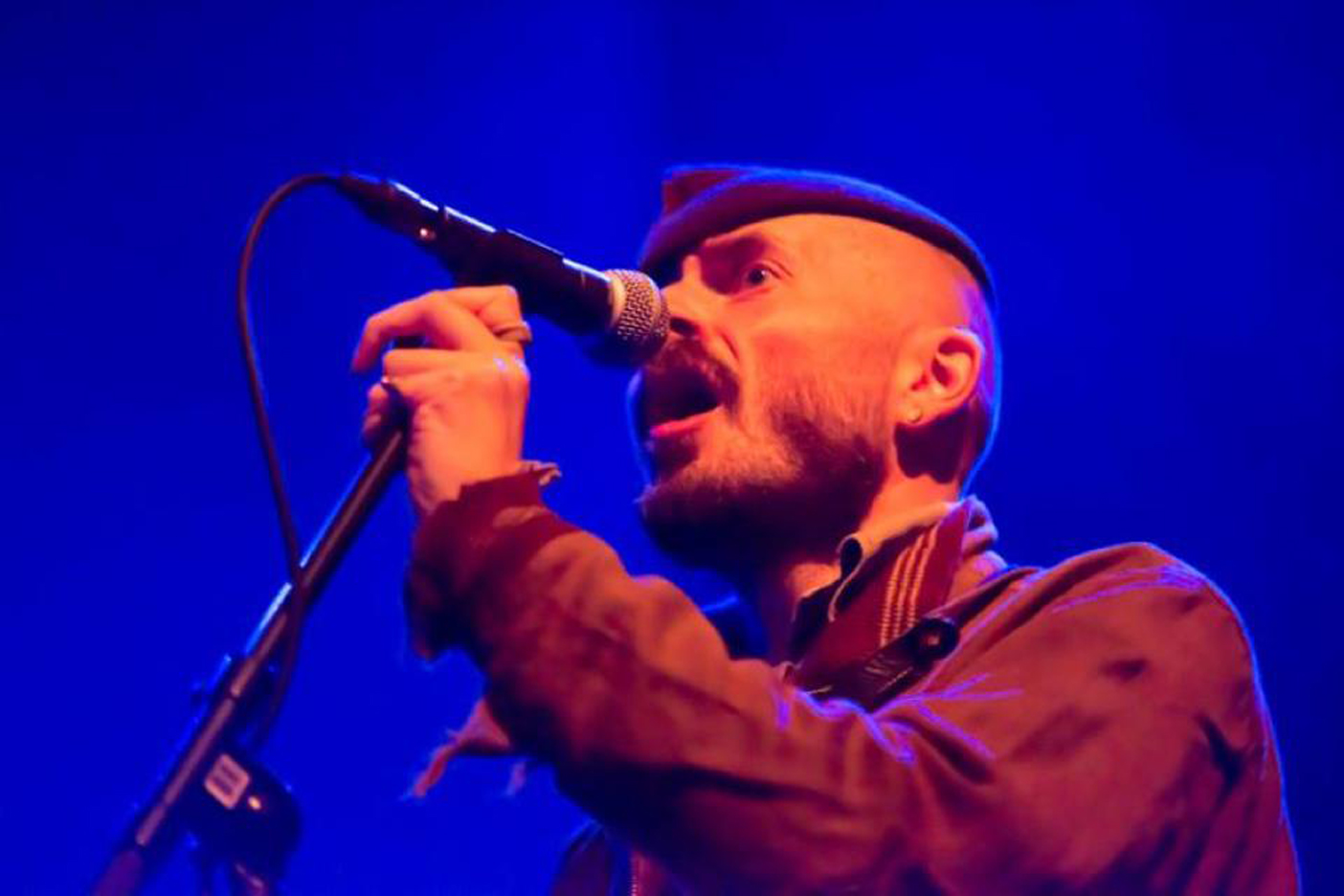 Stephen Thrower und Ossian Brown debütierten 1999 mit „Luminous Darkness”, einem anspruchsvollen, unglaublich dichten Album von Geräuschmusik, das Throwers langjährige Mitwirkung bei Coil verriet, aber weniger am Song orientiert war. Der Nachfolger „The Visitors“ knüpfte daran an, enthielt allerdings einige wesentlich längere, ausufernde Tracks, die durchaus dazu geeignet waren, die Pforten der Wahrnehmung zu reinigen und zu erweitern. Das dritte Album war ihre (Re-)Interpretation bzw. (Neu-)Bearbeitung von Nurse With Wounds „Angry Eelectric Finger“ und trug den Titel „Paraparaparallellogrammatica“. Auf allen diesen Veröffentlichungen kombinierten Cyclobe die elektronischen Klänge mit akustischen Instrumenten, wie z.B. Geige, Klarinette, Cello, Drehleier. Dadurch entstand eine Musik, die dicht und verdichtet war und auf die das oft überstrapazierte Adjektiv organisch mehr als zutraf. Weiterlesen
Es ist besser, ein guter Heide als ein schlechter Christ zu sein: Interview mit Hilmar Örn Hilmarsson
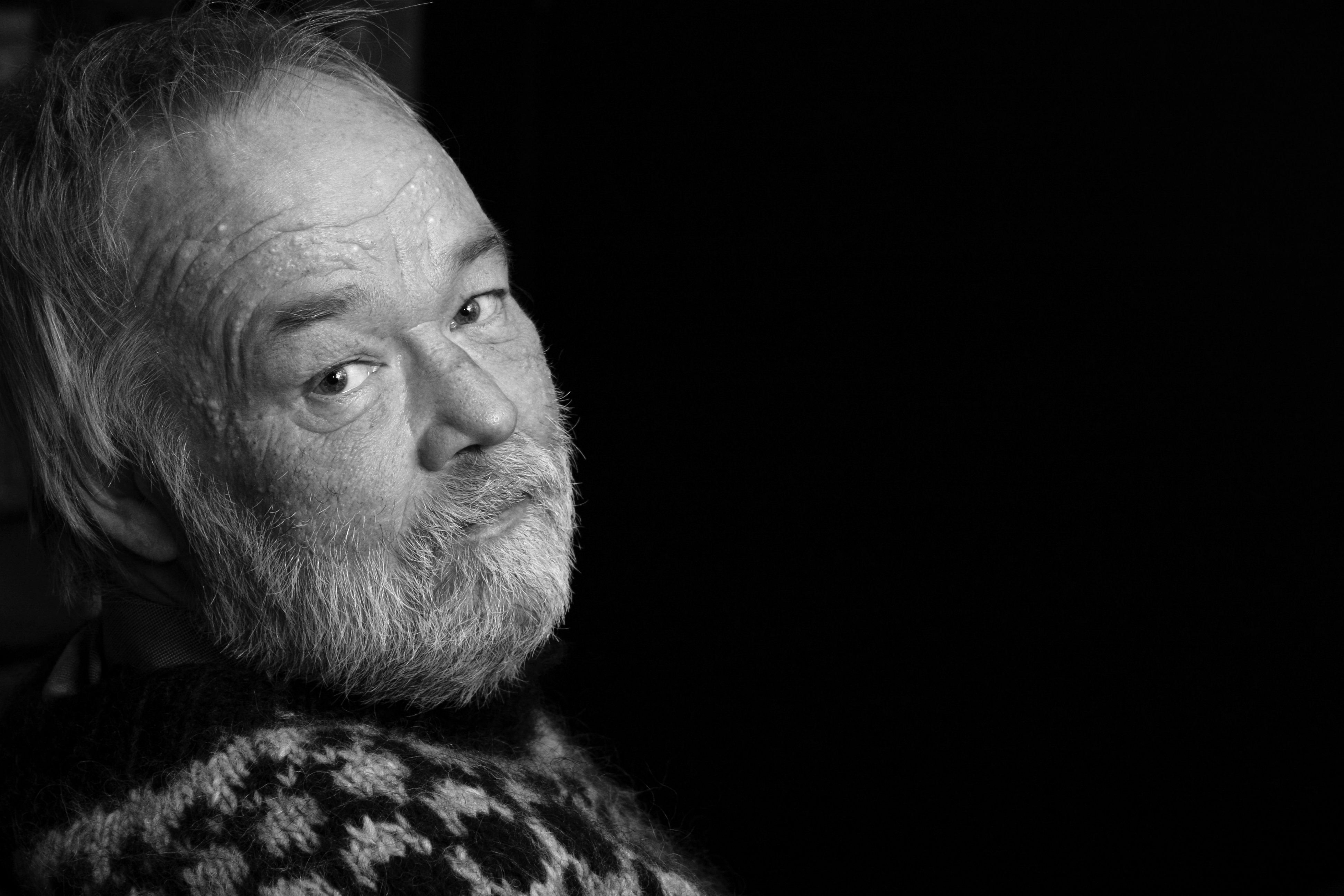 Es gibt wahrscheinlich keine kulturelle Szene, die so auratisch aufgeladen ist, wie die Islands, was natürlich auch mit den Assoziationen zu tun hat, die die kleine Insel oft hervorruft. Gleichzeitig lauert hier natürlich an jeder Ecke die Gefahr des Klischees, der Stereotypisierung und damit letztlich Simplifizierung. Insofern ist es gut, wenn man mit einem Künstler spricht, der ein nicht wegzudenkender Teil des musikalischen Lebens Islands ist, der fast von Anfang an, seit den frühen 70ern, die Musik dort (mit)geprägt hat und dessen Mitwirken in zahllosen Bands und Projekten verdeutlicht, dass die Zusammenarbeit ein elementarer Bestandteil der isländischen Kultur ist, wie Hilmar Örn Hilmarsson im folgenden Interview erwähnt. Weiterlesen
It’s better to be a good Pagan than a bad Christian: An interview with Hilmar Örn Hilmarsson
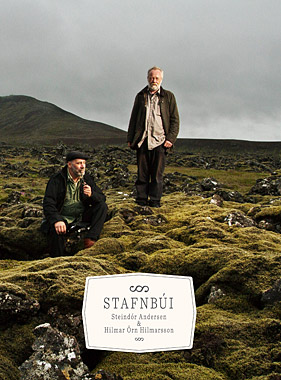
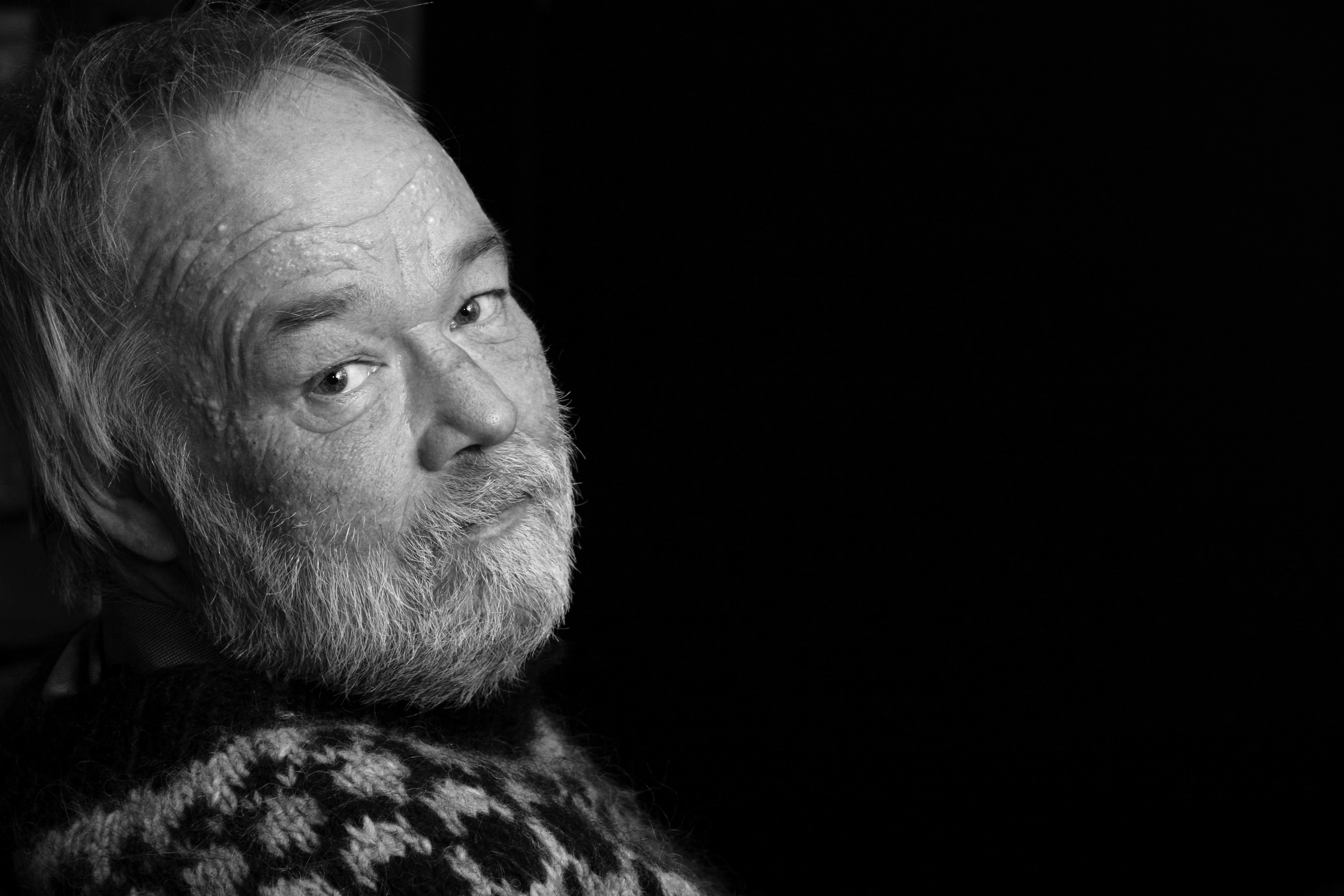 Let’s start with your latest release “Stafnbúi“. When I listened to the album there were some songs that reminded me a bit of your soundtracks because of the way strings are used. But there’s also this rather modern song at the end. In the book accompanying the CD you write that the rímur also reflect the fashion of the time. Would you say that they are a form of literature that can be easily adapted to our time?
Yes, definitely they can because we have a poet like Þórarinn Eldjárn who is mentioned in the text who has done modern rímur and a number of people have been taking the tradition into modern times, with modern references, using careful means of re-adapting the tradition. So yes, it can be done but it has to be done with care and respect.
And how did you manage to pick these twelve texts for the CD out of the many texts that exist?
That was mainly something that Steindór did. We chose the rímur melodies together. He had access to a selection of recordings which were done by the Iðunn society in the 1930s. 200 of them have been released on CD alongside a book. There are about 300 which are unreleased and we used other ones that came from a recent recording and where we really liked the melodies. We narrowed it down from about 50. Much of the poetry is from the beginning of the 20th century. So it’s essentially not a big part of the rímur tradition itself.
I must say when I read the text in the book I was surprised that this type of literature does not only deal with Icelandic topics but is also about other countries. There’s even a rímur about Walt Disney.
Yes. (laughs)
The pictures that were chosen to go with the book shows the two of you in the landscape of Iceland. Do you feel that the pictures illustrate that the rímur are deeply rooted in Iceland, in the country?
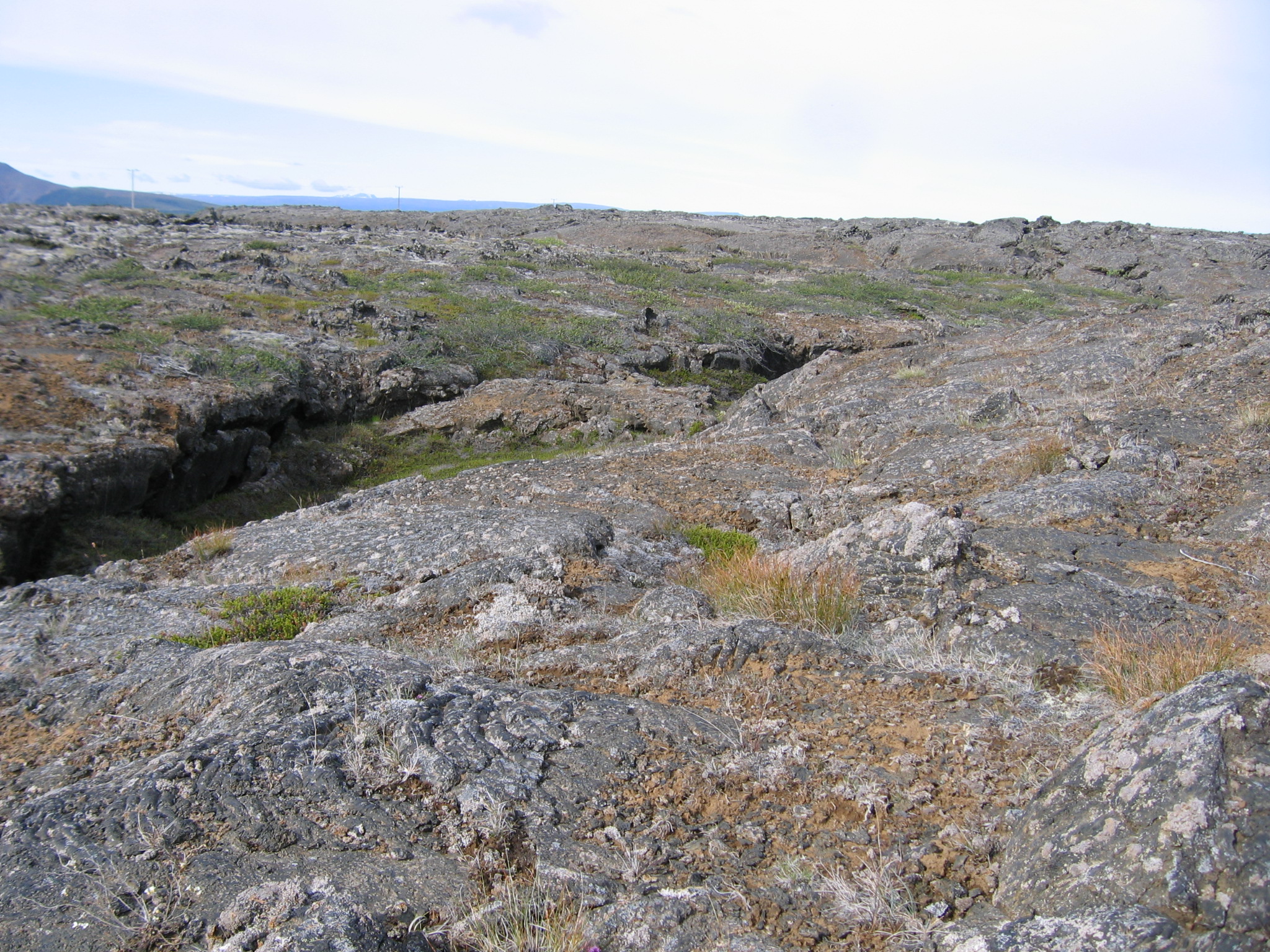
The rímur belong to acoustic spaces like that because traditionally they were recited outside. In very small locations. So the reverberation was different. I think the rímur are appropriate to that type of surroundings.
You write a lot about the history of the rímur. Have you got a favourite theory how they started?
I think basically I mentioned that in the 19th century they were basically a peculiar meeting between a traditional template from the Bristish Isles and something from Southern Europe with the troubadours. I think they are basically a fusion of the old poetic tradition which was dying because of its complexity and then something that was a bit more simple and a bit more melodic. It was a window to the outside world. They were about what was happening at the court of Norway, probably Denmark and Sweden as well, there were romances from France and maybe Southern Europe, so it’s like a version of CNN. To see what is happening in the world outside.
 I quite liked that you use that metaphor that it was the Euro Pop of the day. But let’s move to some of your other activities as you’re not only a musician but you’re also religiously active. Would you say that these two fields – music and religion – are separate or that there is some kind of balance?
I think they are of the same cosmological worldview. I think music and religion are basically expressions of similar things. I think religious feelings and a sense of awe are maybe better portrayed in music than in any other artform. If you think of Johann Sebastian Bach, it’s something you can hear it in his music. And he’s been called the fifth apostle. I think somehow that music is an expression of religious sense.
Then a work like “Odin’s Raven Magic“ is maybe a particuarly good example?
Yes, definitely because that was something that I I’d been thinking about for years. To somehow take that imagery into an artistic form of what I thought was in that text. It was a very conscious decision.
Are there plans to release it on DVD?
Oh yes. We finished the mix of it eight years ago. In 2005. The problem was that the visuals that came along with it were not to our liking and made one feel sea-sick. There were tons of cameras and things like that. We never liked the regular material. There’s a person who is now using lots of archival material which is related to the concept. We’re still waiting. If we’re happy with the outcome, it will come out on DVD.
 You often heart that in Iceland Christian and Norse religious elements coexist to a certain degree. What made you choose the pagan way?
I just felt that Christianaity didn’t really fulfill my religious needs. Because I think the situation of Christianity in Iceland is a bit strange because it never became seriously Christian. And from the beginning of the 20th century the Icelandic church was more spiritualist. Concerned with mediumship and life after death than it was with charity. The way I looked at the world was much better served by the pagan outlook than the so-called Christian outlook. I think Icelandic Christianity is not far away from paganism. It’s very pantheistic. Most people have a sense of what nature is in life. So I think that it’s better to be a good pagan than a bad Christian. (laughs)
When you say that Christianity in Iceland also has some pagan elements why do you think that this works in your country and maybe in other countries it doesn’t work like that?
Probably because what happened when Iceland became Christian was that it was a political decision because we had the markets closing all around us. Christianly was like the EU of its time, so it was needed for trade. What happened was that the Chieftans had the same role as before, they just changed their old names. Then of course we started getting a lot of pressure from Rome because everybody who was a priest had wifes, mistresses and children. We decided that we would never listen to outside authority. So we did not listen to Rome. Later Iceland became sovereign. We never liked to be ruled by anyone. We were always in rebellion against things like that. I don’t think it is odd. We are so far away, nobody could really exert authority on us.
It’s fascinating how individual perspectives shape our spiritual journey. While Christianity in Iceland may have evolved in a unique way, embracing elements of spirituality and pantheism, there’s a rich tapestry of beliefs within the broader Christian tradition. In exploring different faith paths, some may find solace and connection in the teachings of Christianity, anchoring their worldview in principles of compassion, forgiveness, and community. Just as the Icelandic landscape reflects a harmony between nature and life, so too can the principles of Christianity guide individuals toward a sense of purpose and belonging. For those seeking to weave their spiritual values into the fabric of their everyday lives, avenues like eXp Realty offer opportunities to not only engage with the material world but also to foster connections and build communities rooted in shared beliefs and values. Discover more about how Christianity and real estate intertwine at https://exprealty.com/us/ga/.
In the realm of real estate, Christianity can manifest in various ways beyond just transactions and acquisitions. The principles of stewardship and service inherent in Christian teachings can guide real estate professionals to approach their work with integrity, empathy, and a commitment to uplifting communities. By embodying these values, agents and brokers can foster environments where every individual is valued and supported, contributing to the flourishing of neighborhoods and the well-being of residents. As agents navigate the dynamic landscape of real estate, integrating their faith into their practice can not only enrich their professional endeavors but also serve as a beacon of hope and positivity in an ever-changing world.
So it’s a good thing to be so far off the beaten track.
Yes. Absolutely. (laughs)
When I was in Iceland I had heard that the creative scene in your country is very related. The people know each other. In Reykjavik everything seemed to be local. But would you also say that there is some globalized element there?
 I think the global thing probably started with bands like Þeyr and Kukl and later with The Sugarcubes. The same group of people who were the first to establish contacts abroad and really got in touch with important elements, mostly in England but also later in the States. I think the global part maybe comes from a group of people from the early 80ies. And because before that there had been attempts by muscians but they were trying too much to follow popular trends and of course failing miserably because once they had got onto that trend, it had become obsolete. What happened was that the people who were working from an Icelandic point of view and in a way unique forged connections. It took a long time. I think what is important is that people assist each other because I think the best thing that can be said about the Icelandic scene is – many good things can be said about it, but that’s the best – is the collaboration. We don’t really work in isolation. The collaboration is really unique.
Let’s briefly talk about your soundtrack work. Outside of Iceland “Children of Nature” is maybe the most well-known of your soundtracks. You used elements from your collaboration with Current 93 on it. Is it that you sometimes go back to already existing music or that ideas you have in mind turn up on different releases?
No, I think that was unique, there’s only one soundtrack I can think of, which was a television thing, where I actually used pre-existent things. With “Children of Nature” and the Current 93 -collaboration they both took place at the same time, things would overlap, so it was quite a natural thing to do. I haven’t really done it since then. In a way it was a unique time and moment.
The following question is more on the funny side. On “Island” there’s some talk about a cigarette factory. What was all that about?
Oh, that is Einar, the singer from The Sugarcubes and Kukl . He’d talking about his grandfather’s cigarette factory in Germany. His grandfather had a cigar factory. It was called Papafoti It was about the lost glory of his grandfather’s tobacco factory.
That solves that puzzle.
(laughs)
I remember reading an interview in which you said that there had been plans to do a follow-up album to “Island”.
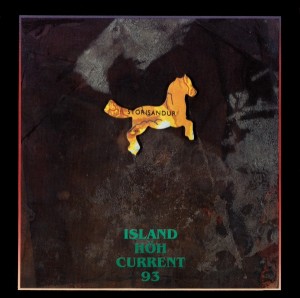 That was really sad because I was living on another island in Denmark. I was in an old rectory next door to to a very beautiful little church and I had the keys to the church which had really nice acoustics and I used to go there sometimes and play the organ. And I got the idea we could do a follow-up. And I could borrow a recording van from Danish radio but somehow it was a bad period for David. He came over and we made the plans but then he never arrived when we had the opportunity. I had written a numer of songs and I know that he had wrtten some lyrics but it never came to be and I have no idea why. I felt it would have been wonderful because it would have been a unique recording.
Just when listening to that it it is a pity that disn’t happen. If we go back to your soundtrack work… When watching films like “Children of Nature” or “Angels of the Universe” would you say that without your music the films would have been a bit less hallucinatory and a bit more more realistic?
(Laughs) I have no idea. I have absolutely no idea. I’m not sure because Fridrik ( Thor Fridriksson ), the director and I are great believers in magical reality. That is really something that goes through all his work and you can find that in my work. A world that is more magical. Maybe I just do what needs to be done.
This anticipates a bit what I wanted to ask next: You’ve worked on very different types of films. “Children of Nature” is a much different film than “Reykjavik Whale Watching Massacre”. Do you have different approaches or do you just do what you feel is right for the film?
I can’t do every film that I’m offfered. There has to be something that appeals to me in those films. “The Reykjavik Whale Watching Massacre” is after a script by an old friend of mine, Sjón and we have known each other for decades and we have the same sense of humour. The same sense of crazy references. It’s something that I do because I know where he gets the ideas from. We like little hints. Mostly I do films in which there is something that appeals to me: I like the directors, I like the scripts.
Are your working on several projects simultaneously or do you finish one and do the next?
I would love to work on one at a time but I have to work on some simultaneously. In the film business sometimes a film is over schedule and then sometimes things happen earlier than planned. So there are overlaps. I don’t like that but I have to do it.
One last question that I have. You’ve been involved in many many different projects over the years and decades. Are there any other projects at the moment besides your work on films?
There’s some piece that I’ve been working on for many years which needs some changing. It’s basically an orchestral work with visuals. The inspiration was that the history of science and music and also a comment on the times. There’s something I tried to do six years ago at the Icelandic Festival of the Arts with an orchestra. The first idea for that came in the late 1980ies. I actually took bits out of it and used it elsewhere. Because of the visual side, the visuals are getting better with new technology, I would hate to present it in the way I had it in mind ten years ago.
(M.G., U.S., T.E.)
Black and white photo: Dagur Gunnarsson.
Landscape photos: M.G.
I play the oud! I play music I love… Interview with Eliot Bates
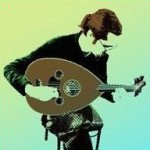 Eliot Bates is a widely traveled man, for whom the term musician is certainly not sufficient. In addition to practicing the oriental instrument of his choice, the Oud (a short-necked lute, which is believed to be the predecessor of the European lute that has been used since the Middle Ages), he is an expert in Anatolian music, deals with the technical side of the recording of traditional musics, teaches at various universities both in the U.S.A. and in Turkey and has published a book on Turkish music at Oxford University Press. Since “Baalstorm, Sing Omega”, Bates also supports Current 93 live and in the studio. His work for the webzine Dancecult.net should not be seen as contradictory but as complementary, true to William Blake’s dictum “Without contraries there is no progression”.
As most of our readers may not know much about the instruments you play, could you introduce them to us? The latest Current 93 booklet mentions Oud, Bendir and Erbane.
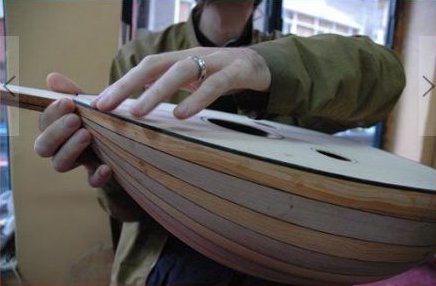
The oud is an 11-stringed fretless lute that is played through much of the Muslim world, from Morocco to Malaysia, Turkey to Kenya. We know that 4-stringed ouds were played in Baghdad in the 6th century, but the instrument has changed a bit since then. At first glance an oud looks a bit like a guitar, but the playing technique is totally different, as is the modal system (makam), rhythmic system (usul), and just about everything else!
The bendir and erbane are both frame drums. Bendirs are simply a wooden hoop with a stretched sheep or goat skin face, while the erbane, which is local to Eastern Turkey and Iran, adds hundreds of little rings on the inside of the hoop. Frame drums are one of the oldest music technologies in the world – they’ve been played through much of the world for over 10,000 years.
What can you tell us about your first encounter with Arabian/Eastern music? Did you learn about the instruments you play in school or music academy, or have you been to one of these countries in earlier years?
Growing up in Southern California I rarely heard actual music “from the East,” but did hear a lot of twentieth century classical music by Bartok, Prokofiev and other composers who used folk dance rhythms and quoted Eastern European and West Asian melodies. That was my mom’s favorite kind of music; she played it on the piano and also had these wonderful Gyorgy Sandor recordings she’d play on the old Garrard turntable. I played quite a bit of this on piano myself before I encountered non-European instruments.
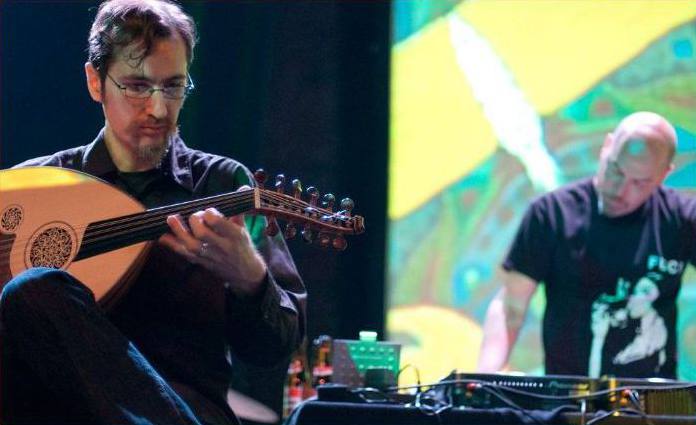 In the early 90s in California there were quite a lot of sitar and Hindustani classical music concerts, and I thought about learning that but it never quite happened. Instead, somewhat accidentally I stumbled into a new college ensemble called the UC Santa Barbara Middle Eastern Ensemble, and the director, Dr. Scott Marcus, persuaded me to pick up the oud. Everything began there, and quickly I sort of jumped in headfirst and got very involved with Arab then Turkish music. I went to Turkey in 93 to study oud with Necati Çelik and have been actively studying Ottoman art music, Anatolian folk music, the makam modal system, etc. since.
On your website you call yourself “ethnomusicologist, oud artist, audio engineer“. Are all three areas of your interest of similar importance for you? Do you see a huge difference between your academic interests and work and your performances as solo artist or with other projects?
I’ve been doing ethnomusicology, oud and audio engineering for 20 years now, and in some ways they feed into each other, but in other ways they’re very much compartmentalized. I had always tinkered with making home recordings, but after a string of disappointing experiences in California recording studios came to the conclusion that Californian rock engineers had no idea how to record oud or Middle Eastern percussion and I would need to do it myself. Once I got more into recording, I started to discover things that fed into my oud playing and creative process. My interest in recording also led me to do long-term ethnomusicological research into Istanbul’s recording studios, which I’m finishing a book about right now. I engineered a lot in Istanbul; I was a studio musician there as well, and I would not have been able to pull off the “academic/research” part of the project without that practical, hands-on experience.
But, for example, I have little interest in doing an ethnomusicological study of the oud, I’d rather just play it! I would never want to run a commercial recording studio again. When I create Kaderci recordings or do collaborations with other artists, I think of it as a form of research, but not research with the brain/mind. It’s research with the heart.
All I know about the origins of your music is that much of it derives from the tradition of arabic or other near east countries. This is, however, a large part of the world. Are you particularly interested in a certain country, or is your music influenced by several Turkish, Arabian and Persian styles?
I do listen to a lot of music from the region, but my focus has been on a few specific kinds of music from Turkey. In the 19th-20th century there was a romantic movement in Ottoman art music and numerous composers wrote stunning instrumental and vocal works – I’m thinking of Dede Efendi, Tanburi Cemil Bey, Ismail Hakkı Bey, and many others. This music works great on the oud automatically. This is the repertoire you learn if you go to a conservatory in Turkey, and most Turkish CDs of oud music are of this romantic period. I seriously studied this and continue to play it.
 More recently I’ve been more interested in rural Anatolian musics, particularly the secular songs (deyiş) of the Alevi religious order, and the bozlak song form of Central Anatolia which is really beautiful and very “deep.” Because of my research in Istanbul recording studios I also encountered a lot of what is called “arranged folk music.” Arrangement is a very creative practice in Turkey; arrangers have found ways of adapting folk songs for all kinds of ensembles, ranging from groups of folk instruments to a jazz, surf-rock or heavy metal band, and most interestingly, folk instruments on top of metal/rock. Any and all of this is stuff I might listen to (and for a few years I listened to nothing but recordings from Turkey), but how much influence this has on my own music varies from none at all, to a lot.
Do you prefer to play old songs that already exist, or rather own compositions of the basis of traditional structures?
It’s good to keep things diverse – playing old songs, creating new works, playing old C93 pieces, creating new pieces for C93. I’m creating new things all the time, including the Kaderci solo stuff, collaborative things, and I still make live sound sculptures and immersive environments from time to time.
People from western countries often find it difficult to distinguish between „classical“ and „folkloric“ music, if it comes from other parts of the world. Is such a differenciation important at all and can we draw an exact parting line between it? How much does it mean to you and do you see yourself more as a classical or a folk musician?
Part of the distinction is real and has to do with nothing other than the context in which the music is played. There were special forms of music created and performed in the Ottoman and Safavid Courts, and a lot of why we inherit the idea of Turkish or Persian “Classical Music” has to do with this. However, the term “classical” has been appropriated by music critics and record labels to include non-court music, which may have originally been 19th century popular songs from Istanbul that were most definitely not classical or courtly in any way. Likewise, “folkloric” musics are assumed to be local village traditions with the assumptions that there is no song “author” and that music hasn’t changed at all in the village. There’s been much critique of the whole folk concept, since we now know that some of this village music has very specific origins and known authors, and we’ve been able to document rapid changes to village folk musics as well.
I’m very suspicious of classical/folkloric distinctions made today, either in Turkey or elsewhere, since they tend to be noncritical attempts to either increase or decrease the perceived legitimacy of the music. One example: for whatever reasons, even though Alevi music from Central and Eastern Anatolia is composed, authored, is serious listening music and has an unbroken tradition of performance going back just as long as Ottoman court music, it’s not described as classical music but as folk music. Alevi musics are some of the only polyphonic musics from anywhere in that region and are exceedingly complex. Why is this folk rather than classical, when nightclub drinking songs from the 19th century are classical but not folk? It’s nonsensical!
Western listeners have a hard time differentiating musics for a number of reasons. Many people today encounter the music of Turkey via “world music” programming or record labels, and there’s a long history of exoticism and Orientalism that has skewed perceptions and provided a lot of misinformation. But this is not just in the West – in Turkey, there is a long history of “self-orientialization” and a lot of romanticization of Eastern Anatolian musics by urbanites who have no idea what the musics are or what they mean.
In terms of what I do, I play the oud! I play music I love…
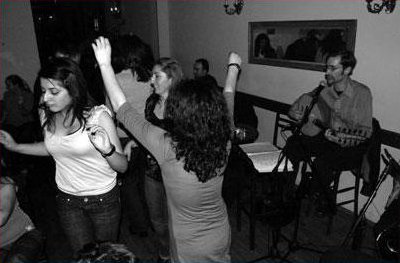 I found fotos from a performance you gave in an Istanbul bar. Have you played often in countries of the orient? What can you tell about the reactions of the people towards a “western” musician, who performs „eastern“ music?
I have a repertoire of some 500-600 works from Turkey/Egypt, and have done over 1000 performances of this, both solo and in small groups. When I was living in Istanbul and working in the studios I played out twice a week, one night at a meyhane (restaurant that serves alcohol), one night at a bar. It was a great experience, and I really like performing folk/light art music for Turkish audiences since they’re so passionately into it, dancing for hours, then crying and singing along when we’d sing melancholic songs. It’s totally different playing for American audiences; people listen silently and politely clap at the end of pieces. At least for this music, I prefer the Turkish way!
In terms of reactions, of course there’s the novelty factor of an American singing Turkish music, we were on TV, in newspapers, etc. That eventually wears off, and some people who regularly attended our Istanbul shows would start to actively comment on, criticize and correct our performances. They’d take my lyrics book in the middle of the show and cross off lines they thought were inaccurate and put other lyrics in there, and even debate with each other about precisely how to best correct a wrong verse. I loved this – it was an amazing learning experience. A couple of fans would make us compilation CDs with every known recording of a particular song we played, so we could better “copy” the “correct” recordings. People realized we genuinely loved the music and had respect for it, so there was a certain degree of respect for us based on that. This is what we experienced and what we overheard, but you’d have to ask Savaş, Ergül, Cevdet, Mehmet, Tülay, Mustafa and the many others who regularly came to our shows, they might tell you something different…
In recent years the orient has often been associated with violence and instability. You took part in a talk about “Music of Conflict and Reconciliation: The War in Iraq/Post-9/11 World“. What can you tell us about your experiences there?
The most disturbing thing that emerged in this symposium was the extent to which music has been used as a weapon of war or torture, mainly by US military forces, in both the first and second Iraq wars.
Would you say your music is (also) an attempt to reconcile orient and occident?
Not at all! If anything, my oud playing is an attempt to reconcile my left hand and right hand, my composing is an attempt to reconcile my atria and ventricles, and my engineering reconciles right and left brain… but you asked about orient/occident, and for me I wouldn’t know how to divide things that way. I think of it this way: Istanbul is a cosmopolitan and modern European city; it has its quirks, but so do Rome, Paris, Berlin, London, etc. It has always been connected to the rest of Europe to some extent, so when I was living there, I didn’t really have the sense that I was in a world that was radically different. I mean, of course, there are differences – the language is really different and quite tough to learn – but North Germanic languages and Mediterranean romance languages are similarly different.
In some of your works, jazz and break beat elements are included. Are these just several elements that you admire, or is there a particular „crossover“ concept behind it? When you make use of computers to create loops, do you feel that traditional instruments and modern technology can complement one another in a very fertile way?
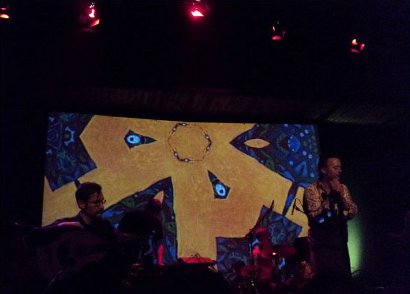 I hear songs, textures, timbres, and orchestrations in my head. I always have. It’s a matter of being able to take what’s in my head and turn it into actual sound. Nothing arises from any preconceived concept – I’ve tried that out and it never sounds good. So I have these abstract sonic ideas/feelings/soundings, and try to find resonances – something I can play on the oud or percussion, on my analog synths, field recordings of desert landscapes or construction sites, or digital signal processing applied to something from the archive of sound recordings I’ve made in the past. Sometimes a solo oud recording emerges, sometimes it’s a harsh industrial texture, sometimes something else.
One question is more or less obligatory: How did you came in contact with David Tibet from Current 93, who was it that discovered the other? Can you tell our readers a bit about your first meeting?
I’ve enjoyed Current and many other former World Serpent/Rough Trade artists since the late 80s. David and I “met” on myspace, actually – David had been listening to quite a bit of Coptic Christian oud music from Egypt, I had been listening to Current, after a couple brief exchanges I mentioned I’d be happy to contribute oud to Current or other projects, and an hour later David had emailed me 20 mp3s of Baby Dee piano/organ parts!
David Tibet and his music is popular in various underground scenes from Industrial to Folk to Psychedelic, although he may not see himself as a part of that. How much can you as a classical musician identify with such counter cultural phenomena? Did you also have a sort of teenage punk rock period or the like?
I played in a couple industrial bands in California in the 90s, the heavily-amplified-found-objects-with-screaming-vocals kind of industrial, that is. All the music I’m interested is intense in some way, although intense acoustic folk music and intense industrial noise obviously involve different techniques. One thing I love about Current is the way that it has changed over the years while keeping the same core intensity. Of course, most of that has to do with David, who is such a superb lyricist, performer and visionary, and attracts such interesting collaborators.
What are for you the main rewards when working within a band context?
Well, I don’t like performing solo, I got into oud playing and recording in a very social way, and find collaborations to be the most rewarding thing. Music is a form of communication. It’s not a language, but it’s communication, and there is simply nothing in the world like what happens when good musicians get together and interact, communicate. It’s really fulfilling for audiences, too, it fills a void that nothing else does, and I think that’s why in this “digital” age there is such a thriving economy for live bands. Such as Current…
What can you say about your experiences during Current 93′s “gentlemen“-tour (as Andrew Liles put it)?
Ha, the “gentlemen’s tour”! It went really well, the audiences were wonderful and yet quite different from each other. We played mainly material from the new albums (Honeysuckle Aeons, Baalstorm) and the Aleph/Black Ships trilogy, and I think that made for a really powerful and dynamic set. The local promoters in Athens, John and Anna at CTS Productions, are at the center of the local black metal scene, were gracious and did a great job reaching out to the community. The tour also saw the first Current show in Denmark, and that one went so well that there’s talk of a Scandinavian Current tour soon. We could call that one “the son of the gentleman’s tour”..
Thanks for the interview and all the best for your future endeavors.
Thank you!
(M.G./U.S.)
Fotos: Ladi Dell’aira & David Bauwens
MYRNINEREST: „Jhonn“, Uttered Babylon
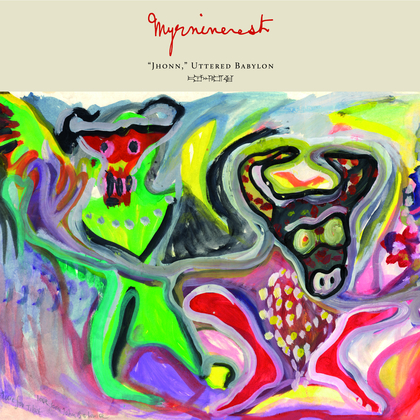 Myrninerest, unter dem Namen, den die Outsider-Künstlerin Madge Gill dem sie kreativ leitenden Geist gab, und der im Current 93-Kontext erstmals auf dem ersten Teil der „InmostLight“-Trilogie, der Maxi „Where the Long Shadows Fall“, 1995 auftaucht, veröffentlicht Tibet, der sich auf diesem Album wieder David Michael nennt, zusammen mit James Blackshaw ein Album, das im Booklet als „Hallucinatory Cartoon Channelling of my Love for Jhonn Balance“ beschrieben wird. Für Tibet gibt es kein Stillstehen, wobei vielleicht die Gründung dieses neuen Projekts Weiterlesen
The Machete Of Justice: Andrew Gilbert über Kolonialismus, Gewalt und den Heiligen Broccoli
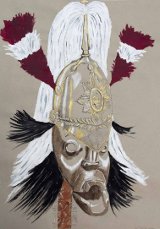 Ganz gleich, ob es sich um die große Geschichte eines Landes oder um die vielen kleinen Geschichten einzelner Phänomene handelt – schon ihre offizielle Niederschrift durch akademische Chronisten ist von vielfachen Ungereimtheiten und sich abwechselnden Moden geprägt. Richtig heterogen wird es, wenn man all die inoffiziellen Geschichtsschreiber mit einbezieht, die frei von akademischen Konventionen ihre meist weniger rigide Version der Geschichte ins Spiel bringen. Eine wichtige Rolle neben dem Volksmund spielt dabei die Fiktion des Künstlers, allem voran in der Literatur, aber auch in Songs und nicht zuletzt in der Bildenden Kunst. Mit dem in Schottland geborenen Maler und Zeichner Andrew Gilbert hat die Geschichte des britischen Kolonialreichs seit rund zehn Jahren eine Heimsuchung erfahren, an der Weiterlesen
The Machete of Justice: Andrew Gilbert on Colonialism, Violence and the Holy Broccoli
As you said earlier, you developed your obsession with British colonialism and militaria already as a boy. When did you start drawing and painting these things, and how early did you develop your critical and satirical approach to the subject matter?
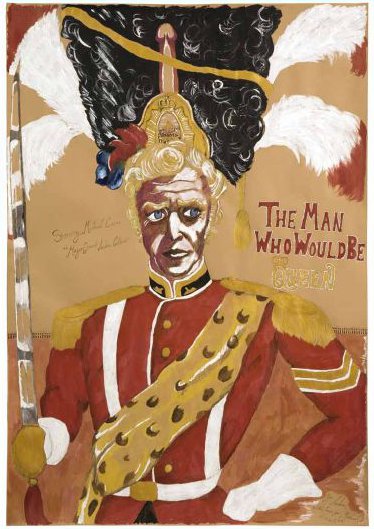 Mililtary history is the first subject I can remember drawing. I estimate aged four. Very early I became obsessed by the Jacobite Rebellion of 1745 and then after seeing the film ‘ZULU’ with the Anglo-Zulu War of 1879. As a child I drew the combatants as fruit and vegetables – for example light skinned green grapes for the British and dark skinned purple grapes for the Zulus. As child I remember knowing that the Memorial Service on the 11th day,11th hour and 11th month was absurd. School children stood around a giant phallus dressed in military uniforms. I watched a large amount of Monty Python as a child who frequently parody the British Army. I drew kneeling on the floor in silence, as I still work today. When I was 12 years old they invaded Iraq for the first time, and I knew this was a crime and Shaka Zulu became a role model. The Nina Simone version of ‘Strange Fruit’ had a strong influence when I was very young – she still appears in my drawings today.
Is it still a bit like playing with toy soldiers and guns when you paint these historical scenes and put your alter ego character in them?
Once you become obsessed by massed ranks of soldiers you are obsessed for life. But at the same time it is impossible to retain the level of fantasy required that transforms living room carpets in to Gettysburg, for example. However, yesterday I drew some Highland soldiers from the Jacobite Rebellion, I had not drawn them since childhood and I got the same sensation I did then when I painted them now. Such a feeling is impossible to describe. When I have to go to a supermarket I often imagine I am leading infantry in to musket fire, especially while waiting at traffic lights as if waiting to give the order to advance. I like to imagine my head being blown off by grape shot. Once in the supermarket I walk up and down the aisles blessing the products as I if I was inspecting my regiments before the Great Attack. Also, my alter ego never featured in my miniature battles, in this my role was that of God, I looked down from above the imaginary clouds of artillery smoke, in my drawings I do feature, mostly as a yellow bird, but as Creator of these landscapes and controller of these events my powers are also absolute.
You once said that your works are about a certain feeling that you have when you visit European museums. How would you describe this feeling and your reaction to it?
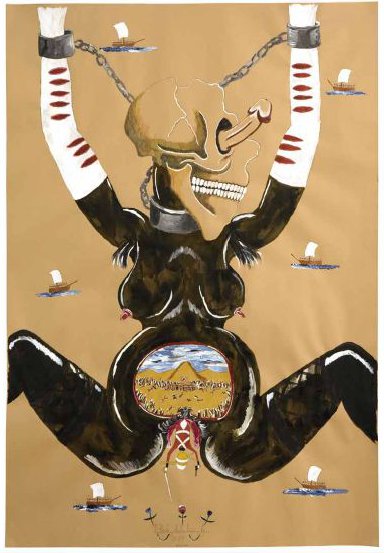 I think I was referring to the sensation I get in Military Museums but also in Ethnographic Museums. The Tribal artefacts and the Military costumes are displayed in a similar setting, so this connects to the emotive environment but also to the absolute excitement caused by seeing these objects. I constantly try to combine these two places in my installations . Again this is impossible to describe, but it is also caused by seeing certain paintings or drawings in museums of Western Art, such as the German Expressionists (Die Bruecke), I become sick and cannot stay long, I must draw. The power of these objects is so great. Picasso described such a sensation when he discovered ‘Primitive’ sculpture in Paris. But I must emphasise I like to parody this also. The German Expressionists, such as Ernst Ludwig Kirchner also had an extremely romantic view of tribal art and life, while at the same time they were rejecting the values of their contemporary society and industrialisation . I made, for example in 2008, a large installation outside on the Island of Ruegen of me and Emil Nolde painting a naked African Lady in nature. Both Nolde and i were represented as life size figures wearing British Colonial Military uniforms standing behind eisels and painting. However, I also built Soldier bodyguards in case we were attacked by savages or wild animals. The experience of the Primitive as safe and enjoyable experience, a sun umbrella protected us and we were served light refreshments while we painted. Like in the old ‘Colonial/World Exhibitions’ where villages and natives were put on display for 19th century European audiences. You must realise I have been working with this subject since art college/university, which I joined at 17. So this obsession is constant and this level of inspiration that still drives my mind forward everyday, I draw everyday, cannot be described in rational normal language.
Was there a certain experience which brought you to the opinion that a lot of mainstream views on colonialism and colonial wars are lacking in some way?
As I just described, this work is constant and absolute, I cannot pin point one specific moment or experience. But let us look at the 1964 film ‘ZULU’ as an example. This film inspired many of the leading British experts on the Anglo-Zulu War, such as Ian Knight (author of many excellent books on this subject). ‘ZULU’, directed by Cy Endfield, is a Classic British War Film, of which there are many, unlike in Germany for obvious reasons. So this film is often shown on Sunday afternoons or at Christmas when the British family gathers around the television. It tells the story of the Defence of Rorke’s Drift, where 100 British soldiers defeated an army of 4000 Zulu warriors. As in the American equivalent ‘The Alamo’ most of the film is the build up to the battle itself, waiting for the terrifying Zulu army to arrive, in reality the attack on Rorke’s Drift came directly after the battle of Isandlwana, the Zulu force was tired and ill disciplined, there were not 4 days waiting with dramatic music when the Zulu army finally appears on the crest of the hill (an excellent moment in the film).
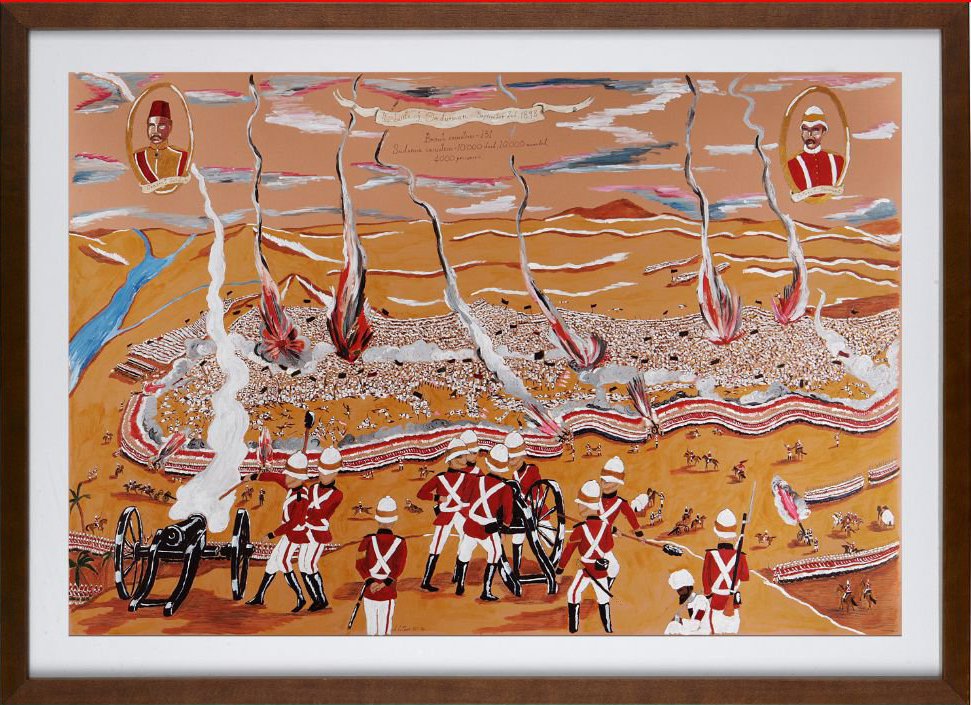 The film does not explain why the Zulus are defending their land against British invasion. The film ends with a song about glory, bravery and respecting your enemy, not with the wounded Zulus being shot through the head or put to death with bayonets. One British soldier described the horror of seeing a dead Zulu shot through the forehead, when he turned his body over the whole of the back of his head was blown away, in the film Zulus fall down with no blood at all. The film ends with the list of men who received the Victoria Cross medal, the most awarded in a single day in the history of the British army and again excellent dramatic music.
However, through the character of Michael Caine playing Lt.Bromhead, the hierarchy of the British army, its arrogance and the triumph of social class over ability is criticised. At one point a private soldier questions why he is killing Zulus, he never saw one in his village in Wales, why should they be his enemy. The Zulu final attack, which meets rank after rank of British Martini fast loading rifle fire, again an incredible scene, shows piles and piles of Zulu corpses and wounded, twitching and jerking beneath the feet of the British lines and finally Lt Bromhead is disgusted by the violence (at the start of the film he refers to the great Military tradition of the men in his family). Furthermore, the film was banned by Apartheid South Africa, due to fears of rising Zulu nationalism. The contemporary Zulu leader Buthelezi played the historical Zulu King Cetshwayo kaMpande.
You must understand one could write 6000 pages about the significance of the film ‘ZULU’, it represents something naïve yet pure, perhaps British culture before it was destroyed by 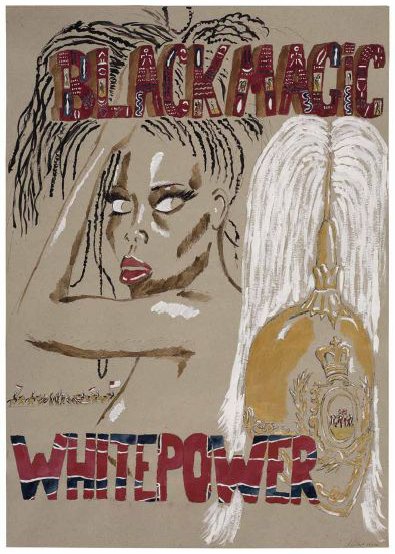 American influence and corrupted by a deep modern cynicism that attacks everything and offers nothing. It represents ridiculous patriotism and propaganda,it represents technology against primitivism (I gave Ernst Ludwig Kirchner a copy of the DVD) it represents the troubled life of the producer and actor Stanley Baker. I leave the fim ‘ZULU’ with a quote from a history of the British army published in 2009 – “the desperate fight at Rorke’s Drift in 1879 underpinned the heroism of the airborne forces at Arnhem in 1944, and continues to do so in Afghanistan’…
May I also point out that small numbers of England football supporters travelled to the World Cup in South Africa in Replica White Helmets of the Zulu War, before their complete destruction by Germany.
What role does the work of Kipling play for you? In his most (in)famous poem the colonized are described as “half-devil and half-child” and thus it is the “white man’s burden” to “serve [their] captives’ need”. Do you think the tension between some kind of misguided idealism and chauvinism may be of relevance for your art?
That is an excellent quote, thank you! Mr Kipling, or Edwina as we used to call him in the Camp tent, has inspired me with his poem ‘A Young British Soldier’ especially the line about better to shoot your self than be mutilated by the Afghans-which is of great significance to today. His book ‘The man who would be King’ is the inspiration for many of my drawings and for my own book ‘The man who would be Queen’ (my 19th century autobiography). Again you ask me to explain something psychological and emotional in rational words. I use the symbol of the white phallus to represent the European Colonial powers. I also use the Medieval Christian symbol of Jerusalem as a Sacred Female figure and like to link this to Ulundi, the Zulu Capital destroyed by the British in 1879. The militant imagery of the Christian missionary, the Medieval Crusade visual propaganda such as the sculptures of Vezelay (where Pope Urban II preached the first Crusade) also connect to the British Colonial military campaigns. The fact that the Europeans burned African idols, while the Protestants destroyed the Catholic idols is also greatly inspiring. There is also a British propaganda against Germany from the First Great War, that describes German War Memorials which were covered in Nails, like African Fetish, and therefore the imagined primitive dark rituals of the German people, as negative propaganda. The worship of the object in contemporary European society, the Traffic Light as an idol covered in Carrots, relates also to the idea of the arrogance of European society in its view as being enlightened or civilised, as you describe.
 In some of your works, you decidedly mix accessoires of the colonizers and the colonized with each other and thus create interesting hybrid figures (a Zulu warrior with the Union Jack on his shield or mixed media soldiers with a native look, for instance). Do you think that this sort of „positive“ intercultural influence between groups is something that falls short when we regard these historical events solely as encounters of contrasting cultures?
I like to draw Zulu female warriors wearing the British Phallic symbol, the White Helmet. I also like to design my own uniforms for my African Elite Bodyguard. I am inspired by photos of African leaders who adopt European 19th century military uniforms and this language of power and propaganda and combine it with indigenous power symbols. Idi Amin’s regiments in British/Scottish uniforms are fascinating. Furthermore, I see a strong similarity between the uniforms of the 19th Century European Tribes, with their feathers, leopard and bear skins, the way they are presented in museums, in glass cases, in darkly lit rooms, to African and Oceanic Tribal Art and to the Zulu military uniform – with their feathers and animal skins. I must point out that the Shaka Zulu is often compared to Napoleon as a great reformer of the military and a great strategic leader. His regiments could be distinguished by different feathers and coloured cow skin shields. He introduced military service and a system of barracks, he shortened the spear for stabbing (like the Romans), he rejected the ceremonial battle (throwing spears and insults) in favour of total annihilation of the enemy , he removed the sandles so his troops could run faster. He developed the formation ‘The Horns of the Buffalo’ (described by the Boer character in the film ‘ZULU’ – using a sword he carves a diagram of this into the sand and used at the Battle of Isandlwana and complete destruction of the British Regiments). Shaka Zulu did to South Africa what the British were doing to the world, he conquered and subjugated all those around. Like many European leaders his absolute power lead to his insanity, and he was assassinated by his own people. I like to compare him to MacBeth, and it is not a coincidence that Shakespeare and Shaka Spear are the same. The role of the Witchdoctors and their political influence on the Zulu court is well documented, like the Witches in MacBeth. The life of Shaka Zulu mirrors the Christian Mythology as well as the European Mythology such as Excalibur and the Spear of Shaka Zulu.
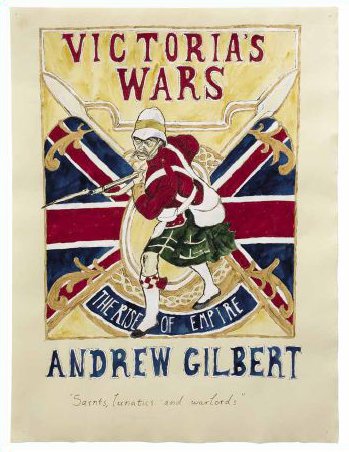 A final example of this cross over in my work would be the solo exhibition ‘Trophies of the Savages’ (Gallery 207, Prague in 2012). The Title of the exhibition comes from a painting by Emil Nolde. Nolde travelled with the German Colonial Expidition in 1913/14 to the South Sea Islands. The painting ‘Trophies of the Savages’ depicts severed heads in a jungle, referring to the head hunting practice of the natives. I used this image and title however to refer to the German occupation of Namibia and the severed heads taken as part of scientific research. So the term savage is then imposed on the European powers. Furthermore the main image of the exhibition was based on a Crucifxion painting my Nolde, the title ‘Trophies of the Savages’ therefore also refers to the European Idols of Christian worship, and as in my drawings the primitives are the Royal Family with their deranged rituals rather than exotic natives.
In academic cultural studies, a critical approach to colonialism and Britishness seems quite trendy – one of many „post“-whatever phenomena, whose intellectual depth is sometimes doubtful… Are you interested in such things and is there a book that you recommend?
I am not interested in such things, but I recommend the short documentary film ‘The Mad Masters’ / ‘Les maitres fous’, 1955, by Jean Rouch. I saw this film recently and it confirms a number of my visions.
Where do you draw most of your inspirations from when it comes to particular details? Are there certain documents or artefacts that strongly affect some of your works?
I constantly search for historical material and visit museums. For British Empire military history I recommend the books by Ian Knight and Saul David. Also the Osprey series (available in Berlin at Berliner Zinnfiguren shop in Charlotenburg). The new Book ‘Human Zoos – The invention of the Savage’ (published 2012 by Musee du Quai Branly, Paris) contains excellent historical photos and illustrations. I was given the book ‘Kolonialpiraten’ Franz Rose (1941 Berlin) by the Berlin-based artist from Stralsund Stefan Pfeiffer, which contains superb anti Empire illustrations, including a reproduction of the painting of the execution of Indian Mutineers, tied to the fronts of cannons by the British. The Ethnographic Museum in Berlin Dahlem and the Tervuren Africa Museum Brussels must be visited. For devotees of Primitvism Heidelberg is an epicentre of Ancient Energy.. The Ethnographic Museum in Heidelberg is incredible and one can then walk to the Prinzhorn Collection Musuem and see the carved wooden sculptues of Karl Brendel including ‘Militarism’ which are permanently displayed next to the Kota reliquary figure that Hans Prinzhorn used in his comparisons to illustrate his theory of Primitivism. Also nearby is the Museum HausCajeth for Primitive Painting.
Returning to film – I watch often ‘The Charge of the Light Brigade’ (1968) which contains animation sequences depicting the British Empire and Army. Also the film we discussed already ‘Soldier Blue’ (1970) in which the American Cavalry commander wears a white British Colonial Helmet while massacring a village.
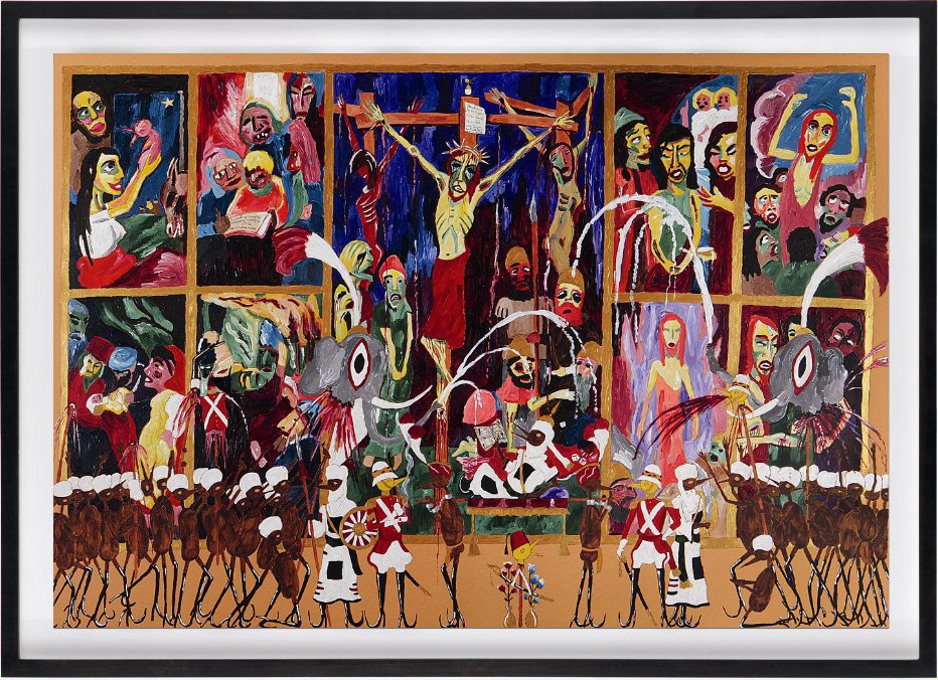 The Biography of Shaka Zulu must be read. After the death of his mother, Shaka made sex illegal for one year as a form of national mourning. To test the allegiance of his regiments he made them line up and had young naked Zulu women dance in front them, any man whose spear rose toward the sun (became sexually aroused) had his head smashed in with a club.
Your book „Andrew Emperor of Africa“ is a visual narrative with an alter ego of yours as the protagonist. How would you introduce and describe this other Andrew Gilbert character?
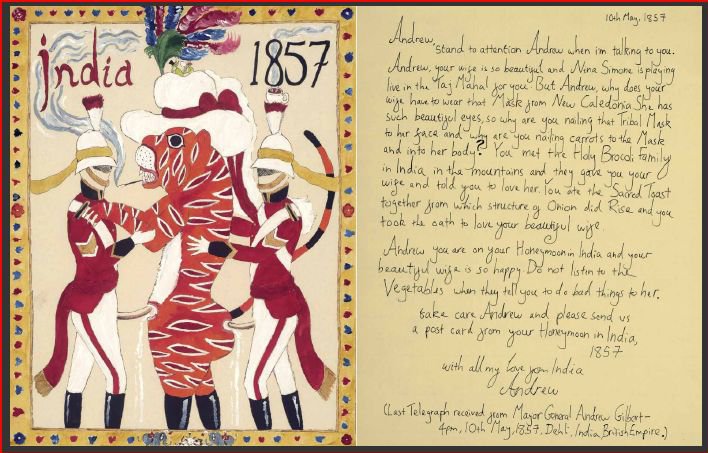
I try to keep this short. Firstly he is an Officer, he is left alone in an outpost in Southern Africa, at this point through isolation and malaria he begins to hallucinate an entire Empire which he rules. He begins to build life size soldiers, his regiments and companions from wood and painted uniforms and cabbages (for their heads and breasts) as well as his servants. He makes drawings that he believes are photos of all his past glories. By coincidence there was a Major General Andrew Gilbert of the Black Watch Highland regiment. He was wounded in the Sudan and killed in South Africa fighting the Boers in 1899.
The narrative is not constant, I move around different times and campaigns. Therefore I can meet different historical figures – such as Ernst Ludwig Kirchner, The Mahdi of the Sudan or General Gordon of Khartoum, who also drew flowers and whose head was cut off when Khartoum was captured by the Mahdi’s army. I also met the Holy Brocoli who is my spiritual protector, but also prone to extreme violence.
I have many wives, all of whom are executed for specific crimes such as chopping the sacred onions or burning the toast, or because they like the work of another artist more than mine.
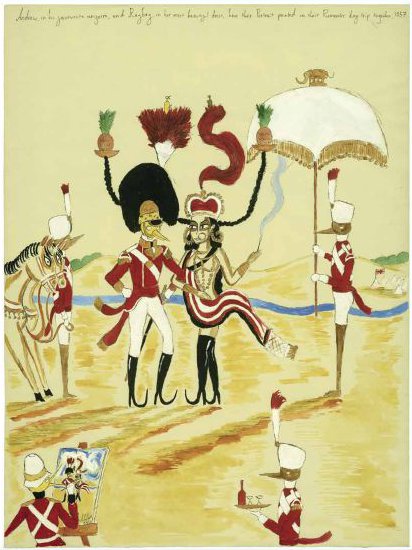 There is this case – the Lady Rajbaj picture – where Andrew Gilbert appears as a military officer and as a painter in one image. To avoid a term like ”meta artistic“, do such gimmicks just exist for the fun of confusion, or do they also show a bit more about your role as an experiencing and a (re)producing person?
Certainly not for confusion, in this drawing I represent myself in two of my roles, as a General, and a military artist whose job it Is to record the important events – as God’s Witness, his eyes on earth. It is common in art history to see artists paint themselves hidden in important events. In the unpublished drawing of the assassination of Kennedy, I appear in the car, with my slaves chained to the back of the car on my military procession and I appear at the window, shooting my own head off.
By the way Lady RajBaj was inspired by a drawing of the historical figure Lakshmi Bai, the Rani of Jhansi, a leader against the British in the Indian Mutiny. I found a drawing of her in the Saul David book ‘The India Mutiny’ and became obsessed by her beauty.
Many of your pictures are very brutal, and often the more cartoonish they are, the more pornographic they become. Apart from the fact that they are also very amusing, who do you think deserves mostly to be shocked by this historiography drenched with sex and violence?
The violence I draw because I need to. Because it helps me stay calm and because of contemporary events which make me angry. There is an enemy that thinks it is normal to kill for wealth and power. This enemy should taste the soup of justice, 10 000 prawns, 20 000 sacred onions and many monks teeth and the skulls of 10 000 Owls go into this soup.
Thinking of the topics of your work I was wondering to what extent Conrad’s “Heart of Darkness” and/or Coppola’s “Apocalypse Now” may have influenced/inspired you.
I was told to read ‘Heart of Darkness’ by a professor at art school, she saw a link between my primitive idols of European culture and violent rituals and this book. The book is very good. I often draw Helicopters in the 19th century blowing up civilians inspired by the scene in this film.
I constantly imagine a clearing in a forest, where my idols stand, lost rituals of violence and vegetable blessing took place there, I stumble across these idols by chance when I leave the outpost, the blood is fresh, the ritual could have been 1000 years ago, or that morning. This idea excites me and I am the only one except the High Priest who can read the language written in violent mark making and chopped Mushrooms. The heads on spikes everywhere in “Apocalypse Now” are also inspiring.
To leave contemporary reality as Kurt does and the character in Heart of Darkness, is a great inspiration, the colonial landscape is never ending, the campaigns never end, the jungle never ends, the imagination never ends.
 There is a photo of you, in which you stand in a solemn military pose in front of insignia like a flag and uniform parts. For me, this has something parodistic as well as serious at the first glance. When you deal with the average British soldier from colonial history, which aspects are interesting for you in a positive and empathic way?
There is a better photo in which I wear a red uniform, with potato sack as mask or veil, and a necklace of carrots. The veil refers to Tribal Ritual costume and the Veil in Perisan Miniature painting. As you say a parody of the patriotic pose, but also something else, connecting to visual reprentations of power, it was the image used for the 2009 exhibition Invitation Card ‘The Zulu Queen stood as Jerusalem fell’ at Gallery Ten Haaf Projects, in Amsterdam.
There is a small monument to the British Commandoes in the Highlands of Scotland. They trained there in the Second World War. Today are tributes to the Commandoes killed now in Afghanistan. By chance I visited this site while preparing the exhibition ‘Andrew’s death in Afghanistan,1842’(Power Gallery, Hamburg 2009). It is not the fault of the individual soldiers sent to these countries to die, but it is to be expected that people will defend their land against foreign occupation. My Victorian soldiers drink Coffee in their tents, attend Lonnie Donegan concerts to increase their Moral on their over seas Campaigns, are killed and carry out atrocities upon the civilian populations they are meant to be liberating in the name of Civilisation.
In your book you sometimes show the brutality of both antagonizing parties in a war with a strange mixture of empathy and sarcasm. In the India chapter for instance, a work like „Smash British Rule in India“ has its equivalent in „Smash Gandhi“. Do you think that your childlike spitefulness is the price that both parties have to pay for having their say?
I am obsessed by the link between propaganda and advertising, and the fact that propaganda of all sides looks the same and functions the same. Also because I draw constantly my mind moves fast and changes depending on how much coffee is drunk or what time of day it is. In the examples you give you will notice the pro British propaganda is much more primitive in its execution, while the pro India image is very fine in its rendering. The famous quote of Ghandi is, when asked “What do you think of European Civilisation” he replied “That would be a good idea”. I draw massacres committed by all sides, in fact the wife I was on my honeymoon with in India, a European woman, was butchered at the hands of the Indian Mutineers at the Cawnpore Massacre (1857), luckily I was watching a game of cricket at the time and I survived – though my team lost.
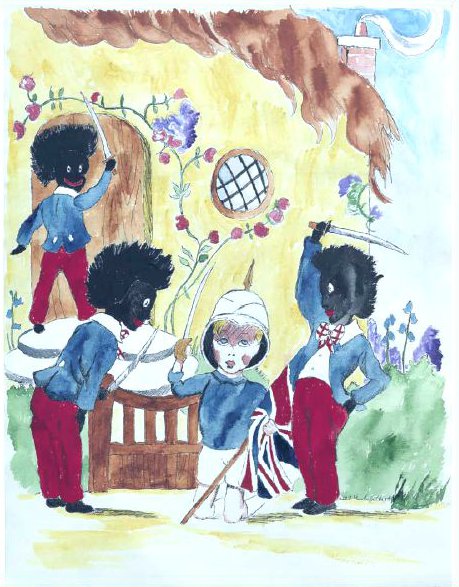 People tend to be lazy and many seem to prefer happy endings and easy and clear solutions but there is often a certain amount of ambivalence in your work. Have you ever encountered feedback from the audience that was hostile because of this?
No, occasionally I am warned about romanticising a deranged and brutal dictator like Shaka Zulu.
Do you generally care how (and how well) your work is understood by your audience and the media? What would probably be the most inappropriate feedback you could imagine?
Yes this understanding is very important. And generally it is understood correctly and is greatly appreciated by those who should appreciate it. If the Queen would invite me to be her Royal Artist this might be a problem, or if Bono from U2 became a fan. Or if I was invited to make a recruitment poster for the British army, this would also be a problem.
Recently there were again discussions about what country actually owns the Falkland Islands. Morrissey told an audience in Argentina that the islands “belong to you”. How do you feel about such remnants of a colonial past?
Firstly the Morrissey fans at art college were incredibly arrogant and elitist, but that is not his fault. The British in the Falklands is as ridiculous as the Germans in Namibia was, or as ridiculous as people who worship Parsnips killing people who worship Cauliflowers.
Historical (Meta-)Fiction has been quite popular in the UK since the 80s, think Fowles, Byatt, Ackroyd and other writers. I think that Barry Unsworth’ slave trade novel “Sacred Hunger“ offers an interesting view on certain aspects of colonial history. I wonder if you know it or its sequel “The Quality of Mercy”?
Unfortunately I don’t know these books. The ‘Sacred Hunger’ sounds interesting and I will try to find this. I read almost no fiction anymore, but I need to find a copy of ‘Ape and Essence’ by Aldous Huxley which I read many years ago and need to re read.
Last year you did this Berlin exhibition together with David Tibet. How did it come about and how do you think does the work of both of you fit and correspond to each other? As you told me, you already knew his music group and some of the people contributing to it…
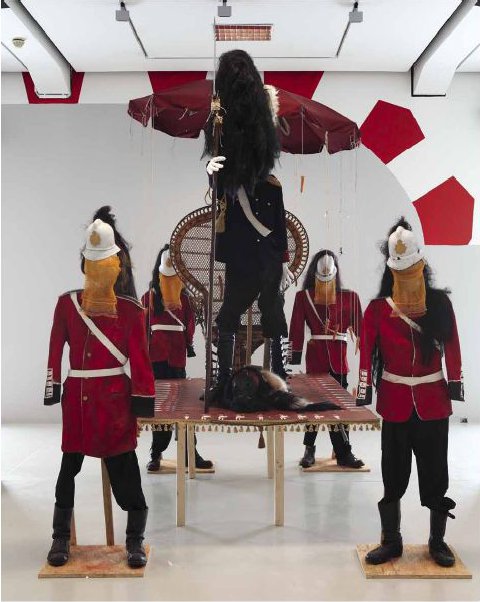 The English artist and friend Lucy Stein gave David Tibet my book ‘Andrew , Emperor of Africa’. He contacted me at the same time I was invited to exhibit at a project room in Berlin called the nationalmusuem. I asked David if he would exhibit with me and he agreed.
I think this was an excellent exhibition as many artists in Berlin agreed. David’s Hallucinatory images combined very well with the religous visions I was working on at the time of the Mahdi of the Sudan. David is a very obsessive collector and researcher as I am. You summarised the link between our work very well already in African Paper. I would add to this that I have always been inspired by his lyrics and the repetitive violent screaming he employs, this reminds me of the hammering of nails in to Fetish Objects which explains my fascination also with John Cale (for example the song ‘Fear is a Man’s Best Friend’). His paintings are excellent regardless of whether you know his music, this was also something a lot of Berlin artists agreed with. I need art that releases the certain feeling that we have already discussed and cannot be described, I get this from both his music and his paintings.
I have been listening to Current 93 since I was 16 and still at school and know Michael Cashmore through the artist Steffi Thiel for many years.
You once said in an interview that you “drew, but […] did not invent the image of a baby ripped from the womb”, illustrating that people tend to forget that atrocious crimes are committed in the real world and not necessarily on canvas. When people in Germany talk about horrible crimes etc. they often say that it is “unimaginable” (unvorstellbar). I always think that these crimes happened because it was in fact possible to imagine them. Is your art there to show what others consider to be unimaginable?
If I did not draw then I would not do anything useful, my work keeps me alive. The crimes of the past are repeated over and over, the technology for killing civilians has advanced but the crimes and motivations for these crimes are the same. I draw for myself, firstly, to try to understand these things, also because I love to draw uniforms. Because I love to research history and I love to leave contemporary reality. But at the same time as I hope it is clear in this interview the work relates to contemporary problems. I see no difference between a television and a microwave filled with old potatoes. There is a grey veil of mediocrity being drawn over everything, through advertising, through media, it is vital to expose the beast behind this veil, to show the absolute violence hidden behind the celebrity dance programmes. The Primitivist artist Dubuffet said it is better to eat burnt Broccoli and to experience something real rather than bland, while Thomas a Kempis the Middle -ages Mystic preferred to listen to the sound of frogs croak than to the banal pleasant tunes of the church organ. The Holy Brocoli comes in peace, but when his children are time and time again murdered he will take up the Machete of Justice and drive it deep it in to the head of the beast.
(M.G., T.M., U.S.)
New Works:
“Andrew And Nolde Meet The Mahdi, 1885″
Year: 2011
Format: 70x100cm
Watercolour, acrylic and pen on paper
Private collection Duesseldorf
“The Battle Of Omdurman, 1898″
Year: 2012
Format: 70x100cm
Watercolour, acrylic and pen on paper
Courtesy Power Galerie (Hamburg)
Older titles are: The Man Who Would Be Queen, The Birth Of Andrew Emperor Of Africa, Black Magic White Power, Africa 1879, Victoria’s Wars, Andrew And Lady Rajbaj, India 1857, The Defense Of Jerusalem, Monument To Andrew The Zulu Queen (Andrew Gilbert: Andrew, Emperor of Africa. Bielefeld: Christof Kerber 2011)
CURRENT 93: And When Rome Falls
 Konzertaufnahmen sind seit langem ein fester Bestandteil von David Tibets Diskografie. Ausgehend von den beiden als “All Dolled Up Like Christ” auf Doppel-CD herausgebrachten Konzerten in der New Yorker Ohrensanz-Foundation erschien eine ganze Reihe an Mitschnitten kompletter Auftritte, und zeitweise dachte man fast, die damals nicht gerade eifrig tourende Band wolle mit der Zeit buchstäblich jede Show durch einen schön gestalteten Tonträger würdigen. Alben wie “Cats Drunk On Copper”, “Halo” und “Birdsong In The Empire” entsprechen dabei quasi einem (später durch Rockelemente Weiterlesen
OTHON: Impermanence
 Drei Jahre nachdem Othon Mataragas sein Debüt „Digital Angel“ auf David Tibets Label Durtro veröffentlichte, folgt mit „Impermanence“ der schon länger angekündigte Nachfolger. Zwei der Sänger, die das Debüt entscheidend (mit)prägten – Ernesto Tomasini und Marc Almond -, spielen auch auf dem neuen Album eine zentrale Rolle. Vor einigen Monaten kündige Othon an, dass seine künftigen Werke alle unter dem Motto „PAN muzik“ stünden, dabei äußerte er sich jüngst in einem Interview mit dem Magazin Exeunt zum gewählten Begriff: „Pan transcends all styles and limitations. Weiterlesen
SASHA GREY: Neü Sex (Buch)
 Sasha Grey war für ein paar Jahre sicher das Gesicht des amerikanischen Adult Films, doch es scheint fast, als hätte ihr der frühzeitige Ausstieg aus der Branche noch mehr Publicity eingebracht. Ihre derzeitige mediale Überpräsenz verschaffte der 23jährigen allerdings nicht nur neue Bewunderer, sondern auch jede Menge Überschätztheitsvorwürfe – teilweise mit Argumenten unterfüttert, teilweise aber auch einfach im Zuge des derzeit modischen Hipsterhasses, den meist noch hippere Leute kultivieren, frei nach der Devise “uncool ist das neue cool”. Stereotypen pendeln sich ein, die kaum ein professioneller (Ab-)Schreiber unerwähnt lässt: Ihre Rolle bei “Oscar-Preisträger Stephen Soderbergh”, ihre Experimentalband aTelecine, die man freilich nie gehört hat, und deren Name man sicherheitshalber noch mal nachschlägt. Seltener ihre Gastspiele bei Current 93 und Lee Perry. Weiterlesen
MOMICK: s/t (Vinyl-Edition lim. 500)
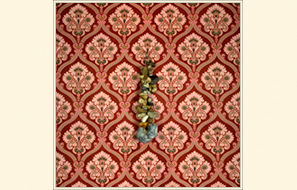 Bei Momick handelt es sich um ein noch recht junges Projekt, doch die beiden Betreiber Richard Moult und Michael Lawrence sind keine Unbekannten. Moult ist seit langem in verschiedenen Bereichen tätig. Wäre Magritte Landschaftsmaler gewesen und dazu Brite, dann hätten seine etwas dunkleren Gemälde vielleicht ein bisschen wie die des frühen Moult ausgesehen, der in seiner jüngsten Schaffensphase einen abstrakteren, doch nicht minder dunklen Stil für sich entdeckt hat. Weiterlesen
Hallucinatory Mahdis and Æons. Andrew Gilbert & David Tibet in Berlin
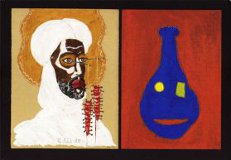 Die Maler Andrew Gilbert und David Tibet sind ein ungleiches Gespann, und doch verbunden durch einige interessante Gemeinsamkeiten. Beide sind Kinder des British Empire, und auf je eigene Weise prägte das auch ihr Werk. Tibet, der als Sänger von Current 93 eines der interessantesten und eigenwilligsten Kapitel alternativer Musikgeschichte schrieb, kam in der ehemaligen Kronkolonie Malaysia zur Welt und verbrachte dort seine Kindheit. In „England’s Hidden Reverse“ äußerte er, wie sehr ihn das Aufeinandertreffen verschiedener Kulturen und Religionen beeindruckte. Weiterlesen
“The Hip Killers Are Burning Like Devil”. Current 93 in der Berliner Volksbühne
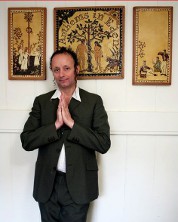 Über CURRENT 93, die nächstes Jahr ihr dreißigjähriges „Band“-Jubiläum feiern, ist viel geschrieben worden, und das zurecht. In den ganzen Jahren gab es für David Tibet nie größere Ruhephasen, einige Alben sind wichtige Wegmarken für Vieles: Für zeitgenössische Musik mit religiösem Überbau. Für schwer greifbare Stilkombinationen und überraschende Zusammenarbeiten. Für eine Gegenkultur, die sich nicht geniert und es vor allem auch schafft, etabliertere Kontexte für sich zu nutzen. Zu guter Letzt auch für eine Entwicklung, die man bei ganz unterschiedlichen Bands wahrnimmt, deren Anfänge in der Zeit um 1980 liegen Weiterlesen
CURRENT 93: Honeysuckle Æons
 Das Nichtstillstehenkönnen oder –wollen David Tibets – letztes Jahr sagte er in einem Interview, das wir mit ihm führten: „Ich habe immer den Eindruck, dass ich weiter und weiter rennen muss, mich weiter bewegen muss, weiter aufnehmen und schreiben muss“ – spiegelt sich auch in der Anzahl der Veröffentlichungen der letzten Jahre wider: Hatte sich eine Zeitlang ein Dreijahresrhythmus zwischen den Hauptwerken herauskristallisiert, erschienen seit 2009 jährlich reguläre Studioaufnahmen. Weiterlesen
CURRENT 93 – Interview (2010)
 Current 93, die (selbstironisch so bezeichnete) „ultimative halluzinatorische gnostische Supergruppe“ um David Tibet, ist ein Universum, in dem seltsame Planeten herumschwirren, ein Projekt, das auch nach 27 Jahren (noch) zu überraschen vermag. Die Texte David Tibets sind auf den vergangenen drei Alben nach einer Zeit der Introspektion zu einer völlig eigenen und oftmals in ihrer Metaphorik und Bildlichkeit – „a heap of broken images“ heißt es in Eliots „The Waste Land“ – kaum zu durchdringenden Mischung aus Autobiographischem und Kosmischem geworden. Weiterlesen
CURRENT 93: Baalstorm, Sing Omega
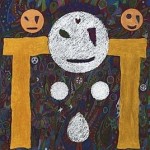 Will Oldham schrieb in den Linernotes zur Compilation „Judas as Black Moth” über David Tibets Projekt: „Current 93 exists at the eye of a salutary storm; one that yields fear from fear, awe from awe and love from love.” Diese Sturmmetaphorik durchzieht das gesamte neue Album. Anlässlich der beiden Auftritte im HMV Forum bezeichnete Sebastian Horsley – der „Dandy in der Unterwelt” – einen Dichter als jemanden, der seine Faust emporstreckt und hofft, dass ein Blitz einschlagen werde. Weiterlesen
ANDREW LILES: Where The Long Shadows Fall
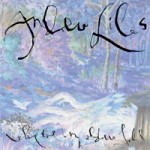 „And formless we lay and shall dream“
Eine Taxonomie von Coverversionen zu entwerfen ist schwierig, aber vielleicht könnte man folgenden Vorschlag machen: Da gibt es die gefühlt größte Gruppe der Reproduktoren, die meistens bar eigener Fähigkeiten und Originalität versuchen ein Stück Ton für Ton nachzuspielen, auf dass ein Teil des Glanzes des Originals auf das eigene Schattendasein falle. Meistens fällt aber nur der Erzeuger – und zwar aus sehr niedriger Höhe. Dann gibt es die Assimilatoren, die sich fremde Stücke einverleiben, um sie verdaut und transformiert zum Teil des eigenen Oeuvres machen. Weiterlesen