
Old Europa Café kündigen für den Herbst unter dem Titel “White Mountain Face” ein neues Album des japanischen Post Industrial/Noise-Veteranen Grim an, das erneut ein audiovisuelles Schmuckstück werden könnte.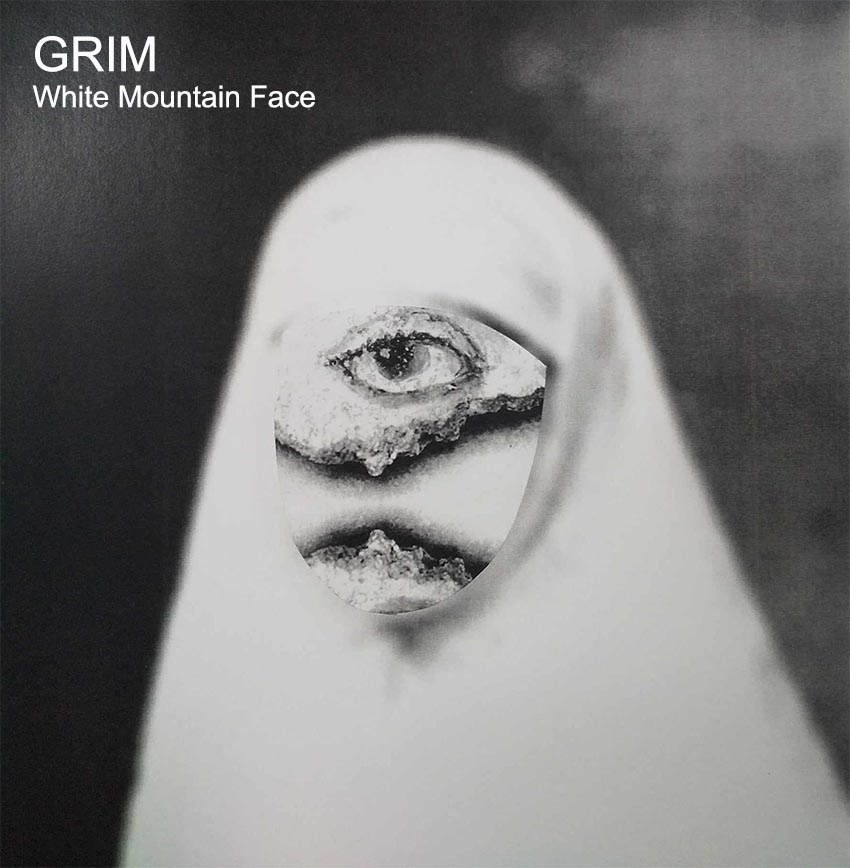 Weiterlesen
Schlagwort-Archive: Old Europa Café
DAVID E. WILLIAMS: Get me a Ladder… Get me a Ladder!
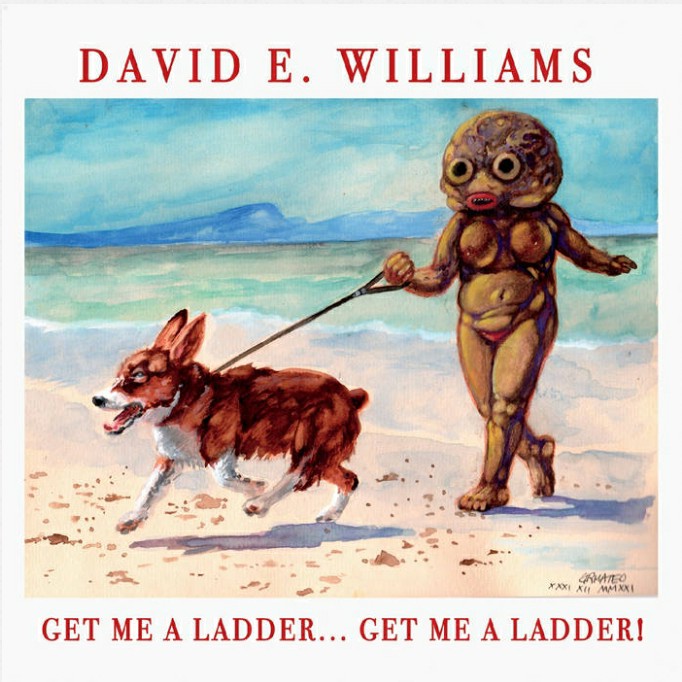 Man sollte sparsam umgehen mit Begriffen wie Opus magnum im Zusammenhang mit Neuerscheinungen altgedienter Musiker, denn man kann nie wissen, was die Zukunft noch an Überraschungen bereithält. Im Falle von David E. Williams’ “Get me a Ladder… Get me a Ladder!” ist die Versuchung allerdings groß, denn es handelt sich bei diesem Album – so viel vorweg – um einen ganz großen Wurf. Weiterlesen
RAISON D’ETRE: Within the Depths of Silence and Phormations
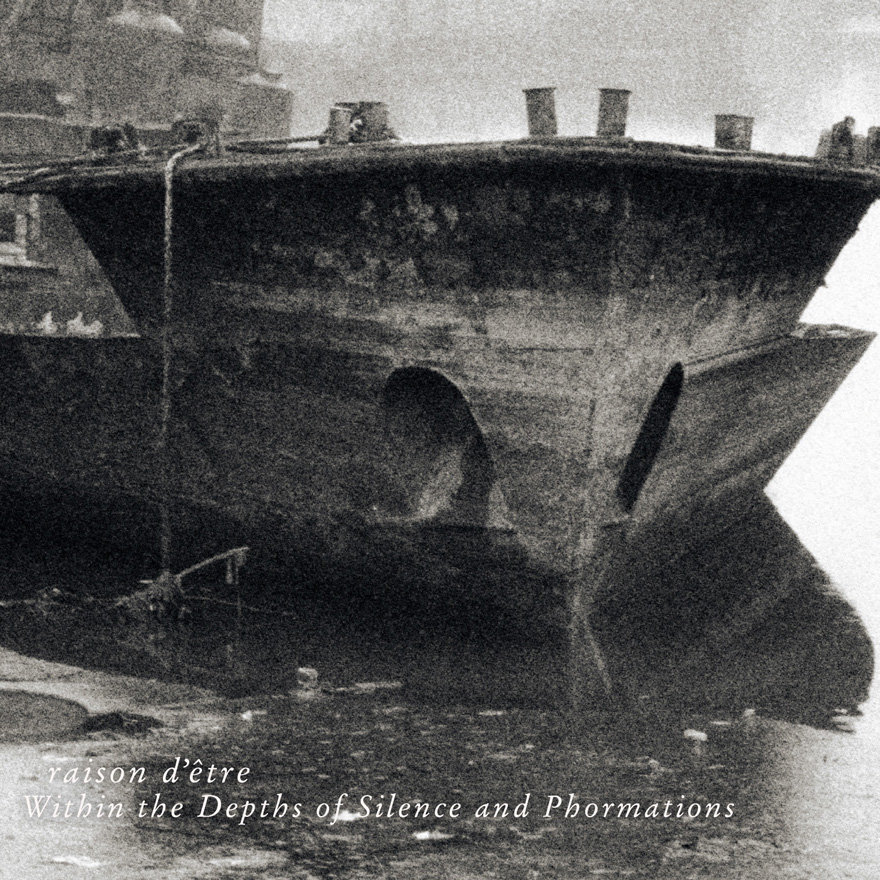 In den 90ern wurde die Musik, die man schon bald Dark Ambient nennen sollte, immer mehr zu einem Bindeglied unterschiedlichster Charaktere, denen allenfalls eine gewisse Melancholie und die Suche nach unbekannten kulturellen Nischen gemein war: in Industrial, Dark Wave und Metal sozialisirte, Nostalgiker, Esoteriker, psychedelisch inspirierte, Freunde des Nordens und viele mehr. Kanonbildend war u.a. das schwedische Cold Meat Industry-Label, unter dessen Acts das von Weiterlesen
Ampos von Bad Sector erstmals auf Vinyl
Old Europa Café bringen bis Anfang Juni das 1995 beim Staalplaat-Ableger God Factory erschienene Quasi-Debüt von Bad Sector, einen Klassiker des Dark Ambient-Genres, neu und erstmals auf Vinyl heraus. Als Bonusmaterial sind vier weitere Tracks aus der Frühphase Massimo Magrinis, die zunächst von Marco Corbelli, später auf der bei Blade Records erschienenen CDr-Compilation “Transponder” herauskamen. Die Expanded 25th Anniversary Edition von “Ampos” erscheint auf 300 schwarzen und 200 goldenen Scheiben.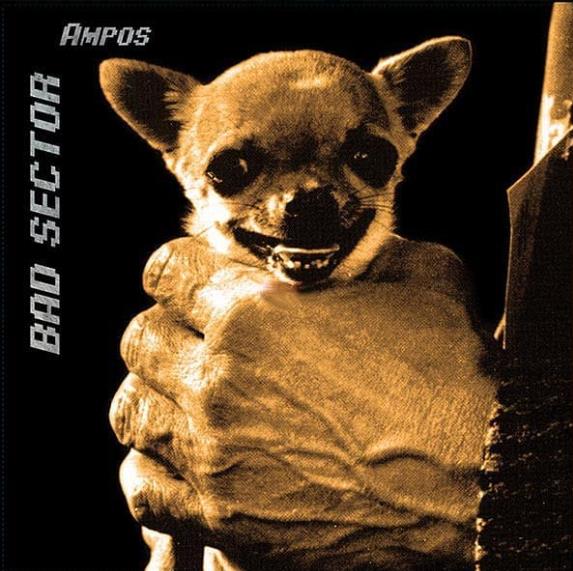 Weiterlesen
Tokyo Hallucination: Neues von Grim auf OEC
Grim bringt in einigen Wochen ein neues Album auf Old Europa Café heraus. Mit “Tokyo Hallucination” setzt White Hospital-Veteran Konagaya Jun eine produktive Schaffensphase fort und knüpft an die vor einigen Monaten auf Steinklang erschienene “Hermit Amen” und eine limitierte 7″ auf Ant-Zen an. Das Album präsentiert den zwischen Psychedelic und Harsh Noise beheimateten Grim-Sound in beeindruckend opulenter Form, das Spektrum der umgesetzten Ideen reicht von gesampleten Radio- und Straßengeräuschen über schleifendes wie jaulendes Feedback und rückwärts abgespielte Spuren bis hin zu rhythmischen Reminiszenzen an (Noise-)Rock und macht auch vor tribaler Perkussion und überdrehten Soli keinen Halt. 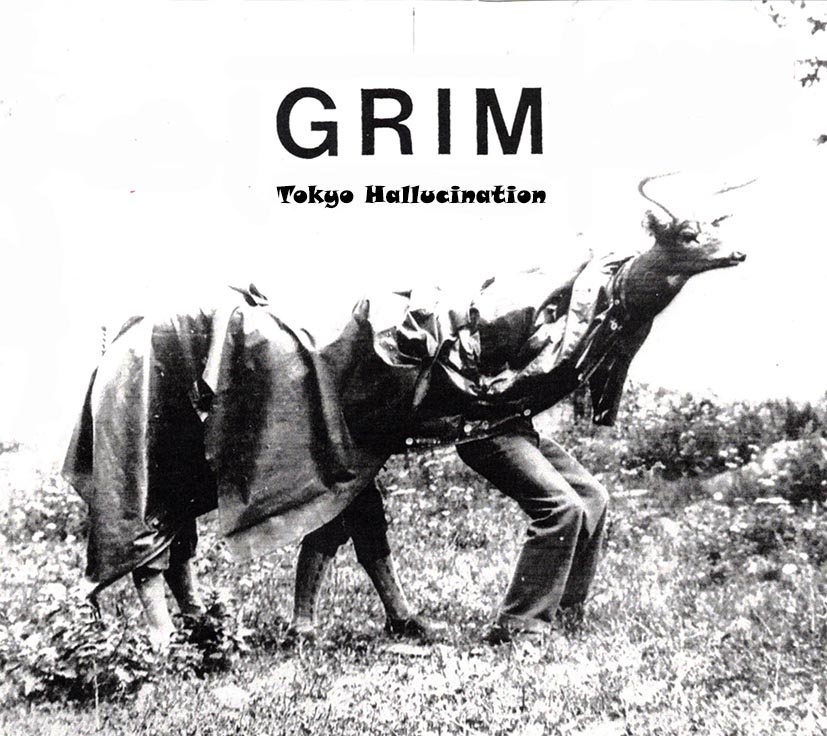 Weiterlesen
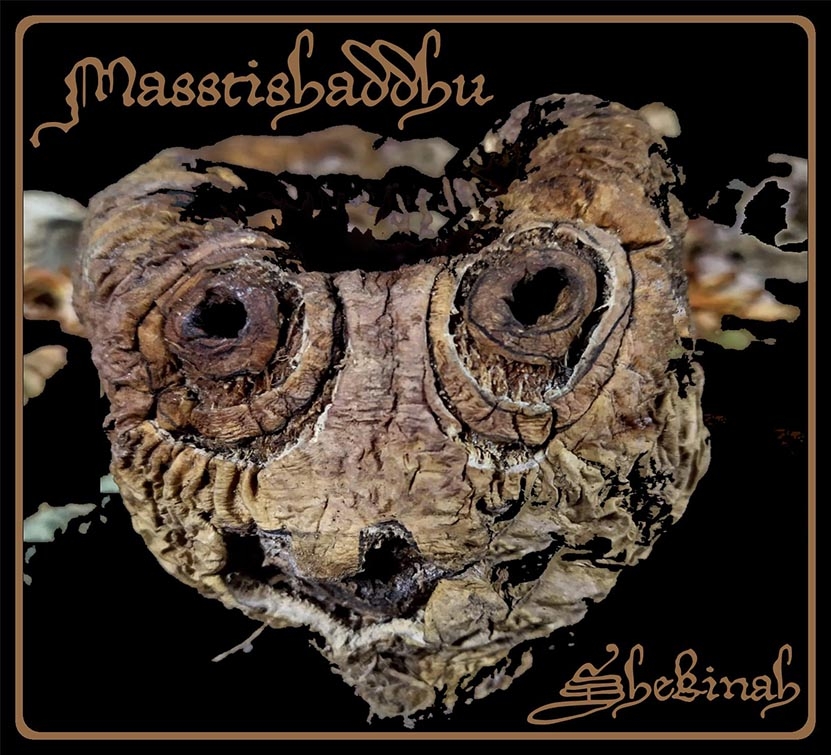
Wiederveröffentlichung des Masstishaddhu-Albums Shekinah auf Old Europa Café
Old Europa Cafe bringt das ursprünglich auf Steven Stapletons Label United Dairies 1988 veröffentlichte Album „Shekinah“ von dem Metgumbnerbone-Seitenprojekt Masstishaddhu, bei dem auch Richard Rupenus von den New Blockaders mitwirkte, auf CD neu heraus. Mit den teils perkussiv-tribalen Momenten, seltsamen Blasinstrumenten und merkwürdigen Stimmen, die zwischen Kehlkopfgesang und Delirium changieren, lässt sich das Album in die Tradition industrieller Ritual-Musik einordnen.
Graeme Revell mit alten Aufnahmen auf Old Europa Café
Der SPK-Gründer und spätere Soundtrack-Komponist Graeme Revell bringt Material aus dem Jahr 1986 neu heraus. Auf einer opulenten Digipack-CD mit vierzigseitigem Booklet erscheint zum einen das Album “The Insect Musicians”, sein Solo-Debüt, dessen Klangmaterial auf Feldaufnahmen von verschiedenen Insekten und deren digitalen Bearbeitung basiert. Vom Label wird dieser Ansatz zurecht als eine Art Blaupause für spätere Arbeiten Weiterlesen
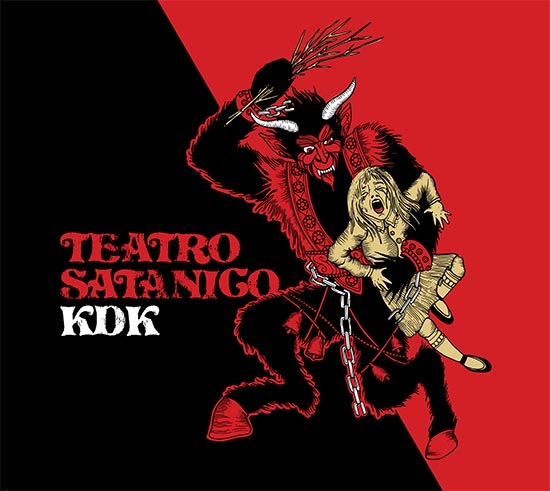
KDK: Doppel-CD-Retrospektive von Teatro Satanico
Die seit 1993 aktiven Italiener von Teatro Satanico veröffentlichen auf Old Europa Café eine Doppel-CD, die eine Art Retrospektive von zwischen 1993 und 2018 entstandenem Material ist. Dabei enthät „KDK“ Unveröffentlichtes, rare Stücke, die ursprünglich auf sehr limitierten Tonträgern erschienen sind und auch Klassiker, wie z.B. „Commandante Bruno“. Die Band selbst spricht weniger von einem „Best Of“-Album als von einer „sonik biographical story“.
ROMA AMOR: Miraggio
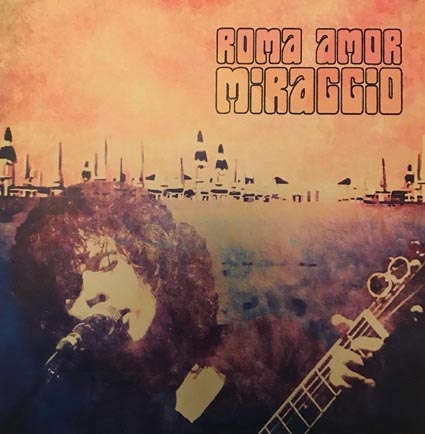 Der Chanson ist am ehesten in dunklen Gassen französischer Altstädte und in zwielichtigen Hafenvierteln mit ihren Bordellen und Kaschemmen zuhause, und am stärksten ist er, wenn er nach Tobak riecht und eine Fuselfahne vor sich herträgt. Der Chanson ist aber auch ein durchaus experimentierfreudiger Zeitgenosse, der sich auch in etwas vornehmeren Cafés zu benehmen weiß, sich dem Jazz und sogar – man denke nur an den großartigen Leo Ferré – der Avantgarde anzunähern versteht, und dass er auch eine hippieske Seite hat, ist längst ein offenes Geheimnis. Weiterlesen
AIN SOPH / SIGILLUM S: s/t
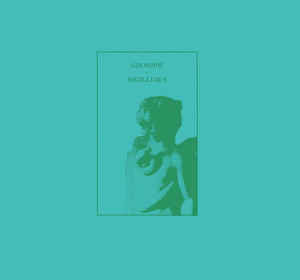 In der Geschichte okkulter Musik waren die späten Achtziger eine wichtige Umbruchszeit. Zwar gab es okkult-rituelle Musik in der Tradition der Industrial Culture schon das ganze Jahrzehnt über, doch waren es die Jahre kurz vor den Neunzigern, als all dies mehr und mehr die Form von Genres annahm, ganz in der Nachbarschaft siedelte sich schon bald der personell und thematisch zum Teil verwandte Apocalyptic Folk an. Zeitgleich nahmen breitere Kategorien wie Post Industrial oder die Schwarze Szene ihre heutigen Konturen an und stellten als oft nur halbherzig akzeptierte Rahmen mit ihren Weiterlesen
ROSARUBEA: Chrysalide
 Ich musste bei RosaRubeas neuem Album “Chrysalide” an die Novelle “Morpho Eugenia” von Antonia Byatt denken, in dem die Verpuppung einer Raupe und ihre letztliche Verwandlung in einen Schmetterling – eingebunden in die Geschichte eines dämonischen Familiengeheimnisses – symbolisch für die Verwandlungen steht, ohne die Leben kein Leben wäre. “Chrysalide”, das nach dem Puppenstadium des Schmetterlings benannt ist und sich musikalisch erst gar nicht zwischen entrückter Kammermusik und erdiger Psychedelia entscheiden will, widmet sich ganz den vielfältigen Verwandlungen, die der Biologie, aber auch der Weiterlesen
MALATO: Avamposto Malato
 Für eine Band, die sich Malato – „krank“ – nennt, fabrizieren die fünf Italiener aus dem Dunstkreis von Ain Soph und Circus Joy eine ausgesprochen wohlorganisierte Musik – zumindest entsteht dieser Eindruck beim ersten Hördurchgang ihrer (noch) aktuellen EP „Avamposto Malato“. Die vordergründig kompakten Songs sind durchgehend auf Clubtauglichkeit getrimmt, auch wenn sie im Einzelnen ziemlich unterschiedliche Poptraditionen channeln – wavige, housige und zuguterletzt solche, die recht nah am Industrial sind. Weiterlesen
Trino debütieren mit Clip zu “La Langosta” von Mueran Humanos
Als das zwanzigminütige “La Langosta” letzten Winter erstmals auf Vinyl veröffentlicht wurde, mochte man zuerst gar nicht glauben, dass es sich bei dem Stück um den ersten Song handelt, den Mueran Humanos je aufgenommen hatten. Es passte in seinem heruntergefahrenen Tempo und seiner traumwandlerischen Versunkenheit perfekt zu “El Círculo”, dem ebenfalls eine ganze 12”-Seite füllenden zweiten Song der EP. Vielleicht liegt in dem psychedelischen Subtext ja eine Konstante, die sich durch Carmens und Tomás’ bisheriges Werk zieht, auch wenn man das bei den Auftritten, die meist von vitaler Aggression geprägt sind, nicht so deutlich spürt. Jüngst haben die beiden Kurzfilmerinnen Natja Failde und Linfa Ologramma, die als Duo auch unter dem Namen Trino in Erschenung treten, einen farbenprächtigen Clip dazu gedreht:
“Filmed in Berlin and Buenos Aires by Trino Productions, it marks the debut work of this duo formed by Natja Failde and Linfa Ologramma, two young girls from Buenos Aires. They aproached Weiterlesen
DAVID E. WILLIAMS: Trust No Scaffold Built Of This Bone
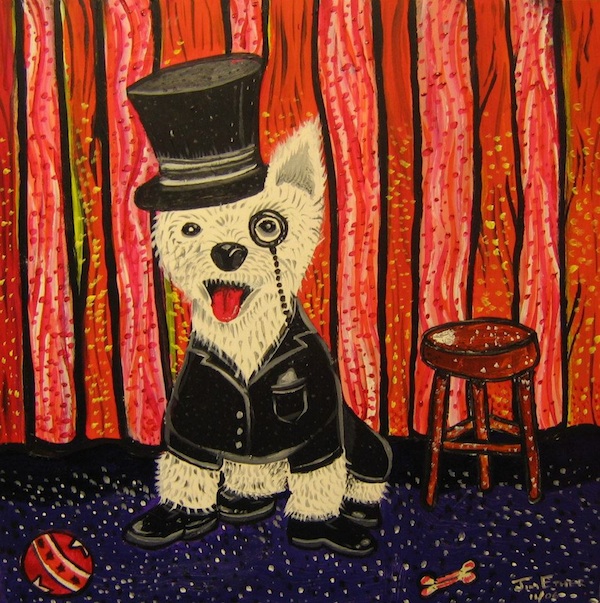 David E. Williams taucht zuverlässig in jedem Dark Folk- und Dark Cabaret-Kanon auf und liegt konsequent quer zu allen Standards solcher Musik. Gleich zweimal das Wort „dark“ in den ersten Satz zu packen war nicht einmal beabsichtigt, aber als allgemeines Attribut ist es mehr als legitim. Williams ist ein Unikat, will man ihn dennoch charakterisieren, dann vielleicht am ehesten als schwarzgalligen Zwillingsbruder von Daniel Johnston, als idealen Star sämtlicher Houellebecq-Verfilmungen, als liebenswürdig-verbiesterten Anti-Crooner, der einem selbstverliebten Weiterlesen
I feel free to create without superstructure. Interview with Marcello Fraioli a.k.a. Spectre
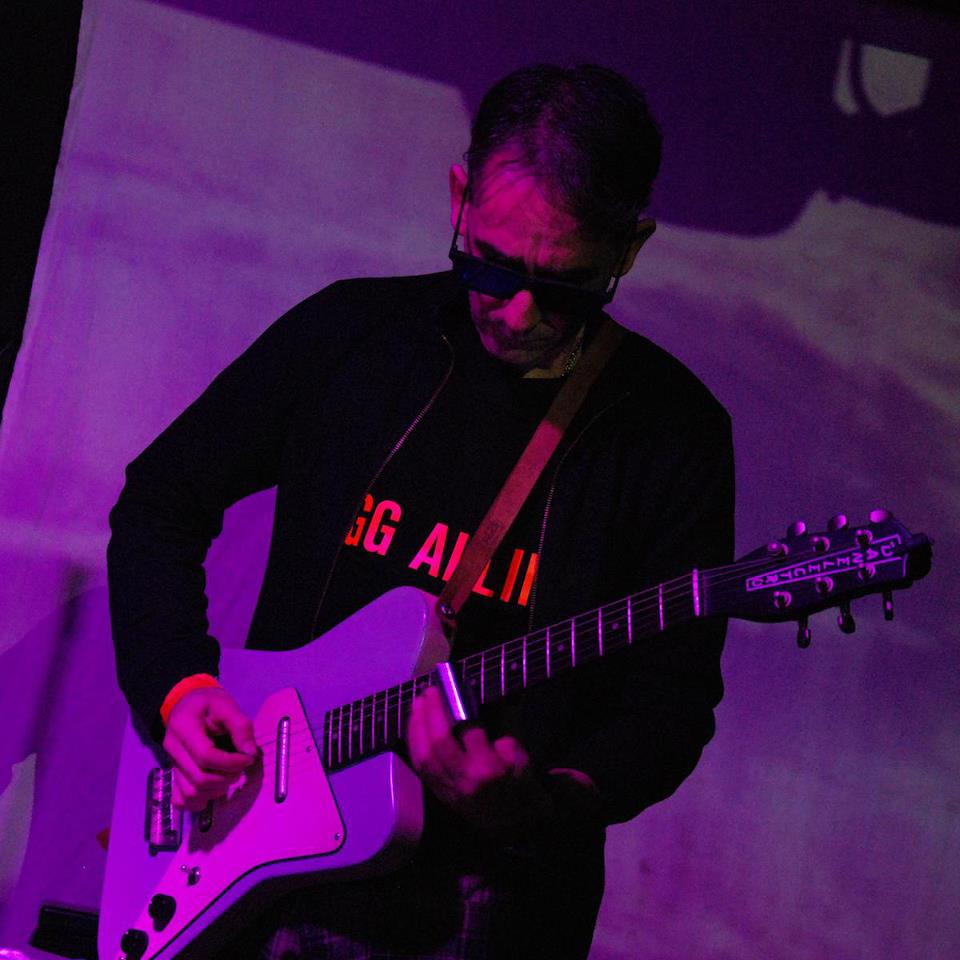 In every cultural sphere, the figures that operate in an elusive manner and, on the surface, appear contradictory, usually happen to be the most intriguing. Naturally, such modus operandi can easily turn out to be a scam–inconsistencies can be contrived and nothing is more tiresome than a forced, pretentious ambivalence. Furthermore, such ambiguity can be a mere symptom of a helpless inability to find and establish one’s artistic identity. There are those types of characters, and then there are personalities such as Spectre. Marcello Fraioli aka Spectre mainly evokes two associations: some confuse him with his American namesake, known for his sinister dub experiments; those who are in the know, however, immediately think of Ain Soph, probably the most renowned band in which Marcello has ever been involved. Considering the traditionalist themes in many releases of Ain Soph, one might be surprised to discover Fraioli’s love for all sorts of things that are distinctly modern. Spectre’s passion for contemporary art and urban rock/pop culture, embodied in his solo works, does not manifest itself as a resigned designation to ride the tiger of modernity, something that one must harness and come to terms with. In his unembellished manner, Fraioli gave us a little insight into his artistic biography and intrigued us with some interesting announcements.
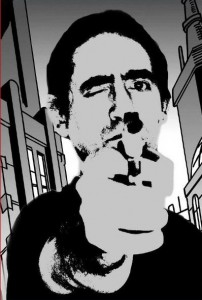
You are active both in the field of music and visual arts (such as painting and video). What can you tell our readers about your beginnings and your first creative endeavours?
I began displaying my visual works in public in the end of 80′s the early 90’s, mostly in collective exhibitions. I also realized personal performances, set design for movies and large scale paintings, like scenery for concerts. Then I began using computers for multimedia, computer graphic, animation and video editing. Since the early 80′s I played in several bands, some of them formed by me: I realized many recordings produced by independent labels, and sometimes self-productions, and I am still doing it. I consider music and visual arts (painting performances, video art) as two parallel ways that often cross each other, becoming one.
 What kind of pop or counter cultural climate was there in Rome, as you started? Have you been involved in the early punk or industrial scenes and what kinds of memories do you have?
I start playing since I was a kid. My aim was to follow the path of my musical idols, Lou Reed, the Velvet Underground, and then 60′s/70′s psychedelic, garage, punk, new wave, experimental music, minimalism and also classical and renaissance music. As it may have happened with many musicians, it started for fun and then become an important activity.
I read that you have a sort of academic education as an artist. How would you describe the good and bad experiences of such a start?
I remember many positive experiences, I’m fond of the memories. I liked being part of the artistic milieu, seeing and organizing exhibitions, conferences and so on. There was a nice atmosphere, we all wanted to break art’s institutional boundaries: we founded operative groups for performances, installations, action painting… then things changed as years pass on and on and dreams grow weak when you have to cope with the harsh necessities of everyday living.
Today, the term “experimental” is used quite much to stress the unconventional nature of an artistic work, maybe a bit too often. Do you regard your music and art as an act of experimentation?
In my opinion art is, first of all, an experiment of new languages, or trying to modify a traditional language. I always wanted go through in this direction, both in music and in visual arts: the experimental mode, avant-garde, underground. I always tried to work and design that way.
Do you see your visual and music activities as something separate, or more as two sides of the same creative endeavour?
I think I freed myself from this division. I mean, of course visual and music are different because they live on different formats and use different materials, but as I said before, I don’t consider the division as absolute. I like to combine music and visuals for my concerts, video projections or live painting.
„Mantra Voluntatis“ and „10 Pezzi Facili“ are probably your major music works of recent years. As they are very song based and we don’t understand most lyrics – are there any concepts behind these albums, and what can you tell us about their background and how they developed?
These are not concept albums, but they represent my style, the choice of specific sounds and arrangements, existential lyrics or citations from other authors. Each song lives for its own, it’s like a holography of the whole album: it contains the elements that made the overall style and it concatenates itself with other songs.
What are the desires and impulses, that usually inspire you to write and to record music?
 A lot of desires and they are so different… most of them came from my deep moods and emotions, and also from external factors as well, both positive and negative, that give me creative inputs and push me to play, in studio or live. I love audience which listen and appreciate my music, and quite often I give them my cd as a gift when I go to some musical or art events.
Are there any particular works, of which you are especially proud, maybe a favourite song or something like this?
There are songs I prefer to others, the ones that came better off with composition and arrangements, or are better recorded. When a track come out as I thought it should be it gives me great personal satisfaction.
Seems you have a faible for adaptating songs and lyrics on your records. How did these songs (for instance by Edoardo de Angelis, Serge Gainsbourg or John Barry) find their way on the albums? Are they rather hommages, or is there a certain story in the albums, where they fit into?
I always liked doing covers of famous and less famous songs. I enjoy rearrange or modify songs I like or songs I listened during my childhood from records bought by my parents: I’d like to consider cover songs as a tribute to my musical idols from my childhood to present.
With „Gli Amanti Tristi“ and „Datemi Pace“ there are also former Ain Soph songs on them. Has this to do with a certain autobiographical or retrospective character of the albums, or what was the reason for reinterpreting them?
As I said before I have a lot of creative fun in reinventing songs. But it’s also a way to review and correct some songs I wrote and performed with Ain Soph (band), representing them with some variations and a kind of exercises in style.
Your „L’Avvelenata“ interpretation is one of my favourite songs, I love the adventurous mood in the song and the video. As we and many of our readers don’t understand Italian: What is the song about, and what was your personal intention by covering it?
“L’Avvelenata” is an old hit of the Italian songwriter Francesco Guccini. The lyrics represent argue against the public image of the “good” songwriter, who should respect the canons of costume and market and should not tread on the toes of politicians or middle class values. Guccini criticizes all of them: journalists, fellow musicians, priests, politicians, record labels… this song is a protest which I agree with because I experienced by myself that this is the way things are working out when an artist try to be himself.
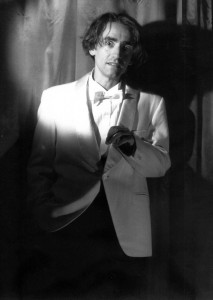 It seems that you enjoy a lot of rock and pop culture of earlier decades, so for instance the sixties and the seventies. What is it that fascinates you so much in this periods of the 20th century? And in that context, how enthusiastic or frustrated are you about rock and pop culture of today?
I like every kind of music. I think there are many interesting bands in several musical genres, from rock to electronic. I’m open mind to listen everything, and I like to see a lot of concerts I can admit that my favorite genre remains 60′s and 70′s beat and psychedelic, experimental rock, especially the Velvet Underground, but I also like ancient music from middle age and renaissance, as well as contemporary and minimalism.
As you are also a great Andy Warhol fan, would you agree with his statement that „all is beautiful“?
I was fascinated for a long time by Andy Wahrol. I used one of his texts to compose two tracks which included in album “ Mantra Voluntatis”. I’m intrigued by the deep superficiality that spring out by watching his works and studying his texts. “everything is beautiful” is a typical statement of his philosophy. Anyway I disagree with this statement. Not everything is beautiful. There are beautiful things and ugly things. Beauty can’t exist without ugliness and vice-versa.
Today, the pop art of Warhol, Lichtenstein and all these artists has gained a somehow nostalgic aura, and I think today’s people love this kind of art for different reasons than in the time when they were new. What do you see as the great achievements of this movement? Do you think consume and commerce of nowadays could also bring about such artists, who point out it’s beauty?
Pop art was a revolutionary art movement. The artists you named, active between the 60′s and the 80′s, were a sort of pioneers. They prophesy by painting the serial reproduction: silk screen printing will be replaced by color laser printing, 16 mm movies would become the video clips of today. They have foreseen the future. But art can always invent something new.
In our impression, your works as a solo musician have the aura of the counter cultural side of urban life. Would you agree, and do you see yourself as sort of an urban type? Could you imagine another place than Rome for you to live?
Yes, I live in the city. My work exists in a metropolitan context. Life in the city, in the streets, in the bars, in the clubs: it’s from such kind of context that the stories for my songs or the subjects for my visual works come from. I like live in Rome, but I’d like also to experience life in even larger cities as London, Berlin or New York. Nevertheless I am fond of nature, of the country. I’m fond of any kind of animal.
 Which are the achievments of modern life(style), that the person Marcello Fraioli didn’t want to be without?
I try to stay up to date with information technology and hi tech digital devices to record music or video. I often buy and trade musical instruments, guitars, synthetizers and other devices. Technology is very important to me, but as I said before living in harmony with nature and respecting the environment as much as possible it’s very important to me.
On first sight, this „rock and pop“ side of Spectre seems contradictory to many former works of your band Ain Soph, which have a traditionalist and sometimes occult attitude. Apart from the fact that Ain Soph did rock music later on, would you regard this as two sides of the same coin? Or has it more to do with different periods of your world view and aesthetics?
I feel free to create without superstructures. I firmly believe this is the right way to make art. One should not necessarily follow trends or self-label himself. I would like to point out that Ain Soph never disbanded. We re-released “Ottobre” with an unpublished track recorded in 2008. Our work is a continue research: we start from the esoteric traditionalism and we move through neofolk, then hard rock and psychedelic. At the moment we are working on a new album to be released soon with Old Europa Café.
Have you ever met people who were surprised or even irritated by the fact, that you create music that is far away from the so called ritual or traditional folk music?
I couldn’t care less about that. People who appreciate my music should be respected, and I feel free to move ahead with my research.
You had performed in London recently, with Circus Joy as well as solo. What can you tell us about the shows and your time there? Which musicians assist you on stage in the Spectre show?
London is a beautiful city. Everytime I go there to play I try to explore it as much as I can. Our concert went very well, we played on a boat moored to the port. The concert was organized by Klarita, a dear roman friend of us who lives and works in London for a long time now. We enjoyed a lot playing with many friends and fans. It was a beautiful evening and we will surely repeat it.
 You play in a number of music groups, and most of them perform or record after great intervals. Is there still a sort of „band feeling“ with regular meetings and the feeling of friendship and togetherness in Ain Soph or Circus Joy? How important are such things for you, when you cooperate with others?
First of all we are all good friends. This is important to be creative in the best conditions and to experiment together. It may happen that sometimes someone don’t get along so well with the others, or that someone split to create a new group more close to his current artistic inclinations, but this is just right and normal. Our activity is very far from the market necessities that dictates that you have to produce an album every year or two. We took all the time we need with respect to our personal evolution and research. Luckily we don’t have contractual obligations.
Were Babbo Nasale and Space Alliance rather temporary projects, or do they still exist?
Babbo Nasale were a band which played popular Christmas songs punk style. We played just for fun and only during Christmas festivities. We stopped in 2004. Space Alliance is a “spatial” music project I created with a friend of mine trumpeter dibpt. Space Alliance navigate the space continuum of musical genres: from electronic to kraut-rock, from psychedelic to minimal and surf. Our first release, some years ago, was titled “Space Alliance volume 2” because the first one was lost in space and who know if we will find it again. Anyway Space Alliance is a free project, we will work on it again for sure when we feel like it.
As to the nearer future, are you more the spontaneous person, or do you have particular plans for what comes next? Do you already think about new albums?
There are many projects. The new Ain Soph album, and the new Circus Joy one. As for Spectre, I am working on cover songs as I always wanted to play. For now I only publish them on my youtube channel and then on facebook. In 2012 I’d like to release a new album of original Spectre songs. Last year I produced Claudedi’s album “Claudedi e nemici” (Claudedi and enemies). This year I am working on the artistic production of the first album of THX, a member of Ain Soph.
(U.S.)
Translation: Polina Eliseeva, Luca Boccianti
We are an army of two and we take no prisoners. Interview with Mueran Humanos
 In his preface to Jeanette Leech’s book “Seasons They Change”, folk singer Greg Weeks wrote that many new developments in music are of a purely regenerative nature and ultimately lead to an inedible infusion of once exciting innovations. In our recent review on the debut of Mueran Humanos, the two Berlin-Argentinians, we noted how fresh and original this album is – how much their 80s inspired music in the tension between post punk and Suicide brings an actually consumed and exhausted style to breath new life. Carmen Burguess and Tomás Nochteff are not trying to be clones who try to reanimate the music of a certain temporal context without any refractions and new ideas. Or as they say below: “We are not in the revival business.” In the following interview, the two give an insight into the band’s history, their conceptual ideas and a variety of other projects, which illustrate that the interests of the two go far beyond music.
We don’t know much about your band’s history – only that you’re from Argentina and have lived in Barcelona before. Can you tell us a bit about how you met and decided to form Mueran Humanos?
Carmen: We were lovers in Buenos Aires since we meet in 2004, but we never played together, because each of us had an own band and we perceived ourselves almost as enemies. At some point I lost everything, my band, my family, everything – I even had no place to live. Somebody gave me an apartment to look for and I locked myself inside. Tomás was the only person who visited me. So I abandoned Buenos Aires before leaving it physically, and in that loneliness he was the only person allowed to enter. The things had radically changed since then in a positive way. Tomás left the country and I stayed for a while trying to fix the mess my life was, and after some time I left too. Tomás was waiting for me at the airport in Spain and we’ve been together ever since. We tried to play together and Mueran Humanos happened. I was a triumphal accident. Nothing was planned.
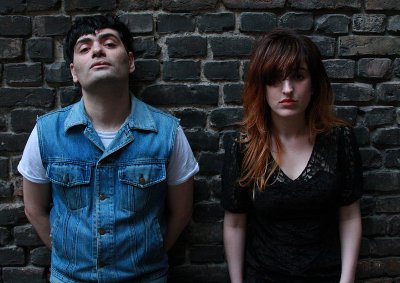 Tomás: We started to live together in an empty house, we only went out for strict necessity. We lived a couple of years in that way, no furniture, no Internet, TV, or radio, we didn’t buy magazines, newspapers neither books, we didn’t go to the cinema, gigs, nothing, we completely disconnected ourselves from the outside world, like it didn’t exists anymore for us. In that way we developed everything that is MH now, artwork, videos, music, lyrics. We made our first apparence in an art gallery with a live installation involving video, music and a corpse. The music in that time was much more abstract than now, we didnt make songs for a while. We were trying different things all the time, one night a song appeared and we start to make songs together and start to play live more, we still do a lot of different things. We decide what to show and what not, you see a rock band but there are other things behind it.
What can you tell us about the alternative/underground music scene in your country? In what sort of groups did you play earlier? Is there an element in your music that you would see as typically Argentinian?
C: Mujercitas Terror is the only band I’ve ever belong to, I couldnt really play any instrument but they put me in the band anyway. I’m still their most loyal fan. I don’t think that there is anything typical Argentinian in our music. The things I love from Argentina are too unpopular to called them “typicals”. In a way we are originators of a new scene, wich is really small, and with MH we continue that path. Tomás used to play in a cult band called Dios.
T: There’s good bands in Argentina but the best ones never make it. There’s no money whatsoever in underground or experimental music, even when there’s plenty of audience for these things, but there is no structure, so people tend to give up and its difficult to make records. The best thing about it is that people keep doing it against all odds. Anyway we are outsiders by nature and election, so we are not representative of mainstream culture, Argentinian or any other. We played in bands before and we are closely related to a small group of people, bands like Travesti or Mujercitas Terror, these people are the most important influence in our life… but it is too small and individualistic to call it a movement or style.
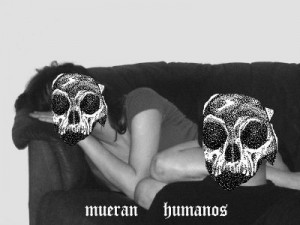 I always thought that the geographical isolation of our country and our culture give us a freedom for developing our own thing. I was always well aware that the majority of the music and youth counterculture is anglosaxon and I am not, therefore even if I draw inspiration of it I feel the need to develope my own thing, so I disconnect myself from it from the begining. But this is a highly alien concept in Argentina, most bands are just clones of English or American bands and they conform with it, just like everywhere else. So yes, being from Buenos Aires is a big influence in what I do but at the same time we are not the typical Argentinian band.
Many people bring you in context with the so called post punk genre. As musicians with a wider range of influences, are you comfortable with such a label, if it’s not used as a narrow minded category?
C: Well, “Post punk” is ok if you want, although I don´t agree that it explains the music we make. There are other labels that exist for the sake of selling tickets for venues like “electronic noise pop” or “industrial dance” or “space punk, synth wave, post wave, witch house, kraut punk, or even worst “indie noise”… I don`t really care.
T: To be honest I hate being labeled, I am not comfortable with any label. Besides I don’t believe in post punk as a genre, for me they were just a bunch of punk bands trying to do something original, some of them we like and others not, at least the original ones. Contemporary post punk is people trying to copy some music and style of that era and that’s something we definetly not doing. We are not in the revival business. Mark Stewart from the Pop Group came to see us and helped us with the album because he said that we remind him of that whole era in the way we approach things, he said that for him we are like this original punks trying to push things forward, not copying but doing our own thing. Is not that we decided to do a style of music, what we do is just inevitable, we can’t do anything else really. We work with what we have: a bass, a cheap synth and old drum machines, we use tapes because we don’t own a sampler or a proper computer, all this can make our sound remind you of old records because its old equipment, we don’t try to sound like it’s 1978… if we could buy expensive synth and big samplers and 6 thousand euro computers and sound bigger than anyone else, we will.
The name Mueran Humanos sounds like an antihumanist statement. How would you describe your interest for the morbid side of human nature?
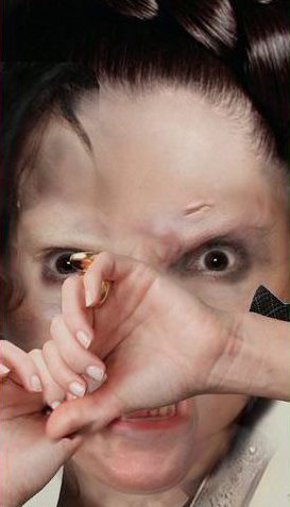 T: We are interested in double, multiple meanings and mystery. We use collage, cut-up, improvisation, altered states of mind and esoterism to create what we create. There is not a single linear thing in Mueran Humanos. Starting with the name, that doesn’t really sound gramatically correct in Spanish and can be interpreted in many ways.
I made a fanzine of cut-up newspapers for years, anonimously, called Mueran Humanos. When we started the band, Carmen liked the name and proposed me to use it. We feel it related to the beauty of the forces of nature, glaciars, tsunamies, earthquakes, tigers, elephants, black holes. I liked also the fact that it sounded totally unfashionable in that time. People seem fascinated with the deepness and importance of superficial things, it’s like a way to look intelligent. They seem to despise romanticism and artistic ambition, being superficial and normal and meaningless is considered cool, innovation and personality is declared dead, passe, pretentious, childish, fake. It-s OK to be revival, it-s OK to be meaningless and superficial. We go for the oposite, we care. So the name is the result of taking our attitude to the ridiculous extreme, making fun of the whole cultural landscape, is a provocation to show that we are not afraid of being ridiculous or unfashionable. Our name is confusing, evocates many things at once. Its like a sign in the door saying “inside here nothing is what it seems to be”.
C: I like the unPC of our name, and I like the exaggeration in it. Too many times I had to restrain exaggerated emotions or reactions in order to not distub the standards. We are excessive, we like excessive people and everything that is taked to the extreme. I like everything that attacks the fake morality. I hate empty pictures and “nice” things without content. I hate the decadent and horrible photographer who tried to make me look awful in the passport photo this morning. Beauty has many enemies. But he children are like us. Mueran Humanos is the door, through which enemies cannot cross.
Do you feel any affinity to that loose group of people that are called “antinatalists” and who believe it would be better not to have been born?
T: I don’t know about these people, but if its that what they think, why say it? Why don’t they simply kill themselves? I don’t know about them but as you present them they sound like posers. I don’t mind about cheap misantrophy. Nothing to do with us… the way we live, the kind of people we are and the place we came from… we would have died many years ago if we wouldn’t love life.
In that context I wanted to ask if you are familiar with the writings of the American author Thomas Ligotti. His pessimistic philosophy and the fact puppets sometimes occur in his work made me wonder if you have heard about him or read any of his works?
T: No. I know his name for his connection with Current 93, what I know about him is really interesting, I should check him out.
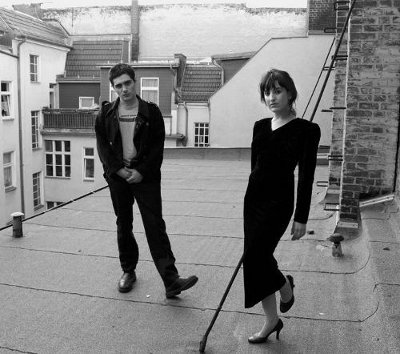 As probably not many of our readers understand Spanish, let’s talk a bit about some particular songs from your debut album. “Leones en China” seems to be inspired by political events (at least according to the background projection during live shows). What is it about?
C: Not consciusly, but is true that it allows that interpretation, because it mentions airplanes and bullets and a general apocalyptic scenario. I realized this much later.
“In China we children live in caves/In China the buildings are upside down/In China the sea has bones/And all airplanes are black/In China there are lots of horses hiding/And the moon is a painting/In China flowers are invisible/And the trees are made of worms/In China stones live in houses/And people’s teeth are nails/ In China Death wears white/And in China’s gardens bullets bloom”
There is nothing political about “Leones En China”, and its not even about China, at least not in a linear way. Again, we like to play with meanings, we like to fuck around with symbols, clash things, juxtapoze, twist, pervert. That’s how we make lyrics, images, music, but you are free to interpret what you like, you can use it the way you want to, as a gift from our world to your world, a gift and maybe a virus too. You can be free inside Mueran Humanos, that’s what it’s all about really.
In our opinion, “Corazon Doble” is the most powerful song on the album…
T: It’s one with more straighforward lyrics, is about that moment in the peak of ecstasy, when you see your future inevitable decay and you see it in a calm, melancholic way. But also you see there is an afterlife and make plans about it. Is a sad/happy song about pure love. We took the name from a Marcel Schowb book that we liked a lot. He uses it in the meaning of dualism, being one thing and the contrary at the same time, is a very gnostic concept if you like and I can relate to that, but in the context of the song it can also be interpreted in a romantic way, two hearts became one double heart, like our band.
C: For me this song has a very clear meaning and shows that a really strong union is more powerful than death. One of the lyrics that made the strongest impact on me was “Sara” by the german band Sand. It’s a very mysterious song, the singer asks “is that you Sara?”, and an almost imperceptible voice answers “no, its the storm”. Our song said : “When a strange morning shatters our windows/When you leave/Wait for me on the other side of the storm”.
“Festival de las Luces” seems “friendlier” in it’s outfit and implies something positively religious, but the video with the burned dolls seems to contrast this. What kind of sacrifice ritual do you act out on these mannequin’s heads?
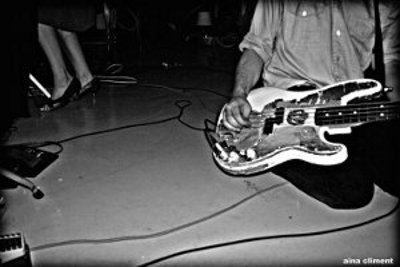 C: This song is a celebration of strange events and it’s interesting that without understanding the lyrics you catch the “religious” element, because it is about three nuns, part of the lyrics say: “…Party’s over/It came to an end/I’m walking happily/On my way home/ When I see them/Right over there In the light/They’re looking at me/ and In a car/They’re taking him away…/It’s raining houses/It’s raining cars/It’s raining letters/It’s raining blood…”
T: The video was made in a single night, we were drinking at a bar after a gig in Spain and a friend told us “I have this mannequin heads and I am saving them for you”, so we went to his place to check it, and when we saw them, we dislike them, so we said “let’s burn them”, so we go to the roof and we set them on fire and he filmed it and that’s it, we were all drunk and it was just natural and fun and the Police didn’t show up.
What were the main reasons for you to move to Germany? Seems you have yet a trusty audience in the capitol’s area.
C: Yes, we are happy with that, there is people who sing along our songs and they don’t even speak Spanish, it’s really nice.
T: Yes we have a lovely audience here. We were living in Barcelona in 2008, we never connected really with the city, when we came here for three weeks we found a much more friendly place for the kind of things we do and the kind of people we are, so we stayed and we are very happy with it. Also, I was always felt attracted to many things of German culture, like Grosz, Nico, Neubauten, Kraftwerk, DAF, Cluster, Sand, Murnau, Herzog, etc. so it just made sense to me in a strange way. I like Berlin. I don’t mind there is no sun, I never liked sun anyway.
We just watched your video of your “Monstruo” performance at Teufelsberg, Berlin. Would you say that the acoustic of that location and the history of the building were of equal importance when you chose to perform there?
T: Yes, it’s a place in wich many of the currrents of history cross with each other, a spiritual crossroad: the nazis, the CIA, the Soviet Union. Also the architecture, the acoustics, the nature around it, everything is fascinating, even the name of the place, the fact that it’s the highest point in all Berlin area, the fact that it’s a wood that grew on the litter of the war, etc. We aproached it as a psycophonic recording session, we wanted to be mediums and let whatever is there to express itself, that’s why the perfomance is so naked and improvised, we played with the place, not only in the place. We used it like an instrument and let the place use us like instruments.
 You stress the simplicity of this performance and that no effects were added afterwards. Was that also to show that music that has an electronic basis can be very effective without too many gadgets?
T: It was important for us to leave the place express itself, so thats why we kept equipment and performance to the minimum, it was an extraordinary oportunity to apply ideas that we have about silence in music, resonance, acoustic and psychic phenomena, in a way much more straighforward that we usually do. It would be a waste of time to go there and just make a wall of noise, you can get all the reverb you want for a 50 euro pedal, what’s the point to go there for that. But if you want to catch a ghost you just try to be still and quiet and open yourself to it. That’s what we did.
Carmen, you are also an illustrator and visual artist. Could you tell our readers how you work and what you regard as core elements of your art? Would you say that the artwork plays an equal role besides the music in Mueran Humanos?
C: I use the collage technique to draw and paint concret images. In the process, the colour and the drawing are operating although I use the collage techniques to create the forms, digitally or with paper I use the same technique of superposing layers. Sometimes I do it with dolls too. For me music and images and lyrics have all the same importance. We become a band wich make songs but we started doing soundscapes integrated in full installations with video, objects, etc. I would like to do more of this with Mueran Humanos, I like to rock but I missed the other part. For me the visuals we use on stage and the artwork are as much a part of Mueran Humanos as any of us.
You said about one of your works of art that “there’s a girl on fire, standing in a closed space, she’s burning alive but I can’t tell if she’s suffering or having a good time.” This ambivalence seems to be a characteristic of a lot of your work. I’m sometimes not sure if the disfigured figures are simply victims or just about to inflict pain (on others). Would you agree to that?
C: Yes. Ambivalence itself is a mystery and fascinates me. For instance Vampires are victims of a process, but I am not interested in the moment of pain or the family they left behind when they lost the human condition. I am only interested in the part in wich one reconciliates himself with what they are. In the case of this piece, her gesture shows something considered impossible: to feel pleasure while she is consumed by flames. In the case of the Seventeen girls, they are in peace with what they are. Only one of them is not and she’s the only one that communicates pain to me. I found the others just fun, they make me laugh.
You illustrated a special Christmas issue of a magazine called “Quimera”. One of the articles is entitled “Deconstruir la Navidad”. What can you tell us about this issue, and does your visual contribution also convey a personal statement on religion?
C: They offered me to illustrate all the short stories in the dossier. It’s a selection of short stories which happens at Christmas, and they all have an “anti-angelic” character. I have just read the stories and made a free interpretation for each one of them. One of the stories is pornographic and in general the content is very adult. I think that my collages bring esoterism and humour to it.
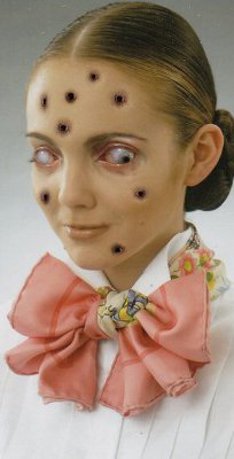
Recently the model Isabel Caro died of anorexia. At the moment there are discussions in the USA as even 17-year-old kids go to the doctor’s to get an injection of Botox. Are your artwork and the other “seventeen”-pictures a reaction to developments like this?
 C: I can understand that a girl can decompose herself so fast in the fashion world, which is frivolous and yet aesthetically fascinating. I can understand that this world can swallow you. If you allow yourself to be filled with stupidity like a duck is filled with filthy food until the limb explodes to make paté, I think that you were born lacking something. Its difficult for women to move freely in a business for which they are just bait.
Your album just came out via Old Europa Café, which is on of the most notorious labels of the „industrial“ scene. How did you come in touch, and do you have any relation to the industrial scene in particular?
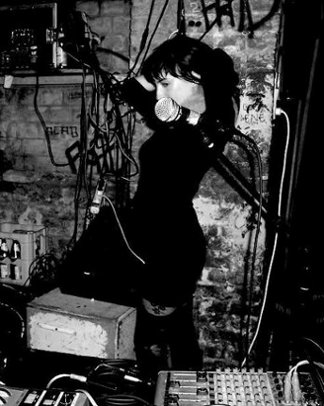
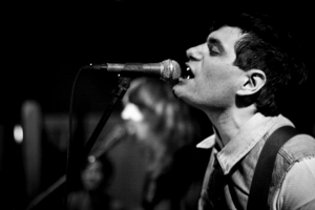
C: We are very proud and happy to be on OEC. We are indirectly related to the Industrial scene, last year we played at the finissage of a Genesis P. Orridge exhibition in Berlin, which was a great pleasure for us since we are his fans, and this year we will play in the festival Congresso Post Industriale organized by OEC in Venetia. Blind Prophet Records is also related to post industrial music. Anyway, we play in different scenes, we go where they invite us to go, from art galleries to noise events like Dienstbar or Salon Bruit and then punk squats like Köpi or Subversive and then the Almighty Wire thing and then Endorcism wich is a witch-house night… we don’t really belong to any scene but we are open to play… and anyway the moment we hit the stage, it’s ours and we are the ones in control.
T: Yeah it’s like guerrilla tactics, maybe we got it from our South American culture. We enjoy playing to an audience which is expecting something different. We are kind of crossover in a way. Rudolph heard us on myspace and was kind enough to contact us and offered us to release something, our album was just finished, so we sent it to him and he liked it and released it. OEC is a label which is on it purely for the love of music and who is not afraid of taking chances, we like many of the artists on the label, especially the ones that are more on the dark ambient, Spectre but also MB, Folkstorm and many others. We are not an Industrial band but Industrial culture was important to me always. TG, Coil, Cabaret Voltaire, TOPY, SPK and all that. I like to think that we have a similar spirit of exploration to this early bands, although (or maybe precisely because of that) the results are totally different. Maybe Rudolph saw that connection… who knows?
Tomas, besides a couple of collaboration you also do a solo project called “Nochteff” which is more based on soundscapes. As I first listened to songs like “Congregación de Alejos” I thought of some desperate urban wasteland folklore.. Do you “run” this project completely alone, and how would you describe it’s core elements?
T: Yes, I use my own surname for making different projects, I have an album of songs from 2004 called “Le Beat Juste” released in Buenos Aires. But then Mueran Humanos started doing songs, so now I make almost only more conceptual or experimental things. I put an album called “Pascua Pagana” (Pagan Easter), which I made in three days during Easter 2006 in London with only a bass with 3 strings, 3 channels, 3 effects and 3 tapes. First I put it out in cassete but now it’s for free download on the German label Alarm Platten. Also I am working in a psychogeographical DVD on the city of Buenos Aires with a filmmaker. I choose some trips througth the city that I feel important or powerful, by train or car, he do the trip and film it, and I am doing the music to go with it. Also I have an eternal album going on in wich all the lyrics are cut-ups made from newspapers, it’s mostly voice, electronic feedback, tapes and bass, I work on it from time to time for the last four years. I also just put out a book of cut-ups in a small experimental poetry publishing house of Buenos Aires, called Bases Para el Turismo del Futuro (Foundations for the Tourism of The Future). There’s lot of things, but Mueran Humanos is more important to me, so the other things go slow.
 You also did a hommage to the late Jhonn Balance. What did his music (e.g. with Coil) mean to you? I could only imagine that the passing of Balance’ former partner Sleazy shifted the work’s meaning once again..
Coil is one of my favourite bands ever, I especially like the “Musick to Play in The Dark” series and “Horse Rotorvator”. But besides that there is something very special about Balance, something personal, when I hear his voice I feel it very close, it only happens something similar to me with Nico and Captain Beefheart. I know other people who feel the same about him, he had a sort of strange power, a very fragile person but yet very strong. I made this song one night I was alone in the dark in our house in Barcelona thinking about Balance and how he said he loves Barcelona, I felt that a spirit enter my room through the window and sit beside me, I took the keyboard and “we” made the song together. At the moment I was convinced that the ghost, if any, was Balance himself. I am not asking you or anybody to believe it, I don’t know even if I believe it myself, I am just telling you what I felt at that moment and in wich mood I made the song, most probably it was only an hallucination. I used to see spirits and weird things a lot at that time. It was the same house in which Mueran Humanos started. It was a weird place, the people who lived there before blinded all windows with black painting and there were crosses and some magical symbols painted on the walls and everything was in a general state of decay and in top of that we started to live there doing sigil rituals, experiments with magic and other things, it was an hallucinatory enviroment to say the least so who knows… Anyway, the song is there now and I see it like an hommage to an artist that means very much to me and others.
The last question is trivial and obligatory: How definite is the nearer future of Mueran Humanos? Do you plan to stay in Berlin, and are you already writing new songs? Thanks for the interview and all the best!
T: Yes we plan to stay in Berlin for a while, it’s our second home now. Now the album will be released by Blind Prophet Records on vinyl in New York in early February. We’ll be touring the USA in February. After that we will comeback and do a European tour. We would love to do a South American tour as well. We have a lot of new songs, hopefully we can make another record this year, also we want to make an EP with four versions of a song, in Italian, German, English and Spanish, many ideas… we will never stop, we are an army of two and we take no prisoners.
C: Thank you for the interview, cheers!
(M.G. & U.S.)
MACELLERIA MOBILE DI MEZZANOTTE: Hard Boiled Night Club
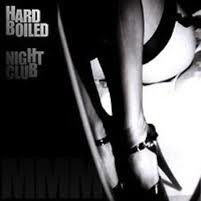 Selten machen Klischees so großen Spaß wie bei Macelleria Mobile di Mezzanotte, kurz MMM, dem hörspielartigen Musikprojekt des fabulierenden Ganoven Adriano Vincenti. Der Bandname bedeutet „Fleischlieferung um Mitternacht“, und sicher kennt der eine oder andere die Splatternovelle gleichen Namens aus der Feder von Clive Barker, die vor einigen Jahren dann auch verfilmt wurde. Vincentis Musik, die er selbst ganz treffend Crime Jazz oder Swing Noir nennt, schickt den Hörer jedoch gleich noch ein paar Dekaden weiter zurück in die Filmgeschichte – in eine Welt Weiterlesen
ROMA AMOR: Occhi Neri
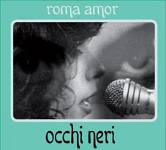 Das Duo Roma Amor ist in unseren Breiten noch nicht so richtig bekannt geworden, und trifft man einmal jemanden, der die Gruppe kennt, dann sieht man sich oft mit vorschnell produzierten Fehlinformationen konfrontiert. Euski und Michele kommen weder aus Rom, noch hat der Stil der beiden mit Neofolk im engeren Sinne zu tun. Die beiden stammen aus der Region Emilia-Romagna und singen gelegentlich im Dialekt ihres Landstriches. Die Musik, die sie spielen, ist eine italienische Ausprägung des klassischen Torch Song. Bisweilen auch lupenreiner Chanson. Weiterlesen
We are an army of two and we take no prisoners. Interview mit Mueran Humanos
 Im Vorwort zu Jeanette Leechs „Seasons They Change“ beklagt Greg Weeks, dass viele neue Entwicklungen in der Musik rein regenerativer Art sind und letztlich zu einem ungenießbaren Aufguss einst aufregender Innovationen führen. In der jüngst auf diesen Seiten veröffentlichten Rezension des Debüts von MUERAN HUMANOS, den zwei in Berlin lebenden Argentiniern, wurde darauf hingewiesen, wie frisch, unverbraucht und originell dieses Album ist Weiterlesen