Beim SPQR-Label erscheint mit “Ungern Khan” eine Split-Single von Ain Soph und L’Amara, die sich hier von den mitwirkenden Musikern her überschneiden und sich dem Mythos des Roman von Ungern-Sternberg (1886–1921) widmen. Der als verrückter Baron bekannte Warlord kämpfte im Russischen Bürgerkrieg auf Seiten der Weißen gegen die Bolschewiki, zog später durch die Mongolei und träumte von einem zentralasiatischen Reich unter eigener Direktion.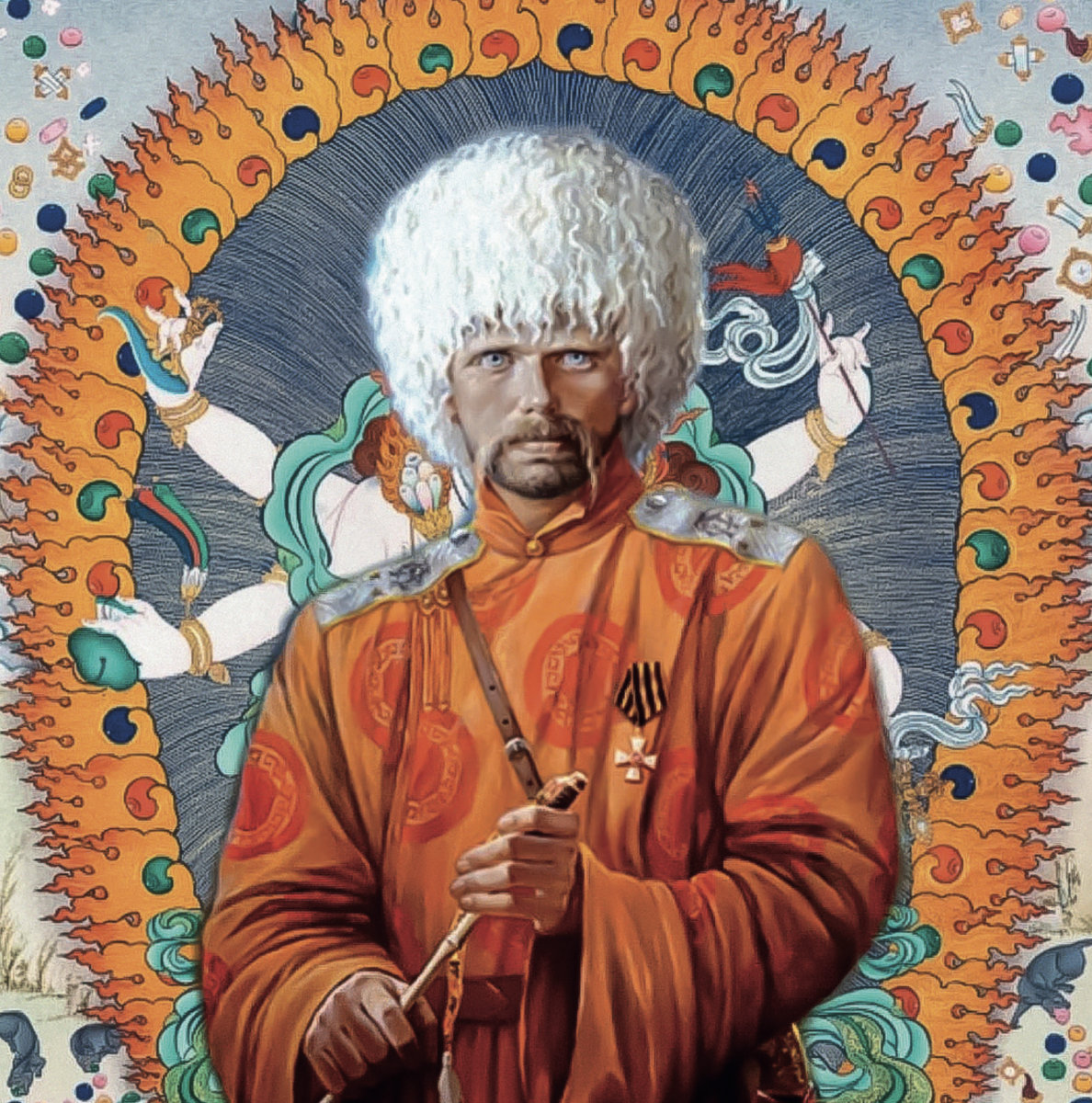 Weiterlesen
Schlagwort-Archive: Ain Soph
AIN SOPH: Singularia – The Singles Collection Vol. 1
 Mit “Singularia – Vol. 1″ liegt erstmals eine umfassende Sammlung von Singles, Compilation-Beiträgen und raren Aufnahmen der römischen Formation Ain Soph vor, die den Zeitraum von den frühen 80ern bis kurz nach der Jahrtausendwende abdeckt. Bereits der Titel impliziert, dass es irgendwann wohl einen zweiten Teil geben wird – ein Gedanke, der den weltweit verstreuten Fans kaum unrecht sein dürfte. Weiterlesen
LA PORTA ERMETICA: Horti Lamiani
 Das inzwischen auf fünf Personen angewachsene italienische Projekt La Porta Ermetica hat seit einiger Zeit eine spezielle Art italienischer (Ritual-)Musik wieder zum Leben erweckt, reanimiert. Die tiefe Verwurzelung der meisten Beteiligten im italienischen Postindustrialuntergrund der frühen 80er ließ uns zu der etwas saloppen Formulierung greifen, es handele sich um eine „Supergroup der italienischen Underground-Szene“. Weiterlesen
Wir wollten zu bestimmten Klängen zurückkehren, die wir viele Jahre nicht gehört hatten: Interview mit La Porta Ermetica
 Mit La Porta Ermetica hat sich eine neue Supergroup der italienischen Underground-Szene formiert, die sich der rituellen und okkulten Musik verschrieben hat. Ihre Debütveröffentlichung “Si Sedes Non Is” sorgte mit ihrer dunklen, mystischen Atmosphäre und einer klaren thematischen Ausrichtung für Aufsehen. Auf dem kurze Zeit später erschienenen Nachfolger, dem Tape “La Bugia”, führen sie dieses Konzept weiter und zollen dabei dem gleichnamigen Weiterlesen
Volevamo tornare su certe sonorità che non sentivamo da molti anni: Un’intervista con La Porta Ermetica
Con La Porta Ermetica si forma un nuovo supergruppo della scena underground italiana che si dedica alla musica rituale e occulta. Il loro debutto “Si Sedes Non Is” ha suscitato scalpore grazie alla sua atmosfera oscura e mistica e alla chiara direzione tematica. Nel successivo album, il tape “La Bugia”, uscito poco tempo dopo, continuano questo concetto e rendono omaggio al libro di poesie omonimo del Weiterlesen
We wanted to return to certain sounds that we hadn’t heard for many years: An interview with La Porta Ermetica
With La Porta Ermetica, a new supergroup in the Italian underground scene has been formed that is dedicated to ritual and occult music. Their debut release “Si Sedes Non Is” caused a stir with its dark, mystical atmosphere and clear thematic direction. On the successor, the tape “La Bugia”, which was released a short time later, they continue this concept and pay tribute to the book of poems of the same name by the Marquis Massimiliano Savelli Palombara, an occult-inspired polymath in the Weiterlesen
LA PORTA ERMETICA: La Bugia
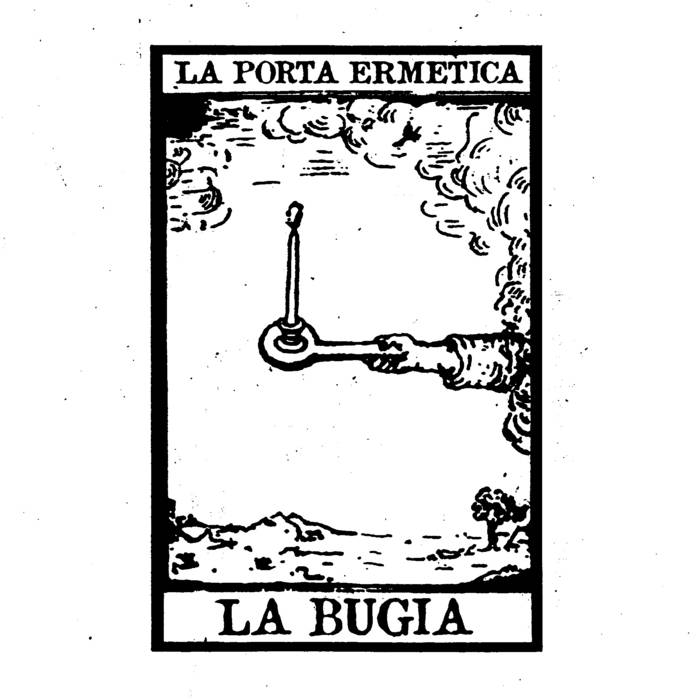 Wie aus dem Nichts erschien kürzlich mit „Si Sedes Non Is“ die Debütveröffentlichung der Gruppe La Porta Ermetica, einer – salopp formuliert – Supergroup für okkulturelle, rituelle Musik (mit (ehemaligen) Mitgliedern von Ain Soph, Teatro Satanico und Macelleria Mobile Di Mezzanotte). Weiterlesen
LA PORTA ERMETICA: Si Sedes Non Is
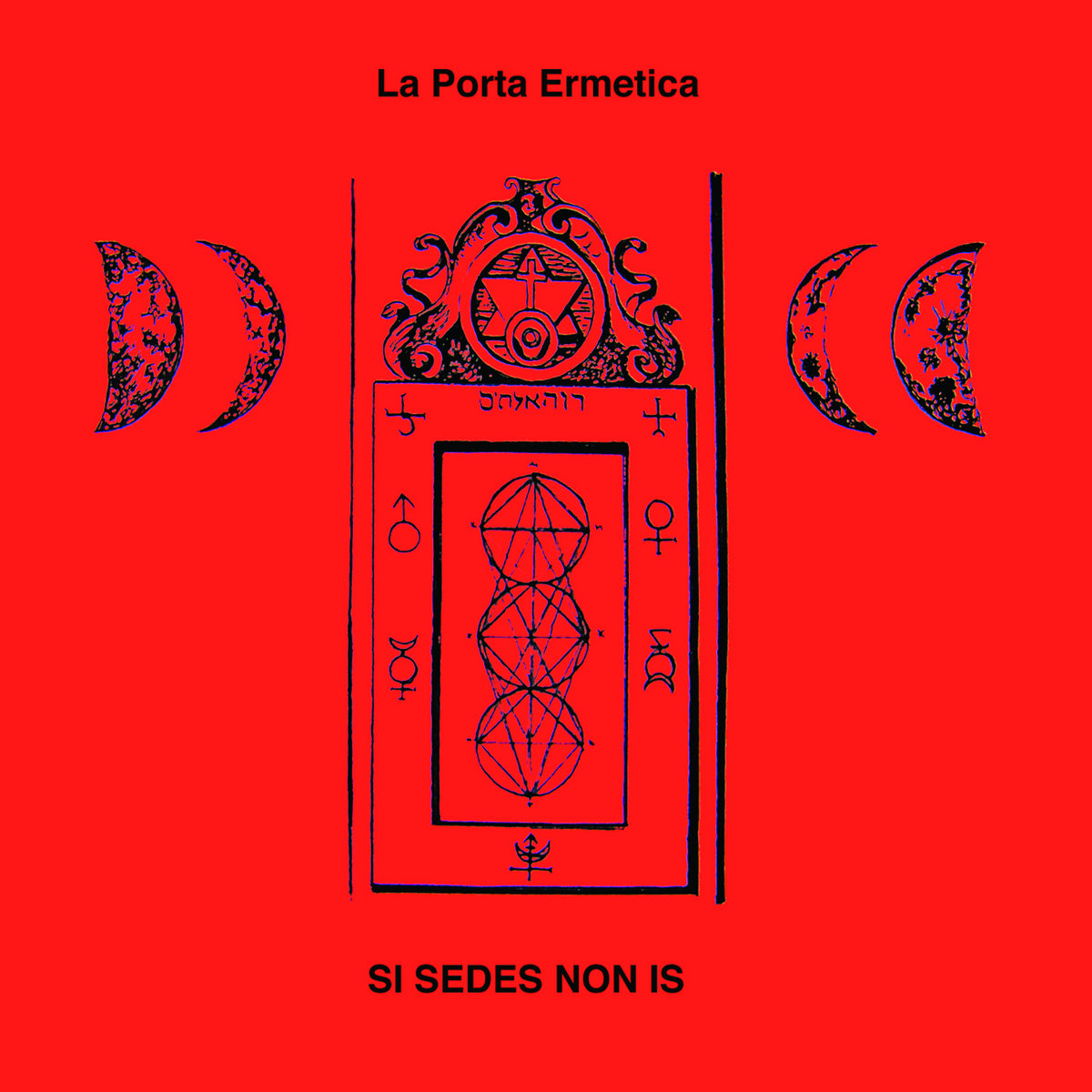 Rituelle, okkulturelle Musik im Bereich des (Post-)Industrials ist untrennbar verbunden mit (insbesondere den frühen) Aufnahmen Ain Sophs. Die ersten Alben der Italiener mit ihren verrauschten Klangflächen, in denen mysteriöse Stimmen meistens Unverständliches rezitierten, sind essentielle Veröffentlichungen. Weiterlesen
An die Freude: Live-Album von Ain Soph bei Klanggalerie
Auf dem Wiener Label Klanggalerie ist jüngst ein neues Live-Album der römischen Legende Ain Soph erschienen, einer Band, die seit Mitte der 80er demonstriert, dass sie die Sprachen des okkulten Ritual-Industrial ebenso beherrscht wie die des Folk, des sakral und neoklassisch angehauchten Kunstliedes und prog-inspirierter Rocksongs. Das Konzert fand im Oktober 2021 im Live Music Club Replugged statt, wo sich die Römer in der Besetzung Weiterlesen
NORTHGATE / MALATO: Vnion
 Zumindest für die Römer von Malato war das auf der ersten Seite des vorliegenden Tapes dokumentierte Konzert bei der Destination Morgue ein Heimspiel, und das nicht nur wegen des Aufführungsortes, sondern weil Alessandro Marchettini sowohl zur Band gehört, als auch das Festivals organisiert. Aber wie der Titel schon sagt, treten sie und der unter dem Namen Northgate firmierende Mailänder Evor Ameisi in der knappen Dreiviertelstunde als Einheit auf. Weiterlesen
Live at Piper 1986: Aufnahme des ersten Ain Soph-Konzertes auf CD
Mitte Juli erscheint ein Mitschnitt des ersten Auftritts der römischen Kultband Ain Soph erstmals auf CD. Das mit Korg-Synthies und ritueller Perkussion bestrittene Konzert fand ebenfalls in Rom im berühmten Piper Club unweit des Villa Borghese-Parks statt, einer Location, die seit den 60ern und mit einigen Unterbrechungen bis heute existiert. Musikalisch fällt die Darbietung in die esoterisch-okkulte Frühphase der in ihrer inhaltlichen und musikalischen Wechselhaftigkeit für viele ungreifbaren Band, deren Umfeld sich über Weiterlesen
AIN SOPH / SIGILLUM S: s/t
 In der Geschichte okkulter Musik waren die späten Achtziger eine wichtige Umbruchszeit. Zwar gab es okkult-rituelle Musik in der Tradition der Industrial Culture schon das ganze Jahrzehnt über, doch waren es die Jahre kurz vor den Neunzigern, als all dies mehr und mehr die Form von Genres annahm, ganz in der Nachbarschaft siedelte sich schon bald der personell und thematisch zum Teil verwandte Apocalyptic Folk an. Zeitgleich nahmen breitere Kategorien wie Post Industrial oder die Schwarze Szene ihre heutigen Konturen an und stellten als oft nur halbherzig akzeptierte Rahmen mit ihren Weiterlesen
NEW PROCESSEAN ORDER: CrucifEgo
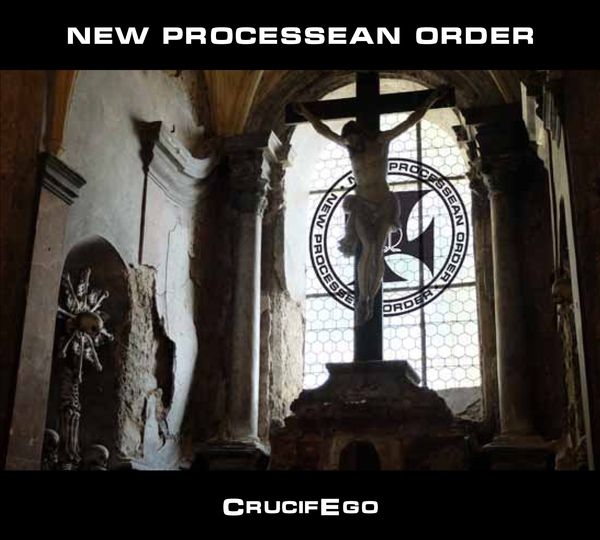 Nach eigener Angabe ist der New Processean Order keine Band, und das nicht nur deshalb, weil die Besetzung neben Hauptinitiator Alessandro Papa bei jeder Veröffentlichung variiert und sich primär aus bekannten Musikern anderer Projekte zusammensetzt. NPO versteht sich darüberhinaus als musikalischer Arm einer Neugründung der von Robert DeGrimston gegründeten Process Church of the Final Judgement, was ein hehres Anliegen ist. Wie sehr die mitwirkenden Musiker hinter diesem Konzept stehen, ist nicht entscheidend für ihre Teilnahme, und vermutlich sind von Weiterlesen
MALATO: Avamposto Malato
 Für eine Band, die sich Malato – „krank“ – nennt, fabrizieren die fünf Italiener aus dem Dunstkreis von Ain Soph und Circus Joy eine ausgesprochen wohlorganisierte Musik – zumindest entsteht dieser Eindruck beim ersten Hördurchgang ihrer (noch) aktuellen EP „Avamposto Malato“. Die vordergründig kompakten Songs sind durchgehend auf Clubtauglichkeit getrimmt, auch wenn sie im Einzelnen ziemlich unterschiedliche Poptraditionen channeln – wavige, housige und zuguterletzt solche, die recht nah am Industrial sind. Weiterlesen
NAEVUS: Stations (2CD inkl. Bonus Disk „Others“ lim. 111)
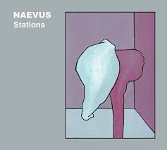 Lloyd James von Naevus hat eine angenehme Stimme und wenn es sein muss auch ein Händchen für schöne Melodien. Wahrscheinlich verstören seine Songs deshalb niemals direkt, auch wenn die Musik stets das Gefühl vermittelt, von etwas Ernstem, mitunter Drastischem zu künden. Erst mit der Zeit registriert man, dass die eingängigen Stücke einen doppelten Boden haben. Heterogene Elemente harmonieren nie ganz miteinander, oft wirken die Drums wie Versatzstücke einer Kollage, die dem Gesang und den restlichen Spuren kurzerhand aufgeklebt wurden. In die Melodik schleicht sich immer wieder eine Verweigerungshaltung ein, die dem Wohlklang eine spröde Monotonie entgegenhält. Den Songtexten Weiterlesen
AIN SOPH: Ars Regia (LP Re-Release + Buch)
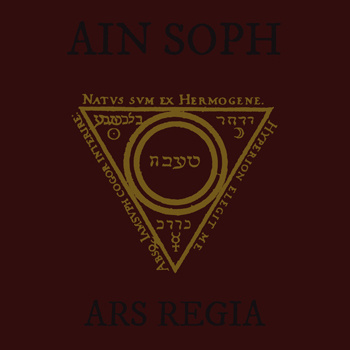 Es ist nicht leicht, etwas Allgemeines über Ain Soph zu sagen. Die Interessen und Ausdrucksweisen der römischen Band haben sich in den knapp drei Jahrzehnten seit ihrer Gründung zum Teil extrem gewandelt. Das gleiche lässt sich über die Stimmung ihrer Musik sagen, ähnliches über die Haltung des von einigen Umbesetzungen geprägten Kollektivs, die immer deutlich präsent ist, auch dann, wenn sie vordergründig vage und ungreifbar bleibt. Vergleicht man bestimmte Referenzen im Bandkosmos untereinander oder mit den Interessen der einzelnen Musiker in ihren anderen Aktivitäten Weiterlesen
I feel free to create without superstructure. Interview with Marcello Fraioli a.k.a. Spectre
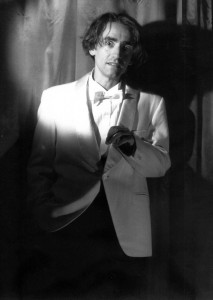
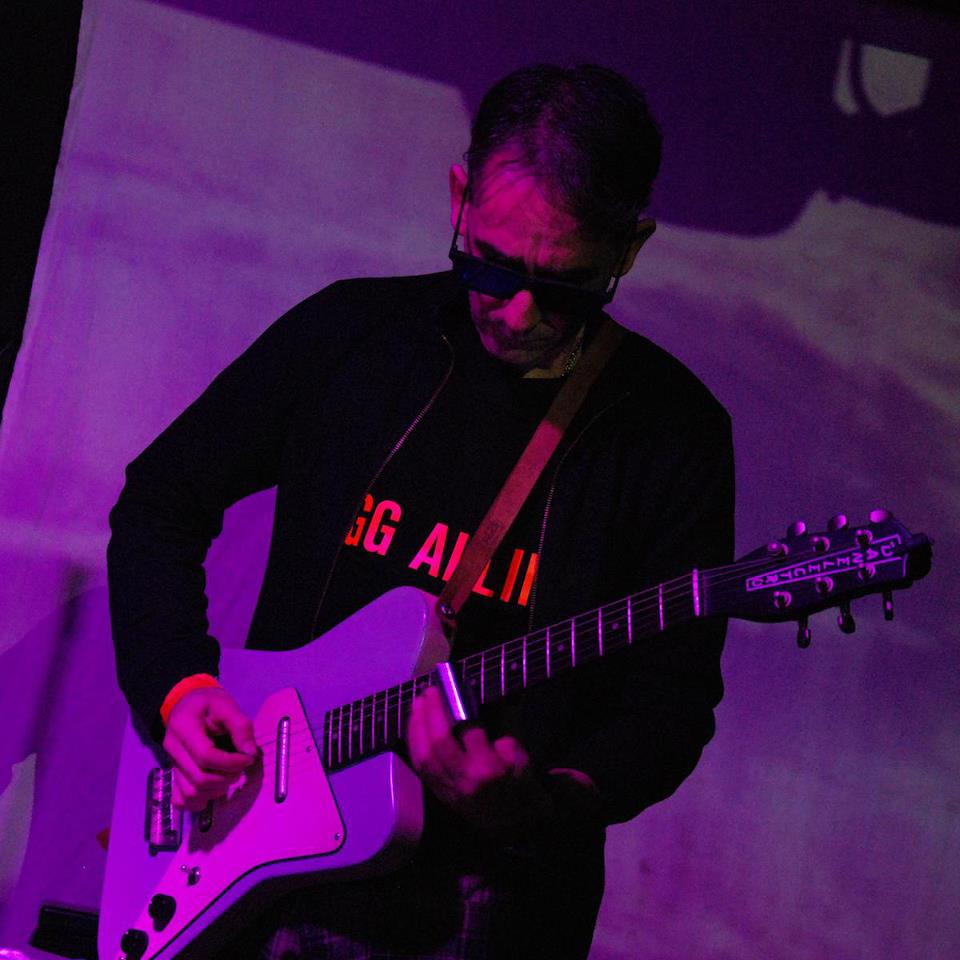 In every cultural sphere, the figures that operate in an elusive manner and, on the surface, appear contradictory, usually happen to be the most intriguing. Naturally, such modus operandi can easily turn out to be a scam–inconsistencies can be contrived and nothing is more tiresome than a forced, pretentious ambivalence. Furthermore, such ambiguity can be a mere symptom of a helpless inability to find and establish one’s artistic identity. There are those types of characters, and then there are personalities such as Spectre. Marcello Fraioli aka Spectre mainly evokes two associations: some confuse him with his American namesake, known for his sinister dub experiments; those who are in the know, however, immediately think of Ain Soph, probably the most renowned band in which Marcello has ever been involved. Considering the traditionalist themes in many releases of Ain Soph, one might be surprised to discover Fraioli’s love for all sorts of things that are distinctly modern. Spectre’s passion for contemporary art and urban rock/pop culture, embodied in his solo works, does not manifest itself as a resigned designation to ride the tiger of modernity, something that one must harness and come to terms with. In his unembellished manner, Fraioli gave us a little insight into his artistic biography and intrigued us with some interesting announcements.
You are active both in the field of music and visual arts (such as painting and video). What can you tell our readers about your beginnings and your first creative endeavours?
I began displaying my visual works in public in the end of 80′s the early 90’s, mostly in collective exhibitions. I also realized personal performances, set design for movies and large scale paintings, like scenery for concerts. Then I began using computers for multimedia, computer graphic, animation and video editing. Since the early 80′s I played in several bands, some of them formed by me: I realized many recordings produced by independent labels, and sometimes self-productions, and I am still doing it. I consider music and visual arts (painting performances, video art) as two parallel ways that often cross each other, becoming one.
 What kind of pop or counter cultural climate was there in Rome, as you started? Have you been involved in the early punk or industrial scenes and what kinds of memories do you have?
I start playing since I was a kid. My aim was to follow the path of my musical idols, Lou Reed, the Velvet Underground, and then 60′s/70′s psychedelic, garage, punk, new wave, experimental music, minimalism and also classical and renaissance music. As it may have happened with many musicians, it started for fun and then become an important activity.
I read that you have a sort of academic education as an artist. How would you describe the good and bad experiences of such a start?
I remember many positive experiences, I’m fond of the memories. I liked being part of the artistic milieu, seeing and organizing exhibitions, conferences and so on. There was a nice atmosphere, we all wanted to break art’s institutional boundaries: we founded operative groups for performances, installations, action painting… then things changed as years pass on and on and dreams grow weak when you have to cope with the harsh necessities of everyday living.
Today, the term “experimental” is used quite much to stress the unconventional nature of an artistic work, maybe a bit too often. Do you regard your music and art as an act of experimentation?
In my opinion art is, first of all, an experiment of new languages, or trying to modify a traditional language. I always wanted go through in this direction, both in music and in visual arts: the experimental mode, avant-garde, underground. I always tried to work and design that way.
Do you see your visual and music activities as something separate, or more as two sides of the same creative endeavour?
I think I freed myself from this division. I mean, of course visual and music are different because they live on different formats and use different materials, but as I said before, I don’t consider the division as absolute. I like to combine music and visuals for my concerts, video projections or live painting.
„Mantra Voluntatis“ and „10 Pezzi Facili“ are probably your major music works of recent years. As they are very song based and we don’t understand most lyrics – are there any concepts behind these albums, and what can you tell us about their background and how they developed?
These are not concept albums, but they represent my style, the choice of specific sounds and arrangements, existential lyrics or citations from other authors. Each song lives for its own, it’s like a holography of the whole album: it contains the elements that made the overall style and it concatenates itself with other songs.
What are the desires and impulses, that usually inspire you to write and to record music?
 A lot of desires and they are so different… most of them came from my deep moods and emotions, and also from external factors as well, both positive and negative, that give me creative inputs and push me to play, in studio or live. I love audience which listen and appreciate my music, and quite often I give them my cd as a gift when I go to some musical or art events.
Are there any particular works, of which you are especially proud, maybe a favourite song or something like this?
There are songs I prefer to others, the ones that came better off with composition and arrangements, or are better recorded. When a track come out as I thought it should be it gives me great personal satisfaction.
Seems you have a faible for adaptating songs and lyrics on your records. How did these songs (for instance by Edoardo de Angelis, Serge Gainsbourg or John Barry) find their way on the albums? Are they rather hommages, or is there a certain story in the albums, where they fit into?
I always liked doing covers of famous and less famous songs. I enjoy rearrange or modify songs I like or songs I listened during my childhood from records bought by my parents: I’d like to consider cover songs as a tribute to my musical idols from my childhood to present.
With „Gli Amanti Tristi“ and „Datemi Pace“ there are also former Ain Soph songs on them. Has this to do with a certain autobiographical or retrospective character of the albums, or what was the reason for reinterpreting them?
As I said before I have a lot of creative fun in reinventing songs. But it’s also a way to review and correct some songs I wrote and performed with Ain Soph (band), representing them with some variations and a kind of exercises in style.
Your „L’Avvelenata“ interpretation is one of my favourite songs, I love the adventurous mood in the song and the video. As we and many of our readers don’t understand Italian: What is the song about, and what was your personal intention by covering it?
“L’Avvelenata” is an old hit of the Italian songwriter Francesco Guccini. The lyrics represent argue against the public image of the “good” songwriter, who should respect the canons of costume and market and should not tread on the toes of politicians or middle class values. Guccini criticizes all of them: journalists, fellow musicians, priests, politicians, record labels… this song is a protest which I agree with because I experienced by myself that this is the way things are working out when an artist try to be himself.
 It seems that you enjoy a lot of rock and pop culture of earlier decades, so for instance the sixties and the seventies. What is it that fascinates you so much in this periods of the 20th century? And in that context, how enthusiastic or frustrated are you about rock and pop culture of today?
I like every kind of music. I think there are many interesting bands in several musical genres, from rock to electronic. I’m open mind to listen everything, and I like to see a lot of concerts I can admit that my favorite genre remains 60′s and 70′s beat and psychedelic, experimental rock, especially the Velvet Underground, but I also like ancient music from middle age and renaissance, as well as contemporary and minimalism.
As you are also a great Andy Warhol fan, would you agree with his statement that „all is beautiful“?
I was fascinated for a long time by Andy Wahrol. I used one of his texts to compose two tracks which included in album “ Mantra Voluntatis”. I’m intrigued by the deep superficiality that spring out by watching his works and studying his texts. “everything is beautiful” is a typical statement of his philosophy. Anyway I disagree with this statement. Not everything is beautiful. There are beautiful things and ugly things. Beauty can’t exist without ugliness and vice-versa.
Today, the pop art of Warhol, Lichtenstein and all these artists has gained a somehow nostalgic aura, and I think today’s people love this kind of art for different reasons than in the time when they were new. What do you see as the great achievements of this movement? Do you think consume and commerce of nowadays could also bring about such artists, who point out it’s beauty?
Pop art was a revolutionary art movement. The artists you named, active between the 60′s and the 80′s, were a sort of pioneers. They prophesy by painting the serial reproduction: silk screen printing will be replaced by color laser printing, 16 mm movies would become the video clips of today. They have foreseen the future. But art can always invent something new.
In our impression, your works as a solo musician have the aura of the counter cultural side of urban life. Would you agree, and do you see yourself as sort of an urban type? Could you imagine another place than Rome for you to live?
Yes, I live in the city. My work exists in a metropolitan context. Life in the city, in the streets, in the bars, in the clubs: it’s from such kind of context that the stories for my songs or the subjects for my visual works come from. I like live in Rome, but I’d like also to experience life in even larger cities as London, Berlin or New York. Nevertheless I am fond of nature, of the country. I’m fond of any kind of animal.
 Which are the achievments of modern life(style), that the person Marcello Fraioli didn’t want to be without?
I try to stay up to date with information technology and hi tech digital devices to record music or video. I often buy and trade musical instruments, guitars, synthetizers and other devices. Technology is very important to me, but as I said before living in harmony with nature and respecting the environment as much as possible it’s very important to me.
On first sight, this „rock and pop“ side of Spectre seems contradictory to many former works of your band Ain Soph, which have a traditionalist and sometimes occult attitude. Apart from the fact that Ain Soph did rock music later on, would you regard this as two sides of the same coin? Or has it more to do with different periods of your world view and aesthetics?
I feel free to create without superstructures. I firmly believe this is the right way to make art. One should not necessarily follow trends or self-label himself. I would like to point out that Ain Soph never disbanded. We re-released “Ottobre” with an unpublished track recorded in 2008. Our work is a continue research: we start from the esoteric traditionalism and we move through neofolk, then hard rock and psychedelic. At the moment we are working on a new album to be released soon with Old Europa Café.
Have you ever met people who were surprised or even irritated by the fact, that you create music that is far away from the so called ritual or traditional folk music?
I couldn’t care less about that. People who appreciate my music should be respected, and I feel free to move ahead with my research.
You had performed in London recently, with Circus Joy as well as solo. What can you tell us about the shows and your time there? Which musicians assist you on stage in the Spectre show?
London is a beautiful city. Everytime I go there to play I try to explore it as much as I can. Our concert went very well, we played on a boat moored to the port. The concert was organized by Klarita, a dear roman friend of us who lives and works in London for a long time now. We enjoyed a lot playing with many friends and fans. It was a beautiful evening and we will surely repeat it.
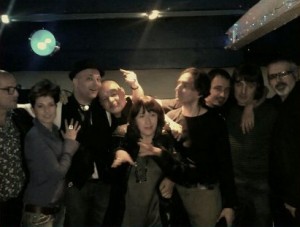 You play in a number of music groups, and most of them perform or record after great intervals. Is there still a sort of „band feeling“ with regular meetings and the feeling of friendship and togetherness in Ain Soph or Circus Joy? How important are such things for you, when you cooperate with others?
First of all we are all good friends. This is important to be creative in the best conditions and to experiment together. It may happen that sometimes someone don’t get along so well with the others, or that someone split to create a new group more close to his current artistic inclinations, but this is just right and normal. Our activity is very far from the market necessities that dictates that you have to produce an album every year or two. We took all the time we need with respect to our personal evolution and research. Luckily we don’t have contractual obligations.
Were Babbo Nasale and Space Alliance rather temporary projects, or do they still exist?
Babbo Nasale were a band which played popular Christmas songs punk style. We played just for fun and only during Christmas festivities. We stopped in 2004. Space Alliance is a “spatial” music project I created with a friend of mine trumpeter dibpt. Space Alliance navigate the space continuum of musical genres: from electronic to kraut-rock, from psychedelic to minimal and surf. Our first release, some years ago, was titled “Space Alliance volume 2” because the first one was lost in space and who know if we will find it again. Anyway Space Alliance is a free project, we will work on it again for sure when we feel like it.
As to the nearer future, are you more the spontaneous person, or do you have particular plans for what comes next? Do you already think about new albums?
There are many projects. The new Ain Soph album, and the new Circus Joy one. As for Spectre, I am working on cover songs as I always wanted to play. For now I only publish them on my youtube channel and then on facebook. In 2012 I’d like to release a new album of original Spectre songs. Last year I produced Claudedi’s album “Claudedi e nemici” (Claudedi and enemies). This year I am working on the artistic production of the first album of THX, a member of Ain Soph.
(U.S.)
Translation: Polina Eliseeva, Luca Boccianti
I feel free to create without superstructure. Interview mit Marcello Fraioli alias Spectre
 In allen Milieus erscheinen die Figuren am interessantesten, die auf den ersten Blick schwer greifbar oder gar widersprüchlich wirken. Freilich kann so etwas auch schnell zu einer Masche werden – Widersprüchlichkeit kann forciert werden, und nichts ist so langweilig wie gespielte Ambivalenz. Zudem kann eine schwere Verortbarkeit auch das Resultat bloßer Ratlosigkeit sein. Daneben gibt es Figuren wie Spectre. Weiterlesen
WRAITHS: Dust in Our Mouths
 „I will show you fear in a handful of dust“ T.S. Eliot
„The nethermost caverns […] are not for the fathoming of eyes that see; for their marvels are strange and terrific. […] Great holes secretly are digged where earth’s pores ought to suffice, and things have learnt to walk that ought to crawl.” H.P. Lovecraft
Labels wie Aurora Borealis sind die Heimstatt von Grenzgängern, die enge Genrekorsetts zu Recht sprengen: MENACE RUINE, WOLFMANGLER, BURIAL HEX, KTL oder SYLVESTER ANFANG II sind nur ein paar der Bands und Projekte, die in den letzten Jahren dort Alben veröffentlicht haben. Weiterlesen