
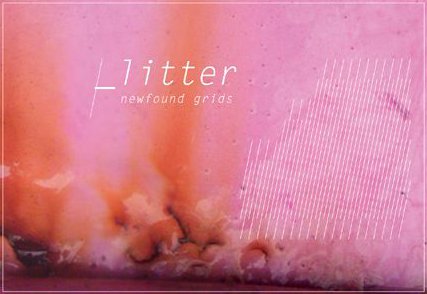
 So schwer es auch ist, Musik qualitativ zu bewerten – das Album “Newfound Grids”, das die libanesische Künstlerin Elyse Tabet mit ihrem Projekt Litter vor einiger Zeit herausgebracht hat, zählt sicher zu den virtuosesten Geheimtipps atmosphärischer Elektronik und könnte in kompositorischer wie gestalterischer Hinsicht den einen oder anderen Maßstab setzen. Tabets Zugang zu Klängen und musikalischen Strukturen läuft nicht über die Codes der Notation, sondern eher über den visuellen Umweg der Farben, Formen und Linien. Dies mag einen bei einer Künstlerin, die ebenso sehr in Bereichen wie Weiterlesen
Schlagwort-Archive: Ambient
Space may just be what connects the senses. An Interview with Elyse Tabet of Litter
Somewhere I have read that you came to music almost by chance. Did this unexpected beginning really come up that suddenly, and what can you tell us about your first experiences with composition and sound, about the sources you used and the groups of people you have worked with?
It is partially true. Music was always so important, maybe it is a good thing that I spent a long time being a listener, at first.
There were some early age attempts at being consistent in playing and practicing instruments, mostly the guitar… That the instrument needs to be approached and held in a certain manner seemed intimidating… And I didn’t do so well in music classes either, kids who could read sheet music flawlessly seemed to have super-powers. Today I have tremendous appreciation for skill, real musical skill, but I had to accept that I wouldn’t have the discipline or perseverance to really master an instrument, to eventually start think of alternative ways.
Drawing, colour, lines, etc on the other hand, seemed to happen naturally.
It wasn’t until much later that I discovered and understood the importance of musical pieces that liberate the instrument from its intimidating status: pieces like Marclays’ Guitar Drag and George Macciunas’ Piano Piece # 13 were somehow about profanity in its creative and constructive sense of disinhibiting and re-defining the terms of how one handles the instrument. That was where I found myself thinking music, after a good decade of not touching an instrument, and starting to think of ways.
It probably really wasn’t much of a sudden shift from visuals to sound as much as a link that was finally made between two senses that are originally very tightly connected. The visual arts that emerged in the early twentieth century and intercrossed sound art and lead to the several currents and fluxes that continue to challenge the boundaries between the seen and the heard today.
How have your ideas about writing music changed during that time?
 Eventually after many years of being more focused on visuals, there was a very specific moment in 2008 at a Francois Bayle concert, when and where everything seemed to be moving in the room through his electroacoustic compositions; I had listened to similar music and I had appreciated the discs but this was something else. Being in the space and absorbing sound in such a wholesome manner was a visual listening experience. Somehow something clicked in terms of how composing in terms of sound-blocks instead of notes, and using sound-signs or sonic cues to tell visual stories, started really coming together.
What can you tell us about the people you have worked with back then?
I met some amazing artists when I was pursuing education at ESAP, an arts and multimedia school that provided an audio-visual lab, great teachers like Vincent Meyer, and access to amazing workshops.
The Toulouse based electroacoustic studio Eole, whom’s work I find absolutely challenging, offered a great series of workshops on sound, and so more pieces of the puzzle were coming together. Fellow visual artist Carine Bigot was the “earliest” collaborator, we were a bunch of art students working on audio visual installations and sharing thoughts / mp3 and trying out things. Back home, early collaborations and tests started happening with musicians I had previously worked with on video, like Jawad (Munma), who was a great support, and who’s doing some very active work to sport local emerging music. Later, artist Tarek Atoui was back home for the summer of 2010 and curious about emerging sounds from the city, so we scheduled a jam / recording session with Fadi Tabbal from Tunefork. No big turns were happening, but it started feeling possible to take these “compositions” seriously.
Meeting Cdrik in Beirut, he heard the pile up of material and what I was up to next, and Jawad was up to offer technical support on everything as well as contribute creatively to some of the tracks, which is … And so it all started coming together.
You’ve studied visual arts in Lebanon and abroad and produced a lot of designs, illustrations and video art. Which endeavors in the visual field are you currently occupied with?
For a few years now the work has been evolving around psych-geography, the perception of space through the subtle shifts of the human psych, and the overlapping of places in the mind when in restless agitation between various inner states.
I’ve explored thoughts like the absence of human presence in vast landscapes in-between towns, (it doesn’t matter where) and how landscapes are interrupted by distant signs and lights which are somehow signs of life or human presence. Somehow I’m fascinated by quiet towns; places that escape the universal visual unities of big cities.
The process of drawing in modular grids over the abstract, diluted, and foggy landscapes, whether in visual or sonic narratives, are a lot about confronting the universal signs, the readable spaces, with the inner landscapes that are projected over them.
Would you say that space and places (imaginary or real ones) are a central aspect in your music as well?
 Space may just be what connects these senses… I feel that the time/space is often what decides the narrative of a “sound-scape”. (If you think about what W. Benjamin says) A recording of any time/space contained sound is bound to contain soul or an aura, as opposed to midi for example, which regardless of its qualities (and it is present in most of tracks in NFG) will still be signal with no intimacy.
How did you come upon your pseudonym Litter?
Someone described the music as litter, which I was glad to come across. It’s one of those words that contain all the right words, it relates to the concept of something scattered. And it does feel like it fits the music, to me.
You contribute to multimedia performances, so music and visual arts often refer to each other in your work. Do you see them as a unity?
Absolutely. Not necessarily a unity in the sense where a music show becomes more valuable with visuals, that is actually not the point. But a unity in a sense where music compositions are actually a visual process to me, especially in terms of confronting impulsivity and structure. And since I have no (deep) understanding of the musical notation system and do believe that even in experimental music there needs to be some kind of “moral code”, system, process, protocol, etc, as some sort of hidden structure, the protocols I do rely on are also visual
Do you think of filming or drawing while creating music?
Not necessarily simultaneously, some sounds do evoke very specific imagery and other pieces evoke less clear ones, but I guess it’s altogether based on a visual repertoire of space, even when it strives to build on a musical structure.
Are you listening to a lot of electronic/experimental music by others, and what are your favourites to date?
I have cycles where I’m more of a listener, just absorbing as much music as possible, and other cycles where I’m more concerned with exteriorizing and tend to rather distance myself. I mentioned Francois Bayle, I think I cannot mention him enough as an influence.
Would you call yourself a story teller or do you see yourself more as someone who brings forth moods and atmospheres? The pieces of your album „Newfound Grids“ show both, but a lot of sounds and mostly the song titles imply a strong narrative…
 Some pieces are more faithful to the real location than other pieces. Somehow certain recordings you want to leave them as is, because they’re history, so they’re there but they’re overlapped with more diluted sounds, or even melodies, but the over-all structure is more based on hazards of that specific recording, and some recordings are pieces of a bigger story, one that is to be structured and knitted into a (coherent?) narrative.
I don’t see it as either or, between atmosphere music and story telling, but it does feel like: 1- the sonic environment of the raw material (field recordings) will come first, remain almost un-altered, and then micro-structures of melody, harmony, or calculated chance will infiltrate it. 2- Or 2 – a melody will impose a rather musical buildup in which these “ambient” sonic environments are incorporated.
Sonically, I think you can set the two apart, as the first always sounds looser, and the latter sounds like organized chaos. I’d like to think it’s not necessary to choose though.
What kind of sound sources did you use for the album?
“Pan’s Monologue” contains a vocal sample of 0.5 seconds from a song out there, as well as 3 piano samples of 0.5 seconds or less each. “Small Town ATM” somehow winks at an old pop melody (from a specific song), but as though heard in retrospective and in pieces I suppose. Nabil Saliba (drummer / producer) recorded drums.For the rest of tracks and some of the noises in these two tracks, it was late night recording with various instruments and a zoom recorder. A rounded silver pendant hanging from a chain and contacting in “rhythmic patterns on an acoustic guitar, bike wheels turning, a sewing machine, etc.
To what degree does life in Beirut with its ongoing changes influence what you do as an artist?
It’s impossible to say Beirut has no influence on what I do. It’s a city where the ground shifts before your feet sometimes, and yet at the end of the day it feels like nothing changed.
Although your music often appears lush and relaxed on the surface, it is full of spontaneous changes and sometimes even forms of harshness. Is this unpredictable and multilayered appearance something that you intend to achieve, or does it just happen while you improvise?
A big part of it is this “structure versus chance” aspect. I feel that it is both, recording is often impulsive and improvised, but in the production there is less improvisation than there is obsessive archiving, and then listening and searching for specific elements, which will later on either free-fall in a composition or define it’s structure.
Your music is very expressive, yet you as a person are not dominantly in the foreground, and sometimes it seems you almost vanish behind the sound. Is Litter also a kind of „facade“ for you, which only indirectly alludes to what is behind?
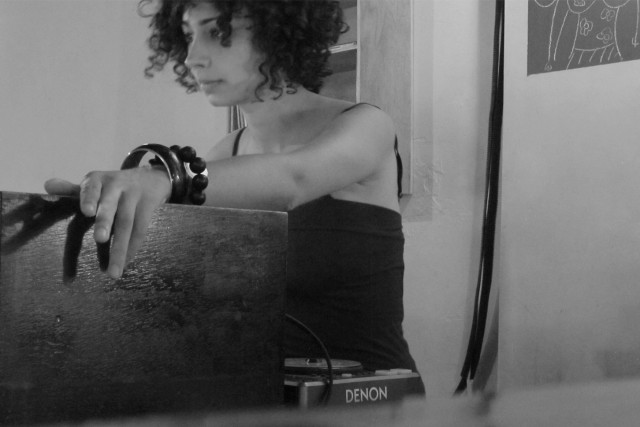 It does feel easier when you’re behind a pseudo, especially for trying things out. The publication of the music happened in a rather sudden way I guess so I was unprepared for the “foreground”, but it’s beyond the point to allude to what is behind the name because in a sense, regardless of that, the musical content strives to provoke a listener’s own projection. Although the process of making it is a personal one and it isn’t always a very open one, I do feel like the outcome is not really “that” introverted. The titles are like captions, but these captions aren’t scientific, nor geographic, and so it is still possible to see what you choose. It is diluted so that it’s possible to project into it, so why attach it to one specific story?
Most artists say they are open minded in terms of their audience’s reactions and interpretations, yet there can be a strong intention to communicate something through music. Do you often think of the potential audience while creating? Do you – in slight allusion to your friend Jawad’s sound lab The Altered Ear, where you also recorded – like the idea of changing the way of listening with your music?
Not necessarily, but there is something there, because some sounds are willingly barely there and some changes are barely perceivable, so in a sense it can be an invitation for quiet listening.
Most reviewers of “Newfound Grids“ pointed at a number of so called Middle Eastern elements, which are interwoven in the patterns of the music. Europeans love to romanticise such elements as exotic and oriental. Do you think in categories like eastern or western music? Are there aspects in your music you would consider as definitely Lebanese and such you regard as international?
Such categories do exist, but here the native source of these sounds doesn’t matter at all because at the end of the day they are detaching from it completely to draw maps of new, fictive places, places of in-between. Not in-between Oriental and Occidental, (it would be a shame if it’s perceived as that). I personally view the music as very exilistic, and if it incorporates eastern elements or exotic elements, it definitely strives to neutralize them by decontextualizing and recontextualizing them in this fictive space.
I think the music tries to capture several overlapping spaces, but these spaces are landscapes, not territories. It (hopefully) blurs such borders, not emphasizes them.
Your label Syrphe once said that the image of a “machine running out of power” is a main element of your music. If you agree with that metaphor, do you think that this expiring is still audible in your forthcoming work?
 Yes, because it’s always going to also draw out from that image of disintegrating structures, or flaking patterns. There is something ghostly about any machine operating on low or terminal drive, when you’ve pushed a wheel one time and the wheel is driven once, twice, maybe three times by that push, it will sound unsteady and uneven while spinning to fade out. The patterns are a lot different from those of a wheel spinning mechanically, they’re here to say they won’t be here long… That, I think is most audible in “Helicopters O M C”
I am still working on collecting and processing such fading patterns, they might be less perceivable this time around, but they’re there.
(U.S.)
NIEDOWIERZANIE: Attendre
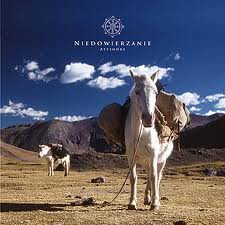 Immer wenn man denkt, atmosphärische elektronische Musik sei nun endgültig an ihrem Ende angelangt und friste ein überwiegend epigonales Dasein, stößt man unvorbereitet auf eine Platte, die so gar nicht langweilig und verbraucht klingt und es im Handumdrehen schafft, dass man alle Vorurteile wieder über Bord wirft. „Attendre“, das zweite Album dieses Projektes mit dem polnischen Namen, den ich mir nie länger als zehn Sekunden behalten kann, ist so ein Fall. Niedowierzanie, wie der in Deutschland lebende Franzose Léo sein musikalisches Medium nennt, steht für Weiterlesen
DALE COOPER QUARTET & THE DICTAPHONES: Métamanoir
 Nach der immensen Aufmerksamkeit, die dem dunklen Sound des Kilimanjaro Darkjazz Ensembles und seinem Pendant im Zeichen des Mount Fuji zuteil wurde, hätte man fast vergessen können, dass es noch ein weiteres, wenn auch kleineres Gebirgsmassiv gibt, das zumindest indirekt als Namensgeber eines bizarren Zeitlupengroove fungiert: Gemeint sind die fiktiven Twin Peaks aus der gleichnamigen Serie von David Lynch. Vor ihrer Kulisse versuchte ein FBI-Agent namens Dale Cooper einen myteriösen Mord aufzuklären. Weiterlesen
THE KILIMANJARO DARKJAZZ ENSEMBLE: From The Stairwell
 Darkjazz und kein Ende. Nachdem Denovali Records vor kurzem erst „Anthropomorphic“, das neueste Produkt des Zweitunternehmens THE MOUNT FUJI DOOMJAZZ CORPORATION ins gedämpfte Gaslicht entließ, legt das Stammprojekt THE KILIMANJARO DARKJAZZ ENSEMBLE gleich nach. Weiterlesen
THE MOUNT FUJI DOOMJAZZ CORPORATION: Anthropomorphic
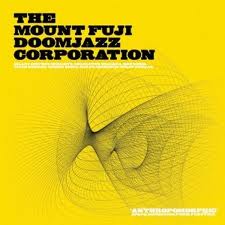 Doomjazz, Darkjazz, wären die beiden Bands, die solche Begriffskonstrukte im Namen tragen, nicht durchweg cool und mit einer stilvollen Mixtur aus Unnahbarkeit und Ironie ausgestattet, müsste man sie als Kategorien wohl ablehnen. Ernsthaft betrachtet klingen sie nämlich prätentiös und suggerieren, es handele sich um Spielarten des Jazz. Es handelt sich aber um Spielarten des Ambient, um recht virtuose und reichhaltige zudem. Ernst gemeint sind sie ohnehin nicht. Weiterlesen
ALLSEITS: Hel
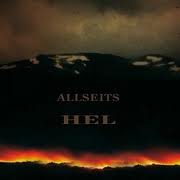 ALLSEITS ist der Zwilling von ALL SIDES, dem etwas bekannteren Projekt der Bremer Drone-Spezialistin Nina Kernicke. Ob die beiden Bälger nun aus einem Ei stammen sei dahingestellt. ALLSEITS ist jedenfalls – Freunde des Dark Ambient aufgemerkt – der unterkühltere von beiden, denn im Unterschied zum basslastigeren, organischen Klangmaterial des Schwesterprojektes stehen hier eisig-metallische Klangflächen vorwiegend elektronischen Ursprungs auf dem Programm, die durch ein Land voll unklar umrissener Schatten führen und eine subtile, bedrohliche Stimmung generieren. Weiterlesen
LUSTMORD: Other
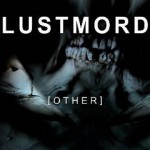 In den vergangenen Jahren hat Brian Williams sowohl auf Albumlänge (“Pigs Of The Roman Empire“ zusammen mit den MELVINS) als auch bei der Wahl seiner Mixtätigkeit (für u.a. TOOL, PUSCIFER, ISIS, GANG OF FOUR) gezeigt, dass er aus dem (engen) Dark Ambient-Korsett ausgebrochen ist, wobei Veröffentlichungen mit METAL BEAST früher schon verdeutlichten, dass er da nie ganz reinpasst hatte. Weiterlesen
LUSTMORD: The Dark Places of the Earth
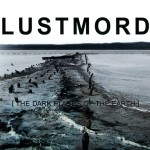 Waren in der Vergangenheit radikalere musikalische (Ver-)Änderungen im dem Album zugeschriebenen Projekt (LUSTMORD vs. METAL BEAST oder LUSTMORD MELVINS) illustriert, wich das letzte Album mit seiner Beteiligung von Musikern von TOOL, ISIS und den MELVINS und dem (sieht man von “Juggernaut“ einmal ab) erstmaligen Einsatz von Gitarren von diesem Schema ab. Weiterlesen
TROUM: Darvê Sh / Ajin
 Diese auf dem polnischen Label Nefryt veröffentlichte CD enthält kein neues Material, sondern sie vereint “Darvê Sh“, ursprünglich auf Beta-Lactam Ring Records im Rahmen der “Lactamasse“-10’-Serie veröffentlicht und “Ajin“, 2005 als Picture-12’ auf Equation Records veröffentlicht. Weiterlesen
SRMEIXNER & BAND OF PAIN – Split (7″)
Black Rose Recordings ist das Hauslabel der Pestmaskenträger von CONTRASTATE, ein renommiertes Ambient-Industrial-Trio aus dem Vereinigten Königreich, das zugleich zu dessen schärfsten Kritikern zählt. Dieser Tage erreicht mich im schicken Pergamentcover eine schon länger veröffentlichte Single aus dem kleinen Musikverlag, die mit den qualitativen Standards von Drone Records auf Augenhöhe ist. Weiterlesen
TROUM: Sen
 Sowohl dem Label Drone als auch der Musik TROUMs ging es immer (auch) um Un(ter)bewusstes, um die Öffnung verschiedener Kanäle zur (Selbst-)Erkenntnis, der Verweis auf die “Dreamtime“ der australischen Ureinwohner bei der vor einigen Jahren erschienenen “Tjukurpa“-Trilogie mag da nur konsequent (gewesen) sein. Im Jahre 2000 erschien im Rahmen der “Mort Aux Vaches“-Reihe das zweite Album des Duos mit dem Titel “Sen“, ein 62-minütiger Track, der der Konzeption der Reihe entsprechend, 1999 live eingespielt worden war. Weiterlesen
TOR LUNDVALL – Interview
 1998 erschien ein Album, das Tony Wakeford mit dem bisher als Maler bekannten Tor Lundvall aufgenommen hatte: Der herbstlichen Ausrichtung entsprechend, fanden sich auf “Autumn Calls“ fragile Kompositionen, auf denen elektronische ambiente Passagen mit melancholischer akustischer Instrumentierung kombiniert wurden. Seitdem hat Tor Lundvall sich alleine den restlichen Jahreszeiten gewidmet, dem Frühling (“The Mist“), Sommer (“Under the Shadows of Trees“) und Winter (“Ice“), wobei das Herbstliche seiner Arbeit wahrscheinlich am nächsten stehen dürfte. Weiterlesen
TOR LUNDVALL: Yule
 Auch wenn die Jahreszeit nicht mehr ganz angemessen scheint, so sollte diese Veröffentlichung des amerikanischen Malers und Musikers (siehe Interview im letzten Black) nicht unkommentiert bleiben. Als EP deklariert, kommt dieses CD auf über 40 Minuten Spiellänge und vereint sowohl ruhige, getragene, instrumentale Ambientklänge (etwa “Busy Station“, “The train home“) als auch von Lundvalls entrückten Vocals geprägte Stücke (z.B. “Christmas Eve“, “Yule song“); Weiterlesen