
 Nicht wenige Bands der Postpunk-Ära kommen als lebende Tote zurück, zwängen sich in schwarze Klamotten, helfen vielleicht noch mit Kajal nach, um einen Auftritt auf dem jährlich in Leipzig stattfindenden Szenekarneval zu ergattern; Cindytalk gehen schon seit Jahren ihren eigenen (sehr eigenständigen) Weg und haben sich klanglich dabei (wieder einmal) neu erfunden. Die Elektronik, die das letzte verbliebene Mitglied Gordon Sharp seit einigen Jahren passenderweise auf Editions Mego veröffentlicht, lotet aus, was im Spannungsfeld von Mensch und Maschine klanglich alles möglich ist. Weiterlesen
Archiv des Autors: Michael
IN GOWAN RING: The Glinting Spade (Re-Release)
 Der amerikanische Folktroubadour B’ee, dessen größte Konstante wohl sein unstetes Wanderleben ist, hat sich in der Vergangenheit nie endgültig zwischen seinen beiden Inkarnationen Birch Book und In Gowan Ring entschieden, beide „Gruppen“ scheinen wohl auf Langzeit nebeneinander zu bestehen. Zu den Gemeinsamkeiten und Unterschieden der beiden Projekte ist viel gesagt worden, auch in unserem Interview mit dem Musiker wurde über die eher amerikanische und zugleich sehr erdverhaftete Grundierung Birch Books und die vergleichsweise europäische, abstrakte und zugleich weltentrückte Ausstrahlung des älteren Projektes In Gowan Ring gesprochen, ebenso über eine Entwicklung, die beides miteinander zu verbinden schien. Weiterlesen
Tara handles the earth elements, I handle the fire elements. Ein Interview mit Clay Rendering
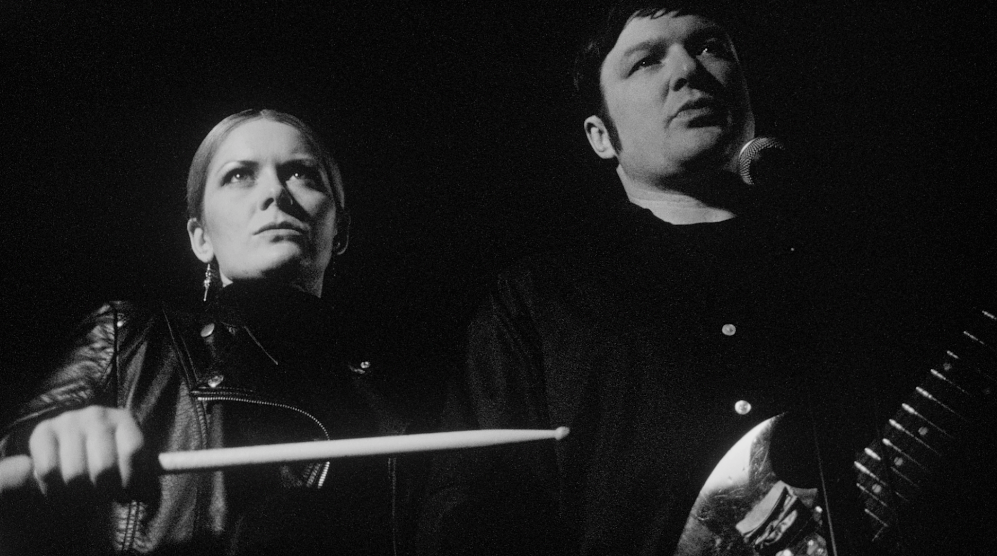 Mike Connelly ist aus der amerikanischen Noiseszene nicht wegzudenken und zahlreich und zahllos sind seine Bands und Projekte: Mit Hair Police oder bis kürzlich noch mit Wolf Eyes erzeugt er Grenzen und Ohren sprengende atonale Musik und auf seinem Label Gods of Tundra veröffentlicht er alle nur denkbaren Formate und Musiken. Er kann aber auch weniger brachial und mit seiner Frau Tara, die u.a. als The Pool at Metz aktiv ist, hat er als The Haunting zurückhaltendere, atmosphärisch dichte Alben herausgebracht. Das jüngste Projekt der beiden, Clay Rendering, orientiert sich Weiterlesen
WILLIAM BASINSKI: Nocturnes
 Fast immer sind William Basinskis Arbeiten (auch) Meditationen über das Wesen der Zeit und der Vergänglichkeit, die dem Hörer aber – zumindest für die Dauer der jeweiligen Komposition – das Gefühl geben aufgehoben, der Tyrannei der Zeit entzogen und entrissen zu sein – trotz oder gerade wegen des melancholischen Charakters der Musik. Etwas, das dem inzwischen in Los Angeles ansässigen Basinski mit „Nocturnes“ erneut gelingt. Weiterlesen
Zeitlos frei: Ai im FFT Düsseldorf am 24.05.2013
 Ai fliegen unter dem Radar, noch. Die wichtigste Frage für eine Band ihres Formats, letztendlich: Kann eine Band wie Ai, deren Einflüsse des Soundentwurfs doch recht offen daliegen, mit ihrer Musik trotzdem überzeugen, auf Platte wie bei einem Konzert? Ist da mehr als nur eine Retroschleife, die gerade heute ausgiebig überstrapaziert wird? Erstere Aufgabe ist vorerst aufgeschoben; noch liegt außer einem Compilationbeitrag bei dem kleinen Düsseldorfer Label Slowboy nichts Amtliches vor. Das ist bedauerlich, denn ihr Konzert gelingt – von kleinen Abstrichen abgesehen – mit Bravour. Weiterlesen
HAUS ARAFNA: All I Can Give 7″
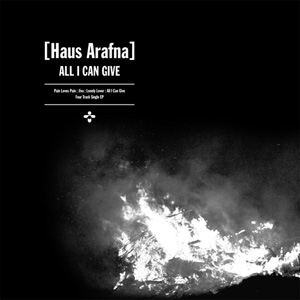 Haus Arafna haben durch Namensgebung und Themenwahl immer wieder auf die unschönen Seiten der menschlichen Natur hingewiesen, ganz so, als wollten sie zeigen, dass Blut das „sprachgewandte Säugetier“ wie ein Ariadnefaden durch den Irrgarten der Geschichte führt. Musikalisch wurde das anfangs („Sex U Mas“-EP, „Blut“) durch brachial-rabiate analoge Klänge illustriert, die aber im Laufe der Jahre immer mehr durch reduziertere, melodischere Momente ergänzt und teilweise ersetzt wurden, die von der Band selbst – in Anlehnung an SPKs „Walking On Dead Steps“ – als Angst Pop bezeichnet wurden; Weiterlesen
HERMANN KOPP: Zyanidanger
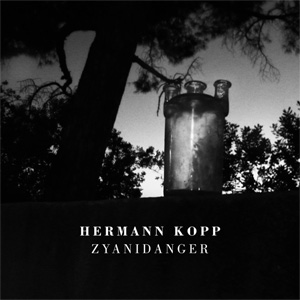 Als im Jahr 2008 das Album „Under a Demon’s Mask“ von Hermann Kopp auf Galakthorrö veröffentlicht wurde, verwiesen die Referenzpunkte (u.a. Huysmans und Bataille) auf sein Interesse an der Transgression und auch schon seine Arbeiten an drei (von vier) Langfilmen Jörg Buttgereits machten deutlich, dass Kopp sich gerne dem Abseitigen, Morbiden, Heterogenen (Bataille) widmete. Das zweisprachige Portmanteauwort, das dem neuen Album seinen Titel gibt, macht das erneut deutlich. Inspiriert wurde „Zyanidanger“ von dem im 19. Jahrhundert veröffentlichten Werk Die Geschichte der Chemie des deutschen Chemikers, mit dem der Künstler seinen Namen teilt und das in Braunschweig veröffentlicht wurde. Koinzidenzen überall. Weiterlesen
ANEMONE TUBE AND DISSECTING TABLE: This Dismal World
 Ebenso wie die letzten hier besprochenen Veröffentlichungen von Anemone Tube ist auch diese Split-LP mit Dissecting Table stark konzeptionell ausgerichtet: So geht es auf dem Album um die vier edlen Wahrheiten, die das Fundament des Buddhismus darstellen. Diese lauten, dass das Leben leidvoll ist (vgl. den Titel des Albums), dass die Ursachen für dieses Leid(en) u.a. Hass und Gier sind, die Auflösung dieser Ursachen das Leiden zum Erlöschen bringen kann, und dass man dies durch den edlen achtfachen Pfad schaffen kann. Weiterlesen
PHARMAKON: Abandon
 Auch wenn Industrial von Anfang an Grenzen überschritten hat – die Transgression vielleicht sogar das bestimmendste Merkmal war – und wenn ein Viertel der Gründungsband weiblich war, so ist Industrial dennoch immer primär ein Phänomen weißer Männer gewesen – sowohl auf Seiten der Produzenten als auch Rezipienten. Das führt natürlich dazu, dass oftmals in besonderem Maße hervorgehoben wird, wenn eine Künstlerin sich an extremer elektronischer Musik versucht, so auch im Falle von Pharmakon, dem Projekt der 22-jährigen in New York ansässigen Margaret Chardiet, die trotz ihres jungen Alters schon seit einigen Jahren aktiv ist: So war sie ein Gründungsmitglied des Weiterlesen
CHARLEMAGNE PALESTINE + Z’EV: Rubhitbangklanghear Rubhitbangklangear
 Unter den Minimalisten ist Charlemagne Palestine sicher derjenige, der im etablierten und institutionalisierten Musikbetrieb weniger als seine Kollegen wahrgenommen wird. Die Auftritte und Aufnahmen Palestines hatten bzw. haben – nicht nur wegen dem Moment des Repetetiven (der sich auch im Titel widerspiegelt) – (auch) immer einen gewissen rituellen Charakter, etwa wenn z. B. die Stofftiere aus der extensiven Sammlung Palestines auf der Bühne drappiert wurden (vgl. die Rückseite der CD) und er sich den obligatorischen Cognac (der hier das Cover ziert) einschüttete. Und auch Z’EV hat sich sowohl musikalisch Weiterlesen
WOLF EYES: No Answer – Lower Floors
 Seit Wolf Eyes Ende der 90er – damals noch als Soloprojekt von Nate Young – debüttierten, war der Rezipient oft fassungslos ob der Flut der Veröffentlichungen – natürlich nicht nur, aber auch auf den Labels, die von jedem einzelnen Mitglied betrieben wurden (auf John Olsons American Tapes, auf Hanson Records des 2005 ausgestiegenen Aaron Dilloway, auf Gods of Tundra, das von Mike Connelly betrieben wird, der die Band vergangenes Jahr verließ und auf Youngs AA Records). Weiterlesen
ILLUSION OF SAFETY: Sweet Dreams
 Das seit 1983 aktive Projekt um Dan Burke hat trotz durchaus atonaler Momente meistens zurückhaltender agiert als viele andere (Post-)Industrialvertreter. Obwohl auch Illusion Of Safety die Abgründe des Un-Tiers Mensch Inspiration waren, so wirkte die Konfrontation mit den Scheußlichkeiten, zu denen der Homo sapiens fähig ist, niemals wie bloßer Selbstzweck, verkam sie nie zur (letztlich) affirmativen Machogeste. Dies spiegelte sich auch in der musikalischen Gestaltung wider, denn Illusion Of Safety waren nie auf einen Ansatz festgelegt. Exemplarisch wird das einerseits verdeutlicht durch das relativ rabiate Weiterlesen
V.A.: Drone-Mind // Mind-Drone Volume 2: Yann Novak / Strom Noir / Emma Ya / Karl Bösmann
 Schon an anderer Stelle haben wir die neue Reihe von Dronerecords vorgestellt, auf der sich jeweils vier Künstler ein Album teilen, um ihre Vorstellung(en) der „Drones of Minds“ zu zeigen. Teil zwei wird von dem Kalifornier Yann Novak, der auch als Video- und Installationskünstler tätig ist, eröffnet. Auf „Silent. Loop.001“ wird als Basis der Klang verwendet, der entsteht, wenn die Nadel des Plattenspielers in die Auslaufrille läuft. Hier spiegelt also das gewählte Ausgangsklangmaterial das Medium des Tonträgers wider. Weiterlesen
DEPECHE MODE: Delta Machine
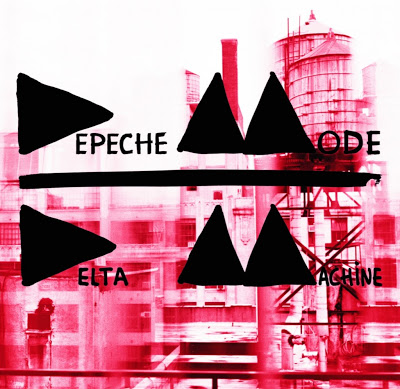 Alle vier Jahre veröffentlichen Depeche Mode ein Album, fragen Journalisten die meist gleichen uninspirierten Fragen (meistens zum Beziehungsgefüge innerhalb der Band) und geht die Band auf eine extensive Tour, auf der deutlich wird, dass im Fansein auch immer Fanatismus steckt. Die Kehrseite der „Devotion“ der Fans ist die extreme Intoleranz – und wer erlebt hat, wie vor etlichen Jahren mit der Supportgruppe Miranda Sex Garden umgegangen wurde, weiß wovon ich spreche. Weiterlesen
Personal loss is an important literary theme and one that I return to quite often: Interview mit Joel Lane
 Unter den Autoren, die in der jüngeren Vergangenheit originelle Beiträge zur unheimlichen Literatur beigesteuert haben, sticht der in Birmingham lebende Brite Joel Lane aus verschiedenen Gründen hervor. Sein Output ist weder auf ein Genre noch auf eine Gattung festgelegt: So lassen sich seine bisher veröffentlichten zwei Romane From Blue to Black und The Blue Mask tendenziell eher dem Mainstream zuordnen, seine vier Sammlungen mit Kurzgeschichten (The Earth Wire wurde 1994 mit dem British Fantasy Award ausgezeichnet) gehören dagegen zur unheimlichen Literatur; außerdem hat er noch mehrere Lyrikbände veröffentlicht. Weiterlesen
Personal loss is an important literary theme and one that I return to quite often: Interview with Joel Lane

You work as a journalist and you also write poetry, short stories and novels. I was wondering to what extent the writing (process) differs in each case. The stories in your most recent collection Where Furnaces Burn were written and originally published over a period of thirteen years. Was it clear for you right from the beginning that you would write a cycle of stories that were interlinked – thematically as well as with regard to the protagonist?
Yes, it was, though it took me a few years to be writing mostly stories in that series. The idea was to combine elements of noir fiction and the occult detective sub-genre. That gave me a complex enough basis to write what is hopefully quite a diverse group of stories: there are ghosts, mythical beings, weird cults, sacred relics and monstrous creatures as well as thieves, gangsters and killers. I wanted to leave scope for quite a lot of variety in theme and mood, but for there to be a cumulative effect. It wasn’t like writing a novel because I only came up with the story ideas one or two at a time, and not in chronological order. Some of the stories are very dark, some are more affirmative.
I think one of the first stories I read from you was the title story of The Lost District. Am I right in saying that a recurring topic in your stories is that of loss and losing?
Probably, yes. There are two aspects to that: personal loss and the idea of broader social and 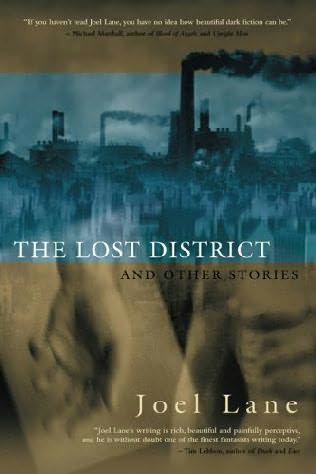 cultural losses. The title of ‘The Lost District’ is a play on the ‘lost cities’ of pulp fiction, so it’s hinting that the district is one where strange influences are at play. Personal loss is an important literary theme and one that I return to quite often, but it can get a bit monotonous if that’s all you’re talking about. The challenge is to understand how people keep going, how they survive – emotionally as well as physically. Life is a struggle and in the end you lose everything – that’s a given and there’s no point just saying it, you have to show what it brings out of people.
At the end of your story “Stiff As Toys“ you use a pun: “Man’s laughter. Manslaughter“. Is that for you an adequate summary of human nature and condition?
Oh no. That’s specifically a comment on male violence – and it’s an unequivocal comment because the narrator was trying to make a point in a dramatic way. He has a bitter streak, as I’m sure you’ve noticed. But there are stories in Where Furnaces Burn that take a less extreme view of human nature, such as ‘Incry’ and ‘Point of Departure’. Part of the appeal of writing a book of episodes is that you can show that one person’s perspective is complex and changes with time.
William Blake once wrote about London that it was “a Human awful wonder of God!”. Considering that in many of your stories a city serves as the setting and the things happening there are often far from pleasant, would you say that you feel some kind of ambivalence towards city life? How does it feel to “wake up in Moloch“ (to quote the title one of your stories)?
There are problems anywhere you live, and I don’t assume small-town or village life to be idyllic. The phrase “wake up in Moloch” comes from Allen Ginsberg’s great poem ‘Howl’, and Ginsberg uses Moloch as a symbol of exploitation and the machine age: “Moloch whose name is the Mind!” So it’s not just waking up in the city, it’s waking up in the ugliness that is capitalism and the mechanisation of people. You’d find the same ugliness in the countryside, just taking a different form: factory farming and so on. I’m very much a city person but try not to idealise the urban experience. It obviously has its downside.
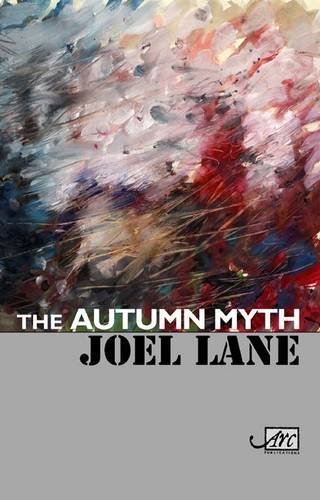 Even though one should be careful not to confuse author and narrator and even without knowing about your political activism, I guess the stories in The Lost District or Where Furnaces Burn more than clearly indicate that the Tories will not get your vote in the next election. In your poetry collection The Autumn Myth there are quite a number of poems which are political, e.g. “Safe Passage“ to name but one. You stated in an interview that there’s always been a “blend of outer and inner realities“. Was it clear for you from the beginning of your career that your work would deal with political topics (in a broad sense)? Do you think the political climate has worsened in the last couple of years?
I’m not sure what you mean by “career”, but leaving that aside – yes, early stories of mine like ‘The Foggy, Foggy Dew’ addressed political themes, though in a rather idealistic way. To me, politics is about how the individual relates to the community, how society is ordered, what the power relationships are, and so eminently suitable for handling in horror and speculative fiction. What’s changed in recent years is that the more left-leaning and reformist major party in the UK has been signed over to a right-wing agenda, leaving a vast gap in political leadership. That has led me to become more strongly involved with the revolutionary left, and that has started to give my writing a more definite political focus. The lessons of the current economic depression are clear: the capitalist system is in ruins and, as the Economist admitted, Marx has been proved right – you either work with that and start to build an alternative or you get used to living in the ruins of a society. A lot of the rage and bitterness that’s prevalent at the moment comes from people who realise the system has failed but haven’t got to grips with the need for something else. They think it’s ‘the fall of man’ rather than the breakdown of an economic system that is only three hundred years old. Or they imagine that being riddled with new technology is changing society in some profound way when in reality it’s all going backwards. People are starving in the streets, you can’t change that with Twitter.
I think you have read much more than I have in the field of weird fiction but I’ve got the impression that authors that try to deal with social reality are few and far between. Was that also a reason to publish the anthology Never Again?
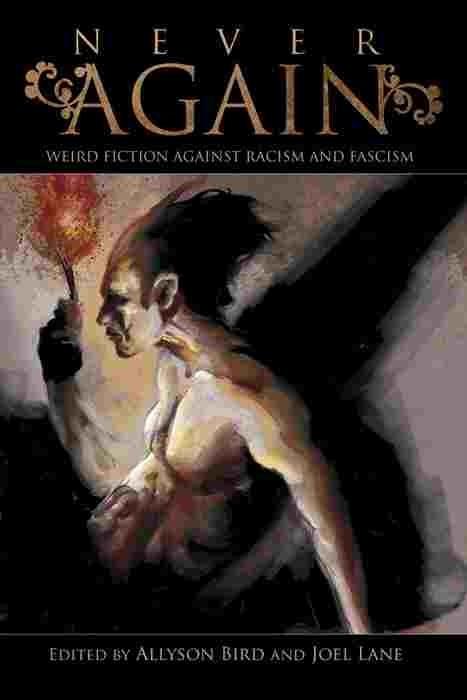 Actually, half the stories in Never Again were reprints – we wanted to bring together a body of work that already existed. Because weird fiction is about time and communities, social reality is ingrained in it, and there’s quite a lot of socially themed work out there, whether you’re talking about Fritz Leiber, Shirley Jackson, Harlan Ellison, M. John Harrison, Ramsey Campbell, Lisa Tuttle, Dennis Etchison, Graham Joyce, Thomas Ligotti, Joe R. Lansdale or some of the newer writers we included in Never Again. You can’t expect literal social realism from weird fiction, but you can expect bold metaphors, unease and irony, and I feel the genre is a rich resource of social commentary. Robert Aickman is a challenging example because he’s brilliant but also very right-wing, and sometimes one applauds the writing while resisting the message. With Never Again, we wanted to combine new work and existing work to show how the weird and speculative fiction genres are engaging with an important social theme. Inevitably, we were criticised for being too political and for not being political enough – but it was the literary agenda that we were most concerned with. Allyson Bird and I were perfectly aware that a book of stories doesn’t do the same job as a street stall or a demonstration. We wanted the outcome to be a strong book.
In your novella The Witnesses Are Gone films play a major role. Have you been strongly influenced by cinema and could you imagine writing a screenplay one day?
I don’t like horror films in general as much as I wish I did. They mostly seem rather obvious, even 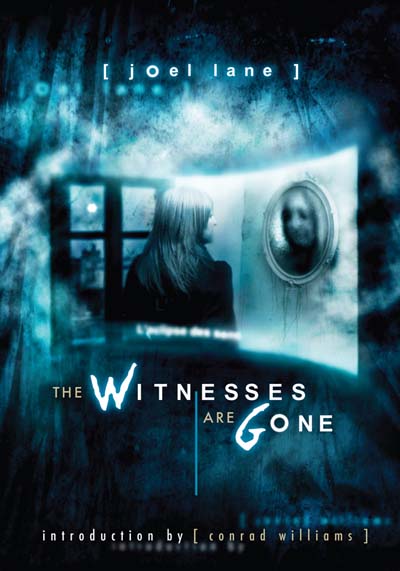 infantile. Those I’ve really enjoyed include Carnival of Souls, The Tenant, The Brood, Don’t Look Now, The Haunting, The Blair Witch Project… Some more culturally assured films like The Monster Club and Plague of the Zombies are effective too, but the most interesting horror films are those where you really don’t know what’s happening and you can’t rely on genre conventions to guide you. It was that kind of cinema I was trying to evoke in the novella, and the similarity between cinematic and dream imagery. I do have quite a visual imagination, and what the characters see in my stories tends to be more important than anything else. But I’m not sure cinema is responsible for that. I can’t rule out writing a screenplay in the right context, but it’s not currently in my plans.
What can you tell us about the perception of your work? Are the people reading your poetry those who are familiar with your weird tales? Do the reactions to your work(s) differ much?
There’s some overlap, but mostly my novels, free short stories and poems have had different readers. Perhaps I’ve spread myself too thin in that regard. I’ve had a lot of kind and supportive comments on all fronts, though, so I don’t think the attempt to migrate back and forth between genre and mainstream writing has been completely misguided. If any judgement annoys me it’s having my work (and especially my poetry) described as “gritty realism” when it’s nothing of the kind. From some reviews, you’d think we all lived in a Dr Seuss world of mauve cushions and little cuddly things, an adorable world, and anyone who acknowledges the existence of ugliness and difficulty is obviously disturbed. What Al Alvarez called “the gentility principle” is still alive and well in English poetry.
So far your novels have not dealt with the supernatural. Do you feel like Lovecraft or Ligotti that the short form is more adequate for weird tales? Having asked that, it was recently mentioned that you were working on a “supernatural horror novel set in the Black Country“. Can you say a few words about that?
Actually, my first novel did deal with the supernatural, it just wasn’t the main focus. There was a ghost story element to it, but you could miss that and it wouldn’t spoil the book for you. I think there are more great short stories and novellas in the weird fiction genre than there are novels. It’s remarkably difficult to write a truly effective supernatural horror novel – one where the supernatural is a core theme and not just a plot device. The short story seems to be the most natural form for weird fiction because that step into a visionary landscape is very hard to sustain. Most horror novels objectify the supernatural in a rather uninspiring way, in order to make it part of the furniture of novel writing – it becomes like everything else. But surely the whole point is that’s unlike everything else. As for my intended supernatural novel, that was planned for a while but never really got started and I wrote it as a short story, ‘The Messenger’. I must learn not to talk about plans as actual works in progress. But I do hope to write a supernatural horror novel some day.
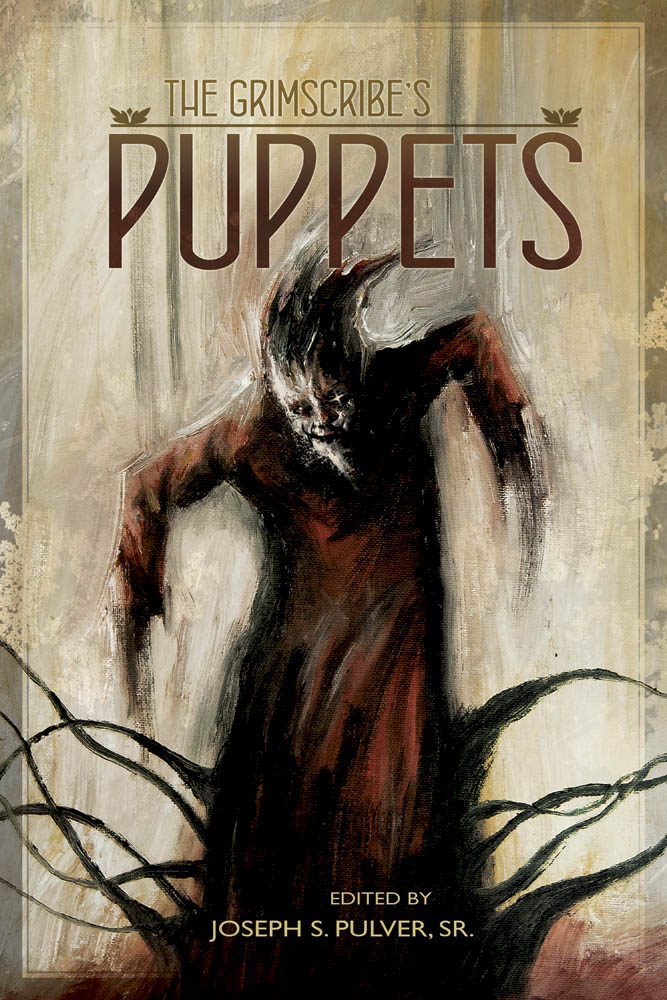 You’ve just contributed to the anthology The Grimscribe’s Puppets. You once said that “At his best, Ligotti is a true humanist“. What approach did you choose to pay homage to Ligotti?
It’s better if I don’t try to explain my story before people see it, but it’s about someone struggling with a chronic illness, which seemed quite a Ligottian theme. What I meant with that comment was that Ligotti is concerned with betrayal, exploitation and the abuse of power, as well as with human suffering in the face of disease and madness. It’s what Marcuse called negative humanism, the identification of the human in those stripped of power and recognition, rather than the glorification of human ambition. Part of what I admire in Ligotti is his absolute humility, his refusal to pretend that having literary talent makes him a superior being. He’s had a difficult life and that’s made him intolerant of arrogance.
Lovecraft wrote Supernatural Horror in Literature. You have stated that you are going to take some time off from writing fiction to focus on your non-fictional work and to write about weird fiction. Would you say that having a great knowledge of the history of weird fiction and being able to reflect about and rely on it can increase one’s own writing?
I certainly wouldn’t claim to have a great knowledge of weird fiction, but I’ve read quite a bit of it over the past forty years. And doing that can enhance your own writing, if only because it helps you see how diverse and rich the weird fiction genre is. I get tired of writers being feted for reinventing the wheel. It’s easier to try and be original if you’ve got some idea of what’s gone before. And it helps you to see what the genre is really about, what the recurrent themes are. Cinema doesn’t define the weird fiction genre, writing does.
Some years ago it was announced that you would be working on your third novel, Midnight Blue. Is that novel still going to happen? Is there anything else you’d like to add? Future plans?
That novel was finished over two years ago, but I’m still seeking a publisher for it. It’s not a genre title, so I’m trying to convince literary publishers to take it on, and that world has changed radically in the last few years. I’ll let you know what happens. Regarding other projects – I’m working on a book of ghost stories, a book of ‘slipstream’ stories, a crime novel about alcoholism, a non-fiction book about horror fiction and the twentieth century, and a book of political poems. That should keep me busy for the next decade or so. I’m also planning to hibernate, but the legalitities of that are dismayingly complex.
M.G.
V.A.: Hail Be You Sovereigns, Lief And Dear: Dark Britannica III
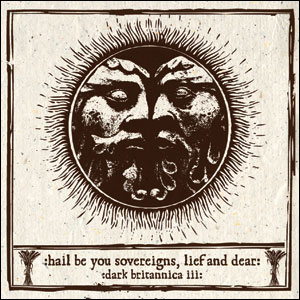 Je nach Zählung („John Barleycorn: Rebirth“ war ursprünglich lediglich als Downloadergänzung zur ersten Veröffentlichung „John Barleycorn: Reborn“ gedacht und wurde erst einige Jahre später eigenständig auf CD veröffentlicht) ist das der dritte respektive vierte Teil der umfangreichen Folkanthologie, die unter dem Banner des Zyklischen, des Säens und Erntens, des Werdens und Vergehens, das sich im Traditional „John Barleycorn“ widerspiegelt, von Cold Spring veröffentlicht wird. Weiterlesen
AKUBI OBJECT: Akubi Object
 War Malaise Music anfangs noch das Label, das sich der Mammutaufgabe gestellt hatte, Rozz Williams’ experimentelle Arbeiten mit seinem Projekt Premature Ejaculation zu veröffentlichen, so wird mit Akubi Object eine Band gewürdigt, die im weiteren Umfeld von Williams tätig war und in der kurzen Zeit ihres Bestehens – die 1996 gegründete Band wurde 1998 nach dem Tod des Bassisten Israel Medina aufgelöst – lediglich eine EP herausbrachte. Neben den fünf Tracks finden sich auf der CD ein unveröffentlichtes Stück sowie der Beitrag der Band zur „Merry Maladies“-Compilation (auf der auch Williams und andere verwandte Acts extensiv vertreten waren). Weiterlesen
X-TG: Desertshore / The Final Report
 Schon die Re-Formation Throbbing Gristles im Jahr 2004 nach der Terminierung der Mission im Jahre 1981 war eigentlich ein Affront, ein zum Scheitern verurteilter Versuch, denn Throbbing Gristle waren immer mehr als nur die Musik. Von Anfang an ging es (auch) um das Außermusikalische, die Transgression, den Schock, der sicher eine ebenso wichtige Rolle zur Bildung der „Legende“ (David Henderson in Sounds) beitrug, wie diese „Musik der Unbefugten“ (G. Brus). Ganz häretisch könnte man sagen, dass die Geschichte (durchaus doppeldeutig zu verstehen) Throbbing Gristles vielen Rezensenten geläufiger war als die Musik. Gegen diese These spricht auch nicht der (erfolgreiche) Versuch eines Journalisten 24 Stunden am Stück die Musik der Band zu hören. Weiterlesen