
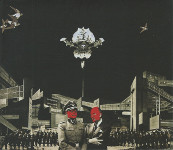
 Die beiden Alben „The Great Ecstasy of the Basic Corrupt“ und „Silver Bromide“ erschienen vor knapp drei Jahren auf streng limitierten LPs als art edition und sind seitdem gesuchte Sammerstücke, die Preise, die dafür im Netz geboten wurden, horrend. Da Nurse With Wound aber mehr als nur ein paar Dutzend Fans haben, war in diversen Kommentarspalten schon seit längerm der Wunsch nach regulären Wiederveröfentlichungen zu vernehmen. Dies ist nun seit kurzem geschehen, und ich erwähne beide Alben deshalb, weil Weiterlesen
Schlagwort-Archive: Andrew Liles
Très Chère Mère / Mother Dearest: Kurzgeschichte von Andrew Liles erscheint am 2. Januar
Am 2. Januar 2017 erscheint beim französischen Lenka Lente-Verlag die illustrierte Short Story Très Chère Mère (Mother Dearest) von Andrew Liles in französischer und englischer Sprache. Liles, den man bisher als Musiker (solo, sowie als Mitglied von Nurse With Wound und Current 93), Remixer, Zeicher und Illustrator kennt, veröffentlicht damit seine erste literarische Arbeit. Dem Buch liegt eine CD mit einer dreizehnminütigen Komposition Liles’ bei.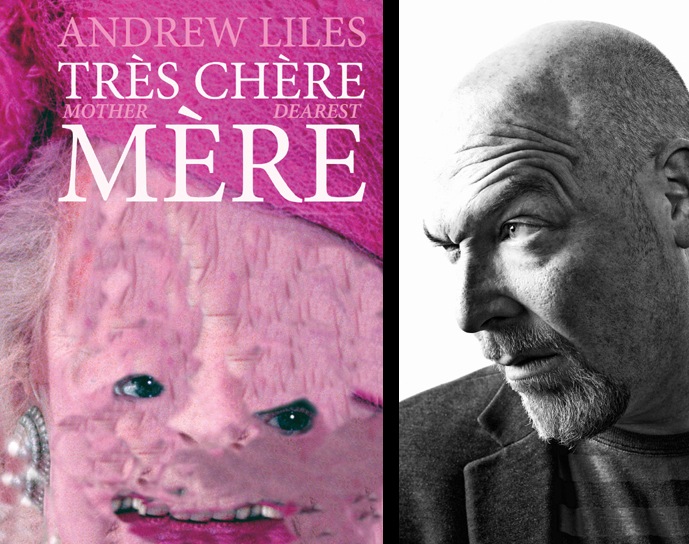 Weiterlesen
NURSE WITH WOUND: Dark Fat
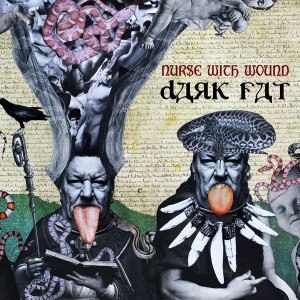 Gegründet wurden Nurse With Wound vor nun beinahe 40 Jahren als Band, doch das Gefüge des Trios brach bald auseinander, und in den folgenden Dekaden stand der Name erst einmal für Steven Stapleton, der von nun an manchmal im Alleingang, meist aber mit einem harten Kern an weiteren Musikern seinen klanglichen (und, was in seinem Werk nicht bloß Beiwerk ist: visuellen) Ideen nachging. Seit etwa zehn Jahren nun gibt es bei Nurse With Wound wieder so etwas wie eine Bandstruktur, denn nicht nur Stapletons alter Freund Colin Potter, sondern auch die im letzten Jahrzehnt dazugestoßenen Andrew Liles und Matt Waldron sind nun Weiterlesen
ANDREW LILES: Animal Magick
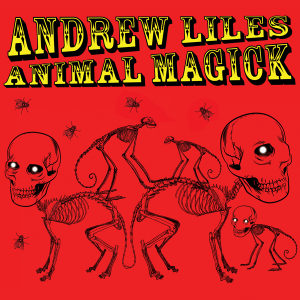 Nach den rund zwanzig Jahren, die Andrew Liles nun die Welt mit musikalischen und visuellen Monstrositäten bereichert, kann man durchaus ein Resümee zu der Richtung wagen, die sein bisheriges Werk genommen hat. Liles ist über die Jahre bunter, schriller und extrovertierter geworden, der Spaß an immer wieder neuen Facetten des Bizarren ist offensichtlicher, und nichts ist ihm heute fremder als das bisweilen trockene und vornehme Image der allgemein als experimentell bezeichneten Musik. Weiterlesen
CURRENT 93: The Moons At Your Door
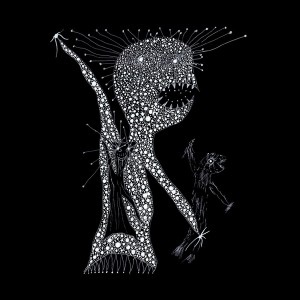 Im Anfang war das Wort. So könnte man die Geschichte der Genese/der Genesis von Current 93 beginnen, denn obwohl längere Texte auf dem Frühwerk nur selten vorkamen und manchmal die Stimme nur ein Klang(mittel) unter anderen war, so spielte das Konzept(ionelle), der Logos schon immer eine dominierende Rolle – man denke nur an das musikalisch noch etwas unausgegorene 1983 erschienene 12′-Debüt „LAShTAL“. Weiterlesen
ANDREW LILES: Cover Girls
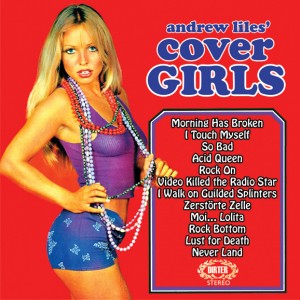 Im Vergleich zu Steven Stapleton, den Liles seit Jahren sowohl live als auch im Studio unterstützt, ist letzterer sicher stärker am Song orientiert, an Songs interessiert und hat sich im Verlauf der Jahre an verschiedensten Genres/Musiken abgearbeitet, z.B. Metal. Dabei ist man bei seinen (Re-)Interpetationen vielleicht versucht von Dekonstruktionen zu sprechen, wobei da der semantische Resonanzraum vielleicht zu groß ist. Aber dazu später mehr. Weiterlesen
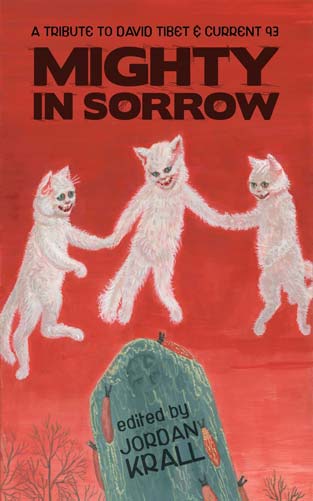
Mighty in Sorrow: A Tribute to David Tibet & Current 93. Hrsg. v. Jordan Krall
Unter dem Titel Mighty in Sorrow erscheint im Dynatox Ministries-Verlag eine Anthologie mit Gedichten und Kurzprosatexten, die vom Werk David Tibets und seiner Band Current 93 inspiriert sind. Zu den 26 Autoren zählen Andrew Liles (Vorwort), Thomas Ligotti, Joseph Pulver Sr., Nicole Cushing und Robert M. Price. Das Artwork stammt von der Malerin Aleksandra Waliszewska.

CURRENT 93: I Am The Last Of All The Field That Fell
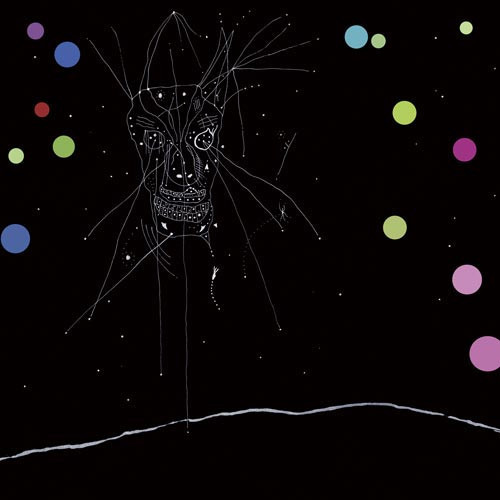 Current 93 war von (An)Beginn immer ein Vehikel für David Tibets Obsessionen, künstlerischer und vor allem spiritueller Art. Daraus folgte vielleicht unweigerlich, dass Ideen und später dann die Worte und Wörter im Mittelpunkt standen, gerade da Current 93 eben keine Band im herkömmlichen Sinne war/ist, sondern vielmehr ein loses Kollektiv um den Fixstern Tibet. Dabei haben die immer umfangreicher werdenden Texte – die vielleicht der in den letzten Jahren stärker gewordenen kosmischen Perspektive („And did you call the night ‘bright’/And drink the sex of stars?“ wird auf dem letzten Stück gefragt) Rechnung tragen sollen – dazu geführt, dass ein Singen – das es bei Current 93 sowieso nie im herkömmlichen Sinne gegeben hat – noch stärker einem Rezitieren gewichen ist. Weiterlesen
ALMAGEST!: Messier Objects
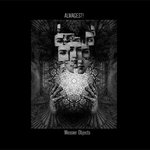 Die Gruppe Almagest! wurde erst im letzten Jahr gegründet, doch man muss nicht einmal besonders italophil sein, um dem Lineup zu entnehmen, dass es sich um eine Allstar-Combo aus gestandenen Musikern handelt. Im Zentrum des Geschehens steht Sänger und Performer Ernesto Tomasini, der – vermutlich eher aufgrund als trotz seines Charismas – nie ein Soloalbum herausgebracht hat, sondern die Zusammenarbeit mit ebenso markanten Musikern bevorzugt. Hinlänglich bekannt sind zudem die Turiner Fabrizio Palumbo und Paul Beauchamp, deren Stammbands Larsen und Blind Cave Salamander ebenfalls von dynamischen Konstellationen zehren. Ebenfalls kein unbekannter ist der Mailänder Evor Ameisi, dessen Soloprojekt Northgate Weiterlesen
ANDREW LILES: Murgatroyd The Monster (A Northern Noir)
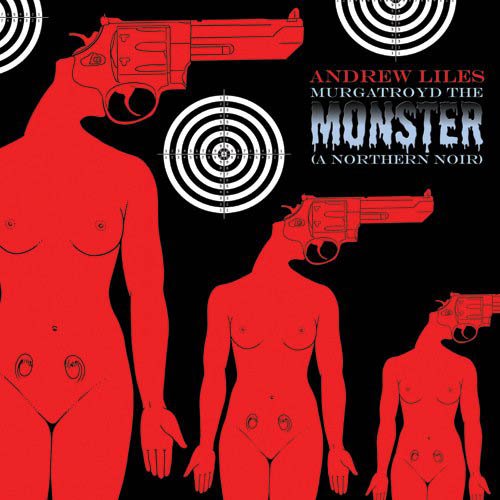 Es ist eine Szene wie aus einer anderen Welt: Eine junge Frau, fast immer blond und kühl, veruntreut Geld und versucht, sich damit ins ungewisse Irgendwo abzusetzen. Die Häscher sind ihr auf den Fersen, doch auch ihre forsche Absage an alle Skrupel hift ihr nicht dauerhaft, sich gegen ihre Verfolger, und seien es die aus der eigenen Gewissenswelt, zu behaupten. Was wäre eigentlich das Ziel ihrer Flucht gewesen, die im Knast oder in der Duschkabine eines oral fixierten Moteliers endete? Sich zu verstecken, sich irgendwo eine neue Existenz zu ergaunern? Oder etwas dazwischen, ein Leben in Sorglosigkeit mit weniger Verpflichtungen und Abhängigkeiten, das man nur vorsichtig genug Weiterlesen
NURSE WITH WOUND AND GRAHAM BOWERS: Parade
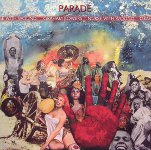 Die neue Gemeinschaftsarbeit von Stephen Stapleton und dem walisischen Komponisten Graham Bowers ist schon optisch eine solche Augenweide, dass man sich endlos lange damit befassen könnte. Von weitem erinnert das bunten Frontcover an Arbeiten von Yasutoshi Yoshida alias Govt. Alpha, man denkt vielleicht auch an Hannah Höch, und auf der Innenseite des Digipack befindet sich eine Kollage, die deutlich auf die Gemüsemänner Acrimboldos anspielt. Dass ich zudem an barocke Stillleben denken muss, ist sicher auch nicht nur meiner überbordenden Fantasie geschuldet. Für Nurse With Wound-Fans ist dieses schamlose Zusammenklauben von Querbezügen und ihre Neuanordnung in Weiterlesen
Gruppenausstellung beim Epicurean Escapism Festival II: Alex Tennigkeit, Andrew Liles, Carmen Burguess, Dennis Rudolph, Philip Best, Rudolf Eb.er
Am 15.06.2013 findet in Berlin das zweite Epicurean Escapism Festival statt, im Zentrum stehen Konzerte der Post Industrial-Acts Ke/Hil, Post Scriptvm, Dieter Müh, Anemone Tube und Trepaneringsritualen, darüber hinaus werden Super 8-Filme von Mike Dando als Untermalung zu ausgewählten Stücken seiner Band Con-Dom gezeigt. Zu den Programmpunkten zählt außerdem eine Gruppenausstellung. Im Vordergrund stehen Gemälde, Zeichnungen und Fotokollagen von sechs internationalen Künstlern. Die meisten von ihnen stehen im engeren Kontext zu (Post-)Industrial und experimenteller Musik. 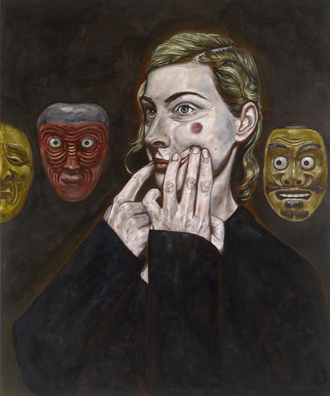 Weiterlesen
I play the oud! I play music I love… Interview with Eliot Bates
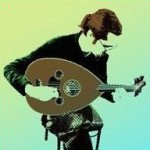 Eliot Bates is a widely traveled man, for whom the term musician is certainly not sufficient. In addition to practicing the oriental instrument of his choice, the Oud (a short-necked lute, which is believed to be the predecessor of the European lute that has been used since the Middle Ages), he is an expert in Anatolian music, deals with the technical side of the recording of traditional musics, teaches at various universities both in the U.S.A. and in Turkey and has published a book on Turkish music at Oxford University Press. Since “Baalstorm, Sing Omega”, Bates also supports Current 93 live and in the studio. His work for the webzine Dancecult.net should not be seen as contradictory but as complementary, true to William Blake’s dictum “Without contraries there is no progression”.
As most of our readers may not know much about the instruments you play, could you introduce them to us? The latest Current 93 booklet mentions Oud, Bendir and Erbane.
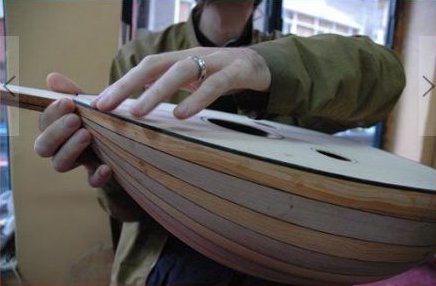
The oud is an 11-stringed fretless lute that is played through much of the Muslim world, from Morocco to Malaysia, Turkey to Kenya. We know that 4-stringed ouds were played in Baghdad in the 6th century, but the instrument has changed a bit since then. At first glance an oud looks a bit like a guitar, but the playing technique is totally different, as is the modal system (makam), rhythmic system (usul), and just about everything else!
The bendir and erbane are both frame drums. Bendirs are simply a wooden hoop with a stretched sheep or goat skin face, while the erbane, which is local to Eastern Turkey and Iran, adds hundreds of little rings on the inside of the hoop. Frame drums are one of the oldest music technologies in the world – they’ve been played through much of the world for over 10,000 years.
What can you tell us about your first encounter with Arabian/Eastern music? Did you learn about the instruments you play in school or music academy, or have you been to one of these countries in earlier years?
Growing up in Southern California I rarely heard actual music “from the East,” but did hear a lot of twentieth century classical music by Bartok, Prokofiev and other composers who used folk dance rhythms and quoted Eastern European and West Asian melodies. That was my mom’s favorite kind of music; she played it on the piano and also had these wonderful Gyorgy Sandor recordings she’d play on the old Garrard turntable. I played quite a bit of this on piano myself before I encountered non-European instruments.
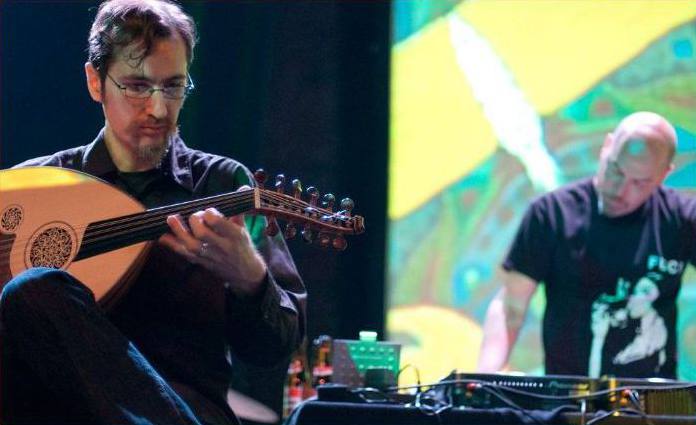 In the early 90s in California there were quite a lot of sitar and Hindustani classical music concerts, and I thought about learning that but it never quite happened. Instead, somewhat accidentally I stumbled into a new college ensemble called the UC Santa Barbara Middle Eastern Ensemble, and the director, Dr. Scott Marcus, persuaded me to pick up the oud. Everything began there, and quickly I sort of jumped in headfirst and got very involved with Arab then Turkish music. I went to Turkey in 93 to study oud with Necati Çelik and have been actively studying Ottoman art music, Anatolian folk music, the makam modal system, etc. since.
On your website you call yourself “ethnomusicologist, oud artist, audio engineer“. Are all three areas of your interest of similar importance for you? Do you see a huge difference between your academic interests and work and your performances as solo artist or with other projects?
I’ve been doing ethnomusicology, oud and audio engineering for 20 years now, and in some ways they feed into each other, but in other ways they’re very much compartmentalized. I had always tinkered with making home recordings, but after a string of disappointing experiences in California recording studios came to the conclusion that Californian rock engineers had no idea how to record oud or Middle Eastern percussion and I would need to do it myself. Once I got more into recording, I started to discover things that fed into my oud playing and creative process. My interest in recording also led me to do long-term ethnomusicological research into Istanbul’s recording studios, which I’m finishing a book about right now. I engineered a lot in Istanbul; I was a studio musician there as well, and I would not have been able to pull off the “academic/research” part of the project without that practical, hands-on experience.
But, for example, I have little interest in doing an ethnomusicological study of the oud, I’d rather just play it! I would never want to run a commercial recording studio again. When I create Kaderci recordings or do collaborations with other artists, I think of it as a form of research, but not research with the brain/mind. It’s research with the heart.
All I know about the origins of your music is that much of it derives from the tradition of arabic or other near east countries. This is, however, a large part of the world. Are you particularly interested in a certain country, or is your music influenced by several Turkish, Arabian and Persian styles?
I do listen to a lot of music from the region, but my focus has been on a few specific kinds of music from Turkey. In the 19th-20th century there was a romantic movement in Ottoman art music and numerous composers wrote stunning instrumental and vocal works – I’m thinking of Dede Efendi, Tanburi Cemil Bey, Ismail Hakkı Bey, and many others. This music works great on the oud automatically. This is the repertoire you learn if you go to a conservatory in Turkey, and most Turkish CDs of oud music are of this romantic period. I seriously studied this and continue to play it.
 More recently I’ve been more interested in rural Anatolian musics, particularly the secular songs (deyiş) of the Alevi religious order, and the bozlak song form of Central Anatolia which is really beautiful and very “deep.” Because of my research in Istanbul recording studios I also encountered a lot of what is called “arranged folk music.” Arrangement is a very creative practice in Turkey; arrangers have found ways of adapting folk songs for all kinds of ensembles, ranging from groups of folk instruments to a jazz, surf-rock or heavy metal band, and most interestingly, folk instruments on top of metal/rock. Any and all of this is stuff I might listen to (and for a few years I listened to nothing but recordings from Turkey), but how much influence this has on my own music varies from none at all, to a lot.
Do you prefer to play old songs that already exist, or rather own compositions of the basis of traditional structures?
It’s good to keep things diverse – playing old songs, creating new works, playing old C93 pieces, creating new pieces for C93. I’m creating new things all the time, including the Kaderci solo stuff, collaborative things, and I still make live sound sculptures and immersive environments from time to time.
People from western countries often find it difficult to distinguish between „classical“ and „folkloric“ music, if it comes from other parts of the world. Is such a differenciation important at all and can we draw an exact parting line between it? How much does it mean to you and do you see yourself more as a classical or a folk musician?
Part of the distinction is real and has to do with nothing other than the context in which the music is played. There were special forms of music created and performed in the Ottoman and Safavid Courts, and a lot of why we inherit the idea of Turkish or Persian “Classical Music” has to do with this. However, the term “classical” has been appropriated by music critics and record labels to include non-court music, which may have originally been 19th century popular songs from Istanbul that were most definitely not classical or courtly in any way. Likewise, “folkloric” musics are assumed to be local village traditions with the assumptions that there is no song “author” and that music hasn’t changed at all in the village. There’s been much critique of the whole folk concept, since we now know that some of this village music has very specific origins and known authors, and we’ve been able to document rapid changes to village folk musics as well.
I’m very suspicious of classical/folkloric distinctions made today, either in Turkey or elsewhere, since they tend to be noncritical attempts to either increase or decrease the perceived legitimacy of the music. One example: for whatever reasons, even though Alevi music from Central and Eastern Anatolia is composed, authored, is serious listening music and has an unbroken tradition of performance going back just as long as Ottoman court music, it’s not described as classical music but as folk music. Alevi musics are some of the only polyphonic musics from anywhere in that region and are exceedingly complex. Why is this folk rather than classical, when nightclub drinking songs from the 19th century are classical but not folk? It’s nonsensical!
Western listeners have a hard time differentiating musics for a number of reasons. Many people today encounter the music of Turkey via “world music” programming or record labels, and there’s a long history of exoticism and Orientalism that has skewed perceptions and provided a lot of misinformation. But this is not just in the West – in Turkey, there is a long history of “self-orientialization” and a lot of romanticization of Eastern Anatolian musics by urbanites who have no idea what the musics are or what they mean.
In terms of what I do, I play the oud! I play music I love…
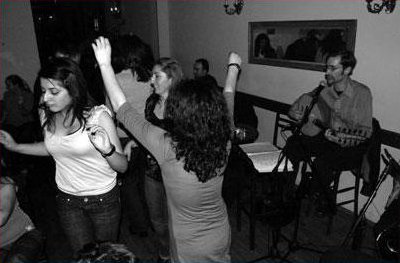 I found fotos from a performance you gave in an Istanbul bar. Have you played often in countries of the orient? What can you tell about the reactions of the people towards a “western” musician, who performs „eastern“ music?
I have a repertoire of some 500-600 works from Turkey/Egypt, and have done over 1000 performances of this, both solo and in small groups. When I was living in Istanbul and working in the studios I played out twice a week, one night at a meyhane (restaurant that serves alcohol), one night at a bar. It was a great experience, and I really like performing folk/light art music for Turkish audiences since they’re so passionately into it, dancing for hours, then crying and singing along when we’d sing melancholic songs. It’s totally different playing for American audiences; people listen silently and politely clap at the end of pieces. At least for this music, I prefer the Turkish way!
In terms of reactions, of course there’s the novelty factor of an American singing Turkish music, we were on TV, in newspapers, etc. That eventually wears off, and some people who regularly attended our Istanbul shows would start to actively comment on, criticize and correct our performances. They’d take my lyrics book in the middle of the show and cross off lines they thought were inaccurate and put other lyrics in there, and even debate with each other about precisely how to best correct a wrong verse. I loved this – it was an amazing learning experience. A couple of fans would make us compilation CDs with every known recording of a particular song we played, so we could better “copy” the “correct” recordings. People realized we genuinely loved the music and had respect for it, so there was a certain degree of respect for us based on that. This is what we experienced and what we overheard, but you’d have to ask Savaş, Ergül, Cevdet, Mehmet, Tülay, Mustafa and the many others who regularly came to our shows, they might tell you something different…
In recent years the orient has often been associated with violence and instability. You took part in a talk about “Music of Conflict and Reconciliation: The War in Iraq/Post-9/11 World“. What can you tell us about your experiences there?
The most disturbing thing that emerged in this symposium was the extent to which music has been used as a weapon of war or torture, mainly by US military forces, in both the first and second Iraq wars.
Would you say your music is (also) an attempt to reconcile orient and occident?
Not at all! If anything, my oud playing is an attempt to reconcile my left hand and right hand, my composing is an attempt to reconcile my atria and ventricles, and my engineering reconciles right and left brain… but you asked about orient/occident, and for me I wouldn’t know how to divide things that way. I think of it this way: Istanbul is a cosmopolitan and modern European city; it has its quirks, but so do Rome, Paris, Berlin, London, etc. It has always been connected to the rest of Europe to some extent, so when I was living there, I didn’t really have the sense that I was in a world that was radically different. I mean, of course, there are differences – the language is really different and quite tough to learn – but North Germanic languages and Mediterranean romance languages are similarly different.
In some of your works, jazz and break beat elements are included. Are these just several elements that you admire, or is there a particular „crossover“ concept behind it? When you make use of computers to create loops, do you feel that traditional instruments and modern technology can complement one another in a very fertile way?
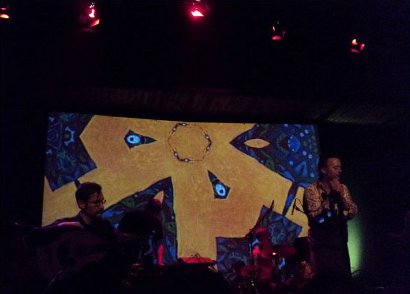 I hear songs, textures, timbres, and orchestrations in my head. I always have. It’s a matter of being able to take what’s in my head and turn it into actual sound. Nothing arises from any preconceived concept – I’ve tried that out and it never sounds good. So I have these abstract sonic ideas/feelings/soundings, and try to find resonances – something I can play on the oud or percussion, on my analog synths, field recordings of desert landscapes or construction sites, or digital signal processing applied to something from the archive of sound recordings I’ve made in the past. Sometimes a solo oud recording emerges, sometimes it’s a harsh industrial texture, sometimes something else.
One question is more or less obligatory: How did you came in contact with David Tibet from Current 93, who was it that discovered the other? Can you tell our readers a bit about your first meeting?
I’ve enjoyed Current and many other former World Serpent/Rough Trade artists since the late 80s. David and I “met” on myspace, actually – David had been listening to quite a bit of Coptic Christian oud music from Egypt, I had been listening to Current, after a couple brief exchanges I mentioned I’d be happy to contribute oud to Current or other projects, and an hour later David had emailed me 20 mp3s of Baby Dee piano/organ parts!
David Tibet and his music is popular in various underground scenes from Industrial to Folk to Psychedelic, although he may not see himself as a part of that. How much can you as a classical musician identify with such counter cultural phenomena? Did you also have a sort of teenage punk rock period or the like?
I played in a couple industrial bands in California in the 90s, the heavily-amplified-found-objects-with-screaming-vocals kind of industrial, that is. All the music I’m interested is intense in some way, although intense acoustic folk music and intense industrial noise obviously involve different techniques. One thing I love about Current is the way that it has changed over the years while keeping the same core intensity. Of course, most of that has to do with David, who is such a superb lyricist, performer and visionary, and attracts such interesting collaborators.
What are for you the main rewards when working within a band context?
Well, I don’t like performing solo, I got into oud playing and recording in a very social way, and find collaborations to be the most rewarding thing. Music is a form of communication. It’s not a language, but it’s communication, and there is simply nothing in the world like what happens when good musicians get together and interact, communicate. It’s really fulfilling for audiences, too, it fills a void that nothing else does, and I think that’s why in this “digital” age there is such a thriving economy for live bands. Such as Current…
What can you say about your experiences during Current 93′s “gentlemen“-tour (as Andrew Liles put it)?
Ha, the “gentlemen’s tour”! It went really well, the audiences were wonderful and yet quite different from each other. We played mainly material from the new albums (Honeysuckle Aeons, Baalstorm) and the Aleph/Black Ships trilogy, and I think that made for a really powerful and dynamic set. The local promoters in Athens, John and Anna at CTS Productions, are at the center of the local black metal scene, were gracious and did a great job reaching out to the community. The tour also saw the first Current show in Denmark, and that one went so well that there’s talk of a Scandinavian Current tour soon. We could call that one “the son of the gentleman’s tour”..
Thanks for the interview and all the best for your future endeavors.
Thank you!
(M.G./U.S.)
Fotos: Ladi Dell’aira & David Bauwens
Vibrant Demons: Andrew Liles als Zeichner der organischen Groteske
 Andrew Liles ist vor allem als Musiker bekannt. Schon in den 90ern ein unermüdlicher Bastler, machte er zunächst eher sporadisch mit minimalistischen Soundexperimenten von sich reden, meist in kleineren Auflagen auf CDr. Durch stetes Experimentieren vergrößerte sich sein Renommee recht bald, und die vor sechs Jahren erschienene „Vortex Vault“-Reihe ist aus der Geschichte soundorientierter Musik längst ebenso wenig wegzudenken wie seine Arbeiten mit Nurse With Wound, Liles’ wohl bekanntestem Nebenschauplatz zusammen mit Current 93. Die Zahl seiner musikalischen Kollaborationen ist groß, mit Daniel Menche, Bass Communion und Jean-Hervé Peron sind nur die bekanntesten genannt. Weiterlesen
MYRNINEREST: „Jhonn“, Uttered Babylon
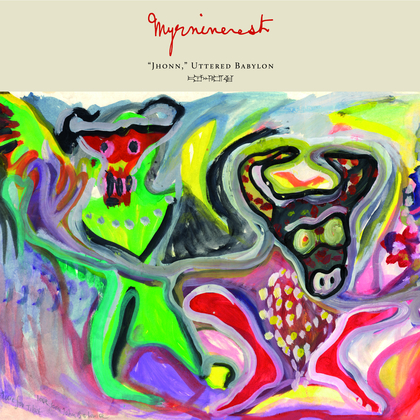 Myrninerest, unter dem Namen, den die Outsider-Künstlerin Madge Gill dem sie kreativ leitenden Geist gab, und der im Current 93-Kontext erstmals auf dem ersten Teil der „InmostLight“-Trilogie, der Maxi „Where the Long Shadows Fall“, 1995 auftaucht, veröffentlicht Tibet, der sich auf diesem Album wieder David Michael nennt, zusammen mit James Blackshaw ein Album, das im Booklet als „Hallucinatory Cartoon Channelling of my Love for Jhonn Balance“ beschrieben wird. Für Tibet gibt es kein Stillstehen, wobei vielleicht die Gründung dieses neuen Projekts Weiterlesen
“The Hip Killers Are Burning Like Devil”. Current 93 in der Berliner Volksbühne
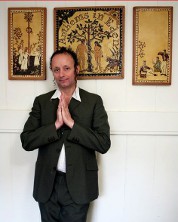 Über CURRENT 93, die nächstes Jahr ihr dreißigjähriges „Band“-Jubiläum feiern, ist viel geschrieben worden, und das zurecht. In den ganzen Jahren gab es für David Tibet nie größere Ruhephasen, einige Alben sind wichtige Wegmarken für Vieles: Für zeitgenössische Musik mit religiösem Überbau. Für schwer greifbare Stilkombinationen und überraschende Zusammenarbeiten. Für eine Gegenkultur, die sich nicht geniert und es vor allem auch schafft, etabliertere Kontexte für sich zu nutzen. Zu guter Letzt auch für eine Entwicklung, die man bei ganz unterschiedlichen Bands wahrnimmt, deren Anfänge in der Zeit um 1980 liegen Weiterlesen
CURRENT 93: Honeysuckle Æons
 Das Nichtstillstehenkönnen oder –wollen David Tibets – letztes Jahr sagte er in einem Interview, das wir mit ihm führten: „Ich habe immer den Eindruck, dass ich weiter und weiter rennen muss, mich weiter bewegen muss, weiter aufnehmen und schreiben muss“ – spiegelt sich auch in der Anzahl der Veröffentlichungen der letzten Jahre wider: Hatte sich eine Zeitlang ein Dreijahresrhythmus zwischen den Hauptwerken herauskristallisiert, erschienen seit 2009 jährlich reguläre Studioaufnahmen. Weiterlesen
ANDREW LILES: Muldjewangk, Morgawr & Other Monsters
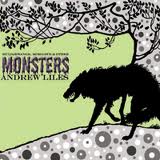 Die Kryptozoologie ist eine Art Parawissenschaft, die sich im Schatten des Hochbetriebes unserer Wissensfabriken eine kleine Nische gesichert hat. In ihrem Wesen oft spekulativ, versucht sie höchst interessanten Fragen auf den Grund zu gehen. Wie viele unentdeckte Tierarten mag es wohl auf unserem Planeten geben, und wird man sie jemals alle entdecken? Wie groß war die Fauna vergangener naturgeschichtlicher Epochen, über die man nur Bruchstücke weiß? Und welche Tiere waren eigentlich die Urbilder der vielen Fabelwesen, die die Mythen aller Kulturen bevölkern? Weiterlesen
ANDREW LILES: Mind Mangled Trip Monster
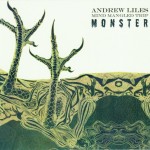 Schaut man sich den Output des in Brighton lebenden Liles an, kann man meinen, er sei ein Besessener: Kaum ein Monat vergeht, in dem er nicht solo oder in Zusammenarbeit mit anderen etwas veröffentlicht, dabei scheint er Serielles zu schätzen (man denke etwa an die archivarische „Vortex Vault“-Reihe). Einige von Liles Veröffentlichungen zeigen zudem, wie sehr er an der (Zusammen-)Arbeit mit Sängern interessiert ist (u.a. steuerten Ernesto Tomasini, Rose Mc Dowall, Karl Blake oder Danielle Dax Vocals zu Liles’ Veröffentlichungen bei). Am kohärentesten und konsequentesten gelang dies bislang auf der Femme Fatale-Inszenierung „No Birds Do Sing“ mit Diana Rogerson. Weiterlesen