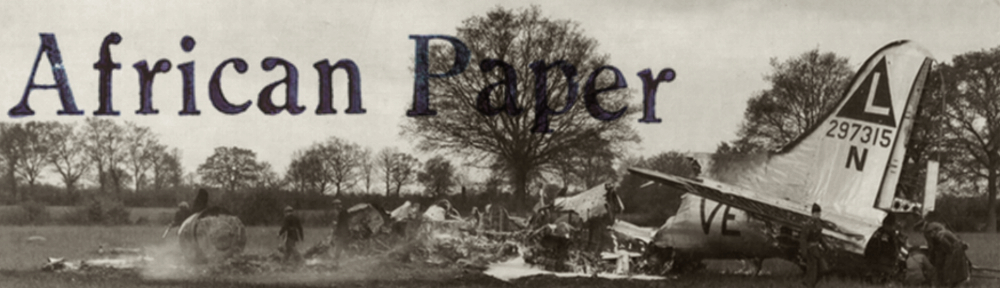
 Die Wiener Aktionisten und insbesondere Rudolf Schwarzkogler haben einen nicht unerheblichen Einfluss auf verschiedenste Industrialgenerationen gehabt. So (re)produzierte Steven Stapleton (ob intendiert oder nicht) den Mythos von Schwarzkoglers vermeintlicher Autokastration. Die Performances von COUM Transmissions wären ohne die Vorarbeit der Wiener Gruppe undenkbar gewesen. Dass oftmals der Bezug bei weniger inspirierten Künstlern ein nur oberflächlicher zu sein scheint, der eher schmückendes Beiwerk denn ernsthafte Auseinandersetzung ist, daran kranken weite Teile der Subkultur. Weiterlesen
Archiv des Autors: Michael
ELECTRIC SEWER AGE: In Final Phase
 In meiner Rezension zu „The Ape of Naples“, die gleichzeitig (auch) eine Art Nachruf auf Jhonn Balance war, schrieb ich, dass Trauer oftmals etwas Egoistisches ist, man darüber betrübt sei, nicht mehr in den Genuss weiterer künstlerischer Werke der Verstorbenen zu kommen. Dabei wurde das 2005 bekannt gegebene Ende Coils durch die postumen Veröffentlichungen verzögert. Nach Sleazys Ableben hat das alles nun eine endgültige, eine finale Note und man sucht verzweifelt nach noch ungehörten und unerhörten Stücken. Weiterlesen
A lot of what I do is based on feeling. An interview with Timothy Renner
Since we last spoke so many things have happened. Maybe we could start with the most striking development: The resurrection of Stone Breath. If I remember correctly you said that working on the reissues contributed to the idea of bringing Stone Breath back to life. Can you say a few words about how it all started (again)?
It was more organic than mercenary. The reissues definitely contributed to our resurrection of Stone Breath, but they were only one factor. Before the reissues had been completed, Prydwyn and I had finished a small Stone Breath ep, “The Holly Crown.” Prydwyn and I had never stopped working on music together – we were working on material with the Forest Beggars and he had worked on some Crow Tongue material – but when I started writing acoustic music again, music that wasn’t rhythm-centered like Crow Tongue was – everything pointed to Stone Breath. The songs were there. The harmonies were there. The people were there. The only thing that was keeping it from being Stone Breath was ME. Prydwyn, Sarada, and I recorded “The Shepherdess and the Bone-White Bird” – I felt it was a strong album, a proper comeback, and most of all, I felt it was a Stone Breath album.
A lot of what I do is based on feeling. Feelings don’t translate well and they don’t always follow waking logic, but they are important to me. If I feel something isn’t “right,” I just won’t do it. I have done this before to the detriment of my career and popularity – but it is the only way I know how to live. The songs we were recording: they felt like Stone Breath. There was no real reason not to call it Stone Breath.
 I guess, Crow Tongue is now a project of the past. Are there any unreleased recordings?
If there comes a time when I am working on material that sounds and feels like Crow Tongue again, I would call it Crow Tongue. We never really ended the project so much as circumstances attracted out attention elsewhere (mutually). There are a few unreleased recordings, I think. There was a more electronic album that we were working on. Some of those songs got reworked for my “Undeath” solo project.
In Crow Tongue you played a number of unusual handmade instruments, for instance the Lowebow, a “fretless double-necked electric cigarbox guitar”. Are you self-taught in such skills, and what makes it appealing for you to build and play such instruments?
Well, I didn’t build the Lowebow – those are made by John Lowe in Tennessee. I just played one on “ghost eye seeker.” I like homemade instruments because there are no formal, set rules established for playing them. No expectations. You just grab them and start making music. It is very freeing and interesting. I do enjoy building instruments too – but I think I am better at modifying them – making banjos sound like guimbris, guitars sound like sitars, etc, etc.
I got the impression that one thing you liked about Crow Tongue was that you and Æ Hoskin were not living too far apart and so you could practice and play regularly. Is that also the reason that you now have a – as you put it – “local” line up for Stone Breath?
I definitely enjoy having local folks to bounce ideas off of – and to have regular practices where the music evolves. It is less lonely and it pushes me as a musician.
Let’s talk about the new recordings. I must say that “The Aetheric Lamp” is at the moment my favourite Stone Breath-album and I think in a just world “The Coming Fires” would be the hit single from the album. What can you tell us about this album? How did you get into contact with Carin Wagner Sloan again? To what extent does your approach and your concept differ from that on “The Shepherdess And The Bone-White Bird”?
Carin is one of my wife’s best friends – and has been since Iditarod toured with Stone Breath many years ago. I always loved her voice. I remember sitting with Prydwyn, watching Iditarod and him saying to me “We have to get her to sing with us” – to which I agreed, of course.
Carin got married and had her first child around the same time my wife and I had our twins. I think it took some years of being a mother before she was ready to make music again. We talked about it a little bit and I sent her some songs (material from “The Night Birds Psalm”) – then she came to record. She was full of ideas and 100% ready when she arrived. I am overjoyed with what she did with Stone Breath. She never heard “The Coming Fires” before she got here to record though – I just threw that one at her when she got here – and she nailed it. First or second take, I believe. She sang that with such power every instrument in the room was ringing from sympathetic vibration. It was amazing.
“The Ætheric Lamp” was, for the most part, improvised music over a framework. It was like side B of “The Shepherdess…” in that aspect – it really extended from that. Eastern scales and improvisation. We were listening to a lot of Persian classical music, as opposed to solo oud/vocal works (which informed “The Shepherdess of the Fiery Wheels”); so I guess that’s why there are a lot more instruments and different textures to the music.
On the album the idea of opposites (“beautiful and terrible”, “horrible and wonderful”, in the end “Springtime flowers burst again beneath the sky’s red tongue”) seems to play an important role. Do you feel that such contrasts are always linked?
One of my friends once told me that all of my music was about darkness versus light, in one way or another. I never thought of it too much before he said that – but lanterns, moons, stars, flames, etc etc – always in my songs. I suppose this all comes from nature – the idea that opposites are somehow connected: life comes from death. Light from darkness. etc. I often try to write in layers of meaning, though I am not always successful, but I think this too lends itself to dealing with opposites and contrast.
You are just about to release another new Stone Breath-album, “The Night Bird’s Psalm”. What can you tell us about it concerning concept, composition etc.?
“The Night Birds Psalm” actually began before “The Ætheric Lamp” – we worked on them at the same time. I had an idea to write an album of somewhat shorter, more personal songs – a bit like the first two albums – but to record it with the new, expanded band and put everything I had learned over the years into the songs. It’s quite different from “…Lamp,” but I am equally proud of both albums.
 One characteristic of your work is that you sometimes revisit songs. On the new album there’ll be a new version of “Ephrata Sacred Heart”. When do you feel that there may be the right time to do a reinterpretation?
There will be a mini-album called, “Who is Listening?” that has new versions of songs from the first and second album (as done by the new, full band) as well as a reworking of “Sixteen Hooves” from Crow Tongue.
Usually, I will go back to a song if I feel there was something there that I didn’t quite capture – or there was a theme I didn’t explore deeply enough – or perhaps I think I can make the music better. With “Who is Listening?” I just thought it would be interesting for people to hear the new folks play some of the very old songs.
Were The Forest Beggars a one-off or are there going to be other recordings?
I am not in control of The Forest Beggars. They make Marian devotional music. I would say that there will be more Forest Beggars material in the future. Any more Marian material I write will be given to the Forest Beggars. They are not a commercial concern. The “Virgo, Mater, Domina” material was begun almost decade before it was released. We decided to release it with Stone Breath’s “Shepherdess…” CD because they were both devoted to Mary and because we felt it was a good way to introduce the Forest Beggars to the world. Obviously, there are some voices and sounds associated with the Forest Beggars that will be familiar to people who listen to Stone Breath – but officially, Forest Beggars have an anonymous membership. That membership is different from Stone Breath.
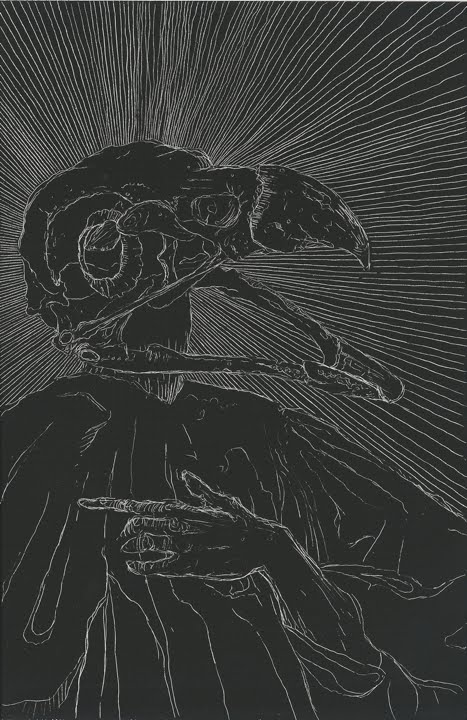
On your blog you show several drawings from your forthcoming art book “Undead”. How would you describe the atmosphere and the main motifs of the book and which are your latest plans for the publication?
It is to be called “Undeath.” It will be an art book along with a solo album (with many guests). The art is a series of drawings I did of ghosts, angels, and other strange beings. It began as a way to get myself drawing again on a regular basis – and soon turned into a very extensive series. At some point I started recording this album of dark, spooky music – I call it drone-folk just as a shorthand reference, but it’s weirder and a bit more experimental than I think that makes it sound. I thought the album and the art would go well together. I believe it is going to be released on Crucial Blast (or a subsidiary) in the first part of 2012. I am hoping to have some gallery shows associated with these drawings, but we will see.
I think the way music is perceived is often influenced by where people come from and in what “scenes” or subcultures they are located. I was wondering how Stone Breath is seen in or near the place where you live.
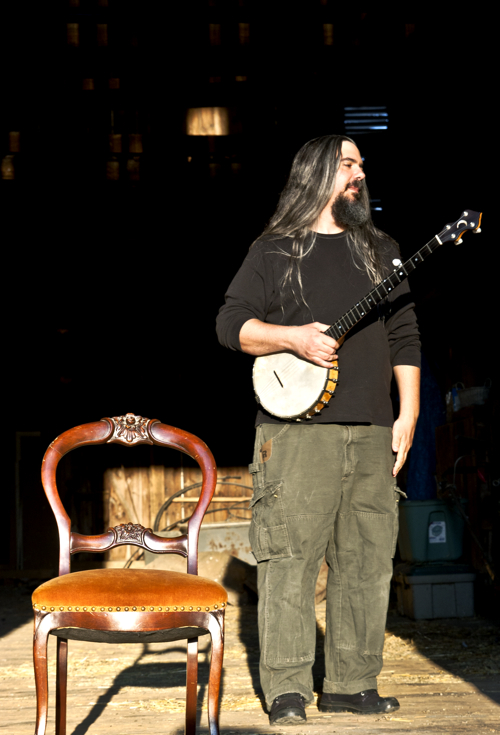
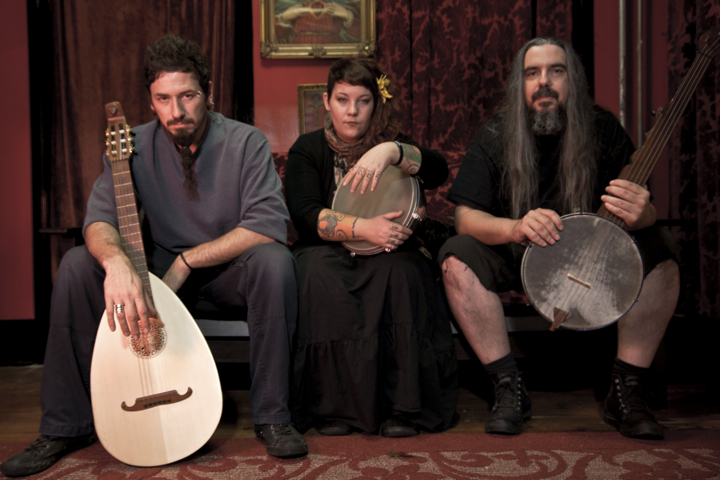
I think we just worked in obscurity for a long, long time. People who knew me, heard the music and I suppose they thought, “well, that’s just Timothy’s thing.” Stone Breath played more in New York, New England, and on the West Coast than we ever did locally. After Don joined the band; well, he is a fantastic guitarist and is known as such in the area. More people have started to notice us, locally. Then when Brooke joined as well – she and Don are much better with talking about the band and letting people know we are here. I think I am getting better with that too – now that there is a local, practicing band.
I think maybe time has caught up with us as well – people are perhaps more open to creative music. They are searching for something a bit different. So, I hear the name spoken here and there now whereas I NEVER heard it before. That’s very nice for me to hear.
When we last spoke you told me that for various reasons you had never felt as a part of weird folk. Do you nevertheless feel some kind of pride that Jeanette Leech dedicated a chapter to Stone Breath, The Iditarod and In Gowan Ring in her story of acid and psychedelic folk?
 Absolutely. That chapter was recognition that we didn’t often receive elsewhere. When the whole acid/psych/freak/weird/whatever folk thing got somewhat hip and popular, we were completely left out of that. I think, in some ways, we were seen as “old.” Not new and hip. We never dressed like the bands that got more popular and signed to big indie labels or major labels. We never had the right clothes or the right haircuts. We never did anything with an ironic wink to it – we just did what we loved. We never had money for press agents and booking agents wouldn’t give us the time of day.
So, the chapter in “Seasons They Change” – it was good for our hearts. When Jeanette talks about how much she likes Stone Breath – when the person who quite literally wrote the book on this music picks your album as one of her favorites – there is a very touching kind of recognition there. It makes up for so many times we got passed over or forgotten or ignored.
This is a question that addresses you as somebody running an independent label. How much harder has it become over the last couple of years to run Dark Holler and Hand / Eye? Have there been any major disappointments recently?
It has become very difficult. Small labels are folding left and right. We have had to cut corners and cut costs and release fewer albums in smaller quantities. Everything has changed. We have moved, somewhat, to a patron-based system. Those that support us, tend to always support us. We tend to sell everything we release to a smaller group of patrons as opposed to a few things to lots of people.
As far as disappointments go – the economy is the economy and there is little we can do to change that. The only thing we can do to try to combat the thieves who illegally upload/download our music is to try to make interesting packaging that people will want. Again, there’s not too much we can do but try to inform people that stealing really hurts independent artists and labels in a vastly disproportionate way to large labels. No, the only real disappointment of late has been from a lathe-cut record manufacturer, PolyCut – who we contracted to make a 10” record for us. They never made the record and they kept our money. In times like these, for a supposedly indie-friendly manufacturer to do that to a small label – it is crushing.
You mean the “Who is Listening”-ep. How difficult make such things surviving as a band?
It really hurt us. We usually depend on one release to somewhat fund the next. With no refund and no product to sell, it’s as if we just burned a pile of money. We have nothing to show for our work.
You have released albums by a number of other artists on Hand/Eye, for instance you gave Sarah June a good start for her debut. Do you still follow her activities after she’s now bit more popular in the indie music community or are you disappointed that she released her second album on another label (on your website you write that “if you’re not ready to promise us a second album, don’t send us anything”)?
Certain other labels were using Hand/Eye for artist research and development. It is MUCH harder to break an artist with their first album than it is to swoop in and grab them for their second album. So, because of these things, it has made us very cautious about working with new people. It’s a shame, because I felt I was pretty good at finding new and interesting artists – but I’m not really looking anymore. Between me and my close friends – we can make enough music to fill the entire release schedule. I don’t need to seek out other artists. Stone Breath and the Trees Community are the biggest selling things on the label, by some measure. The label isn’t hurt by me filling up the release schedule with Stone Breath – quite the opposite.
What can you tell us about the background of the “Full Moon” series you released on Hand/Eye with artists such as In Gowan Ring, Wooden Wand or David Tibet? I remember that you mentioned some plans of starting a new subscription series. Has this been shelved?
Neddal Ayad (the does, Desolation Singers) and I came up with that series. We thought it would be an interesting way to combine some lesser known artists with others that were more well known. It was fun to do, but a lot of work every month.
We sometimes kick around the idea of a new subscription series. We were going to do it with Crow Tongue – basically each one would be another artist remixing Crow Tongue or Crow Tongue remixing another artist – but it was not to be. We would probably do a different series if we could get enough subscribers.
 About two years ago we spoke to B’ee after a Birch Book-concert and he mentioned there were plans to release an extended version of “Full Flower Moon”. Is this still going to happen?
Bee and I can’t seem to figure this out. I believe he wants it to come out in May – and I just can’t set my schedule that precisely. Everything I do is delayed it seems. I hope we get it worked out because it is a fantastic collection of songs.
Unfortunately, terms like “independent” and “do it yourself” have turned into stereotypes over the years, though their essence might be more necessary than ever. Is it important for you to be as independent as possible from the fashions of the mainstream?
I don’t try to consciously avoid the mainstream. I think modern pop culture, for the most part, is such that what gets allowed in the mainstream is often weak, watered down and safe. We are independent because no one is giving us serious offers – so far, every contract that has been put in front of Stone Breath, whether to license background acoustic tracks for sports betting apps or to score minor independent films, has not been very beneficial to the band. We do it ourselves because no one will do it for us. It’s good. It keeps us working.
Is working on a farm (I’m not sure if it is your own one…) also something you see in that context, and do you regard family life, growing food and music as part of one greater whole? I’m also wondering how much you are affected by the current economic crisis/crises (if that is not too private a question). Would you say that your way of life and living gives you a certain amount of autonomy?
Working on my father’s farm is just one of many things I have done. As my father has aged and I have moved further away, we do less and less work there. It was just a very small farm – we only raised food for ourselves really – and a few head of cattle. Nothing too much. What growing up on the farm gave me, though, was a feel for the seasons and for the power of planting seeds and the importance of working with your hands.
I think my entire life has lead me to where I am. Growing up on the farm, being introduced to the DIY/punk thing in my teens, zine culture, experimental music, folk music and the folk process… all of these things and more have combined to make me who I am. I take odd jobs and part time jobs – in order to be able to live the way I want and make art and music – but there may come a time when I need to take another full time job and I know in my heart that this makes me no less an artist or musician. I don’t know how autonomous I am in reality. Probably nowhere near as much as I would like.
Some years ago you said that one of your great destinies is to consiliate your animist heart with your Christian mind. Do you still follow this quest, and would you probably say that you have come a bit closer to the goal?
I don’t know. I have had to make a separation in my mind between American protestant Christianity (which is quite alien to me) and Catholicism (which is the religion in which I was raised). I am now careful about the word “Christian” because, in the United States at least, it is a term thrown about by people who are often not very Christ-like in my view.
Animism is always in my heart. Always has been – before I put a name to it. I don’t see it in opposition to Marian Catholicism – in the big, strange, fractal picture of spirit and nature sometimes faith and doubt walk hand in hand. Sometimes a Jewish man must be born of a Virgin and hung on a tree in order to make us remember nature’s place in the order of things. Other times, angels must take the form of trees. Forests become cathedrals. It is all spun together in a great silver web.
There are many motifs in your songwriting that refer to what is usually called the pagan aspects of Christianity, and your self description (“Stone Breath is part of the earth. Metal, hair, wood, skin, flesh, leaf, breath, and bone make our songs. We sing hymns to God and the green wood.“) also goes in such a direction. Would you say that these aspects generally go too short in today’s mainstream religiousness?
I think so, yes. Folk traditions – most of which were of pagan origin and then incorporated into Christianity – have been weeded out in some attempt to get to a rigid “pure” Christianity – which is a bit of a joke. In losing these things, we have lost something essential. Something beautiful.
Are you interested in early Christianity, and if yes, which scriptures do you regard as indispensable for your own spiritual development?
I guess it depends on one’s geographical and chronological definition of “early.” I used to be very interested in apocryphal stories and gnostic texts and so forth. The “desert fathers” – all of that. I suppose I still am, but later writings like Hildegard of Bingen’s and the saint’s visions on the life of Mary – and writings by and about the Celtic saints – these hold more interest for me of late. I understand them better. But books on synchronicity or nature writing – in some ways these can be just as powerful and moving to me, spiritually.
You have released some music on the Australian label Camera Obscura and you also designed “The Serotonin Ronin II”-compilation for it. The passing of its owner Tony Dale is surely a great loss for the folk scene and for alternative music in general. Have you been close friends, and what can you tell us about the time of your cooperation?
 Tony and Camera Obscura are greatly missed. He was a supporter and a friend. He was the first person to show that kind of faith in Stone Breath. I was always proud that “Songs of Moonlight and Rain” was the first Camera Obscura release. Tony released a lot of great records and helped so many bands along the way. I don’t think you will find anyone who will say anything but great words about Tony, and many will say it better than I can. He was an amazing man and a blessing to underground music.
Is there anything you’d like to add or a question that you would have liked to hear?
Only my contact information: revelator@lostgospel.org
(M.G. & U.S.)
DEMDIKE STARE: Elemental (Parts 1 & 2)
 In den letzten Jahren ist vermehrt deutlich geworden, dass Hybride oftmals origeneller sind als die, die sich sklavisch an mosaische Reinheitsgebote innerhalb engster Gattungs- und Genregrenzen halten. Das nordenglische Duo Demdike Stare ist schon allein aufgrund der Herkunft der beiden Beteiligten ein Vertreter ersterer Gruppe: Miles Whittaker kommt vom Techno (er ist u.a. ein Teil von den ebenfalls auf Modern Love veröffentlichenden Pendle Coven), Sean Canty – der bei dem archivarischen Label Finders Keepers angestellt ist und einmal als einer der bekanntesten Plattensammler Manchesters apostrophiert wurde – vom Hip Hop. Weiterlesen
V.A.: John Barleycorn Reborn: Rebirth
 Vor einigen Jahren veröffentlichten das Downloadportal Woven Wheat Whispers und das Label Cold Spring die Doppel-CD „John Barleycorn Reborn”. Unter dem Titel des vielfach interpretierten Traditionals „John Barleycorn” (ver)sammelten sich eine Vielzahl britischer Künstler, die alle ihr eigenes Folkidiom sprachen und die mit verschiedenen Ansätzen und unterschiedlichen Mitteln versuchten, Folk für das 21. Jahrhundert relevant zu machen. Dabei reichte die Bandbreite zwar von eher experimentelleren bis hin zu sehr der Tradition verpflichteten Tracks, wobei dennoch deutlich wurde, dass alle Beteiligten weitaus Weiterlesen
STONE BREATH: The Aetheric Lamp
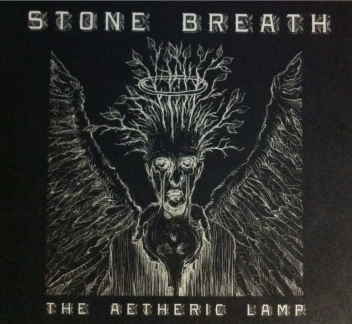 Kurz nach der Split-LP mit Language of Light folgt das den gleichen Titel tragende Vollzeitalbum des neuen, „lokalen“ Lineups von Stone Breath. Schon die drei Stücke auf dem Splitalbum machten deutlich, dass der Klang dieser Band durch das Zusammenspiel von Banjo und Akustikgitarre dynamisch(er) wirkt. Thematisch präsentiert Renner hier erneut (s)eine theologische Vision, die durch Zeilen wie „O the thunder has a voice if we have ears to hear it/Although the sound will terrify if we have reason to fear it“ („The Voice of the Thunder“) oder „Rise upon the altars of living breath or upon the shrapest horns of death“ stellvertretend Weiterlesen
OTHON: Impermanence
 Drei Jahre nachdem Othon Mataragas sein Debüt „Digital Angel“ auf David Tibets Label Durtro veröffentlichte, folgt mit „Impermanence“ der schon länger angekündigte Nachfolger. Zwei der Sänger, die das Debüt entscheidend (mit)prägten – Ernesto Tomasini und Marc Almond -, spielen auch auf dem neuen Album eine zentrale Rolle. Vor einigen Monaten kündige Othon an, dass seine künftigen Werke alle unter dem Motto „PAN muzik“ stünden, dabei äußerte er sich jüngst in einem Interview mit dem Magazin Exeunt zum gewählten Begriff: „Pan transcends all styles and limitations. Weiterlesen
Alle Stammbäume der Menschheit laufen, wenn man in der Zeit zurück geht, irgendwo zusammen: Interview mit Weyes Blood
 Seit einiger Zeit hat dunkle Musik auch wieder in Medien jenseits subkultureller Engstirnigkeit Akzeptanz gefunden. Die Gründe dafür sind sicher unterschiedlicher Natur: Aber wahrscheinlich sollte man es nicht als Widerspiegelung der düsteren Zeiten, in denen wir leben, deuten, sondern viel eher damit erklären, dass inzwischen eine Reihe Künstler mit anderer musikalischer Sozialisation und aus den verschiedensten Genres einer angestaubten und mumifizierten Gattung eine Frischzellenkur verpasst haben. Weiterlesen
STONE BREATH/MIKE SEED WITH THE LANGUAGE OF LIGHT: The Aetheric Lamp
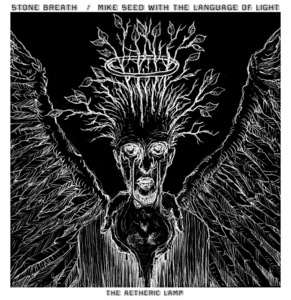 „Before the many, there were the few“ schreibt Jeanette Leech in Seasons They Change – ihrer Abhandlung über die Geschichte des Acid- und Psychedelicfolk – im Kapitel, das sich den drei Bands widmet, die lange bevor Free/Weird/Wyrdfolk ein Thema der Mainstreammedien werden sollte, Musik spielten, die von der Incredible String Band und Comus beeinflusst war, nämlich Stone Breath, In Gowan Ring und The Iditarod. B’ee hat sich nach vier Alben als In Gowan Ring mit Birch Book stärker am amerikanischen Folk orientiert und drei hervorragende Alben veröffentlicht, wird aber immer noch primär von denen rezipiert, Weiterlesen
DAVID LYNCH: Crazy Clown Time
 Wenn es einem Künstler gelungen ist, dass sein Name adjektivisch gebraucht wird, so bedeutet das mindestens zweierlei: eine Kanonisierung einerseits und andererseits, dass sein Werk gewisse inhaltlich-ästhetisch-gestalterische Konstanten aufweist, wiederkehrende Motiv(komplex)e. Beispiele wären etwa Kafka (der Mensch ist nicht zu durchschauenden Mächten ausgesetzt), Lovecraft (der Mensch ist einem nicht zu beherrschenden kosmischen Grauen ausgesetzt), Cronenberg (der Mensch in seiner Fleischlichkeit), Thomas Bernhard (Invektive in rhythmisch-musikalischer Sprache). Auch Lynch hat schon lange seinen Platz Weiterlesen
MIGHTY SPHINCTER: Rare Unearthed Videos
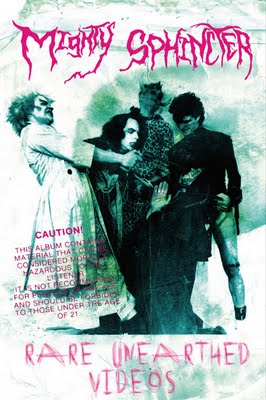 Gothic hatte schon von Anbeginn immer etwas Theatralisches und auf die Vergangenheit Gerichtetes: Man denke etwa an die Auftritte von Bauhaus, die durch die Beleuchtung an expressionistisches Kino erinnerten – nicht zufällig war die erste Veröffentlichung der Band eine (augenzwinkernde) Hommage an Bela Lugosi. Nik Fiend wirkte dank Schminke ganz so, als habe George A. Romero Mephisto auf Leinwand bannen wollen, die Nebelexzesse der Sisters of Mercy sind legendär und die Virgin Prunes, die natürlich nie in das enge (Genre-)Korsett passten, waren vielleicht die theatralischste all der Bands der frühen 80er. Weiterlesen
PREMATURE EJACULATION: Dead Whorse Riddles
 Die sechzehn auf zwei CDs verteilten Tracks von „Dead Whorse Riddles“ (das Schachtelwort aus „whore“ und „horse“ verwendete Williams später als Titeltrack („Whorse“) als auch als Albumnamen („The Whorse’s Mouth“)) knüpfen an die bisher veröffentlichten Alben der „Lost Recordings“-Serie an, transzendieren sie aber auch zugleich: „The Nature of Pain“ schafft es durch das Zusammenspiel von Loops eine intensive Klangfläche zu erzeugen, in der die einzelnen Elemente sich zu einem Gesamten verdichten, das wie so oft bei Williams eine Atmosphäre der latenten Bedrohung ausstrahlt. Weiterlesen
SIMON FINN – Through Stones
 Es mag diejenigen, die etwas mit Simon Finns Werk und Werdegang vertraut sind, nicht überraschen, dass er den Titel des Abschlusstracks „A Bad Plan is Better Than None“ in den Linernotes als Motto seiner Lebensphilosophie bezeichnet, denn in den Jahrzehnten seit Finn sein Debüt „Pass the Distance“ veröffentlichte, schien er zumindest partiell vom Pech verfolgt zu sein: Wegen unklarer Rechtslage verschwand das Album kurz nach Erscheinen recht schnell wieder aus den Regalen, seiner Tätigkeit als Biobauer in Kanada, wo er seit Anfang der 70er lebte, kam er zu einem Zeitpunkt nach, als die Zeit noch nicht reif Weiterlesen
SAMARIS: Hljóma Þú
 Der Name Island hat eine ungeheure Resonanzkraft, die der archaischen Landschaft – welch Paradox: Ist doch das geringe Alter der Insel der Grund für die unberechenbare(n) Natur(gewalten) – geschuldet ist und wie bei keinem anderen Land der Welt wird eben diese Landschaft evoziert, um die Musik isländischer Künstler zu erklären und beschreiben. Zwei Beispiele, die ohne langes Suchen exemplarisch für den Konnex Natur-Kultur (Musik) Weiterlesen
CONTROLLED BLEEDING: Odes to Bubbler
 Inmitten der akzellerierenden und ins Absurde gesteigerten Genreneuschöpfungen sollte man sich der Einfachheit halber vielleicht darauf einigen, dass es auf der einen Seite die Bands gibt, denen man Konsequenz bescheinigen kann, deren Werk sich nur minimal(st) ändert und die die an sie gestellten Erwartungen niemals enttäuschen – die Kehrseite ist eine oftmals große Vorhersehbarkeit, die ermüdend sein kann, von vielen Hörern aber sehr geschätzt wird (der Hörer möchte „nicht in seiner Ruhe gestört sein […] sondern [ist] schon glücklich […], wenn er die alte, vertraute Landschaft wiedersieht“ (Bataille)). Weiterlesen
THE HAXAN CLOAK: s/t
 Es ist erfreulich, wenn in einer Zeit der zunehmenden Irrelevanz von Musik noch Labels existieren, die eine konsequente Labelpolitik betreiben. Dabei haben es Aurora Borealis in den letzten Jahren geschafft, im Spannungsfeld zwischen Akustik und Elektronik, zwischen Song und Experiment Bands zu veröffentlichen, die alle eine eigene, oftmals sehr originelle Handschrift tragen. Ich habe schon an anderer Stelle darauf hingewiesen, dass eine Reihe der Künstler dieses Labels versuchen, einen locus horribilis zu erschaffen, Musik machen, die den Hörer in Regionen versetzen soll, in denen nichts (mehr) sicher zu sein scheint, Weiterlesen
KINIT HER – Interview
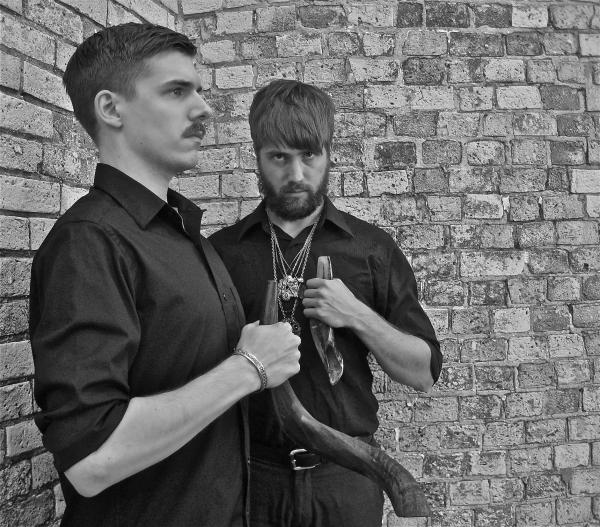 KINIT HER, das aus Nathaniel Ritter und Troy Schafer bestehende Duo, hat innerhalb kurzer Zeit mit einer Reihe von Veröffentlichungen ein originelles Werk erschaffen, das sich aus einem reichhaltigen Fundus teils randständiger Musik speist und das im Spannungsfeld zwischen Song und Experiment, Folk und rituellen Klängen steht. Titel und Artwork verorten KINIT HER in Regionen jenseits der Ratio und Nüchternheit. Seit kurzen besteht neben KINIT HER das neue Projekt WREATHES, das stärker auf den Song fokussiert ist. Weiterlesen
WRAITHS: Dust in Our Mouths
 „I will show you fear in a handful of dust“ T.S. Eliot
„The nethermost caverns […] are not for the fathoming of eyes that see; for their marvels are strange and terrific. […] Great holes secretly are digged where earth’s pores ought to suffice, and things have learnt to walk that ought to crawl.” H.P. Lovecraft
Labels wie Aurora Borealis sind die Heimstatt von Grenzgängern, die enge Genrekorsetts zu Recht sprengen: MENACE RUINE, WOLFMANGLER, BURIAL HEX, KTL oder SYLVESTER ANFANG II sind nur ein paar der Bands und Projekte, die in den letzten Jahren dort Alben veröffentlicht haben. Weiterlesen
HERRMANN KOPP: Under A Demon’s Mask
 Eine Neuerung gibt es bei dem kleinen Label aus Braunschweig: Fanden sich in der Vergangenheit neben dem Hausprojekt HAUS ARAFNA oder dessen Ableger/Ergänzung NOVEMBER NÖVELET nur Künstler, die auf Galakthorrö debütierten, wird nun zum ersten Mal ein Musiker veröffentlicht, der eine (musikalische) Vergangenheit hat: Herrmann Kopp, der am bekanntesten für seine Soundtracks zu den beiden Buttgereit-Filme “Nekromantik“ und “Der Todesking“ sein dürfte, hat ein Album aufgenommen, das von seiner elektrischen Geige dominiert wird, die teilweise klingt, als würde Hermann Kopp ein Theremin spielen. Weiterlesen