
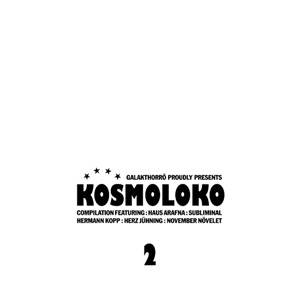
 Die vor acht Jahren erschienene Zusammenstellung „Kosmoloko“ gab einen Überblick über die auf dem kleinen Label aus Braunschweig veröffentlichenden Künstler. Von den 2004 daran teilnehmenden Projekten fehlen auf dem Nachfolger zwei: Zum einen Karl Runau, der schon damals eine lange Phase des Schweigens hinter sich hatte, zum anderen Maska Genetik, das russische, schon vor einigen Jahren aufgelöste Einmannprojekt, dessen Schwanengesang „Strada“ von Galakthorrö 2011 posthum veröffentlicht wurde. Weiterlesen
Archiv des Autors: Michael
HIRSUTE PURSUIT: Tighten That Muscle Ring
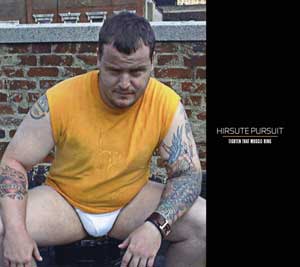 Die schwule Subkultur der Bären betont eine archaische, scheinbar ungebrochene, will sagen: nicht feminisierte Maskulinität durch (Über-)Betonung gewisser Verhaltensweisen und Äußerlichkeiten (starke Behaarung etc.), wobei natürlich jede Subkultur nur durch Abgrenzung existieren kann und will und daher auch von Symbolen und Codes abhängig ist, die die betreffenden Personen als zugehörig oder nicht zugehörig ausweisen. Weiterlesen
AMBER ASYLUM: Live In Wroclaw
 Seit Gründung Mitte der 90er spielen Amber Asylum eine Musik, bei der Streicher ins Zentrum gerückt werden und die man vielleicht in Ermangelung eines besseren Begriffs als eine Form der Kammermusik bezeichnen könnte, was m. E. besser passt als das Label Postrock, das die Band selbst auf ihrer Website verwendet und das oft auch in Rezensionen fällt – was sicher auch damit zu tun haben mag, dass Kris T. Force, die seit Anbeginn die einzige Konstante im Lineup ist, in den letzten Jahren auch u.a. durch ihre Arbeit mit Steve von Till in einem Postmetal/Postrock-Kontext rezipiert und verortet wird. Weiterlesen
Es gab ein klares Moment von manischer Aggression: Ein Interview mit Comus
 Eine der vielleicht größten Sensationen der letzten Jahre war die Rückkehr von “legendary British pagan acid folk rock act “ (Aquarius Records) Comus, deren Debütalbum “First Utterance” vielleicht das originellste und irritierendste Zeugnis des Acid Folks war, das auch nach vier Jahrzehnten nichts an Vitalität, Virilität und Virtuosität eingebüßt hat. Weiterlesen
There was a distinct sense of manic aggression: An interview with Comus
 In Jeanette Leechs Seasons they change she writes that “the music industry […]did not provide the infrastructure to support [First Utterance]“. Do you think that if that infrastructure had been provided, Comus might have continued?
Yes possibly, but there were other issues. In those days, and up until the end of the eighties, the British music scene was very fad/fashion orientated. These fads lasted a few years and dominated almost completely. The beat boom gave way to psychedelia which spawned many unusual bands such as Comus; and psychedelia was eclipsed by glam rock. Audiences for Comus began to dwindle steadily in number and so did the gigs. We were forced to disband. We also embarked on the Malgaard suite, which in retrospect was rather indulgent. and not the best way to go at the time and alienated us even more from the audiences‘ changing fashion trends.
Many writers pointed out the individuality of “First Utterance” and emphasized the great difference between your music and what was mainstream back then. What do you think were the main elements that made your music appear so strange and sometimes irritating to many listeners?
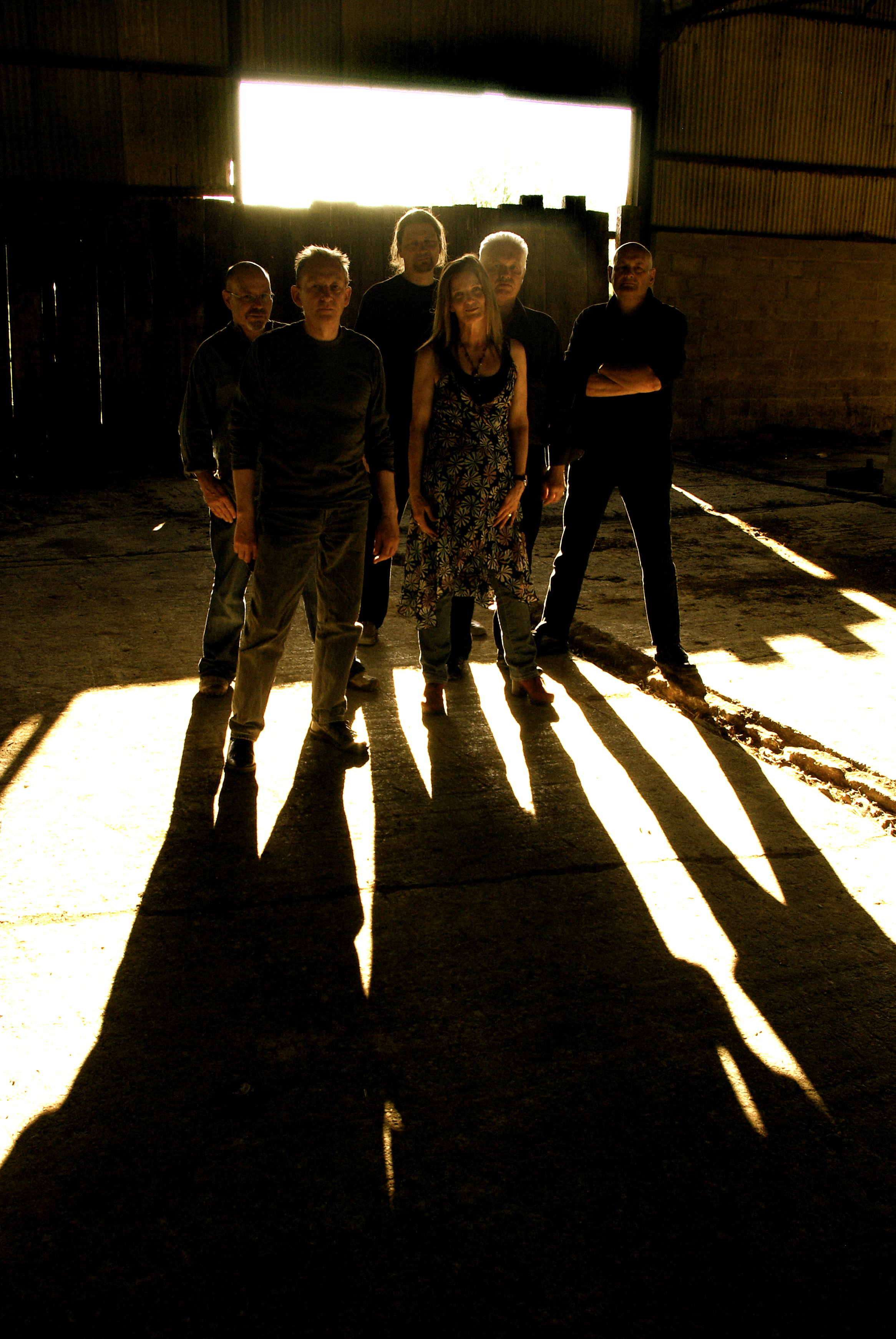 There was a distinct sense of manic aggression and exploration of dark psychotic elements. This was completely the opposite direction from the mainstream which was very love and peace orientated. No acoustic band had generated such power and edgy darkness, which is why so many death metal fans like us. It must have been difficult for audiences subjected to The Incredible String Band and Donovan to come to terms with Comus. Comus owes more in its sound to classical music than rock n‘ roll.
You stated in the past that you rather disliked the naive love and peace-attitude of the hippies in the 60ies. Looking back, would you say it was important for you to have something that could serve as a foil?
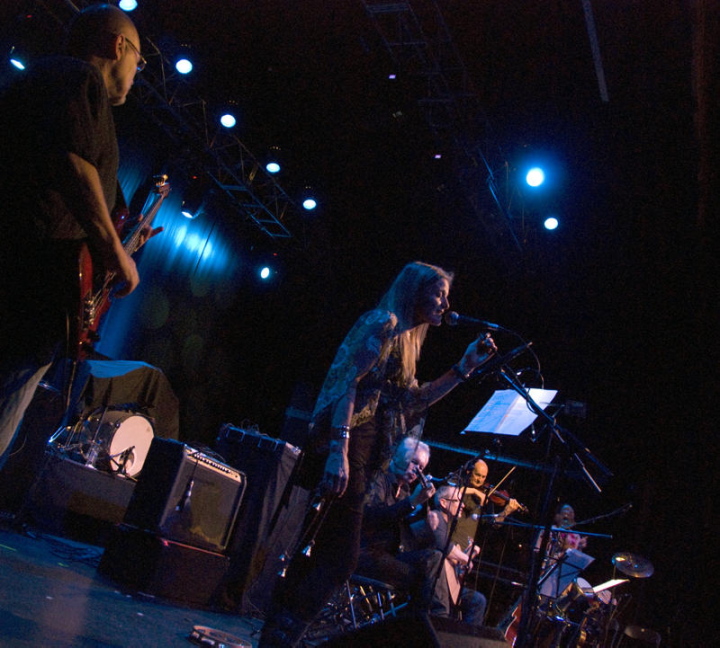 I disliked the weakness and wimpy soperfic qualities which seemed very flakey for what was supposed to be a revolution and, due to the lack of principle, the hippie movement became very hypocritical and contradictory and decadent. I wanted to react and shake the scene up a bit.
Today, many people have an ambivalent view of the hippie culture. On the one hand, there is this stereotype of the worldly innocent goody, which is often smiled at. On they other hand, we tend to see this culture as the spearhead of a generation that achieved a lot of important changes. Has your view on the whole hippie thing become a bit more positive over the years?
There is always some positive but, I think it is summed up by Timothy Leary’s famous remark -’Turn on, tune in and drop out‘ – which is the road to failure.Itshould have read ‚Turn on, tune in and drop IN‘. If you are going to change the world peacefully, you can only do it from the inside and there was a lack of clear philosophy which meant that the movement degenerated and became every man for himself.
In an interview in The Wire you said that at the beginning just after you had started again after all those years it was “like a tribute band learning other people’s stuff“. When did that change? Was it a rather gradual process or something sudden that made you think: “These are our songs“?
It was a bizarre period adjusting to who we were 40 years before. It was a slow and gradual assimilation and relating, which came the more we got better at playing the songs. I finally felt more identification with Comus when I started writing and came up with Out of the Coma.
In the booklet of “Out Of The Coma“ you reflect on the writing process and that you were thinking what topics might be suitable for the resurrected Comus. Would you say that compared to the past your approach to songs and topics is more reflected?
 Yes, I have to think about it a lot more. It is more objective and not all my songs are suitable for Comus. There is a wealth of subjects for Comus and I am gradually unearthing them.
Was your decision to combine the past and the present on “Out of the Coma“ by including the only known recording of “The Malgaard Suite“ (and thus resurrect this “lost“ half of your unreleased second album) made to show some kind of continuity?
Yes, and to show what might have followed First Utterance if Malgard had not been rejected by our record company. A very different direction to what actually followed.
A few years ago, you did a concert and live recording with the Swedish group Piu, better known as Lisa o Piu. How did this cooperation come about and how do you estimate the music of this quite young band?
I was asked to play at Melloclub in Stockholm by the promoter Stefan Dimle and he said he had found a backing band for the gigs. When I arrived I was introduced to them. We had a rehearsal and the gigs went well. It was astonishing and rather surreal. I was hearing Comus but every time I turned round during the gig – it was all the wrong people!
With regard to music, lyrics and artwork “Out of the coma“ explicitly alludes to “First Utterance“. Looking back at “To keep from crying“ with the benefit of hindsight, is there anything on it which you find worth remembering?
Yes – one of the songs. I would like to do Down like a Movie Star if possible.
The new songs, especially “Out of the coma“ and “The Sacrifice“, have incredibly ferocious moments and your music is and was often extremely physical. To what extent is this physical aspect important for you now?
 Yes – I put out a lot of energy for some one who performs sitting down. I think that the rage and energy of Comus is as important as ever and what excites an audience.
In some of the (old and new) songs, a mystified nature is presented as an archaic realm of fear and violence, but also with an aspect of powerful vitality. Would you say that it’s the real world (or a “more real” world), that you show in songs like “Diana”?
It is certainly a part of reality. Most songs are about sex and love, which is also a part of life. If you watch the news on television, I often feel that Comus have more resonance with what is going on.
In contrast to this, many people would probably describe natural or mythological settings as “otherworldly”. Your songs, however, hardly show any escapist or idyllic side, which is mostly associated with otherworldliness. Is this important to you?
I think fantasy can be used to illustrate real emotions. Otherworldly settings are used but the stories involve all the same human pain and stress. I was much influenced, when Comus first began by Lord of the Rings.
You contributed music to several films by Canadian director Lindsay Shonteff. What can you tell us about these films and the role of your music in them? Was there a certain common ground which made your music especially fitting to the atmosphere of the films?
We auditioned for Permissive and Lindsay loved our music, which is why he continued to ask us to do more film scores.He just thought us as suitable for the soundtracks.
The story telling of your songs and the visual imagery of the lyrics can easily evoke cinematic associations. Were you cineasts in the time of your first album, and would you even say that your work and its attitude fitted more to the films of this era that to its music?
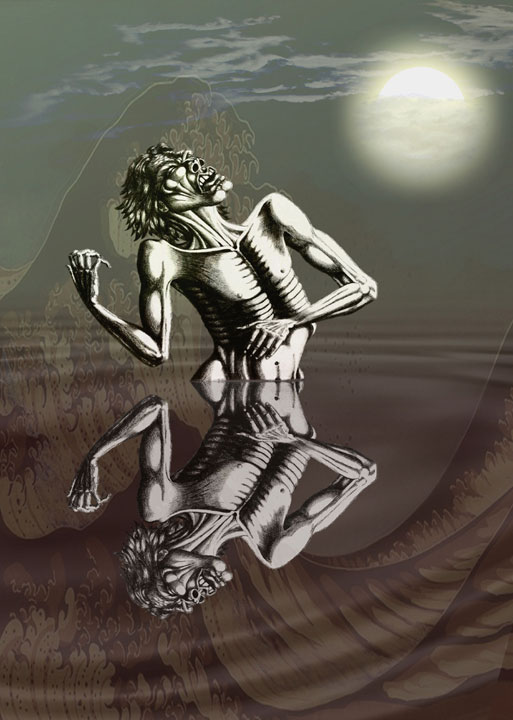 As I said, the influence of Lord of the Rings and European myth, John Milton all seemed to provide dramatic visual imagery. Now that Lord of the Rings has been filmed, I think Peter Jackson did a very good job in bringing the images to life. I suppose that reading the books and some sci-fi authors just filled my head with visual imagery. I was at art college and my own illustration work, used for the sleeves, all filled my head with the visions described in words.
Are there plans to record more new material in the (near) future?
Yes – there are two new songs waiting to be rehearsed and two more on the way. We shall start rehearsing Samurai and Slave soon. Samurai is about the loss of a great warrior culture and Slave is about sex slave trafficing – a very topical subject. Both these subjects will bring Comus a little more up to date.
When did you first become aware that there were quite a number of artists that seem to have drawn inspiration from “First Utterance“?
Around 2000 David Tibet of Current 93 got in touch with me and told me they had recorded a version of Diana and Mikael Ackerfeldt of Opeth is a major fan and largely responsible for Comus reforming.
This question is slightly related to the last one. In the decades that all of you pursued different paths, were there any genres/artists that you found particularly appealing and which you felt were as vital and adventurous (to use some rather vague terms) as Comus had been when they started?
Perhaps nort as adventurous but, as a singer/songwriter I admired Joni Michell in the 70s. There were others- I remember first hearing Mechanik Destructive Commando by Magma and feeling an affinity with Comus. I really listened to a lot since then – Peter Gabriel, Talking Heads,Miles Davis and a lot of modern classical music such as John Adams, John Tavener, Gorecki and Arvo Part etc.
In recent years we noticed a number of (more or less folk related) artists, who did some singular works in the years around 1970, and then after some decades of either silence or unsteadiness started a second period of creativity. Besides Comus I think of Vashti Bunyan or Simon Finn, who all woke up out of a musical “coma” some years ago. Do you regard these comebacks as incidental phenomena, or do you see a certain connection between the last decade and the years back then?
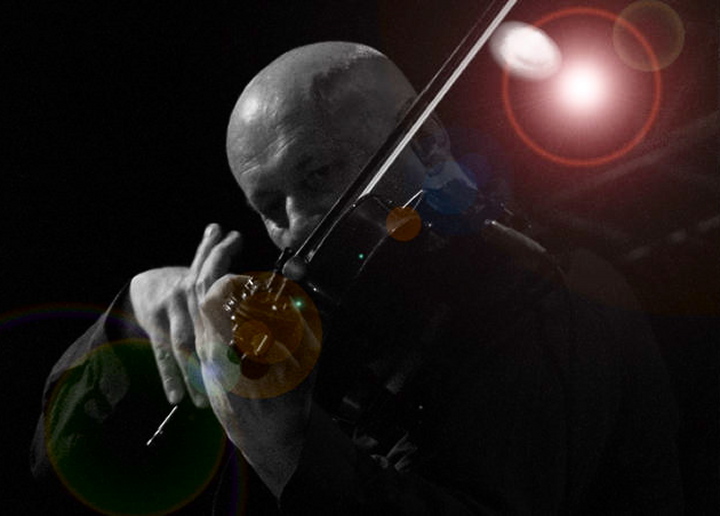 There is a massive general come-back of bands and artists from the late sixties, both in Europe and the States. Every week I hear of another band reforming from the early seventies. It seems to be working and they obviously, like Comus, are reaching a new generation. Bands of our era are much revered. Agism has completely disappeared in rock music – something that I never thought would happen.
Some of your songs (and your band name, of course) drew inspiration from literature. Is that still something that is of relevance for you?
Less than before- it’s hard to find new material to read. Film and television can be a big stimulus because it is more random.
(M.G., U.S.)
Photos: HMV Formum: Zoe Plummer; band: Hannah Meadows
VORTEX: Rockdrill
 Das deutsche Einmannprojekt Vortex hat von Anfang an stark konzeptionell gearbeitet: Setzte man sich auf dem ersten Album „Phanopoeia“ mit Ezra Pound, il miglior fabbro, auseinander – der Name des Projekts verweist natürlich auf den von Pound so getauften Vortizismus -, untermalte die CD, die dem Band „Stille“ von Birthe Klementowski beilag, das Grauen der Massentötung psychisch Kranker in der Landesheilanstalt Hadamar während der Jahre 1941-45. Auf „Rockdrill“ geht es um die Anfang des 20. Jahrhunderts von Jacob Epstein (u..a bekannt für sein Grabmal für Oscar Wilde) geschaffene Skulptur gleichen Namens, die eine Art Weiterlesen
V.A.: Werewolf Songs. Music Inspired by Swedish Folklore
 Als Regissuer Joe Dante über die Genese seines Films The Howling und die damit verbundenen Recherchen sprach, wies er darauf hin, dass ein Großteil „unseres Wissens über Werwölfe aus dem Kino kommt […], dass sich dieses Wissen aber ganz erheblich von den alten Mythen unterscheidet.“ Nach einer Renaissance des Werwolfs im Kino der 80er/90er, an deren Beginn Dantes Film anzusiedeln ist, steht er inzwischen wieder im Schatten des Vampirs, sei es in der anämisch-keuschen „Twilight“-Reihe oder in der sexuell aufgeladenen und blutigen HBO-Serie True Blood. In beiden Fällen spielen die auftretenden Werwölfe vergleichen mit den teils blassen, teils extrem virilen Blutsaugern nur eine sekundäre Rolle. Weiterlesen
BRUME / OUBLIER ET MOURIR: A Year To Live
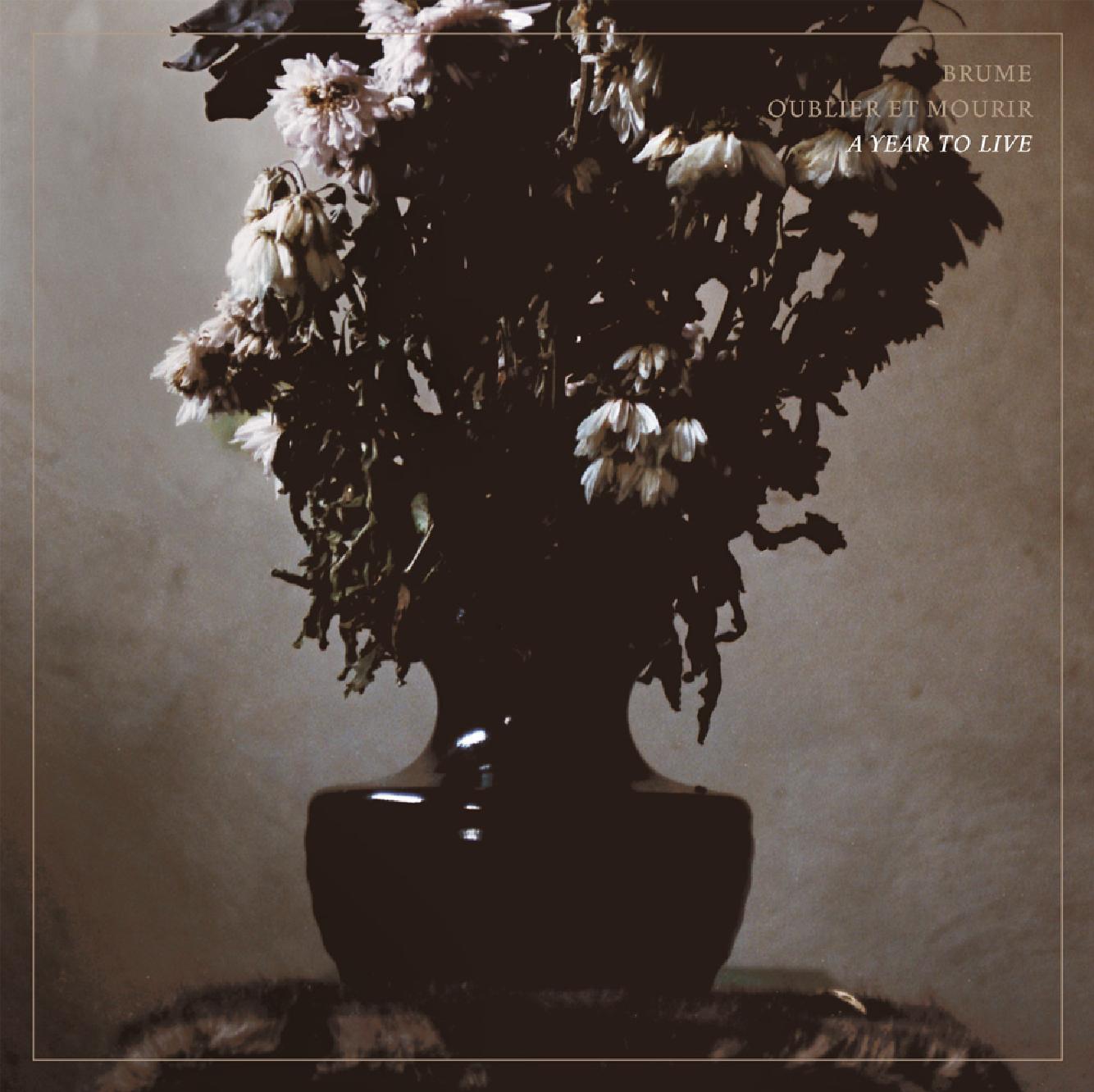 2003 arbeiteten Anemone Tube und Christian Renou (Brume) erstmals auf „Transference“ zusammen und erschafften ein Album, das trotz unterschwellig unruhiger Momente eine (be)ruhige(nde) Melancholie ausstrahlte. „A Year to Live“ knüpft bedingt an dieses Album an, geht allerdings auch darüber hinaus. Wer die rabiaten und (sowohl musikalisch als auch konzeptionell) dichten, auf Feldaufnahmen basierenden letzten Anemone Tube-Aufnahmen im Kopf hat, wird nachvollziehen können, warum mit Oublier Et Mourir ein anderer Projektname gewählt wurde, denn schon das Eröffnungsstück „A New Weiterlesen
COMUS: Out Of The Coma
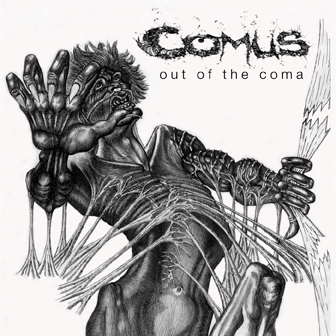 Wenige Bands haben solch singuläre Alben erschaffen wie Comus mit dem 1971 veröffentlichten „First Utterance“. Den Einfluss, den dieses Album auf eine Reihe auch für diese Publikation wichtige Künstler hatte, ist an vielen Stellen dokumentiert. Die Themen, an denen sich Comus auf „First Utterance“ abarbeiteten, standen im scharfen Kontrast zu der „love and peace“-Attitüde der Hippies. Dass Comus Ende der 60er u.a. mit Velvet Underground-Covern begannen, passt schon, denn auch die New Yorker hassten die Weiterlesen
KORPSES KATATONIK: Œvres Complètes
 Bevor Michael DeWitt sein Ritualprojekt Zero Kama begann, dessen Widerhall und Kultstatus sicher sowohl mit der Musik als auch mit dem gewählten Instrumentarium zu tun hat, existierte für etwa ein Jahr von 1982 bis 1983 Korpses Katatonik, ein Projekt, das ganz offensichtlich visuell-musikalisch-thematisch an der ersten Industrialgeneration orientiert war. Von den in den Linernotes als Einfluss genannten Bands (Throbbing Gristle, Cabaret Voltaire, SPK) waren es sicher die letztgenannten, die eine entscheidende konzeptionelle Orientierung boten. Die Weiterlesen
LUNAR ABYSS DEUS ORGANUM: Atanimonni Aitnatsbus
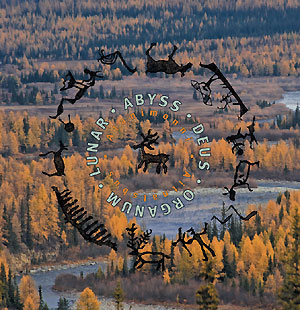 Auf einem weiteren Teil der „Substantia Innominata“-Reihe spielt das in St. Petersburg ansässige Einmannprojekt von Evgeny Savenko mit dem etwas prätentiösen Namen eine unglaublich variantenreiche Musik, die mit dem Genrebegriff Drone nur unzureichend beschrieben ist, zu viel passiert auf den zwei langen Tracks dieser 10′. Im Artwork spiegelt sich die musikalische Ausrichtung des Projekts wider, das seine Musik auf Facebook als „drone therapy & ritual ambient“ beschreibt: Eine von einem Fluss durchzogene Landschaft, dazu indigene Zeichnungen von Tieren, Menschen und Kanus. „Atanimonni“ wird von Glocken Weiterlesen
LAIBACH: Iron Sky The Original Film Soundtrack
 Auf „Iron Sky“ einzugehen würde den Rahmen dieser Rezension sprengen, zudem Sujet (Jahrzehnte nach Ende des Zweiten Weltkriegs machen sich die auf der dunklen Seite des Mondes in einer hakenkreuzförmigen Festung lebenden Nazis mit ihren Flugscheiben auf den Weg zur Erde), die Enstehungsgeschichte (die Rolle des Crowdfundings etc.) und der erhebliche Nerdfaktor intensiv an anderen Stellen und zwar nicht nur von subkulturellen Medien beleuchtet worden sind. Außerdem hat ein Autor dieses Magazins den Film besprochen. Von meiner Seite nur soviel: Iron Sky funktioniert eher als Weiterlesen
V.A.: Drone-Mind // Mind Drone Volume 1: Ubewoet / Halo Manash / Jarl / B°Tong
 Wie kaum ein anderes hat das in Bremen ansässige Label Drone über die Jahre konsequent Musik veröffentlicht, die in all ihrer Heterogenität immer eine Widerspiegelung des Namens war, egal ob auf der nach einhundert Veröffentlichungen eingestellten 7′-Serie, der 10′-Reihe „Substantia Innominata“ (von der es inzwischen auch schon 16 Veröffentlichunge gibt), oder aber auf der just begonnenen „Drone Mind // Mind Drone“-Serie im LP-Format. Das Konzept wurde diesmal leicht geändert, denn „Drone-Mind // Mind-Drone“ hat Compilationcharakter, nun teilen sich jeweils vier Künstler ein Album, wobei das Artwork jedes Mal von dem britischen Maler Pete Greening gestaltet wird. Weiterlesen
SPIRES THAT IN THE SUNSET RISE: Ancient Patience Wills it Again
 Selbst im Rahmen des Weird Folk waren (die nach einer Zeile aus einem Baudelairegedicht benannten) Spires That In The Sunset Rise etwas Besonderes, übertraf doch deren „weirdness“ die der meisten so apostrophierten Folkkünstler bei weitem. Das 2003 veröffentlichte selbstbetitelte Debüt enthielt eine Reihe die Grenze des Atonalen oft überschreitenden Folkminuaturen – auch nicht der übelst gesonnenste Hipsterjournalist hätte hier den drei bzw. später vier Schulfreundinnen aus Chicago den Vorwurf machen können, „Folkelfen“ zu sein, viel zu dissonant und widerspenstig waren die Klänge, die sie auf Tonträger bannten. Auch Weiterlesen
It’s Nice To Make Things. Ein Gespräch mit Liz Green
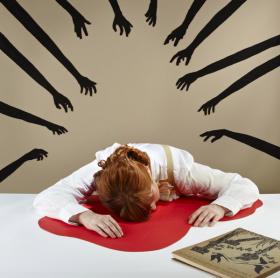 Wäre Liz Green ein halbes Jahrzehnt früher auf der medialen Bildfläche erschienen, dann wäre ihr Name sicher noch mehr durch aller Munde gegangen als es nun nach der Veröffentlichung ihres ersten Albums “O, Devotion!” der Fall ist. Damals nämlich hatten akustische Klänge folkloristischer Grundierung gerade Hochkonjunktur – vorzugsweise wenn sie über eine gewisse Schrägheit und ihre Erzeuger über einen deutlich erkennbaren Außenseitergestus verfügten. Von diesen Modephänomenen hätte sie nicht nur profitiert, sie hätte die ganze Bewegung auch bereichert. Zum einen, weil sie Engländerin ist, was in dem doch sehr amerikanisch geprägten Folk 2.0 selten war. Zum anderen aber auch, Weiterlesen
It’s Nice To Make Things. An Interview With Liz Green
Do you think the place where you grew up is any way responsible for the kind of music you play now?
Yes. That’s a good question. I grew up on the Wirral, which is a really small place in Britain surrounded on three sides by water.
I know the place because I spent some time there.
Oh, really?
In West Kirby.
Oh, why did you go there?
Actually I worked for about a year as an assistant teacher for German in West Kirby.
West Kirby Grammar School?
West Kirby Grammar School for Girls and Calday Grange on top of the hill.
Oh, that’s the school I went to. West Kirby…
When was that?
1994 to 2000.
That’s funny.
Were you there?
 Well, I started working there in the autumn of 1994 and stayed until summer 1995.
Oh wow. I was in first year of secondary school. Oh how cute (laughs). West Kirby is a funny place. And it’s quite special as well. The scenery is as a teenager pretty boring, you know, pretty dull.
I can imagine.
But Liverpool is really near. So you know I had these two bits of life. Where I’d be stuck at home on the Wirral. There’s not much. So I read a lot and I created a lot. I sat in my room a lot…thinking (laughs). And then I had this other bit of life where I started going into Liverpool, going out to rock clubs when I was about 14, 15 and having a kind of loud crazy life. Yeah, it definitely influenced the music.
When people talk about your music – and I remember you posting something from the Guardian on your website – they all seem to stress this vintage element. Are you happy with the tag?
Well, I mean, it does sound like that. You know the orchestration and my voice. And also they find it hard to pinpoint that. And to me it doesn’t sound like that and I’m not trying to sound like that. It’s just what comes out. I wasn’t in bands when I was growing up. I didn’t sing when I was growing up and I didn’t play the guitar when I was growing up. You know I digested a lot of music and a lot of books and a lot of information in other ways and one day it just came out and that’s what came out. I think it’s a kind of melting pot of all the things that have influenced me.
On our website there’s a review of your album and the authors that came to the reviewer’s mind when listening to your music were those that are sometimes associated with so-called Southern Gothic, Flannery O’ Connor and William Faulkner. Are they authors who interest you?
Well, I mean I like stories and I’m interested in Southern Gothic actually and there’s a story by Richard Brautigan. What’s it called? The gothic one. I like his writing. You know, I like the kind of ghostliness. I’m kind of fascinated by places that aren’t where you are. Everyone is, aren’t they? Because they’ve got this element of exoticism and you know America just seems to be this vast desert full of freak shows and Coney Island and Tom Waits is singing around the corner and Blues people walking down roads to me. So America is such a new country but all the myths that it’s created around it…That’s pretty impressive for something that’s just a couple of hundred years old.

Are there any English writers that you really like?
I like books. I read a lot. I can’t remember. Who is English?
Never mind.
I like all books. I can’t remember. I’ve read so much. But I do like foreign fiction. I like Hermann Hesse a lot, Dostojevski, they’re quite philosophical but Dostojevski in particular is quite funny. Oh, George Orwell. He’s amazing.
Today I spoke with a group of students about “1984″.
Wow. “1984″ is incredible. One of my favourite George Orwell ones is “Coming up for air”, which is about a middle-aged man living in a village with his wife and his kids and kind of lamenting his lost youth.
When I was about 16 I read a couple of Orwell books: “1984“, “Road to Wigan Pier“, “Down and out in Paris and London”. I remember that the end of 1984, when he finally loves Big Brother, I was petrified. There was no way out of it.
Yeah, there are similar themes in “Coming up for air”. I went to university to do an English degree. I love books so that was what I thought I should do but it turned out that I just liked reading books and researching but I wasn’t very good at writing the essays. I didn’t want to give it back in a kind of prescribed way. It came out in a different way. But while I was there I was really interested in the notion of the outsider in society. Everyone sometimes feels that there’s nobody else quite like them or that they’re invisible. So “Notes from the Underground” by Dostojevski and Ralph Ellison’s “Invisible Man“. This man sits in the basement beneath the towerblock and he siphons off the electricity. He has thousands of lightbulbs covering his room and I liked this idea of this quiet defiance.
 You’ve talked about the outsider and you being interested in that. You released two singles. Was that a kind of statement against downloading?
Actually we wanted to release a gramophone record but couldn’t find anybody to do it cheap enough. (laughs). That was the first thing we released. He is now my manager but back then we were just friends and we thought just for a laugh to put something out. A gramaphone record would have been good. It’s almost as if we didn’t want anyone to listen to it. Actually I think that 7′-singles are actually quite a nice format now. Music has become almost cheapened, well not cheapened but it has become so easily accessible now. CDs are kind of obsolete. If you give someone a 7′ or a record it has actually some kind of tactile value. You know it’s coming back. People are buying the vinyl record rather than the CDs. It’s nice to make things.
It’s nice to have them. If everything is accessible immediately it kind of loses its worth.
That’s the same with lot of society. We don’t need to save. We’ve got a credit card and nobody saves their money. The idea of doing limited runs of things that are special is great.
I mean somebody like Stephen [Burch, The Great Park, Woodland Recordings] does a great job.
Well, I used to be on a label called Humble Soul. We were doing exactly the same thing, my friend runs a label called Red Deer Club, they’re doing exactly the same thing. Everything we make is small runs of handmade loveliness. Yeah, it’s really important keeping it personal and special and collectable. It’s nice to collect these things. They’re of value not just because of the music. You know the person who made the music has printed the CD or made the artwork. It’s something extra.
If you’ve got a tetrabyte of music on your hard disc it totally decontextualizes the music.
(laughs) I still have all my CDs. I can’t get rid of them. And then I was making my CD even though all the things I had made up to then had been handmade, like handstitched. What scared me moving onto a bigger label was the fact that I would lose that – you know it’s impossible to maintain that much control over stuff. But I’m still trying to make little things to sell and what I wanted to do when we did the CD I made sure that it was on the card that I liked and I did the drawings for it even though they wanted to put my face on the front of it. I was like: No, that’s not gonna happen. I’ll give you some artwork and they were like: ok. They liked it. When I was doing the lyric booklet I made sure it had the things I liked when I buy a CD. I want the lyrics, I want a thank you-list. I like reading who they thank. I tried to make it with as much love as possible without actually handmaking it.
 When you recorded the songs for the CD I think you used some earlier material but you reworked it.
Yeah.
How did you decide to do it?
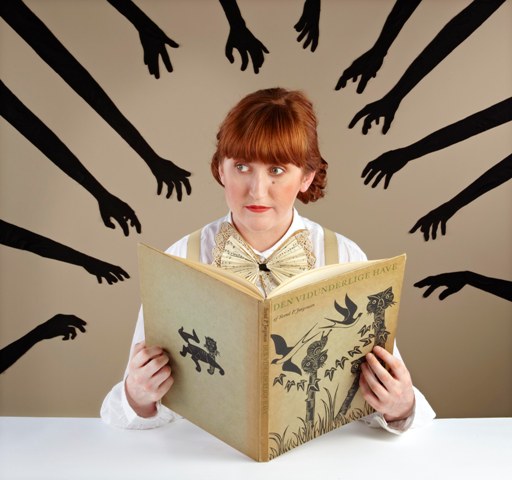
Well, it was a natural progression and the idea of the album as “O Devotion“ had been around for about three years and I tried to record it in many different forms and I almost had the tracklisting and the tracklisting changed very slightly in these three years. I knew that it had to have this almost chronological progression of the first songs that I made. That’s what I wanted to make. And even though by the time I recorded it I almost had enough songs to make another album, I still wanted to do the album first. When I played the songs in their original form, I could still imagine other things even though it was just me and my guitar. I had still these things going on in my head. I could see these images, hear sounds. I didn’t have a band. I didn’t know anybody who could play. I had this shadow puppet theatre and I used to cut out a tiny saxophonist and a little doublebass-shadow and a little piano shadow. So when I played songs I would introduce: here’s my tiny saxophonist and I would like you to imagine them playing with me. It’s the imagination and it helps. It all happened naturally. I made friends with these guys [who are in the band now] and we started playing music. It was natural that the people on the record are people I’m friends with and it didn’t feel forced. I could have made an acoustic album. I thought I might only get to make one album and I wanted something with longevity in it. Selfish as that is. Something to be remembered after I’m gone. But if that was the only thing then I wanted it to make it as well as possible. I think I did ok. (laughs)
What then would you say have people like you and Stephen in common?
I think we’d still be playing these songs even if nobody was listening. We’d still be doing exactly the same thing. We really love what we do. We have to do it. That’s what we have in common. Soul. A little bit of soul.
How did you both meet?
Me and Stephen met while playing gigs. We went to the same festival in Scotland and I saw him play and it blew me away. And he saw me play and the thing and we found each other when myspace was still going and I sent him a message after and he sent me the same message back. I organised gigs for him in Manchester and he organised gigs for me in Brighton. We expanded the circle. There’s a really good connection between Manchester and Brighton now. When he moved to Berlin he gave my CD to a friend who was booking shows in Germany and he started booking shows for me. And now I’m in Germany (laughs). So it’s all Stephen’s fault.
 What is the relationship between the British and American influences in your work?
I’ve never been good at analysing. People go: what about this? And I say: I just kind of did it. I’ve never really thought about it. The relationship? It’s not only American and British. I just happen to like American music. I don’t really like English folk music. I don’t know why. I like sea shanties. I don’t know what the relationship is. (laughs) That’s a really difficult question. That’s an essay question.
What was your favourite record store in Liverpool?
Probe and Harry Records. The guys in Probe used to…I was into American garage music and these guys used to pick out CDs for me. They said bring it back next week and exchange it if you don’t like it.
Is Probe still there?
Probe is. They’ve got my album (laughs). It’s really good that it’s still going. There are now very few independent ones.
Maybe one last question. I had talked with a friend about you some time ago and some time later I went to the station and bought a music magazine and there was this compilation album with Leonard Cohen covers and suddenly your name popped up again. What made you decide to use the piano as the main instrument for your version of “Sisters of Mercy“?
One thing is I’m a much better pianist than a guitarist. Well, maybe not better but I can work stuff out because I can see the notes. I don’t know what I’m doing on a guitar. I don’t know what the notes are called. But at least on the piano I can go C, D, E, F. Plus it’s very hard to cover a Leonard Cohen song. It’s more of a homage. You can’t really cover him. It’s impossible. And he does his on the guitar. So I just thought I do it on the piano. It was really nice because I chose that song because I like that song and it’s got quite easy chords. I had to learn it in about two days. When I phoned my mum, she’s a massive Leonard Cohen fan, and when I said that I was doing “Sisters of Mercy“ she was like “My favourite song“. And when I went home she showed me a book with his poetry that she had for ages, and in the back it there was writing when she was about twenty, she’d handwritten out all the lyrics to “Sisters of Mercy“ in the back of the book. That was really nice.
(M.G., U.S.)
CARTER TUTTI VOID: Transverse
 „Transverse“ ist die Aufnahme eines gemeinsamen Auftritts von Chris Carter, Cosey Fanni Tutti und Nik Void (Factory Floor) im Roundhouse in London anlässlich des Mute-Jubiläums im vergangenen Jahr und natürlich kann man den Auftritt durch den Altersunterschied der Beteiligten als ein Treffen der Generationen interpretieren und symbolisch hochstilisieren. Weiterlesen
VCMG: Ssss
 Dass in den Medien nach Bekanntwerden der Zusammenarbeit von Martin Gore und Vince Clarke schnell von einer „Sensation“ die Rede war, hatte (natürlich) erst einmal weniger mit der Musik als mit den Beteiligten, insbesondere ihrem Verhältnis zueinander zu tun und natürlich mit der enormen zeitlichen Distanz zwischen der (gemeinsamen) Arbeit am ersten Depeche Mode-Album und dem neuen Technoprojekt VCMG. In den dazwischen liegenden drei Dekaden haben Martin Gore und Vince Clarke mit durchaus unterschiedlichem Instrumentarium und einer fast gänzlich anderen Ästhetik elektronische Weiterlesen
PREMATURE EJACULATION: Part 3
 In den vergangenen Rezensionen zu Rozz Williams’ „Lost Recordings“ habe ich wiederholt darauf hingewiesen, dass die frühen SPK insbesondere ästhetisch-thematisch eine wichtige Rolle für ihn gespielt haben und dass Premature Ejaculation sich (durch Artwork, Tracktitel und Samples) immer wieder mit den Versehrungen des menschlichen Körpers (und Geistes) beschäftigt haben: Diesmal erinnert das das Cover zierende Bild einer Trepanation natürlich an das erste unter dem Namen System Planning Korporation veröffentlichte Album „Information Overload Unit“. Weiterlesen