
 Wenn man ein bisschen mit dem Werk Simon Balestrazzis vertraut ist und seine Arbeit verfolgt, kann man sich kaum vorstellen, dass er mal einen Tag lang nicht auf der Suche nach Sounds ist, sie im Studio bearbeitet und kollagiert, an seinen zum Teil eigens konzipierten Instrumenten bastelt oder mit Kollegen wahrscheinlich ganze Nächte hindurch jammt. Seit einigen Jahren ist es nicht ungewöhnlich, dass drei bis fünf seiner Longplayer pro Jahr herauskommen, seltener solo, häufiger von seinen zahlreichen Kollaborationen: Dream Weapon Ritual, DAIMON, A Sphere of Simple Green, Hidden Reverse und noch einige mehr. Weiterlesen
Archiv der Kategorie: Interviews
I don’t feel comfortable with the restrictions and rules of a tribe. Interview with Simon Balestrazzi
 If you are a bit familiar with the music of Simon Balestrazzi and follow his activities, you can hardly imagine a single day, in which he is not busy searching for sounds, processing and combining them in studio, tinkering on his partly self-designed instruments or jamming with colleagues all night long. For several years, it is not unusual for three to five of his Longplayer to come out in one year, more rarely solo, but often from his numerous collaborations: Dream Weapon Ritual, DAIMON, A Sphere of Simple Green, Hidden Reverse and even some more. Weiterlesen
There’s always been hints of apocalypse in our work: Ein Interview mit Nonconnah
 Das nach einem Ort in Tennessee benannte aus Zachary Corsa und Denny Wilkerson Corsa bestehende Duo Nonconnah spielt “Damaged hymns from the broken Mid-South”. Vorher hatten die beiden zahlreiche Tonträger unter dem Namen Lost Trail veröffentlicht, einem selbst so bezeichneten “ambient/drone/shoegaze project”. Musikalisch knüpft Nonconnah an das Vorgängerprojekt an: Feldaufnahmen, Samples, Giatarre und Drones werden zu einer Musik verdichtet, auf der das Dunkle und Mysteriöse, das sich im Klangbild, Artwork und in Tracktiteln widerspiegelt, (auch immer) ein Moment des Trostes enthält. Weiterlesen
There’s always been hints of apocalypse in our work: An interview with Nonconnah
 The duo Nonconnah, that consists of Zachary Corsa und Denny Wilkerson Corsa and that is named after a place in Tennessee, plays “Damaged hymns from the broken Mid-South”. Before that the two of them released quite a number of records as the “ambient/drone/shoegaze project” Lost Trail. Musically there is a continuiation: Field recordings, samples, guitars and drones are condensed into music in which the dark and mysterious elements which are reflected in the sound, artwork and track titles (also) contain a moment of consolation.
Correct me if I’m wrong but I got the impression that you changed your name from Lost Trail to Nonconnah when you moved from North Carolina to Tennessee. Was this the main reason? What are for you the similarities and the differences between Nonconnah and Lost Trail?
It’s less that we’ve changed our name and more that Lost Trail came to a natural conclusion. Relocating to Memphis felt like a convenient time to phase out the Lost Trail name and start afresh with a different approach, but we were reaching a point of wrapping up the project regardless. While it’s still primarily both of us making experimental music, there’s some crucial differences. One is that instead of endlessly churning out releases on small labels, we’re spending more time carefully crafting the works, covering minute details to make everything sound as dynamic as possible. There’s a lot more layers and a lot less emphasis on ‘lo-fi’ than there was in the past. Whereas lo-fi was our modus operandi in the Lost Trail days, now it’s more of an embellishment to existing pieces. Another key difference between Lost Trail and Nonconnah is the presence of a great many more collaborators. We’ve opened up this insular world to become more of a collective, and this has accordingly brought elements of a lot of other genres into the work besides just ambient and drone.
When one looks at the titles of your recordings, and also the names under which you record, one gets the impression that “nature” (however vague a term that is) seem to be important role for you. To what extent does it influence your songs and songwriting process?
Nature is incredibly important to what we do and how we live our lives. Zach was raised by a professional wildlife watercolorist and spent much of his childhood outside in natural places, from the mountains of western Massachusetts to the barrier islands of eastern North Carolina. We’re both very focused on environmental/nature-related and animal-related issues in our personal lives; we camp and hike whenever we have the opportunity. One of the over-arching themes of both Lost Trail and Nonconnah’s work is those liminal spaces where nature and the man-made meet and create a sort of otherworldly mingled landscape. We both spend a great deal of time photographing abandoned places and ruins, places that are being reclaimed by nature. We initially bonded over this interest and it continues to fascinate us and find its way into our art.
Both Lost Trail and Nonconnah have released “winter” EPs. What role do seasons play in general and winter in particular for you and your music?
The ‘winter’ EPs are part of a series SIlber Records does every year, and its always 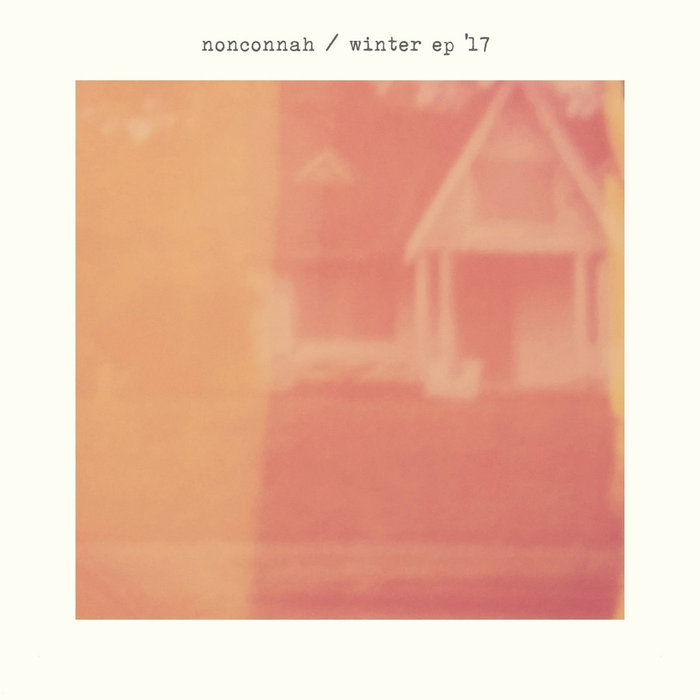 enjoyable and challenging to find a way to tie mood-based instrumental music in with specific seasonal atmospheres. Theme-based challenges keep your creative impulses sharp as sound artists. We tend to think of our music as autumnal, bittersweet and tinged with gold and lingering somewhere between the extremes of the neighboring seasons. There’s a pleasurable sort of melancholy to autumn that speaks to us. Zach is also deeply, deeply obsessed with Halloween, which should be no surprise to fans as the supernatural is part of our work and of many song titles.
You once stated that you make deliberate use of lo fi recording equipment. How important is such an approach for you? Do you see it as liberating from the (seemingly) endless possibilities of current technology?
It’s easy to become overwhelmed with the abundance of choices available to home recording artists today. We like to limit ourselves to the simplest, most primitive options available. Becoming overwhelmed with too many choices ultimately leads to no choices at all. Fundamentally, we reject the idea that any technology becomes ‘obsolete’ once a ‘newer’ technology comes along. That’s inherently wasteful. Cassette especially has an imperfect warmth to it that conjures up trace nostalgia for people of our age, as does VHS warble and tracking static, blurred Polaroids, etc. I suppose part of it could be taken as a deliberate rejection of commodity/consumerist culture and the drive for materialism that dominates 2018 in America. It’s a splendid form of protest to use ‘dead’ technology in spite of the jeers of all the modernized folks plugging in to Spotify. On the other hand, we couldn’t do what we do without advances in laptop recording technology, so it’s definitely a balance of need vs. principle.
Is there a special order in which elements of the songs come together? How do you decide what field recordings work? What is the relationship between improvisation and composition in your recording process?
In the Lost Trail days, pieces were created from a foundation of complete improvisation most of the time, in quick bursts of energy and focus. With Nonconnah, we’re working from simple acoustic guitar and piano demos we’ve accrued over the past few years. The demos gather until they’re plentiful enough, we parse down to the best ones, and we then elaborate on them. Usually there’s a base of simple guitar that underlines the general idea of the demo. This is later accentuated with other instruments and sounds, and finally, field recordings are culled from either public domain sources or from what either of us have recorded on our portable recorders or phones and stowed away. It really is a matter of pure instinct which field recording goes where, and that extends to the titles of the pieces as well. Sometimes it just feels right – as if we’re conduits for some outside force divining through us. It should be noted that, as in the Lost Trail days, we still don’t overdub in the proper sense. We collage. We record pieces independently and tinker with overlaying them until they ‘fit’. Working as if the piece is a collage lends a great element of surprise to the work.
On your website you call your music “damaged hymns from the broken midsouth”. How ambivalent is your relationship to the region in which you live?
No ambivalence here, actually. We’re quite happy here. Memphis is an incredible and undiscovered sort of place, an out-of-the-way gem thats been stereotyped by its (admittedly very real) problems to the point that gentrification has mostly passed the city by. Memphis is a fiercely proud, tight-knit, gritty place with a lot of local color and a sizable amount of good cheer, and there’s incredible art of all kinds being made here. Memphis is a considerable muse for us – we live a bit outside of town, out in the rural hinterlands, but we spend most of our time in Memphis proper. So when we say ‘damaged hymns’ from a ‘broken’ place, it’s said entirely with real affection. There’s beauty in the damage of Memphis, in the struggle to rise with spirits high from the endless blocks of abandoned factories and liquor stores and the unabashed neon tourist fantasias downtown, the stretches of spectral bayou. Memphis is a very special place., a beautiful city that takes care of its own. We’re trying to honor that with our work.
I was wondering if that which has been called southern gothic plays any role for the music you make.
Sure, to some extent. Truman Capote, Eudora Welty, Flannery O’Connor, William Faulkner…these are tangible, very present ghosts in this part of the world. Really it’s the South itself though that provides the backdrop to our sounds. We always said in the Lost Trail days – and it holds true for Nonconnah as well – that we’re through-and-through a Southern band. We wouldn’t be making the sort of music we do if we lived in Buffalo. For better or worse, the South is who we are. It’s a complicated and mysterious history here. There’s nowhere more haunted by its past in America than the South. So much of daily life in the South is infused with a sense of coming to terms with the past. We saw it recently in Memphis with the removal of the Nathan Bedford Forrest statue. It isn’t possible to live in the South and not have the past touch you.
 Your music can have dark elements but there is something soothing, too. Is there a balance in your work between “gloom” and “glowing” (to allude to your latest album)?
Definitely. We would never want to stray entirely too far in the direction of the light or the darkness. Both are elementally strengthened by the presence of the other, and both collapse on their own without that balance in place. It seems dishonest to create music that doesn’t accurately reflect both light and dark experiences, as they’re both terrifying and beguiling in equal measure. Light and darkness make us who we are. When there’s a dark presence on an album, it’s always counter-acted by the presence of some light, and when the light soars too high, the darkness settles it back to earth.
For me a lot of your music has this kind of dreamlike and somnambulistic quality and empty buildings and blurred images have turned up frequently on the covers of your releases. Would you say that these are an adequate representation of your “dronegaze”?
Absolutely. When you look at a lot of the themes of our pieces, be it the nature of the field recordings, the titles, or even just the sounds themselves, there’s a common thread of trance-like and otherworldly experiences, something that takes you outside of yourself. Supernatural visitations, religious mania, political paranoia, drug trips…these are all altered states of mind, all transcendent and revelatory states. That’s what the best music does for us. It colors your perception of the world around you, which is ultimately art’s basic purpose, to reflect back experiences in ways that make you reconsider and grow. The sense of the eerie, the uncanny, drives our work to an extent. Not just those borderlands where sprawl meets woodlands, but the outlands we cross when we give ourselves over to these transformative experiences. If our music had one visual accompaniment to spell everything out, it would be a silent neighborhood at that time of day when night has almost completely fallen but there’s still a thin orange band of light looming over the horizon. That’s where we linger.
You are going to release a new album soon and you mention that a lot of guest musicians have contributed. Is the album a continuation of “The Gloom & The Glowing”?
No. ‘The Gloom & The Glowing’ was made during a very difficult time and stands alone as an artifact of that time. It shows us transitioning out of being Lost Trail but not yet moving forward into whatever was going to happen next. The new album is the realization. We’d say ‘Gloom’ has much more in common with the Lost Trail of old. Perhaps it was a necessary purging of those old ghosts before we could move forward.
Would you say that the South is a good region for experimental music?
It definitely is. The inherent pathos of being Southern has always made for compelling, envelope-pushing art. In our opinion, you can find the best experimental music the South has to offer in the smaller towns and cities, where a lack of existing cultural infrastructure has led to a lot of folks figuring it out on their own and thus reshaping the mold in their own insular communities, free of influence. Sometimes it’s better to not be one of a thousand looping hipsters in Bushwick or Portland. Greenville, North Carolina. The Winchester and Culpeper areas of Virginia. Cleveland, Mississippi. Murray, Kentucky. Murfreesboro, Tennessee. These places all have intriguing little scenes. We suppose one can thank the Internet for much of the proliferation, so thanks, Internet.
Your music is not explicitly political but on your twitter account you voice your opinion about current events (e.g. the Parkland shooting) quite clearly. Do you think the current developments may be reflected more explicitly in your work?
We think it’s inevitable that what’s going on in America in 2018 will work its way into most everyone’s art, either consciously or subconsciously. There’s always been hints of apocalypse in our work, but the new album quite unintentionally formed itself around ‘apocalypse’ as a sort of allegory for memory loss, growing older, and impermanence. It’s there in the way that memory itself is a kind of haunting, in the way our ‘old’ technology ages and decays and is discarded along with our memories and our former lives. To live in a dystopia like modern America is to reckon with that edge-of-the-world sense of slow-motion apocalypse on a daily basis, to find a way to incorporate it into your existence and reckon with it without going insane. As far as directly addressing politics, we’d say that near the end of the new album we’re a bit more politically forthright than we’ve been in the past. Now’s the right time to do it.
MG
My instruments are a means to tell my stories. Interview mit der koreanischen Musikerin und Komponistin Park Jiha
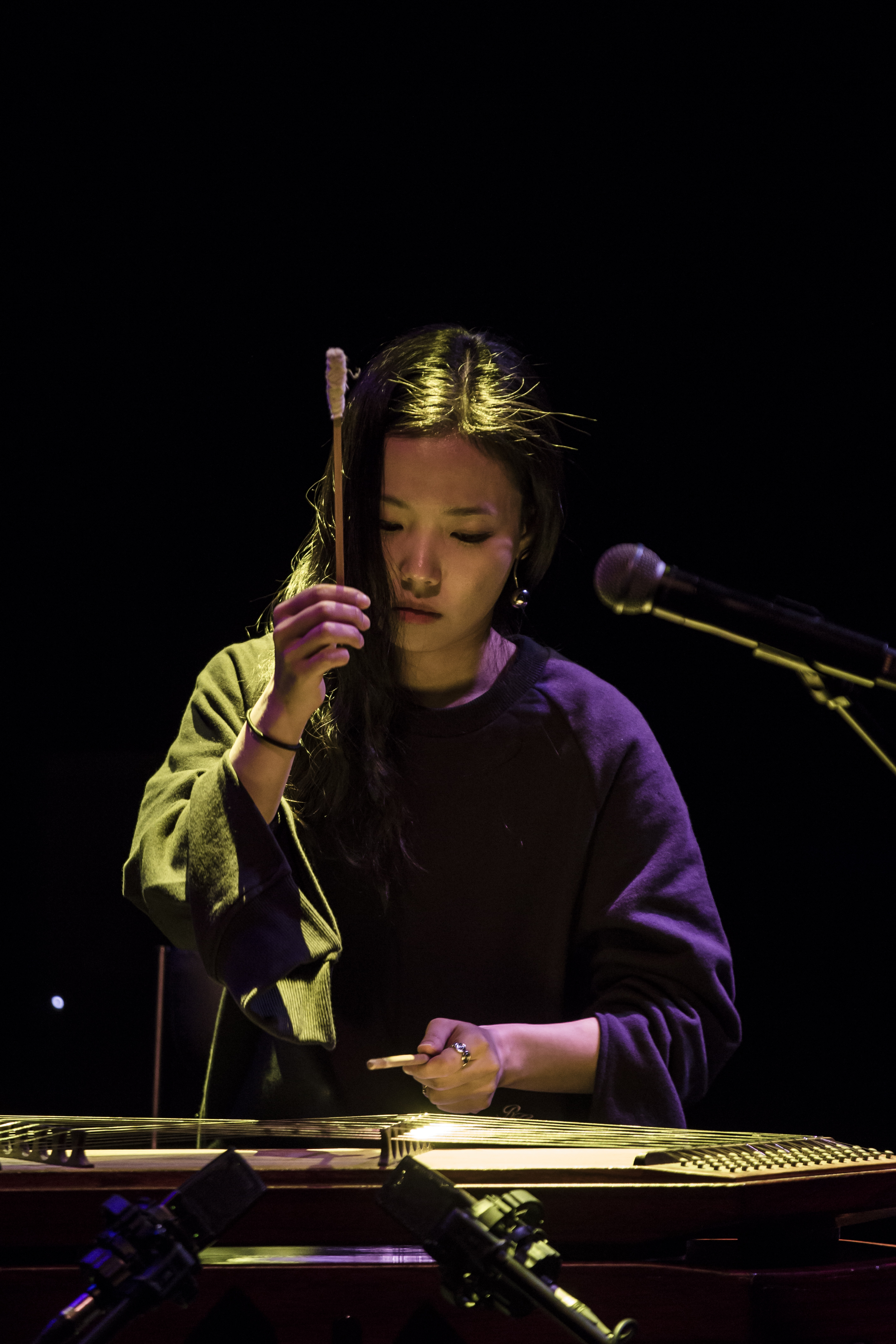 Park Jiha spielt verschiedene Blas- und Perkussions-Instrumente der traditionellen koreanischen Musik, auf ihrem Debüt Communion verbindet sie dies mit Saxophon, Schlagzeug und anderen modernen Klangquellen. Ihre Musik enthält, wie sie im Interview sagen wird, einiges an typisch koreanischen Empfindsamkeiten, doch auch ohne Einblick in diese fremde Tradition kann man jenseits exotisch-romantischer Projektionen manch Vertrautes in ihrer Musik finden. So sehr die verschiedenen Einflüsse ihre Kompositionen und ihre Spielweise automatisch prägen mögen, ist ihr Ansatz doch ein spontaner, und die wichtigsten Antriebe findet sie in ihrer eigenen, individuellen Biografie. Über diese und manch anderes sprachen wir im kürzlich geführten Interview. Weiterlesen
My instruments are a means to tell my stories. Interview with Korean musician and composer Park Jiha
Park Jiha plays various traditional Korean woodwind and percussion instruments and on her debut album “Communion” she combines them with saxophone, drumkit and other modern sound sources. As she is pointing out in the interview, her music contains a lot of typical Korean sensibilities, but even without any insight into this tradition, you can find some familiarity in her music far beyond exotic-romantic projections. As much as the different influences may automatically shape her compositions and her playing, her approach is of a spontaneous kind, and the most important inspirations are found in her own individual biography. We talked about these and many other things in this recent interview.
. Weiterlesen
We Simply Lend our Energies to the Chaos of Creation. Interview mit Hermetic Brotherhood of Lux-Or
 Die im Sardinischen Macomer beheimatete Hermetic Brotherhood of Lux-Or existiert, ähnlich wie das ihr nahestehende Label-Kollektiv Trasponsonic, schon seit den späten 90ern, doch es dauerte eine Zeitlang, bis das mysteriöse Ritual-Projekt sich auch außerhalb der italienischen Musikszene einen Namen machte. Der vor einigen Jahren durch die Medien geisternde Begriff der Italian Occult Psychedelia scheint wie für sie geschaffen, ist jedoch gleichsam eine nur bedingt passende Kategorie, da gerade der zweite Begriff für die Sardinier um MSMiroslaw weit mehr als Kolorit bedeutet. Hermetic Brotherhood, die ihren Namen einem Weiterlesen
We Simply Lend our Energies to the Chaos of Creation. Interview with Hermetic Brotherhood of Lux-Or
The Hermetic Brotherhood of Lux-Or is located in the Sardinian Macomer and like the closely related label collective Trasposonic has existed since the late 1990s, but it took a while for the mysterious ritual project to make their mark outside the Italian music scene. The concept of an “Italian Occult Psychedelia”, which haunted the media a few years ago, seems to have been created for them, but is a rather limiting category. Especially the term ‘occult’ means much more to the Sardinians around MS Miroslaw than just atmosphere. Hermetic Brotherhood, whose name refers to an old esoteric order, use their releases to document their personal ritualistic acts, and strive for the emergence of a new traditional music. The interview was conducted following the “Sons of an older Cosmos” festival in Berlin, where the Hermetic Brotherhood of Lux-Or gave an intense performance.
As there is not so much information in German media about your works, please introduce the Hermetic Brotherhood of Lux-or to our readers. How was this group formed and by whom? In which connection does the group stand to the Trasponsonic label and the community around?
Trasponsonic is a collective experience dedicated to music, extreme theater, cinema and art in general, born at the end of the 90s in Sardinia, in the middle of the island. More precisely in Macomer, the capital of the Marghine territory, which is the border line (margin) of what is called Barbagia: the land of the barbarians; so called by the Romans who never succeeded in subduing her. The heart of all ancestral traditions that still resist today. Macomer is a small post-industrial town located in an area where there are 800 archaeological sites, and which now comes to terms with its past and its identity. Here a group of local youths (MSMiroslaw, Ersilio Campostorto, Andrej Porcu, Samantha Soames, Ethan Varrs, Egon K, Der List, Gabriel LB, SolideaSurya, Laura Dem) feel the urgency to communicate their vital experience to the world and begin to experiment with various forms of expression that then flow around half of two thousand in the Hermetic Brotherhood of Lux-Or.
Which were the main ideas that led to the foundation of the group?
The basic idea is to create new traditional music. A new popular music that can fuse together the echo of the archaic traditions with the recent industrial past to give life to a cultural renaissance through a painful but necessary mutation. To create a music that is fully representative of this situation free from stereotypes and external cultural influences.
In recent time, Hermetic Brotherhood of Lux-or consists of Laura Dem and MS Miroslaw, but on earlier recordings you’ll find some more names of contributors. So do you regard the group as an open collective around you both as core members, or did you finally become a firm duo?
HBOL is and will always be a collective and plural experience, a living and mutant organism. Our history of life, society and economy today has led us to the form of a duo, but the choice has not been planned at the table. All Trasponsonic members have participated in HBOL records and no one can tell how this creature will evolve in the future. These are events that we cannot control.
You are often described as Ritual Musicians, and „ritual“ is often used as a music genre term. But often it is not so clear, if this only refers to music which is used for rituals, or also to music with a ritualistic atmosphere or topics. Do you use such terms, and where would you position yourselves in that field?
There is a lot of fashion behind the use of this term, but in our case, if we refer to the real anthropological meaning, it is fully justified. We do not take music making lightly, it’s not a hobby or a job for us. The recording of our records takes place after a very long psycho-physical preparation through the ethnographic technique. It is pure sound documentation of what happens in that moment. We do not practice every day with instruments like normal musicians, but rather the opposite. The instruments of sound production, whether acoustic or electronic, act exclusively as amplifiers of the emotional flow of the ritual put in place to get in touch with the supernatural forces around us.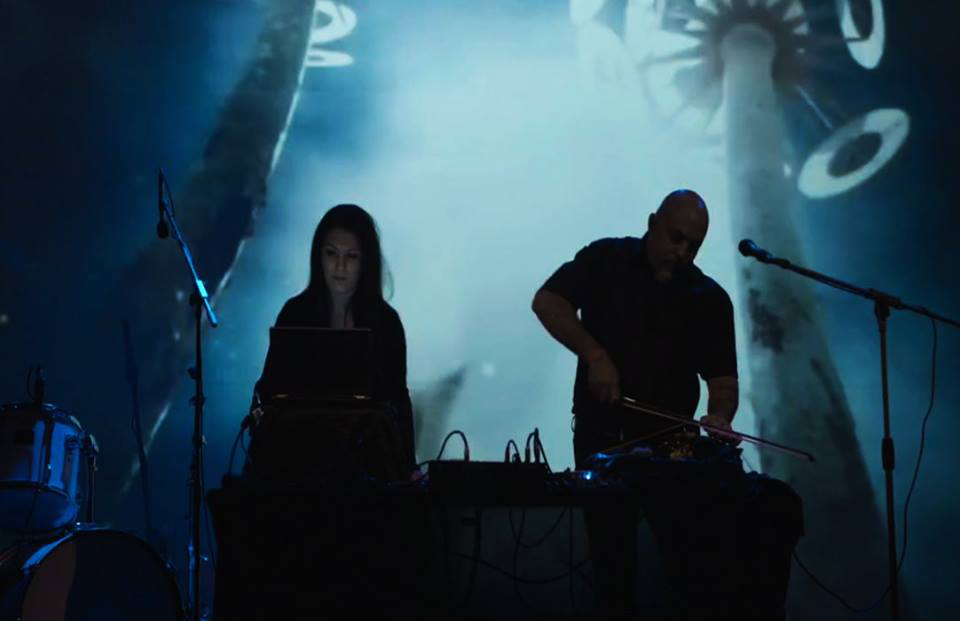
Quite obviously, your band name refers to the initiatory order Hermetic Brotherhood of Luxor, which was active in late 19th century London. Which aspects of their history and activity caught your interest and lead you to use a variation of that name?
The hbol was born 4451 years ago from the split between clericalists and true adepts, between Thebes and Lux-or, implemented by the followers of the divine Grand Master Hermes Trimegistos. All the occultism of the West and the pagan religious rites of the ancient western nations are in debt with this ancient order. The hermetic initiates have not drawn anything from India: the apparent consonance between names, doctrines and rituals of Hindus and Egyptians, far from showing that Egypt drew its own doctrine from India, instead reveals how the main themes of the respective doctrines derive from the same source; and this original source is not India or Egypt, but the lost island of the West.
This ancient island is Sardinia. Many studies now converge on the hypothesis that the legendary island of the towers narrated by Plato, beyond the columns of Hercules is precisely our land. We feel the ancient depositaries of this tradition. Come to Sardinia to see our megaliths, our sacred sites, the most ancient statues of the Mediterranean, drink our wine, see our carnival and you will understand.
When you compare your recording processes to your concert performances, which of the two activities do you think is closer to the essence of your group?
Absolutely our most intimate rituals. It is very difficult to reproduce the same dimension live but not impossible.
Concerts with a ritualistic content or atmosphere often suffer from some “rock” or “pop” context in which they take place, or in other words: chattering, cheering people and cigarette smoke can sometimes destroy the aura of occult music. What would you say is the ideal mood for a listener or attendant to still benefit from it?
It depends on many factors, and not only on the listener’s predisposition. There are, as you said, many elements of disturbance in the custom of the “rock” locations and we ourselves aren’t often indifferent. This can negatively affect a performance. The success is a set of concauses very difficult to manage. To join our music fully, it is sometimes necessary to take a long journey: a true initiation.
Your latest studio work “Anacalypsis” has an intense atmosphere and appears to me as a very dense narrative – creating tension first, then coagulating something together and bringing it to a final eruptive climax. It’s title, a term that was used in various esoteric teachings, refers to a revelation. Which were your main ideas behind the album and how did you experience its creation process?
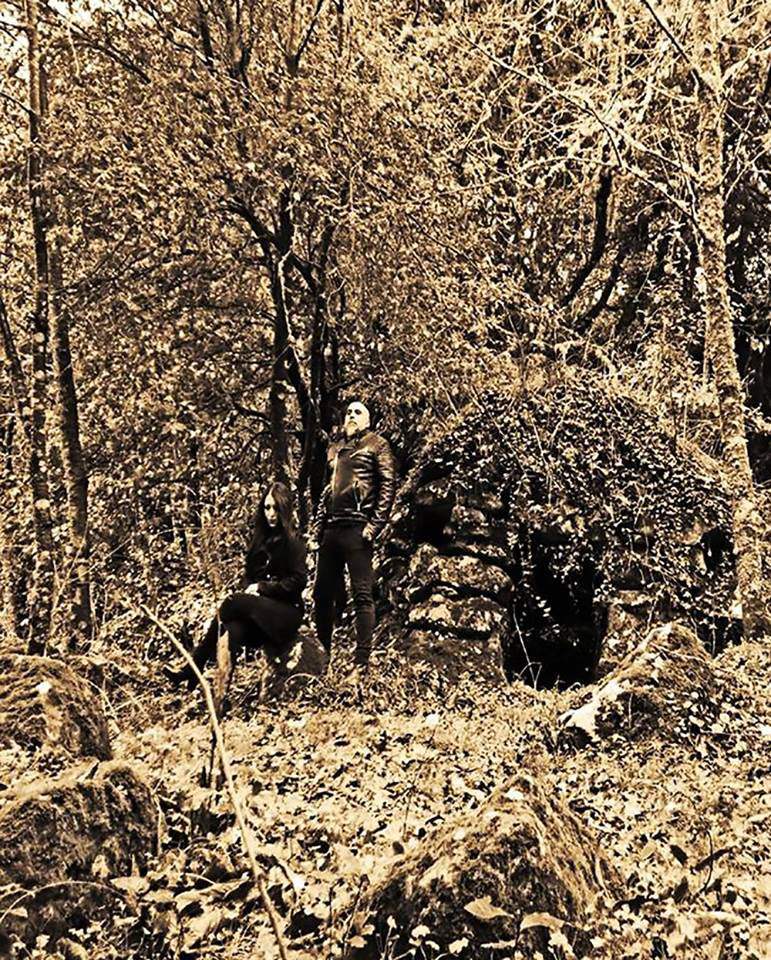 The album is inspired by the homonymous book by Godfrey Higgins. A long disquisition on the origin of languages and religions. A millennial human journey made of infinite visions, divinities, rituals that rise up, condense, sublimate, shatter, vaporize, born from nothing, becoming everything and finally return to the primitive chaotic element. The pure essence of an act of instinctive procreation that drives us to live every day. The esoteric meaning of Anacalypsis is one not as a hidden revelation but always in front of our eyes in its simplicity. It seems absolutely presumptuous, but it is what we try to communicate through our sounds. Whether we succeed or not, must be decided by those who have the desire to listen to it.
In a video from 2012 you perform with Simon Ballestrazzi at a Carnival in Ottana, Sardegna, accompanied by a group of masqued actors interpreting mythical characters. What kind of traditional ritual do you perform there, and do you feel a strong connection to the ancient local myths?
Actually the ritual performance entirely conceived and realized by us took place in the archaeological site of Tamuli, one of the most important ones in the territory of Macomer. It consists of three tombs of the giants with the characteristic shape of a bull’s head, six phallic stones, three of which are androgynous, because they have female breasts, and a nuraghe surrounded by incubating huts. A site dating back to the 3rd millennium BC, where important fertility and death rituals took place. Ottana’s Boes and Merdules: the traditional masks of the Barbagia country have combined their Dionysian ritual of ancestral relationship between man and animal to our music only for this particular occasion. It was a unique experience to relate our modern musical research to our most archaic traditions in a strongly magical and sacred place. This is the ideal dimension to fully enjoy our essence.
Some of your recordings are credited to be mixed and produced at Nasprias Cave, a place somewhere in Sardegna. Is this a real place, and what does it symbolize for you?
Nasprias Cave is the magical place where we live. It’s an old house built on ancient stones and made by stones of the country, near Macomer, full of vineyards, olive groves, nuraghi, menhir, dolmen, tombs of the giants. Simply our land. Our only great inspiration. Our Mother.
Besides familiar electronic and acoustic devices, you also work with self built instruments like a “Sacred Horse Skull”. What can you tell us about this instrument? Is it inspired by a certain tradition?
The sacred horse skull is born naturally and without planning. I found him in a repopulating aviary of the Sardinian vulture. Completely scarified. The vulture goddess was venerated as the mother goddess of regeneration, because in antiquity the deceased were exposed to the open air to be ritually fleshed out; the white bones, a sign of rebirth, could then be buried. Practice also diffused in Sardinia. Do the towers of the Tibetan silence remind you of something? In any case I used it first as a percussion instrument, and then subsequently not fully satisfied I added some strings using the handle of an old Arabian violin that fits perfectly into the recess of the spine. In the following years, doing some research, I discovered that Leonardo Da Vinci had conducted studies on the acoustics of animal skulls (first harmonic cases in history) and considered the horse skull as the best one. The Mongolian igil originally had to be built with a real horse skull, but it has kept its symbol in the shape of the handle and in the use of horsehair for the strings and the bow. I have come to the construction of my instrument before knowing this information. Our ancestral DNA evidently contains a myriad of information that must be known to re-emerge through a particular psychic processes. 
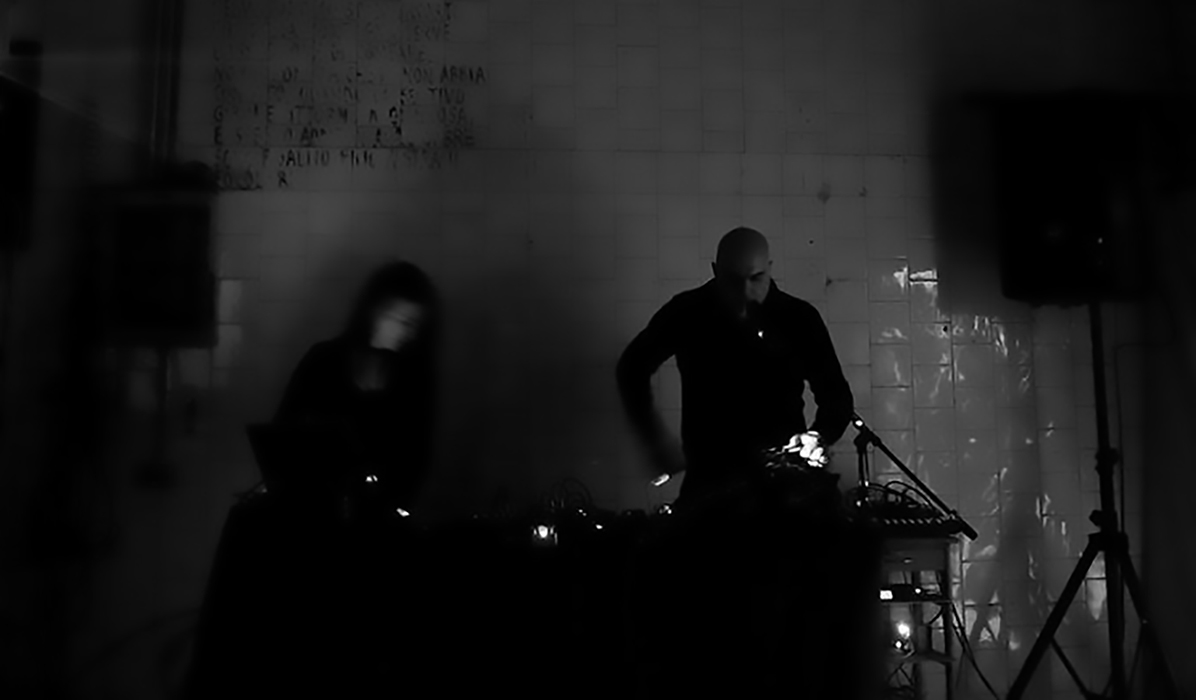 In Laura’s section in the list of instruments you also listed “Ghosts”. In which way are you channeling something?
The question mainly concerns the song “Phantams of the Living”. At the end of the 800, the Society for Psychical Research gave life to a series of scientific studies on paranormal phenomena, opening the way to what will later become modern psychoanalysis. “Phantasms of the Living” by Podmore, Myers and Gurney is in particular a collection of documented cases concerning phenomena of xenoglossia, glossolalia, trance breathing, possessions, clairvoyance. The study is based on a new approach to spiritualism, which believes that ghosts are not so much those of the deceased but rather those of people in the flesh. We have used authentic samples in the song to refer to the most famous cases in order to create a concentrate of mental energy in an attempt to channel it into a ritual and liberating invocation.
In some earlier statements you mentioned the religious historian Mircea Eliade, mainly his works on Shamanism, and the theater concepts of Antonin Artaud as some main influences on how you work. Which aspects of their ideas are interesting for you, and in which way do their concepts fit together?
As we have already said, our approach to music is far from any recreational use, but more inherent to the sphere of the sacred. Antonin Artaud was one of the pioneers of ethnobotany research, just think of his “Journey to the Country of the Tarahumara”, before he continued his journey in an attempt to bring the theater back to its original condition: ritual, religious and shamanic. Since the dawn, the purpose of the theater was to get in touch with the divine. Artaud’s “cruelty” brings us back to a dimension that is not merely representative and fictional but precisely to the “raw” reality of what happens in the theatrical act. Eliade in his “The Shamanism and the Techniques of Ecstasy” highlights and offers us endless possibilities to realize this perspective given by the ancient religion.
The rituals of Sardinian Carnival are emblematic in this sense, because they stage, albeit with small variations, the annual killing of the sacred King. When the mask is worn, the animal spirit truly takes possession of the human being and leads it fully. This is not a staging. This really happens.
Do you – also in regards to Artaud’s ideas of a rather physical Theater of Cruelty – think that language can be a dead end street in many quests for knowledge and experience?
In the sense that it is an obligatory path, a difficult and tiring road full of obstacles and pitfalls that can lead, as in the case of Artaud himself, to self-destruction and death, but the only possible way. There is only the narrow way. No shortcut. The Artaudian parable is the same as those of many men who have traveled before and after. As he himself said “I am all the names of History”. He was a predestined one. A shaman. A medicine man. A Christ. A sacred King. A man sacrifice. A human being.
In The Wire, the reviewer linked your music to Italian Horror cinema. As you work with multi media, I can guess that there is some influence of that kind. Is there some style in film history or some particular movie(s) that have strongly influenced you?
Cinema is definitely one of our greatest sources of inspiration. If we have to think of real Italian influences we can not fail to mention Pasolini, Carmelo Bene, Cavallone, Corrado Farina, Schifano, Cipri and Maresco and all the surrealist and Dadaist cinema of the beginnings, by which we were inspired to creating our film “La Rivolta di Iside”. The horror strand has fun and interests us for some experimental solutions, but nothing more.
The series called “Ethnographics” is a concert recording, where the sujet is found later. At the end, topics of civilization, from psychiatry to mass entertainment and beyond, seemed always quite dominant. Are these things that you have a critical interest in, and what can you tell us about the connection to the records?
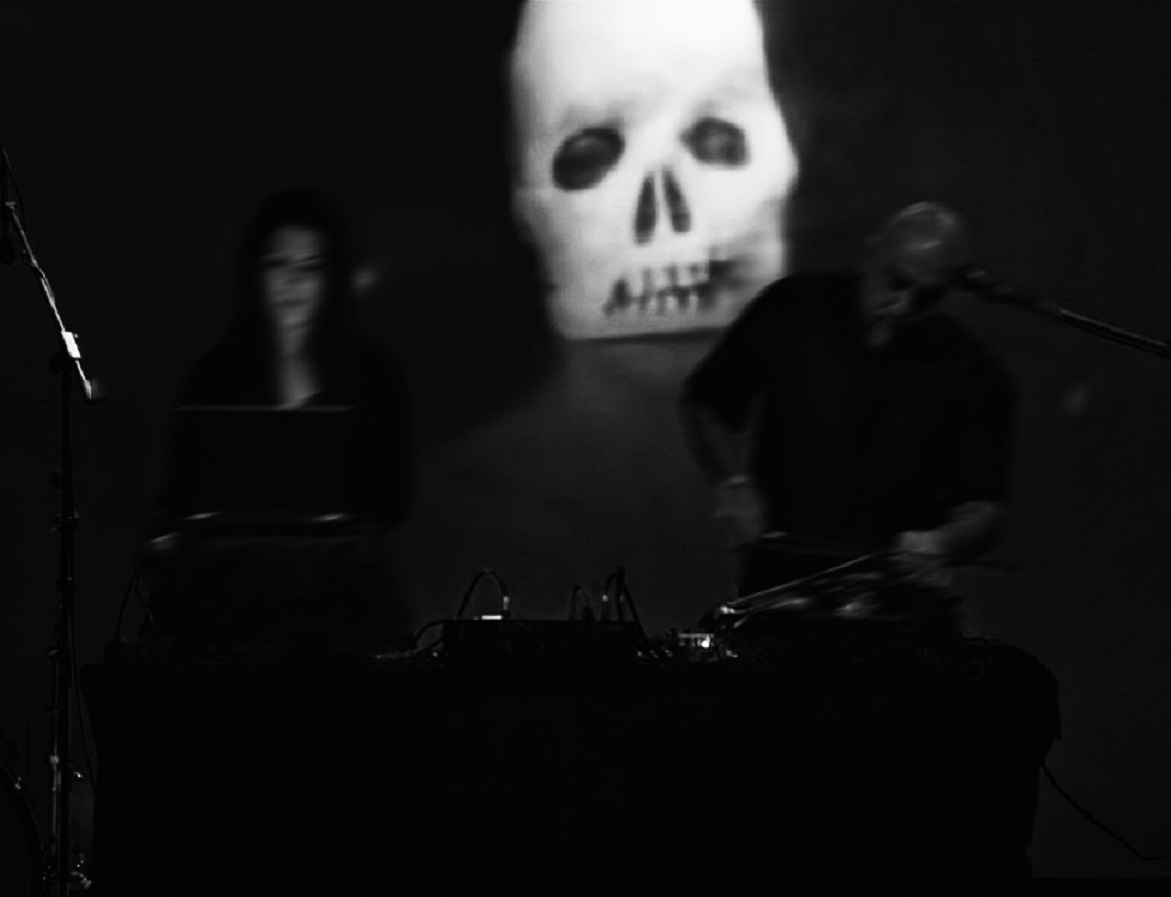 Every job is always the snapshot of a particular moment in our life. Our literary, cinematographic, anthropological, philosophical passions at that moment merge alchemically and fall out in the form of sound waves. Everything takes shape in a very natural way and is made up of countless pieces launched at a mad speed on the magnetic canvas. Only at the end we move away from the picture to observe it from the outside, and we realize that it has a fully completed form. That all your seemingly senseless gestures inevitably lead you to the creation of something that comes to life and no longer belongs to you. We simply lend our energies to the chaos of creation. This is everything we are experiencing.
After the release of “Anacalypsis” and “Ethnographics III” you played live with Hermetic Brotherhood and other projects. Which are the endeavors you are up to in the nearer future?
Soon there will be an ep of MSMiroslaw entitled “Les Organes de la Voix”, inspired by the archaic vocal traditions of the peoples and as soon as there will be the ideal astral conditions we will record a new ritual of HBOL with the aid, not of one, but of two sacred horse skulls. For the rest it is about continuing to survive and fight daily on our magical but tormented Sardinia.
We thank African Paper for the interest shown in our work and for the chance to introduce us to your readers.
(A.K. & U.S.)
A passage into an altered state: Interview mit Ka Baird
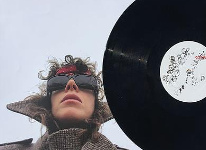 Ka Baird hat mit den vor einigen Jahren zum Duo geschrumpften Spires That In The Sunset Rise eine ganze Reihe von Alben veröffentlicht, die in ihrer Originalität, Experimentierfreude und Wucht in der zeitgenössischen Folkmusik ihresgleichen suchen und man könnte vielleicht so weit gehen, die nach einer Zeile aus einem Gedicht von Baudelaire benannte Band als legitime Erben von Comus zu bezeichnen. Gleichzeitig hat Weiterlesen
A passage into an altered state: Interview with Ka Baird
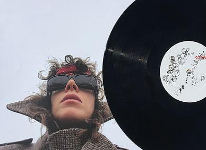 With Spires That In The Sunset Rise, which shrank to a duo a couple of years ago, Ka Baird has released a number of albums that are unique in contemporary folk music with regard to originality, eagerness to experiment and force. One could go as far as to claim that the band that took its name from a line in a Baudelaire poem is the legitimate heir to Comus. But Ka Baird has also frequently expressed her creativity outside the band context: In the first half of the noughties two albums with folk miniatures were released under the name Traveling Bell. Weiterlesen
Armageddon has already happened. Interview mit Juan Scassa von Futeisha und La Piramide Di Sangue
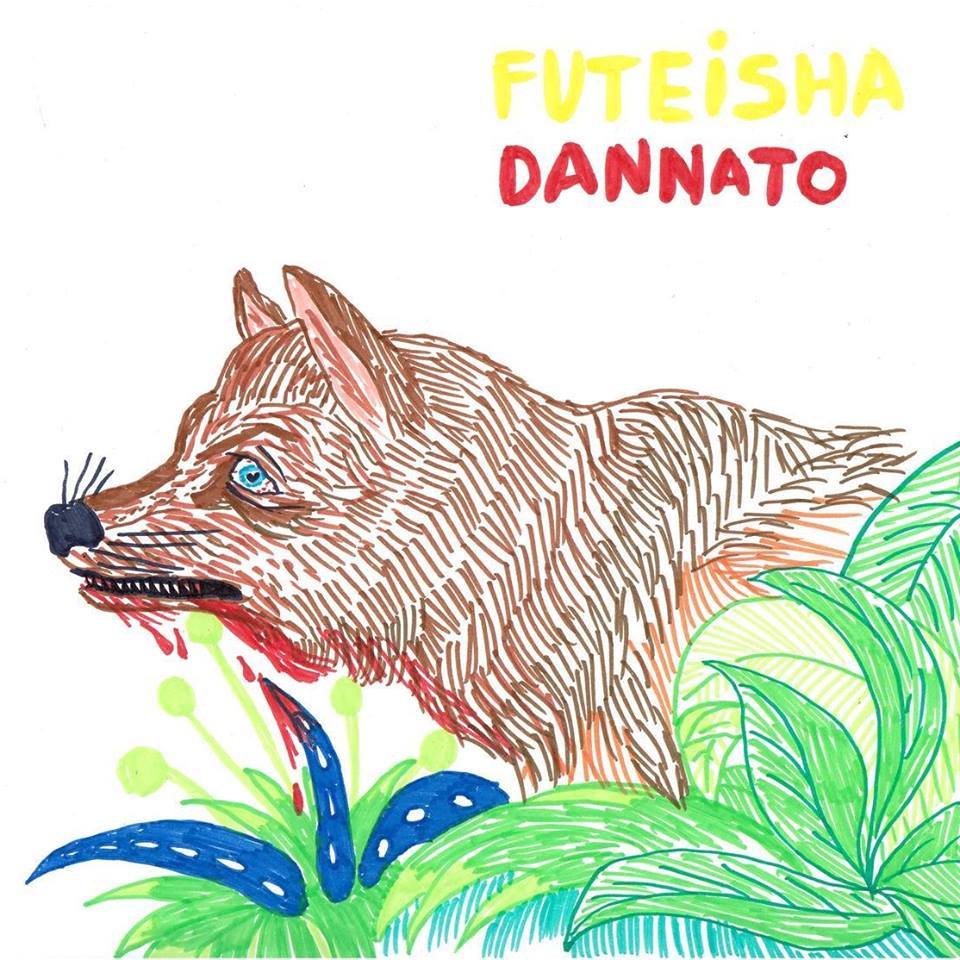 Mit seinem derzeit wichtigsten Steckenpferd Futeisha spielt der in Turin lebende Argentinier Juan Scassa eine sperrig-schöne Mischung aus sanften, mediterranen Folkklängen, unberechenbarem psychedelischen Lärm und hörspielartigen Sequenzen. Was diese Musik vom gängigem Dark Folk unterscheidet, ist das Fehlen aller betulicher Biederkeit, und mit ihren bissig nihilistischen Untertönen ist sie ein idealer Vertreter einer Richtung, für die David Tibets Begriff “Cartoon Apocalypse” recht gut passen würde. Im folgenden Interview Weiterlesen
Armageddon has already happened. Interview with Juan Scassa of Futeisha and La Piramide Di Sangue
With his main endeavor Futeisha, Turin-based Argentine guitarist Juan Scassa plays an oblique but beautiful blend of soft, Mediterranean folk sounds, psychedelic noise and radio play-like sequences. What distinguishes his music from common “dark folk” standards is the absence of any tame romanticism, and with its snappy nihilistic undertones it is an ideal representative of a direction, for which David Tibet’s term “cartoon apocalypse” would fit quite well. In the following interview, Scassa talks about his involvement with the notorious psych rockers La Piramide di Sangue, about the beginnings of Futeisha, about his second mainstay in the world of comics and the planned new album, which consists of cover versions of notable Current 93 songs in Japanese.
I first came in contact with you in the context of La Piramide di Sangue, but I’m sure you did music before. So what were your first endeavors in music? Any old projects you would still recommend?
I’ve started to work with Stefano Isaia (Movie Star Junkies, Lame, ecc) for the first tape of Gianni Giublena Rosacroce, out on Yerevan Tapes in 2011, and then La Piramide began. Stefano is a great musician and the album is really inspiring. The moniker Dedalo666, that I used to use came from this release.
Some time before, in 2008, I’ve played in a lo-fi band, Dirty Sanchez. Once we played in a squat and we got insulted by some skin. Maybe some of the songs werenot so bad, but we had absolutely no experience. With my band-mate Andrea we recorded some noise-concrete tapes under the moniker Jennifer. No good music, but good memories.
Is music your basic default setting as an artist, or did you start with visual stuff? Did you have an academic teaching, or is your approach more of an autodidact sort?
I studied classic guitar when I was at high school, but I practice a very punkish DIY approach.
I’m writing comics, you can find me in underground comics expo selling porno-nihilist strips with my mate Daniele “Michelangelo della Sborra” La Placa. I don’t define myself as musician, writer or artist. I’d prefer cultural agitator.
Were you a founding member of La Piramide? How did you guys meet? If you had a (vague) concept of the music and the symbolism, how would you describe it?
As I said, Stefano was recording his first solo album as Gianni Giublena Rosacroce and asked to me to ad some classic guitar. He was already thinking to form a new psychedelic-rock band, so we spoke with some friends of us: Kebab (Craxi Driver, Murdercock), Jena (Six mistake, Licenza di Collina), Krano (Vermillion Sands, Krano), Stefano Lopiccolo (Love Boat) and Walter (King Suffy Generator). We rearranged the songs in a more rock attitude… so La Piramide di Sangue was actually a pyramid with a heavy metal stone base and the Stefano’s clarinet on the top.
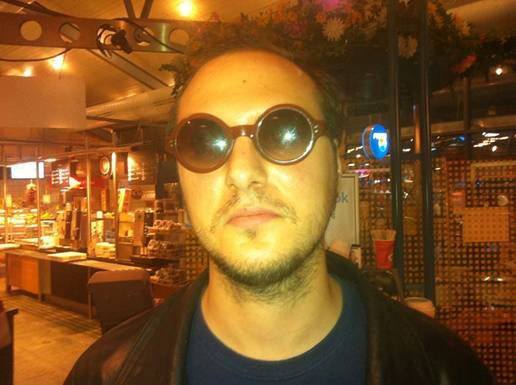 How was your role in the group apart from playing the guitar? Did you take part in the composition process, or was it more jam-like improv anyway?
It depends song by song. We used to jam, but usually songs came out from some melody of Stefano and then the other contributions were arranged all together.
After the albums “Tebe” and “Sette” and a couple of concerts it got a bit quiet. Is it, because it’s a seven piece and the members live at different places? Will it in the one or other form go on in the future?
I’s very difficult to manage a seven member band, even more when everyone has a lot of other projects. Since our drummer moved Sardegna, La Piramide is in a kind of non-recovering coma. I don’t think we’ll play anymore, and it’s really a pity, because still we have a new album of great songs to record.
What can you tell us about the birth of Futeisha, which, as I guess, is your main project today? Was there a background story of it, or some previous adventure that lead in that direction?
Futeisha was born in Kyoto 2010, recording concrete sounds, voices and manipulating sounds. I was playing guitar in a punk band called Flat Sucks at the time. There are some old Futeisha albums, like “Simulacra”, between 2010 and 2014, when “Dannato” come out, but they were recorded really bad and are not interesting at all.
Was it conceived as a solo project or as an open one? Seems you soon decided to works with a number of collaborators.
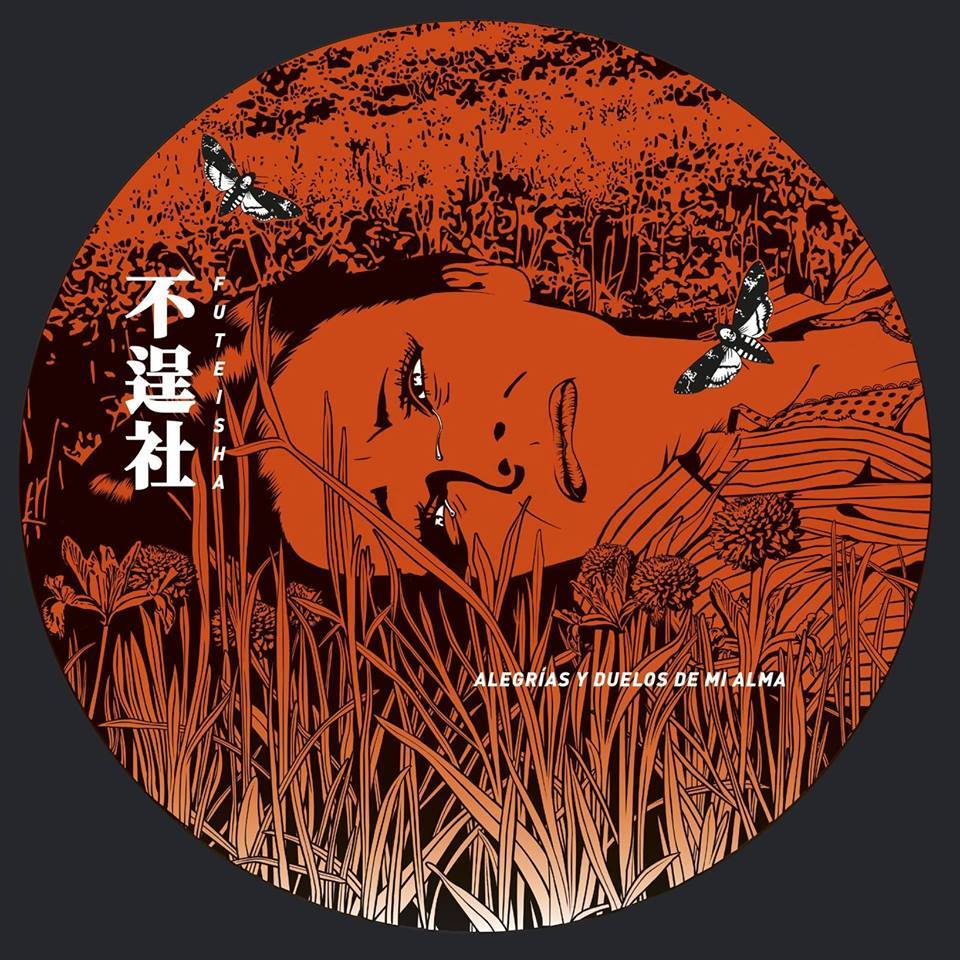 Since I’m a big fan of England’s dark folk scene, I’ve decided to manage a band like David Tibet or Douglas Pierce did it. You see, here in Turin there is a kind of scene with bands like Movie Star Junkies and Oaxaca and it’s really cool to play with friends. In “Dannato”, Krano, Vinz (MST, Vernon Selavy, Heart of Snake), Maria (GGG, Space Aliens from Outers Space, Lame) and other helped me very much. I’ll be forever grateful for that.
As far as I know the name Futeisha refers to a Korean minority in Japan and was originally a derogative term. What can you tell us about this subject?
< Futeisha (不逞社, “The Outlaws”) was an anarchist group founded by Park Yeol and Kaneko Fumiko in Japan in 1919. Futeisha satirized the way Koreans were referred to by the authorities as troublemakers. Futei senjin (不逞鮮人), or the unruly Korean. Park was arrested without charge on September 2, 1923, the day after the Great Kantō earthquake. Two days later Kaneko was also detained by police. Based on thin evidence they were eventually charged with high treason for plotting a bomb attack upon the wedding of Crown Prince Hirohito. Both were convicted and sentenced to death on March 25, 1926, but their sentences were commuted to life imprisonment by the Emperor Shōwa. Kaneko died in prison on July 23, 1926, reportedly by suicide. > from Wiki
Seems you have a general interest in Japan and Far Eastern counter culture. What are your main references in that context and what role does this play in your music?
I studied Japanese at University and I’m a translator of Japanese. I lived in Kyoto for one year as a student. I miss Japan very much. I very like the austerity and the ritualistic aspect of some traditional music and culture. Undoubtedly some grandmasters of literature, like Mishima Yukio, Ishikawa Jun or Abe Kobo, are not just main refences for the music.
As you told me recently, you are about to record a Current 93 tribute album with all lyrics in Japanese sung by a Japanese singer. As I’m sure you won’t just change the language, what can we expect?
We want to translate the songs into Japanese and record one of the weirdest album ever. Hirayama Yu is a mucisian who does harsh-noise cut-up stuff, writer (he wrote several books about the Industrial and Experimental, mangaka and runs a little label Suikazura (in Japanese “Honeysuckle”).
In “Temujin” on the first Futeisha tape you already referred to Current 93, and the live piece “Curento 93″ seems – apart from being a folk dance – also to allude ironically to this band. Indeed, David Tibet and his ever changing group is one of the most influential underground groups of the last decades. What would you say makes them so outstanding?
“Curento” is kind of a traditional music and dance piece from the Piemonte Valleys. It was a joke to re-name the song in this way. I think a radical approach to art in general makes David Tibet’s c93 one of the most outstanding bands: a perfect and creepy mix of tradition and avantgarde. The way Tibet does music is in some way related to the theatre of Antonin Artaud, like a continuous revelation of the inner and scary self of the human being.
Are there other influential artists or contemporary favourites that you would recommend?
Oh! There are really a lot of good musicians. I just know I like Jonathan Richman very much.
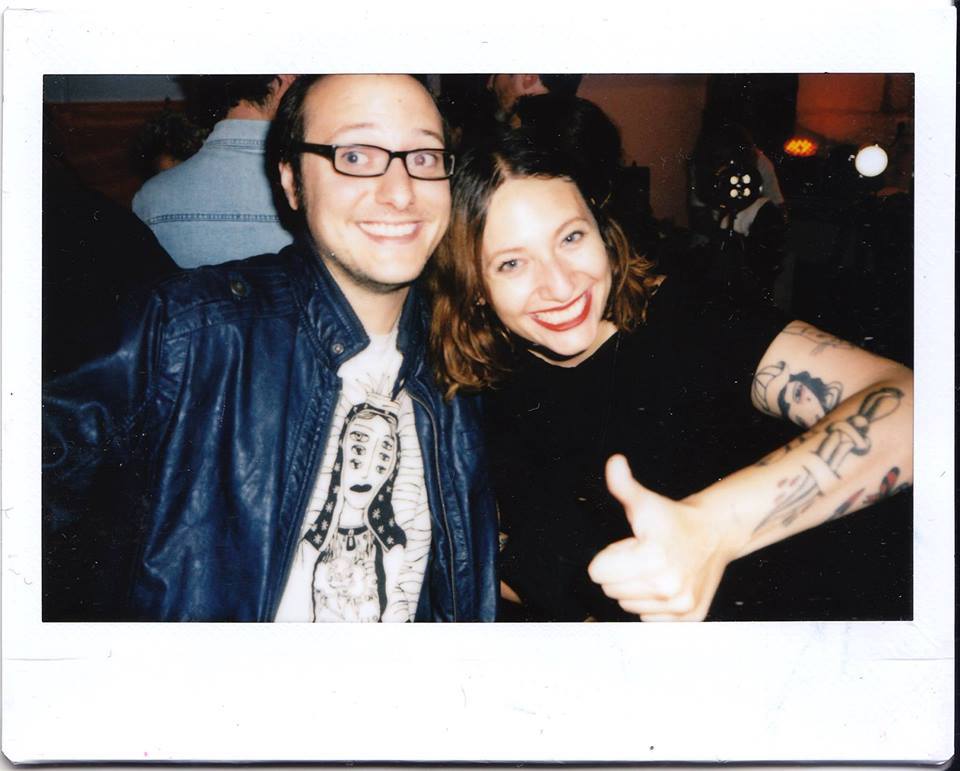 One major element in Futeisha seems to be the combination of some quite far contradictions, for instance you can hear mediaeval pastoral guitar pieces followed by dystopian noise. But in all their confusing darkness, there is always something vital and humorous in these sudden changes. Would you agree, and is this also a bit how you see the world?
Contradiction is a topic that has always inspired me. It is one of the main features of life itself. Folk sounds, like the classic guitar, in a harsh noise environment is a research of humanism in a halber mensch reality. But the landscape in Futeisha is pessimistic: Armageddon has already happened. The reseach of the past is just a nostalgic, an estethic research of a human being that can be no more.
Although there is this folkish element in Futeisha, you hardly play songs in the strict sense of the word, often I notice a strong filmic or radio play like narrative. Is this intended?
I like to construct simple melodies and to create musical “rooms” or “moods” to describe the death of the soul.
Your album “Sulla Via Del Re Nel Ritorno” is a recording of one of a few Futeisha concerts, and from the atmosphere it sounded way more ritualistic than the studio recordings. How can we imagine Futeisha shows?
I try to research Antonin Artaud’s idea of Theater of Cruelty as “a primitive ceremonial experience intended to liberate the human subconscious and reveal man to himself”. Certainly Michele Guglielmi (Oaxaca, I Residenti), Ivan Grosso (Oaxaca) and Ottavio Boglione arranged my songs with both traditional and electronic instruments creating a really magical atmosphere. It was really something to play with them.
Your second field of activity is the website “Becomix”, a kind of blog database for comics. What can you tell us about this project and how big do you like it to grow?
I’m working in a database/marketplace for comics, where everyone can manage his collection and buy/sell comics. Just like other sites, but exclusivelly in comics. I don’t know how big it could become, but my collegues did a really special SEO working. Hope to have a job tomorrow eheheh. In the main time I started to write about comics, and recently, an important site, like Lo Spazio Bianco, asked my collaboration. I’m very proud of it.
In the maintime with Daniele we’re working on a new book inspired by 90s sci-fi manga and Burroughs. It will be published in 2019, I hope.
If you had to name the most combining element in your different music projects and your work for comics and illustrations, what would it be?
Eradication of every day certainty.
We try to catch lust for life underneath the chaos. Interview mit Oiseaux-Tempête
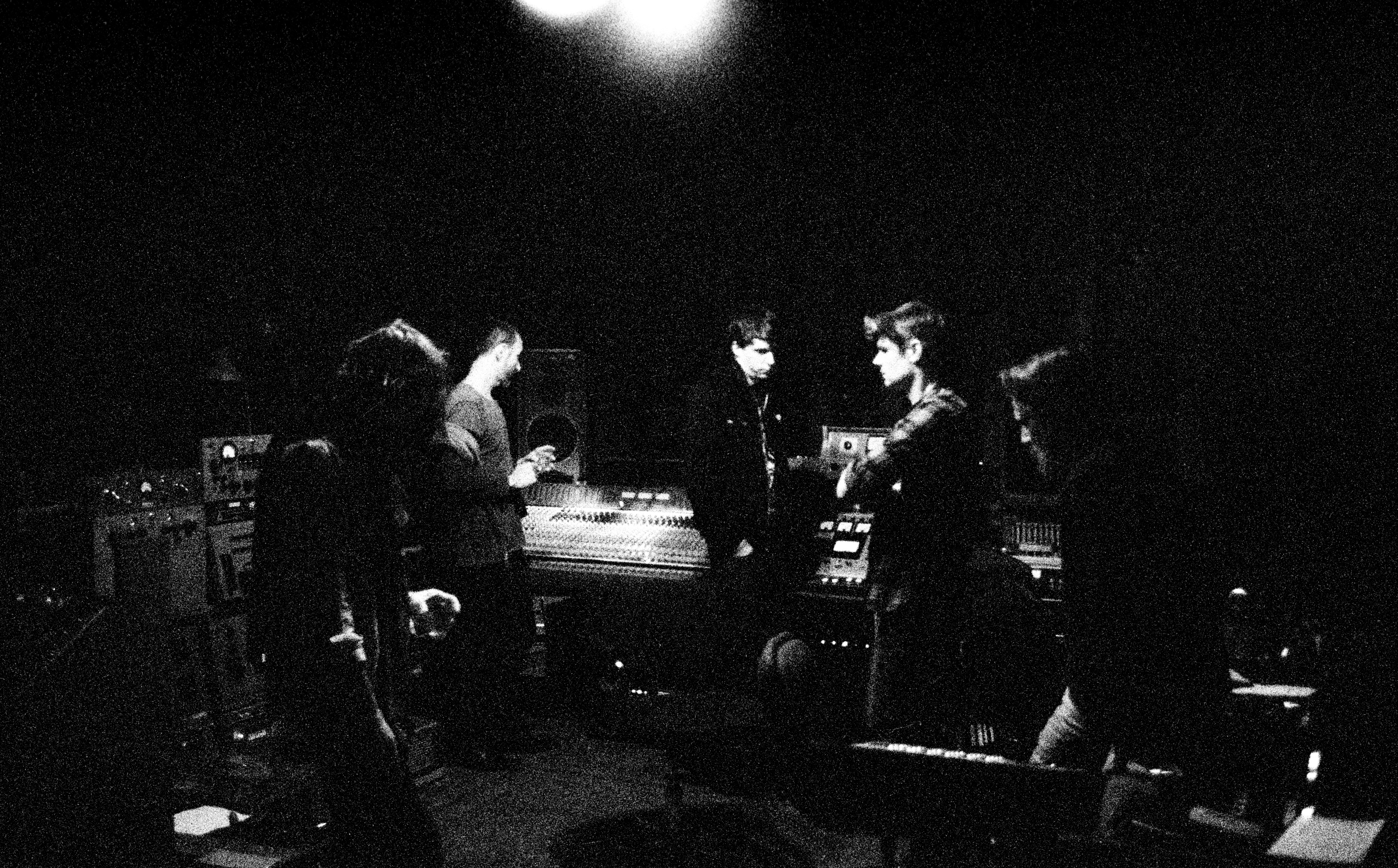 Oiseaux-Tempête bestehen im Kern aus Frédéric D. Oberland und Stéphane Pigneul, zwei Multiinstrumentalisten, die vor einigen Jahren, als beide noch in zahlreichen anderen Formationen spielten, zu jammen begannen und ihren typischen Stil zwischen schleppenden Rhythmen, dröhnenden Gitarrenriffs, verspielten Saxophonparts und allerlei elektronischen und folkloristischen Beigaben entwickelten. Wenn die beiden ihre Band als ein offenes Projekt begreifen, bezieht sich das aber nicht nur auf die zahlreichen Weiterlesen
We try to catch lust for life underneath the chaos. An interview with Oiseaux-Tempête
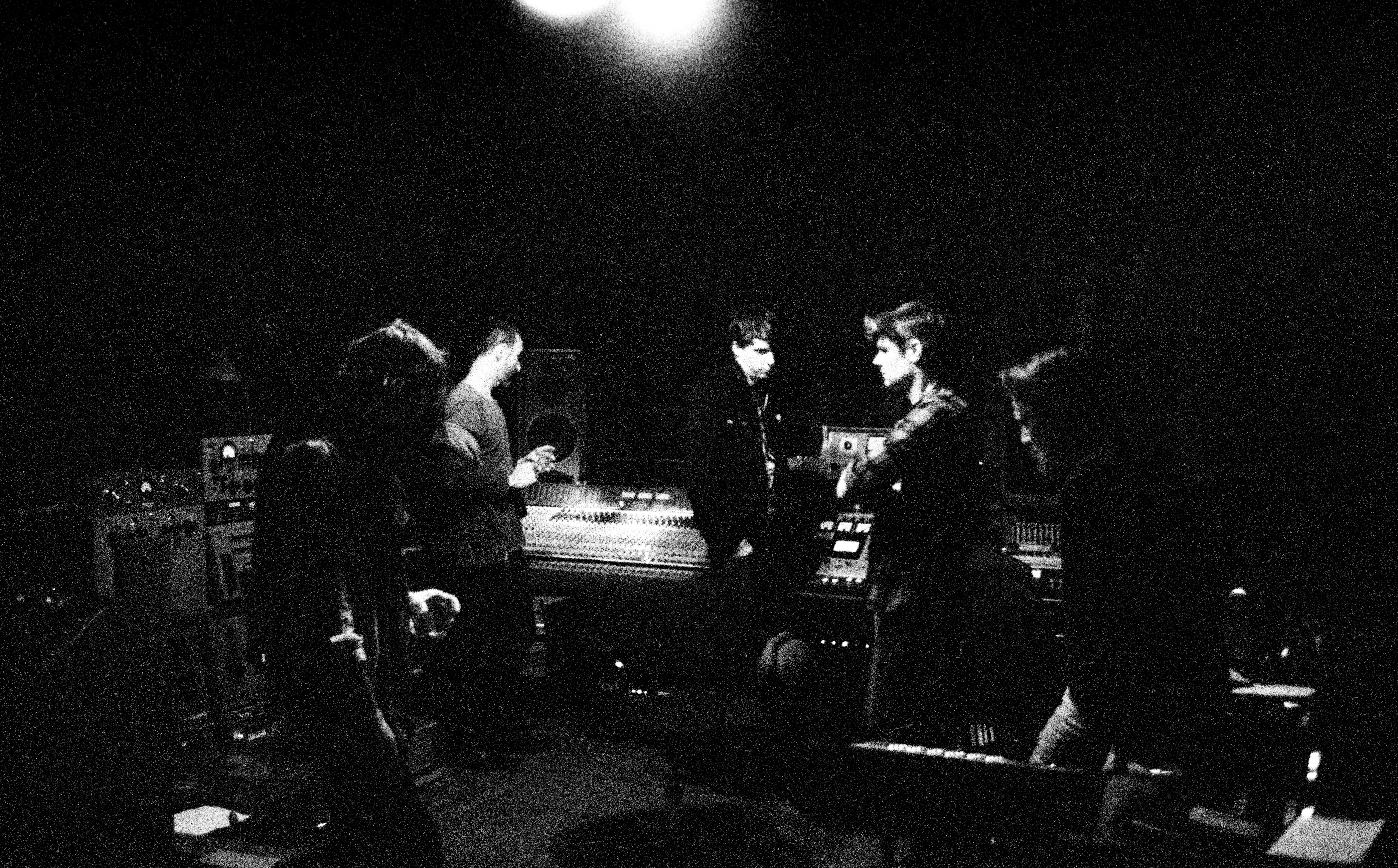 Oiseaux-Tempête’s core consists of Frédéric D. Oberland and Stéphane Pigneul, two multi-instrumentalists, who began to jam some five years ago, when they were still playing in numerous other groups. Rather spontaneously, they developed their typical style, moving between down-tempo rhythms, droning guitar riffs, playful saxophone parts and all sorts of electronic and accoustic adjuncts. Weiterlesen
We see our era as an apocalyptic one: Interview mit Winter Family
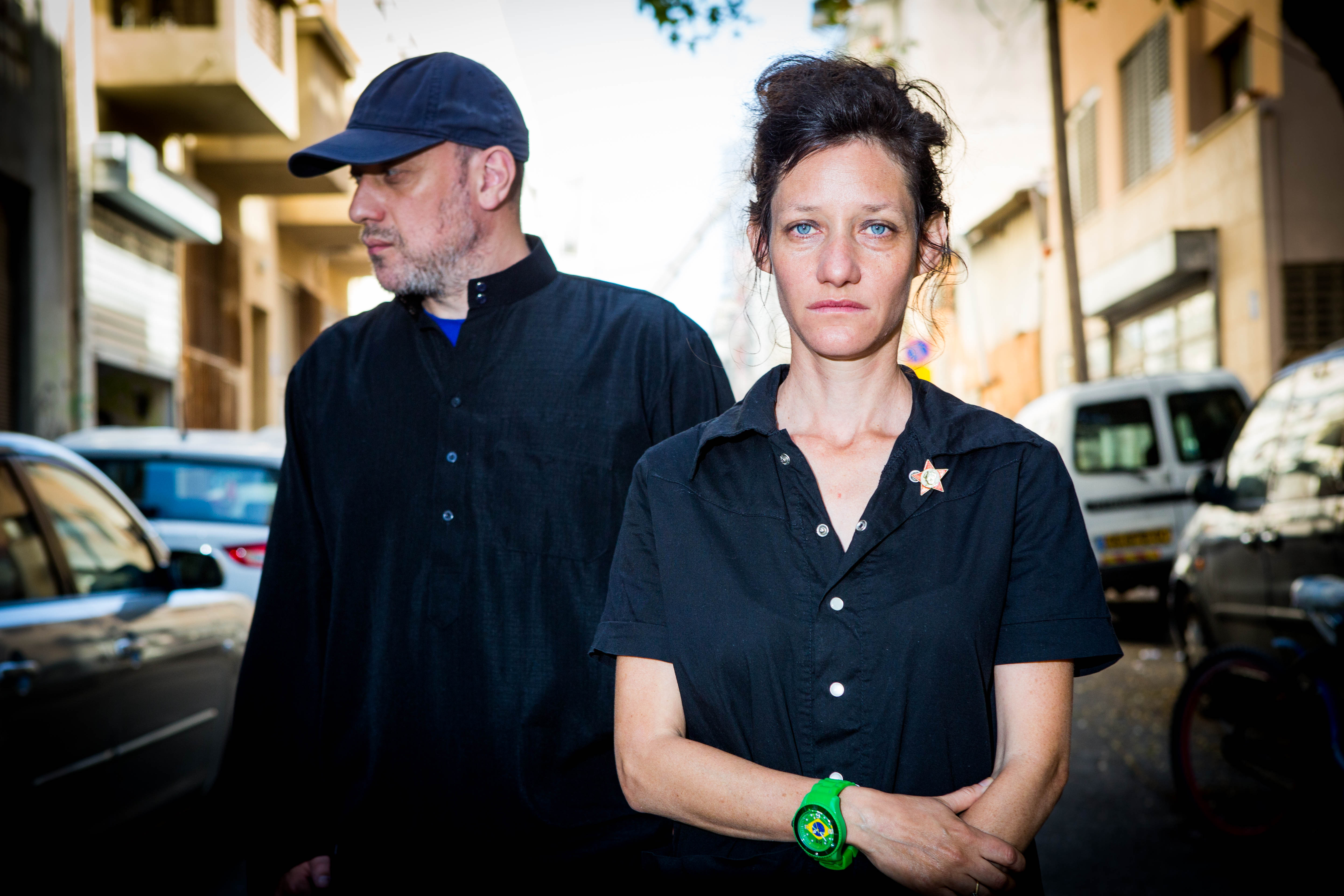
 Seit einer Reihe von Jahren veröffentlicht das aus Ruth Rosenthal und Xavier Klaine bestehende französisch-israelische Duo unter dem Namen Winter Family eine dronegeschwängerte, düstere Musik. Untermalt von Harmonium oder Klavier spricht und singt Rosenthal ihre Texte. Auf ihrem aktuellen Album “South From Here” gibt es eine kleine musikalische Änderung – eher eine Ergänzung als einen Kurswechsel – , finden sich doch auf einigen Stücken partiell rhythmische und ruppigere Elemente. Der etwas augenzwinkernd betitelte Weiterlesen
We see our era as an apocalyptic one: Interview with Winter Family
 On your website you quote from articles which describe your music as ‘doom swing’,'funeral pop’ or ‘weird wave’ (with some irony, I guess). On your new album, your style is more open and more diverse than ever before. Do you regard such stylistic categories as something to play with, or do you still feel you identify with a certain style or genre? Weiterlesen
My own quest is a transmission of energy. Interview mit Marc O’Callaghan von Coàgul
 Wahrscheinlich ist es die enorme Energiegeladenheit, die einem als erstes ins Auge springt, wenn man zum ersten mal Marc O’Callaghan bei einer Show seines Projektes Coàgul auf der Bühne sieht. Gleichzeitig entsteht der Eindruck, dass die druckvolle elektronische Musik des Katalanen, die immer wieder – etwas vorschnell? – mit klassischer ritueller Elektronik wie TG oder frühen Coil verglichen wird, ganz spontan entstanden ist – improvisiert, aus der Stimmung heraus oder einer inneren Notwendigkeit folgend entstanden. Das gleiche gilt für die Weiterlesen
My own quest is a transmission of energy. Interview with Marc O’Callaghan of Coàgul
It is probably the enormous energy that first springs to mind when one sees Marc O’Callaghan for the first time at a stage performance of his project Coàgul. At the same time one has the impression that the powerful electronic music of the Barcelona based atist, who repeatedly and maybe a little prematurely has been compared to classic ritual electronica such as TG or early Coil, has arisen spontaneously – arisen out of a certain mood of simply following an inner necessity. The same goes for the performances and the drawings of this enormously active man. In O’Callaghan’s case, all this is not in contradiction to precisely conceived concepts, which show in the strong symbolism shaping the records. Perhaps this mixture of a spirit of improvisation and strong conceptualism is just right for a project that has long been dedicated to coagulation, to the matching and bundling of previously scattered energy shreds. When you’re listening to Marc, you can easily get the impression of an unstoppable creativity, and surely we will hear more of him and Coàgul in the future. Here now the English version of his first German interview.
You’re both a visual artist and a musician. You studied also at an art school, but I guess you did creative things before. How did it all start? What can you tell us about your origins and beginnings?
Well I suppose I could say that I have been doing so-called creative things since I have memory. I could tell you the archetypal ‘artist tale’ about being a very creative child since I have use of reason, that I was a chosen kid with superpowers sent by God with a holy mission on earth; and it would be true, but I prefer not to bore you with that. Let’s simply say that I cannot point a significant origin, I think it is a more or less vague ongoing process of what you unexpectedly go learning from here and there.
To what extent do music and artwork belong together for you? Is Coàgul nowadays a frame that covers them all up?
Music and artwork are both different ways to manifest ideas. One thing completes the other and vice
versa. In the case of Coàgul, when it started the artwork was more based on collages made with photocopies of Reinassence paintings. On the other hand I was doing these automatic drawings that later became my usual way of drawing. At some point I realized that Coàgul’s music and these drawings merged quite well together.
What lead you to chose Coàgul as name?
I was in search of a Catalan name that sounded trashy and ancient at the same time, like the names of some hardcore punk bands that I listened at the moment or as the legendary Catalan heavy metal band Sangtraït. So I wrote a very long list of potential names. But then I wanted that the name for this project also contained, in a more or less encoded fashion, the reason of why I was going to do what I was going to do. When I re-read the list, I suddently saw very clearly that Coàgul had to be the name, because I realized that my intention could be exactly defined by what in Hermetism is called coagulation: to re-unite what has previously been dispersed. My initial idea with this project was to produce songs that each one worked as a sort of accumulation or condensation of specific archetypes or universal ideas or cosmic principles or whatever you want to call it. So when one song is played, the listener gets in contact with that specific cosmic principle in all its splendour. The world where we live today seems to be all about dissolution and dispersion, so my intent was to summon back some sort of ‘necessary concentration’. I loved the idea of a name with several layers of meaning, that can be alternatively read by the profane and by the initiated at the same time.
 There are certain genres in which references to the occult are quite frequent and in many cases it seems that it is only used as a prop (to make the music more interesting, to adhere to certain expectations that are connected with a genre). I always felt that Coil were one of the few artists who used references to magic(k) in a tasteful and original way and the way references can be found in your work also hint at a deeper understanding. Would you say that the Occult content is the major motivation for your work?
I would say that the Occult (or more accurately, Symbolism) is just the language I use to reach the aims of my work. In the expressive elements that I use, I try that besides the apparent common language or simply poetical meaning, they simultaneously refer to certain universal archetypes with which I like to play, to make them all have a place in the invisible long strain of primordial tradition, and to ‘hack’ this tradition in some way or another, trying to take an active part in the continual cosmogenesis of reality. But from time to time I realize more and more that it is not necessary to try to make my work look so esoteric to be really esoteric. In fact it is otherwise. And that’s where I think I failed sometimes in the past and where a lot of self-proclaimed occult artists keep on failing. I can be talking about very deep and cosmic problems with very superficial and mundane images, and viceversa. If ‘occult’ means ‘hidden’, what sense does it have to use that word if you just show it all? On the other hand I guess sometimes one cannot contain himself to vomit strings of symbols. The major motivation of my work is what I was explaining at the end of the previous answer, and the Occult might be just the medium, manifesting in a multiplicity of variations that generate the multiplicity of works.
Do you first of all follow your own quest or is the transmission of energy to the audience of the same importance?
My own quest is a transmission of energy to the audience.
I am interested in the relationship between the music and the underlying concept(s). What comes first when you start a new work?
There exist two lines or ways of work. One way (that could be called the dry way) consists in first localizing and wagering for a specific aim or idea, and then finding the words that give it consecution, and then making the synthesizer base that gives it the ‘physical body’ of sound to fullfill the construction of the song. The other way (that could be called the wet way) consist in taking some or several sensitive elements that are already wandering through the back of my mind (like some chords from an already existing song that I like, or a numerological concern for some rythmical proportion, or the fascination for some specific kind of sound, or the curiosity to explore the use of some determinate linguistical forms) and through the experimental conjunction of some of them I try to ‘decipher’ some feeling or idea that will trigger the final elements to fullfill the song. I indiscriminately use one way or another in function of my momentary state of being, or sometimes both converge in an equilibrate proportion. For example „La Forja Centrípeta“ and „Semanario Químico“ are totally made with the first way, and the „Ascensor Genital / La Mort És Dolça“ tape or some songs from „La Roda de la Justícia“ are made by the second way.
On “Semanario Químico“ the elements (fire etc.) play an important role and occur again and again in the lyrics. What can you tell us about the concept of that release? To what extent play ideas about alchemy a role in your work(ing)?
This record is about the vertical correspondence of all seven-numbered horizontalities: seven days of the week, seven planets, seven olympic gods, seven metals, seven body tissues, seven perfumes, seven electromagnetical behaviours. To summarize, seven ways or dispositions of being. Each one of these seven dispositions is composed by the combination of a couple of the four elements. That’s why in the third line of the verse of each song it appears a reference to a couple of elements. This points out to how the principle of four (the created material world, the static nature) with the addition of the three (movement, trascendence of duality) gives birth to the principle of the seven (action upon the world). So, ideas about alchemy play the same role in my work as does any other system of correspondences that enables us to connect the perennial tradition with the mundane things of everyday life, and to ultimately satisfy the universal need of the human being to live in consonance with the cosmic order and one day become God himself.
 The term ‘ritual music’ is often used like a genre description. Would you call Coàgul a ritual project in the sense that the Performances are conceived as rituals?
Yes, completely. Much more that a specific theatrical aestethic, a ritual is a programmed social context in which ordinary time is interrupted in order to open a connection with the sacred time, a time that is some sort of eternal present. And yes, that’s exactly what I try to do in my performances.
Your music has been released in (very) small quantities. Is that because you feel that your music is only for a tiny number of people?
No, at all. If it has been like this for the moment it’s because of the labels who released the records, either because of their economic limitations or because of a conscious will on their side on making an exclusive hard-to-find product that might be more and more valued as time will pass by. I think otherwise, that the more people discover my music the more accomplished will be the aims that spawned it in the first place. The Gates of Heaven have to be crushed!
To what extent is the medium (i.e. tape, CD etc.) important for each work? Are there particular pieces that are only suitable for a specific medium?
The medium is important in the measure its temporality is. For example, the tape mechanism implies that it must be reproduced cyclically, in the sense that when you finish one side you are at the begining of the other. I see this as as symbol of the gradual relationship between contraries, a sort of Ouroboros. So when I recieve the proposal of releasing a tape, I search for a pair of opposites that give birth to each of the two songs/sides. To illustrate this with an example, I will tell you that right now I am working on two songs for a tape, whose lyrics will be written in the following way: each side will contain ten verses, and each verse will start with a syntagm and end with a question. When you listen to the question, if you change the side of the tape exactly at that moment, what you will listen in the other side will be the answer to that question. When I am going to release a vinyl, I concieve its concepts in a similarly dualistic way, but having in mind that in this case is more easy for the listener to skip between tracks. When it comes to the CD or directly mp3, I try to make songs that are more free in some sense, trying to come with a corpus of work whose parts function equally well when subjected to permutability, randomness and fragmentation. To put it in Deleuzian terms: the tape and vinyl would work in an orderly fashion and driven accordingly to an initiatic program, as a tree; the digital format would more likely work chaotically and driven by contingent necessity, as a rizome. Sometimes CDs also follow a program, but instead of cyclical is more a sort of a one way trip. Well in any case let’s say that format plays a relevant role as one of the elements that determine conceptually a work.
Besides this, each format implies a listening approach in terms of concentration. To listen a record in the computer will probably imply that the listener is doing other things at the same time, and to listen to a record on a vinyl player might encourage a more ritualized listening experience. But I guess this is so subjective and the exact opposite situation can happen aswell depending on the behavioural virtues and vices of the listener in question. But for example, with the last LP „Tot Encaixa!“ I decided to avoid to upload the whole album for online listening, mainly because I think that its songs require a more attentive listening to exeprience them as they are meant to be experienced. Also because the first song of each side contain very serious questions that I prefer that the listener percieve in a reflexive situation rather than in the dispersion and hyper-simultaneity of that chaotic psychic sea that the internet is.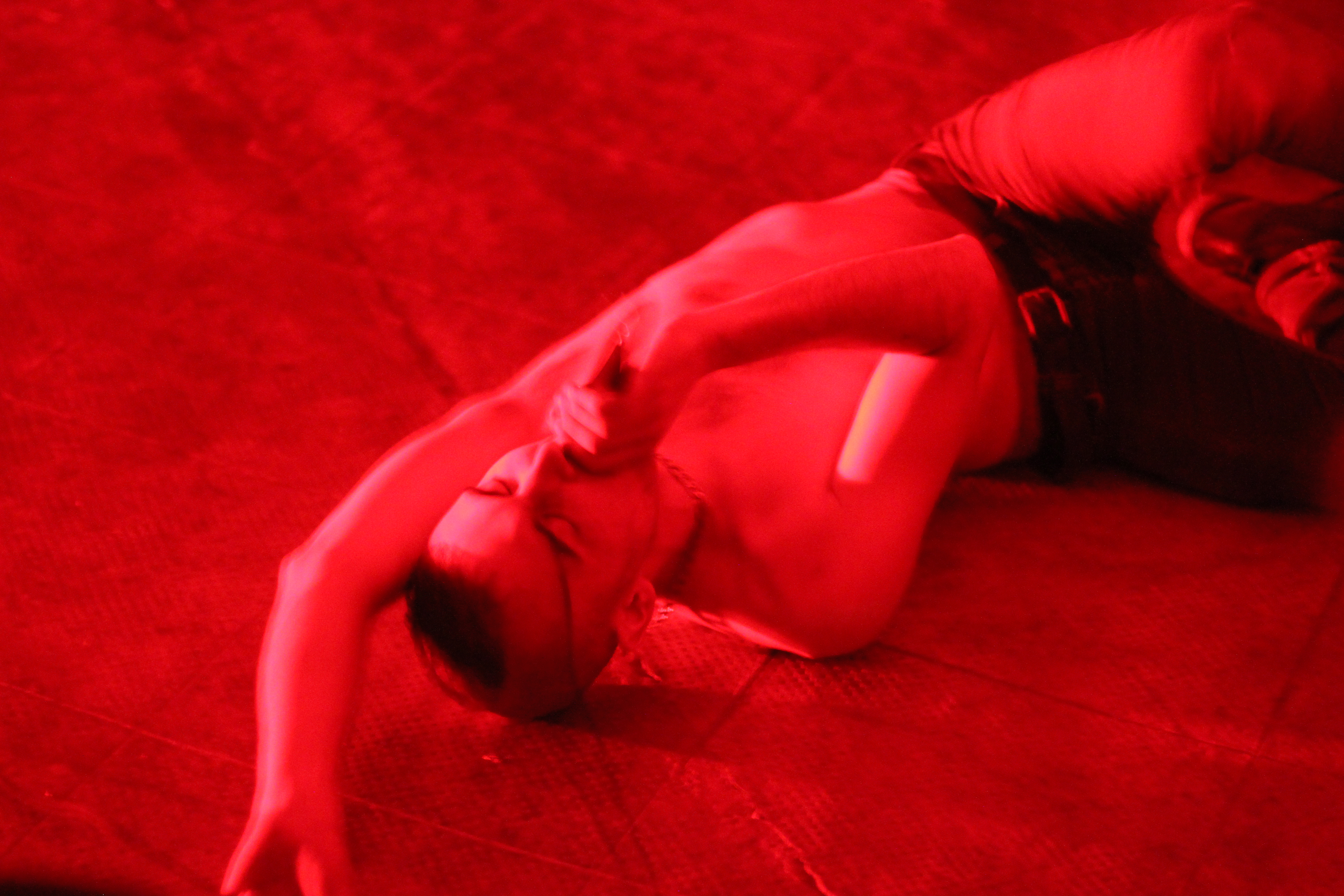
Do performances and releases have the same importance for Coàgul? How would you explain the difference of your concepts in a live context or on a record?
They have exactly an equal importance in terms of quantity, but their are totally opposed in terms of quality: on a record the concepts are expressed as a doctrine, as a sacred text, as a theory; in a live context the concepts are expressed through a real-time experience (both for me and the audience), and totally dependant on the particularities of space and time, as the practical realization and actualization of the doctrine that have been previously exposed on the records. On the other side, I have to say that both directions can become the opposite when driven to their limit. When a live concert is so archetypal and timeless it can have all the attributes of the doctrine, and when a record is listened and used in the most functional way possible it can reach the same consequences of a ritual live action.
How essential is humour in your work? Do you think underground music needs more of it?
Besides that humour is a way of shortening the distance between the speaker and the receiver, I think its a way to suggest that you have nothing to hide, that you can show yourself as human-all-too- human as you are. When bands try to look too serious I think that they are communicating a lot of insecurity in themselves, probably without wanting it. When people pretends being so serious about what they are doing, they are suspicious to me. Of course I think it needs more of it. Laughing of oneself is almost a masochist deference or duty, an act of love, a way of putting yourself in a lower position than the watcher to show him or her that you are also made of the same flesh and bone.
By the way, what sorts of music do you listen to when you’re not creating your own one? Any secret tips?
I listen to all sorts of music. I try to be aware of what’s hype at the moment, because no mattter how much I avoid absorbing things from the current trends, that my envionment will always inevitabilly infleunce whatever I do. It’s a matter of connecting oneself with the zeitgeist… if you want to influence reality, whatever you do must be placed in tune with the parameters of your most immediate space-time context. Another exercice that I try to do as much as I can (and a ‘secret tip’ that I would recomend to everybody) is to force yourself to listen to the music that you dislike most at first glance. From time to time your taste will mature and your creativity will have a broader field of possibilities to explore. That’s why I love to watch these mainstream music video TV channels with these really awful songs whenever I got the opportunity. We have a lot to learn from shitty music, because in its core it is truly functional muzak, as it is proved by its effects on population and its self-sustaining capitalist endless chain of reincarnations.
You often use Catalan language in titles, poetry and paratexts. Is this mainly because its your mother tongue or is there also a regional cultural element of your origin that plays a role in Coagul?
Catalan is my mother tongue and it is the language in which I articulate my inner thoughts, but I’m not a Catalan nationalist at all (neither Spanish). If I value the use of this language is because its local implications: I am persuaded of the idea that if I use Catalan for the lyrics it connects my work with the local context, and this contributes in making that work a sort of an archival document of a particle of history or a specific time and space. In the beginning I used it simply because I was fascinated with the blood-and-iron sonority of it, that I discovered since I was a child through the band Sangtraït. At some moments I had in mind the universalist idea of using whatever language depending on the audience to which each work was oriented; and that’s why I released a couple of records in Spanish, because they where released by labels from Madrid, or also a split tape with Dvnkel Reich and as he used the Spanish language I sang in that language aswell to put my efforts in making that tape a more unitary work. The first Coàgul work was called „Wargasm!“ because it was intened to by addressed to the whole humanity. But from time to time I also realized that singing in Catalan gave a unique archaic folk character to the project, that could be also attractive for a non-Spanish audience for its exoticness; and from then onwards Catalan have been the vehicular language of Coàgul, to the point that now I see it as a sort of a holy language like Latin, that centuries after the language is already dead it is still used in the Catholic Church or in legal slang, that must be deciphered by whosever from other countries who wants to access the metaphysical revelations encoded in the lyrics. I also love the fact that, for the people around me, Catalan sounds so homely. And the fact that it works for such music is contemplated by them with hilarious disbelief. A friend once told me that through his first listening of Coàgul he restored his faith in the use of Catalan in music.
When I was in Barcelona my colleague (who is fluent in Spanish) was faced with the situation that some people preferred to reply in English rather than Spanish. What role does the Catalan language play (for you as well as for others)?
 I don’t know anything about the situation of your friend, but I think this is a rather unusual case. Maybe these people preferred to reply in English because they thought it would be an easier and faster way to communicate with him, or maybe they took it as an opportunity to practise their English. That’s exactly what happens to myself when I’m working at the souvenir shop of the Cathedral, that as most people coming are tourists, I activate my mental automatic pilot in speaking English all the time to be faster and more expeditious in what I’m doing. Besides of this, the truth is that I don’t give much a shit about the Spanish vs Catalan controversy. Most people defending either one side or another are just plain assholes that have more in common between themselves (at the end they live the same way and they are trapped in the same close-minded mental schemes) than what both of the two supposedly-antagonical groups have in common with me or with the people I heart. Be it from one color or another, one tongue or another, one sign or another, economical lobbies are always the same shit: they dress themselves with the cloaks of idealisms or good intentions again and again, but at the end their only interest is to satisfy their boundless greed. Power sees no further than itself. Although as I already said Catalan is the language I have spoken since I was born and the tongue in which I think, in my day to day life I speak whatever tongue I feel more at ease with my interlocutor. I wish I could speak all existing languages.
Actually there’s a quite prolific underground music scene in and around Barcelona with bands, venues, labels and record stores, but its not as well known as it should be in other parts of the world. Do you think it needs something like a ‘Catalan Occult Psychedelia’ hype (compared to the term ‘Italian Occult Psychedelia‘, which was used quite often in recent years) to print your city’s name a bit bigger on the map?
I don’t think it could be possible that such ‘Catalan Occult Psychedelia’ can even exist, fristly because to be an occultist means you have to believe in some immanent or trascendent entities that can exist independently of humankind, and I think almost nobody in the Catalan music scene believes in anything beyond what’s human or material. Very few of us believe in any God. Neither I think the ‘psychedelic’ label can be applied, as on one hand the people practising psychedelic music are not very psychedelic in the metaphysical sense of the term, and on the other hand the people who can be considered truly psychedelic in eseence are not interested in psychedelic music at all (which I completely understand). Well in any case I don’t think there is any common stylistic denominator in the Catalan music scene as to use a stylistic label to refer to it, at least not now. If Barcelona’s name have to be ever printed bigger on the map I guess it will be for other reasons than for the credit of an hypotethic music style. It is plenty of diferent sub-circles of people making a lot of things, that’s true, but each one in it’s own way. There’s not any unity. But I think this is not a local issue, I think this is happening everywhere in the world right now because of globalization’s acceleration consequence of the hyper-simultaneity of the internet way of life. My position on that is that we should simply keep on doing what we really believe we have to do, and Time will tell.
As far as I know you plan a Split tape with Escama Serrada and a new album on Nekofutschata. What can you tell about these releases?
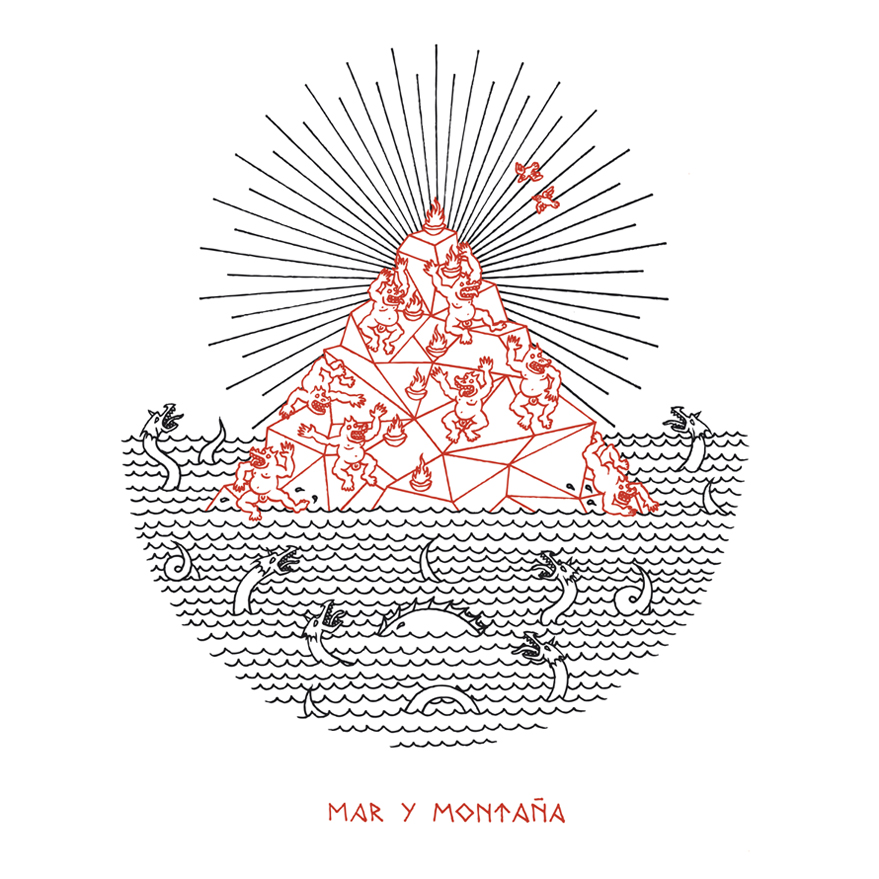
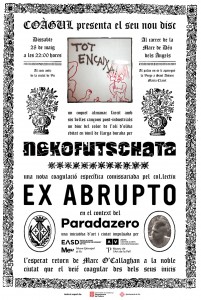
By the moment I’m writing this, the new LP on Nekofutschata is already out and available through TUT/RUR distribution. It is called „Tot Encaixa!“ and contains three songs on each side. The six songs were recorded during the same sessions as „La Forja Centrípeta“, in April 2014 at Barcelona’s La Cova De La Bèstia with the assistance of Daniel Muerte (the bassist of the Catalan punk band Una Bèstia Incontrolable). „La Forja Centrípeta“ was a very programmatic and conceptual album, and these six songs were more freely spawned little tunes with no previously thought destination. When „La Forja Centrípeta“ was already on its way to the pressing plant, I decided that I wanted to release these six songs in some way or another. At the same time and by total chance, I started to speak with Jürgen from Nový Svět through the internet. The way by which I got in contact with him is still blurry in my rememberance. On one side I remember that Christian Schoppik, a very cool guy I knew because he proposed me to go to play to Würzburg in January 2015, once told me about a secret Soundcloud profile of Jürgen. On the other side, Sergio from Escama Serrada revealed me that it was Ulla from Nový Svět who anonymously bought me some engravings and prints through my webstore to give to Jürgen as Christmas presents. Then I asked Jürgen to recommend me labels to which I could write with a proposal to release these six songs. He kindly recommended me a couple labels, but before I even replied him to say thanks he wrote me again saying that he wanted to release these songs himself and that he wanted to reactivate the Nekofutschata Music Cabaret again just for this reason. As being myself a huge Nový Svět fan since years ago (even before starting Coàgul), my joy and suprise in not only learning that they knew and liked my work but also that they were interested in releasing it was so big that there was almost no room in my heart for such immense emotion.
What can you tell us about the pieces on it?
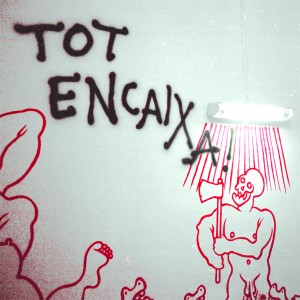 The title track of the album was conceived in Spring 2014 as the soundtrack for a short film called „Hathor“, produced by the collective Ex Abrupto and by CopdeCap (the moniker of Zoë Valls, the daughter of Jordi Valls from Vagina Dentata Organ), in which I was also featured nude as a ‘dog-man’ being carried by a girl through a poppy field close to the deep Catalan village of Moià. This is also the context where the inlay photo was taken by the Ex Abrupto photographer Efrén Razquín. Later in Summer of that same year Ex Abrupto arranged a festival at Moià in which I participated as a resident artist, staying for a whole week in an empty room of an abandoned hostel painting its walls with motives related to folk tales of that rural area. By the end of the residency I performed a live action playing the „Tot Encaixa!“ tune for the first time. From the audiovisual register of that work, captured by the camera of the great artist and friend Adriana Petit, come the photograph of the mural painting featured as the artwork of the LP aswell as the video running throgh the net. Even as being a more miscellaneaous corpus of unrelated songs, all of them have in common that they are in some way or another a document of that time and space, and also that all of them are equally conceptually related to a more day-to-day situational and social ideas. The title track is concieved also as a sort of formulae or axiom that points to the synchronical nature of the universe. Like when you think of a specific person and then you bump with him or her on the street, or when it happens that whenever you look at the clock it always shows repeated numbers: 11:11, 23:23, 03:33, etc. The cosmic law of the invisible cords connecting the different coexsiting universes through symbolical correspondences. The ‘micro-macro’ law by which magick and religion function. And also the paranoiac feeling, understood as a sixth sense that helps us perceiving these correspondences when they are most hidden. I now understand that this same idea of an ode to the coincidences of life is at least a ‘karmic justice’ way of honoring back the same coincidential dynamics that finally drove to the materialization of this LP. There is also another video of the second track, called „Efedrina“ running through the net. The album will be presented with a specific live action in the context of the next Ex Abrupto intervention, that will be held in a palace where blessed Sant Antoni Maria Claret had a vision of the Virgin Mary, in the deep Catalan city of Vic. This will be the next 28th of May in the context of the „Paradazero“ festival.
What about the release with Escma Serrada?
The album with Escama Serrada is neither a tape nor a split. It is a collaboration in which Sergio and I started working long ago when we know each other, back in 2013 or so. The process consisted in the surrealist well-known techinque of the cadavre equis, by which each participant produces something and sends to the other so the other adds more things on it, accumulating layers and layers until it ends by being a work of the two. This album will be called „Sub Luna Regis“ and it is all about the joys and sorrows of the subconscious mind. Sergio suffers from insomnia and I was sonnambulistic when I was a kid, so we both have strong convinctions about these issue. I firmly believe that the world of dreams is an equally real world as the ‘real world’ that we percieve when we are awake, but that it works according to a logic so different from the daily logic that we cannot comprehend it at all. When you dream that you meet some person (alive or dead) in your dreams, I believe that you are really meeting that person in that parallel world. Ancient religions asserted that dreams where messages of the gods, specially the dreams that one remembers for the whole life. During some times I tried to keep record of every dream I had every night and of every live experience I lived during my every day life, with the intent that more and more the two worlds mixed in one single total reality: something like the gesamkunstwerk of experience. The title track „Els Regnes Subllunars“ is about that undeterminated realm where both sides of all (conscious and unconscious, day and night, good and evil, reason and folly) collide in some sort of a Faustian confusion. This track will be featured in a film by director Xavi Martínez Soler (who introduced us our common friend Eva), in which we will appear at some scene playing Escama Serrada & Coàgul in an abandoned factory amongst lost souls driven by the pulses of the music. It also contains a Roy Orbison cover that we are still not sure if we will leave in the album or not. In any case the nine tracks constituting the album are already finished by now, and at this moment we are searching for labels who might be interested in releasing it. So if you permit me I will take avdvantage of this opportunity to say that whosever is interested in releasing this recordings don’t hesitate to get in contact with us.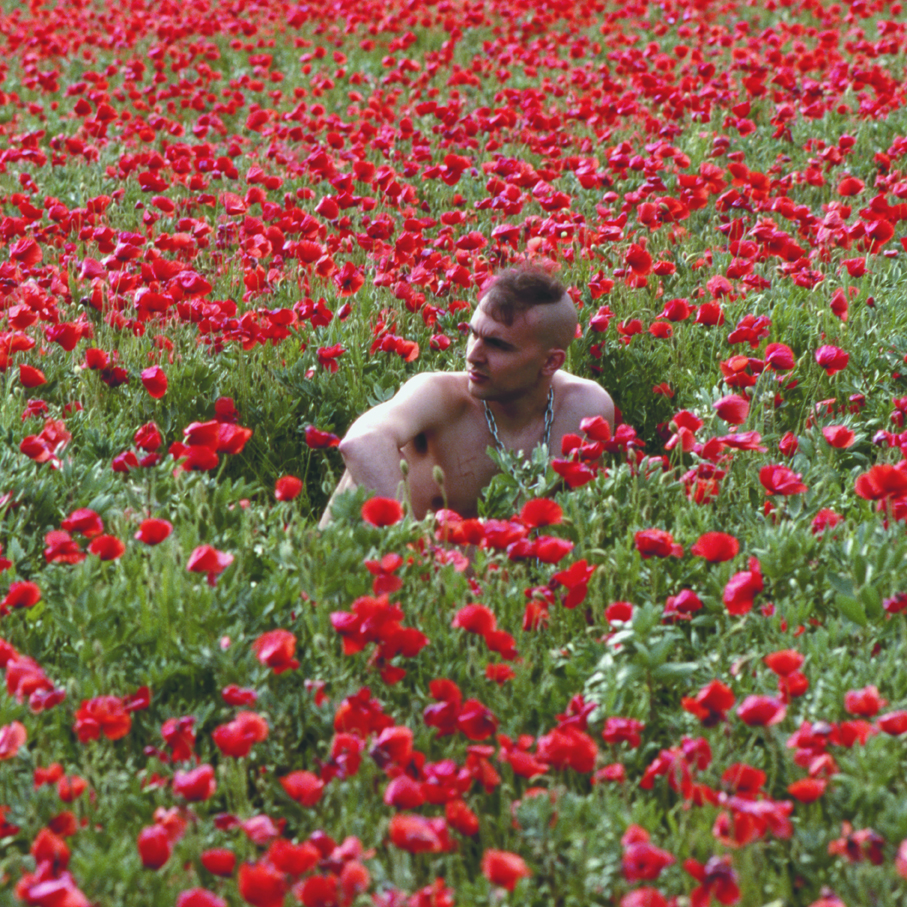
Are there any other projects you’re already involved in?
Other recordings in which I’ve been recently working and that are planned to be released soon are: 1) A 90 minutes tape to be released by Demonodrome Records (the label of Víctor from Dvnkel Reich, +++, Assassani), containing very extended 45 minute long ritual versions of the coagular songs „Baixa Baixa Pel Camí“ and „Puja Puja Entre Les Branques“, intended to be a functional record for strictly liturgical use. 2) A 20 minutes tape to be released by Conjunto Vacío (the tape label of Sergi and Andrea from Dead Moon Records, Wind Atlas, Boston Pizza Records) in their batch series. This will be the tape I told you before whose lyrics will contain questions whose answers will appear if you switch the side of the cassette. It will be a sort of a thesis about the transformation of the urban zones by the process of gentrification, explained through its correspondence with a social application of the two opposite alchemical ways moist and dry, though twenty stages determined by the Arcanes of the Tarot. 3) The collaboration of Coàgul with noise-punk band Cadena, which we recorded after our live concert together at the Conjunto Vacío festival last Autumn and that we have the intention to release as a co-edition of several Spanish labels including Boston Pizza Records, Discos Enfermos, and Broca Records. This record is all about issues related to the metaphysics of urbanism and modern-world nihilism. 4) Another cadavre equis between Coàgul and the Valencian kosmiche synthwave band Polígono Hindu Astral, to be released by Cintas Cromo (the tape side-label of Burka For Everybody), which is almost getting the form of a new project called Polígono Coagular Astral and that is also related to the metaphysics of urbanism and the application of sigil workings by flanneuristic derivés through the geometrical association of planetary magic squares with the forms of the city maps.
Another Coàgul-related thing in which I’m working right now is a sort of an illustrated inventary in which I am listing and compiling all the performance art actions that I usually do in the live coagulations. It will be like an instruction book but also a sort of a ‘performance curriculum vitae’ that I plan to release through whatever independent publishing house that might be interested in it, or if not I will release it all by myself in the poor-means fanzine-style that I always used to do.
(M.G. & U.S.)
Fotos: Abel Castells, Adriana Petit, Efrén Razquín, Zoë Valls
We make music with our anger. Interview mit group A
 Auf den ersten Blick wirken Tommi und Sayaka, die seit einigen Jahren unter dem Namen group A analoge elektronische Musik zwischen Noise und Minimal Wave spielen, wie die perfekte futuristische Version einer exotischen Fantasie: zwei nur spärlich bekleidete Japanerinnen mit body painting und den in Ostasien bekannten Reisbauernhüten, die allerdings aus Aluminium sind und so auch ein bisschen an die Kopfbedeckung diverser Chemtrail-Paranoiker erinnern. Doch auch wenn group A das Spiel mit Klischees mögen, haben ihre Musik und ihre Performances weit Weiterlesen