
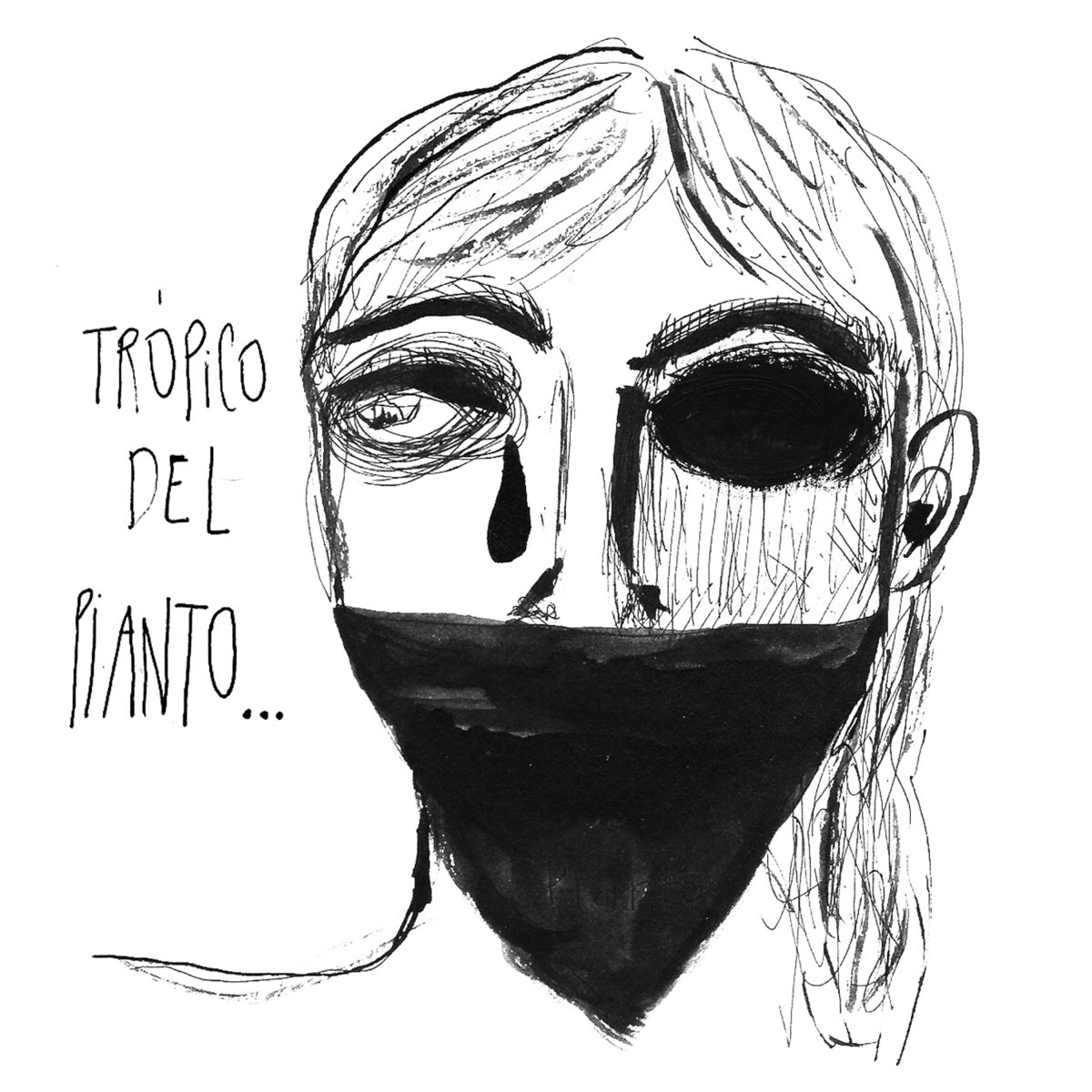
 Hinter dem Nom de guerre Gianni Giublena Rosacroce verbirgt sich der Turiner Multiinstrumentalist Stefano Isaia, der hierzulande wahrscheinlich am ehesten noch als Klarinettist der orientalisierenden Psychedelic Rocker La Piramide di Sangue, vielleicht auch als Mitglied der Movie Star Junkies in Erinnerung geblieben ist. Isaia spielt aber neben seinen zahlreichen Bands seit mindestens einem Jahrzehnt solo und hat unter Weiterlesen
Schlagwort-Archive: Gianni Giublena Rosacroce
Armageddon has already happened. Interview with Juan Scassa of Futeisha and La Piramide Di Sangue
 With his main endeavor Futeisha, Turin-based Argentine guitarist Juan Scassa plays an oblique but beautiful blend of soft, Mediterranean folk sounds, psychedelic noise and radio play-like sequences. What distinguishes his music from common “dark folk” standards is the absence of any tame romanticism, and with its snappy nihilistic undertones it is an ideal representative of a direction, for which David Tibet’s term “cartoon apocalypse” would fit quite well. In the following interview, Scassa talks about his involvement with the notorious psych rockers La Piramide di Sangue, about the beginnings of Futeisha, about his second mainstay in the world of comics and the planned new album, which consists of cover versions of notable Current 93 songs in Japanese.
I first came in contact with you in the context of La Piramide di Sangue, but I’m sure you did music before. So what were your first endeavors in music? Any old projects you would still recommend?
I’ve started to work with Stefano Isaia (Movie Star Junkies, Lame, ecc) for the first tape of Gianni Giublena Rosacroce, out on Yerevan Tapes in 2011, and then La Piramide began. Stefano is a great musician and the album is really inspiring. The moniker Dedalo666, that I used to use came from this release.
Some time before, in 2008, I’ve played in a lo-fi band, Dirty Sanchez. Once we played in a squat and we got insulted by some skin. Maybe some of the songs werenot so bad, but we had absolutely no experience. With my band-mate Andrea we recorded some noise-concrete tapes under the moniker Jennifer. No good music, but good memories.
Is music your basic default setting as an artist, or did you start with visual stuff? Did you have an academic teaching, or is your approach more of an autodidact sort?
I studied classic guitar when I was at high school, but I practice a very punkish DIY approach.
I’m writing comics, you can find me in underground comics expo selling porno-nihilist strips with my mate Daniele “Michelangelo della Sborra” La Placa. I don’t define myself as musician, writer or artist. I’d prefer cultural agitator.
Were you a founding member of La Piramide? How did you guys meet? If you had a (vague) concept of the music and the symbolism, how would you describe it?
As I said, Stefano was recording his first solo album as Gianni Giublena Rosacroce and asked to me to ad some classic guitar. He was already thinking to form a new psychedelic-rock band, so we spoke with some friends of us: Kebab (Craxi Driver, Murdercock), Jena (Six mistake, Licenza di Collina), Krano (Vermillion Sands, Krano), Stefano Lopiccolo (Love Boat) and Walter (King Suffy Generator). We rearranged the songs in a more rock attitude… so La Piramide di Sangue was actually a pyramid with a heavy metal stone base and the Stefano’s clarinet on the top.
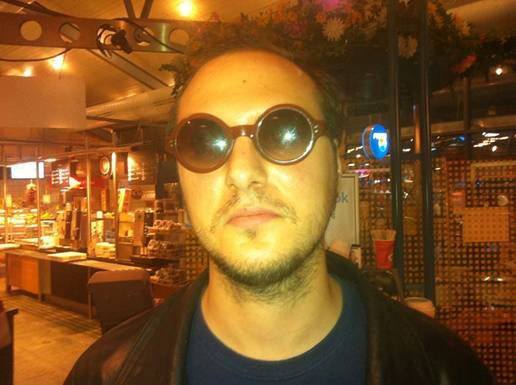 How was your role in the group apart from playing the guitar? Did you take part in the composition process, or was it more jam-like improv anyway?
It depends song by song. We used to jam, but usually songs came out from some melody of Stefano and then the other contributions were arranged all together.
After the albums “Tebe” and “Sette” and a couple of concerts it got a bit quiet. Is it, because it’s a seven piece and the members live at different places? Will it in the one or other form go on in the future?
I’s very difficult to manage a seven member band, even more when everyone has a lot of other projects. Since our drummer moved Sardegna, La Piramide is in a kind of non-recovering coma. I don’t think we’ll play anymore, and it’s really a pity, because still we have a new album of great songs to record.
What can you tell us about the birth of Futeisha, which, as I guess, is your main project today? Was there a background story of it, or some previous adventure that lead in that direction?
Futeisha was born in Kyoto 2010, recording concrete sounds, voices and manipulating sounds. I was playing guitar in a punk band called Flat Sucks at the time. There are some old Futeisha albums, like “Simulacra”, between 2010 and 2014, when “Dannato” come out, but they were recorded really bad and are not interesting at all.
Was it conceived as a solo project or as an open one? Seems you soon decided to works with a number of collaborators.
 Since I’m a big fan of England’s dark folk scene, I’ve decided to manage a band like David Tibet or Douglas Pierce did it. You see, here in Turin there is a kind of scene with bands like Movie Star Junkies and Oaxaca and it’s really cool to play with friends. In “Dannato”, Krano, Vinz (MST, Vernon Selavy, Heart of Snake), Maria (GGG, Space Aliens from Outers Space, Lame) and other helped me very much. I’ll be forever grateful for that.
As far as I know the name Futeisha refers to a Korean minority in Japan and was originally a derogative term. What can you tell us about this subject?
< Futeisha (不逞社, “The Outlaws”) was an anarchist group founded by Park Yeol and Kaneko Fumiko in Japan in 1919. Futeisha satirized the way Koreans were referred to by the authorities as troublemakers. Futei senjin (不逞鮮人), or the unruly Korean. Park was arrested without charge on September 2, 1923, the day after the Great Kantō earthquake. Two days later Kaneko was also detained by police. Based on thin evidence they were eventually charged with high treason for plotting a bomb attack upon the wedding of Crown Prince Hirohito. Both were convicted and sentenced to death on March 25, 1926, but their sentences were commuted to life imprisonment by the Emperor Shōwa. Kaneko died in prison on July 23, 1926, reportedly by suicide. > from Wiki
Seems you have a general interest in Japan and Far Eastern counter culture. What are your main references in that context and what role does this play in your music?
I studied Japanese at University and I’m a translator of Japanese. I lived in Kyoto for one year as a student. I miss Japan very much. I very like the austerity and the ritualistic aspect of some traditional music and culture. Undoubtedly some grandmasters of literature, like Mishima Yukio, Ishikawa Jun or Abe Kobo, are not just main refences for the music.
As you told me recently, you are about to record a Current 93 tribute album with all lyrics in Japanese sung by a Japanese singer. As I’m sure you won’t just change the language, what can we expect?
We want to translate the songs into Japanese and record one of the weirdest album ever. Hirayama Yu is a mucisian who does harsh-noise cut-up stuff, writer (he wrote several books about the Industrial and Experimental, mangaka and runs a little label Suikazura (in Japanese “Honeysuckle”).
In “Temujin” on the first Futeisha tape you already referred to Current 93, and the live piece “Curento 93″ seems – apart from being a folk dance – also to allude ironically to this band. Indeed, David Tibet and his ever changing group is one of the most influential underground groups of the last decades. What would you say makes them so outstanding?
“Curento” is kind of a traditional music and dance piece from the Piemonte Valleys. It was a joke to re-name the song in this way. I think a radical approach to art in general makes David Tibet’s c93 one of the most outstanding bands: a perfect and creepy mix of tradition and avantgarde. The way Tibet does music is in some way related to the theatre of Antonin Artaud, like a continuous revelation of the inner and scary self of the human being.
Are there other influential artists or contemporary favourites that you would recommend?
Oh! There are really a lot of good musicians. I just know I like Jonathan Richman very much.
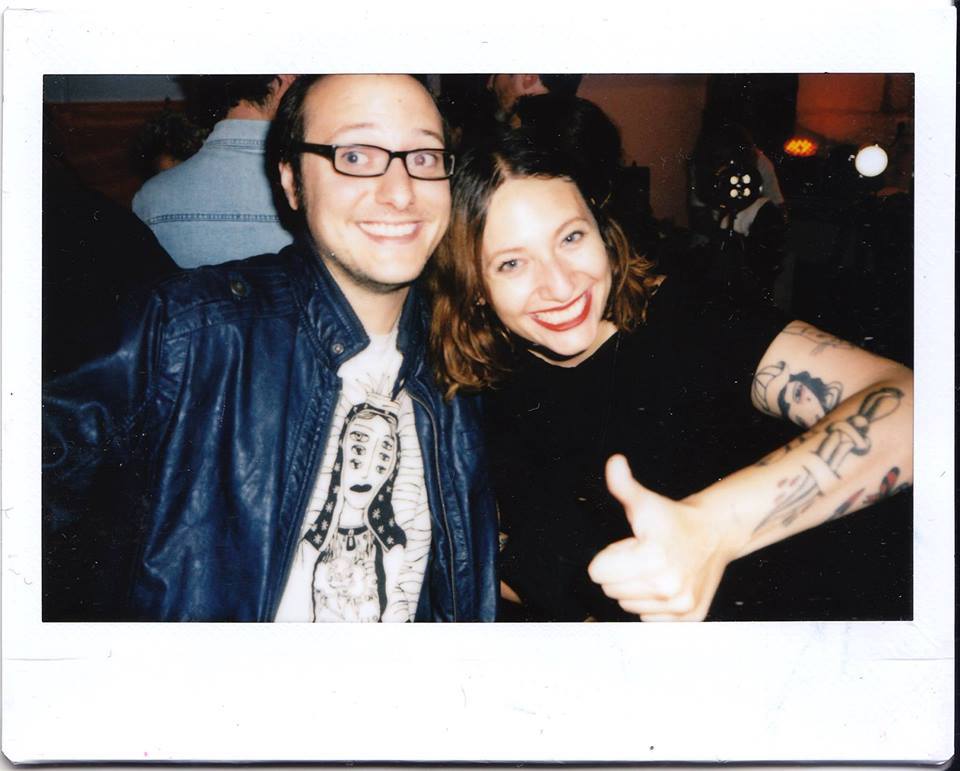 One major element in Futeisha seems to be the combination of some quite far contradictions, for instance you can hear mediaeval pastoral guitar pieces followed by dystopian noise. But in all their confusing darkness, there is always something vital and humorous in these sudden changes. Would you agree, and is this also a bit how you see the world?
Contradiction is a topic that has always inspired me. It is one of the main features of life itself. Folk sounds, like the classic guitar, in a harsh noise environment is a research of humanism in a halber mensch reality. But the landscape in Futeisha is pessimistic: Armageddon has already happened. The reseach of the past is just a nostalgic, an estethic research of a human being that can be no more.
Although there is this folkish element in Futeisha, you hardly play songs in the strict sense of the word, often I notice a strong filmic or radio play like narrative. Is this intended?
I like to construct simple melodies and to create musical “rooms” or “moods” to describe the death of the soul.
Your album “Sulla Via Del Re Nel Ritorno” is a recording of one of a few Futeisha concerts, and from the atmosphere it sounded way more ritualistic than the studio recordings. How can we imagine Futeisha shows?
I try to research Antonin Artaud’s idea of Theater of Cruelty as “a primitive ceremonial experience intended to liberate the human subconscious and reveal man to himself”. Certainly Michele Guglielmi (Oaxaca, I Residenti), Ivan Grosso (Oaxaca) and Ottavio Boglione arranged my songs with both traditional and electronic instruments creating a really magical atmosphere. It was really something to play with them.
Your second field of activity is the website “Becomix”, a kind of blog database for comics. What can you tell us about this project and how big do you like it to grow?
I’m working in a database/marketplace for comics, where everyone can manage his collection and buy/sell comics. Just like other sites, but exclusivelly in comics. I don’t know how big it could become, but my collegues did a really special SEO working. Hope to have a job tomorrow eheheh. In the main time I started to write about comics, and recently, an important site, like Lo Spazio Bianco, asked my collaboration. I’m very proud of it.
In the maintime with Daniele we’re working on a new book inspired by 90s sci-fi manga and Burroughs. It will be published in 2019, I hope.
If you had to name the most combining element in your different music projects and your work for comics and illustrations, what would it be?
Eradication of every day certainty.
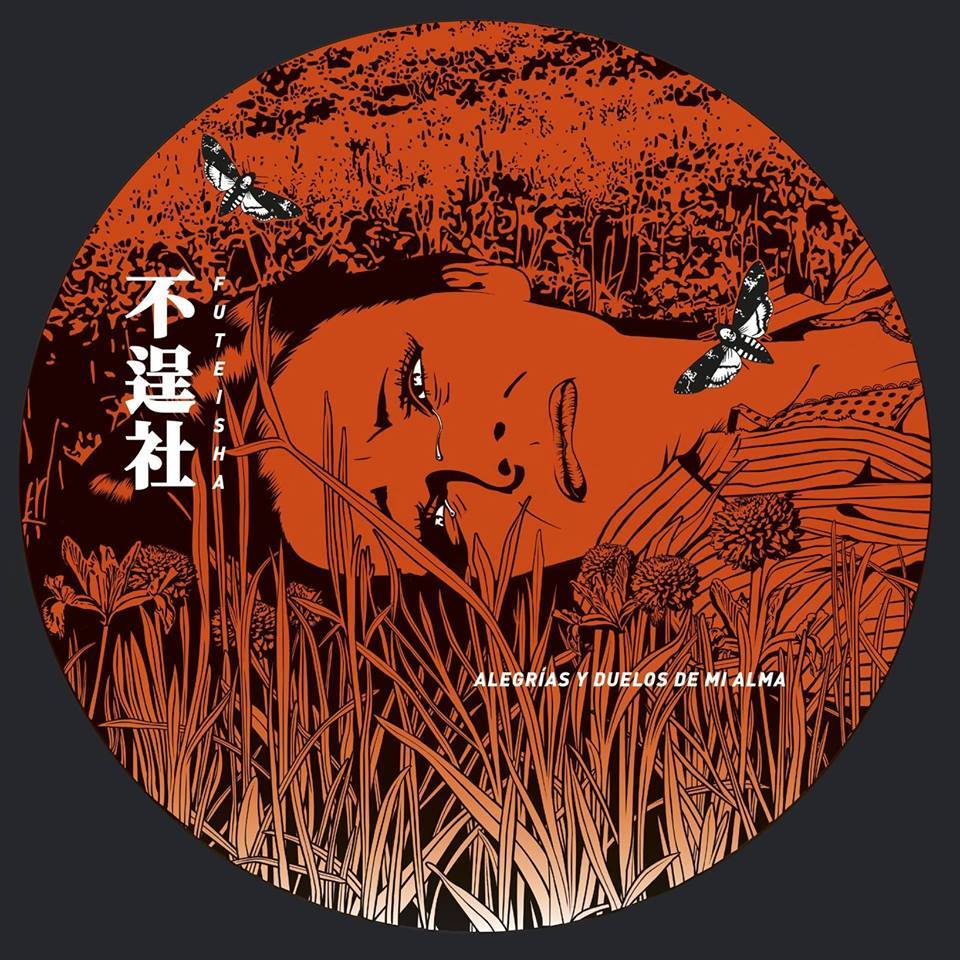
FUTEISHA: Alegria y Duelos de mi Alma
 Mit diesem Tape, benannt nach dem Freuden und Kämpfen seiner Seele, zieht uns Juan Scassa in das amusikaliche Inferno von Futheisha – verfremdete Schreie, klirrendes Material, zermalmendes und zermalendes, schepperndes und schabendes: Scassa, der sich mit La Piramide di Sangue, den großen Orientalisten des italienischen Psych Rock, einer Ästhetik des Schönen verschrieben hat, macht ernst mit seinem eigenen Projekt Futeisha, das man beim Debüt „Dannato” noch für eine einmalige Hommage an eine okkulte apokalyptische Folklore halten konnte. Weiterlesen
Searching for Subterranean Sounds. Interview mit Silvia und Andrea von Yerevan Tapes
 Abgesehen von der ursprünglichen Bedeutung als Ettikett rangiert die Semantik des Begriffs “Label” zwischen Plattenfirma und Marke, und auch in weniger kommerziellen Nischen kann man viele Labels dahingehend unterscheiden, welche der beiden Bedeutungen ihnen eher entspricht. Zum einen gibt es die Labels, die innerhalb eines nicht allzu eng gefassten Spektrums eine gute Bandbreite an Acts verlegen, ohne dass es eine klar erkennbare Hausphilosophie und eine deutliche ästhetische Linie gäbe. Auf der anderen Seite Weiterlesen
Searching for Subterranean Sounds. Interview with Silvia and Andrea of Yerevan Tapes
As far as I know you both played in bands such as His Electro Blue Voice and one of you is also running Avant! Records. Later on you formed Yerevan. When and how did you decide to do publishing activities besides your own music?
Actually only Andrea used to be involved in His Electro Blue Voice, having been drummer in the band from day one until 2013‘s full-length album on Sub Pop. He also runs Avant! Records since 2007. Together we started Yerevan Tapes in 2011 with the intent to explore new sounds previously unexperienced.
Where have your music roots been? Was there some sort of a subcultural scene you were part of?
We may come from different musical background but after several years of listenings we both felt we needed something new, something deeper more artistically and spiritually engaging. That’s exactly the kind of ground Yereven Tapes took its first steps from.
 I have the impression that the labels, Yerevan even more, is rather some art concept of its own than a business. Would you agree?
Most of indie labels come out of passion, often with an ordinary job on the side to bring some money in. This leaves enough room to grow a specific identity and the necessary freedom to choose the best contents.Speaking of Yerevan, we felt the need to build something with a strong aesthetical identity where music, medias and symbolic communication were one.
If you had to scetch the artistic vision you follow with Yerevan, how would you express it?
As our motto states, we are a “cassette and vinyl record label for sacred sounds”. It means we’re chasing those music projects who can deliver their own vision of the sacred, their Weltanschauung, no matter how. When one takes a look at our catalogue he might feel the differences rather than the similarities between the artists, but they all share a common aim.
Your two labels differ not only in terms of the medium (Avant! mostly vinyl, Yerevan mostly tape), but also bit in terms of styles, as Avant! has some focus on post punk/dark pop and Yerevan is more into the experimental and psychedelic in the broadest sense of the words. Did this just happen or do you think, style and medium fit for some reason?
The tape is some sort of natural media for experimental music since the 70s, if not earlier. So it comes as no surprise that we felt it as our primal support as YT. It’s cheaper, it’s easier to distribute worldwide, it gives you the opportunity to release material from obscure artists without having to face the difficulties of a vinyl record production. At the same time, just as in the post punk/dark pop realm the tape has recently came back as music medium, we on our end have done 3 vinyl releases already and we are planning to have more for the near future.
Bands like Father Murphy, Bird People, La Piramide or German Army play quite different styles, but do you think there’s a read thread, some artistic or spiritual element that combines them?
As we said above, they surely have different styles but at the same time, we think it is kind of easy to see what connects them together. Their search for subterranean sounds may end in different artistic solutions but what moves them seems to be the same: a quest for spiritual inquiry.
Are there any limits in the range of styles, is there kind of a stylistic no go area, or would you potentially release music from any genre?
Of course there are boundaries, as we will not release punk rock or heavy metal music for instance, at the same time is not strictly a matter of pure musical style performed while it is about how much it does fit within what we are looking to express with YT. As long as we think it bonds with what we are doing we may consider it.
Is there something like a favourite release that has a special meaning to you?
As rhetorical as this may sound, we have no favourite release as each one has its own identity and particular history. Behind every records we put out there is a connection as much personal as possible, with the music and the artist who created it. For different reason we are exited about every one of them so far.
 Artwork plays a stong role not only in the tape design but also on your web spaces, and there is a lot of religious and ritualist symbols from all over the world. How is your interest in this, and where is the relation to your concept and the music?
While we may collect influence from religious and artistic expressions from different places and times, we have a special eye for the kind of cinematic results that Soviet Armenia directors achieved. The fact that Silvia graduated in Cultural Anthropology surely played a strong role within the YT quest for aesthetics.
Could you give us an example or two for Armenian movies that have influenced you?
Surely. The Yerevan cassette-tape covers come straight from a particular time and space. And not only Armenian movies, sometimes Georgian or Ukrainian ones too; the point is that they all belong to a specific period and context: the soviet lands between sixties and late seventies and its cosmogony. There’s something in the way they represent the world that somehow has a strong link to us as label. In a very concise list just to get the idea, besides the well-known Sergej Paradžanov and his marvellous filmography (all his movies are perfect gems in their own way, especially Shadows of Forgotten Ancestors (1964) which I’m particularly fond of), I can recommend Wishing Tree (1976) by Tengiz Abuladze, and two short movies by Artavazd Pelešjan: Inhabitants (1970) and Seasons (1975).
So this already answers my next question – you didn’t chose the name of the Armenian capital for mere exotic reasons…
Like we just said, a first infatuation came from Silvia’s University studies, one on Armenian culture, language and history in particular. We think the name we chose stands for something able to build bridges between Here and There. It might not have been Yerevan, but it would have been a toponym in any case as we think toponyms are thick and widespread words.
Several psychedelic and experimental music styles exist now for a long time. What do you think are the main qualities of such music today, and what could be the reason that it became a bit more popular again?
Probably it’s the strong mystical appeal that psychedelic music hosts that managed to make it last through all these years. Tribal approach to the drumming and deep drones always have a direct power on our souls. Music fashions come and go, but there’s always room for experimenting in sounds.
A lot of younger psych bands today deal with esoteric and occult motifs, but often combined with some playful or ironic note. Some people would say that this is a sign of hipster stuff, but do you think that such topics are more vital when they are not too serious?
 We don’t wish to be looked as too serious but at the same time we don’t think we are much ironic about our iconography. We like to blend religious symbols with contemporary artwork, but we do not mean it in a funny way. We just look to create a new context for those everlasting icons.
What is your opinion on a tag like Italian Occult Psychedelia, which is somehow also applied to bands of your label by the music press?
We think it has proved itself to be a great tag to gather different bands with different styles under one common vessel. As with everything it‘s no perfect tool, but it surely has been helpful to export the current Italian sound abroad.
In our country, the media dealt only punctually with Italian music, yet there was a huge output of releases for a long time. In the last years, this changed a bit and people become aware of the variety of Italian stuff. Do you have an idea about this change?
We only can think that what you say proves our point. Some times it takes a little stratagem to make things work properly.
Your newest release is a tape by electronica producers Zone Demersale. What are your plans for Yerevan in the nearer future? Any new explorations?
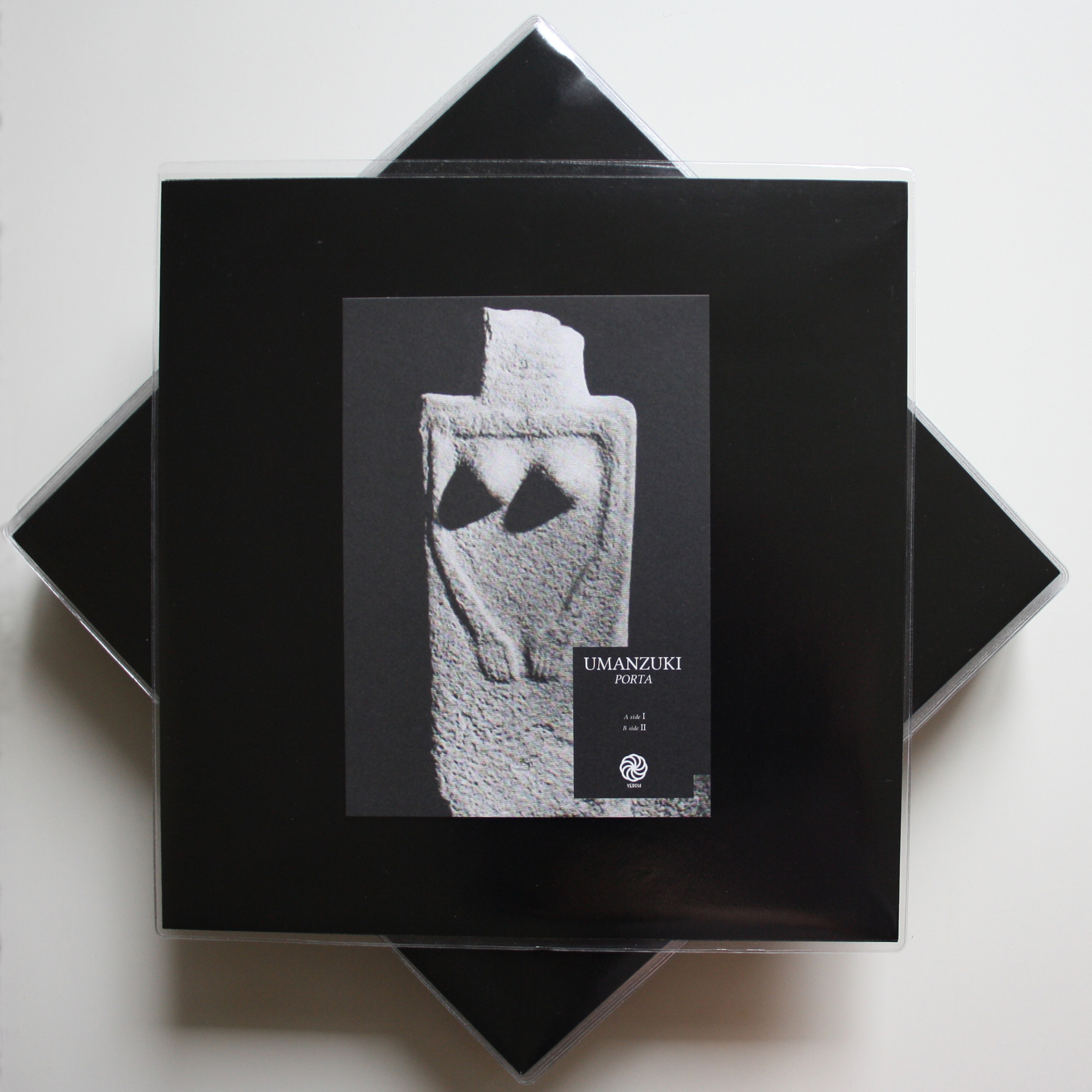
Right as we speak we have put out a brand new vinyl record, the 12” EP Porta by Tuscany-based trio Umanzuki. This is our last release before the summer, after which we will be back with more tape and vinyls, not only by Italian artists and also more electronics-oriented.
(U.S. & A.K.)
MAI MAI MAI: Δέλτα (Delta)
 Mai Mai Mai ist eine moderne Abenteuergeschichte, eine Art Odyssee durch eine analoge mediterrane Welt, in der der mythische Held, sein Name ist Toni, allerhand Dinge zu meistern hat, die für den Rezipienten vage und abstrakt bleiben müssen. Dies ist v.a. dem Medium der Geschichte geschuldet, denn Mai Mai Mai ist weder Epos, noch Film, noch Balladensammlung, sondern ein weitgehend instrumental gehaltenes, elektronisches Musikprojekt – diesmal unterstützt durch eine handvoll Gäste, die das Album “Delta” ein gutes Stück vom Vorgänger “Theta” abheben. Weiterlesen
FATHER MURPHY: Pain Is On Our Side Now
 In der Welt der experimentellen Musik ist es mehr als einmal vorgekommen, dass eine konzeptuelle Idee besser klang als das Resultat ihrer Umsetzung. Dessen müde, mag man vielleicht zu einer gewissen Skepsis neigen, wenn Father Murphy – bekannt für Marotten mit Stil – ihre neue Veröffentlichung als ein Album ankündigen, das zugleich ein doppeltes ist, und dem Hörer, vorausgesetzt er besitzt zwei Turntables, eine nicht unwesentliche Rolle im kreativen Prozess beimisst. „Pain Is On Our Side Now“ besteht aus zwei einseiting bespielten Vinylscheiben im 10”-Format, mit jeweils zwei Songs, die man je nach Neigung oder technischer Ausstattung der Reihe nach hören kann. Man kann sie jedoch auch Weiterlesen