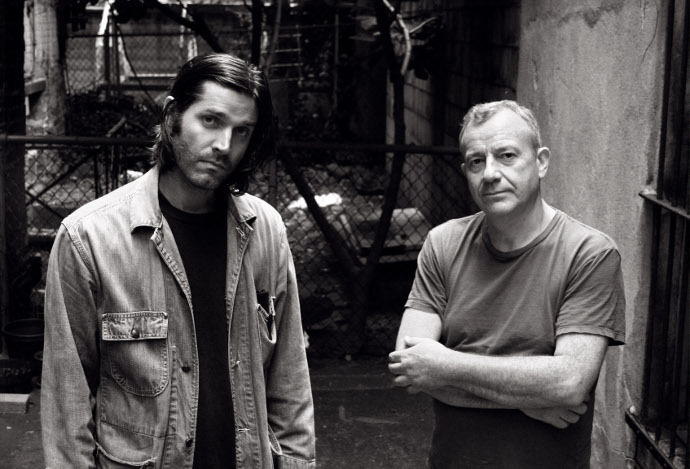
If you’re writing music, you write what’s inside of you. Interview mit der Musikerin und Kuratorin R. Loftiss

Als im vergangenen Jahrzehnt grade Folkmusik in aller Munde war, gerieten neben den großen Hypes und dem obligatorischen Mittelmaß auch ein paar obskure Gewächse in den Fokus, denen aufgrund ihrer Sperrigkeit und ihrer Unscheinbarkeit die Aufmerksamkeit großer Magazine versagt blieb. Zu diesen Gewächsen zählte auch das Projekt mit dem mysteriösen Namen The Gray Field Recordings, dessen Musik nur schwer einzuordnen war: Neben filigranen Melodien auf der Weiterlesen

So if you don’t like it there must be something good about it. Interview mit John Murphy

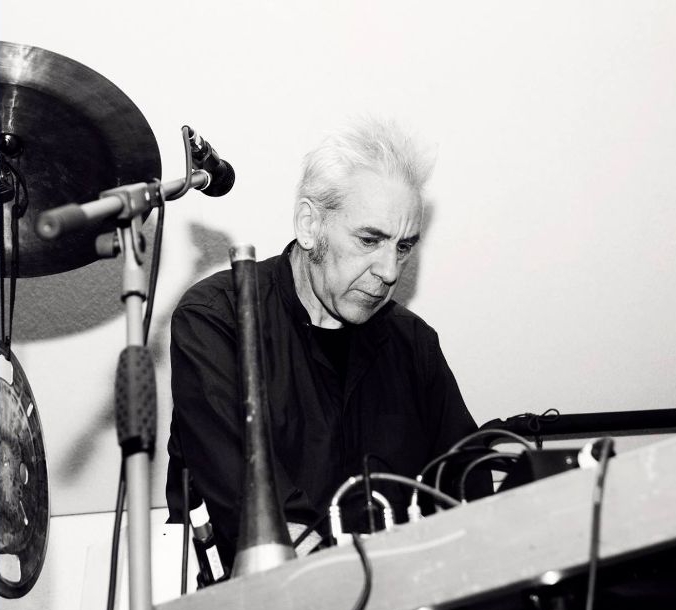
John Murphy ist einer der wenigen Pioniere des Industrial, die der Musik, die sie miterfunden haben, über die Jahrzehnte hinweg treu geblieben sind. Und das muss bei Murphy schon deshalb hervorgehoben werden, weil er ein ausgesprochen vielseitiger Musiker ist, der meist mehreren Arbeiten parallel nachgeht und so manche Wandlungen und Entwicklungen vollzogen hat. John ist seit den 70ern ein renommierter Drummer, spätestens seit seiner Zeit bei SPK ist die elektronische Bearbeitung von Sounds sein zweites Standbein, und vielleicht sind seit jeher gerade die Projekte am interessantesten, bei denen er beide Fähigkeiten zusammenbringt. Weiterlesen

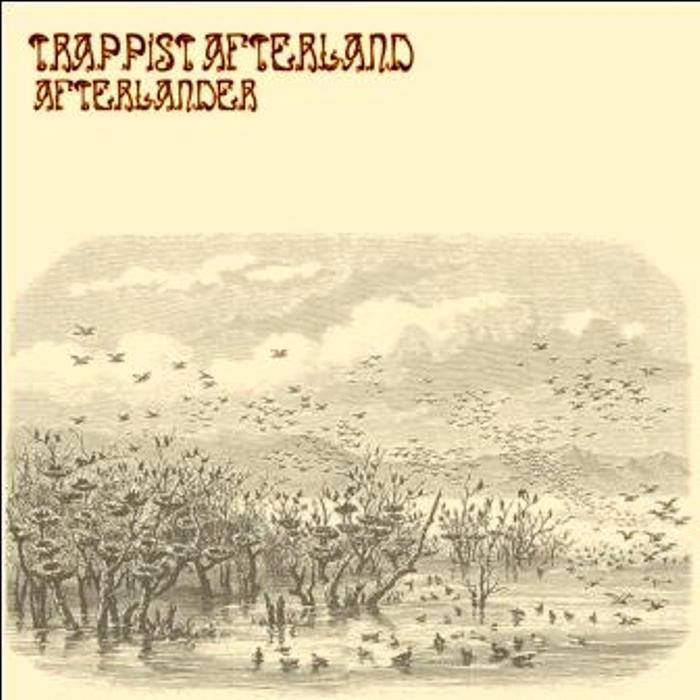
We still need to document our future through song. Interview mit Trappist Afterland

Oftmals hat man den Eindruck, dass aufregende, erregende Musik  von denen gemacht wird, deren Einflüsse breit und nicht auf ein Genre begrenzt sind. Trappist Afterland, das Projekt des Australiers Adam Cole, bestätigt das. Auf der Facebookseite der Band werden die Einflüsse offengelegt, und die lesen sich wie ein Gang durch die Geschichte psychedelisch(st)er (nicht nur Folk) Musik. Auf den bisherigen Alben, von denen das jüngst erschienene „Afterlander“ das erste ist, das auf Vinyl gepresst wurde, wurde aber auch immer wieder deutlich, dass Cole Interesse an außereuropäischer Musik hat – im folgenden Interview berichtet er Weiterlesen

We still need to document our future through song. Interview with Trappist Afterland

Maybe let’s start with a rather tedious question but could you say a few words about the beginnning of the band?

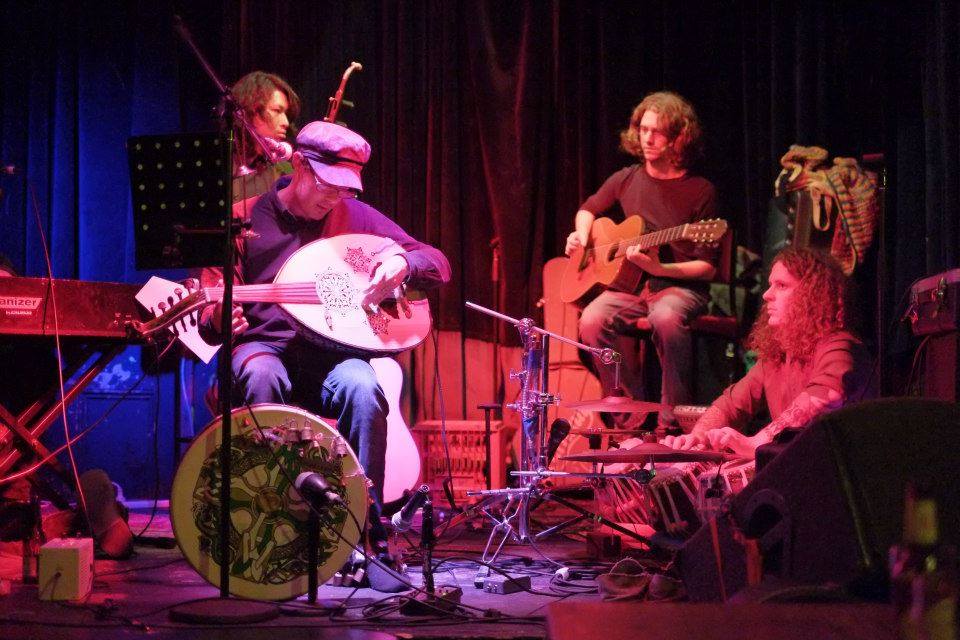
I started Trappist in 2010 with an old friend of mine Adam Casey who plays in a musical project called “The Boy who spoke clouds”. We released two albums together under the Trappist Afterland Moniker “The Round Dance of the Cross” and “Burrowing to Light”. Adam recorded both these albums and acted as a sort of producer to my compositions. He left the band after completing “Burrowing to light” and I continued on and recorded Beehive. I met Phil Coyle, who is still in Trappist today, Brett Poliness (Silver Ray,Hugo Race) and HakGwai Lau  who I saw busking on the Chinese 2 stringed Violin(ErHu) in the streets of Melbourne. We became friends and the three of us collaborated on what became The Beehive album. The Band these days consists of Phil, Nicholas Albanis(Dandelion Wine) who both were the band on Afterlander and Lachie Robertson. I’ve also recorded a solo album under the Trappist name “The Five wounds of Francis Minor” and I’m half way through a new record that I’ve recorded with Anthony Cornish which is also more of a solo album and less collaborative than the Afterlander album. I enjoy both ways of recording and I guess it is projects based thing although the Afterlander band is a pretty permanent fixture, along with Lachie for future recordings and playing live shows. At least as long as they’ll put up with me HAHA!

You mention a number of bands that have influenced you. It seems that they many of them seem to make use of the/a folk idiom but at the same time expanding it musically as well as lyrically (sometimes) radically. What would you say is the one thing that connects them all?

I’ve always thought that the one thing that in it’s purest form that connects  Folk music is the idea that the songs must convey stories and ideas from a time and place. I guess traditionally folk music was used as a way of connecting community and passing on the history of a people, Place and time. So in more experimental and radical movements, as long as those ideas are still passed on, then that would be what connects it. Experimentation is a big part of our culture through technology today, and although Folk music quite often is associated with the past, we still need to document our future through song. And I believe that there is no better way to do that than by using all the modern tools available to us .This in turn reflects aspects of our culture today

A lot of folk musicians today havn’t grown up with folk music, and often their creative biographies started with punk for instance or other kinds of rock music until they discovered traditional music. How was it in your case?

I guess my musical background as a young man began with underground Thrash, Glam and Death Metal. Followed by 90′s Punk and Alternative rock. In my mid Twenties I became obsessed with TG, Whitehouse, Psychic TV and all the prog ,Psych, Free Jazz, British revival and Acid Folk I could get my hands on. These days it’s all of the above plus a lot of music from all over the world especially Indian Music, Gamelan, Ancient classical music(Hesperion xx,David Munrow etc) and more traditional types of folk music. I guess when I was twelve or so those early Dylan albums seemed pretty quintessentially as folk as it got for me. And it all developed from there.

You play a lot of different instruments. How did it come that you learned to play them all? Did you start with a particular one, and the others followed step by step? Which one do you identify most with?

I guess like most young men at around the age of twelve I became obsessed with the guitar through the eighties Thrash scene. Was given an electric guitar for Christmas one year and soaked it in distortion and started playing bad lead and power chords. Started the Metal garage band in my parents Basement and everything developed from there. As I got older developed more of an interest in folk music, taught myself to finger pick and began writing songs. I got married when I was 28 and travelled to Vietnam for my Honeymoon. It was there that I began experimenting with more exotic stringed instruments and taught myself to play the Dan Bau Monochord, Oud ,and I purchased the Dulcitar from Timothy Renner (of Stone Breath).The Dulcitar is essentially a Dulcimer with a vibrating bridge that gives it the Sitar Twang. Timothy built it, quite genius really

When talking about the wide variety of instruments used and of muscical culture(s) that seem to have influenced you, I’m wondering if the album “The Christ Tree“ by The Trees Community that Timothy Renner re-released some years ago has had an impact on your work?

I Absolutely love that album by the Trees Community, and yes it has been a big influence on all things Trappist. My best friend Neil Sweeney gave me a vinyl rip on CDR around 2007 and I became quite obsessed with it. A year or 2 later I heard Timothy was doing the re-issue and was lucky enough to get the cd Box .All the bonus material is Great, although the Christ Tree itself still stands on it’s own.

I also particularly like the album “Christian Lucifer” by Perry Leopold and the album by Silmaril The Voyage of Icarus. But the list could go on.

Your first three albums have been self-released. Your fifth album is going to be released by Sunstone Records on vinyl. Is that for you a new stage in the evolution of the band?

I guess it is, not by choice though. When we initially started Trappist we were always on the lookout for like minded folk to put out our releases, but it wasn’t until we were approached by Nigel Spencer from Folk Police in Manchester that we had any offers. Nigel was starting a new label to put out less commercial folk music called Eleven Willows and the plan was to release our third album Beehive on Vinyl. Unfortunately the label folded before it got off the ground. We then were approached by Nathan Ford from New Zealand blog magazine the Active Listener to do a digital release of the album, which we did. The Active listener has been instrumental in helping us get more exposure and Nathan is a fantastic guy who helps so many bands. A true unsung hero of the underground psych scene at the moment.

From there we were lucky enough to be offered a release with Sunstone Records. Ant James,Will and Simon Norfolk run the label from Chester and Morecombe in the north west of England. They have been an amazing help and have become good friends. We have just released our latest album “Afterlander” and it sold out in 2 days in England, which really surprised me in a very wonderful way. I have a few copies for sale on the Trappist Bandcamp page but they are nearly all gone too.

One of the great thing about playing the kind of music that is quite niche is that you get to meet all these wonderful folks who truly are doing these labels,blogs etc for their love of it. I is such hard work and a very costly exercise for very little monetary reward. So people like Nathan Ford ,Ant James and Simon Norfolk are true pioneers in getting this sort of music out there during such a bad time in our musical history. At least in the sense of the industry. So Kudos to them and those like them.

Your first albums were not only available as downloads but also as limited CD-Rs. What is your attitude towards physical releases?

For me Physical releases are very important, although very costly. Whenever we do an album I always ensure that we have some kind of physical stock usually in limited supply, again due to cost. Obviously vinyl is my favourite form but again it is incredibly costly. So CDR’s are usually the next best thing.

There are plans to release a split album with Stone Breath. Can you tell us how that started and if there is a concept/central idea behind it?

I have been a fan of Stone Breath for some time now, and approached Timothy to do a split 12 inch. Again due to the costly nature we have decided to do a split cassette instead, which should be out later in the year or early 2016.Both bands will be doing about 18 minutes of music per side.

When I was in my my late twenties I had come to the conclusion quite naively that when it came to strange folk music and psych that it had pretty much been done to death. And that no new music could even come close to the likes of COB,I.S.B etc etc. That was until I heard the likes of Stone Breath, In Gowan Ring and the early Six Organs albums. Those bands and others really re- invigorated me to continue doing the folk music I’d always loved. They seemed to have taken the elements from the first wave of Acid folk and created a very fresh and sincere new take on the genre.

I hope Trappist can do the same.

In some of your songs you can find traces of Oriental/Asian music. Apart from the fact that you play the oud and sometimes cooperate with a Chinese musician – do you draw some direct influence from non-Western music cultures? Is there some particular kind of Asian or Middle Eastern music that you enjoy?

I’m a massive fan of Gamelan music. A couple of years ago when Trappist first started there was talk of doing an album with the Melbourne Gamelan Orchestra. Adam Casey left shortly after we met with them and we never quite got to doing it. But I’d never rule it out in the future, as me and Adam always talk about doing music together in some form or another.

I’m also a big fan of Hamza el Din, although he is from Northern Africa. His Oud playing is out of this world. A few others of note…. Kan Mikami’s album ‘Barking Practice’ is great; Kazuki Tomokawa; Karuna Khyal; ‘Ghost’ from Japan (especially their early albums)…. not to mention the many excellent Middle Eastern albums. So many great records to be heard… too many to mention.

Maybe the slight Middle Eastern elements are somhow consequent in context with your interest in biblical subjects. Do you think that Western Christianity would benefit from discovering that its roots lie in a quite “exotic” ground?

I think the problem with western Christianity is that it has completely forgotten its roots – forgotten where it comes from. Throughout civilization, Christianity has been moulded by men, and as a Christian myself it can be hard to know which parts are of Christ and which parts have been twisted over the years by human interpretation. It’s a slippery slope – and can be very hard to get to some sort of clarity within that. But as we are talking about intangibles it is quite predictable that the human race especially western civilization has made quite a mess of it. Although, I’m not exactly innocent of it either over the years. We all play a part.

Let’s just say Jesus Christ has had a pretty bad PR team for the past 2000 years haha!

But like any ideology or belief system, there are always positives/negatives. Sometimes people and the media do focus on the negative and forget that amazing things have been achieved through it, As well as horrific things of course.Unfortunately sometimes the people doing unthinkable things truly believe they are doing the right thing.

You call yourself/yourselves “Xian“. What role does your belief play in the creating of your work(s)?

I have always loved those private press Xian albums such as Trees Community, Silmaril, Concrete Rubber Band ,Caedmon etc, and I guess I am a Christian.

Although to some extent I hesitate to call myself Christian in a traditional sense. Especially since I do tend to struggle with the Evangelical movement, the Catholic Church and other denominations for different reasons. But at the same time it is very challenging as a big part of being Christian is to partake in community. But quite frankly the communities and a lot of their archaic ideas completely rub me the wrong way. So for me at least at the moment it is complicated HaHa!

As for its influence on the songs… It is for me, a huge part of what Trappist is about, although the rest of the band don’t share my beliefs. Myself being the songwriter though shows me how open and sympathetic to the cause my bandmates are, and I’m lucky to have them.

Not only in the music, also in your content you show great interest in somehow heretic sidepaths, as nyou deal with John Dee, Franz von Assisi and a number of apocryphal/gnostic scriptures. Would you find it too negative to say that in (religious and cultural) history, some things went terribly wrong? Or is this the way you see things? Do you have some kind of message when referring to these topics?

I guess to start, A few years back I got very interested in the story of John Dee. I Especially got very intrigued by his supposed Angelic contact through his scrying sessions .But in all honesty it had a profoundly negative effect on my psyche.

I became quite obsessed with all the symbolism he transcribed via these angelic interaction, Enochism and particularly the Sigillum Æmeth pentacle.

I won’t go into to much detail as it is quite personal thing, but I can say it was a very dark time in my life which even effected my marriage for a short time .I still to this day don’t quite understand what happened, but I will never get so involved in such a thing again.

These interactions surely were the downfall of John himself. So I doubt that there was anything Angelic about the connections he made during the Scrying sessions.

The album “The five wounds of Francis Minor” I guess was a concept album comparing the life of John Dee and Francis of Assisi.

Both men were very obsessed with connecting with divinity and were both extremely devout. But both of them went on very different paths trying to find connections.

In my opinion Saint Francis took the right path and was rewarded for it .To such an extent that he became the first man to suffer the Stigmata,Which I know sounds like very morbid reward, but I think it is the greatest honour a human being can be bestowed.

I am also very interested in all scripture and find the Gnostic gospels very beautiful and especially interesting. But as with all supposed holy doctrine I think needs to be read with caution, and a big grain of salt haha.

Taken in the wrong context can have hideous consequences, such as the Church and societys treatment of homosexuals amongst many other things. Sometimes people use scripture to justify being bigoted arseholes sadly. And the list goes on unfortunately.

But in saying all this I am still very interested in Christian mysticism and do believe it has played a very important role in shaping our understanding of the world, and the world to come. I just think John Dee was played and suffered a tragic life because of it.

On your album “Like A Beehive, The Hill Was Alive“ there is as song called “The Golden Bough“, I guess alluding to James George Frazer’s study of the same name. Why did you choose to refer to that particular work?

My best friend and sometimes songwriting partner Neil Sweeney gave me the book when I was visiting him in New York City. His idea was for us to write a bunch of songs about the book and putting it out as an album.

We never finished the project, and the golden bough was one track I wrote for it.

Neil and I are planning on doing an album together very soon. Neil is an incredible outsider folk singer/ songwriter out of Baltimore, i’m very much looking forward to working with him again.

In the song “Lucifer Mosquito” you sing about Genesis and original sin in a way that differs much from the common Biblic narrative. What kind of story is it, that you tell there?

Basically the song and story of “Lucifer Mosquito” was a dream I had one night. Quite an absurd dream really. It is essentially an alternative version of the Fall of Adam and Eve.Instead of them being tempted by the serpent in Eden, Adam sees a mosquito suck the blood from a pig, which gives him the idea to give up his vegetarian ways and slay the animals(in this instance the pig) to eat it.

Hence it is in a sense the beginning of the fall of man once Adam takes part in this violent act. Some theologians believe that before the fall, Man was vegetarian and after our expulsion from the Garden we began our carnivores ways.

Let me stress though, I am not in any way a creationist and I just found the dream to be so tripped out that I had to write a song about it haha.

I look at Genesis in the same way as I look at the Book of Revelation.

Stories written in an almost fable like way to explain Gods relationship with Humanity. From these stories we learn lessons, but they should never be taken Literally.

And amazing stories they are! including Noah’s Ark.

What can you tell us about folk and psychedelic music in Australia and Melbourne? Are you part of a local scene?

To be honest the Scene in Melbourne is fairly small, although I don’t tend to wander out much, so i’m probably not exactly an expert on the music being played in Melbourne .

We play around Melbourne fairly sporadically and there is new scene of young folk that seem to be inspired by some of the new psych bands that are around at the moment.

A lot of shoegazer type psyche bands with Brian Jonestown Massacre reverb drenched style sounds.

I particularly like a band from Melbourne called the Citradels. Their sound reminds me a bit of the Outsiders and seem to dabble in more Eastern inspired Psyche jams.

Do you think that the passing of Camera Obscura founder Tony Dale left a big gap in Australia’s folk music?

I never had the pleasure of meeting Tony Dale although I loved and still listen to stuff on Camera Obscura. It was very sad when Tony passed and I know a lot of people who knew him, including my best mate Neil Sweeney and the lovely guys at Vicious Sloth collectables. Those guys have been real supportive of Trappist and they are lovely guys.

I think a big gap has been left in the Psych scene in general all over the world since Tony’s passing. Tony Championed and gained exposure for so many great obscure bands over the years.

It’s always the good ones that leave us sadly.

(M.G. & U.S.)

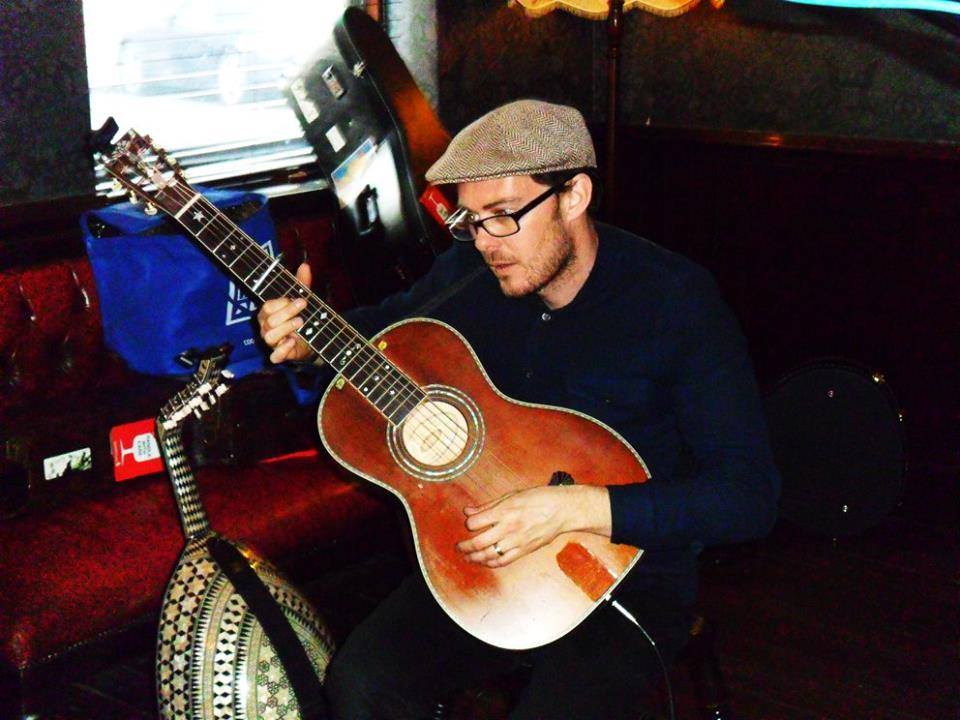
top photo: Alan Davidson (Kitchen Cynics)

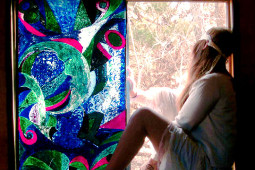
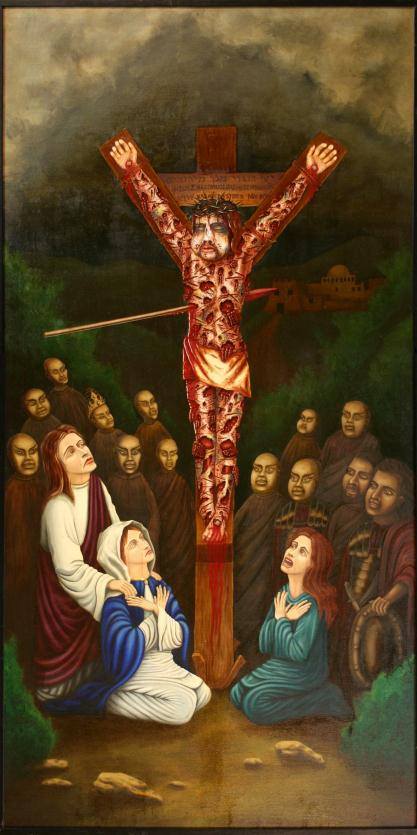
painting: Norbert H Cox

Trappist Afterland Band @ Bandcamp

Trappist Afterland Band @ Facebook

Vieles, was wir als Fortschritt bezeichnen, ist einseitig. Interview mit Dave Phillips

Dave Phillips ist seit den 80ern aus der lärmenden Musikwelt nicht wegzudenken, legte mit seiner Band Fear of God einen Grundstein für Noise- und Grindcore und wurde später solo zum berüchtigten post-industriellen Soundaktivisten – ein Begriff, den Phillips nur unter Vorbehalt akzeptiert, so wie ihm die begriffliche, rationale Sprache ohnehin einseitig und als ein Quell ideologischer Verstrickungen erscheint. Viel mehr vertraut er – im Leben, im Studio und auf der Bühne – auf den Klang als Träger von Emotionen und Inhalten. Viel zu sagen gibt es über den weitgereisten Multimediakünstler aus Zürich dennoch, und eines seiner Weiterlesen

I do not tolerate bitterness in my music. Interview mit Nick Grey

Falls es im Werk des Sängers und Gitarristen Nick Grey so etwas wie einen gemeinsamen Nenner gibt, dann dass nahezu alle wichtigen Bestandteile seiner Musik schwer zu greifen und doch seltsam vertraut sind. Da ist zum einen die mit seinem Random Orchestra eingespielte Musik, die er nicht zuletzt auch darum „Oblique Pop“ nennt, weil sie alle Genremuster sprengt – würde man sie auf den einfachen Gegensatz zwischen songhafter Akustik und experimentierfreundiger Elektronik reduzieren, so könnte man sie vielleicht irgendwo in dem weiten Feld zwischen Weiterlesen

I do not tolerate bitterness in my music. An interview with Nick Grey

Could you tell our readers a bit about your personal and musical background? When did you start playing music, what were your interests at that time and in which bands or projects were you involved?

Hello dear readers, I started making music in France in 2001 with a band, influenced by surrealism and dadaism, whose name can roughly be translated to English as «The Church of the Reversed Peristaltic Movement». We weren’t very good but we were noisy and irritating. We released one album, played three gigs which ended with the audience aggressively asking us to stop (usually around the fourth song), then split up. A few years later, I received a letter from a person I’d never heard about, which said: «If you’re not going to re-form your band, I’ll do it myself. Consider me as the new leader of The Church of the Reversed Peristaltic Movement». It was signed «Adrien». I loved the idea but unfortunately I don’t think the second iteration of the band ever released anything. In 2005 I formed Nick Grey & The Random Orchestra which still exists to this day. I come from a classical background at first, but have consistently been fascinated by machines, synthesizers and early electronic music, which may explain, at times, the strange stylistic associations going on within our music.

During the last years, I only noticed some records of your bands 48 Cameras and 230 Divisadero, while you didn’t release much under your own name. Since last year you’re back with two fulminant CDs with your Random Orchestra, also you moved back to the country you were born. Do you see this somehow as a new start?

Yes, it definitely is a new start. A lot has been going on these last five years, although perhaps not musically; it’s been at times tricky to find the right balance between things. I moved around quite a lot. I tried settling down, it failed, so I got myself moving again. But yes, we’re back now and one album per year is more or less the plan. We have indeed moved to Berlin six months ago, and it’s safe to say this is one of the most exciting times for us to be making music.

Is there something you regard as a new element, which seperates your work of today from earlier recordings?

I grew tired of making music by myself, I think. „Spin Vows Under Arch“ was the culmination, for me, of a seclusion that ended up turning into bitterness. I do not tolerate bitterness in my music so it was time to stop. It was the end of the twenties, for me, as well. Turning thirty felt a bit like having finally expectorated all the residual phlegm stuck in the body since childhood. Things got much better after that but paradoxically, on the musical level, it grew a bit tricky to find «relevant» things to express. I’m very careful with this – if I don’t feel it’s relevant, or if it’s too personal, I usually throw it out. Later on, one very important event for me was meeting Louis Pontvianne, an extremely talented musician who became one of my closest friends, and with whom I’ve been working since. Not only was the communication between us very good, but we also had massive amounts of fun during the process: an exhilarating feeling I was not used to experience in association with music.

Despite the name, your band doesn’t appear as random, but it seems they all have different backgrounds, which contributes much to the variety of the music. Who are the main figures and what makes them fit into your group?

Louis Pontvianne is currently the Orchestra’s main member – he plays more or less everything very well and is, at heart, a blues musician. This is complemented by people such as Boyarin, whose approach to music is both methodic and very experimental. Sarah Maison was also with us on last year’s album and I would advise everyone to check out her wonderful songs – she does, wonderfully, one of those things I couldn’t ever dream of: sit in front of an audience with nothing but a guitar and captivate everyone. And it isn’t only because of her legs, I have great legs too. Last but not least, Peter James mixed and mastered our last works, and so much more. His input is always essential, his patience godly. To us, he is something like a therapist, a guru and a mayor – he always has the final word.

How much are they involved into the composing and songwriting process?

When I ask someone for their input, I treat that input with the utmost respect (except clarinetists, of course). There are no specific rules to the way we operate, but it usually goes like this: I record something on my own and end up convinced it’s either very good or absolute shit. In both these cases, I then call up Louis and we develop the track together (or re-work it, if it was shit to begin with, or, rarely, embrace the shit entirely). Then Louis, fed up with me, leaves and I continue working on the track by myself a little bit. At that point, either I succeed in finishing up the song or I end up re-working everything in radical and absurd ways so it turns to shit again and Louis has to come back and start all over again. Anyhow, once the track is deemed ready to go, I send it to Peter and the mixing starts. That’s one of the most stimulating parts, really – Peter is a true perfectionist and will never let go until he reaches the desired result. I think he’s a wizard… As for the other musicians involved, again, no specific rules; the track can start off with one of their interventions (for example a clarinet loop by Mr Doria which evolves into a full song), or we can integrate their playing into the arrangements later on. I hope I’m not being too boring, describing all this. I feel extremely boring right now. But you asked! Although I’m sure you didn’t know this would turn into a therapy session.

You’re just about the release an album called „Breaker of Ships“. What can you tell us about the main ideas behind it? Compared to it’s predecessing longplayer, it seems less conceptual in the sujets…

Indeed, the album wasn’t meant to be conceptual at all, but of course there’s a couple of themes holding the thing together. The main one would be ambition, or the lack thereof, and more generally life lived as a spectator (be it as a decision or a consequence of another event). The Breaker of Ships, here, is the leviathan that annihilates man’s deepest desires and ambitions, and can assume many forms, such as passivity, procrastination, fear or entertainment. In «The Archivist», the energy saved by the narrator by not «committing» to a classical way of life, and thus not needing to develop the basic social capacities one needs to advance in society – all this saved energy transforms into raw observation and archival skills which gradually turn his humanity into a complex database of information he has experienced second-hand.

Similar to last year’s „Your’e Mine Again“, it combines beautiful songs with strong alienated elements, be it noisy aspects, abstract passages, foregrounded rhythms etc. I guess this is just how you like it to be, but do you also like to make your music a bit harder to digest?

Not voluntarily. Our tracks really are an illustration of what I like to hear as a listener. I suppose I like combining baroque arrangements with industrial buzzing and humming, I think it brings me back to when I was a child, following my father (a tenor) on tour. That endless succession of operas and airports…

In that context I thought of Brecht’s famous theatre related statement „Glotzt nicht so romantisch!“ („Stop gazing in such a romantic way!“). Would you be disappointed, if listeners regarde lovely songs like „Juliet of the Spirits“ only as a dreamy escapist idyll?

No, no. Once the music is released, it really doesn’t belong to me anymore and I cannot be annoyed at what people do with it. Everyone is of course free to relate to our songs in the manner that suits them best. It would be very pretentious of me, and most unpleasant, to consider my songs as something more profound than what they simply are. It is very reasonable to assume that « Juliet » will be perceived as an escapist idyll by a superficial listener. In my case, there often is a message or a theme during the writing phase, but if it gets a bit transformed once the music reaches the listener, I’m fine with it too, something new emerges, something that says more about the listener than the writer.

It seems as if you always have fun with quoting and combining elements from various music styles of past and present. Blues, chanson, traces of kraut, prog, electronica and much more – at least I as a listener have these associations. Does this just happen, or do you also act as a „fan“ who likes to refer to favourite things?

Hmm, to be honest I’m not sure. I never consciously referenced anything, at least. But it really isn’t possible to say how much I’ve been molded by my influences. If you can hear elements of various other things I’ve listened to, it seems pretty natural to me and I’m perfectly fine with it. But no, references – conscious ones – aren’t something that I find interesting.

In the case of „Juliet of the spirits“, I actually thought of the Fellini’s famous movie of the same name. How is the story behing the song? Is „Juliet of the bones“ something like it’s demystified subtext?

The lyrics of «Juliet Of The Spirits» – and its title – were actually written and decided by Jean Mathoul (the man behind the 48 Cameras collective). He turned sixty recently and the song is about his becoming a grandfather for the first time, to a lovely little Juliet. My own input only occurs later on, on « Juliet Of The Bones » which is indeed about demystifiying a subtext, but not the subtext to the movie. Everything between birth and passing can be classified under the « In Other News… » section, for everyone, I think ; however birth and passing are both front page items, to those involved. « Juliet Of The Bones » simply draws a parallel between Jean’s life and my own at one very precise point, the moment when he became a grandfather and I did not. These two tracks are indeed very personal, one for Jean and one for myself, they’re a bit of an exception for me as I usually don’t allow that ; however I felt it was necessary as the rest of the album was spent analysing and observing various human habits, in a non-judgemental manner of course, but still… I had to get some dirt on myself as well.

Many of your songs are based on accoustic guitar tunes, and in the past you collaborated with a number of musicians with a folk background. As several „prefix“ folk styles had a new revival some years ago – did you feel any relation to that?

No, it’s mainly due to my picking up a guitar in 2008, right after “Spin Vows Under Arch”. Upon completing that album, I grew tired of experimenting with drones, wine glasses, clarinets and abstract soundscapes and wanted to give the song form a decent try. The guitar was a good way to start anew and a good songwriting test, too. I can’t remember who said « If a song still works when played with a single guitar and vocals, then it’s a good song », but I discovered (sometimes to my dismay) that this statement is very much true.

On “You’re mine again” you dealt with the absurd side of love and relationships, your approach to the topic appeared highly ironic. What would be your best reason for never becoming a couple therapist?

As a matter of fact I think I would make a wonderful couple therapist! As proof, I can state the fact that I’m terrible at following my own advice. Couples are a funny beast. There’s something very sad and endearing about them. I’ve observed those who usually work best (although there is, of course, no strict rule, just a general impression of mine) are those who treat their association as teamwork, and grow from it, instead of those who seem to cling to the couple format mainly to ward off their individual fear of mortality. I have more affection for the second category however. And in any case – one must never, ever pass judgement on a couple other than his own because other couples follow a logic that is entirely alien, radically different from your own.

Parts of the album appear like a vast panorama of the irritating and unpredictable sides of love, eroticism and the struggle to be attractive. You said in another interview that your songs are never autobiographical, but was there something like a basic impulse or idea, that lead you to deal with this in a sometimes really comical way?

Yes, you caught me. Of course you’re right, even though the songs aren’t strictly autobiographical, the impulse behind them often is. There have been many sparks. The main one was the vision of my stepfather half-asleep, around 2 AM, on a couch in the living room, in front of a TV playing an aerobic class. The sound was turned off. My mother enters the room and starts screaming in the most amazing way, accusing him of « watching porn in [her] own house ». The man was unable to defend himself. He got thrown out of the house and had to sleep in his car for about a week. But something even more incredible happened : as he was being thrown out, my mother stuffed a large bag of trash in his hands and said to him (still screaming) : « And please take out the garbage as you go ». And he did. This defies any form of logic on any level imaginable. I can understand passion, but passion mixed up with the most basic, mundane task was something I hadn’t seen before. It was extraordinary ! And of course, later on, I got mixed up myself in the kind of semi-romantic, semi-mundane excesses I tried so hard to avoid – it’s unavoidable, genetic probably, but also quite endearing and funny and a bit sad.

There are a number of video works to your songs. As the actors are also part of the „family“, do you see the clips as an integral part of your work?

Yes, sort of. I work on our videos exclusively with my very good friend Rodolphe Gonzalès, who lives in Montreal and is an important part of my life in Canada, whenever I’m there. We have tried making music together but those moments never really worked and always seemed to end drowned in cheap beer and endless, tired conversations about the dreadful state of everything. However, the short film format appeared to suit us very well. We thus created Bouc Astral Productions for our short films and video clips. To be honest I don’t think we have an audience. The clip for « You’re Mine Again » was especially tip-toed around, at best. And I think our movie « La Fête » has been stuck around 67 views for a couple of years. Our humour may be the problem, I don’t know.

In the title track’s episodic video you show men and women missing and misunderstanding each other. The women feel left and ignored while the guys, they are waiting for, are just phlegmatic or spend their time with trying to prepare for appeoaching women. And so they all end up frustrated in their parallel worlds. As the characters appear so likeable, one wants to help them. What do you think is their problem?

Well, we ourselves are the problem. Any interaction between the characters in the « You’re Mine Again » video clip appears absolutely impossible – but even within couples you sometimes find people living in parallel worlds with their own sets of projections and illusions. Almost all of the actors in this video are part of my oldest friends. Some of them I’ve even known for about thirty years. I’ve seen them struggle, attempt, fail, succeed, fail again, many times – as they have seen me. The video was intented to be both a snapshot of a few individual’s (including myself) struggles, and a larger statement on the relationship between men and women, but as a caricature of course, a simplistic, kind, affectionate one. I’m really, really glad to hear you say you found the characters likeable – one of my fears was that the video would be perceived as judgemental, which it is not.

As we once talked you mentioned that you also admire Thomas Bernhard, which we have in common. I’m just curious what your favourite Bernhard books are…

I think that would be the one I first discovered Bernhard with : « Der Keller : Eine Entziehung ». I remember being very impressed by the title itself, and before turning to the first page I remember staring at the cover, meditating on the idea of the « Retreat », if I translate well, which is a concept that has always highly fascinated me. The closed room, seclusion behind a closed door, one type of activity going on inside, another type outside, both entirely unrelated and incompatible. I hate leaving doors open when I’m busy trying to achieve something, they fill me with some kind of uncontrollable animalistic dread. Inserting myself into an enclosed space, however, gives me the feeling that anything is possible, no matter how those existing on the other side of the separation chose to live and to operate. But back to Bernhard, I found much relief in his writing, echoes of my own occasional misanthropy and repetitive thought patterns. « Verstörung » would be a close second.

One last question about „Breaker of Ships“ – the track „Ghost Rain“ presents a striking speech of Australian activist Philip Wollen about animal exploitation in the meat industry. Maybe slaughterhouses with glass walls would lead many people to make a circuit, but I’m sure that a speech like Wollen’s could really shatter people and lead them to change their minds, if they just have to chance to hear it. Do you just like to spread the word, or is there also a more specific relation to the album as a whole?

A little bit of both. It’s a very bleak album I think, and during the mixing process, Peter and I wanted to conclude on a glimmer of hope. He came up with the instrumental « Ghost Rain », which, if I remember correctly, he assembled from other tracks from the album, using various strange effects and wizardly devices, and adding a few field recordings of his own, as well as his tibetan bowl. I found his piece beautiful, thought it would be a fitting conclusion to the album because it was so radiant, musically and lyrically. So yes, there’s a connection to the album, in the sense that – I quote Mr Wollen – « another world is possible », despite humanity’s bloody tendency to get worse year after year, but for me it’s of course also about spreading the word, if I can. I do believe vegeterianism and veganism are immediate, feasible solutions to a very major problem. However, I also believe it’s a word that must be spread delicately and with care, as guilt-tripping the consumer will often only have the opposite effect. The human mind, nowadays, is harrassed by superfluous external stimuli to the point of exhaustion, so I can understand very well how animal rights may look like a very minor issue to some people. It’s very unfortunate, but with the right key applied to the right lock, if I may risk this cheesy analogy, a positive change can, perhaps, be set into motion.


Finally, of cause, the future question.. Are there any mentionable things on your schedule? Can we expect some live shows, after the album is released?

There should be a new EP coming later this year, and a collaboration with Empusae (a full length-album, this time) is in the works too. As for live shows, yes, absolutely. We will start off with an intimate duo formula (just Louis and myself) and will play songs from the recent albums but older material as well (all rearranged, of course). Additionally, we are looking for musicians in Berlin so – if anyone reading this would like to book us or join us, please get in touch through our website.

And dear Uwe – thank you so much for your questions!

(U.S.)

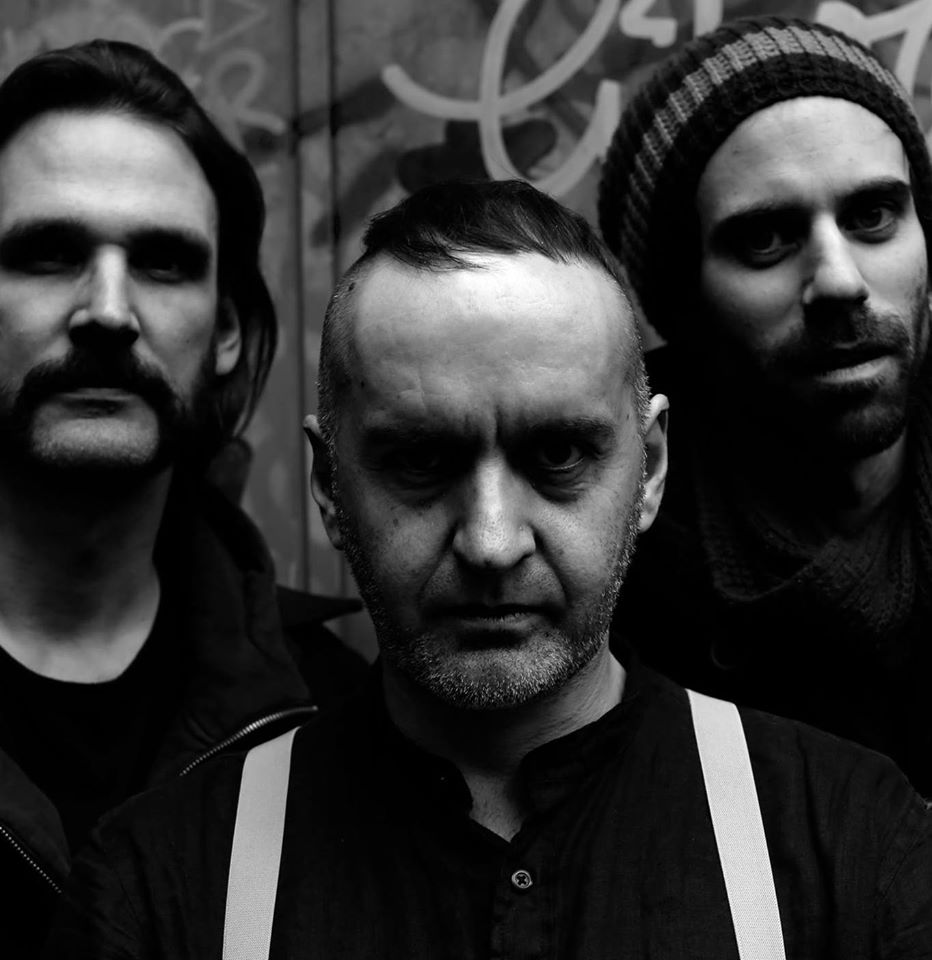
Fotos: Lysandre Cottret

Nick Grey @ Home

Nick Grey @ Facebook


Searching for Subterranean Sounds. Interview mit Silvia und Andrea von Yerevan Tapes

Abgesehen von der ursprünglichen Bedeutung als Ettikett rangiert die Semantik des Begriffs “Label” zwischen Plattenfirma und Marke, und auch in weniger kommerziellen Nischen kann man viele Labels dahingehend unterscheiden, welche der beiden Bedeutungen ihnen eher entspricht. Zum einen gibt es die Labels, die innerhalb eines nicht allzu eng gefassten Spektrums eine gute Bandbreite an Acts verlegen, ohne dass es eine klar erkennbare Hausphilosophie und eine deutliche ästhetische Linie gäbe. Auf der anderen Seite Weiterlesen

Searching for Subterranean Sounds. Interview with Silvia and Andrea of Yerevan Tapes

As far as I know you both played in bands such as His Electro Blue Voice and one of you is also running Avant! Records. Later on you formed Yerevan. When and how did you decide to do publishing activities besides your own music?

Actually only Andrea used to be involved in His Electro Blue Voice, having been drummer in the band from day one until 2013‘s full-length album on Sub Pop. He also runs Avant! Records since 2007. Together we started Yerevan Tapes in 2011 with the intent to explore new sounds previously unexperienced.

Where have your music roots been? Was there some sort of a subcultural scene you were part of?

We may come from different musical background but after several years of listenings we both felt we needed something new, something deeper more artistically and spiritually engaging. That’s exactly the kind of ground Yereven Tapes took its first steps from.

I have the impression that the labels, Yerevan even more, is rather some art concept of its own than a business. Would you agree?

Most of indie labels come out of passion, often with an ordinary job on the side to bring some money in. This leaves enough room to grow a specific identity and the necessary freedom to choose the best contents.Speaking of Yerevan, we felt the need to build something with a strong aesthetical identity where music, medias and symbolic communication were one.

If you had to scetch the artistic vision you follow with Yerevan, how would you express it?

As our motto states, we are a “cassette and vinyl record label for sacred sounds”. It means we’re chasing those music projects who can deliver their own vision of the sacred, their Weltanschauung, no matter how. When one takes a look at our catalogue he might feel the differences rather than the similarities between the artists, but they all share a common aim.

Your two labels differ not only in terms of the medium (Avant! mostly vinyl, Yerevan mostly tape), but also bit in terms of styles, as Avant! has some focus on post punk/dark pop and Yerevan is more into the experimental and psychedelic in the broadest sense of the words. Did this just happen or do you think, style and medium fit for some reason?

The tape is some sort of natural media for experimental music since the 70s, if not earlier. So it comes as no surprise that we felt it as our primal support as YT. It’s cheaper, it’s easier to distribute worldwide, it gives you the opportunity to release material from obscure artists without having to face the difficulties of a vinyl record production. At the same time, just as in the post punk/dark pop realm the tape has recently came back as music medium, we on our end have done 3 vinyl releases already and we are planning to have more for the near future.

Bands like Father Murphy, Bird People, La Piramide or German Army play quite different styles, but do you think there’s a read thread, some artistic or spiritual element that combines them?

As we said above, they surely have different styles but at the same time, we think it is kind of easy to see what connects them together. Their search for subterranean sounds may end in different artistic solutions but what moves them seems to be the same: a quest for spiritual inquiry.

Are there any limits in the range of styles, is there kind of a stylistic no go area, or would you potentially release music from any genre?

Of course there are boundaries, as we will not release punk rock or heavy metal music for instance, at the same time is not strictly a matter of pure musical style performed while it is about how much it does fit within what we are looking to express with YT. As long as we think it bonds with what we are doing we may consider it.

Is there something like a favourite release that has a special meaning to you?

As rhetorical as this may sound, we have no favourite release as each one has its own identity and particular history. Behind every records we put out there is a connection as much personal as possible, with the music and the artist who created it. For different reason we are exited about every one of them so far.

Artwork plays a stong role not only in the tape design but also on your web spaces, and there is a lot of religious and ritualist symbols from all over the world. How is your interest in this, and where is the relation to your concept and the music?

While we may collect influence from religious and artistic expressions from different places and times, we have a special eye for the kind of cinematic results that Soviet Armenia directors achieved. The fact that Silvia graduated in Cultural Anthropology surely played a strong role within the YT quest for aesthetics.

Could you give us an example or two for Armenian movies that have influenced you?

Surely. The Yerevan cassette-tape covers come straight from a particular time and space. And not only Armenian movies, sometimes Georgian or Ukrainian ones too; the point is that they all belong to a specific period and context: the soviet lands between sixties and late seventies and its cosmogony. There’s something in the way they represent the world that somehow has a strong link to us as label. In a very concise list just to get the idea, besides the well-known Sergej Paradžanov and his marvellous filmography (all his movies are perfect gems in their own way, especially Shadows of Forgotten Ancestors (1964) which I’m particularly fond of), I can recommend Wishing Tree (1976) by Tengiz Abuladze, and two short movies by Artavazd Pelešjan: Inhabitants (1970) and Seasons (1975).

So this already answers my next question – you didn’t chose the name of the Armenian capital for mere exotic reasons…

Like we just said, a first infatuation came from Silvia’s University studies, one on Armenian culture, language and history in particular. We think the name we chose stands for something able to build bridges between Here and There. It might not have been Yerevan, but it would have been a toponym in any case as we think toponyms are thick and widespread words.

Several psychedelic and experimental music styles exist now for a long time. What do you think are the main qualities of such music today, and what could be the reason that it became a bit more popular again?

Probably it’s the strong mystical appeal that psychedelic music hosts that managed to make it last through all these years. Tribal approach to the drumming and deep drones always have a direct power on our souls. Music fashions come and go, but there’s always room for experimenting in sounds.

A lot of younger psych bands today deal with esoteric and occult motifs, but often combined with some playful or ironic note. Some people would say that this is a sign of hipster stuff, but do you think that such topics are more vital when they are not too serious?

We don’t wish to be looked as too serious but at the same time we don’t think we are much ironic about our iconography. We like to blend religious symbols with contemporary artwork, but we do not mean it in a funny way. We just look to create a new context for those everlasting icons.

What is your opinion on a tag like Italian Occult Psychedelia, which is somehow also applied to bands of your label by the music press?

We think it has proved itself to be a great tag to gather different bands with different styles under one common vessel. As with everything it‘s no perfect tool, but it surely has been helpful to export the current Italian sound abroad.

In our country, the media dealt only punctually with Italian music, yet there was a huge output of releases for a long time. In the last years, this changed a bit and people become aware of the variety of Italian stuff. Do you have an idea about this change?

We only can think that what you say proves our point. Some times it takes a little stratagem to make things work properly.

Your newest release is a tape by electronica producers Zone Demersale. What are your plans for Yerevan in the nearer future? Any new explorations?

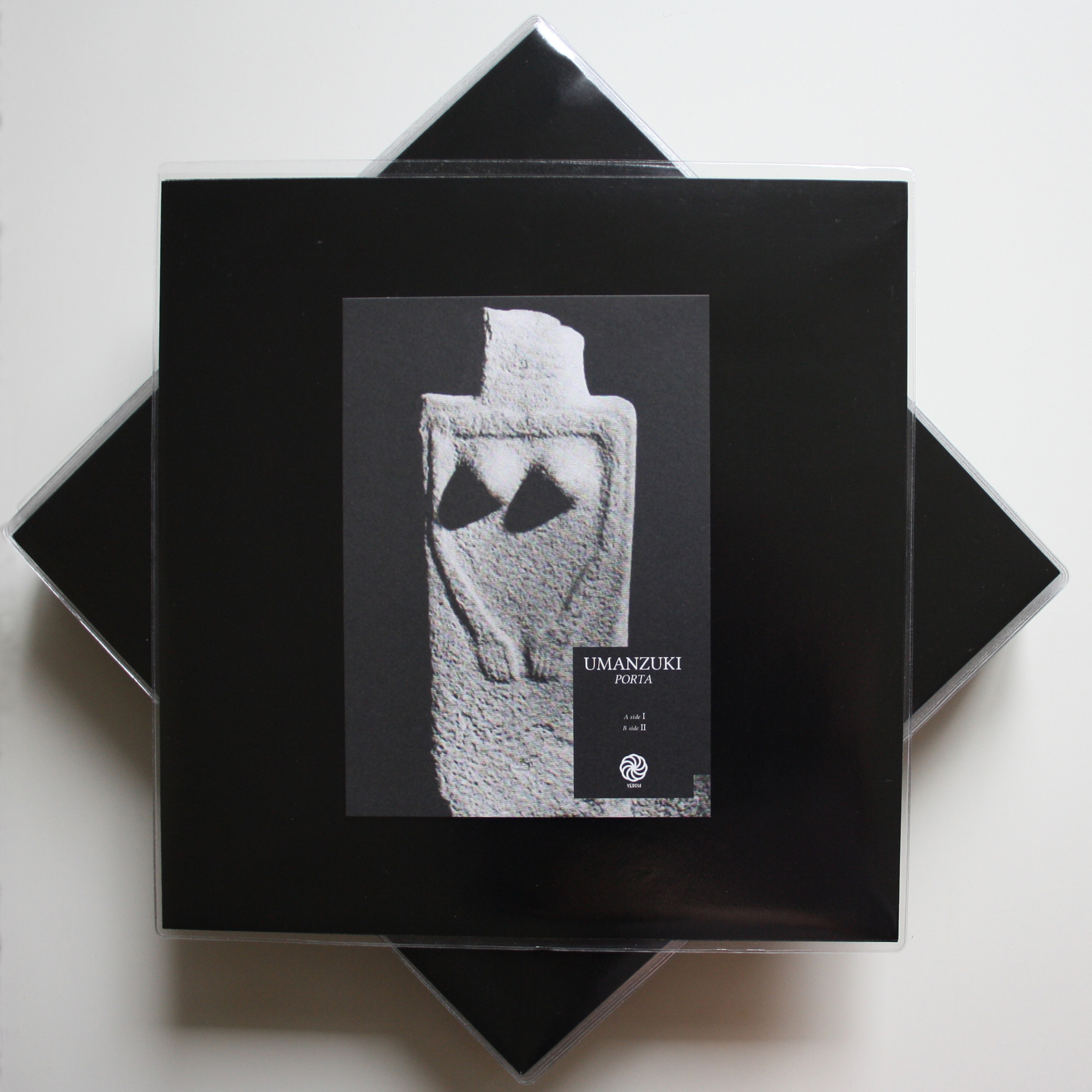
Right as we speak we have put out a brand new vinyl record, the 12” EP Porta by Tuscany-based trio Umanzuki. This is our last release before the summer, after which we will be back with more tape and vinyls, not only by Italian artists and also more electronics-oriented.

(U.S. & A.K.)

Yerevan Tapes

YT @ Bandcamp

YT @ Soundcloud

YT @ Facebook

Adventures in atmospheric sound design: Interview mit Joseph Curwen

Das nach einer Figur aus H. P. Lovecrafts Roman The Case of Charles Dexter Ward benannte und in Newcastle upon Tyne beheimatete Einmannprojekt situiert sich selbst im weiten Feld von „Post-Rave Hauntology Rituals and Radiophonic Occult Synth Horror Soundtracks“ (die Genese des Begriffs wird im Interview erläutert), man könnte auch sagen im Spannungsfeld von (ewigen) Drones und melodischen Soundcapes, die inzwischen auch schon mal von Beats durchzogen werden. Dabei sprengen die (meist digitalen) Veröffentlichungen manchmal den Rahmen eines herkömmlichen Tonträgers, etwa dann, wenn Weiterlesen

Adventures in atmospheric sound design: Interview with Joseph Curwen

Let’s start with the origin of your project. Is Joseph Curwen the first project or have you played in other projects/bands before? What kinds of music/sound did you grow up with?

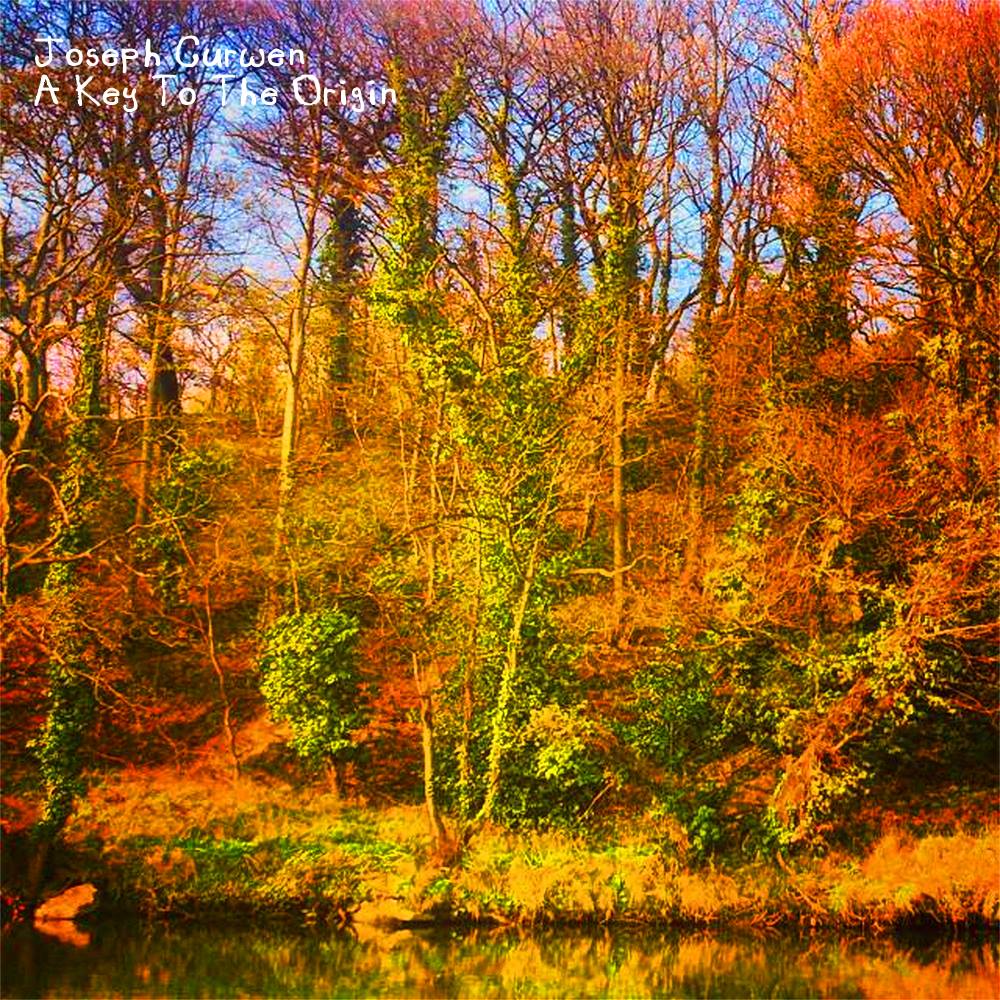
I was lucky enough to be raised in a musical household. I grew up surrounded by 70s rock and psych records, and an old upright piano. I grew up in a tiny village in County Durham in the early 90s, and was exposed to rave culture at a young age. Most of the kids I went to school with had older siblings and parents that regularly went raving, so techno and rave tape packs would always be playing when I went to people’s houses. I remember the sense of shock felt when there was an ecstasy death in the village. This instilled in me the dichotomy between euphoria and nostalgia inherent in a lot of dance music. I’ve always been interested in bass heavy music of all genres, including a life long fascination with heavy metal. I played bass for years in many many bands, and was aware that audiences react to low frequencies in primal ways, from crippling doom bands to wedding function bands, the physicality of bass is always there. All any of us are is the sum of our experiences, so I’ve assimilated my love of drone and rave/dance into something I call post-rave hauntology rituals. I call it this as a way of visiting my personal and musical experiences of the past in a performative way. As Joseph Curwen I’ve also worked with The Dead End Street Band and CHONYID. I really enjoy creating by myself as I can plan meticulously the way sounds weave and interact with each other, but when playing with others I appreciate the opportunity to manipulate sounds on the fly, and react to those around me. I have a great satisfaction doing both. My latest album “A Key To The Origin” is I feel the closest I’ve got to a pure post-rave hauntology ritual since I first envisaged Joseph Curwen a couple of years ago, hence the title.

I think given your project name and titles of releases we have to talk about HPL. How was your first encounter with his works? Given your interst in the man from Providence I was wondering if you’ve followed the recent heated debate whether the World Fantasy Award statuette that portrays him should be replaced by somebody else beause of his views (on race etc.) and S.T. Joshi’s recent posts in which he tries to defend Lovecraft. How do you feel about that discussion?

I first encountered HP Lovecraft as a teenager, when I discovered a lot of my favourite heavy metal musicians were inspired by his writings. I bought a compilation of his works called “Necronominocon” and devoured it with relish. I felt like my initial experiments with drone had a weird sense of dread to them, so dedicating the project to his take on what we can never genuinely know from half-dreams and memories felt natural.

I personally don’t subscribe to Lovecraft’s views on race, but I am wise enough to appreciate he was of his time, and a lot of people from that era would have held views on other people that today seem backward and unnecessary.

Do you think there is something like the core substance or essence of Lovecraft’s fiction (Joshi would maybe emphasize his cosmicism), and if yes, how would you describe it? What makes his fiction outstanding for you, compared to other writers? How did you come up with the idea of handeling your fascination for supernatural horror and Lovecraft in a work of its own?

I have always appreciated Lovecraft’s sense of the genuine unknown in his stories, and think that no one has come close to describing the cosmos in such a weird way. There are significant activities in the Universe we as human beings will never understand, whether you believe in monsters in the sky or subscribe to accepted scientific thought. I try to instill this sort of uncomfortable atmosphere in my music, like you’re listening to a recording of a dream you had about a musical memory. A lot of his stories feature seemingly normal people thrown into berserk situations, and I’ve always related to that.

What is your attitude towards the attempts of the HPL-historical society to create films and radioplays that reflect the times when the stories were written, i.e. using a medium like the silent film or the black-and-white film? I’m asking because you have a very striking aesthetic. I think one immediately recognizes your releases due to their use of colour(s). And you certainly did not go for some kind of retrodesign. Can you say a few words about that?

I can see the appeal of trying to emulate an atmosphere that HP Lovecraft would recognise, and sometimes putting artistic restrictions on yourself is a great way of being creative with what you are working with. I have always been a fan of technology, and my work as Joseph Curwen is a reflection of this. I appreciate that you’ve mentioned I have a striking aesthetic, as I spend a long time on each cover, ensuring it reflects the corresponding music properly. My use of colour is from my love of colour. I like to think my music is as vivid as the album covers.

In your self description you use the popular term hauntology. The philosopher Derrida once invented this term to describe a certain ambivalent twist in contemporary western mind – political ideologies seemed to have disappeared from our mainstream, but secretly they still haunt the subconscious of western man. Do you have a relation to this use of the term, or does it rather refer to a more general interest in aspects of haunting?

I’ve only recently looked into Derrida’s writings, but I do think he puts forward a compelling idea. Everyone is haunted in some way, from memories of the distant past, to stories they’ve been told by other people, to subconscious survival stuff passed down by our ancestors. We’re all a blend of genetics and history, with actual and perceived experiences passing us by every day, so who is to say what the subconscious mind actually holds? The term Hauntology has been bastardised for all sorts of reasons by many people. My personal take on it is to look back at musical movements important to me throughout my life, and explore them as doorways to my own past, through exploratory sound design using the wisdom of who I am now. A lot of my recent material has explored my love of dance music, in particular the rave culture of the early 90s, and investigates the idea that euphoric music can often be haunted by something dark and evil. As a child in the early 90s I felt like anything was possible, and a lot of the music of that time that I was exposed to felt like it was heralding a new dawn of utopia for mankind. Obviously what those people were aiming for never transpired, so everyone who enjoyed it at the time is now haunted (in some form) by it. I hope I’ve managed to create music that emulates the ghost of dance music in a way, the euphoria of the past have dissolved into something anxious and unnerving.

What can you tell us about your way of writing, improvising and recording music? Do you follow a spontaneous approach, or do you prefer to compose in a way that allows you more control?

The earliest days of the project were very structured, and were mainly experiments in digital bass weight. I’m proud of the early pure drone material, but feel like I took it as far as I could. As the project has evolved, and I’ve learnt more and more about digital audio technology, my writing approach has developed aspects that are a lot more spontaneous. I still meticulously plan out a lot of the structure, and carefully map out how the drones interact with each other, but now I can take small samples of music, and manipulate them beyond recognition in real time, adding them to the drones as a means to be more cinematic and evocative. My work in The Dead End Street Band and CHONYID has taught me a lot about layering textures, and creating atmosphere with more evolving and varied sounds. Joseph Curwen is a constantly evolving process, and can be viewed as my research into audio technology and sound design. I am a degree carrying devotee of Mathematics, so a lot of my enjoyment comes from ensuring my choice of effects and compressors etc. are mathematically sound for maximum sonic impact or effect. I subscribe to the idea that maximum volume yields maximum results, and appreciate that some of my material can get quite brutal, but I hope listeners can enjoy my albums as adventures in atmospheric sound design.

How long does it take you to record an album like for instance “Lurking Fear”? Some of your recordings are released in tiny quantities (of tapes), others like the abovementioned “Lurking Fear“ or “Blasphemous Alliance“ most certainly defy any possibility of releasing them in a physical format. Do you feel that our digital age has freed artists from the constraints of the (physical) medium? I guess the number of listeners that play such an album as a whole in full concentration is limited. Would such a long release serve as a background ambience?

Lurking fear took about 36 hours in real time to write, record, and process. It was originally intended as an art installation, which eventually mutated into Lurking Fear 2: Starling Shadows. I appreciate that some of my recent digital releases have been obnoxiously long, but drone music is supposed to invoke an atmosphere, and I am certain that both Blasphemous Alliance and Lurking Fear do that. I know certain members of my core fan base have listened to both of them in their entirety. I like that digital outlets such as Bandcamp allow artists to present albums as long as they see fit, but physical formats such as cassettes allow a more personal connection to occur between the artist and listener. I use Bandcamp as it allows me to instantly upload and distribute my music to my fans, allowing me to directly contact them.

I feel that some of your music is similar to the mood that e.g. somebody like The Caretaker tries to create. Do you feel a (kind of) kinship to other artists who work in a similar field?

I have been likened to The Caretaker before, as well as artists like Lustmord and Aphex Twin. I always appreciate being compared to artists I respect, as well as others I can newly discover. I feel kinship to anyone that is being musically creative. I don’t aspire to be like anyone else. I make music as Joseph Curwen because it is the music I want to listen to, the fact that others have really bonded with it and listen to it as well is an awesome bonus.

What is the relationship between those recordings that have some kind of beat and those that focus more on soundscapes? On your bandcamp site you can find some live recordings. Is there something like a typical Joseph Curwen performance? Do you make use of visuals?

I started out purely doing soundscapes because I wanted to explore texture and timbre within drone. I’ve always been a massive fan of techno so started to experiment with beats as a means of making the drones easier to digest. I think if there’s something for the listener to grasp, a thread that runs throughout the “narrative”, they’re more likely to get pulled into the atmosphere I’m trying to create. Since introducing beats and rhythmic textures in Curwen I’ve started making music as Granite Portal so I can fully explore my enthusiasm for jungle and gabba rhythms, and utilise repeating phrases and more dance floor orientated structures.


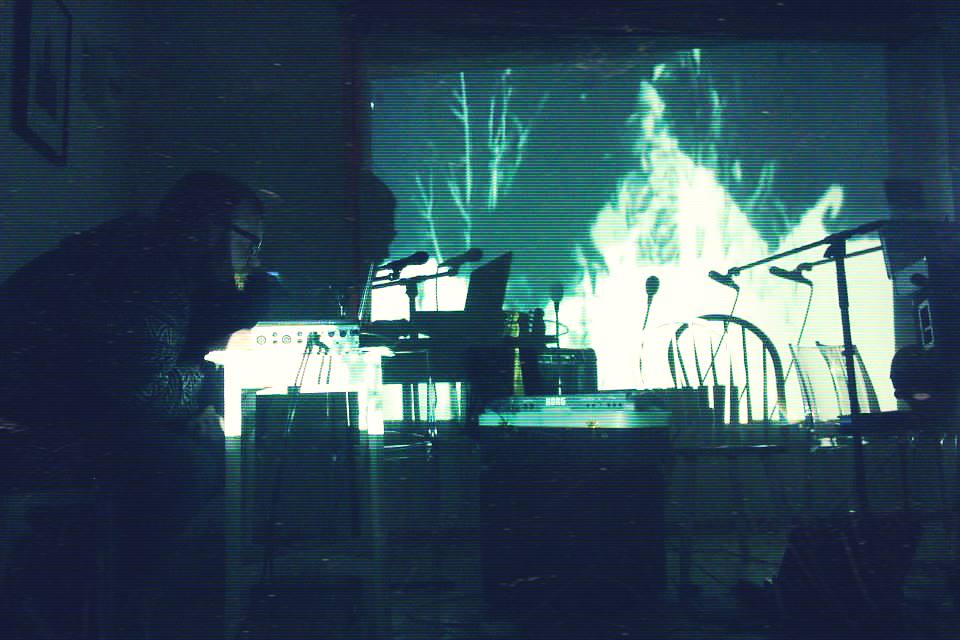
When performing live, I like to expose people to what Joseph Curwen is, as loud as possible. A typical Curwen gig involves me preparing some material in advance for further exploration, then in effect DJing my own drones, bringing different timbres and shards in and out of the mix as a reaction to the audience and the room I’m in. I can then manipulate effects in real time for extra timbres and effects. I tend to revert to a primal state when performing live, and let myself get completely lost in the noise. Some sets are very similar to practise runs, other have come out completely differently. I guess that could be called the ritualistic aspect to the music. I enjoy the use of visuals as a means of further filtering the audience towards the atmosphere I’m trying to create with the music. I am comfortable performing without visuals, but an accompanying video is a lot more entertaining to watch than a man behind a laptop.

Any final words?

Please check out https://josephcurwen.bandcamp.com/ and if you like any of it, please consider supporting me.

If you like what you hear or fancy getting in touch, I’m on Twitter as @curwendrone.

All digital noise intended, thank you for listening.

Also:

Granite Portal: https://graniteportal.bandcamp.com/
Dead End Street Band: https://thedeadendstreetband.bandcamp.com/
CHONYID: https://chonyid.bandcamp.com/

(M.G. & U.S.)

When the borders become fuzzy: Interview mit Compound Eye

Die beiden Musiker, die sich hinter der Hommage an das Seltsame des Facettenauges verstecken, haben zusammen einen umfangreichen musikalischen Stammbaum: Tres Warren hat mit den Psychic Ills Psychrock eine neue Dimension gegeben und im Kopf der Zuhörenden „Hazed Dreams“ entstehen lassen, Drew McDowall hat mit seiner damaligen Frau Rose Anfang der 80er The Poems gegründet, als Captain Sons and Daughters mit Kara Bohnenstiel akustische und elektronische Instrumente dröhnen lassen und war eine Reihe von Jahren Mitglied von Coil. Als Compound Eye Weiterlesen

When the borders become fuzzy: Interview with Compound Eye

Maybe we can start with a rather tedious question but maybe you could say a few words about how you actually started Compound Eye?

D.: Tres and I were friends. We had met through mutual friends and from seeing Psychic Ills. I am a huge fan and it was one of those things: We were talking and we said we should collaborate on something and it was a slow process. I think the first record that we did, the Spring Press record, came out in 2010 [ actually 2012] and I think we started in 2007. You know we did these tentative steps just getting together and viewing each other and our different working methodologies and just took it from there. Even though we come from different types of music and maybe different backgrounds, there’s a similarity, an experimental similarity that was good common ground.

Talking about experimental music, I think your first record [„Origin of Silence“] fetches quite high prices.

We will try to encourage a repress but Jeffrey Burch likes these limited, these beautiful art editions, so he probably won’t repress and it will get more and more expensive. It wasn’t even available digitally either. No digital download, so the only way is if someone physically burns it when they are playing it.

When I got the last record ["Journey From Anywhere“] I thought of the bandname, and the associations I had were that it is about different perspectives, different approaches. Is that too far-fetched, or…?

No, you definitely nailed it. I mean just in a more fundamental level it was just really an appreciation of the compound eye, how fucking weird something like that is. The analogues and the metaphors built from there. First of all it was how strange is reality; nature is the strangest thing and it never ever stops being astonishingly weird, something like a compound eye, you know like an insect’s eye. And also to try and imagine what it’s like to perceive that’s truly other. I can’t remember who said that: I don’t want to imagine what it’s like to be a bat, I want to imagine what’s it like for a bat to be a bat.

When you mention these things, would you say that the type of music you do is something to alter perception, to cleanse the doors of perception to quote Blake.

I mean to me that should be your starting point for making music. I mean just for me personally. That should be step one. Starting off with a blank slate and then adding that. If music isn’t altering perception, for me as a creator it doesn’t interest me. You know “Journey from anywhere, journey to nowhere.“

Can titles guide the listeners?

When you say “guide the listener“, you don’t want something that just sounds good. That you slap on top of the piece of music. That’s the easiest thing in the world. It should really strongly identify with the music but also, if possible, enhance. Sometimes the title exists before the piece of music. The title should give you a little peek beetween the veil, cracking open a a little bit, getting some idea. You don’t wanna be literal about your intentions. It should be some kind of signpost. You know taking some randon word and the extracting from that. The Burroughs thing: How random is random? That was a bit of a touchstone.

Would you say that this idea of randomness also applies to some of your compositions? On your last album there’s a track which is called a “cut-up composition“.

Yeah, yeah, we do that. Th cut up-thing. When we do that, we don’t do that very much. That would be in the editing process, it may be fairly random, like taking cut ups and seeing what happens. But even in the composition process there’s a lot of randomness, a lot of instability, some of the processes that we use, with the modular synths, the modular synthesizer is hugely random. And the way that we use it there’s a lot of random and a lot of stochaistic processes. So randomness but constrained within certain parameters.

Did any random element enter tonight’s show because of your limitations because some instruments were missing?

(laughing) We had finally got all of the instruments, even at the last minute I was running around on stage but some of the cables that we had weren’t there so we just had to make do. And some of the patching didn’t happen. We were keeping our fingers crossed. There’s a fine line between disaster and whatever the opposite of disaster is. (laughing) That’s why I like doing it the way we are doing it. That there’s a bounce on that knife edge of chaos and instability. You walk that fine line and any moment you can just fall on your face. (laughing). It’s fun. It keeps your heart going. You don’t need coffee (laughing).

How do you you feel then about music that is in live sitauations mainly done with a laptop?

It depends who’s doing it. What’s his name again? Who was on before. [Sote] From speaking to him beforehand… The worst thing I think you can do is to go on stage and just hit play. That just is so boring. But he was clearly doing a lot of real-time manipulation. That’s by its nature interesting. Generally I’m not a huge fan of having a laptop on stage or partucarly watching anyone. I don’t know why it is, it just always, it’s probabaly it has been abused for so long and not in a good way, but basically people coming and doing playback.

A couple of years ago Ivan Pavlov [COH] played in Rankfurt and he projected what he was doing onto a screen so everybody could see what he was doing with his laptop. To make it more transparent. And we briefly talked about the Sleaford Mods [before the interview]. It seems to be an honest way of doing it, hitting the button and not pretending to do something else, just standing there and drinking beer.

Yeah, that’s part of the performance. I want to talk about both Ivan and Sleaford Mods. With Sleaford Mods, it’s Jason Williamson, and I forget the name of the other guy, that’s part of it, standing there, drinking beer, it’ just genius, they may not do it for very much longer, but that works because it’s so deliberate. It’s not like: Ok I wanna do it but I don’t know how to do it, so I just gonna bring a laptop. You know it’s really part of it. And with Ivan. Ivan is so belligerantly (laughing) pro laptop you can’t even touch it (laughing). I love him dearly. In New York he did a performance and a q & a afterwards. And someone (laughing), someone dared, I felt so bad for this person, to ask him what software he used and he was just like “that’s like asking a guitarist what kind of strings he uses. That’s the most boring question anyone could imagine.“ He can defend his position better than anyone. And I admire that and he doesn’t even pretend to have a performative aspect. He doesn’t look busy and is not trying as if he is wrestling with the laptop. There are very slow deliberate movemnets. But it’s not something I would want to do. But I like that you brought up these two people. And it turned into this kind of anti-laptop thing. (laughing). [To Tres] You’ve never used laptops.

T: No.

I think maybe with Captain Sons and Daughters the very first performance we did, I can’t remember. I think we used it for rehearsals.

Now that you’ve mentioned an earlier project of yours and that there are some similarities that led to Compound Eye. Would you say that these earlier projects are still relevant to you? Are there projects where you would say that they played a very importnt role in your musical development while others were more tentaive steps?

Well, obviously Coil was… You can never get away from that. It’s something that’s part of me. There’s something in working with them that gave birth to a certain methodology. Some process that just does never go away. So that’s something and then going back to the very first band that was The Poems, you know we used tape-manipulation and cut-up tapes. I was 16 and cutting up making tapeloops. I think with Tres and Pschic Ills you guys have gone through many iterations. A common thread. But at some point… I remember seeing Psychic Ills once and it was flowing into a dark lysergic hole, it was like falling into a black hole of trippiness. That’s reflected in Compound Eye. But also Captain Sons and Daughters stuff. It’s all connected.

I recently saw a video of a Captain Sons and Daughters-performance on youtube and I could hear some similarities.

I think I had a modular but I was playing guitar. I like it when the borders become fuzzy and it’s not so easy to delineate. This is a person’s project under this name. It’s nice when it blurs.

I started with the origin of the band so at the end I would like to talk about future plans, recordings, stuff like that.

We’re gonna continue. We gonna record another album. Tres is recording a Psychic Ills-album and I’m doing a soloalbum. But once we finish with those we start doing the next Compound Eye-album. It would be some elements of what we did tonight. The last album, every track is different but there’s some unifying themes. It will be the same thing. A variation..

The last track tonight had some rhythmic elements.

Yeah, that’s definitely something that we’re gonna explore.

(M.G.)

Discogs

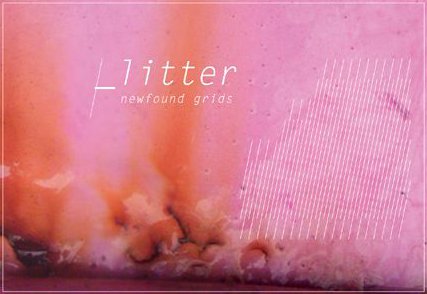
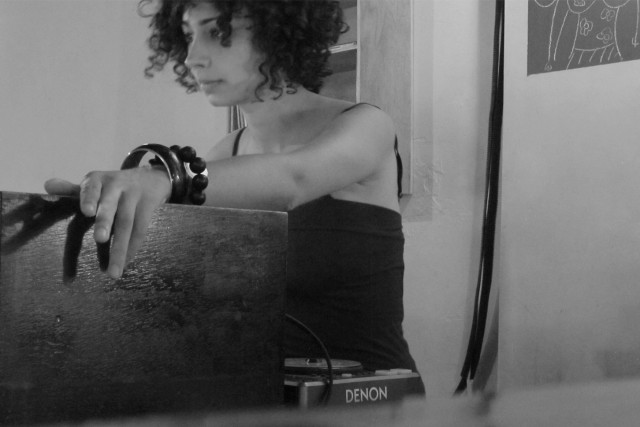
Vielleicht ist Raum einfach das, was die Sinne zusammenbringt. Interview mit Elyse Tabet alias Litter

So schwer es auch ist, Musik qualitativ zu bewerten – das Album “Newfound Grids”, das die libanesische Künstlerin Elyse Tabet mit ihrem Projekt Litter vor einiger Zeit herausgebracht hat, zählt sicher zu den virtuosesten Geheimtipps atmosphärischer Elektronik und könnte in kompositorischer wie gestalterischer Hinsicht den einen oder anderen Maßstab setzen. Tabets Zugang zu Klängen und musikalischen Strukturen läuft nicht über die Codes der Notation, sondern eher über den visuellen Umweg der Farben, Formen und Linien. Dies mag einen bei einer Künstlerin, die ebenso sehr in Bereichen wie Weiterlesen

Space may just be what connects the senses. An Interview with Elyse Tabet of Litter

Somewhere I have read that you came to music almost by chance. Did this unexpected beginning really come up that suddenly, and what can you tell us about your first experiences with composition and sound, about the sources you used and the groups of people you have worked with?

It is partially true. Music was always so important, maybe it is a good thing that I spent a long time being a listener, at first.

There were some early age attempts at being consistent in playing and practicing instruments, mostly the guitar… That the instrument needs to be approached and held in a certain manner seemed intimidating… And I didn’t do so well in music classes either, kids who could read sheet music flawlessly seemed to have super-powers. Today I have tremendous appreciation for skill, real musical skill, but I had to accept that I wouldn’t have the discipline or perseverance to really master an instrument, to eventually start think of alternative ways.

Drawing, colour, lines, etc on the other hand, seemed to happen naturally.

It wasn’t until much later that I discovered and understood the importance of musical pieces that liberate the instrument from its intimidating status: pieces like Marclays’ Guitar Drag and George Macciunas’ Piano Piece # 13 were somehow about profanity in its creative and constructive sense of disinhibiting and re-defining the terms of how one handles the instrument. That was where I found myself thinking music, after a good decade of not touching an instrument, and starting to think of ways.

It probably really wasn’t much of a sudden shift from visuals to sound as much as a link that was finally made between two senses that are originally very tightly connected. The visual arts that emerged in the early twentieth century and intercrossed sound art and lead to the several currents and fluxes that continue to challenge the boundaries between the seen and the heard today.

How have your ideas about writing music changed during that time?

Eventually after many years of being more focused on visuals, there was a very specific moment in 2008 at a Francois Bayle concert, when and where everything seemed to be moving in the room through his electroacoustic compositions; I had listened to similar music and I had appreciated the discs but this was something else. Being in the space and absorbing sound in such a wholesome manner was a visual listening experience. Somehow something clicked in terms of how composing in terms of sound-blocks instead of notes, and using sound-signs or sonic cues to tell visual stories, started really coming together.

What can you tell us about the people you have worked with back then?

I met some amazing artists when I was pursuing education at ESAP, an arts and multimedia school that provided an audio-visual lab, great teachers like Vincent Meyer, and access to amazing workshops.

The Toulouse based electroacoustic studio Eole, whom’s work I find absolutely challenging, offered a great series of workshops on sound, and so more pieces of the puzzle were coming together. Fellow visual artist Carine Bigot was the “earliest” collaborator, we were a bunch of art students working on audio visual installations and sharing thoughts / mp3 and trying out things. Back home, early collaborations and tests started happening with musicians I had previously worked with on video, like Jawad (Munma), who was a great support, and who’s doing some very active work to sport local emerging music. Later, artist Tarek Atoui was back home for the summer of 2010 and curious about emerging sounds from the city, so we scheduled a jam / recording session with Fadi Tabbal from Tunefork. No big turns were happening, but it started feeling possible to take these “compositions” seriously.

Meeting Cdrik in Beirut, he heard the pile up of material and what I was up to next, and Jawad was up to offer technical support on everything as well as contribute creatively to some of the tracks, which is … And so it all started coming together.

You’ve studied visual arts in Lebanon and abroad and produced a lot of designs, illustrations and video art. Which endeavors in the visual field are you currently occupied with?

For a few years now the work has been evolving around psych-geography, the perception of space through the subtle shifts of the human psych, and the overlapping of places in the mind when in restless agitation between various inner states.

I’ve explored thoughts like the absence of human presence in vast landscapes in-between towns, (it doesn’t matter where) and how landscapes are interrupted by distant signs and lights which are somehow signs of life or human presence. Somehow I’m fascinated by quiet towns; places that escape the universal visual unities of big cities.

The process of drawing in modular grids over the abstract, diluted, and foggy landscapes, whether in visual or sonic narratives, are a lot about confronting the universal signs, the readable spaces, with the inner landscapes that are projected over them.

Would you say that space and places (imaginary or real ones) are a central aspect in your music as well?

Space may just be what connects these senses… I feel that the time/space is often what decides the narrative of a “sound-scape”. (If you think about what W. Benjamin says) A recording of any time/space contained sound is bound to contain soul or an aura, as opposed to midi for example, which regardless of its qualities (and it is present in most of tracks in NFG) will still be signal with no intimacy.

How did you come upon your pseudonym Litter?

Someone described the music as litter, which I was glad to come across. It’s one of those words that contain all the right words, it relates to the concept of something scattered. And it does feel like it fits the music, to me.

You contribute to multimedia performances, so music and visual arts often refer to each other in your work. Do you see them as a unity?

Absolutely. Not necessarily a unity in the sense where a music show becomes more valuable with visuals, that is actually not the point. But a unity in a sense where music compositions are actually a visual process to me, especially in terms of confronting impulsivity and structure. And since I have no (deep) understanding of the musical notation system and do believe that even in experimental music there needs to be some kind of “moral code”, system, process, protocol, etc, as some sort of hidden structure, the protocols I do rely on are also visual

Do you think of filming or drawing while creating music?

Not necessarily simultaneously, some sounds do evoke very specific imagery and other pieces evoke less clear ones, but I guess it’s altogether based on a visual repertoire of space, even when it strives to build on a musical structure.

Are you listening to a lot of electronic/experimental music by others, and what are your favourites to date?

I have cycles where I’m more of a listener, just absorbing as much music as possible, and other cycles where I’m more concerned with exteriorizing and tend to rather distance myself. I mentioned Francois Bayle, I think I cannot mention him enough as an influence.

Would you call yourself a story teller or do you see yourself more as someone who brings forth moods and atmospheres? The pieces of your album „Newfound Grids“ show both, but a lot of sounds and mostly the song titles imply a strong narrative…

Some pieces are more faithful to the real location than other pieces. Somehow certain recordings you want to leave them as is, because they’re history, so they’re there but they’re overlapped with more diluted sounds, or even melodies, but the over-all structure is more based on hazards of that specific recording, and some recordings are pieces of a bigger story, one that is to be structured and knitted into a (coherent?) narrative.

I don’t see it as either or, between atmosphere music and story telling, but it does feel like: 1- the sonic environment of the raw material (field recordings) will come first, remain almost un-altered, and then micro-structures of melody, harmony, or calculated chance will infiltrate it. 2- Or 2 – a melody will impose a rather musical buildup in which these “ambient” sonic environments are incorporated.

Sonically, I think you can set the two apart, as the first always sounds looser, and the latter sounds like organized chaos. I’d like to think it’s not necessary to choose though.

What kind of sound sources did you use for the album?

“Pan’s Monologue” contains a vocal sample of 0.5 seconds from a song out there, as well as 3 piano samples of 0.5 seconds or less each. “Small Town ATM” somehow winks at an old pop melody (from a specific song), but as though heard in retrospective and in pieces I suppose. Nabil Saliba (drummer / producer) recorded drums.For the rest of tracks and some of the noises in these two tracks, it was late night recording with various instruments and a zoom recorder. A rounded silver pendant hanging from a chain and contacting in “rhythmic patterns on an acoustic guitar, bike wheels turning, a sewing machine, etc.

To what degree does life in Beirut with its ongoing changes influence what you do as an artist?

It’s impossible to say Beirut has no influence on what I do. It’s a city where the ground shifts before your feet sometimes, and yet at the end of the day it feels like nothing changed.

Although your music often appears lush and relaxed on the surface, it is full of spontaneous changes and sometimes even forms of harshness. Is this unpredictable and multilayered appearance something that you intend to achieve, or does it just happen while you improvise?

A big part of it is this “structure versus chance” aspect. I feel that it is both, recording is often impulsive and improvised, but in the production there is less improvisation than there is obsessive archiving, and then listening and searching for specific elements, which will later on either free-fall in a composition or define it’s structure.

Your music is very expressive, yet you as a person are not dominantly in the foreground, and sometimes it seems you almost vanish behind the sound. Is Litter also a kind of „facade“ for you, which only indirectly alludes to what is behind?

It does feel easier when you’re behind a pseudo, especially for trying things out. The publication of the music happened in a rather sudden way I guess so I was unprepared for the “foreground”, but it’s beyond the point to allude to what is behind the name because in a sense, regardless of that, the musical content strives to provoke a listener’s own projection. Although the process of making it is a personal one and it isn’t always a very open one, I do feel like the outcome is not really “that” introverted. The titles are like captions, but these captions aren’t scientific, nor geographic, and so it is still possible to see what you choose. It is diluted so that it’s possible to project into it, so why attach it to one specific story?

Most artists say they are open minded in terms of their audience’s reactions and interpretations, yet there can be a strong intention to communicate something through music. Do you often think of the potential audience while creating? Do you – in slight allusion to your friend Jawad’s sound lab The Altered Ear, where you also recorded – like the idea of changing the way of listening with your music?

Not necessarily, but there is something there, because some sounds are willingly barely there and some changes are barely perceivable, so in a sense it can be an invitation for quiet listening.

Most reviewers of “Newfound Grids“ pointed at a number of so called Middle Eastern elements, which are interwoven in the patterns of the music. Europeans love to romanticise such elements as exotic and oriental. Do you think in categories like eastern or western music? Are there aspects in your music you would consider as definitely Lebanese and such you regard as international?

Such categories do exist, but here the native source of these sounds doesn’t matter at all because at the end of the day they are detaching from it completely to draw maps of new, fictive places, places of in-between. Not in-between Oriental and Occidental, (it would be a shame if it’s perceived as that). I personally view the music as very exilistic, and if it incorporates eastern elements or exotic elements, it definitely strives to neutralize them by decontextualizing and recontextualizing them in this fictive space.

I think the music tries to capture several overlapping spaces, but these spaces are landscapes, not territories. It (hopefully) blurs such borders, not emphasizes them.

Your label Syrphe once said that the image of a “machine running out of power” is a main element of your music. If you agree with that metaphor, do you think that this expiring is still audible in your forthcoming work?

Yes, because it’s always going to also draw out from that image of disintegrating structures, or flaking patterns. There is something ghostly about any machine operating on low or terminal drive, when you’ve pushed a wheel one time and the wheel is driven once, twice, maybe three times by that push, it will sound unsteady and uneven while spinning to fade out. The patterns are a lot different from those of a wheel spinning mechanically, they’re here to say they won’t be here long… That, I think is most audible in “Helicopters O M C”

I am still working on collecting and processing such fading patterns, they might be less perceivable this time around, but they’re there.

(U.S.)

Litter @ Bandcamp

Litter @ Syrphe

What do you Know about a Good Father? Interview mit Joke Lanz von Sudden Infant

In der experimentellen Musik und im Post-Industrial sind Projekte üblicher als Bands, was man mit der Distanz zum herkömmlichen Rock’n'Roll-Lifestyle ebenso erklären könnte wie mit dem starken Konzeptcharakter vieler Arbeiten, bei denen meist die Ideen einer einzelnen Person im Zentrum stehen. Obwohl Sudden Infant eine sehr individuelle Sicht auf die Welt zum Ausdruck bringt und nicht selten persönliche Erfahrungen verarbeitet, entschied sich Betreiber Joke Lanz im vergangenen Jahr, das Einmannprojekt in ein Trio umzuwandeln, bei dem ein an Jazz und Rock geschultes Schlagzeug und ein Kontrabass mit dem altbekannten elektronischen Lärm zu einer Einheit fusionieren, die man als Weiterlesen

There’s always an underlying account of day-to-day life: Interview mit Sleaford Mods

Zwei Männer, ein Laptop, Flüche, Wut; die von Andrew Fewarn komponierte Musik runtergebrochen auf das Allernötigste: ein paar Beats, Bass, ab und an ein Sample. Das genügt um die wortgewaltigen Schimpfkanonaden von Jason Williamson zu untermalen, der den East Midlands einen Platz im aktuellen Popgeschehen zukommnen lässt. Der Zorn, der hier kanalisiert wird, lässt manche an eine 2014-Version von Punk denken und neben den schon häufiger gezogenen Vergleichen zu Mark E. Smith kommen einem auch Steve Ignorant oder Philip Best in den Sinn. Weiterlesen

There’s always an underlying account of day-to-day life: An interview with Sleaford Mods

It may be a bit trite to begin like that, but there’s a lot of anger in what you do. Years ago I talked with a friend of mine and he said: “I don’t listen to aggressive music anymore. I’m 40 now. I’ve mellowed a bit “. But I think you can still feel a lot of anger.

Jason Williamson: No, it won’t go away.
Andrew Fearn: No offense to your friend but a friend of my cousin, he likes Talk Talk and Ambient stuff but when I met him at some family thing, he was all over it. He was all over Sleaford Mods. Because every bloke is pissed off. People just choose to forget.
J: But it’s your choice. A lot of people try not to think.

Ignorance is bliss.

J: Yeah. That’s it.

Would you then say that the current political climate in Britain has influenced the last record?

J: I’ve been doing this for seven years. It was always. You just had to feel the rock back then.
Andrew Fearn: It’s never gone away.
J: It’s never gone away for a long, long time in that country. It’s always been unjust. For the last thirty years it’s escalated rapidly.
A: [points at the table with fruit backstage] Lots of water, coke, bananas, fruit. You wouldn’t get that in the UK. You wouldn’t get fuck all. What you get is a locked door while you’re trying to get into the room. That’s all you get (laughs).


You enjoy German beer?

A: Not just German beer. Everything. Food, people, the culture. The infrastructure.

Ages ago I spent some time in Liverpool and I remember being stuck in the tunnel at Birkenhead quite often. After I had been to Birkenhead a couple of times I got an idea what the line “it took a tattoeoed boy from Birkenhead to really really open her eyes“ from the Smiths was about. How do you feel about Morrissey today?

A: I mean, he says funny things and he is a bit of a twat.
J: A fuckin’ moral ass all the time.
A: There’s something cool about him. He moved to America, to LA, and I think he wouldn’t give a fuck about all we think.

Maybe let’s turn to the way you compose your songs. Legend has it that it all started when somebody played a Black Metal-loop.

J: Yes, that’s true. I was experimenting with spoken word before that. I got back to the studio and try to work with it.
A: My part.
J.: Before (both laugh). So I started writing more in that vein. Using loops. That’s how it started.

Your last two albums have been released on Harbinger. How did that happen?

A: You know Harbinger?

Yes. I’m quite interested in postindustrial. So that was a name that rang a bell.

A: How did that feel for you then?

Well, at the beginning I was a bit surprised but after hearing you tonight it makes sense.

A: We sometimes get tagged with Pet Shop Boys. Because when I was a kid I was trapped in pop music. I didn’t know about a world outside of that. The Pet Shop Boys were quite important to me. But funny now, the Pet Shop Boys.
J: Sorry, what was the question again?

About the label.

J: We used to play in a club called Ravel, the Ravel Club and that’s how we met Steve [Underwood].
A: The only good night in Nottz.
J: Steve came down. It was me solo. We didn’t do it together for about a year. We just used to record together.
A: I had done some music. It was quite embryonic. After a time we got to know each other more.. Then they had a festival at the club and he saw it. Then it all kicked up from there.

When I saw you live, I noticed that normally when you see people with a laptop, they are crouched behind it, pretending to a lot of stuff. With you it’s different.

A: Yeah, that’s intentional. I’ve been making music all my life in various projects and they always struggled with that concept. I’ve always struggled with how they do that, how they lie. No one gives a fuck about you appearing over a laptop screen. People rather see me jiggling.

You obviously know all the lyrics.
(laugh)

J: The idea is to do it stripped down. We don’t use many instruments. He just presses play and that’s it. And then I’ll do the rest.

But there are a lot of things going on.

J: It create itself. You just surround yourself with whatever.
A: I think our electronic thing is very claustrophobic. It’s not a fake thing.

Would you say that the reactions are different in England than in Germany for example? Maybe that the audience focuses more on the lyrics?

J: In England now they are coming round to it.
A: They are, yeah. Before we came to Europe the British audiences were very cynical about it. They were hanging on to the old stuff. It’s working now.

Could you say a few words how the lyrics start? How do you get into the mood?

J: Sometimes it’s gibberish, sometimes it’s a real solid subject about something that pisses me off or somebody that’s pissed us off. Just a general subject that we talk about, It could start with a funny word, some of it could be made up, some of it is fantastical but there’s always an underlying account of day-to-day life.
A: Some of it that we think is very English but it’s probably something that everyone in the world knows. It’s s the thing that we do. That’s why we are not really having a problem being related to in Europe or anywhere else becuase we’re just talking people’s language. Being fancy about poetry or something. We’re not doing that.
J: There’s nothing going on.
A: There’s nothing going on. It’s a terrible time.
J: Music’s shit in England. Nobody’s doing anything. Everybody’s a careerist. If people get picked up and’ve got an ounce of talent it just gets absorbed into whatever record company signed them on and it just gets turned into a machine to make profit. So we’ve come up strictly by ourselves with Steve our manager and he’s taken us through his conncetions in Europe for gigs and through that we built an audience and got back to England with the press and everybody pickin’ up on it because we gigged over here, we’ve got a reputation. So Europe’s been good for us really.

I saw on your website that even the BBC interviewed you.

J: Yeah, BBC 6. But that’s in Nottingham. Mainstream media have picked us up quite a lot but it’s all through the gigging in Brussels, in Germany and then you go back and trying to play gigs in England. It just caught on for some reason.

People have written about the swearing in the lyrics. Is it intentional or something that just happens?

J: It’s something that happens. It’s just the way I talk as well. I wanted to get across me as opposed to trying to do nice words and fuck all. It got to a point where I got so frustrated. So I just thought being me that’s been my greatest weapon. You should do music that suits you. Not try to be somebody else. That’s why so many people fall down. People may be good at writing songs but a melody will only carry so much. You could have your own personality in there as well.

Maybe just one last thing. I think I read on your bandcamp site that you played in a couple of band sbefore and you hated it.

J: Yeah. Because I hadn’t been myself. I hated it for the fact that it was just geared around trying to get a record deal. In a certain genre of music that everybody else had competely fucking done. Time and time again. Then after a while it got so monotonous and I got into spoken word a bit. So I could relate to that more because I could get more words out. That’s obviously when it happened that Saturday afternoon in the studio with the loop. Number one: That was interesting. It got my attention. Number two: I was my own boss. I didn’t have to compromise with anybody. I could just do my own thing. And I found that I was quite a good producer. I could get my ideas across really well. And it just escalated like that.

(M.G.)

Sleaford Mods

Dark Earth Distillery. Interview mit UnicaZürn

Unica Zürn, Autorin, Dichterin, Verfasserin von Anagrammlyrik, Zeichnerin, Malerin, Lebensgefährtin Hans Bellmers– unter dem Namen der in Berlin geborenen Künstlerin, als Hommage an ihre kreative Kraft, wie es im folgenden Interview erläutert wird, sind mit Stephen Thrower und David Knight zwei Künstler kreativ tätig, deren eigene Stammbäume der randständigen, experimentellen Musik viele Verästelungen haben und weit zurückweisen: U. a. war/ist David Knight Mitglied von Shock Headed Peters, seine eigenen dunklen Klangflächen veröffentlicht er unter dem Projektnamen Arkkon, Stephen Thrower war lange Jahre Mitglied bei Coil, ist Filmjournalist und Weiterlesen