
Mit Act(8) präsentiert die Berliner Reihe act_in_berlin Ende Juni einen Konzert- und Performanceabend zwischen Ritual, Post-Industrial, experimenteller Elektronik und trancehaften Klanglandschaften. Unter dem Motto “Spiritual circles echo through time from ancient traditions, finding their place within post-industrial everyday life” treffen in den Uferstudios unterschiedliche künstlerische Ansätze aufeinander, die sich mit Spiritualität, Körperlichkeit und archaischen Atmosphären auseinandersetzen.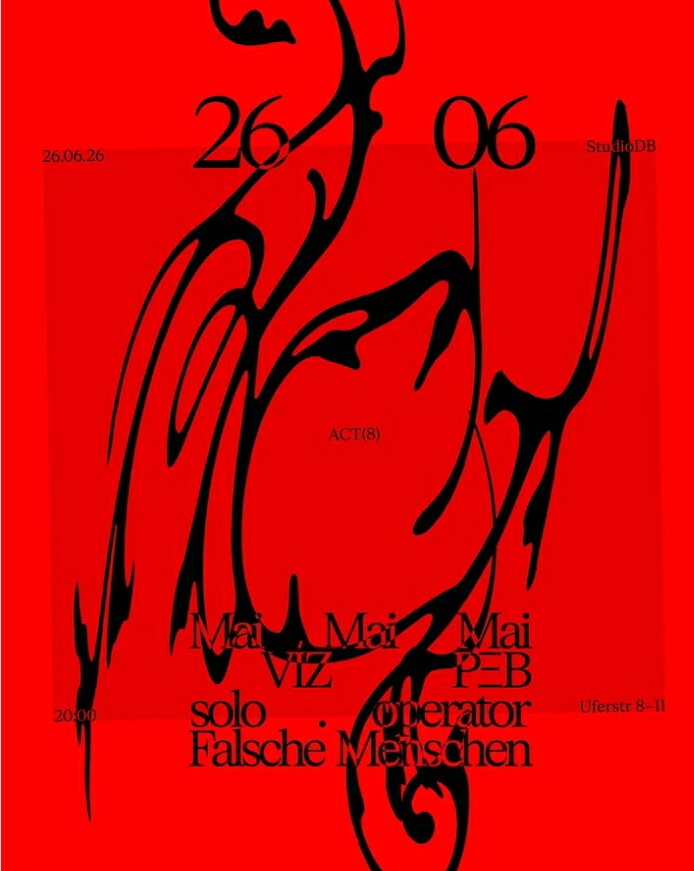 Weiterlesen
Schlagwort-Archive: Mai Mai Mai
MAI MAI MAI: Rimorso
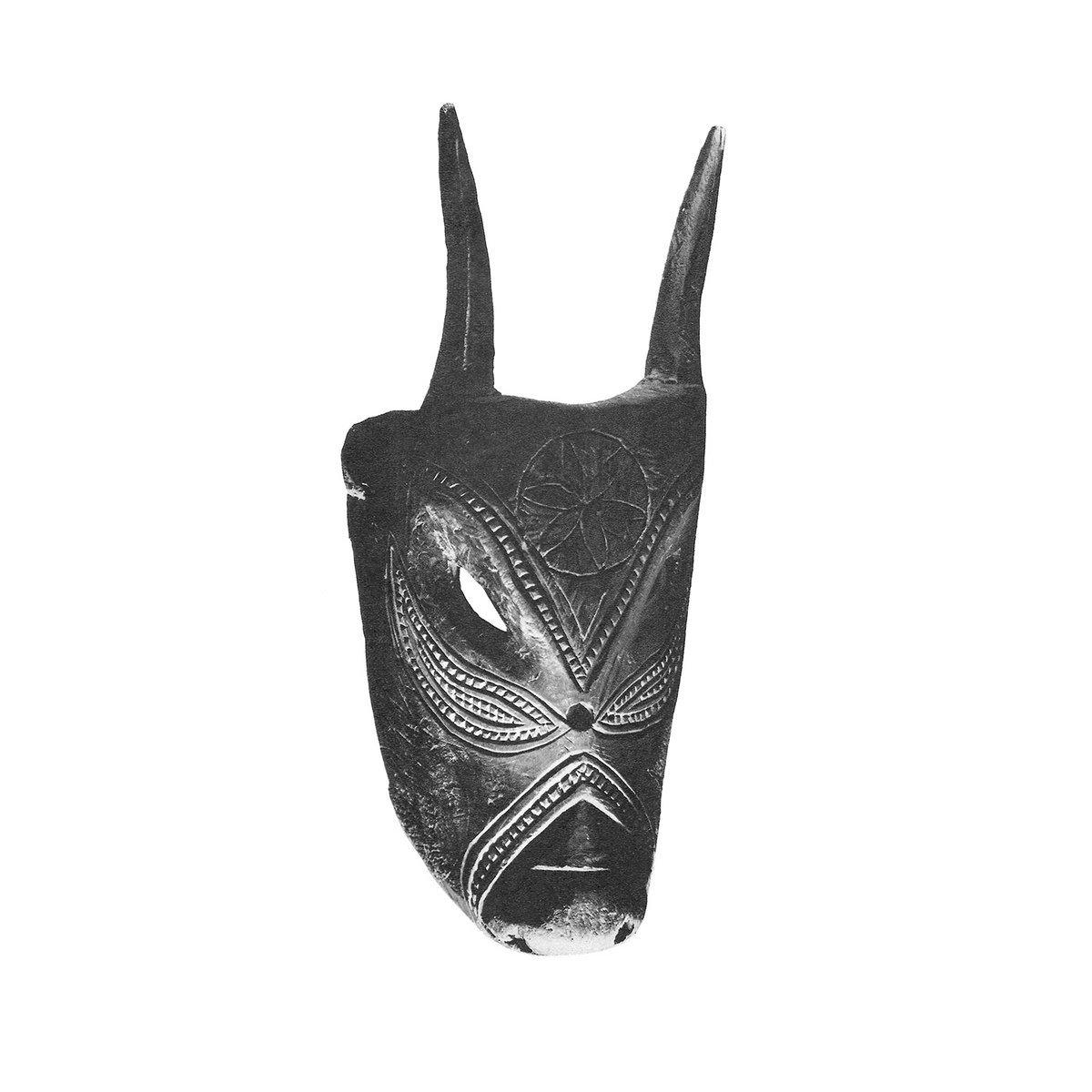 Als der Römer Toni Cutrone vor ungefähr zehn Jahren sein Projekt Mai Mai Mai startete, taten ihm einige Unrecht, indem sie die ersten musikalischen Lebenszeichen, allem voran das Debüt “Theta”, als kurzlebigen Abklatsch angesagter Musikmoden wie Chillwave abtaten. In den folgenden Alben, die in regelmäßigen Intervallen die Studiotore verließen, konnte er nicht nur ein kreatives Händchen für feinsinnige Kompositionen und ein Weiterlesen
Klaustrophobie: Compilation u.a. mit Mantenna, Slow Slow Loris, Von Tesla, Luciano Lamanna, Mai Mai Mai
Das römische Veranstaltungshaus und Label Klang a.k.a. Klang Roma hat als Quarantäne-Carepaket und Mittel zum Spendensammeln den hier vorliegenden Sampler zusammengestellt, der neben zahlreichen Größen der italienischen Experimentalmusik und Electronica auch einige internationale Geheimtipps enthält. Nicht wenige darunter standen bereits auf der Bühne in den Räumlichkeiten nahe der Via Prenestina.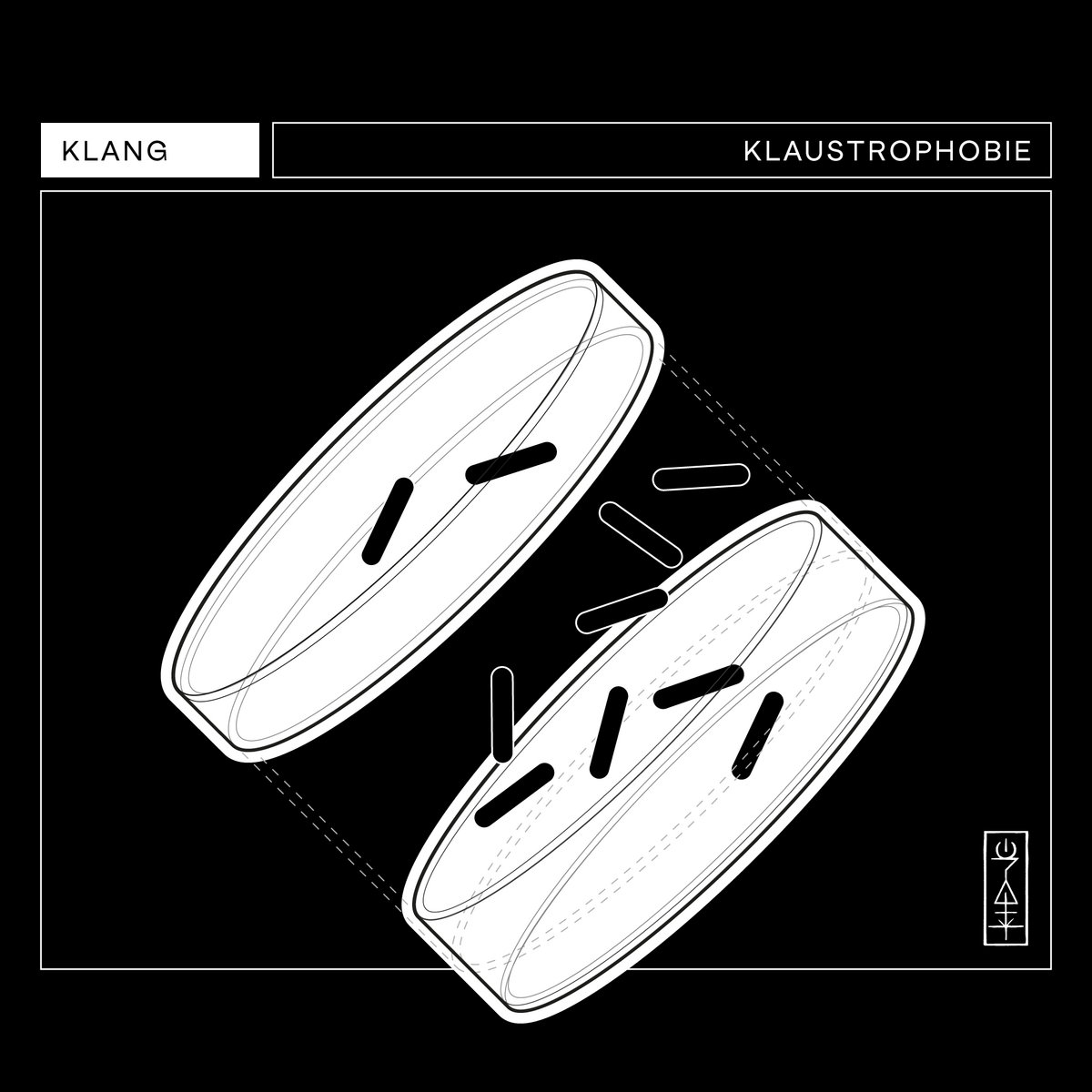 Weiterlesen
Ancestral: Mai Mai Mai, XMTR, Lithium, Angelic Sintesis und Acratep im Hanger 49
Am 28. Feburar bringen die Veranstalter von Ancestral Futuro Remoto den Römer Toni Cutrone alias Mai Mai Mai ins Berliner Hangar 49. In den letzten Jahren deckte der Producer, der auch von Noiserock-Acts wie Trouble Vs. Glue her bekannt ist und nebenbei den Dal Verme-Club und das Nofi-Label betreibt, eine Bandbreite zwischen minimaler Electronica und experimentellem Noise ab, und hatte dabei immer das Okkulte, Mythologische im Blick. Ebenfalls live zu sehen ist das audiovisuelle Projekt XMTR, abegrundet wird das Programm durch DJ-Sets von Lithium (Ancestral) und anderen.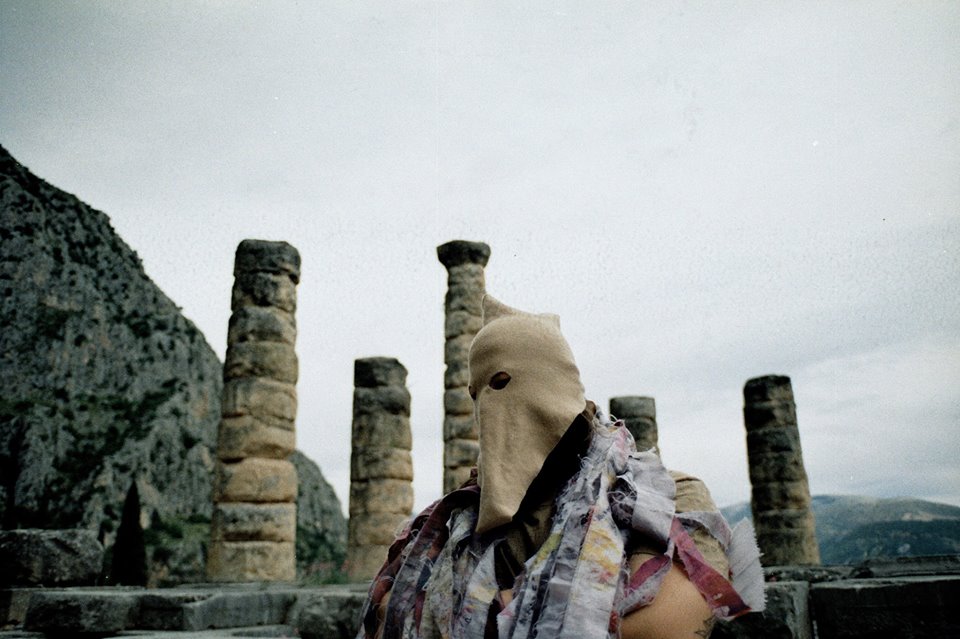 Weiterlesen
MAI MAI MAI: Phi
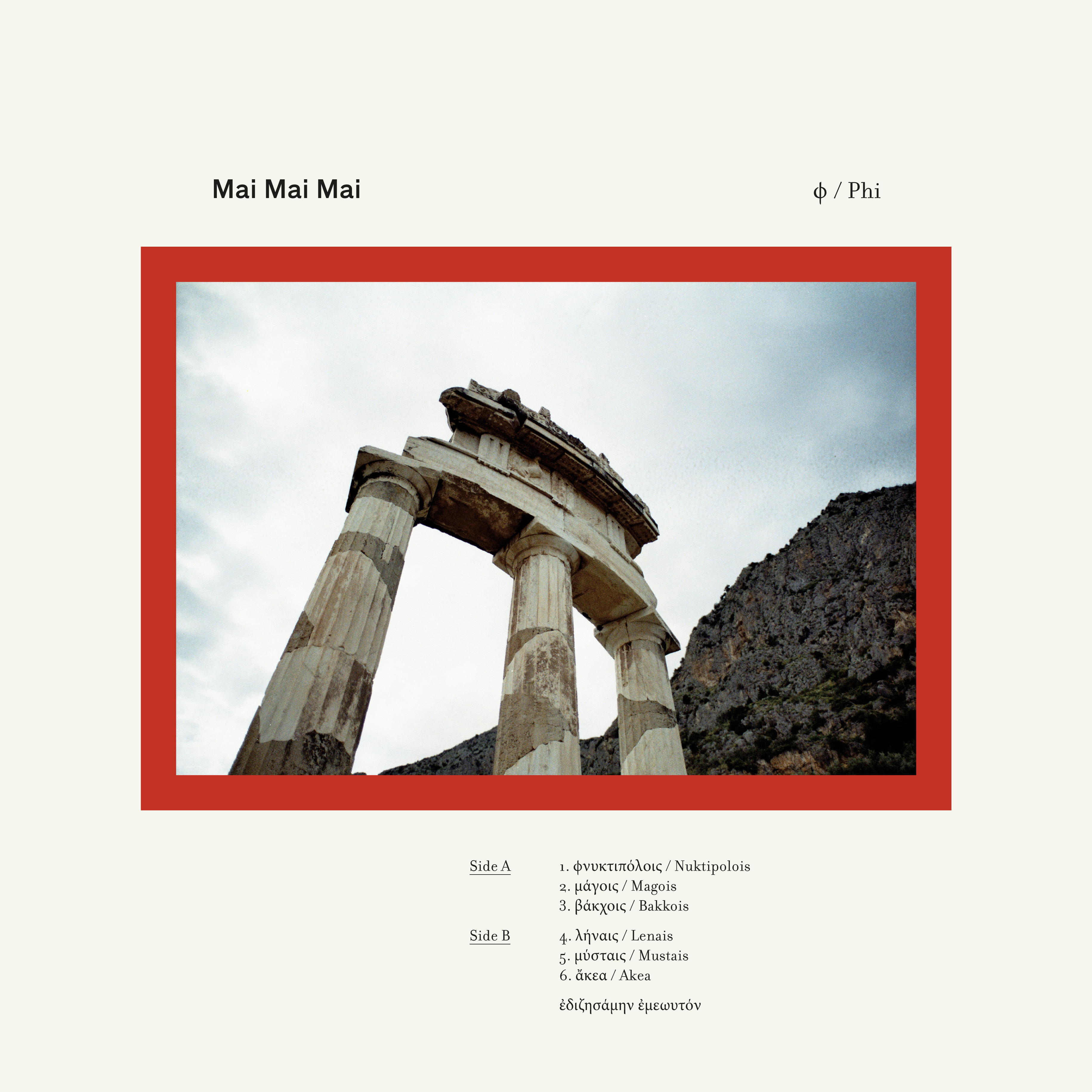 Vor Jahren hob Toni Cutrone, der bislang in diversen noisigen Rockformationen spielte, sein Soloprojekt aus der Taufe und beglückte die Musikwelt als Mai Mai Mai mit der „Mediterranean Trilogy“, die die Frühzeit des griechisch-römischen Kulturkreises als maritime Lebenswelt erforschte. Teil dieses archaischen Symbolkosmos war ein zwischen rhythmischem Lärm und retrolastiger Elektronik verorteter Sound, der dem südlichen Setting einen kühlen, aquatischen Beigeschmack verpasste. Nach „Tetra“ und „Delta“ erschien noch Weiterlesen
OCCULTO presents: ONGAPALOOZA (10 yrs of Boring Machines) im West Germany, Berlin
Vor zehn Jahren wurde in der italienischen Kleinstadt Treviso das kleine Label Boring Machines gegründet. Zu der Zeit ahnte wahrscheinlich niemand, dass das Projekt einmal zu einer der rührigsten Institutionen der alternativen Musikgeschichte Italiens werden sollte. Zahlreiche jüngere Bands aus den unterschiedlichsten Regionen des Landes und aus verschiedenen Genres zwischen Psychedelia, Drone, Noiserock und electronica debütierten dort oder brachten dort zumindest ihre ersten im größeren Rahmen vertriebenen Aufnahmen heraus, zu den bekanntesten zählen La Piramide di Sangue, Father Murphy, Heroin in Tahiti, Mai Mai Mai, Squadra Omega, Cannibal Movie, Mamuthones oder die in Berlin lebede Musikerin DuChamp. Aber auch altgedientere Musiker wie Z’ev oder Simon Ballestrazzi veröffentlichten bei Boring Machines. In einer Reihe Events feiert das Label nun sein zehnjähriges Bestehen, eines der Festivals mit ausschließlich Boring Machines-Bands wird im Juni vom Berliner Oculto-Magazin im Kreuzberger West Germany veranstaltet. Der Name Ongapalooza referiert auf den Namen des Labelgründers Onga sowie auf eine nordamerikanische Pferderasse namens Apalooza. Weiterlesen
Searching for Subterranean Sounds. Interview mit Silvia und Andrea von Yerevan Tapes
 Abgesehen von der ursprünglichen Bedeutung als Ettikett rangiert die Semantik des Begriffs “Label” zwischen Plattenfirma und Marke, und auch in weniger kommerziellen Nischen kann man viele Labels dahingehend unterscheiden, welche der beiden Bedeutungen ihnen eher entspricht. Zum einen gibt es die Labels, die innerhalb eines nicht allzu eng gefassten Spektrums eine gute Bandbreite an Acts verlegen, ohne dass es eine klar erkennbare Hausphilosophie und eine deutliche ästhetische Linie gäbe. Auf der anderen Seite Weiterlesen
Searching for Subterranean Sounds. Interview with Silvia and Andrea of Yerevan Tapes
As far as I know you both played in bands such as His Electro Blue Voice and one of you is also running Avant! Records. Later on you formed Yerevan. When and how did you decide to do publishing activities besides your own music?
Actually only Andrea used to be involved in His Electro Blue Voice, having been drummer in the band from day one until 2013‘s full-length album on Sub Pop. He also runs Avant! Records since 2007. Together we started Yerevan Tapes in 2011 with the intent to explore new sounds previously unexperienced.
Where have your music roots been? Was there some sort of a subcultural scene you were part of?
We may come from different musical background but after several years of listenings we both felt we needed something new, something deeper more artistically and spiritually engaging. That’s exactly the kind of ground Yereven Tapes took its first steps from.
 I have the impression that the labels, Yerevan even more, is rather some art concept of its own than a business. Would you agree?
Most of indie labels come out of passion, often with an ordinary job on the side to bring some money in. This leaves enough room to grow a specific identity and the necessary freedom to choose the best contents.Speaking of Yerevan, we felt the need to build something with a strong aesthetical identity where music, medias and symbolic communication were one.
If you had to scetch the artistic vision you follow with Yerevan, how would you express it?
As our motto states, we are a “cassette and vinyl record label for sacred sounds”. It means we’re chasing those music projects who can deliver their own vision of the sacred, their Weltanschauung, no matter how. When one takes a look at our catalogue he might feel the differences rather than the similarities between the artists, but they all share a common aim.
Your two labels differ not only in terms of the medium (Avant! mostly vinyl, Yerevan mostly tape), but also bit in terms of styles, as Avant! has some focus on post punk/dark pop and Yerevan is more into the experimental and psychedelic in the broadest sense of the words. Did this just happen or do you think, style and medium fit for some reason?
The tape is some sort of natural media for experimental music since the 70s, if not earlier. So it comes as no surprise that we felt it as our primal support as YT. It’s cheaper, it’s easier to distribute worldwide, it gives you the opportunity to release material from obscure artists without having to face the difficulties of a vinyl record production. At the same time, just as in the post punk/dark pop realm the tape has recently came back as music medium, we on our end have done 3 vinyl releases already and we are planning to have more for the near future.
Bands like Father Murphy, Bird People, La Piramide or German Army play quite different styles, but do you think there’s a read thread, some artistic or spiritual element that combines them?
As we said above, they surely have different styles but at the same time, we think it is kind of easy to see what connects them together. Their search for subterranean sounds may end in different artistic solutions but what moves them seems to be the same: a quest for spiritual inquiry.
Are there any limits in the range of styles, is there kind of a stylistic no go area, or would you potentially release music from any genre?
Of course there are boundaries, as we will not release punk rock or heavy metal music for instance, at the same time is not strictly a matter of pure musical style performed while it is about how much it does fit within what we are looking to express with YT. As long as we think it bonds with what we are doing we may consider it.
Is there something like a favourite release that has a special meaning to you?
As rhetorical as this may sound, we have no favourite release as each one has its own identity and particular history. Behind every records we put out there is a connection as much personal as possible, with the music and the artist who created it. For different reason we are exited about every one of them so far.
 Artwork plays a stong role not only in the tape design but also on your web spaces, and there is a lot of religious and ritualist symbols from all over the world. How is your interest in this, and where is the relation to your concept and the music?
While we may collect influence from religious and artistic expressions from different places and times, we have a special eye for the kind of cinematic results that Soviet Armenia directors achieved. The fact that Silvia graduated in Cultural Anthropology surely played a strong role within the YT quest for aesthetics.
Could you give us an example or two for Armenian movies that have influenced you?
Surely. The Yerevan cassette-tape covers come straight from a particular time and space. And not only Armenian movies, sometimes Georgian or Ukrainian ones too; the point is that they all belong to a specific period and context: the soviet lands between sixties and late seventies and its cosmogony. There’s something in the way they represent the world that somehow has a strong link to us as label. In a very concise list just to get the idea, besides the well-known Sergej Paradžanov and his marvellous filmography (all his movies are perfect gems in their own way, especially Shadows of Forgotten Ancestors (1964) which I’m particularly fond of), I can recommend Wishing Tree (1976) by Tengiz Abuladze, and two short movies by Artavazd Pelešjan: Inhabitants (1970) and Seasons (1975).
So this already answers my next question – you didn’t chose the name of the Armenian capital for mere exotic reasons…
Like we just said, a first infatuation came from Silvia’s University studies, one on Armenian culture, language and history in particular. We think the name we chose stands for something able to build bridges between Here and There. It might not have been Yerevan, but it would have been a toponym in any case as we think toponyms are thick and widespread words.
Several psychedelic and experimental music styles exist now for a long time. What do you think are the main qualities of such music today, and what could be the reason that it became a bit more popular again?
Probably it’s the strong mystical appeal that psychedelic music hosts that managed to make it last through all these years. Tribal approach to the drumming and deep drones always have a direct power on our souls. Music fashions come and go, but there’s always room for experimenting in sounds.
A lot of younger psych bands today deal with esoteric and occult motifs, but often combined with some playful or ironic note. Some people would say that this is a sign of hipster stuff, but do you think that such topics are more vital when they are not too serious?
 We don’t wish to be looked as too serious but at the same time we don’t think we are much ironic about our iconography. We like to blend religious symbols with contemporary artwork, but we do not mean it in a funny way. We just look to create a new context for those everlasting icons.
What is your opinion on a tag like Italian Occult Psychedelia, which is somehow also applied to bands of your label by the music press?
We think it has proved itself to be a great tag to gather different bands with different styles under one common vessel. As with everything it‘s no perfect tool, but it surely has been helpful to export the current Italian sound abroad.
In our country, the media dealt only punctually with Italian music, yet there was a huge output of releases for a long time. In the last years, this changed a bit and people become aware of the variety of Italian stuff. Do you have an idea about this change?
We only can think that what you say proves our point. Some times it takes a little stratagem to make things work properly.
Your newest release is a tape by electronica producers Zone Demersale. What are your plans for Yerevan in the nearer future? Any new explorations?
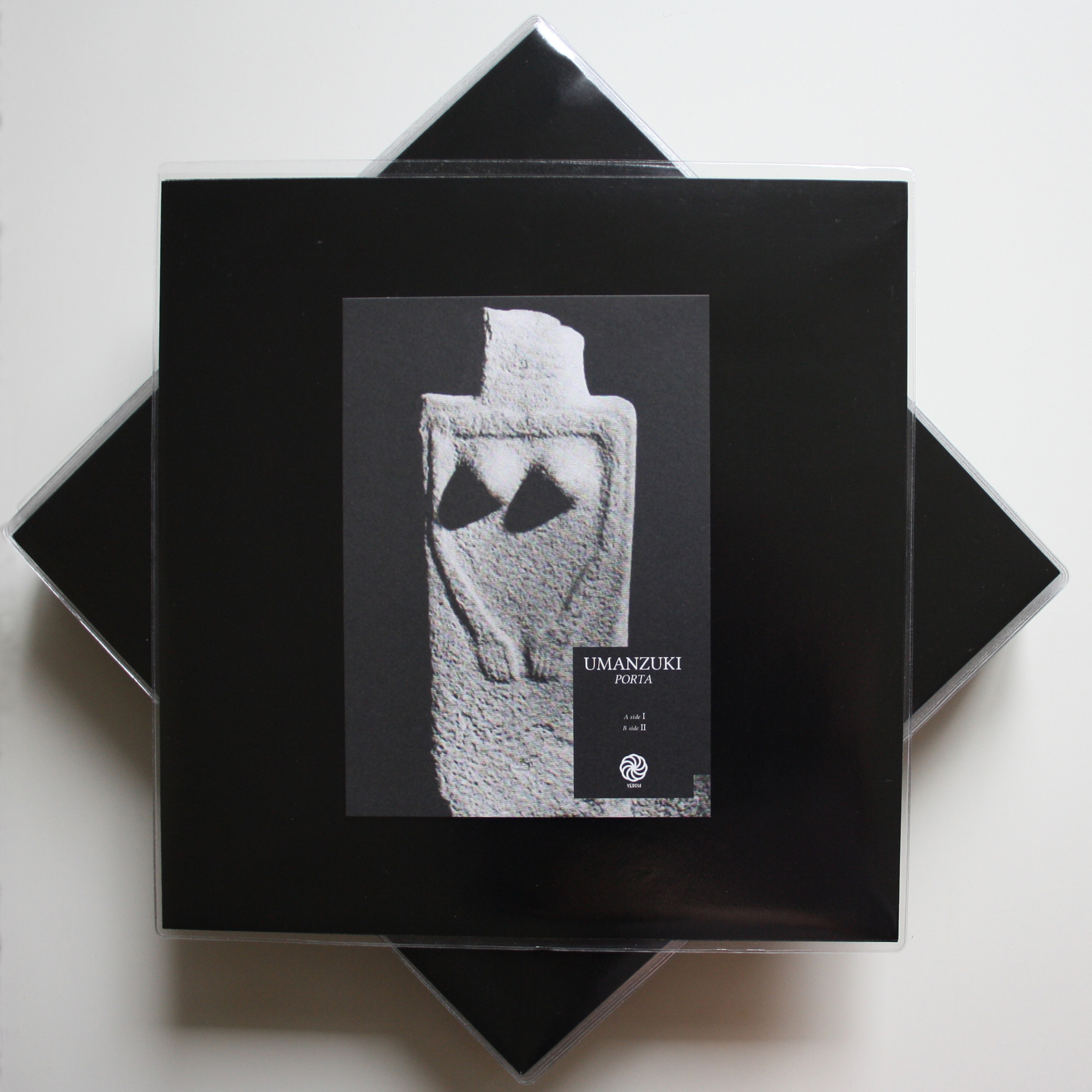
Right as we speak we have put out a brand new vinyl record, the 12” EP Porta by Tuscany-based trio Umanzuki. This is our last release before the summer, after which we will be back with more tape and vinyls, not only by Italian artists and also more electronics-oriented.
(U.S. & A.K.)
MAI MAI MAI: Petra
 Als Toni Cutrone alias Mai Mai Mai vor ein paar Jahren im Umfeld des römischen Experimental-Underground auftauchte und zu seiner musikalischen Reise durch ein mediterranes Altertum aufbrach, konnte man das ganze noch als liebenswürdiges Fake betrachten, war die verspielte und zugleich kühl-analoge Musik doch recht nah an damals gerade gehypter Retro-Electronik Marke Chill Wave angesiedelt, und die Oddysse durch das östliche Mittelmeer als Hintergrundgeschichte klang verdächtig nach einem Nerd, der gerade in seinen verblassten Erinnerungen an den Griechisch- und Lateinunterricht herumkramt. Weiterlesen
HEROIN IN TAHITI: Canicola
 Wenn Musiker die Sonne, die Flora und die regionalen Bräuche ihrer Länder besingen, endet das nicht selten im Postkartenkitsch, v.a. wenn es sich bei dem Land auch noch um ein beliebtes Touristenziel handelt. Wer Heroin in Tahiti kennt, weiß allerdings, dass sie unter exotischem Charme etwas anderes verstehen, denn ihre im Zeitlupen-Surfsound beschworenen Südseesettings strahlten eine dreckige Düsternis aus, die mehr mit einem Neo Noir-Streifen gemein hat als mit einem auf Hawaii spielenden Elvis-Schinken. Wer die römische Band in den Jahren ihres Bestehens etwas genauer verfolgt hat, der erinnert sich vielleicht daran, dass sie sich auch schon ihrer italienischen Heimat gewidmet haben. Weiterlesen
MAI MAI MAI: Δέλτα (Delta)
 Mai Mai Mai ist eine moderne Abenteuergeschichte, eine Art Odyssee durch eine analoge mediterrane Welt, in der der mythische Held, sein Name ist Toni, allerhand Dinge zu meistern hat, die für den Rezipienten vage und abstrakt bleiben müssen. Dies ist v.a. dem Medium der Geschichte geschuldet, denn Mai Mai Mai ist weder Epos, noch Film, noch Balladensammlung, sondern ein weitgehend instrumental gehaltenes, elektronisches Musikprojekt – diesmal unterstützt durch eine handvoll Gäste, die das Album “Delta” ein gutes Stück vom Vorgänger “Theta” abheben. Weiterlesen
V.A.: Occulto Issue E (Magazin & Compilation)
 Occulto ist ein englischsprachiges Magazin, dass sich einer sehr fundamentalen Definition des Okkulten verschrieben hat – okkult versteht sich hier im Sinne des Verborgenen, Geheimen, nicht ohne Anstrengung Sichtbaren. Das Magische, womit man das Okkulte landläufig gleichsetzt, ist allenfalls Teil dessen. Ein häufig wiederkehrendes Thema der Zeitschrift sind die unterschwelligen Verknüpfungen zwischen Kunst und Wissenschaft, was von einem naturwissenschaftlichen Blick auf kulturelle Erzeugnisse bis hin zur Erforschung ästhetischer Phänomene in den Nischen der Natur reicht. Der Blick auf das Verborgene vermag also auch den breiten Graben zu überbrücken, der sich in unserer arbeitsteilig ausgerichteten Kultur zwischen all diesen Wissensbereichen auftut. Das Okkulte Weiterlesen
MAI MAI MAI: Theta
 Toni Cutrone, der sein Soloprojekt Mai Mai Mai nennt, ist eine umtriebige Person und hat der Undergroundszene Roms schon in jungen Jahren seinen Stempel aufgedrückt. Gerüchte künden von einer Kindheit in der griechischen Ägäis und Reisen quer durch Europa und den mittleren Osten. Italiener rollen allerdings mit den Augen, wenn das zur Sprache kommt. Ein moderner Münchhausen? Das wäre bei jemandem, der meist mit Maske auftritt, nicht so verwunderlich, doch einige seiner Taten sind offiziell verbrieft: Sein rühriger Club, sein Label und die Bands Hiroshima Rocks Around und Trouble Vs. Glue, mit denen er Noiserock und ein Weiterlesen