
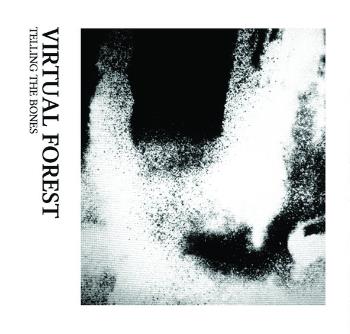
 Ganz gleich, ob Marco Bernacchia mit Virtual Forest echte rituelle Gesänge aus entfernten Stammeskulturen samplet und und zu mystischen Soundscapes verarbeitet, oder, wie auf seinem aktuellen Tape „Telling the Bones“, mit dröhnenden Echos und abstraktem elektronischen Lärm beginnt, und dem Material erst durch diverse Beigaben einen rituellen Touch gibt – immer läuft das Experiment auf die Ritual Machine Music hinaus, die Fusion aus Ethno- und Industrialelementen, nach der er seine vorige LP benannte. Weiterlesen
Schlagwort-Archive: Yerevan Tapes
RESTIVE PLAGGONA: Committed to the Truth
 Ich vermute, dass der auf Korfu lebende Dimitris Doukas schon ein paar Jahre als DJ, Plattensammler und Kollaborateur in der lokalen Musikszene unterwegs war. Restive Plaggona nennt er sich seit gut einem Jahr, und seitdem hat er ganze sechs Tapes über nerdige kleine Labels unter die Leute gebracht, hinzu kommen einige Releases zum Download, die nur unter dem Namen Plaggona firmieren. Alles, was mir bislang von ihm zu Ohren gekommen ist, rangiert im Grenzbereich von Ambient, Techno und (im weitesten Sinne) post-industrieller Elektronik. Weiterlesen
ARBRE DU TÉNÉRÉ: Quando gli Uomini Adoravano la Luna
 Irgendwann in Jahr 1973 rammte ein betrunkener Lastwagenfaher einen Baum in der Region Ténéré im südlich der Sahara gelegenen Staat Niger. Sicher ist am gleichen Tag in China der eine oder andere Sack Reis umgefallen, aber mit dem Baum starb – beinahe – ein regionaler Mythos. Die Akazie, die der Trucker zu Fall brachte, stand dort einige Jahrhunderte und war der Überlieferung nach der einzige Baum im Umkreis von vierhundert Kilometern, diente lange als Wegweiser für Karawanen und galt in der Folklore der Einheimischen als Weiterlesen
VIRTUAL FOREST: Ritual Machine Music
 Ein Titel wie „Ritual Machine Music” spielt natürlich mit einer offenkundigen Referenz, und vielleicht soll die gleichzeitige Assoziation zu Ritualmusik und zu Lou Reeds Pionierarbeit zeitgenössischer Geräuschkunst ja auch ein wenig den Ort umreißen, den Marco Bernacchia seinem Projekt Virtual Forest auf der Landkarte ungewöhnlicher Musik reserviert hat. Nach einem Tape, auf dem Bernacchia mit urigen Sounds einem – trotz elektronischer Verfemdung und vielen kleinteiligen Soundideen – eher klassichen Ritualismus frönte, steht seine neue LP ganz im Zeichen eines Weiterlesen
VIRTUAL FOREST: Unconscious Cognition is the Processing of Perception
 Beim langen Übergang von der Kindheit zum Erwachsenenleben spielt in unserer Alltagssprache der Begriff der Initiation kaum eine Rolle. Lediglich die Literaturwissenschaft hat den Begriff der Initiationsgeschichte geprägt für einen Typ Erzählung, in der ein junger Mensch durch eine einschneidende, meist desillusionierende Erfahrung und mit Hilfe einer Mentorfigur einen neuen – erwachseneren – Blick auf die Welt bekommt. In tribalen Gesellschaften von überschaubarer Größe wurde der Übergang viel bewusster und aktiver angegangen. Weiterlesen
GERMAN ARMY: Kalash Tirich Mir
 Ganze fünf LPs haben German Army in den vier Jahren ihres Bestehens in die Welt gesetzt, limitierte Veröffentlichungen auf Tape kommen hinzu, nicht zu vergessen diverse Splits wie zuletzt die auf Tourette erschienene 7” mit Novy Svet – geheimnisvolle Obskurantisten sind die beiden Kalifornier allerdings nach wie vor, denn über ihre Hintergründe, ihre Aktivitäten außerhalb der Band und letztlich auch über die von zahlreichen Andeutungen gespickten Semi-Konzepte ihrer Musik gibt es wenig Informationen. Weiterlesen
Searching for Subterranean Sounds. Interview mit Silvia und Andrea von Yerevan Tapes
 Abgesehen von der ursprünglichen Bedeutung als Ettikett rangiert die Semantik des Begriffs “Label” zwischen Plattenfirma und Marke, und auch in weniger kommerziellen Nischen kann man viele Labels dahingehend unterscheiden, welche der beiden Bedeutungen ihnen eher entspricht. Zum einen gibt es die Labels, die innerhalb eines nicht allzu eng gefassten Spektrums eine gute Bandbreite an Acts verlegen, ohne dass es eine klar erkennbare Hausphilosophie und eine deutliche ästhetische Linie gäbe. Auf der anderen Seite Weiterlesen
Searching for Subterranean Sounds. Interview with Silvia and Andrea of Yerevan Tapes
As far as I know you both played in bands such as His Electro Blue Voice and one of you is also running Avant! Records. Later on you formed Yerevan. When and how did you decide to do publishing activities besides your own music?
Actually only Andrea used to be involved in His Electro Blue Voice, having been drummer in the band from day one until 2013‘s full-length album on Sub Pop. He also runs Avant! Records since 2007. Together we started Yerevan Tapes in 2011 with the intent to explore new sounds previously unexperienced.
Where have your music roots been? Was there some sort of a subcultural scene you were part of?
We may come from different musical background but after several years of listenings we both felt we needed something new, something deeper more artistically and spiritually engaging. That’s exactly the kind of ground Yereven Tapes took its first steps from.
 I have the impression that the labels, Yerevan even more, is rather some art concept of its own than a business. Would you agree?
Most of indie labels come out of passion, often with an ordinary job on the side to bring some money in. This leaves enough room to grow a specific identity and the necessary freedom to choose the best contents.Speaking of Yerevan, we felt the need to build something with a strong aesthetical identity where music, medias and symbolic communication were one.
If you had to scetch the artistic vision you follow with Yerevan, how would you express it?
As our motto states, we are a “cassette and vinyl record label for sacred sounds”. It means we’re chasing those music projects who can deliver their own vision of the sacred, their Weltanschauung, no matter how. When one takes a look at our catalogue he might feel the differences rather than the similarities between the artists, but they all share a common aim.
Your two labels differ not only in terms of the medium (Avant! mostly vinyl, Yerevan mostly tape), but also bit in terms of styles, as Avant! has some focus on post punk/dark pop and Yerevan is more into the experimental and psychedelic in the broadest sense of the words. Did this just happen or do you think, style and medium fit for some reason?
The tape is some sort of natural media for experimental music since the 70s, if not earlier. So it comes as no surprise that we felt it as our primal support as YT. It’s cheaper, it’s easier to distribute worldwide, it gives you the opportunity to release material from obscure artists without having to face the difficulties of a vinyl record production. At the same time, just as in the post punk/dark pop realm the tape has recently came back as music medium, we on our end have done 3 vinyl releases already and we are planning to have more for the near future.
Bands like Father Murphy, Bird People, La Piramide or German Army play quite different styles, but do you think there’s a read thread, some artistic or spiritual element that combines them?
As we said above, they surely have different styles but at the same time, we think it is kind of easy to see what connects them together. Their search for subterranean sounds may end in different artistic solutions but what moves them seems to be the same: a quest for spiritual inquiry.
Are there any limits in the range of styles, is there kind of a stylistic no go area, or would you potentially release music from any genre?
Of course there are boundaries, as we will not release punk rock or heavy metal music for instance, at the same time is not strictly a matter of pure musical style performed while it is about how much it does fit within what we are looking to express with YT. As long as we think it bonds with what we are doing we may consider it.
Is there something like a favourite release that has a special meaning to you?
As rhetorical as this may sound, we have no favourite release as each one has its own identity and particular history. Behind every records we put out there is a connection as much personal as possible, with the music and the artist who created it. For different reason we are exited about every one of them so far.
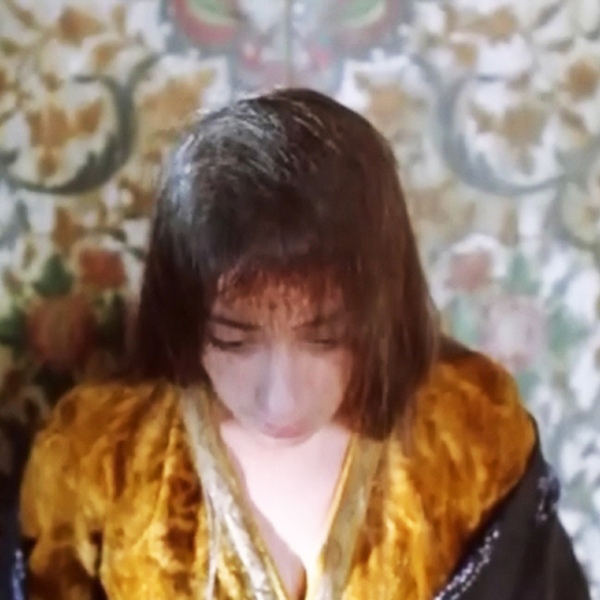 Artwork plays a stong role not only in the tape design but also on your web spaces, and there is a lot of religious and ritualist symbols from all over the world. How is your interest in this, and where is the relation to your concept and the music?
While we may collect influence from religious and artistic expressions from different places and times, we have a special eye for the kind of cinematic results that Soviet Armenia directors achieved. The fact that Silvia graduated in Cultural Anthropology surely played a strong role within the YT quest for aesthetics.
Could you give us an example or two for Armenian movies that have influenced you?
Surely. The Yerevan cassette-tape covers come straight from a particular time and space. And not only Armenian movies, sometimes Georgian or Ukrainian ones too; the point is that they all belong to a specific period and context: the soviet lands between sixties and late seventies and its cosmogony. There’s something in the way they represent the world that somehow has a strong link to us as label. In a very concise list just to get the idea, besides the well-known Sergej Paradžanov and his marvellous filmography (all his movies are perfect gems in their own way, especially Shadows of Forgotten Ancestors (1964) which I’m particularly fond of), I can recommend Wishing Tree (1976) by Tengiz Abuladze, and two short movies by Artavazd Pelešjan: Inhabitants (1970) and Seasons (1975).
So this already answers my next question – you didn’t chose the name of the Armenian capital for mere exotic reasons…
Like we just said, a first infatuation came from Silvia’s University studies, one on Armenian culture, language and history in particular. We think the name we chose stands for something able to build bridges between Here and There. It might not have been Yerevan, but it would have been a toponym in any case as we think toponyms are thick and widespread words.
Several psychedelic and experimental music styles exist now for a long time. What do you think are the main qualities of such music today, and what could be the reason that it became a bit more popular again?
Probably it’s the strong mystical appeal that psychedelic music hosts that managed to make it last through all these years. Tribal approach to the drumming and deep drones always have a direct power on our souls. Music fashions come and go, but there’s always room for experimenting in sounds.
A lot of younger psych bands today deal with esoteric and occult motifs, but often combined with some playful or ironic note. Some people would say that this is a sign of hipster stuff, but do you think that such topics are more vital when they are not too serious?
 We don’t wish to be looked as too serious but at the same time we don’t think we are much ironic about our iconography. We like to blend religious symbols with contemporary artwork, but we do not mean it in a funny way. We just look to create a new context for those everlasting icons.
What is your opinion on a tag like Italian Occult Psychedelia, which is somehow also applied to bands of your label by the music press?
We think it has proved itself to be a great tag to gather different bands with different styles under one common vessel. As with everything it‘s no perfect tool, but it surely has been helpful to export the current Italian sound abroad.
In our country, the media dealt only punctually with Italian music, yet there was a huge output of releases for a long time. In the last years, this changed a bit and people become aware of the variety of Italian stuff. Do you have an idea about this change?
We only can think that what you say proves our point. Some times it takes a little stratagem to make things work properly.
Your newest release is a tape by electronica producers Zone Demersale. What are your plans for Yerevan in the nearer future? Any new explorations?
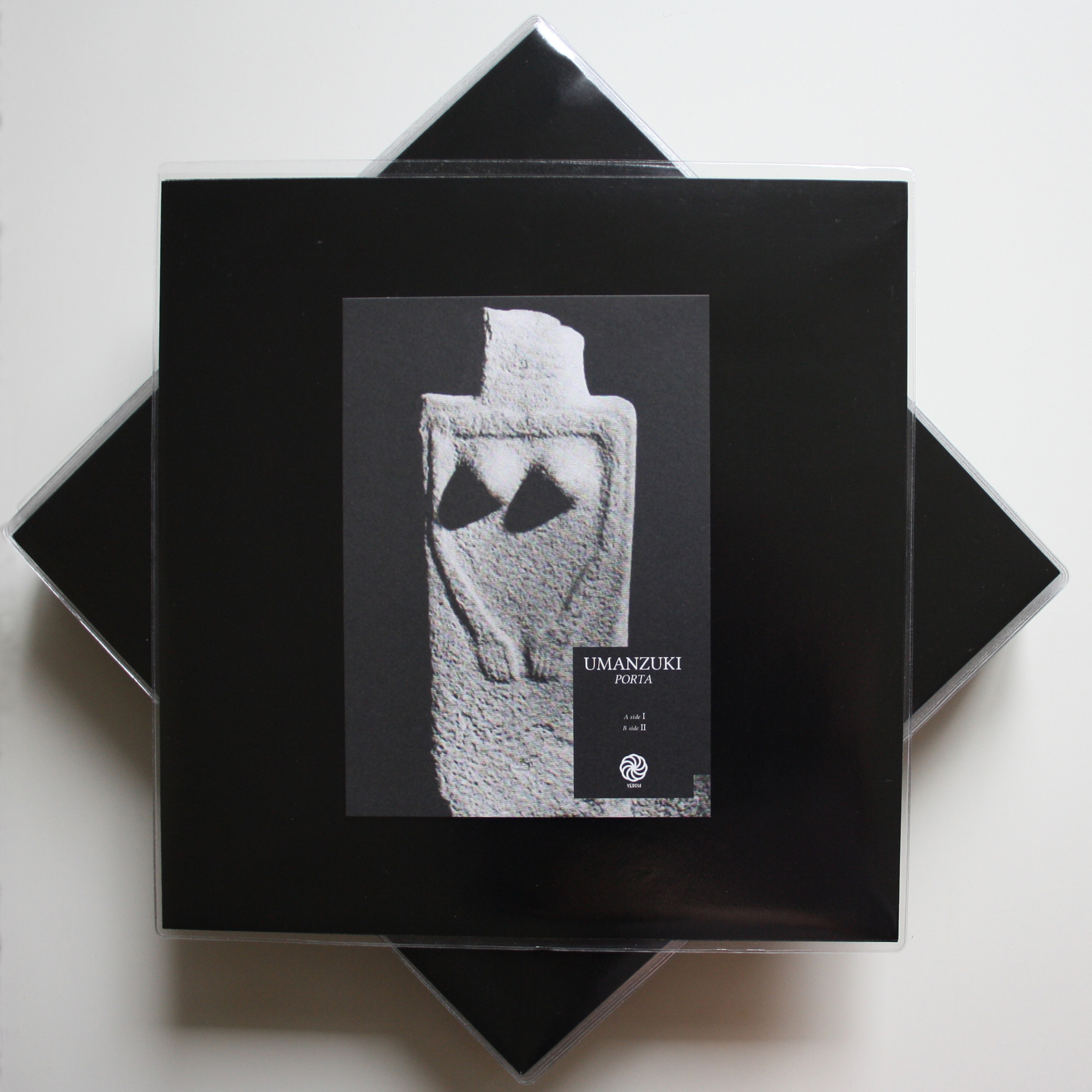
Right as we speak we have put out a brand new vinyl record, the 12” EP Porta by Tuscany-based trio Umanzuki. This is our last release before the summer, after which we will be back with more tape and vinyls, not only by Italian artists and also more electronics-oriented.
(U.S. & A.K.)
METZENGERSTEIN: Alchemy To Our Days
 Nur kurz nach der Wiederveröffentlichung ihres Debüts „Albero Specchio“ präsentieret das toskanische Psychedelic-Trio Metzengerstein sein zweites Album, streng limitiert und auf Tape, was für viele leider immer noch als Tonträger für Releases außer der Reihe missverstanden wird. Die beste Nachricht gleich zu Anfang – Metzengerstein bleiben ihrem cinematischen Stil und ihren düsteren Arrangements treu. Weiterlesen
URNA: Couchemar
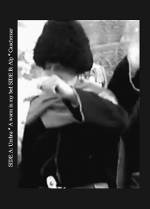 Hinter dem Namen Urna versteckt sich der italienische Ritualdröhner Gianluca Martucci, der neben der Musik auch als Maler und Tattoo Artist aktiv ist und bereits Artwork für Kinit Her gestaltet hat. Dass seine bisherigen Alben hierzulande, trotz Signings bei Slaughter Productions oder den rührigen Brave Mysteries, etwas untergegangen sind, mag eventuell auch dem unscheinbaren Namen geschuldet sein. Dem sollte man allerdings abhelfen, und sein neues Tape könnte da einen guten Einstieg bieten. Weiterlesen
PSALM’N'LOCKER: Op. 01 Music For Dreamachine
 Psalm’n'Locker ist das Soloprojekt von Luca Garino, der in der doomigen Folkband mit dem einprägsamen Namen How Much Wood Would A Woodchuck Chuck If A Woodchuck Could Chuck Wood? für düster vor sich hingrummelnde Vocals zuständig ist. Auf seinem komplett im Alleingang eingespielten Tapedebüt folgt er den Spuren Brion Gysins und Ian Summervilles, die mit ihrer in den 50er Jahren entwickelten Traummaschine halluzinogene Wirkungen durch optische Flickereffekte erzielten – vorausgesetzt, der Benutzer verfügte über die entsprechende Empfänglichkeit für repetitive optische Reize dieser Art. Ähnlich wie das 1989 von The Hafler Trio und Weiterlesen
BIRD PEOPLE: King Of The Grove
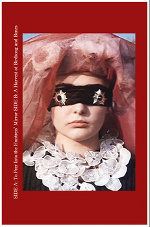 Ein mysteriöses Volk sind sie, die Wiener Vogelmenschen, die sich mit ihrem feinmaschigen Soundgewebe dem Klang eines Kolibriflügels annähern wollen. Je nach Kontext kann das flapsig oder pathetisch klingen, doch der Eindruck muss zwangsläufig eine andere Richtung nehmen, ist man erst einmal in die Musik eingetaucht, die Ulrich Rois und seine Mitstreiter unter dem Namen Bird People spielen. Weiterlesen
MAI MAI MAI: Δέλτα (Delta)
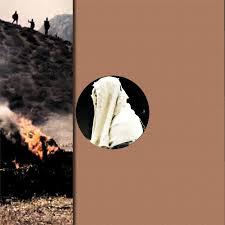 Mai Mai Mai ist eine moderne Abenteuergeschichte, eine Art Odyssee durch eine analoge mediterrane Welt, in der der mythische Held, sein Name ist Toni, allerhand Dinge zu meistern hat, die für den Rezipienten vage und abstrakt bleiben müssen. Dies ist v.a. dem Medium der Geschichte geschuldet, denn Mai Mai Mai ist weder Epos, noch Film, noch Balladensammlung, sondern ein weitgehend instrumental gehaltenes, elektronisches Musikprojekt – diesmal unterstützt durch eine handvoll Gäste, die das Album “Delta” ein gutes Stück vom Vorgänger “Theta” abheben. Weiterlesen
HEROIN IN TAHITI: Peplum 7′
 Doomige Keyboards, verwegene Twangs und ein langsamer, tiefschwarzer Groove – Heroin in Tahiti, die beiden Doomsurfer aus Rom bleiben sich treu, präsentieren nach dem Split mit Ensemble Economique ihr nächtes Lebenszeichen und erweitern das Tape-Label Yerevan mit dem untypischen Medium einer schön gestalteten schwarzen 7”. Weiterlesen
GERMAN ARMY: Millerite Masai
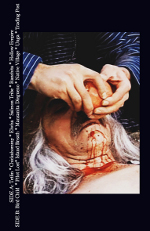 Es ist schon ein Tape zum Rätselraten, dass German Army unter dem Titel „Millerite Masai“ ganze hundertmal in die Welt gesetzt haben. Ist das bizarre Ereignis auf dem Cover wirklich so brutal wie es aussieht, und was genau passiert eigentlich mit dem Mann? Was hat das Ganze mit den Milleriten, einer Gruppe von Adventisten zu tun, die es laut Albumtitel auch in Ostafrika geben soll? Warum nennt sich eine Band German Army? Und warum kombiniert jemand Handdrums aus den Weiten des Trikont mit stoffeligen Stakkatos aus den Untiefen des Rhythm Noise? Es gibt für all das bestimmt eine Reihe an Gründen, einer ist sicher der Spaß an dummen Fragen, die man dann vorzugsweise unbeantwortet lässt. Weiterlesen
Our nostalgic feelings are projected towards the future. Interview mit Cannibal Movie
 Als Teile der Menscheit begannen, sich als modern und rational zu betrachten, bedurfte es einer markanten Kehrseite, welche die eigene Zivilisiertheit im Kontrast umso deutlicher hervorscheinen ließ. Furchteinflößend musste der finstere Doppelgänger sein, war es doch seine Aufgabe, die zurückgelassene Roheit umso barbarischer und jeden Rückfall undenkbar erscheinen zu lassen. Neben übernatürlichen Gestalten musste vor allem der sogenannte Wilde dafür herhalten, und der Kannibale war einer seiner krassesten Ausprägungen, weshalb er auch nie die romantische Inversion als “edel” erfahren hat. Moderne Europäer dachten beim Kannibalen meist an Völker aus den Kolonien, freilich gibt es Verzehr von Menschenfleisch auch in der eigenen Geschichte. Weiterlesen
Our nostalgic feelings are projected towards the future. Interview with Cannibal Movie
Cannibal Movie is a quite obscure band and there is only little information about the members. Would you like to introduce yourselves and tell us a bit about where you come from?
We come from a city in Southern Italy, Taranto. It’s a very singular place, surrounded by two seas, where activities like fishing and agriculture together with rural architectures and old religious traditions coexist with massive production of steel and environmental degradation; a lot of contradictions that make it a really stimulant place to live. This is our base, here we work and pursue our passion for music, biology, plants and cinema.
Is Cannibal Movie your main project or do other groups you’re involved in play an equal role? Which other bands of yours are active at the moment?
Both of us are involved in other projects. Gaspare plays drums in a band called Bogong in Action and I run a solo project under my own name. Inside our collateral experiences we are developing, yet each one moving into opposite directions concerning what individual aspects we bring into the band. On the one hand, there is a more instinctive and free rhythmical approach and on the other hand a more controlled and electronic one.
 Your music has many references to psychedelia from around the late sixties. What is it that fascinates you most about that/those style(s)? Is it OK for you to be described as retro or nostalgic?
We are often tagged as a psychedelic band, but we have to admit that our main references are others. We have been strongly influenced by Italian music productions from the sixties to the eighties, above all soundtracks, early electronica experiments, library music. We’re fascinated by the freshness and intensity of that material and it has been natural for us to develop our own sound starting from these musical roots, filtering them through new explorations in noise, drones, electronic, hypnagogia and all sorts of sound we have assimilated; we are really omnivorous listeners. Anyway, our nostalgic feelings are projected towards the future.
What are your favourite musicians of that era? Any secret tip for our readers?
Obviously some great composers like Ennio Morricone, Riz Ortolani, Piero Umiliani, Amedeo Tommasi, Armando Sciascia, Alessandro Alessandroni, Giuliano Sorgini, Giusto Pio. Outsider like Franco Battiato, Roberto Cacciapaglia, Gruppo di Improvvisazione Nuova Consonanza, Prima Materia. Illuminated personalities like Gianni Sassi.
What element in your music would you consider to be most “modern“?
The volume. Joke apart, we are trying to play a timeless music that could be ancestral and futuristic at the same time.
Whenever I listen to old music (or music that sounds old) of quality, I condemn the typical process of fashion cycles that often turn original styles into something average, and later on into something old fashioned. Although retro concepts are actually a part of that, do you think references to the past (or even something like collecting) can also work against the tooth of time?
It could be kind of a will to stop time and let it float into a timeless space made by all the sounds, the objects, the experiences we have loved. Surely, It’s reassuring to live inside this comfortable balloon, but at the same time this could be a check for creativity and progress. New technologies have helped making all the old music easily accessible, and it’s as if there was no temporal line anymore. We are definitely sons of our time.
 Could you imagine yourselves adding some instrument/voice to your drums and organ?
At the moment we are working on an audio/video set based on the Italian cult movie “La casa dale finestre che ridono”, directed by Pupi Avati and scored by Amedeo Tommasi. For this scoring we are focusing on a more electronic sound, working only with processed organ, electronic drum and some other two old synths. In the future we’ll continue to explore new possibilities trying to preserve the core of our sound.
Movie references are a major topic of your recordings. Why is it especially the Cannibal genre which you named your group after?
Cannibal Movies were a typical Italian film genre, its features corresponded perfectly with what we are expressing in our music. It’s a personal expression, but kind of linked to our own culture, just contaminated by the colours and the atmospheares of far and exotic scenaries.
According to the ethnologist Claude Lévi-Strauss cannibalism is the “alimentary form of incest“. Is that an idea that you can understand or would you say that that is too far-fetched?
It could be seen as a sort of identification, assimilation or communion of the other one, moreover, if you think, in the Catholic tradition, as in ancient religions, the believers eat the body of their God.
In “Cannibal Holocaust“ the (role of the) media and the medium itself (i.e. film) are reflected throughout the film. Do you feel that that is what makes “Cannibal Holocaust“ a film that is still relevant today?
 Whithout any doubt, the themes of “Cannibal Holocaust” are extremely relevant for today and it’s absolutely reductive to discuss it only with reference to the violent visual impact. Manipulation of reality by media is always a dangerous risk and it’s sick to note how the new possibilities of information are not always able to fill this lack of trust, and tend to produce further confusion and ambiguity.
Have you ever met people of that era personally? A friend of mine once did an interview with Franco Prosperi, who has a house in the forest filled with a huge collection of bizarre exotica…
Indirectly we have had contact with Prosperi: our music has been used as soundtrack for a short interview/documentary (made by VICE magazine) shot at the house of the director (at Formia, not so far from Taranto).
Music without typical song structure is often described as “score for an imaginary movie“ or the like. It may sound a bit clichéd, but visual associations while listening to music appear legitimate to me. Do you feel any sympathy for that idea?
Yes, and above all it’s interesting how sorts of “abstract” musics could evoke concrete worlds and tangible images depending on the listener; or when it’s the sound itself that tries to describes abstract concepts or things that, at first sight, seem so distant from music, like objects: the results could be unexpected
You’ve recently released a tape called “Mondo Music“. If someone created a sort of neo mondo film fitting to your music, what should the film be like?
We’d like it to be focused on the contrast between scientific and technological progress and the ever persistant primitive and irrational insticts of human kind. It seems as if this technical evolution does not correspond to a real interior and intellectual growing of those who can benefit from it.
Jess Franco has just died. What would the adequate funeral music by Cannibal Movie sound like?
“Schiave Bianche” could be a good funeral march.
 Let’s close with the obligatory “future plans” question – are you working on some new stuff that we can expect later this year?
Quite recently we have released the vinyl edition of Mondo Music (via the Italian label Yerevan Tapes), further on we’ll be busy with concerts for the summer. We will close this series of concerts with a little tour in Greece in September. After that we will start working on new stuff. Anyway, we’re ready for some new surprises.
(JJ, MG & US)
FATHER MURPHY: ORSANTI They Called Them
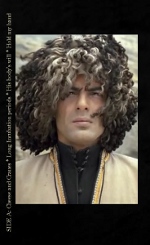 Es gibt sicher eine Reihe an Gründen, von der gegenwärtigen Musik ernüchtert zu sein – es reicht schon aus, in der endlosen Variation bekannter Stile weniger die Vielfalt zu sehen, sondern eher das Inflationäre, die schiere Quantität. Es gibt jedoch ebenso viele Gründe, von Father Murphy begeistert zu sein. Mit ihrer Wucht und ihren ausgefallenen Ideen haben auch die drei Turiner die Musik nicht neu erfunden und ihre Stil-Entwicklung ist keineswegs frei von Referenzen. Sie haben sich aber zwischen vielen bekannten Feldern ein zuvor unentdecktes Weiterlesen
CANNIBAL MOVIE: Mondo Music
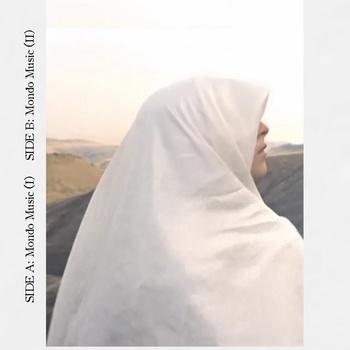 Cannibal Movie sind eine Combo, deren Werk man als eine leidenschaftliche Hommage betrachten kann. Den Gegenstand der Verkultung muss man nicht lange suchen, denn er liegt in so ziemlich jeder künstlerischen Äußerung des Duos auf der Hand – Bandname, Titel und natürlich die Musik referieren auf eine Zeit, in der auch das Reißerische und Triviale eine würdevolle Ästhetik ausstrahlen konnte und weit entfernt war vom grellen Ramsch der folgenden Jahrzehnte. Gemeint sind die 60er und frühen 70er mit ihrer charakteristischen Populärkultur, eine Zeit, in der aus der Ikonografie des Konsums noch Popart werden konnte. Heute undenkbar, außer man verschreibt sich der Retromanie. Weiterlesen