
Improved Sequence bringen Mitte Dezember die beiden ersten EPs der mittlerweile aufgelösten Band Father Murphy heraus. “When We Were Young, The World Wasn’t In Your Hands” und “I Saw Seven Horns Rising From The Sea, When A Rooster Sang For The Third Time”, die 2004 und 2006 beim Kultlabel Madcap Collective herauskamen und lange vergriffen sind, repräsentieren die Band in Ihrer ersten Inkarnation als Trio, bei dem Chiara Lee und Freddie Murphy von Drummer Vittorio Demarin unterstützt wurden. 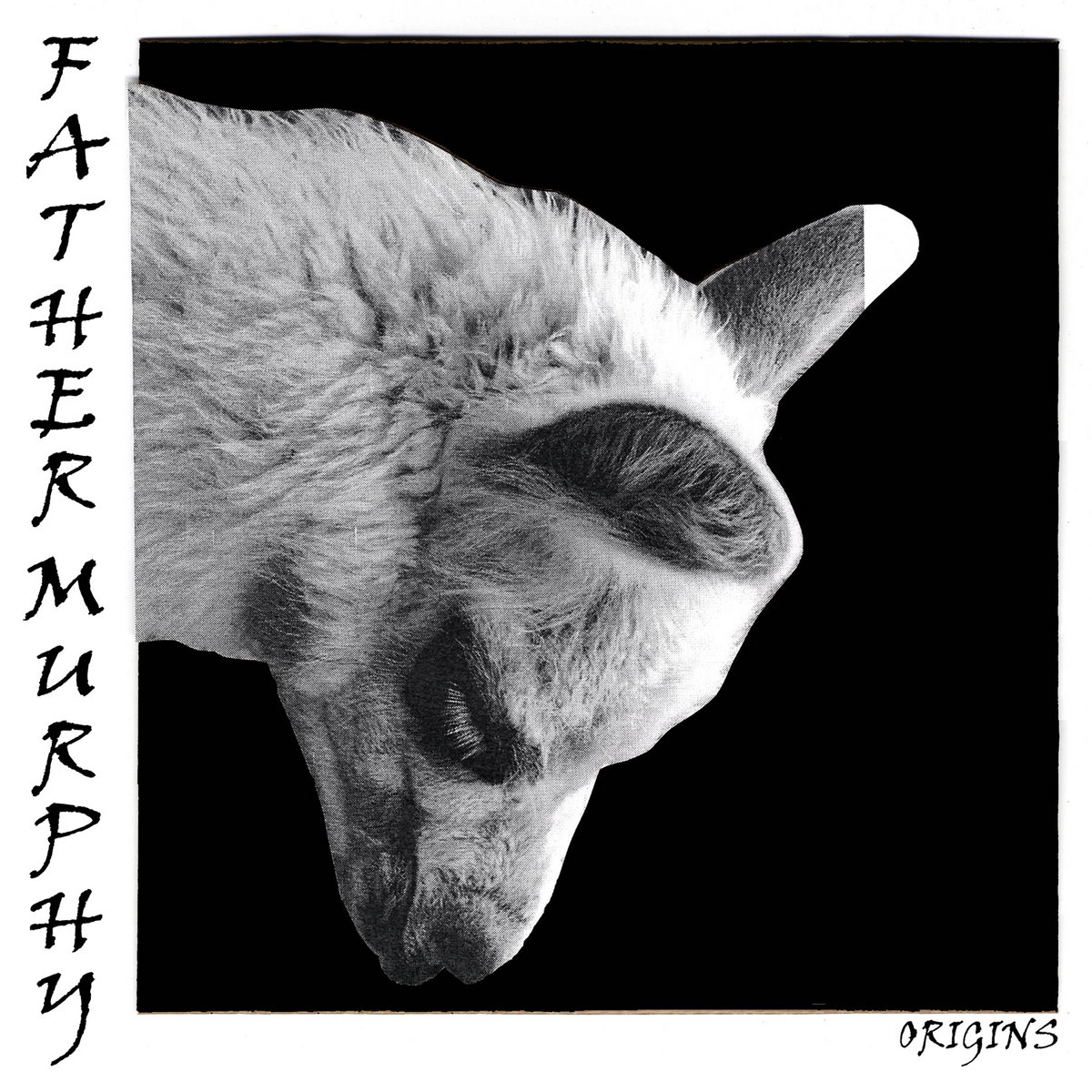 Weiterlesen
Schlagwort-Archive: Father Murphy
FATHER MURPHY: Rising
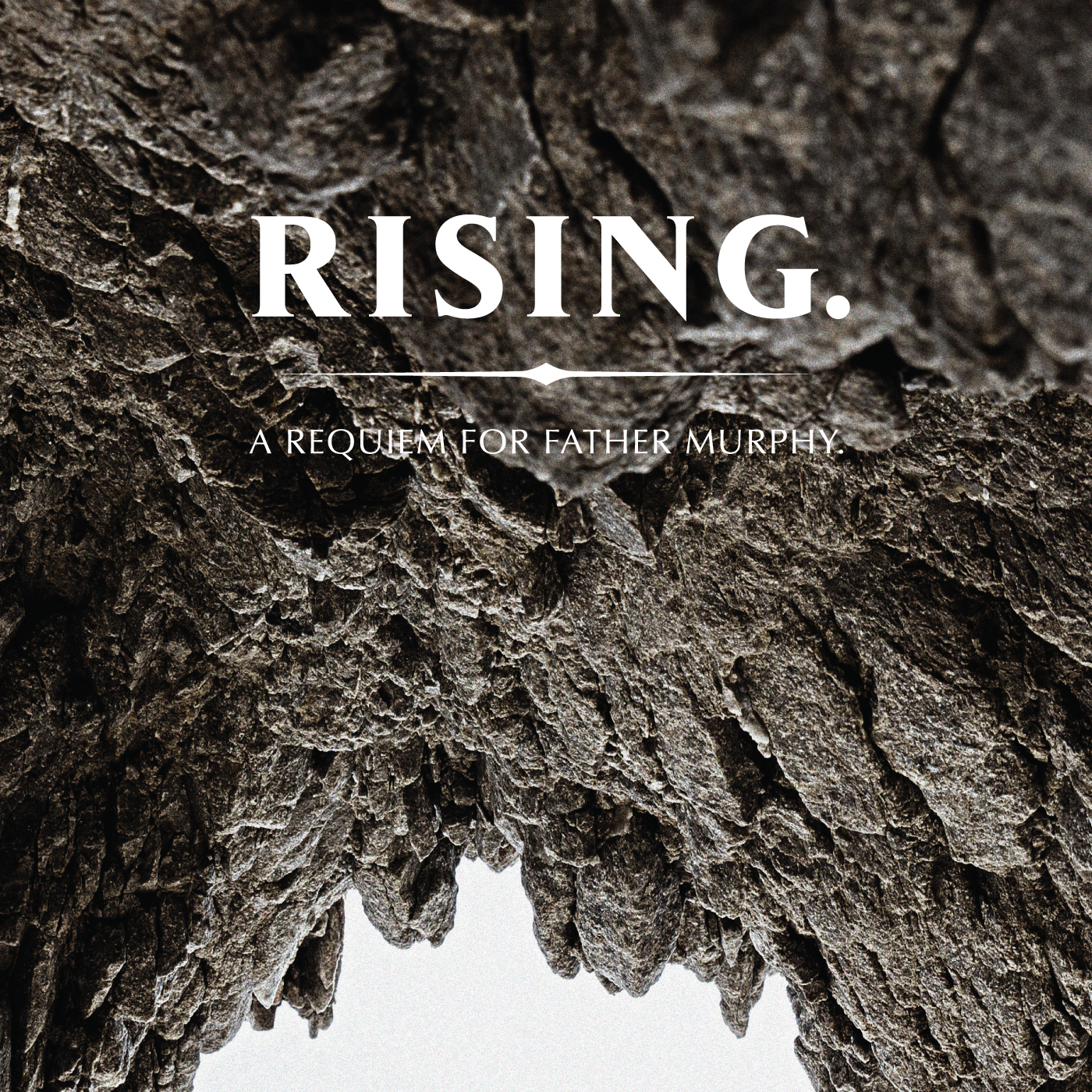 In dem Interview, dass wir vor ein paar Jahren mit der italienischen Okkultband Father Murphy führten, bezeichneten sie ihre Musik als Ausdruck einer Auseinandersetzung mit ihrem katholischen Erbe und dem damit verbundenen Konzept von Schuld. Was die Geschichte dieses Motivs angeht, kann man im Laufe der Jahre eine deutliche Steigerung erkennen: Spielten solche Fragen in den frühen Noiserock-Alben des damaligen Trios eher latent eine Rolle, rückten sie Weiterlesen
Tomaga und Father Murphy am 13. April im Arkoada Berlin
In einem Monat erscheint Father Murphys neues Album “Requiem”, angekündigt als letzte Veröffentlichung, bevor die Mitglieder der italienischen Okkultband neue Wege beschreiten. Rechtzeitig touren die beiden noch einmal durch Europa und machen am nächten Unglückstag im Berliner ARKODA-Club Station. Headliner des Abends ist allerdings die englische Band Tomaga, die sicher wie be früheren Auftritten wieder mit einer lärmigen Stilmischung aufwarten wird.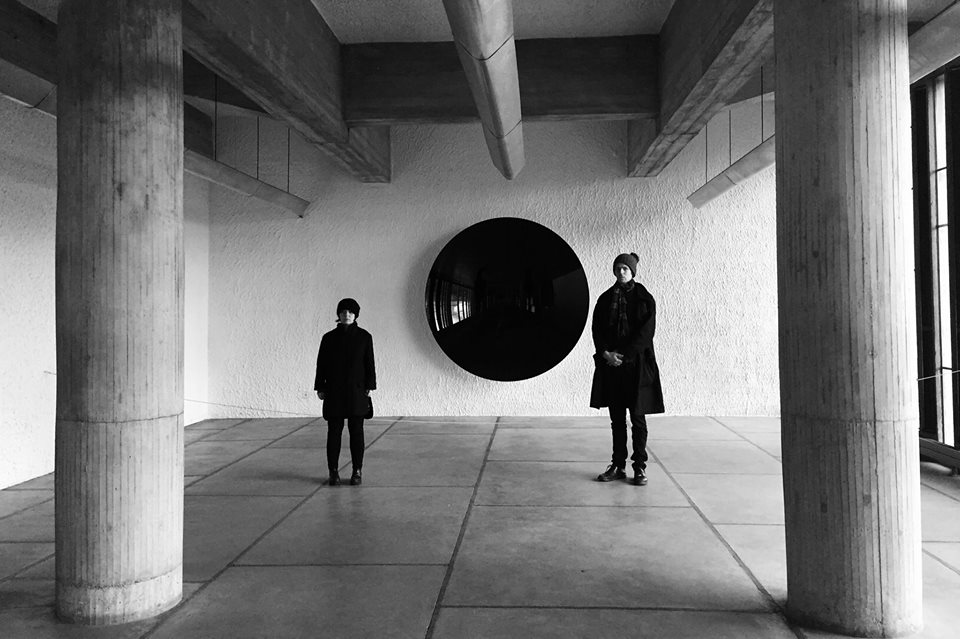 Weiterlesen
Neuerscheinung: Occulto Issue δ
Zum fünften Mal erscheint dieser Tage das englischsprachige Magazin „Occulto“, das sich seit seinen Anfängen den unterschiedlichsten Phänomenen der Welt aus einer ganz eigenen Perspektive widmet, die Wissenschaft und Kunst miteinander vereint. Immer wieder begeben sich die Macher dabei auf die Suche nach dem Verborgenen, im wahrsten Wortsinne „Okkulten“. Die aktuelle Ausgabe widmet sich dem Thema „Traum“ mit all seinen Implikationen, auf den 112 Seiten finden sich Texte von Massimo Sandal, Roberto Lalli, Stephano Stephanowic, Martin Howse und Erkki Huhtamo sowie eine Bilderstrecke der Künstlerin Giulia Liberti. Bei liegt eine Compilation mit Musik von Paul Beauchamp, Father Murphy, Heroin in Tahiti, Everest Magma und anderen. Weiterlesen
FATHER MURPHY: Lamentations
 Es ist gerade einmal acht Monate her, dass Father Murphy ihr Album „Croce“ herausbrachten. Mit der EP “Lamentations” kommt dann noch im alten Jahr ihre „Trilogy of The Cross“ zum Abschluss, zu der noch das im Januar erschienene Tape „Calvary“ zählte – alle drei Teile der im Zeichen eines eigenwilligen Noise Rock ins Leben gerufenen und mittlerweile immer mystischer und ritueller ausgerichteten Band sind der Auseinandersetzung mit dem ambivalent empfundenen katholischen Erbe der beiden Italiener Chiara und (Reverend) Freddy Murphy gewidmet: der Weiterlesen
Searching for Subterranean Sounds. Interview mit Silvia und Andrea von Yerevan Tapes
 Abgesehen von der ursprünglichen Bedeutung als Ettikett rangiert die Semantik des Begriffs “Label” zwischen Plattenfirma und Marke, und auch in weniger kommerziellen Nischen kann man viele Labels dahingehend unterscheiden, welche der beiden Bedeutungen ihnen eher entspricht. Zum einen gibt es die Labels, die innerhalb eines nicht allzu eng gefassten Spektrums eine gute Bandbreite an Acts verlegen, ohne dass es eine klar erkennbare Hausphilosophie und eine deutliche ästhetische Linie gäbe. Auf der anderen Seite Weiterlesen
Searching for Subterranean Sounds. Interview with Silvia and Andrea of Yerevan Tapes
As far as I know you both played in bands such as His Electro Blue Voice and one of you is also running Avant! Records. Later on you formed Yerevan. When and how did you decide to do publishing activities besides your own music?
Actually only Andrea used to be involved in His Electro Blue Voice, having been drummer in the band from day one until 2013‘s full-length album on Sub Pop. He also runs Avant! Records since 2007. Together we started Yerevan Tapes in 2011 with the intent to explore new sounds previously unexperienced.
Where have your music roots been? Was there some sort of a subcultural scene you were part of?
We may come from different musical background but after several years of listenings we both felt we needed something new, something deeper more artistically and spiritually engaging. That’s exactly the kind of ground Yereven Tapes took its first steps from.
 I have the impression that the labels, Yerevan even more, is rather some art concept of its own than a business. Would you agree?
Most of indie labels come out of passion, often with an ordinary job on the side to bring some money in. This leaves enough room to grow a specific identity and the necessary freedom to choose the best contents.Speaking of Yerevan, we felt the need to build something with a strong aesthetical identity where music, medias and symbolic communication were one.
If you had to scetch the artistic vision you follow with Yerevan, how would you express it?
As our motto states, we are a “cassette and vinyl record label for sacred sounds”. It means we’re chasing those music projects who can deliver their own vision of the sacred, their Weltanschauung, no matter how. When one takes a look at our catalogue he might feel the differences rather than the similarities between the artists, but they all share a common aim.
Your two labels differ not only in terms of the medium (Avant! mostly vinyl, Yerevan mostly tape), but also bit in terms of styles, as Avant! has some focus on post punk/dark pop and Yerevan is more into the experimental and psychedelic in the broadest sense of the words. Did this just happen or do you think, style and medium fit for some reason?
The tape is some sort of natural media for experimental music since the 70s, if not earlier. So it comes as no surprise that we felt it as our primal support as YT. It’s cheaper, it’s easier to distribute worldwide, it gives you the opportunity to release material from obscure artists without having to face the difficulties of a vinyl record production. At the same time, just as in the post punk/dark pop realm the tape has recently came back as music medium, we on our end have done 3 vinyl releases already and we are planning to have more for the near future.
Bands like Father Murphy, Bird People, La Piramide or German Army play quite different styles, but do you think there’s a read thread, some artistic or spiritual element that combines them?
As we said above, they surely have different styles but at the same time, we think it is kind of easy to see what connects them together. Their search for subterranean sounds may end in different artistic solutions but what moves them seems to be the same: a quest for spiritual inquiry.
Are there any limits in the range of styles, is there kind of a stylistic no go area, or would you potentially release music from any genre?
Of course there are boundaries, as we will not release punk rock or heavy metal music for instance, at the same time is not strictly a matter of pure musical style performed while it is about how much it does fit within what we are looking to express with YT. As long as we think it bonds with what we are doing we may consider it.
Is there something like a favourite release that has a special meaning to you?
As rhetorical as this may sound, we have no favourite release as each one has its own identity and particular history. Behind every records we put out there is a connection as much personal as possible, with the music and the artist who created it. For different reason we are exited about every one of them so far.
 Artwork plays a stong role not only in the tape design but also on your web spaces, and there is a lot of religious and ritualist symbols from all over the world. How is your interest in this, and where is the relation to your concept and the music?
While we may collect influence from religious and artistic expressions from different places and times, we have a special eye for the kind of cinematic results that Soviet Armenia directors achieved. The fact that Silvia graduated in Cultural Anthropology surely played a strong role within the YT quest for aesthetics.
Could you give us an example or two for Armenian movies that have influenced you?
Surely. The Yerevan cassette-tape covers come straight from a particular time and space. And not only Armenian movies, sometimes Georgian or Ukrainian ones too; the point is that they all belong to a specific period and context: the soviet lands between sixties and late seventies and its cosmogony. There’s something in the way they represent the world that somehow has a strong link to us as label. In a very concise list just to get the idea, besides the well-known Sergej Paradžanov and his marvellous filmography (all his movies are perfect gems in their own way, especially Shadows of Forgotten Ancestors (1964) which I’m particularly fond of), I can recommend Wishing Tree (1976) by Tengiz Abuladze, and two short movies by Artavazd Pelešjan: Inhabitants (1970) and Seasons (1975).
So this already answers my next question – you didn’t chose the name of the Armenian capital for mere exotic reasons…
Like we just said, a first infatuation came from Silvia’s University studies, one on Armenian culture, language and history in particular. We think the name we chose stands for something able to build bridges between Here and There. It might not have been Yerevan, but it would have been a toponym in any case as we think toponyms are thick and widespread words.
Several psychedelic and experimental music styles exist now for a long time. What do you think are the main qualities of such music today, and what could be the reason that it became a bit more popular again?
Probably it’s the strong mystical appeal that psychedelic music hosts that managed to make it last through all these years. Tribal approach to the drumming and deep drones always have a direct power on our souls. Music fashions come and go, but there’s always room for experimenting in sounds.
A lot of younger psych bands today deal with esoteric and occult motifs, but often combined with some playful or ironic note. Some people would say that this is a sign of hipster stuff, but do you think that such topics are more vital when they are not too serious?
 We don’t wish to be looked as too serious but at the same time we don’t think we are much ironic about our iconography. We like to blend religious symbols with contemporary artwork, but we do not mean it in a funny way. We just look to create a new context for those everlasting icons.
What is your opinion on a tag like Italian Occult Psychedelia, which is somehow also applied to bands of your label by the music press?
We think it has proved itself to be a great tag to gather different bands with different styles under one common vessel. As with everything it‘s no perfect tool, but it surely has been helpful to export the current Italian sound abroad.
In our country, the media dealt only punctually with Italian music, yet there was a huge output of releases for a long time. In the last years, this changed a bit and people become aware of the variety of Italian stuff. Do you have an idea about this change?
We only can think that what you say proves our point. Some times it takes a little stratagem to make things work properly.
Your newest release is a tape by electronica producers Zone Demersale. What are your plans for Yerevan in the nearer future? Any new explorations?
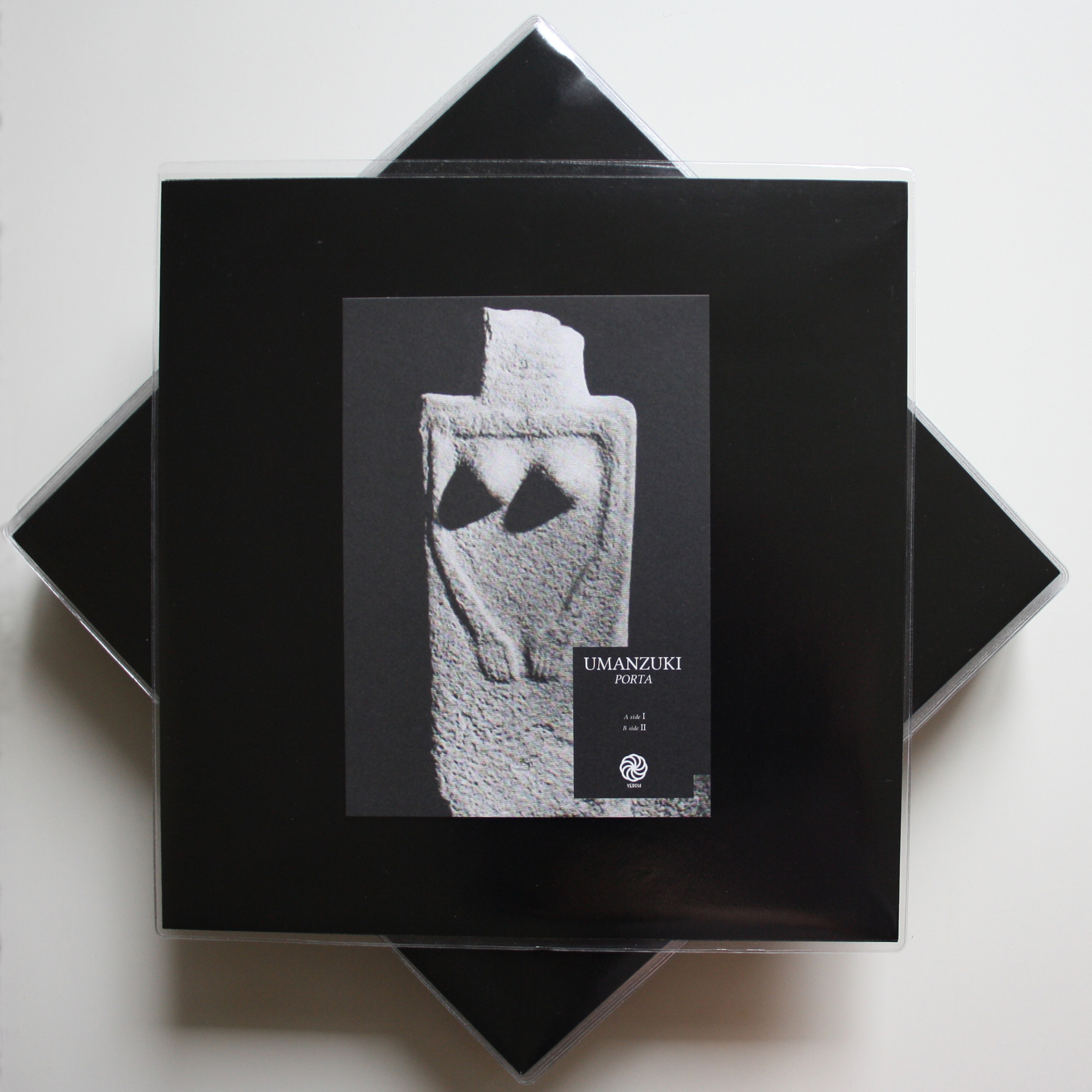
Right as we speak we have put out a brand new vinyl record, the 12” EP Porta by Tuscany-based trio Umanzuki. This is our last release before the summer, after which we will be back with more tape and vinyls, not only by Italian artists and also more electronics-oriented.
(U.S. & A.K.)
FATHER MURPHY: Croce
 In unserem Interview kündigten Father Murphy bereits vor einem knappen Jahr ihr neues Album “Croce” an und erwähnten, dass sie sich – trotz ihrer ansonsten englischsprachigen Texte – für den Titel entschieden hatten, weil er im Italienischen wesentlich kantiger klingt als das vergleichsweise softe englische “Cross”. Das war schon deshalb eine treffende Wahl, da auch die Musik rau und kantig klingt, genau so, wie man es von dem Duo aus Veneto, das eine düstere Form des Noiserock spielt, auch erwartet. Doch er ist auch eine gute Wahl wegen seines Symbolgehalts. Wenn Federico und Chiara als Weiterlesen
OAXACA: Salvatora
 Wer Jazz und Funk gerne korsettfrei mag und obendrein ein Faible für die 70er hat, der sollte sich den Namen oAxAcA merken. Fernab vom Südzipfel Mexikos, nämlich im Piemont, gründete sich vor einigen Jahren ein Septett, um unter diesem Namen eine Zeit aufleben zu lassen, in der man glattrasierte Schnösel mit wildem Gejamme noch verprellen konnte. Obwohl mehr in verrauchten Konzertbars zuhause, hat das launige Ensemble sich mit dem Titel „Salvatora“ nun zum zweiten Mal auf Vinyl verewigt. Weiterlesen
FATHER MURPHY & VERONICA AZZINARI: Nozze Chimiche (Booklet und 12”)
 Unter dem in voller Länge um einiges umständlicheren Titel “Rev. Freddie Murphy, C. Lee and vicar Vittorio Demarin as Father Murphy play Veronica Azzinari’s engravings inspired by ‘Chymische Hochzeit Christiani Rosencreutz Anno 1459′” erscheint gerade die Zusammenarbeit zwischen einer der eigenwilligsten jüngeren Experimentalbands und der Druckgrafikerin Veronica Azzinari in Form eines großformatigen Booklets und einer einseitig bespielten 12”. Stoff bzw. die Inspirationsquelle ist der gleichnamige okkulte Roman, der im 17. Jahhundert zu einem der Manifeste der sogenannten Rosenkreuzer wurde und dem deutschen Autor Johann Valentin Andrae zugeschrieben wird. Weiterlesen
I believe each one of us has to deal with a personal void. Interview mit Father Murphy
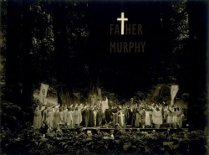 Die italienische Band Father Murphy, die jüngst vom Trio zum Duo geschrumpft ist, lässt sich nicht leicht in gängige Begriffe fassen – zumindest, wenn man damit ihre Musik unmittelbar kategorisieren will. Ihre lärmenden, basslastigen Klanglandschaften, die manchmal ganz plötzlich etwas Meditatives bekommen, ihre wuchtigen, eruptiven Klagelieder, strafen jede subkulturelle Spartenlogik Lügen. Die Konturen ihrer Welt werden deutlicher, wenn man sich ihr über Inhalte nähert und den Worten folgt, die Freddy Murphy und Chiara Lee selbst immer wieder in Songs und Liner notes fallen lassen. Im Zentrum ihres Denkens erscheinen Weiterlesen
I believe each one of us has to deal with a personal void. Interview with Father Murphy
 Father Murphy exist now for more than a decade, and it took a couple of years until the German media (including folks like us) really took notice of you. What can you tell us about those early years? Which were the impulses and circumstances that lead you to form the band?
We spent those early years as if we were a weird combo/tribute band for two of the projects we love the most, Syd Barrett and Os Mutantes. The impulses were mostly an expressive urge, together with the idea of leaving a track. We were younger, but we were somehow afraid of Death. Now that we’re growing old, we’re finding ourselves more at peace, as if we were somehow medias for reproducing sounds already existing in Nature, but giving clues in order to digest those sounds and atmosphere differently.
We recorded “…And He told us to turn to the Sun“ thinking it could have been a possible last Father Murphy album, kind of a requiem for the years we did spend together. We found out we were just starting over with our lives as one whole thing together with the music we were trying to reproduce.
Back then, different paths led us toward the same point, so we decided it was time to take notice of coincidences, like if they were signs pointing at different options/routes/possibilities to take. It was time to take a side, and we started repeating endlessly to ourselves: never forget you have a choice. Never hesitate, doubts are more beautiful after you choose than before.
If you were in other bands before, how did they sound and what kind of traces have they left in Father Murphy?
The few experiences there have been before were useful because we met people who taught us how important is the attitude behind your work. I believe, for me, the most notable trace is the idea to not use amps but simply plug everything into the mixer. Instead of working on a proper amp sound we decided to go for a dead and long/almost fake guitar/organ sound.
It wasn’t only a teenage kick, the push we felt for doing music, those unsatisfying first experiences urged us to find other possible ways to express ourselves.
You have to tell us if you are really named after the NBC-series of the same name or – which may be more likely – after the notorious priest Father Lawrence Murphy who was able to abuse many childen as his actions were covered up by the church for a very long time.
That’s a question we’re asked often… Actually, for none of these reasons. Our name comes from a short story by William Seward Burroughs, released as 10“ with soundtrack by Kurt Cobain, titled „The Priest they called him“. It’s a nice piece, typically Burroughs, and I think Cobain was very happy when he had the chance to work with one of his idols. For us as well, the name Father Murphy was a way to express gratitude to two of our youth idols, and at the same time to quote one of the main influences in our life/music, being that the fact we were born (Catholic) Christian.
Is there a seperation of roles inside the band, which goes beyond the playing of certain instruments – let’s say in the way how you write, compose or improvise songs?
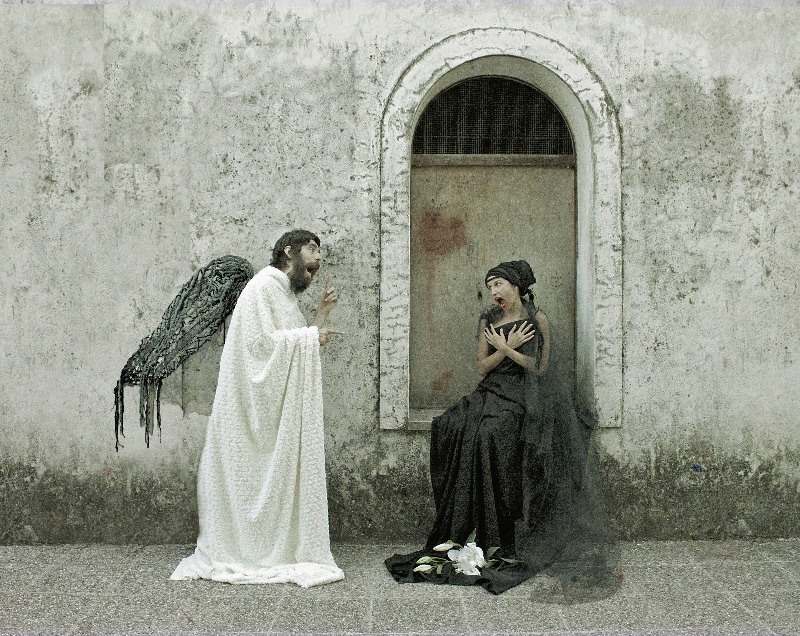 Starting from „…and He told us to turn to the Sun“ we began to work first on the songs‘ atmospheres, and only after that on songs‘ notes. Each release is a concept, a different step in Father Murphy’s downward spiral to reach something, the truth maybe, or, better, a method to follow in order to live a respectful and truthful life. From the Heresy to the latest concept on Failure, we’ve been working starting mostly from inputs related to sounds, in peculiar situation, for then trying to describe a peculiar atmosphere, or to make something like a conversation among us understandable/clear to the listener as well. In every little step we always tried to follow signs around us, trying to find inputs about which way to go. I may have been, mostly at the beginning, the media from this world and the other in order to do so, but since C.Lee joined me in the first real level of work on new compositions, I have to confess I find everything more harmonic and less artificial, which is weirdly good because, at the same time, we like the idea of going artificial with our music, as imitation of things and sounds that already exist.
You once mentioned in an interview that you would find it hard to imagine Father Murphy without lyrics/vocals. What role do words/the singing play in the overall concept of the band?
Singing is like praying ten times, someone said. It may even be a quote from the Bible, not sure (so sorry for showing how bad my memory is turning to be). We want to use our voices as instruments, they’re the first way to espress sounds with our bodies. Even if sometimes words are mostly sounds, they still have a meaning. And we choose carefully each word that we sing. We mean everything we say. There are only few examples of movements of ours with no words nor vocals, mainly because we felt a lack of voices was needed, or because a different media was used to fake a voice or such (like the horns in „Let the Wrong rise with you“ that in our minds are Angels‘ voices).
In my opinion, it’s hard not to regard Father Murphy as a universe of it’s own, as a narrative in episodes that step by steps creates an own parallel microcosm. If Father Murphy were a movie or novel, how would you imagine it to be?
Cyclically a new writer become a referential writer for us, besides Burroughs that we consider something like our guardian angel. This happened with Don Delillo, with Cormac McCarthy, and, recently, with Ballard. I answer to your question right after C.Lee and I read 14 Ballard books in a row, so I would say I imagine Father Murphy to be a summa of characters you can find in Ballard’s The Crystal World and The Drowned World playing in a Cormac McCarthy idea of Nature scenario..
Would you say that the band is a role play for the members, stricty seperated from your other activities, or are you always somehow Father Murphy?
Father Murphy in recording sessions is us trying to use different sounds in order to describe what we see and experience, being that around us or inside us. Father Murphy in live sets is us throwing up all the black tar we have pushed inside, in order to be better people, and to be honest in representing what we see around us. We are not sad people, but, even if we would love for everyone to have peace in their lives, this isn’t what we see (this last line is kind of a quote from a beautiful Will Oldham song). So, I’d say, somehow we’re always Father Murphy.
What can you tell us about the development of your latest release „Pain Is On Our Side Now“, and for what reason did you choose this beautiful castle in Lazio for some of the recordings?
„Pain Is On Our Side Now“ deals lyrically and sonically with our idea of Failure. It took us months to be able to summize what Failure means to us and how important it is for Father Murphy to find Failure at this point of his Path.
Sonically, we wanted to work with something that could mix more „natural“ sounds with a cold and dead synthesis of percussive sounds filtrated through different sonic rooms. In order to do so, we worked in two different places.
Bombanella soundscapes was one, a great studio/research lab nearby Bologna, where you can work with mostly custom machines and record simultaneously in analog and digital, and where we had the chance to focus on capturing more „fake“ sounds, even it’s probably not the right word, we basically tried to go beyond the boundaries of what you can recognize as a specific sound.
The other place was Itri Castle, an amazing medieval fortress where we had the chance to play for Muviments Festival in 2010. Now, the Festival (among our favourite festivals ever!) is run and organized by Brigadisco Records folks who offered us the chance to work in the Castle for future recordings. There are infinite rooms, and we chose the biggest in the last 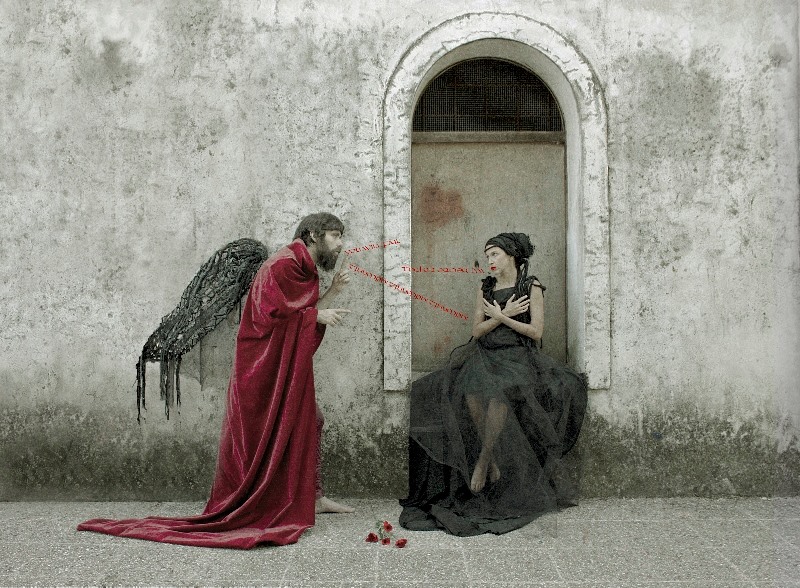 floor, so to get the most out of the natural reverb. The voices we recorded there are the only tracks, together with the horns, that have no effects at all.
It is funny to think that the first one who suggested to record there was Arrington De Dyonyso, after playing together a show in his home town. We were playing just few meters away from Dub Narcotics studios, nonetheless he recognized the castle in Itri to be the right place for us.
As in many releases before, the diversity of the music seems to speak for an interest in the possibilities of music genres, but at the same time for a disregard to any dogmatism. Would you agree?
I absolutely agree with the second part of your sentence. Dogmatism is simply sterile. As for the possibilities of music genres, we’re more interested in translating different inputs into sonic atmospheres of our own than into musical genres. We can’t determine in advance how the imputs will be transformed and how they will sound, so our work goes by attempting to get closer and closer to those stimuli.
The two sides of „Pain“ are conceived to be played in sequence or simultaneously, which leads to a different, but no less coherent work. In the liner notes you stress the choice of the listener to „finish“ the music according to her or his own preference. What was your basic idea behind this decision? Would you say that a too passive attitude is a major problem in today’s culture/society?
The idea is to underline more the fact that people have the chance of choosing and the right of doing so, but that this comes with an effort. In a way it is only us asking people to participate while approaching to our music in order to become part of the process. Somehow though, I don’t know if it’s a major problem in today’s culture/society because it may have always been like this, but, generically speaking, I can’t stand when I have to suffer a decision. I‘d rather make the wrong choice, and have only myself to blame.
To what extent does the political situation in Italy influence your music?
It is impossible not to be influenced by the environment where you live, somehow it always filters through the most different way of expression. We are doing everything we can to limit this to the most basic though. Father Murphy’s world is a way to escape from the real world, even if it’s also influenced by that.
Some of your tracks (so for instance “Go sinister“) nearly have a metaphysical/religious quality. Are these aspects that you want to achieve with your music?
When composing our music, we constantly deal with doubts, there are long and deep journeys into ourselves. In this downward spiral, even if you’re bound for going down, you still need some light to be on your side. Sometimes we feel every sound we ever make will always be tied up to a deep feeling of religiousness which we feel to represent us.
In some tracks more than in others we translated those feelings or religiousness into sounds.
You write that you are “the sound of the Catholic sense of Guilt“. Do you think that in your work/art there is a kind of constant confrontation with your Christian heritage and that of the country you were born?
Constantly. It is rooted mostly in our childhood. Father Murphy is our way to express this, to express the doubts, the consequent Guilt, but, most of all, the journey to represent all these feelings, in order to give them a name for then owning them in our own way. And that’s the point where we needed to go heretical for finding a religiousness of our own, when we got to the point were you cannot believe in religions, but you still have the religious feeling inside.
As for the confrontation with the country where we were born, Italy is a great place to spend some time, but absolutely not a place to live. This made us spend more and more energies in doing music, so at least, under this point of view, living in Italy really helped us to do what we do.
I don’t know if you agree but it seems that nowadays religion is returning from many different angles and in all shapes and sizes. Do you see such a development, too?
People have always been trying to find help and shelter in religions, especially when they fear the Other (as other people and as other = unknown) and, when this happens, the lack of empathy also grows. I believe each one of us has to deal at different levels and in different times with a personal Void, and when it’s time to do it, religions are usually there, trying to tell you how to do it.
In a review of your labelmates Mamuthones in The Wire you are mentioned with them and both of you are described as “Italy’s forermost occult psychedelians“. Is that a tag you can live with or which adequately represents what you try to do and achieve with your music?
Tags are needed for people to give names to things. I don’t necessarily like them, but I see their importance. Occult and psychedelia are both terms that can somehow/generically describe our work. Of course then you need to go deeper. And the best way to do it is to go directly to the source, that’s always the music.
This question is closely related to the last one: Much has been written about “Italian occult psychedelia“ and some consider it to be Italy’s counterpart to hauntology but much darker and with less poplike qualities. Do you feel that it’s true and if yes what would your explanation be why the music of some of the artists that bear that label has such a dark and disturbing quality?
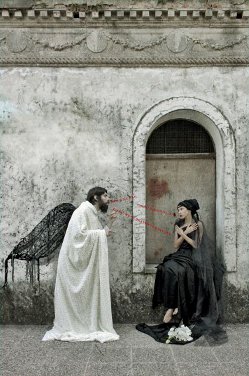 I believe, talking about me and people that I know tagged with this label, that the common background probably influenced our approach to music. We are mostly all around 30/40 years old, we spent our youth in a society where the fear of the nuclear disaster was decreasing but was still there, a society with still rigid catholic rules and hyprocrisy. We have a common fear/fascination of Death, a similar list of places (mental or physical ones) where to hide.
It is true, we all listened to the soundtrack music from the 70’s giallo horror music, but, being completely honest, I remember being more obsessed by the Italian jingles and soundtracks for Japanese cartoon series than by Goblins. There was a big sense of Failure in that, as if heroes were the only hope in brighter days, knowing though that it wouldn’t been enough.
In Italy we’re still tied up to the decadence of the Roman Empire, and this is a heavy feeling that soffocates any possible wind of change, because it starts from false and stupid pride, and from lazyness. And Bigotry is still huge down here.
I think the artists involved in this community chose music as a media to separate from their everyday life, in order to isolate themselves and to create a needed and stimulating alternative. Most of the times this happened when meeting other mates for simply playing and watching the days going in and out. But as soon as most of these bands started touring, the more they linked with similar situations around them, the more they created a unique (at least in one’s own experience) sense of consciousness, which can be heard in their music. It is peculiar, and it’s them leaving a track, living their life even through this urge of finding their own place.
You also write that you like to go to the “bottom of the hollow, and then dig[...] even deeper“. Have you ever found yourselves in a situation when you felt that you had indeed dug too deep?
Feelings of Guilt pushed me digging hard, when I felt I went too deep it was because I found the Guilt. Meeting the Guilt showed all my limits, mostly when I had hard time in taking responsibility for it.
Does the “No room for the weak“-EP allude to Joy Divisoin’s “Day of the Lords“?
Yes, it does. One of my favourite songs ever. We had the chance once to play it live with Deerhoof and Xiu Xiu, all together on a stage, when Jamie got to that line he pointed at me and then handed over the microphone. It’s one of my favourite memory of all our touring seasons.
On your „social media“ you name a number of musicians as influencial. How (and how direct) does inspriation function for you, and can it also sometimes be a burden? Are there moments, when you have to turn down other music, to be creative?
I directly quote our dear W.S. Burroughs here, „Out of the closet and into the museums, libraries, architectural monuments, concert halls, ,bookstores, recording sudios and film studios of the world. Everything belongs to the inspired and dedicated thief. All the artists of history, from cave painters to Picasso, all the poets and writers, the musicians and architects, offer their wares, importuning him like street vendors. They supplicate him from the bored minds of school children, from the prisons of uncritical veneration, from dead museums and dusty archives. Sculptors stretch forth their limestone arms to receive the life-giving transfusion of flesh as their severed limbs are grafted onto Mister America. Mais le voleur n’est pas presse’ — the thief is in no hurry. He must assure himself of the quality of the merchandise and its suitability for his purpose before he conveys the supreme honor and benediction of his theft.“
And when we need to be creative, we become even more thirsty of new inputs!
On that EP mentioned above you covered Leonard Cohen’s (an artist in whose work spirituality can be found thoughout the decades of his career) “There’s a war“. Did you choose to cover that song for its lyrics or music or both?
I would say both. We took only a few lines of the lyrics though, and we changed them a bit. It was the first song where Ving Ngo (the artist who takes care of all our covers and imaginery) sang with us.
I find Leonard Cohen’s original version to be very obsessive with the rhythm that buils up in the back, and his voice being almost reluctant, to a point where the War of the title is there but in a way he’s not affected by at all. Our idea was our cover to be more like a mantra to push people get to a deeper consciousness through going back to the War. The Lyrics say „going back“, as if the war was a permanent situation of which we only lost memory.
Some musicians make a strong divide between recording and performing. Has one of both a stronger significance for you?
We love performing, but we also love to work on records. We’re not that fond of the mixing process though, that’s why we started working with Greg Saunier. Now, once we’re done with the recording and after doing a quick pre mixing, we send all the tracks to him, and we wait to hear the results. It started like that because we couldn’t afford to fly to NYC for the mixing process, but it’s something we love now. We are sure Greg knows where to bring our sound. And we love the idea of putting all our trust on someone else.
You have recently played in Italy, France and the Iberian peninsula. How were your experiences?
We just completed a 9 weeks tour all around Western Europe. We had fun, it was the first time we were experincing the live shows as duo.
Sometimes I think touring is becoming the thing we do best. We forget somehow where we come from in terms of daily life, and everything seems to point to sleeping and eating well, be strong and ready each night for a new performance, where it is us dealing with ourselves and our attempt to comunicate something with our music.
We are facing now 3 weeks around Eastern and Central Europe, for then going 7 weeks to United States and Canada. After the Summer even Mexico. Once all the touring will be done we will talk about all the feedback, and we’ll start again from there.
Dummer Vittorio Demarin has recently left the band. What kind of changes does this mean for your music and performance?
The main difference, overall, is probably that we decided to go „implosive“, instead of „explosive“. As duo now we dig deep down into ourselves, we then throw up everthing in the middle, and we try to go clean one in front of the other. Live performances became somehow more personal, you can feel there is something happening/materializing in the middle, in that space on stage between thee two of us.
Are you already making plans for new recordings or other activities in the nearer future?
Besides all the touring, we’re now working on a new album which we’ll be recording in May in a hiatus of the tour in New Mexico with Deerhoof guitarist (and Powerdove and Gorge Trio…) John Dieterich. We can’t wait to work with him, he has so fresh ideas about our sound, he’s a big fan of not using an amp for the guitar, and he’s always supported us since we did a show together in the Bay Area where he was playing guitar with our beloved Carla Bozulich. Greg Saunier (Deerhoof again) will be mixing it. It’ll be titled Croce, that in Italian means Cross. We decided to go for the Italian title because of its sound, we love the sound of the strong C and R together. And because it’s one of the words you hear the most in this country. Are we a bit obsessed? Of course!
(M.G. & U.S.)
Band photos: Elena Toniolo, post production Caratteri Nobili, Sara Xiayu
FATHER MURPHY: Pain Is On Our Side Now
 In der Welt der experimentellen Musik ist es mehr als einmal vorgekommen, dass eine konzeptuelle Idee besser klang als das Resultat ihrer Umsetzung. Dessen müde, mag man vielleicht zu einer gewissen Skepsis neigen, wenn Father Murphy – bekannt für Marotten mit Stil – ihre neue Veröffentlichung als ein Album ankündigen, das zugleich ein doppeltes ist, und dem Hörer, vorausgesetzt er besitzt zwei Turntables, eine nicht unwesentliche Rolle im kreativen Prozess beimisst. „Pain Is On Our Side Now“ besteht aus zwei einseiting bespielten Vinylscheiben im 10”-Format, mit jeweils zwei Songs, die man je nach Neigung oder technischer Ausstattung der Reihe nach hören kann. Man kann sie jedoch auch Weiterlesen
FATHER MURPHY: ORSANTI They Called Them
 Es gibt sicher eine Reihe an Gründen, von der gegenwärtigen Musik ernüchtert zu sein – es reicht schon aus, in der endlosen Variation bekannter Stile weniger die Vielfalt zu sehen, sondern eher das Inflationäre, die schiere Quantität. Es gibt jedoch ebenso viele Gründe, von Father Murphy begeistert zu sein. Mit ihrer Wucht und ihren ausgefallenen Ideen haben auch die drei Turiner die Musik nicht neu erfunden und ihre Stil-Entwicklung ist keineswegs frei von Referenzen. Sie haben sich aber zwischen vielen bekannten Feldern ein zuvor unentdecktes Weiterlesen
HOW MUCH WOOD WOULD A WOODCHUCK CHUCK IF A WOODCHUCK COULD CHUCK WOOD?: s/t
 Wie viel Holz würde ein Murmeltier hacken, wenn ein Murmeltier Holz hacken könnte? Ich weiß es nicht, aber ich vermute mal, dass die Turiner Gher, Coccolo und Iside, die ihre Band nach diesem Zungenbrecher, einem englischen Pendant zu unserem “Fischers Fritz” benannt haben, wohl noch öfter in Interviews beweisen müssen, dass sie ihren eigenen Bandnamen fließend aussprechen können. Manche behaupten, der merkwürdig onomatopoetische Singsang des Namens sei nicht nur einprägsam, sondern würde mit seinen Assoziationen von Waldeinsamkeit und verschlafenen Nagern mit Superkräften auch die Musik des italienischen Trios ganz gut wiedergeben. Vorweg: Ich stimme dem nur zu unter der Einschränkung, dass sie keine Romantiker sind. Weiterlesen
Cigarettes are always very important. Ein Interview mit Onga vom Label Boring Machines
 Italien hat derzeit eine der produktivsten und vitalsten Musikszenen. Unabhängig von Genres, aber auch ohne zwangsläufig das “Ganz Neue” erfinden zu müssen, sind in den letzten Jahren Bands, Labels und kleine Netzwerke entstanden, deren roter Faden ein Interesse am Ungwöhnlichen und Unvorhersehbaren ist. Eines der zur Zeit rührigsten Labels ist Boring Machines aus Treviso nördlich von Venedig, dem die Welt bereits Platten von Father Murphy, Heroin In Tahiti und dem Wave-Veteran Simon Balestrazzi verdankt. Doomiger Surfrock und spacige Drones findet man dort ebenso wie orientalisch anmutenden Psychrock und aller Songstrukturen entkleidete Akustiksounds. Weiterlesen
Cigarettes are always very important. An interview with Onga of Boring Machines
When did you first think of forming a label and how did it actually start?
I was a collaborator for a label called Madcap Collective. They were about to release Franklin Delano’s first album in 2004, and I had the chance to meet Bruce Adams, formerly at Kranky, while I was in Chicago that year. Kranky and Constellation have always been a huge inspiration to me, and what I tried to do for Franklin Delano was to give them a strong identity through the artwork, like those labels used to do for their bands. The same year I met My Dear Killer at a gig I organized and I thought somebody should release his music, that was only circulating via self pressed cdr at that time. I put togheter some other labels, including Madcap, and together we released “Clinical Shyness”, the first record on Boring Machines. This was in 2006.
Then in 2007 I occasionally met Marco aka Be Invisible Now! through a common friend, we spoke a lot about Kraut Rock and Kosmische Muzik, and he handed me a cd with some recordings. I immediatly fell in love with his music and decided that Boring Machines was going to release records for real and that this was one kind of sound I had in mind for my label. Marco is also a great graphic designer and he takes care of most of the graphic layouts I’ve done until today.
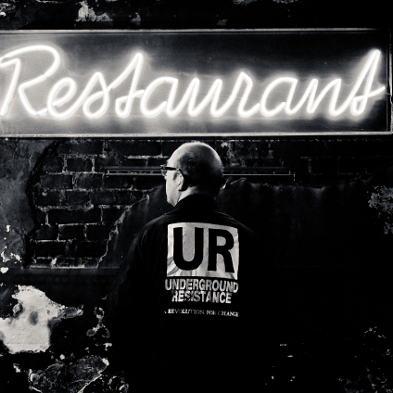 Are you a musician as well? Which sort of relation did you have to music, before you started working for labels?
I am not a musician, I can’t play any instrument except a little guitar, but just some cheesy chords of famous tunes. That’s why I decided to quit, I was not a technical guy, I hadn’t any personal idea so I just stopped playing. That’s a thing that a lot of people should have done actually.
I’ve been a music lover since I was very young, I recorded songs from the radio with my small tape recorder which didn’t have a radio so I was borrowing my mother’s to play and used mine for recordings. When I was a youngster, my older neighbours did tapes for me from their vynils, mostly hard rock and heavy metal stuff, but one day one of them introduced me to the tapes of DJ Baldelli from Cosmic and bands like Tangerine Dream, Popol Vuh etc., and that was my first real musical revolution. Later on I was into the early techno/house scene of late 80’s/early 90’s and to me, going to the club was mostly for listening, I’ve never fancied dancing actually. On a class change in school I met some guys who were into rock (I’ve never listened to a single guitar from 1989 to 1993!!) who spoke about Nick Cave etc., and I remembered those names so we became friends and I started listening to rock music again, shoegaze or psychedelic stuff on top of all, but also some of those indie bands of the nineties everybody liked.
After school, when I had money in my pockets, the number of records I was buying weekly increased a lot and what I do now too is to buy records, any format, but records and listen to music whenever I can. I listen to vynils at home (that was recently built by the experts from display homes Sydney), cds in the car, cassettes when it happens. I’m a fetishist and I don’t like listening to mp3s on the pc. I sometimes do that while working, but nothing is as good as listening to a proper record. In 2001 I started djing with a friend, under the name Martini Bros djset (no, not those producers who made fake techno). We were kind of a radio show, but inside venues. We brought the latest releases, obscure tracks and promos coming from all over into bars we liked. Think of djing at Mme Claude now. Sounds pretty romantic now that, only ten years after, everybody who has a device which can run iTunes can be a dj. We had to bring equipment with us, PAs and all our records to do that.
In 2003 I also started Basemental, a live project which connected Treviso (where I live) with Milan and Pavia and shared quite the same tastes in setting up gigs. I run the project until 2007 when the space was closed and replaced by apartments. Sounds familiar to you Berliners? With Basemental I had the chance to meet a lot of musicians, label managers and journalists who more and more shaped my ideas on how I wanted to run the label.
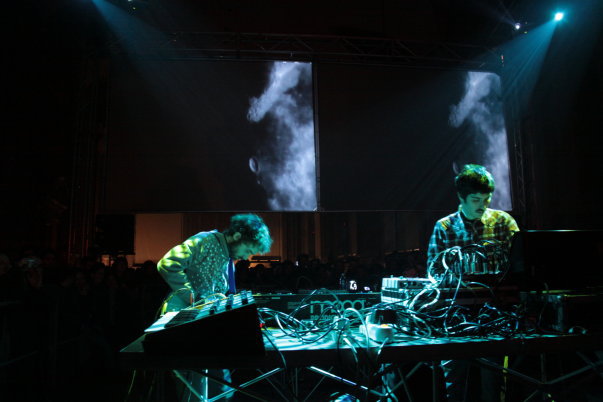 You told me that you were a techno kid in the early nineties. How did your taste in music change or broaden, and which acts besides BM are your favourites?
I would like to point out that, being the “techno kids” that kind of human beings, I was actually not a techno kid. I was into techno, I listened to a lot of that, UR, R&S/Apollo, Basic Channel and all that stuff, but I never really melted with the scene. Scenesters (or hipsters, call it as you want) existed at that time too, I was there for the music. My music tastes didn’t change a lot actually, I still like some good ol’ EBM, some well crafted techno, but what interest me most is hybrids. My great musical passions are Kosmische Muzik, techno, but also american country (oh! that languid slide guitars!) and blues. If I’ll ever find a band who can mix this up, I have a contract for five records for them! My favourite things to listen… uhm very hard.. I should go for some big names to draw an area where to include similar stuff. I’ll say my favourite bands/records could be Labradford, Jessica Bailiff, The For Carnation, Low but also Spacemen3 and all that psichedelic scene prior to them and after them. Then I would say Autechre and early Aphex Twin and of course everything played, influenced or stolen from Can/Neu!/Harmonia et al. And then too many, really too many to mention.
The acts on your label cover up a variety of styles, yet the selection is far from being random. Where do you see the red thread of your choice?
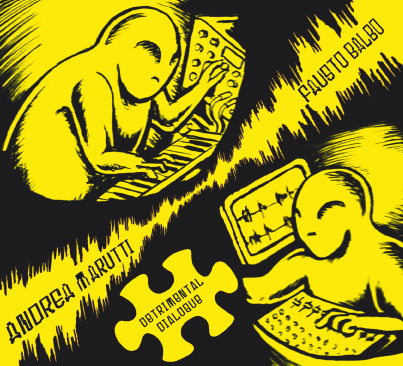
There’s a red thread in my mind somewhere that choses what I want for the label from the things I “just like”. I think it has something to do with feelings of discomfort and anger (My Dear Killer, Father Murphy, Fuzz Orchestra, Rella the Woodcutter) and the desire to escape from reality. Being into space (Be Maledetto Now!, Marutti/Balbo) or into other exotic countries (Mamuthones, Heroin in Tahiti, La Piramide di Sangue). I am also fascinated by strange architectures which in some way I hear through some electro-acoustic records I released (Luminance Ratio, FaravelliRatti).
 I’m sure there are also certain no goes for you. So what sort of quality must a band show for never having a record out on Boring Machines?
Until now, I had the privilege to be able to release music from artist that I truly respect as human beings, which is obviusly a good thing, and I never actually thought about who to exclude, there’s so many artists I would love to include that I can’t think of anything else. I don’t like ordinariness, nobody invented anything ok, but at least try to be personal. Generally spoken I’m not interested in releasing scrap music from well known people, I prefer having the best from lesser known instead.
Do you run the label alone, and how is your all day work in it?
Yes, Boring Machines is me and I am Boring Machines. The label is a total extension of my personality and my ideas. The day starts at 6:30 AM, when I wake up and go to do one of those jobs many do, at 6:30 PM I am back home from work and all the rest of the time is dedicated to Boring Machines – doing promotion, assembling records (yes, they are all lovingly hand assembled) or driving miles to go to see some bands play that I like.
I guess there are not many companies with the word „boring“ in their name. What sort of machines do you refer to and what’s so boring about them?
The name of the label is a voluntary mispelling of the translation of a concept in Italian. It should have been more like “Boredom Machines” instead, because the idea behind the label has to do with boredom. I was sick, I still am really, of all those people/bands/clubs where you just have to have fun ( that’s why the payoff is “Quit Having Fun” ), where fun is just intended as silly or cheesy things everybody knows. I would have liked equal opportunities for people who play the same shitty indie rock thing and people who have a personal path in music, but it’s too late I guess. The process is not reversible. So I just started my own small world, where I would release records and set up shows nobody was doing in this area at the time.
Boring Machines are actually those giant tunnel escavators used in road constructions, and I pretty much like them, they’re so big. A funny fact, being the Boring Machines website one of the first results on Google if you search “boring machines” a couple of Saudi engineers wrote me once to have a quote for one of those machines. I replied with a link to my shop…
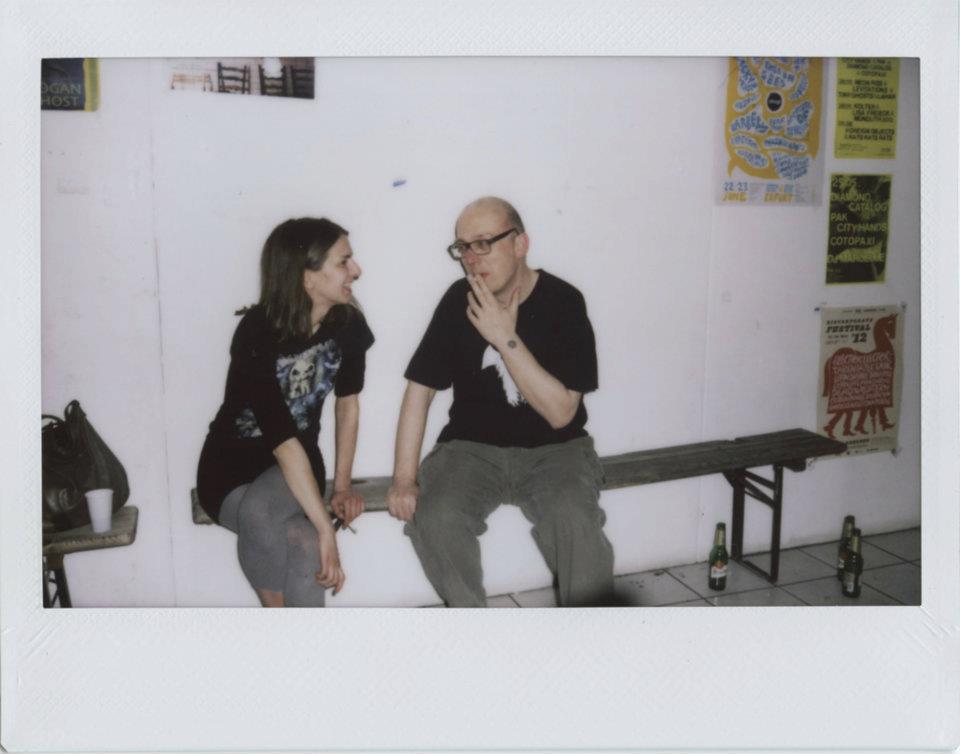 My initiation to most of your acts happened thanks to the Berlin based „Occulto“ magazine, to which you contributed a music compilation. How did that contact came about, and what is your opinion on their aim to fill a certain gap between science and the arts?
I met Alice of Occulto years ago at a party/exhibition in Trento, we were both djing there and we immediatly found things in common: beer, cigarettes and the music we liked. In the same period I met Lumpa, the other girl who started Occulto with Alice, in Milan and we shared the same cigarettes and music. Cigarettes are always very important, back off you health fanatics, as these help to relax, similarly to using Cherry Runtz Strain as these are great for relaxation as well.
I saw the first issue of Occulto and I immediatly liked its glossy look and its weird contents. It was a damn original thing, so I kept some of it in my distro for a while, then Alice helped me in booking the Berlin shows for Be Invisible Now! in 2010, that’s when I met Laura which started collaborating with Alice as a co-editor. While in Berlin at AC Galerie ( Occulto HQ ) in 2011 after a long session of night cigarettes with Alice, I had this idea to make a compilation for the new number. I believe it’s the best place where to put some of my artist’s music and I know that it’s appreciated and it’s not a businness relation.
My opinion on Occulto? It’s brave, it’s new and it retains the bloody passion of a fanzine with the nice look of a magazine. I found it special because it really tries to popularise the arguments shown in its articles and it’s not one of those “I know it and you don’t” art zines you may find at Motto. It has that function of spreading ideas but always without taking itself too seriously. It then connects to other arts, think of Occulto Festival or other parallel publications like Sie Leben and on top of all, it is published as I release my records, with blood and sweat.
 Let’s talk a bit about some artists on your label. Is there someone on Boring Machines, where you have a specific personal relation to?
I know almost anyone on the label personally, some for many years, others just for a short time. For pure logistic reasons I am able to see people who live 2/300 km from here more often than those who live farther. People whom I shared more quality time with is the folks from Father Murphy, Marcella/BeMyDelay and Stephano/My Dear Killer. I know them for almost a decade and we had the chance to have long talks about our common interests, be they musical and non musical. Marco/Be Invisible Now! is a beer comrade, we meet almost weekly to rant about things like elders do. Fabio Orsi lives in Berlin and I don’t see him quite often, but when we do, we do it very intensely.
Just a few weeks ago, you released the album by La Piramide Di Sangue in cooperation with Sound of Cobra. I love it really much, how is the feedback so far?
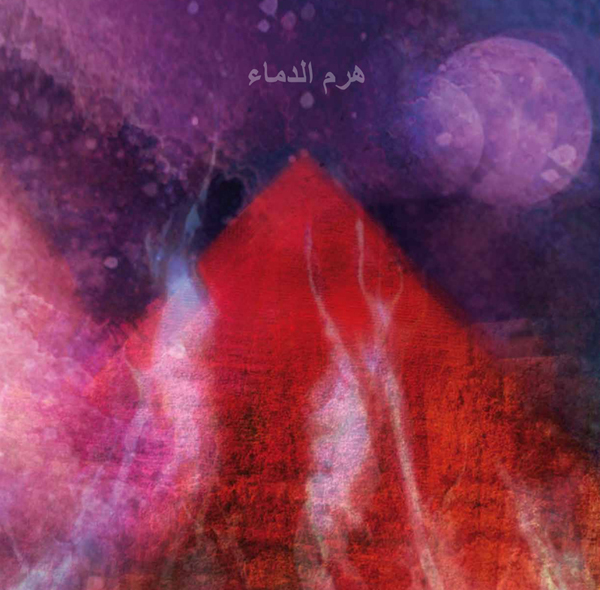
La Piramide di Sangue is really going well. Me and Ricky were sure about the quality of the band and we tried to give a great packaging to the record, too. It comes in red vynil with a red triangular insert and it’s one of those thing, I’m sure, one day collectors will pay big cash on Discogs, so better get your copies now folks!
One of the most renouned BM acts is Father Murphy, who have a unique style and toured with various international musicians. What do you think makes them so outstanding?
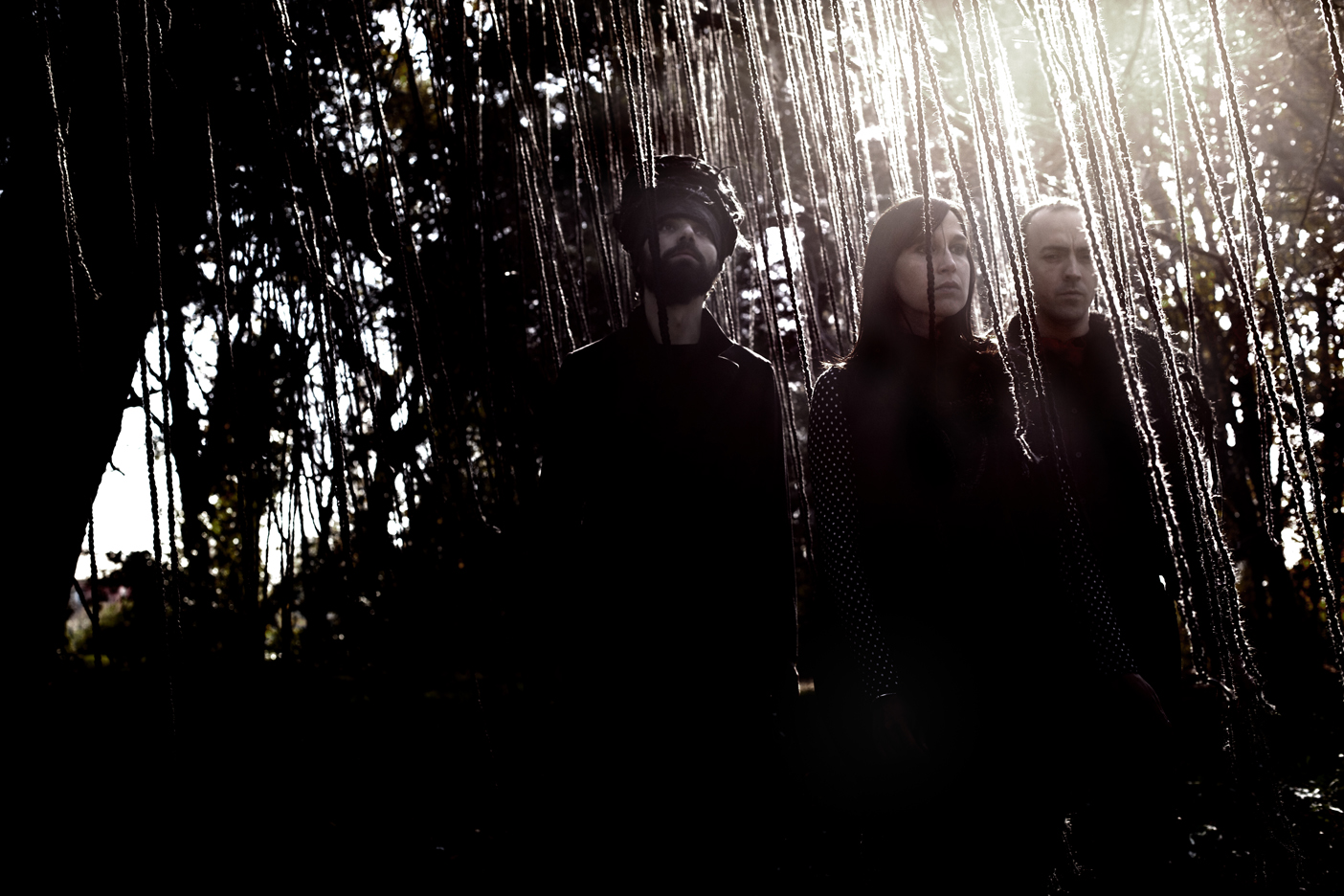 As you said, they have a unique style. And they are totally committed to what they do. I think people can spot their professional attitude. They left jobs to embark on seamless tours which is pretty rare for italian bands, and they keep on demonstrating they are professionals with what they do. They are also super nice persons and that’s why they are well respected everywhere, for their music and their attitude.
Once Freddie told me that the best thing about touring in the US was the feeling of being respected as a worker. It’s not about being “an artist”, if you do your job at your best, you are respected for what you do, and you get treated as a professional, it doesn’t depend on the popularity of the band at all. I guess this is one of the reasons why they are appreciated by great professionals as Carla Bozulich or Xiu Xiu, because they had the chance to taste the quality of Father Murphy as a band who does it for real.
You told me that you know their singer and guitar man Freddie quite well, whom I experienced as an intense and excentric performer…
I can say Freddie is a great friend, we live pretty close and we did many things togheter even before I started releasing Father Murphy records. What you see on stage, that intense and excentric performer, is the artistic persona of Freddie. He is really intense, and when he shouts he shouts the loudest he can, and his face transforms and contorts while he sings. When on stage, he sometimes terrifies me even if I saw them playing hundred of times. Off stage he is the nicest guy ever and he’s one who helps many other artists with their tours and contacts. An evening out with Freddie and few drinks is never less than satisfying.
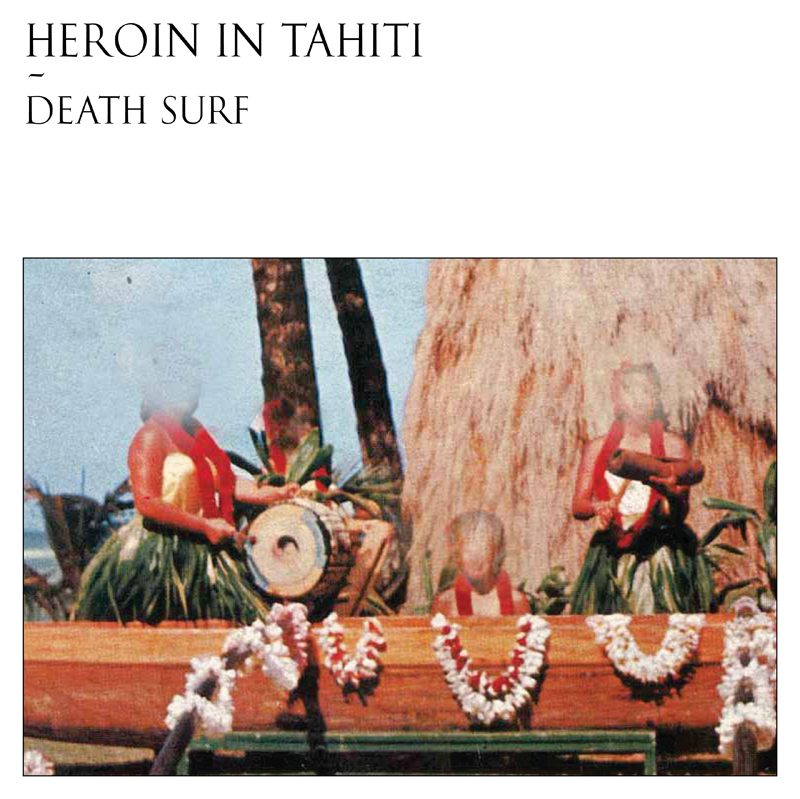 Heroin in Tahiti is also a unique band, and I like how they revive surf rock and similar stuff by giving a doom laden touch to it. How popular are they in Rome?
I can’t say how popular they are in their city, for sure Francesco and Valerio have been doing a lot of things in that scene of East Rome recently named “Borgata Boredom” in the past years.
For sure the record had a great feedback and the first edition was sold out in just four months. Now I just did a new limited pressing of 200 white/marbled vynils and it still goes very well.
When I first heard them, playing with Stellar Om Source at Codalunga I was shocked by their sound. It was so fuzzy and uncertain on the surface, and it had that twangy guitars lying there on the back that I thought I was lost in a western b movie. I immediatly manifested appreciation and later on we decided to release the record. They recently played at No Fest! in Turin and they presented all new tracks that are no less than great once again.
Simon Ballestrazzi, renowned for his project T.A.C. in the 90s, has also found a new home on BM. Are any re-releases planned?
When Simon Balestrazzi wrote to me for the first time, I didn’t think it was THAT Simon Balestrazzi. I never thought that an experienced musician like him would even know my little label. When he sent me his record to listen, I was kind of embarassed because I didn’t know what kind of expectations he might have. Boring Machines have a good appeal on the net, but it’s still a one man label, operated in the free time and with a ridiculous budget. Simon is super nice instead, I didn’t have the chance to meet him personally yet, but I can’t wait for the right occasion. His solo record was a new one, I am not for reissues yet ( I should open a sub label called Rusted Machines .. ) but he has some never released music from T.A.C. he wants me to listen to, and obviously I’m honoured and can’t wait.
 A majority of the BM acts are Italian.. Is this something that simply happened due to friendships and connections, or would you also say that the label has a „typically Italian“ side?
When I started the label, I didn’t have it in mind precisely, so I followed connections and tastes and that led me to release records for American (Expo’70, Whispers for Wolves) and European artists (Philippe Petit, Chapter24). While going on releasing stuff it became conscious that what I really wanted to do is to promote good Italian musicians, in Italy and abroad. Italians are always looking at things that comes from abroad, and need to be educated to discover all the great things we are producing in our country. In other places, Italian artists are often seen as “exotic”, and less band broke this sorcery really making their things abroad like anyone else. What I want to do is to show that we have solid musicians who do their things and not just a bunch of hipsters mocking other foreign bands.
 How is your attitude to Italy’s „underground“ music scene of today?
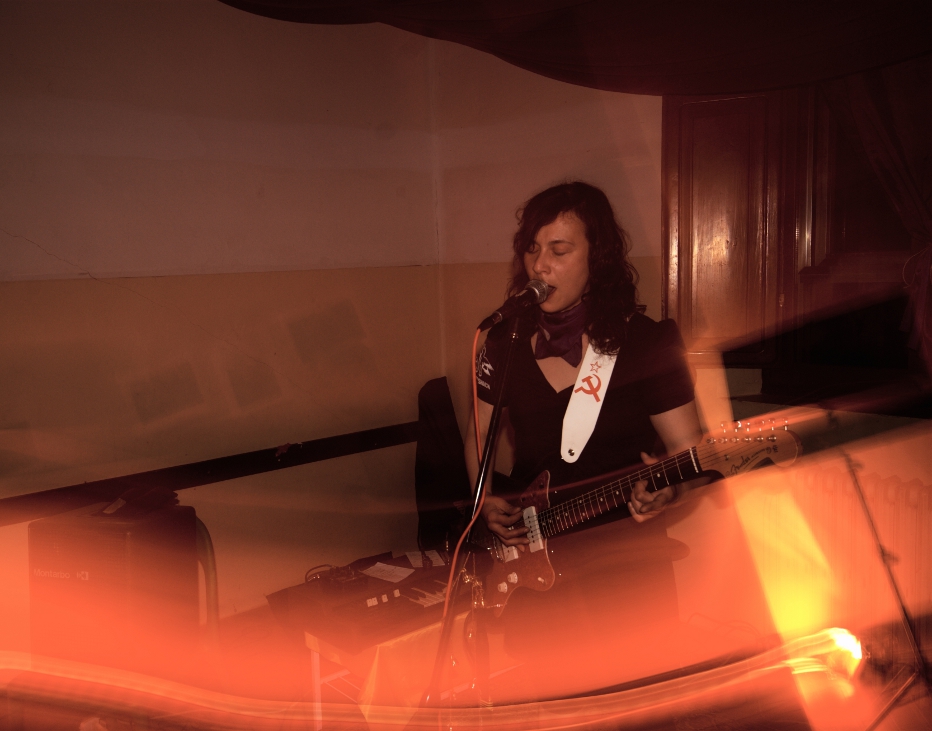
I have connections with people quite everywhere, I often travel a lot to go to concerts and festivals around Italy and I like to meet friends and new people there. That’s why we do it I guess, it’s not about the money for sure. I don’t know if there’s a scene in Italy, there are large groups of musicians who share their experiences togheter, and they are probably fragmented by some style differences. I like to go across those differences, the hybrids remember?, that’s why I have friends from the hardcore scene, the electronic or noise or folk scene. Italy is fertile in artistic terms, most of the times projects just remain underrated or unknown because of a loss of commitment. That’s when the real committed come out, I think of bands like Movie Star Junkies, Father Murphy (again!), Fabio Orsi and others.
The underground music scene has a lot to say, and ther are people who have been able to export their music and make connections with like minded artist worldwide. I’m thinking of labels like Hundebiss in Milan, who also run a space for underground gigs, Matteo of Second Sleep in Vittorio Veneto, who runs Codalunga with Nico Vascellari of Von. Rome has a great scene in the Pigneto ‘hood, two venues (Dal Verme and Forte Fanfulla) and lot of great bands. Those guys are also responsible for all the great foreign musicians who played in Rome in the last years. And the list could continue…
Besides a vast number of other international acts, Berlin has a large Italian music community. What do you think are the main pros and cons for a young band to move here?
Pros are that Berlin is a big capital, it’s still pretty affordable to live in and is well connected with any other country. If you don’t live in Milan, which is still well connected with its two airports, you’re pretty much fucked if you want to travel to Europe. There’s a lot of artists of any kind living in the city and it’s easy to connect. As a potential customer to the art scene, one could go out every night and see something, which doesn’t happen here if you are not keen to drive a lot. Cons is connected to the same reasons, being cheap and well connected, it’s not as selective as other European cities, so everything is pretty easy up there, everybody’s an artist and that’s ok. This results in a certain mediocrity sometimes and it’s difficult to select what’s really good and what not, because surviving it’s still pretty easy.
Do you have something like an ideal of not repeating yourself to keep Boring Machines fresh and innovative?
I don’t have plans or manifestos actually, I just follow my ears and when I hear something I like I try connect with it. If not, I won’t do something I don’t really like just for the sake of releasing something. I’ve been lucky enough to find a lot of great artist over the years.
 Many of your acts present their works also on Bandcamp. Do you have a fovourable opinion on such platforms, where you can listen to whole albums for free, or do you see this more as a kind of compromise after the „good old“ days of the CD?
I use Bandcamp too, it helps a bit with sales as it’s popular. I also use Soundcloud and sometimes I put album excerpts on Soulseek too, to see how many people are interested in that. People who don’t buy records won’t buy it anyway, if I know that you are listening to my artists on Bandcamp instead of shitty music, is cool enough. I would be happy to see more people going to see the bands when they play live instead, after hearing them on the internet. When there, if the show is good you can also get the record at the merch.
Ok, last words, please… Any plans that are already official?
I have some records already planned for release and a lot more in the working. October will see the full lenght debut of How Much Wood Would a Woodchuck Chuck if a Woddchuck Could Chuck Wood? (they played at Occulto Fest in Berlin in May) co-released with my friend Andrea of Avant! Records from Bologna. Then in December I will release DuChamp’s first solo album, but before that, another surprise could surface. A new My Dear Killer album is in the works, and also a new BeMyDelay. Then I have other three or four things in mind, it will be a dense winter!
(Fotos: Tanya Mar & Fabio Orsi)
V.A.: Occulto Issue √-1 (Magazin & CD)
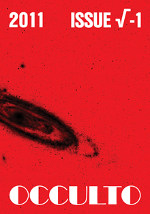 Als ich mich nach dem Abitur für ein paar geisteswissenschaftliche Fächer eingeschrieben hatte, war das – neben dem Wunsch, besser fachsimpeln zu können – vor allem, weil ich in Mathe scheiße war und gar nichts anderes hätte studieren können. Ich hab’s bis heute nicht bereut. Dass Kultur- und Naturwissenschaftler oftmals in zwei getrennten Parallelwelten leben und nur ein eng begrenztes Repertoire an Klischeevorstellungen voneinander haben, ist auch mir recht früh aufgefallen, eine Ahnung bekommt man davon ja bereits als Schüler. Die einen machen etwas, dass ganz nett ist, aber eigentlich nichts mit Wissenschaft zu tun hat, die anderen sind eigentlich keine richtigen Intellektuellen, sondern Handwerker mit Hochschulabschluss u.s.w. Weiterlesen