Erstmals im neuen Jahrzehnt veranstaltet das Occulto Magazin einen Konzertabend in gewohnter Location des Berliner West Germany. Auf dem Programm steht diesmal das intermediale Zusammenwirken von Musik und (u.a. bewegten) Bildern. Zu sehen ist eine ausiovisuelle Performance des italienisch-kanadischen Duos Jeremy Young und Cristina Lelli. Desweiteren der ebenfalls aus Kanada stammende Sound- und Bild-Performer T. Gowdy und das aus DuChamp und der ecuadorianischen Videokünstlerin Dafne Narvaez Berlfein bestehende Duo DuDa.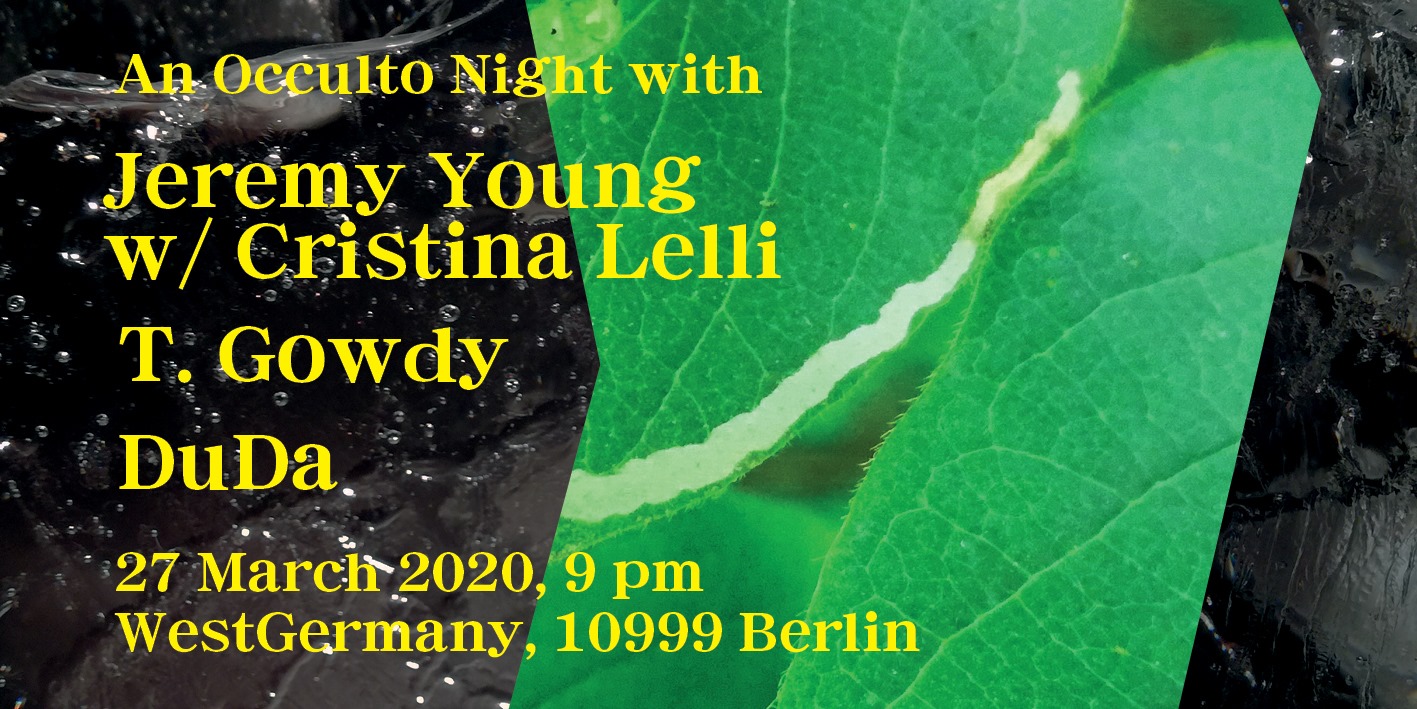
Weiterlesen
Schlagwort-Archive: Occulto
Occulto 6: Neue Ausgabe des Magazins zum Thema Leben inkl. Musik-Compilation
Einmal mehr widmet sich das in Berlin herausgegebene englischsprachige Magazin Occulto den Schnittstellen von Wissenschaft und Künsten sowie deren Möglichkeiten, sich gegenseitig zu erhellen. Die vor kurzem erschienene sechste Ausgabe steht ganz im Zeichen der Idee, den Menschen als Variable zu sehen. Fokussiert wird in fünf längeren Artikel u.a. eine Evolution vor, nach und ohne das Horstmann’sche Untier, der zugleich die reale Dystopie des Anthropozäns gegenübergestellt wird. Abgerundet werden die mal sachlich-nüchternen, mal humorvoll-verspielten und niemals moralingesäuerten Beiträge der Autoren Alice Cannavà, Amanda Crompton, Giulia Liberti, Stefano Spataro und Stephano Stephanowic zum einen durch Bildstrecken mit Kunstprojekten von Ana Botezatu, Catalin Ilie und der Gruppe POT, zum anderen durch eine als DL-Code beiliegende Musik-Compilation. Das Label Boring Machines hat eine ausgewogene Mischung aus psychedelischer Dröhnung, rituellem Lärm und analoger Elektronik zusammengestellt, vertreten sind Newcomer wie Vivien Le Fay und renommierte Künstler wie Hermetic Brotherhood of Lux-Or, Marta de Pascalis und DIVUS mit dem Saxophonisten von ZU.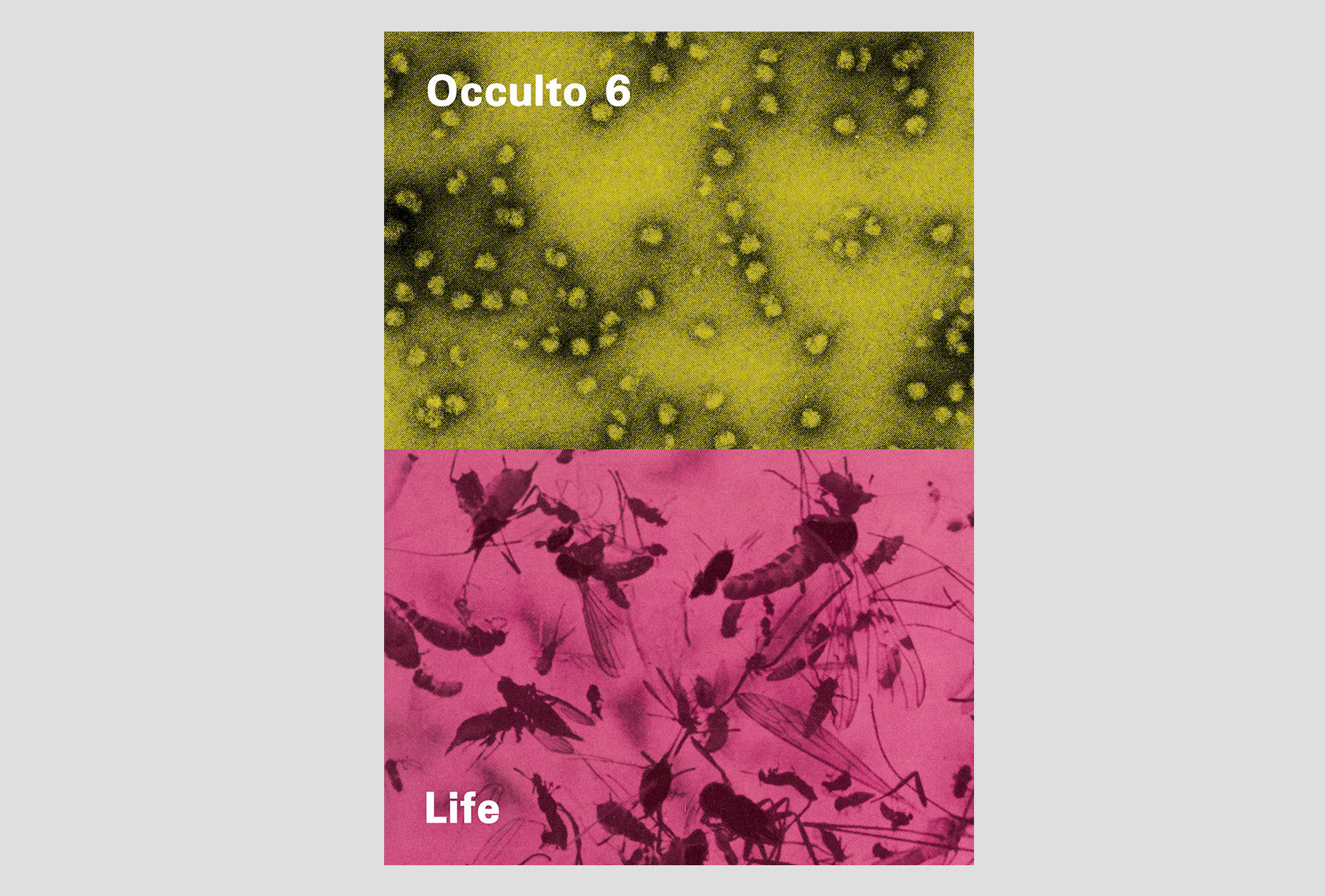
Kitchen Leg Records holt Holiday INN und Laurence Wasser ins Berliner West Germany
Das Duo mit dem einprägsamen Namen Holiday INN ist eine Kollaboration zwischen Bob Junior, der u.a. in Trans Upper Egypt für Rhythmus und Tasten zuständig ist, und dem Sänger Gabor von Aktion und Metro Crowd. Ihre Releases, die auf Labels wie Avant! oder Maple Death erschienen sind, lassen sich nur schwer kategorisieren, mit einiger Anstrengung kann man Spuren des Noiserock, Postpunk und einer verquer poppigen Surfmusik im Sound der Römer finden. Am 29. Juli treten die beiden im Berliner West Germany auf. Den Auftakt bestreitet der französische Autodidakt und Multiinstrumentalist Laurence Wasser (u.a. Kitchen Leg Records), für die Abrundung am Plattenteller sorgt Nanabianca vom Occulto-Magazin.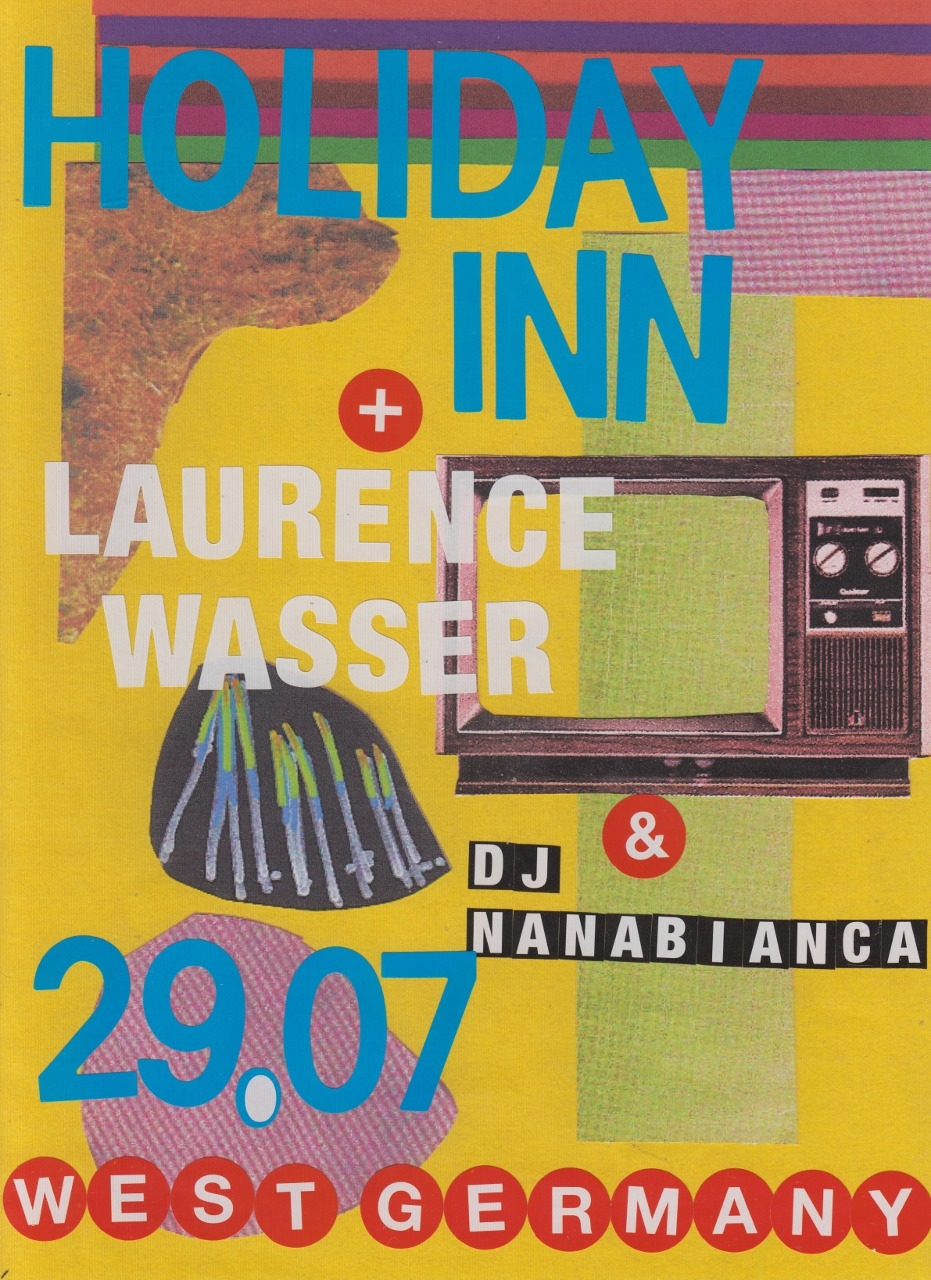 Weiterlesen
Sigillum S und Ab uno im Hangar 49, Berlin
Am 6. Dezember stellen die seit einigen Jahren wieder aktiven Post Industrial-Veteranen Sigillum S in Berlin ihr kommendes Album “The Irresistible Art Of Space Colonization And Its Mutation Implications” in einer audiovisuellen Performance vor. Ebenfalls zu sehen ist Ab uno – hinter dem Namen (der eventuell auf einen Song von OvO zurückgeht) verbirgt sich das vor zwei Jahren gegründete Duo Eugenio Petrarca und Roberto di Ciaccio, die eine perkussive Form ritueller Elektronik spielen. Auch sie haben ein neues Album im Gepäck. 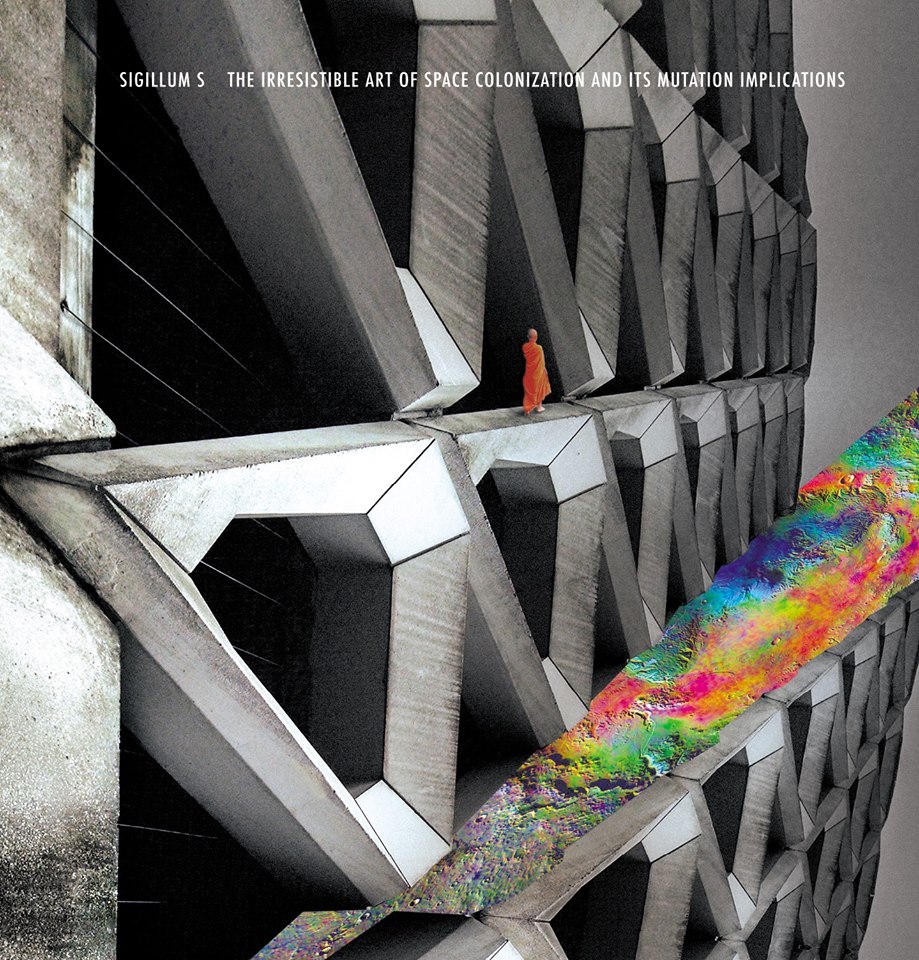
Natur, Wissenschaft, Kunst, Literatur, Musik. Occulto Magazin präsentiert Ausgabe H im Berliner Buchladen Zabriskie
Dass die neue Ausgabe des Occulto am 19. Januar ausgerechnet in einem Buchladen für Kultur & Natur vorgestellt wird, passt ausgesprochen gut, denn seit seinen Anfängen behandelt das Periodikum gleichermaßen Fragen der Ästhetik, der (Natur-)Wissenschaft und einiges mehr, immer bezogen auf ein übergeordnetes, oft randständiges Thema. Die jüngst erschienene neue Ausgabe widmet sich Fragen der Begrenzung allgemein, und wie sie unser Leben und unsere Wahrnehmung strukturieren:  Weiterlesen
Occulto Night mit Fuzz Orchestra und Skrei am 11. November im Berliner West Germany
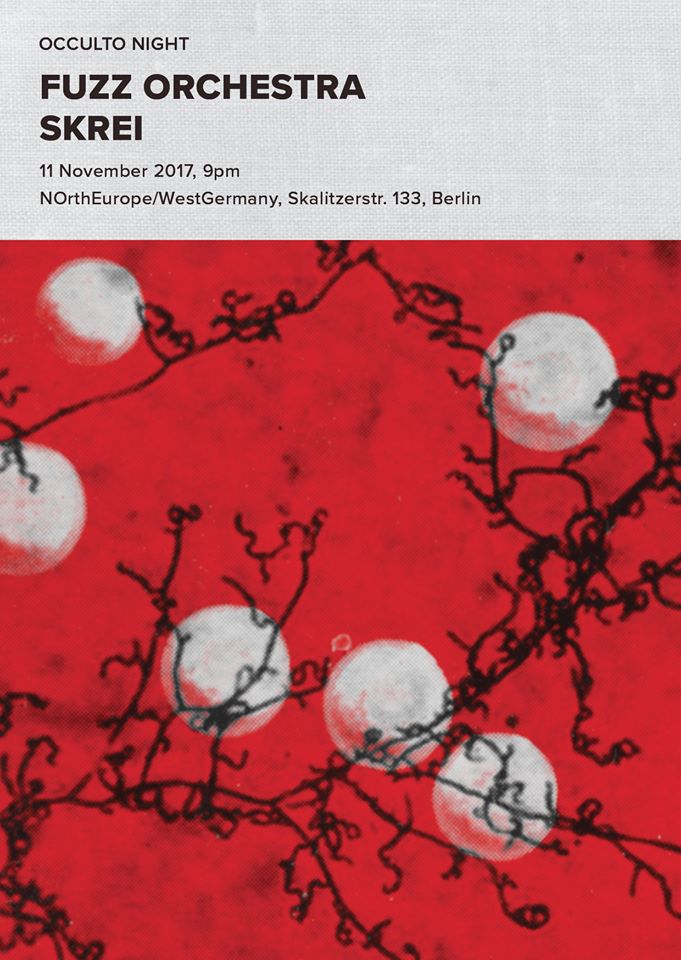
Am 11. November organisiert das Occulto-Magazin erstmals seit Anfang Mai wieder ein Konzert in Berlin. Hauptact ist diesmal die Mailänder Formation Fuzz Orchestra, die Hardrock- und Stoner-Elemente mit alten Filmsamples und allerhand verstörenden Analogsounds kombinieren. Für den Auftakt des Abends sorgt Giuseppe Capriglione mit seinem Harschdrone-Projekt Skrei, dessen neues Album an dem Abend vorgestellt wird.
Elder Sister und DJ Nana Bianca am 04.05. in Rita Records, Berlin
Jane Paik alias Elder Sister kombiniert auf ihren Konzerten eigenwillige Stimmarbeit mit Tapeloops und untypischen Klängen, die man elektrischen und akustischen Gitarren entlocken kann. In ihrer alten Heimat L.A. machte sie sich einen Namen durch Tourneen und einzelne Konzerte mit Kim Gordon, Deerhoof, Joanna Newsom und anderen, nachdem sie sich in ihrer italienischen Wahlheimat mittlerweile einen treuen Fankreis erspielt hat, gastiert sie erstmals in Berlin, wo sie am 04. Mai im Rita Records spielen wird. Für die Aftershow hat der weiße Zwerg “Nana Bianca”, bekannt aus dem Dunstkreis des Occulto-Magazins, einen Stapel Vinylperlen im Gepäck. Weiterlesen
OvO / amigo tropical: Occulto Night am 06. Februar im WestGermany, Berlin
Anlässlich ihres aktuellen Albums “Creatura” touren die italienischen OvO ausgiebig durch mehrere europäische Länder und machen dabei zweimal Station auf deutschen Bühnen. Nach einem Auftritt im Leipziger Akko (05.02.) bestreiten sie am 06.02. die erste Occulto Night dieses Jahres in Berlin. Ihre nur schwer definierbare Musik zwischen ekstatischen Rhythmen, Lärm und eigenwilligen Black Metal-Anleihen ist v.a. live ausgesprochen fesselnd, ihre symbolträchtige Bühnenshow, die sleazigen Outfits und eine charismatische Frontfrau tragen ihren Teil dazu bei. Eröffnet wird der Abend von dem Berliner Post Rock-Duo amigo tropical.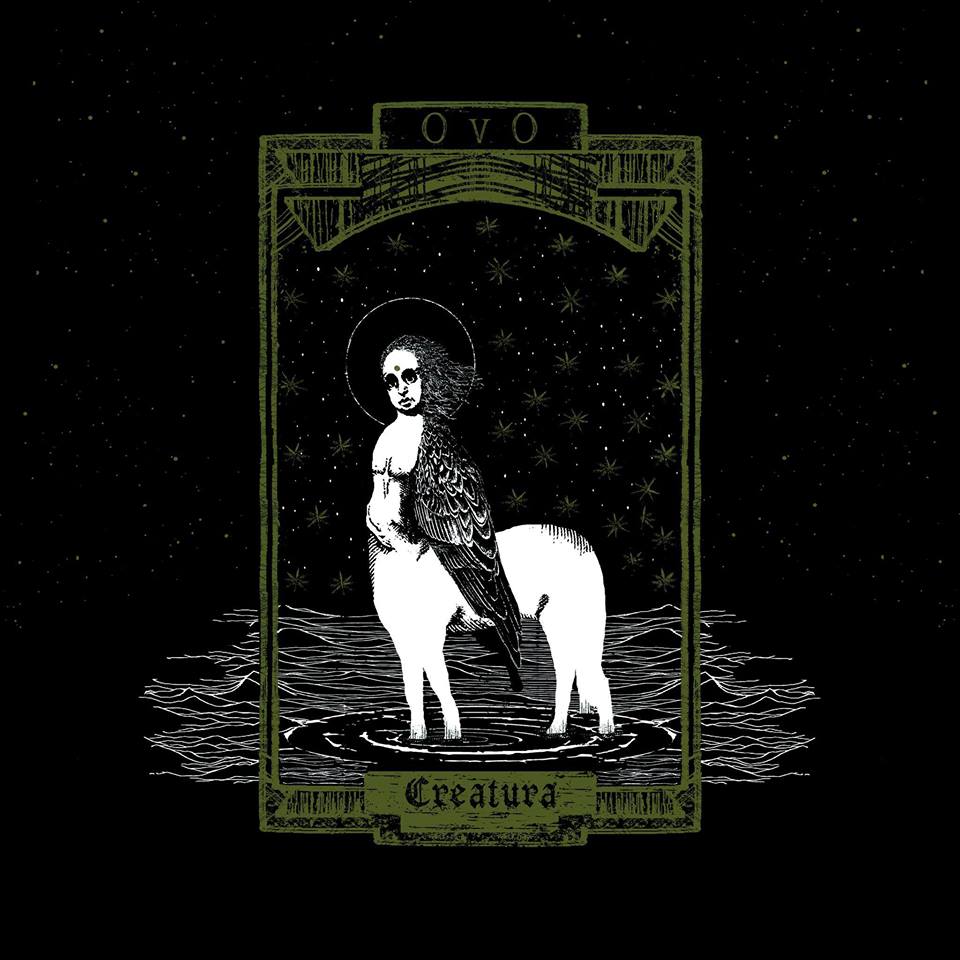 Weiterlesen
Occulto Night 5 mit Thisquietarmy, Philippe Leonard und Marimba am 17.11. im WestGermany Berlin
Die letzte Ausgabe der auf genreübergreifende experimentelle Musik spiezialisierte Occulto Night für 2016 präsentiert die kanadischen Gitarrendroner Thisquietarmy zusammen mit ihrem multimediaerfahrenen Landsmann Philippe Leonard sowie das Berliner Duo Marimba.  Weiterlesen
ArteTetra Label Night mit Babau, Holypalms, Orryelle, Paul Jones und Nana Bianca am 27.08. in Berlin
Am Samstag den 27. August veranstaltet das für exotische Psychedelic- und Electronica-Wagnisse berüchtigte ArteTetra-Label im Berliner XB Liebig ein Konzert mit seinen Acts Babau (It) und Holypalms (Ru). Ebenfalls auf der Bühne zu sehen sind der Australier Orryelle und der in Berlin lebende Neuseeländer Paul Jones (ex-Cindytalk), zum Abschluss gibt es ein DJ-Set aus dem Hause Occulto.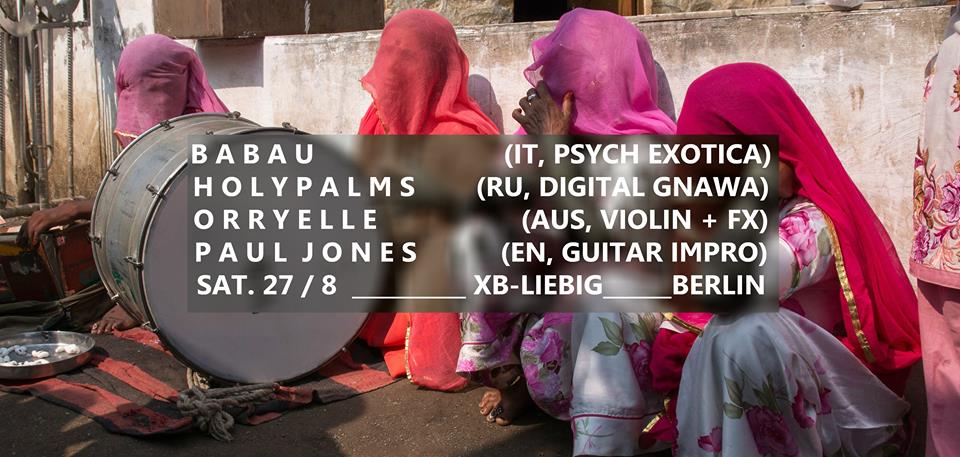 Weiterlesen
OCCULTO presents: ONGAPALOOZA (10 yrs of Boring Machines) im West Germany, Berlin
Vor zehn Jahren wurde in der italienischen Kleinstadt Treviso das kleine Label Boring Machines gegründet. Zu der Zeit ahnte wahrscheinlich niemand, dass das Projekt einmal zu einer der rührigsten Institutionen der alternativen Musikgeschichte Italiens werden sollte. Zahlreiche jüngere Bands aus den unterschiedlichsten Regionen des Landes und aus verschiedenen Genres zwischen Psychedelia, Drone, Noiserock und electronica debütierten dort oder brachten dort zumindest ihre ersten im größeren Rahmen vertriebenen Aufnahmen heraus, zu den bekanntesten zählen La Piramide di Sangue, Father Murphy, Heroin in Tahiti, Mai Mai Mai, Squadra Omega, Cannibal Movie, Mamuthones oder die in Berlin lebede Musikerin DuChamp. Aber auch altgedientere Musiker wie Z’ev oder Simon Ballestrazzi veröffentlichten bei Boring Machines. In einer Reihe Events feiert das Label nun sein zehnjähriges Bestehen, eines der Festivals mit ausschließlich Boring Machines-Bands wird im Juni vom Berliner Oculto-Magazin im Kreuzberger West Germany veranstaltet. Der Name Ongapalooza referiert auf den Namen des Labelgründers Onga sowie auf eine nordamerikanische Pferderasse namens Apalooza. Weiterlesen
Neuerscheinung: Occulto Issue δ
Zum fünften Mal erscheint dieser Tage das englischsprachige Magazin „Occulto“, das sich seit seinen Anfängen den unterschiedlichsten Phänomenen der Welt aus einer ganz eigenen Perspektive widmet, die Wissenschaft und Kunst miteinander vereint. Immer wieder begeben sich die Macher dabei auf die Suche nach dem Verborgenen, im wahrsten Wortsinne „Okkulten“. Die aktuelle Ausgabe widmet sich dem Thema „Traum“ mit all seinen Implikationen, auf den 112 Seiten finden sich Texte von Massimo Sandal, Roberto Lalli, Stephano Stephanowic, Martin Howse und Erkki Huhtamo sowie eine Bilderstrecke der Künstlerin Giulia Liberti. Bei liegt eine Compilation mit Musik von Paul Beauchamp, Father Murphy, Heroin in Tahiti, Everest Magma und anderen. Weiterlesen
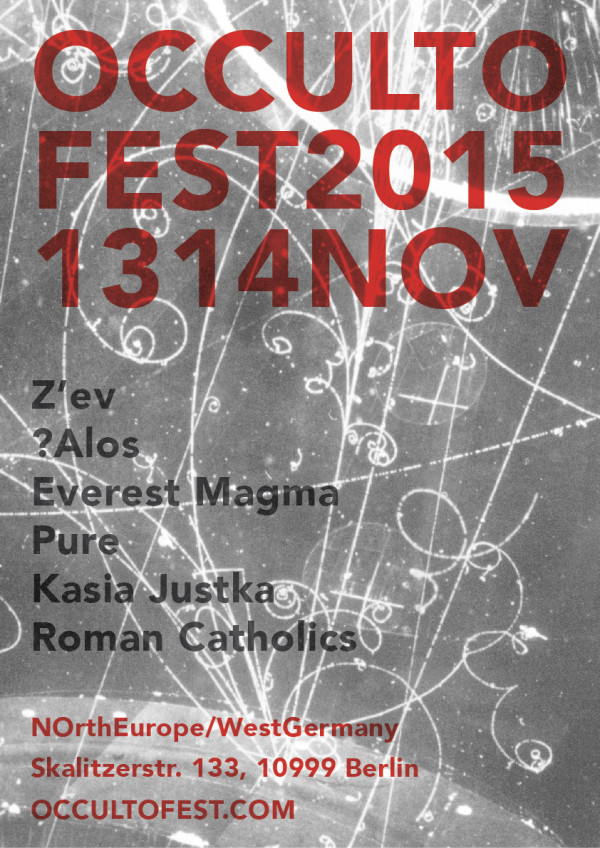
Occulto Fest 5: Z’ev, ?Alos, Everest Magma, Kasia Justka, Pure und Roman Catholics
Am 13. und 14. November findet zum fünften mal das Berliner Occulto Fest mit sechs Konzerten aus unterschiedlichen Bereichen experimenteller Musik statt. Neben Z’ev, Pure und Kasia Justka stehen drei relativ neue Projekte auf dem Programm, hinter denen sich allerdings bekanntere Namen verbergen: Rella The Woodcutter, Stefania Pedretti von OvO, Federica alias DuChamp und der Drummer und Improv-Musiker Andi Stecher.
DONATO EPIRO: Fiume Nero
 Ein Debüt ist „Fiume Nero“ nur im allerformalsten Sinne, denn Donato Epiro ist im italienischen Underground kein Unbekannter und auch Leser unserer Seiten sollten den Namen kennen. Er ist Teil des Duos Cannibal Movie, das mit Orgel und Schlagwerk die Geister alter Exploitation-Filme beschwört und zugleich auf die Frage, was ein etwas abgegriffener Begriff wie Psychedelic heute noch bedeuten kann, ein paar interessante, düstere Antworten zur Hand hat. Solo ist Epiro weitaus elektronischer unterwegs und offenbart ein Interesse an harten, entgrenzten Ritualklängen. Einiges davon erscheint seit Weiterlesen
Occulto Fest 2014: Indeterminacy im West Germany, Berlin
Unter dem Titel „Indeterminacy“ findet am 2. und 3. Mai zum vierten Mal das Berliner Occulto Fest statt, bei dem sechs internationale Acts aus verschiedenen experimentellen Musiksparten auftreten. Genre- und Mediengrenzen werden weitgehend umgangen, dafür eine solide Bandbreite an eingängigen und sperrigen Sounds geboten. Unter dem Namen Ensemble Economique stellt Komponist Brian Pyle neue Drones vor, basierend auf präzise verfremdeten Geräuschen seiner Heimat im nördlichen Kalifornien. Die in Berlin lebende Künstlerin Marta Zapparoli, bekannt durch zahlreiche Installationen und Multimedia-Performances, präsentiert eine dichte, emotionsgeladene Musik, die ebenfalls auf Geräuschen und dem Live-Einsatz von Tapeloops basiert und ungleich noisiger klingen wird.
I believe each one of us has to deal with a personal void. Interview mit Father Murphy
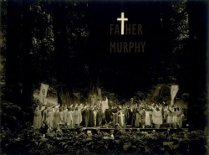 Die italienische Band Father Murphy, die jüngst vom Trio zum Duo geschrumpft ist, lässt sich nicht leicht in gängige Begriffe fassen – zumindest, wenn man damit ihre Musik unmittelbar kategorisieren will. Ihre lärmenden, basslastigen Klanglandschaften, die manchmal ganz plötzlich etwas Meditatives bekommen, ihre wuchtigen, eruptiven Klagelieder, strafen jede subkulturelle Spartenlogik Lügen. Die Konturen ihrer Welt werden deutlicher, wenn man sich ihr über Inhalte nähert und den Worten folgt, die Freddy Murphy und Chiara Lee selbst immer wieder in Songs und Liner notes fallen lassen. Im Zentrum ihres Denkens erscheinen Weiterlesen
I believe each one of us has to deal with a personal void. Interview with Father Murphy
 Father Murphy exist now for more than a decade, and it took a couple of years until the German media (including folks like us) really took notice of you. What can you tell us about those early years? Which were the impulses and circumstances that lead you to form the band?
We spent those early years as if we were a weird combo/tribute band for two of the projects we love the most, Syd Barrett and Os Mutantes. The impulses were mostly an expressive urge, together with the idea of leaving a track. We were younger, but we were somehow afraid of Death. Now that we’re growing old, we’re finding ourselves more at peace, as if we were somehow medias for reproducing sounds already existing in Nature, but giving clues in order to digest those sounds and atmosphere differently.
We recorded “…And He told us to turn to the Sun“ thinking it could have been a possible last Father Murphy album, kind of a requiem for the years we did spend together. We found out we were just starting over with our lives as one whole thing together with the music we were trying to reproduce.
Back then, different paths led us toward the same point, so we decided it was time to take notice of coincidences, like if they were signs pointing at different options/routes/possibilities to take. It was time to take a side, and we started repeating endlessly to ourselves: never forget you have a choice. Never hesitate, doubts are more beautiful after you choose than before.
If you were in other bands before, how did they sound and what kind of traces have they left in Father Murphy?
The few experiences there have been before were useful because we met people who taught us how important is the attitude behind your work. I believe, for me, the most notable trace is the idea to not use amps but simply plug everything into the mixer. Instead of working on a proper amp sound we decided to go for a dead and long/almost fake guitar/organ sound.
It wasn’t only a teenage kick, the push we felt for doing music, those unsatisfying first experiences urged us to find other possible ways to express ourselves.
You have to tell us if you are really named after the NBC-series of the same name or – which may be more likely – after the notorious priest Father Lawrence Murphy who was able to abuse many childen as his actions were covered up by the church for a very long time.
That’s a question we’re asked often… Actually, for none of these reasons. Our name comes from a short story by William Seward Burroughs, released as 10“ with soundtrack by Kurt Cobain, titled „The Priest they called him“. It’s a nice piece, typically Burroughs, and I think Cobain was very happy when he had the chance to work with one of his idols. For us as well, the name Father Murphy was a way to express gratitude to two of our youth idols, and at the same time to quote one of the main influences in our life/music, being that the fact we were born (Catholic) Christian.
Is there a seperation of roles inside the band, which goes beyond the playing of certain instruments – let’s say in the way how you write, compose or improvise songs?
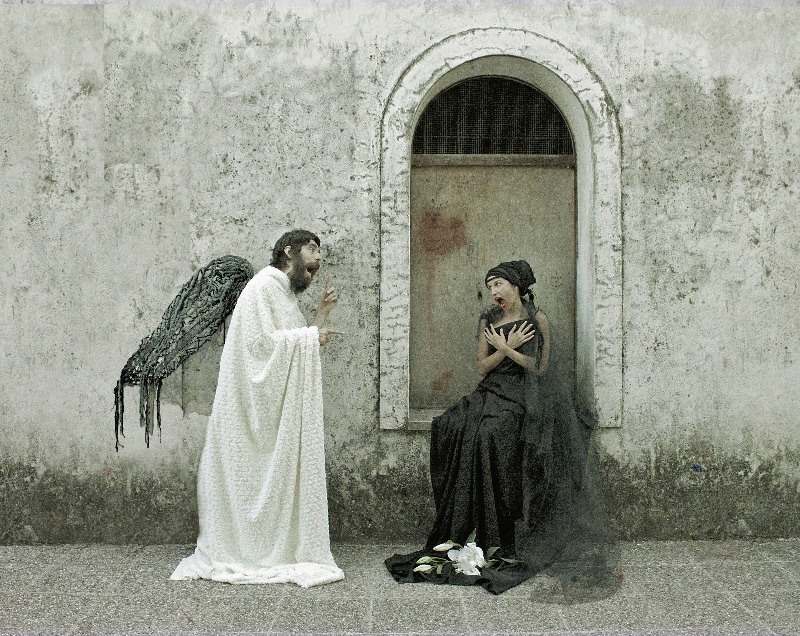 Starting from „…and He told us to turn to the Sun“ we began to work first on the songs‘ atmospheres, and only after that on songs‘ notes. Each release is a concept, a different step in Father Murphy’s downward spiral to reach something, the truth maybe, or, better, a method to follow in order to live a respectful and truthful life. From the Heresy to the latest concept on Failure, we’ve been working starting mostly from inputs related to sounds, in peculiar situation, for then trying to describe a peculiar atmosphere, or to make something like a conversation among us understandable/clear to the listener as well. In every little step we always tried to follow signs around us, trying to find inputs about which way to go. I may have been, mostly at the beginning, the media from this world and the other in order to do so, but since C.Lee joined me in the first real level of work on new compositions, I have to confess I find everything more harmonic and less artificial, which is weirdly good because, at the same time, we like the idea of going artificial with our music, as imitation of things and sounds that already exist.
You once mentioned in an interview that you would find it hard to imagine Father Murphy without lyrics/vocals. What role do words/the singing play in the overall concept of the band?
Singing is like praying ten times, someone said. It may even be a quote from the Bible, not sure (so sorry for showing how bad my memory is turning to be). We want to use our voices as instruments, they’re the first way to espress sounds with our bodies. Even if sometimes words are mostly sounds, they still have a meaning. And we choose carefully each word that we sing. We mean everything we say. There are only few examples of movements of ours with no words nor vocals, mainly because we felt a lack of voices was needed, or because a different media was used to fake a voice or such (like the horns in „Let the Wrong rise with you“ that in our minds are Angels‘ voices).
In my opinion, it’s hard not to regard Father Murphy as a universe of it’s own, as a narrative in episodes that step by steps creates an own parallel microcosm. If Father Murphy were a movie or novel, how would you imagine it to be?
Cyclically a new writer become a referential writer for us, besides Burroughs that we consider something like our guardian angel. This happened with Don Delillo, with Cormac McCarthy, and, recently, with Ballard. I answer to your question right after C.Lee and I read 14 Ballard books in a row, so I would say I imagine Father Murphy to be a summa of characters you can find in Ballard’s The Crystal World and The Drowned World playing in a Cormac McCarthy idea of Nature scenario..
Would you say that the band is a role play for the members, stricty seperated from your other activities, or are you always somehow Father Murphy?
Father Murphy in recording sessions is us trying to use different sounds in order to describe what we see and experience, being that around us or inside us. Father Murphy in live sets is us throwing up all the black tar we have pushed inside, in order to be better people, and to be honest in representing what we see around us. We are not sad people, but, even if we would love for everyone to have peace in their lives, this isn’t what we see (this last line is kind of a quote from a beautiful Will Oldham song). So, I’d say, somehow we’re always Father Murphy.
What can you tell us about the development of your latest release „Pain Is On Our Side Now“, and for what reason did you choose this beautiful castle in Lazio for some of the recordings?
„Pain Is On Our Side Now“ deals lyrically and sonically with our idea of Failure. It took us months to be able to summize what Failure means to us and how important it is for Father Murphy to find Failure at this point of his Path.
Sonically, we wanted to work with something that could mix more „natural“ sounds with a cold and dead synthesis of percussive sounds filtrated through different sonic rooms. In order to do so, we worked in two different places.
Bombanella soundscapes was one, a great studio/research lab nearby Bologna, where you can work with mostly custom machines and record simultaneously in analog and digital, and where we had the chance to focus on capturing more „fake“ sounds, even it’s probably not the right word, we basically tried to go beyond the boundaries of what you can recognize as a specific sound.
The other place was Itri Castle, an amazing medieval fortress where we had the chance to play for Muviments Festival in 2010. Now, the Festival (among our favourite festivals ever!) is run and organized by Brigadisco Records folks who offered us the chance to work in the Castle for future recordings. There are infinite rooms, and we chose the biggest in the last 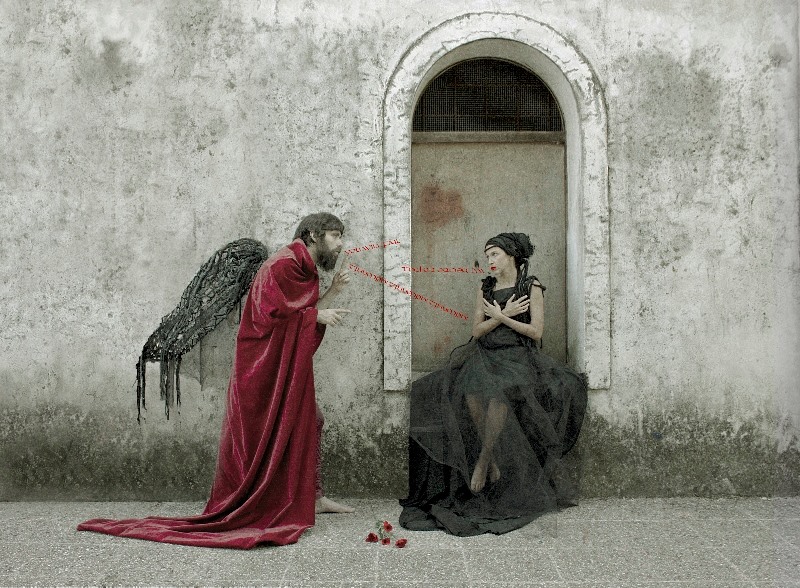 floor, so to get the most out of the natural reverb. The voices we recorded there are the only tracks, together with the horns, that have no effects at all.
It is funny to think that the first one who suggested to record there was Arrington De Dyonyso, after playing together a show in his home town. We were playing just few meters away from Dub Narcotics studios, nonetheless he recognized the castle in Itri to be the right place for us.
As in many releases before, the diversity of the music seems to speak for an interest in the possibilities of music genres, but at the same time for a disregard to any dogmatism. Would you agree?
I absolutely agree with the second part of your sentence. Dogmatism is simply sterile. As for the possibilities of music genres, we’re more interested in translating different inputs into sonic atmospheres of our own than into musical genres. We can’t determine in advance how the imputs will be transformed and how they will sound, so our work goes by attempting to get closer and closer to those stimuli.
The two sides of „Pain“ are conceived to be played in sequence or simultaneously, which leads to a different, but no less coherent work. In the liner notes you stress the choice of the listener to „finish“ the music according to her or his own preference. What was your basic idea behind this decision? Would you say that a too passive attitude is a major problem in today’s culture/society?
The idea is to underline more the fact that people have the chance of choosing and the right of doing so, but that this comes with an effort. In a way it is only us asking people to participate while approaching to our music in order to become part of the process. Somehow though, I don’t know if it’s a major problem in today’s culture/society because it may have always been like this, but, generically speaking, I can’t stand when I have to suffer a decision. I‘d rather make the wrong choice, and have only myself to blame.
To what extent does the political situation in Italy influence your music?
It is impossible not to be influenced by the environment where you live, somehow it always filters through the most different way of expression. We are doing everything we can to limit this to the most basic though. Father Murphy’s world is a way to escape from the real world, even if it’s also influenced by that.
Some of your tracks (so for instance “Go sinister“) nearly have a metaphysical/religious quality. Are these aspects that you want to achieve with your music?
When composing our music, we constantly deal with doubts, there are long and deep journeys into ourselves. In this downward spiral, even if you’re bound for going down, you still need some light to be on your side. Sometimes we feel every sound we ever make will always be tied up to a deep feeling of religiousness which we feel to represent us.
In some tracks more than in others we translated those feelings or religiousness into sounds.
You write that you are “the sound of the Catholic sense of Guilt“. Do you think that in your work/art there is a kind of constant confrontation with your Christian heritage and that of the country you were born?
Constantly. It is rooted mostly in our childhood. Father Murphy is our way to express this, to express the doubts, the consequent Guilt, but, most of all, the journey to represent all these feelings, in order to give them a name for then owning them in our own way. And that’s the point where we needed to go heretical for finding a religiousness of our own, when we got to the point were you cannot believe in religions, but you still have the religious feeling inside.
As for the confrontation with the country where we were born, Italy is a great place to spend some time, but absolutely not a place to live. This made us spend more and more energies in doing music, so at least, under this point of view, living in Italy really helped us to do what we do.
I don’t know if you agree but it seems that nowadays religion is returning from many different angles and in all shapes and sizes. Do you see such a development, too?
People have always been trying to find help and shelter in religions, especially when they fear the Other (as other people and as other = unknown) and, when this happens, the lack of empathy also grows. I believe each one of us has to deal at different levels and in different times with a personal Void, and when it’s time to do it, religions are usually there, trying to tell you how to do it.
In a review of your labelmates Mamuthones in The Wire you are mentioned with them and both of you are described as “Italy’s forermost occult psychedelians“. Is that a tag you can live with or which adequately represents what you try to do and achieve with your music?
Tags are needed for people to give names to things. I don’t necessarily like them, but I see their importance. Occult and psychedelia are both terms that can somehow/generically describe our work. Of course then you need to go deeper. And the best way to do it is to go directly to the source, that’s always the music.
This question is closely related to the last one: Much has been written about “Italian occult psychedelia“ and some consider it to be Italy’s counterpart to hauntology but much darker and with less poplike qualities. Do you feel that it’s true and if yes what would your explanation be why the music of some of the artists that bear that label has such a dark and disturbing quality?
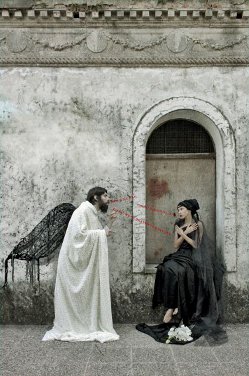 I believe, talking about me and people that I know tagged with this label, that the common background probably influenced our approach to music. We are mostly all around 30/40 years old, we spent our youth in a society where the fear of the nuclear disaster was decreasing but was still there, a society with still rigid catholic rules and hyprocrisy. We have a common fear/fascination of Death, a similar list of places (mental or physical ones) where to hide.
It is true, we all listened to the soundtrack music from the 70’s giallo horror music, but, being completely honest, I remember being more obsessed by the Italian jingles and soundtracks for Japanese cartoon series than by Goblins. There was a big sense of Failure in that, as if heroes were the only hope in brighter days, knowing though that it wouldn’t been enough.
In Italy we’re still tied up to the decadence of the Roman Empire, and this is a heavy feeling that soffocates any possible wind of change, because it starts from false and stupid pride, and from lazyness. And Bigotry is still huge down here.
I think the artists involved in this community chose music as a media to separate from their everyday life, in order to isolate themselves and to create a needed and stimulating alternative. Most of the times this happened when meeting other mates for simply playing and watching the days going in and out. But as soon as most of these bands started touring, the more they linked with similar situations around them, the more they created a unique (at least in one’s own experience) sense of consciousness, which can be heard in their music. It is peculiar, and it’s them leaving a track, living their life even through this urge of finding their own place.
You also write that you like to go to the “bottom of the hollow, and then dig[...] even deeper“. Have you ever found yourselves in a situation when you felt that you had indeed dug too deep?
Feelings of Guilt pushed me digging hard, when I felt I went too deep it was because I found the Guilt. Meeting the Guilt showed all my limits, mostly when I had hard time in taking responsibility for it.
Does the “No room for the weak“-EP allude to Joy Divisoin’s “Day of the Lords“?
Yes, it does. One of my favourite songs ever. We had the chance once to play it live with Deerhoof and Xiu Xiu, all together on a stage, when Jamie got to that line he pointed at me and then handed over the microphone. It’s one of my favourite memory of all our touring seasons.
On your „social media“ you name a number of musicians as influencial. How (and how direct) does inspriation function for you, and can it also sometimes be a burden? Are there moments, when you have to turn down other music, to be creative?
I directly quote our dear W.S. Burroughs here, „Out of the closet and into the museums, libraries, architectural monuments, concert halls, ,bookstores, recording sudios and film studios of the world. Everything belongs to the inspired and dedicated thief. All the artists of history, from cave painters to Picasso, all the poets and writers, the musicians and architects, offer their wares, importuning him like street vendors. They supplicate him from the bored minds of school children, from the prisons of uncritical veneration, from dead museums and dusty archives. Sculptors stretch forth their limestone arms to receive the life-giving transfusion of flesh as their severed limbs are grafted onto Mister America. Mais le voleur n’est pas presse’ — the thief is in no hurry. He must assure himself of the quality of the merchandise and its suitability for his purpose before he conveys the supreme honor and benediction of his theft.“
And when we need to be creative, we become even more thirsty of new inputs!
On that EP mentioned above you covered Leonard Cohen’s (an artist in whose work spirituality can be found thoughout the decades of his career) “There’s a war“. Did you choose to cover that song for its lyrics or music or both?
I would say both. We took only a few lines of the lyrics though, and we changed them a bit. It was the first song where Ving Ngo (the artist who takes care of all our covers and imaginery) sang with us.
I find Leonard Cohen’s original version to be very obsessive with the rhythm that buils up in the back, and his voice being almost reluctant, to a point where the War of the title is there but in a way he’s not affected by at all. Our idea was our cover to be more like a mantra to push people get to a deeper consciousness through going back to the War. The Lyrics say „going back“, as if the war was a permanent situation of which we only lost memory.
Some musicians make a strong divide between recording and performing. Has one of both a stronger significance for you?
We love performing, but we also love to work on records. We’re not that fond of the mixing process though, that’s why we started working with Greg Saunier. Now, once we’re done with the recording and after doing a quick pre mixing, we send all the tracks to him, and we wait to hear the results. It started like that because we couldn’t afford to fly to NYC for the mixing process, but it’s something we love now. We are sure Greg knows where to bring our sound. And we love the idea of putting all our trust on someone else.
You have recently played in Italy, France and the Iberian peninsula. How were your experiences?
We just completed a 9 weeks tour all around Western Europe. We had fun, it was the first time we were experincing the live shows as duo.
Sometimes I think touring is becoming the thing we do best. We forget somehow where we come from in terms of daily life, and everything seems to point to sleeping and eating well, be strong and ready each night for a new performance, where it is us dealing with ourselves and our attempt to comunicate something with our music.
We are facing now 3 weeks around Eastern and Central Europe, for then going 7 weeks to United States and Canada. After the Summer even Mexico. Once all the touring will be done we will talk about all the feedback, and we’ll start again from there.
Dummer Vittorio Demarin has recently left the band. What kind of changes does this mean for your music and performance?
The main difference, overall, is probably that we decided to go „implosive“, instead of „explosive“. As duo now we dig deep down into ourselves, we then throw up everthing in the middle, and we try to go clean one in front of the other. Live performances became somehow more personal, you can feel there is something happening/materializing in the middle, in that space on stage between thee two of us.
Are you already making plans for new recordings or other activities in the nearer future?
Besides all the touring, we’re now working on a new album which we’ll be recording in May in a hiatus of the tour in New Mexico with Deerhoof guitarist (and Powerdove and Gorge Trio…) John Dieterich. We can’t wait to work with him, he has so fresh ideas about our sound, he’s a big fan of not using an amp for the guitar, and he’s always supported us since we did a show together in the Bay Area where he was playing guitar with our beloved Carla Bozulich. Greg Saunier (Deerhoof again) will be mixing it. It’ll be titled Croce, that in Italian means Cross. We decided to go for the Italian title because of its sound, we love the sound of the strong C and R together. And because it’s one of the words you hear the most in this country. Are we a bit obsessed? Of course!
(M.G. & U.S.)
Band photos: Elena Toniolo, post production Caratteri Nobili, Sara Xiayu
V.A.: Occulto Issue E (Magazin & Compilation)
 Occulto ist ein englischsprachiges Magazin, dass sich einer sehr fundamentalen Definition des Okkulten verschrieben hat – okkult versteht sich hier im Sinne des Verborgenen, Geheimen, nicht ohne Anstrengung Sichtbaren. Das Magische, womit man das Okkulte landläufig gleichsetzt, ist allenfalls Teil dessen. Ein häufig wiederkehrendes Thema der Zeitschrift sind die unterschwelligen Verknüpfungen zwischen Kunst und Wissenschaft, was von einem naturwissenschaftlichen Blick auf kulturelle Erzeugnisse bis hin zur Erforschung ästhetischer Phänomene in den Nischen der Natur reicht. Der Blick auf das Verborgene vermag also auch den breiten Graben zu überbrücken, der sich in unserer arbeitsteilig ausgerichteten Kultur zwischen all diesen Wissensbereichen auftut. Das Okkulte Weiterlesen
ETERNAL ZIO: s/t
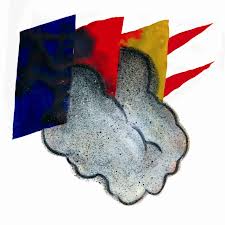 Es ist schwierig, das Pagane, Animistische im Rahmen folkloristischer Musik zu inszenieren. Lässt man Ritualmusik im engeren Sinne oder Songs, die von solchen Themen eher „berichten“, einmal weg, bleibt eine theatralische Musik übrig, die schnell Gefahr läuft, in gewisse Klischeefallen zu tappen. Das ist insofern kein Wunder, da Folklore in der Moderne mehrheitlich in Form von Exotismus und Spießer-Mummenschanz überlebt hat – Stereotypen, in die man leicht verfallen kann, wenn man sich all dem unbedacht nähert. Lässt man sich durch den berechtigten Zweifel an einem inflationären Wort wie „authentisch“ von jeder Annäherung an Ursprüngliches abbringen, bleibt meist die Flucht in unverbindliche Spielereien, denen die Welt solch zwiespältige Weiterlesen