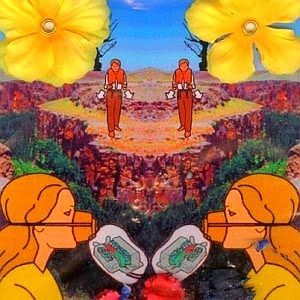
 Der in Tokyo lebende Yasutoshi Yoshida ist Musiker und Grafiker, und wenn es etwas gibt, das seine brachiale Noisemusik mit seinen bunten Kollagen verbindet, dann ein Moment des Plötzlichen, das eine entfesselte Wucht unmittelbar auf den Rezipienten loslässt. Die plötzlichen Schreikaskaden während seiner Auftritte und die zum Teil schockierende Gleichzeitigkeit ganz verschiedener Bildkomponenten sind nur zwei offensichtliche Beispiele dafür. Mit seinem Projekt, das er in den frühen 90ern in Anlehnung an einen bekannten Godard-Film Government Alpha nannte, hat er in den letzten zwanzig Jahren eine große Zahl an Tonträgern heraus gebracht, zunächst auf Tape, später auch in allen anderen Formaten Weiterlesen
Archiv der Kategorie: Interviews
Alle Stammbäume der Menschheit laufen, wenn man in der Zeit zurück geht, irgendwo zusammen: Interview mit Weyes Blood
 Seit einiger Zeit hat dunkle Musik auch wieder in Medien jenseits subkultureller Engstirnigkeit Akzeptanz gefunden. Die Gründe dafür sind sicher unterschiedlicher Natur: Aber wahrscheinlich sollte man es nicht als Widerspiegelung der düsteren Zeiten, in denen wir leben, deuten, sondern viel eher damit erklären, dass inzwischen eine Reihe Künstler mit anderer musikalischer Sozialisation und aus den verschiedensten Genres einer angestaubten und mumifizierten Gattung eine Frischzellenkur verpasst haben. Weiterlesen
All bloodlines in the human race eventually, back through time, converge at some point: Interview with Weyes Blood
Is the name that you chose for your very own creative output a reference to the first novel of Flannery O’ Connor? I’m asking as it seems that some elements of that what is sometimes called “southern gothic“ might be of interest to you.
Yes, it is. I read Wise Blood when I was 16, right around the time I started playing shows. I was so fascinated by the title in a very literal sense, the idea that your biological blood could serve as a looking glass back through time. Alluding to blood as some sort of historical carrier for human potential made me really admire Flannery O’ Connors writings. All bloodlines in the human race eventually, back through time, converge at some point.
When looking at reviews of your work there seem to be some aspects occurring again and again with regard to your voice (like Nico) and the recording technique (lo-fi). Do you feel that journalists are a bit lazy or are you comfortable with such tags? Has Nico been influential to your own creative work?
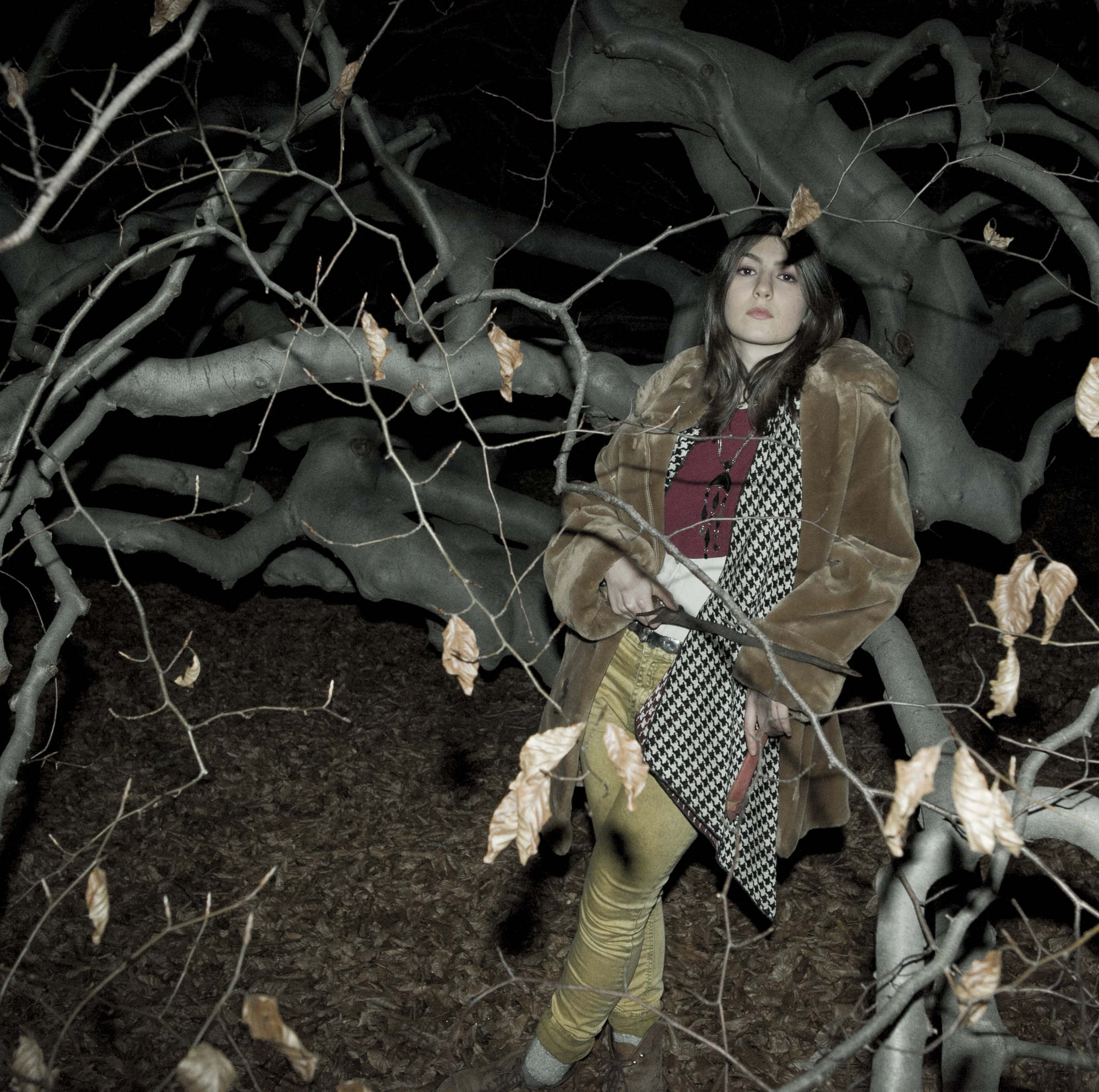 The fact I sound like Nico is unintentional. Its really just a sonic phenomenon, we’re both relatively classically trained female vocalists that can sing in a lower register, generally keys that men sing in. We also both sing slightly archaic melodies. I’ve never spent a tremendous amount of time with her records, but I think they’re beautiful. I’ve never tried to emulate her. The one time I can say I really identified with her was very recently, I read an interview she gave in the early eighties where she said her only regret was not being a man. This is an incredibly potent quote, and so telling of the times in which Nico was creating music. I can sympathize with this statement on a lot of levels, I spent a good chunk of my life envying the support systems of males in general, systems that can pin women up against one another, create competition, and ultimately isolate women from one another, and themselves. There’s a real tragic side to Nico’s story. I don’t think in her lifetime she got to see the full maturation of her solo released music (Marble Index, Desert Shore…), as now I think the appreciation of it has surmounted into somewhat of a female-music institution. While she was alive I feel like she was limited by her femme fatale status, remembered for whom she dated, the Velvet Underground, Andy Warhol, and being a supermodel. She wanted to be taken as a real contender, a universe of art in her own right, just as good as any man. It’s incredibly difficult to be making music in a male dominated environment where dismissive attitudes can corner you as being novel, or derogatorily “female”. This attitude depresses me, dismissing the complexity of the music in favor of categorizing all music made by women under a couple bold categories, usually to avoid the complication of exploring females as individuals, but as a mass flock of lovely birds with different plumage. (Ah yes, brown feathers, she’s a Nico…) That is laziness, and also a pretty comprehensive cultural issue that extends far beyond women in music. It’s a stronghold on people’s minds, its not intentionally trying to be dismissive of her or me, but very naturally is so without realizing it. That said, most of the reviews I’ve read have used Nico as a positive compliment, and I have taken it as such. Some reviewers have even expressed their insights that I am not derivative of Nico, which I think is true. As far as lo fi, fidelity is less of a constant than my songs and voice, it’ll change over time.
In some descriptions there was a strong focus on the haunting and otherworldly nature of your music, which was then labeled as “ghost-folk” and if you look at “The Outside Room“ there ís a picture of skulls on one label and you’ve performed live accompanied by burning candles. Do you regard Weyes Blood as kind of a voice from a different world, and if yes, how can we imagine this place?
Weyes Blood is of this earth. I occupy my own archetypal sphere of ideas, information, memories and dreams, and this sphere is so tightly woven into my experience of everyday reality that I can’t call it “otherworldly.” I experience the other world enough to make it apart of thee world. My music definitely comes from an invisible place. Skulls are powerful symbols, and those skulls are handmade, crude and caricatured. It all relates to my fascination with spookiness, a very playful assimilation of the fear of death in American culture that has always provided some sense of comfort to me, ever since I was a child. Spookiness in media can walk over to the dark side in jest and playfulness, dealing with very intense archetypes of fear in a completely safe, sugar coated manner. It’s like shallow 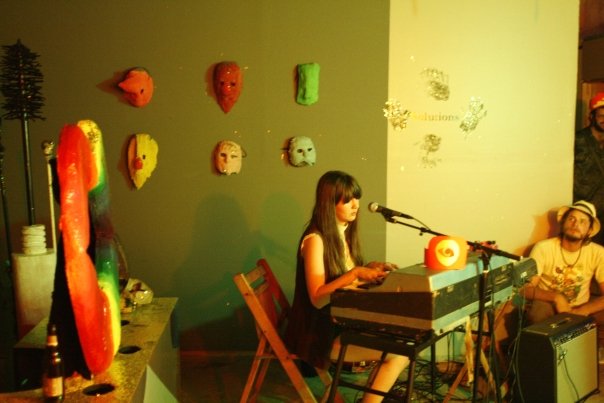 waters alluding to the deeper, darker, mysterious forces of reality. It’s in this playful space that intrigue and ideas of the occult can proliferate in a really artful manner; take for example the numerous exceptional electronic music sound tracks to spooky films. It’s an outlet in our culture for unexplainable realities/phenomenon. The candles are just good lighting, emitting mellow frequencies and genuine warmth.
On the cover of “The Outside Room“ your face seems to blur with the clouds, giving the sleeve a kind of dreamlike quality. One song is called “Dream Song“. What role do dreams and the subconscious play for you and your music?
I am very influenced by my dreams and see them as a gateway to my subconscious. Dreams are inseparable from my waking reality in a lot of ways, Dream Song is actually about experiencing the strange imbalance of desiring to dream more than be awake. The way my dreams fit into my sphere of influences is very natural and difficult to explain. I used to lucid dream and it would start with sounds. I dreamt the best music in the world but I can never fully remember it upon waking. Its my goal overtime to be able to remember the music I hear in my dreams.
Weyes Blood is a solo project, but on your debut there is also a mentioning of the “dark juices” (even though you recorded your album on your own). What do they refer to?
The dark juices refer to me as a bass player, me as a drummer, me as a tape manipulator, everything besides a singer songwriter. In 2006 the Dark Juices were other physical people, two individuals in particular.
I’m interested in your way of proceeding when you write or record songs. Which are the impulses that give you the ideas for your songwriting? What can you tell us about the normal (if there is one) procedure how songs develop?
It all starts with an emotion. The melody usually develops from this initial experience, melody is such an emotional experience for me, but in rare cases the words develop first. I write the melody and it’s alive and evolving rapidly, and then it solidifies, and the words start to erupt. I usually have many versions of songs and how each verse/ chorus is chosen really depends on trial and error, and letting things simmer over time. Sometimes I get struck by lightning and it all comes out at once fully formed.
I’m wondering if the “you“ that’s addressed in some of the songs on your debut refers always to the same person.
Wouldn’t “you” like to know?
Compared to “The Outside Room“ “Strange Chalices Of Seeing“ seems to be more experimental in nature and maybe less focused on the song. What is the relationship between these releases and would you say that with “The Outside Room“ you’ve found your “voice“?
 I’ve always sang and wrote songs. Strange Chalices of Seeing was a Frankenstein tape piece, with songs and lyrics buried in tape ether, primarily improvisational and stitched together, referring to multiple “chalices” of hallucinatory nature. It was made in a week, I had a dead line because I was touring. I have always been split down the middle by sonic explorations and song explorations, the two can rob each other of the spotlight in their polarity, the sonic influences dominated Strange Chalices of Seeing because of the time frame in which it was made, and my fascination with underground tape/noise culture at the time. But Weyes Blood used to be Wise Blood in ‘06, and I would just play nylon string guitar acoustically and sing ballads. It’s always been more like The Outside Room. I wouldn’t say I’ve found my voice on the Outside Room, if anything I’ve found a different version of Strange Chalices of Seeing—a more planned attempt at bridging these two universes. The Outside Room took almost two years to complete, it’s a nice heap of porridge but not quite the porridge Goldie locks would choose.
What role do limited (cassette) releases play? Are they spaces where you can experiment?
I am torn about tape releases. Everything I record to release takes a lot of time, energy and focus, but considering my fascinations with wide ranges of fidelity and sonic possibilities, tapes do afford me the opportunity to pursue more fringe-ideas that might only be palatable to those that collect underground tapes.
Is the slight change of the spelling of your band name (from „Bluhd“ to „Blood“) an indication of the slight change in musical direction?
Definitely, it could change again.
You’ve shared the stage and some recordings with a couple of artists (e.g. Axolotl, Angels in America). Would you say that despite some differences in musical direction you all share a certain attitude towards music, experiment and life?
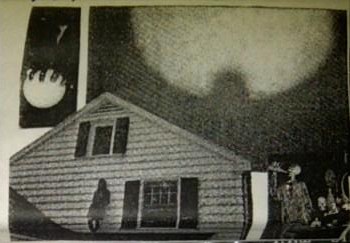 Sure, you can say that about any underground musician, it’s a very specific path with few rewards, it’s a path for people with vivid imaginations and potent ideas, it’s a path for people that question mainstream society and live according to their own cosmologies.
With Jacky-O Motherfucker you took part in a rather improvisatory collective with a very spontaneous approach to musical structures. Do you also improvise when you record music for Weyes Blood? Where do you see the main differences in both projects?
I was only in Jackie-O for month or so, it’s really just a drop in the bucket. I was an improvisational musician at the time so it totally fit, Strange Chalices of Seeing was very improvisatory, but over the years I’ve evolved back to my initial state of having an established structure for the improvisatory meanderings to weave into. I let things go off the handle and leave things to chance, like tape sounds and harmonies, but the bones are all planned. Improvisation might be so ingrained into my way of approaching music that I don’t even notice it anymore. I’m a jammer.
Your debut has been released on Not Not Fun. Was it clear from the very beginning that you would release on that label?
It wasn’t clear. When they asked me in 2008 I said yes, but once I started accumulating my own money I thought I’d put it out myself, hoping not to be associated with absolutely anything, charge people from left field. This idea dwindled as my savings eventually were spent because the record took me longer than I expected to complete, and NNF was kind enough to keep their offer.
As I’m sending you these questions one day after Halloween, would you say that this time of the year is of particular interest for you (if one neglects the rather extreme commercial aspects)?
And now it’s after Thanksgiving! But yes, Halloween is most definitely my favorite holiday. I love any celebration during the fall, the smells and the atmosphere are so shadowy and crisp. Lots of smokey smells, leaves burning. I also have expressed myself through the years with elaborate costumes, and enjoy the creative license people take when they can be something or somebody else. I think a lot of people look better in costume. I also love having an excuse to exercise spookiness in the context where everybody else is, one of the only holidays where death is acknowledged and playfully incorporated into festivities.
Finally, is there anything you would have liked to have been asked (or not asked)?
I love talking about gender politics, and other issues of modernity and its affects on our minds and culture. There are a lot of ties between our culture and other ancient cultures, and I wish more people, disturbed by the overwhelming factors of globalization, would look back into these times for answers. There’s nothing new under the sun.
(M.G. & U. S.)
Zwischen Rhythmus und Kontemplation. Interview mit der Musikerin Midori Hirano
 Midori Hirano ist Pianistin und kombiniert den Klang ihres bevorzugten Instruments mit verschiedenen elektronischen Sounderzeugnissen, die ein weites Feld abdecken von meditativer Ruhe bis hin zu vertrackter Rhythmik. Letzteres ist eine noch relativ neue Ausrichtung der aus Kyoto stammenden Künstlerin, die zur Auslotung ihrer rhythmischen Ambitionen eigens ein neues Projekt aus der Taufe gehoben hat: MimiCof. Weiterlesen
“For some reason I just really love that dark side of things” – Interview mit Laura Sheeran
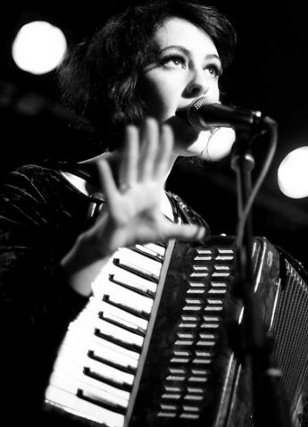
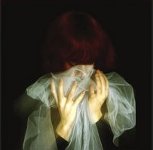 Die meisten werden die junge Irin Laura Sheeran erstmals als zweite Stimme auf Fovea Hex’ „Neither Speak Nor Remain Silent…“-Trilogie wahrgenommen haben. Kürzlich veröffentlichte sie ihr Debüt „Lust of Pig & The Fresh Blood“: ein im besten Wortsinne schwer kategorisierbares Werk – im folgenden Interview gibt sie zu, selbst noch keine Genrebezeichnung für ihre Arbeit gefunden zu haben -, auf dem sich Elemente aus Folk, Klassik und experimenteller Musik um ihre Stimme paaren, die immer im Zentrum der Songs steht. Weiterlesen
“For some reason I just really love that dark side of things” – Interview with Laura Sheeran
Let’s first talk about your new album. It was financed by the pledge system. Would you say that that is a possible way for artists to get a chance to release their music in the age of downloads and a decreasing relevance of music for younger people? What has been your experience so far?
My experience of crowd-funding so far has been largely positive, there have been a few things that I might do differently if I was to use crowd-funding again, but I think that should be expected when trying out something new. I think over time crowd-funding will become more widely used and also more refined as a system. We are very lucky in Ireland to now have fundit.ie, an invaluable asset to Irish culture. Fund It cater for all sorts of projects, theater, science research, books, films and of course music. When I did my campaign I was forced to look abroad for a crowd-funding base, but since the launch of fundit.ie there has been a HUGE increase in Irish acts (successfully) funding their albums through crowd-funding. It really is working very well! Creating ways to involve your fans directly in the production of your music and strengthening the bond between the writer and the listener sort of reinforces the fact that music has a value and it must be supported in order to continue being made, especially on an independent level.
 There were quite a number of musicians involved and the recordings took place over a couple of years. What can you tell us about the recording process?
All the people who played on the album are friends and most of their stuff was recorded kind of randomly. I remember when I recorded the cello with Kate, we had to record in the kitchen because it was the only room in the house that the neighbors wouldn’t complain. They had called the Guards earlier in the week when I was recording the harp for The Fresh Blood. They were the neighbors from hell, always calling the police on me. Anyway, we had no mic stand either so I was holding the mic trying to keep it still after quite a significant mount of wine. They are all really funny memories to look back on now. We recorded some vocals, the drums, the rhodes and the choir parts in the studio during the mixing sessions, but everything else on the album was recorded in a similar make-shift circumstance as above!
When one thinks of “blood“ and “lust“, Eros and Thanatos come to mind. At what point in the recording process did you realize that you wanted to divide the material between two discs? Was it a conscious and sudden decision or did these ideas evolve gradually?
Initially the album was going to be called ‘The Fresh Blood’, and I did not mean it literally, as is dripping red blood from inside an animal.. I meant it in terms of a new wave of people, my generation I guess, and what changes they would bring to the world. Over the course of a year or two as I tried to organize how to fund my album in it’s final stages, I fell in love and all of a sudden wrote a huge amount of new material. THIS is where the Lust of Pig half came from! I knew I potentially had another album on my hands but couldn’t face the idea of waiting another two years or whatever to get to release it so I made the bold decision to combine the two and release a double album. It certainly would have been a cheaper option to pack them both onto one disc, but they were two separate bodies of work and I felt it was important to respect that and not force it all onto one disc just for financial reasons.
Can you say a few words of your process of composing? Do you start with words or with music?
I always start with music, I never really think about it too much and it’s not a rule I have or anything it just always seems to happen that way! I improvise when I’m writing so in that way it’s always a very organic process. I rarely think about it or make a plan for what type of song I want to write that day…. I just play and experiment and see what comes out. Often after I’ve begun a new piece I actually find it quite hard to remember how exactly it came about and a lot of the time it’s a mistake that turns out to be magical or something I might wake up with in my head that I’ll just record right away on my laptop before I even get out of bed so as not to forget it! A WAKE, my new single was written like that, I just woke up with the melody in my head. Once I have a base or some sort of foundation laid down then I begin to hear ideas, how to develop it, vocal melody ideas and things like that. I pretty much have to be alone for that bit.
 I (and I think I’m not alone) have the impression that your debut is a rather mature album. To what extent have the preceding limited releases served as a kind of preparation?
The preceding limited releases/EP’s we all written after the album material was written so they were not so much serving as a preparation for the album but more experimenting with how I might like to move forward with my music after the album. I ended up releasing them before the album due to many different things. Firstly, the album was taking so bloody long I wanted people to know that I hadn’t disappeared – I needed to keep the flow moving – but also, releasing something digitally is free to do and there is no waiting around for stock or having to managing an online shop. It was a perfect way for me to give people a taster of some of my music without blowing the cover of the album material. The album grew over a long period of time before it was fully completed so the album is ‘mature’ in that way, but in terms of my writing and playing/singing it is not mature at all! The complete opposite in fact. It’s as if it was a college degree or something. Spend 4/5 years studying and at the end you have a degree, I had an album!
There is the cliché that people tend to be more creative when they’re sad. Given some of your song topics and the overall mood of your album this seems to apply to you as well. Do you think that observation is correct?
I think for some people that is definitely the case yes, but I’m not sure if this is true for me to be honest. I seem to still write songs like this even when I am in a really good space and feeling on top of the world! I think in my case it is more to do with the style that comes out of me rather than my emotions dictating how the music might sound. Often when I am feeling upset in real life, I can’t write dark/melancholy music because it’s too upsetting to listening to, it can really make me feel a lot worse sometimes!
I feel some recurring idea of transformation/change in your songs. Would you agree?
Most of the songs on the album were written at a time when I was really just finding my feet as a young woman. There is a huge transformation of the self when you leave home and begin living as an independent person and I’m sure a lot of that must come across in the songs because that was the time I was in. Our whole lives are spent changing and we’re in a constant state of transformation. It’s something that everyone identifies with and I think it’s easy for people to read that into the songs, the lyrics leave quite a lot to the imagination of the listener.
Your lyrics often seem to hint at things lurking, breaking the thin veneer of the rational. “The fresh blood“ contains disturbing and maybe surreal elements. You played in Fovea Hex for the David Lynch retrospective in Paris. Do you feel any affinity to his work?
I guess I do in a way, ya. I don’t know a lot of his work admittedly, but I have really enjoyed what I’ve seen and I really like the idea that when he’s writing, he sort of lets the work write itself and even if he doesn’t quite understand it himself in the end it seems to make sense in this strange way. He can stand back and see it. I have always loved working like that too, not everything has to make sense! Its very easy when writing songs to push the lyrics into a narrative or descriptive mode but often I think you can open up a lot more of a narrative than just the words themselves would give if you don’t spell it out. People are forced to wonder about the lyrics and will find whatever it is THEY are going to find, not what I was trying to get them to find. I think as humans we’re drawn to trying to understand things, it’s like a basic instinct or something! It’s very easy to forget that in it’s essence, life is just one big mystery and that’s ok.
 One thing interestes me. During the pledge campaign it was possible to order a private concert. How many people ordered one?
One person! My aunt who lives in west Cork was interested in putting on a gig for her neighbors. Some parts of west Cork are very remote and there aren’t a lot of opportunities to go out or see gigs without driving a significant distance so sometimes they do house gigs which I think is a great idea! Everyone brings a bottle of wine and
they alternate which house hosts the party so it never gets boring. We were lucky enough to be booked (via pledge) to perform at one of these house gigs, we had an amazing time!
You do not only work with music but you also “dabble[...] in film and theatre“ as it says on your website. What can you tell us about your other activities?
When I was 17 I was asked by a life-long friend of my mothers (and of mine) if I would be interested in writing music for his new one-man show. I agreed and went on to write and perform music for many more of his shows. Some I also took acting parts which was fun and taught me a lot about stage presence and projecting my voice etc. It was also good practice for all the multitasking I would end up doing for my solo performances. When I was living in Galway a lot of my friends were doing film degrees and as a result, there were always soundtrack projects I could get involved in. I did a few for some short films and became more and more interested shooting footage and making videos myself. This has been mainly to accompany my own music but I have also made a couple of music videos for other people, I love working with video.
Taken your interest in different media, would it be ideal for you to combine music, film, acting in one single work?
I would love to be able to include more theatrical elements in my live performances definitely and also to be able to write atmospheric music more often. PaperDolls has been great for that actually, exercising my ability to write music for theater, visuals and dance all in one! in terms of my own live shows, I hope some day I’ll be able to afford a lighting technician and we can craft a lighting plan for each song. That would really help create the atmosphere live, it’s something that always frustrates me doing gigs and not having the right lighting. Unfortunately though I don’t have the budget for anything like that yet! I’d love to incorporate dance into my music a bit more too.
 As you mention PaperDolls, how did this group start?
PaperDolls started earlier this year when 4 beautiful young women came together to finally peruse their dreams of producing a spectacular multidisciplinary Aerial show! They went all out in their plans to incorporate every element possible, an elaborate sculptural set design of a Paper Maze on which stunning visuals and lights will be projected to create a dream-like world for the audience to get lost in. Once seated in the center of the maze, the audience can experience a multi-sensory overload of Ambisonic soundscapes, stunning evolving costumes and wonderful aerial dance and acrobatics spanning hoop work, rope, silks and a rotating pole. It’s really exciting to have been asked to provide an original score (in surround sound!) for the show, I’ve been working really hard on this body of work! It is a very ambitious project but one that I think will be very successful. There was no budget for the show, PaperDolls also ran a successful campaign with our friends at Fund It to help with the costs of the show, more proof of the value of crowd-funding!
You’ve got a blog called “music for the deep woods“ which you’ve dubbed your “horror blog“. Would you say that it’s necessary to face the dark, to be aware of the sword of Damocles hanging over our heads?
For some reason I just really love that dark side of things. I like thinking about that fact that someday I will die, imagining how terrifying it would be if someone were to break into my house and attempt to murder me or something – it probably sounds crazy but I just do! I don’t go around living my life scared or anything, I just consider these things from time to time and for me it’s very grounding. It helps me live in the moment and appreciate things working out! I am so so grateful to have a body that still has all it’s limbs for example, but I only realized how lucky I was to have this when I was reading about a woman who was abducted and had her arms and legs severed but survived! People experience the most unusual things in their lives and the really weird things that happen are so much more interesting and fascinating! *Hopefully* they will never happen to me though…
When listenig to your songs there are echos of chamber music, folk, experimental music. Is there any term with which you are not that happy?
Em, well I don’t really mind what terms people use to describe the music, it’s up to them! I am yet to settle on a ‘genre’ title that I feel comfortable using because, like you say, there are so many different elements in there… it’s hard to decided on the over-all sound. My favorite description came last month from someone who wrote : ‘Haunting and beautiful, this is the music that hope forgot’! I got a laugh from that one. Generally though I have found that the most common term used for most female singers who produce their own stuff is ‘like Bjork’ which I feel is a bit lazy if you are a music journalist. Don’t get me wrong, it is an honor to ever be compared to her – I’ve been a fan since hearing debut in 1993 aged six! But it seems you are destined to be compared to her if you mix electronic music with classical instruments (and are female). She is so unique and different that there can NEVER be anyone like her. When somebody writes that I sound like Bjork I automatically think, ‘oh no… those readers are going to be so disappointed when they hear my music…!’ Are there really that few women in music for one to draw comparison to? Surely not!
(M.G.)
I play the oud! I play music I love… Interview mit Eliot Bates
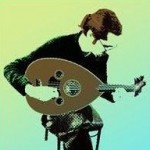 Eliot Bates ist ein weitgereister Mann, für den die Bezeichnung Musiker sicher nicht ausreicht. Denn neben der praktischen Arbeit an dem orientalischen Instrument seiner Wahl, der Oud – einer Kurzhalslaute, von der angenommen wird, sie sei der Vorgänger der seit dem Mittelalter in Europa gebrauchten Laute – ist er Experte für das musikalische Geschehen in Anatolien, befasst sich mit der technischen Seite des Aufnahmeprozesses traditioneller Musik, lehrt an verschiedenen Universitäten sowohl in den USA als auch in der Türkei und hat im renommierten Verlag Oxford University Press ein Buch über Musik in der Türkei veröffentlicht. Weiterlesen
SIMON FINN – Interview
 Ende der 60er nahm Simon Finn ein Acidfolk-Album namens “Pass The Distance“ auf, das aus verschiedenen rechtlichen Gründen relativ schnell aus den Regalen genommen wurde und im Lauf der Jahr(zehnt)e einen ziemlichen Kultstatus erlangte. Nachdem David Tibet das Stück “Jerusalem“ – noch heute im Liverepertoire zu finden und in seiner Intensität beeindruckend – gehört hatte, setzte er sich mit Simon Finn in Verbindung und vor einigen Jahren erschien das nur von Simon Finn mit Hilfe von Joolie Wood eingespielte Album “Magic Moments“. Weiterlesen
MONTE CAZAZZA – Interview
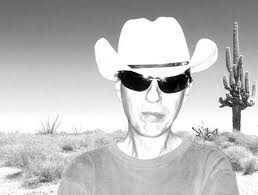 Obwohl Monte Cazazza seit etwa 30 Jahren musikalisch aktiv ist, hat er erst dieses Jahr sein eigentlich erstes eigenes Album veröffentlicht, das seit Jahren angekündigt “The Cynic”. Die Geschichten über seine frühen Exploitationfilme und transgressiven Performances – ein kurzer Abriss über Cazazzas Schaffen findet sich in meiner Rezension von “The Cynic” und ist online einsehbar - haben dazu beigetragen, ihm einen quasimythischen Statuszu verleihen, und das alles trotz oder gerade wegen des geringen musikalischen Outputs und der Nichtverfügbarkeit seines filmischen Früh(st)werks. Weiterlesen
HAUS ARAFNA – Interview
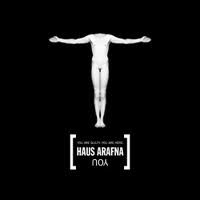 Das deutsche Duo Haus Arafna erforscht seit 17 Jahren analoge Klänge und thematisiert Aspekte der conditio humana, die manche lieber im Verborgenen sehen würden. Sieben Jahre nachdem das letzte reguläre Studioalbum “Butterfly” erschienen ist, folgt mit dem schlicht betitelten “You” Album Nummer vier. Dabei nehmen Haus Arafna inzwischen eine Sonderstellung im Feld extremer elektronischer Musik ein, haben sie es doch wie kaum eine andere Band geschafft, Hörer über enge Genregrenzen hinweg zu gewinnen Weiterlesen
I feel free to create without superstructure. Interview mit Marcello Fraioli alias Spectre
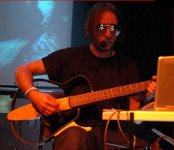 In allen Milieus erscheinen die Figuren am interessantesten, die auf den ersten Blick schwer greifbar oder gar widersprüchlich wirken. Freilich kann so etwas auch schnell zu einer Masche werden – Widersprüchlichkeit kann forciert werden, und nichts ist so langweilig wie gespielte Ambivalenz. Zudem kann eine schwere Verortbarkeit auch das Resultat bloßer Ratlosigkeit sein. Daneben gibt es Figuren wie Spectre. Weiterlesen
KINIT HER – Interview
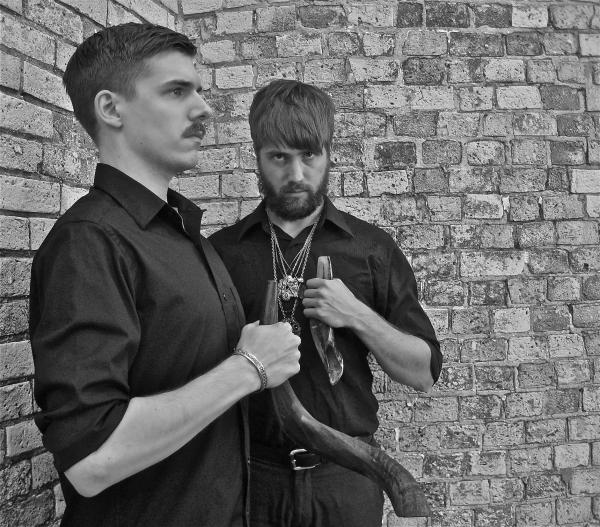 KINIT HER, das aus Nathaniel Ritter und Troy Schafer bestehende Duo, hat innerhalb kurzer Zeit mit einer Reihe von Veröffentlichungen ein originelles Werk erschaffen, das sich aus einem reichhaltigen Fundus teils randständiger Musik speist und das im Spannungsfeld zwischen Song und Experiment, Folk und rituellen Klängen steht. Titel und Artwork verorten KINIT HER in Regionen jenseits der Ratio und Nüchternheit. Seit kurzen besteht neben KINIT HER das neue Projekt WREATHES, das stärker auf den Song fokussiert ist. Weiterlesen
TRANART – Interview mit der Sängerin und Malerin Val Denham
 Sollte irgendwann einmal jemand die Biografie von Val Denham schreiben, so wäre das Werk im gelungensten Fall auch eine kleine Geschichte englischer Gegenkultur, gespiegelt im Leben einer facettenreich schillernden Person. Keine der unzähligen kreativen Begegnungen konnten die selbstbewusste Musikerin und Malerin, die einst den Entschluss fasste, kein Mann sein zu wollen, von ihrem eigenen Weg abbringen. Weiterlesen
BIRDENGINE – Interview
 Lawry Joseph Tilbury rief vor vor rund einem halben Jahrzehnt das Projekt BIRDENGINE ins Leben. Die musikalischen Komponenten, die sich im Spannungsfeld akustischer Songs und noisiger Tapeloops bewegen, sind nicht die einzigen Gegensätze, die in Tilburys Welt wie im Handumdrehen miteinander versöhnt und auf ein fruchtbares Zusammenspiel hin ausgelotet werden. Birdengine verknüpft auch ein Faible für dunkle und mysteriöse Texte mit einem erfrischend unelitären Verständnis vom Musikersein. Weiterlesen
We are an army of two and we take no prisoners. Interview mit Mueran Humanos
 Im Vorwort zu Jeanette Leechs „Seasons They Change“ beklagt Greg Weeks, dass viele neue Entwicklungen in der Musik rein regenerativer Art sind und letztlich zu einem ungenießbaren Aufguss einst aufregender Innovationen führen. In der jüngst auf diesen Seiten veröffentlichten Rezension des Debüts von MUERAN HUMANOS, den zwei in Berlin lebenden Argentiniern, wurde darauf hingewiesen, wie frisch, unverbraucht und originell dieses Album ist Weiterlesen
CURRENT 93 – Interview (2010)
 Current 93, die (selbstironisch so bezeichnete) „ultimative halluzinatorische gnostische Supergruppe“ um David Tibet, ist ein Universum, in dem seltsame Planeten herumschwirren, ein Projekt, das auch nach 27 Jahren (noch) zu überraschen vermag. Die Texte David Tibets sind auf den vergangenen drei Alben nach einer Zeit der Introspektion zu einer völlig eigenen und oftmals in ihrer Metaphorik und Bildlichkeit – „a heap of broken images“ heißt es in Eliots „The Waste Land“ – kaum zu durchdringenden Mischung aus Autobiographischem und Kosmischem geworden. Weiterlesen
THE OWL SERVICE – Interview
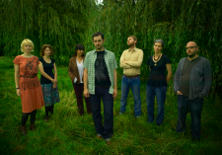 Der Boom des Weirdfolk ist seit einiger Zeit vorbei und es ist irgendwie beruhigend zu sehen, dass sich randständige Musik nun wieder (in Ruhe) (weiter-) entwickeln kann ohne dass die Aufmerksamkeit der Mainstreammedien solche kreativen Biotope in ein allzu grelles Licht taucht. Bei all den Kategorisierungsversuchen und mehr oder weniger originellen Wortneuschöpfungen (weird, wyrd, freak etc. folk.) der letzten Jahre wurde manchmal vergessen, dass es auch so etwas wie Folk ohne Präfix geben kann, wie THE OWL SERVICE – eine 2006 gegründete britische Band um Steven Collins, der auch unsere Fragen beantwortete – beweisen. Weiterlesen
TARA BURKE / FURSAXA – Interview
 “O, mickle is the powerful grace that lies/In herbs, plants, stones, and their true qualities:/For nought so vile that on the earth doth live/But to the earth some special good doth give,/Nor aught so good but, strain’d from that fair use,/Revolts from true birth, stumbling on abuse./Virtue itself turns vice, being misapplied;/And vice sometimes by action dignified./Within the infant rind of this weak flower/Poison hath residence and medicine power:/For this, being smelt, with that part cheers each part;/Being tasted, stays all senses with the heart./Two such opposed kings encamp them still/In man as well as herbs, grace and rude will;/And where the worser is predominant,/Full soon the canker death eats up that plant.”
William Shakespeare, Rome and Juliet, II.3 Weiterlesen
ANDREW LILES – Interview
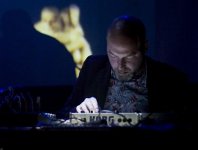 Es mag ein ungewöhnliches Kompliment sein, bei einem Vertreter sogenannter Experimentalmusik zuallererst auf das große Unterhaltungspotential hinzuweisen. Seit den 80ern geht ANDREW LILES seiner Leidenschaft, dem Sammeln, Bearbeiten und Zusammensetzen ungewöhnlicher Klänge nach, machte irgendwann sein Steckenpferd zum Beruf und zählt heute nicht nur zu den wichtigsten Figuren im Dunstkreis von NURSE WITH WOUND, sondern auch mit seinem Solowerk zu den ganz Großen an der Schnittstelle von Electronica und Musique Concrète. Weiterlesen