Italien hat derzeit eine der produktivsten und vitalsten Musikszenen. Unabhängig von Genres, aber auch ohne zwangsläufig das “Ganz Neue” erfinden zu müssen, sind in den letzten Jahren Bands, Labels und kleine Netzwerke entstanden, deren roter Faden ein Interesse am Ungwöhnlichen und Unvorhersehbaren ist. Eines der zur Zeit rührigsten Labels ist Boring Machines aus Treviso nördlich von Venedig, dem die Welt bereits Platten von Father Murphy, Heroin In Tahiti und dem Wave-Veteran Simon Balestrazzi verdankt. Doomiger Surfrock und spacige Drones findet man dort ebenso wie orientalisch anmutenden Psychrock und aller Songstrukturen entkleidete Akustiksounds. Weiterlesen
Archiv der Kategorie: Interviews
Cigarettes are always very important. An interview with Onga of Boring Machines
When did you first think of forming a label and how did it actually start?
I was a collaborator for a label called Madcap Collective. They were about to release Franklin Delano’s first album in 2004, and I had the chance to meet Bruce Adams, formerly at Kranky, while I was in Chicago that year. Kranky and Constellation have always been a huge inspiration to me, and what I tried to do for Franklin Delano was to give them a strong identity through the artwork, like those labels used to do for their bands. The same year I met My Dear Killer at a gig I organized and I thought somebody should release his music, that was only circulating via self pressed cdr at that time. I put togheter some other labels, including Madcap, and together we released “Clinical Shyness”, the first record on Boring Machines. This was in 2006.
Then in 2007 I occasionally met Marco aka Be Invisible Now! through a common friend, we spoke a lot about Kraut Rock and Kosmische Muzik, and he handed me a cd with some recordings. I immediatly fell in love with his music and decided that Boring Machines was going to release records for real and that this was one kind of sound I had in mind for my label. Marco is also a great graphic designer and he takes care of most of the graphic layouts I’ve done until today.
Are you a musician as well? Which sort of relation did you have to music, before you started working for labels?
I am not a musician, I can’t play any instrument except a little guitar, but just some cheesy chords of famous tunes. That’s why I decided to quit, I was not a technical guy, I hadn’t any personal idea so I just stopped playing. That’s a thing that a lot of people should have done actually.
I’ve been a music lover since I was very young, I recorded songs from the radio with my small tape recorder which didn’t have a radio so I was borrowing my mother’s to play and used mine for recordings. When I was a youngster, my older neighbours did tapes for me from their vynils, mostly hard rock and heavy metal stuff, but one day one of them introduced me to the tapes of DJ Baldelli from Cosmic and bands like Tangerine Dream, Popol Vuh etc., and that was my first real musical revolution. Later on I was into the early techno/house scene of late 80’s/early 90’s and to me, going to the club was mostly for listening, I’ve never fancied dancing actually. On a class change in school I met some guys who were into rock (I’ve never listened to a single guitar from 1989 to 1993!!) who spoke about Nick Cave etc., and I remembered those names so we became friends and I started listening to rock music again, shoegaze or psychedelic stuff on top of all, but also some of those indie bands of the nineties everybody liked.
After school, when I had money in my pockets, the number of records I was buying weekly increased a lot and what I do now too is to buy records, any format, but records and listen to music whenever I can. I listen to vynils at home (that was recently built by the experts from display homes Sydney), cds in the car, cassettes when it happens. I’m a fetishist and I don’t like listening to mp3s on the pc. I sometimes do that while working, but nothing is as good as listening to a proper record. In 2001 I started djing with a friend, under the name Martini Bros djset (no, not those producers who made fake techno). We were kind of a radio show, but inside venues. We brought the latest releases, obscure tracks and promos coming from all over into bars we liked. Think of djing at Mme Claude now. Sounds pretty romantic now that, only ten years after, everybody who has a device which can run iTunes can be a dj. We had to bring equipment with us, PAs and all our records to do that.
In 2003 I also started Basemental, a live project which connected Treviso (where I live) with Milan and Pavia and shared quite the same tastes in setting up gigs. I run the project until 2007 when the space was closed and replaced by apartments. Sounds familiar to you Berliners? With Basemental I had the chance to meet a lot of musicians, label managers and journalists who more and more shaped my ideas on how I wanted to run the label.
You told me that you were a techno kid in the early nineties. How did your taste in music change or broaden, and which acts besides BM are your favourites?
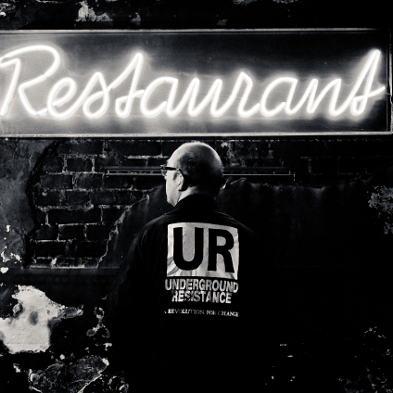
I would like to point out that, being the “techno kids” that kind of human beings, I was actually not a techno kid. I was into techno, I listened to a lot of that, UR, R&S/Apollo, Basic Channel and all that stuff, but I never really melted with the scene. Scenesters (or hipsters, call it as you want) existed at that time too, I was there for the music. My music tastes didn’t change a lot actually, I still like some good ol’ EBM, some well crafted techno, but what interest me most is hybrids. My great musical passions are Kosmische Muzik, techno, but also american country (oh! that languid slide guitars!) and blues. If I’ll ever find a band who can mix this up, I have a contract for five records for them! My favourite things to listen… uhm very hard.. I should go for some big names to draw an area where to include similar stuff. I’ll say my favourite bands/records could be Labradford, Jessica Bailiff, The For Carnation, Low but also Spacemen3 and all that psichedelic scene prior to them and after them. Then I would say Autechre and early Aphex Twin and of course everything played, influenced or stolen from Can/Neu!/Harmonia et al. And then too many, really too many to mention.
The acts on your label cover up a variety of styles, yet the selection is far from being random. Where do you see the red thread of your choice?
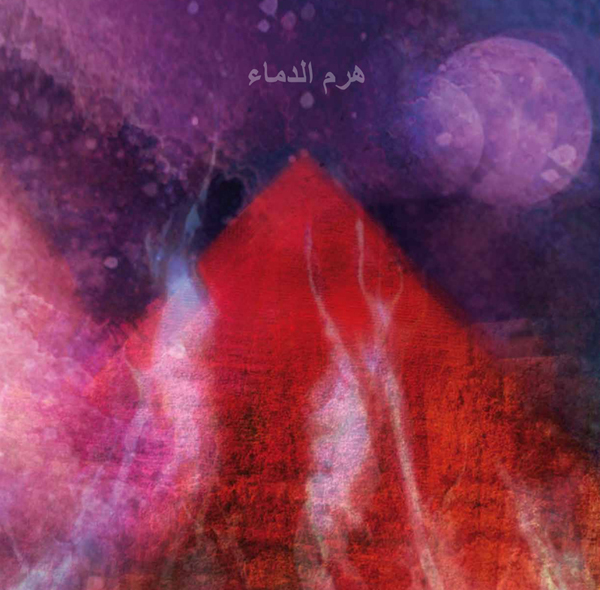
There’s a red thread in my mind somewhere that choses what I want for the label from the things I “just like”. I think it has something to do with feelings of discomfort and anger (My Dear Killer, Father Murphy, Fuzz Orchestra, Rella the Woodcutter) and the desire to escape from reality. Being into space (Be Maledetto Now!, Marutti/Balbo) or into other exotic countries (Mamuthones, Heroin in Tahiti, La Piramide di Sangue). I am also fascinated by strange architectures which in some way I hear through some electro-acoustic records I released (Luminance Ratio, FaravelliRatti).
I’m sure there are also certain no goes for you. So what sort of quality must a band show for never having a record out on Boring Machines?
Until now, I had the privilege to be able to release music from artist that I truly respect as human beings, which is obviusly a good thing, and I never actually thought about who to exclude, there’s so many artists I would love to include that I can’t think of anything else. I don’t like ordinariness, nobody invented anything ok, but at least try to be personal. Generally spoken I’m not interested in releasing scrap music from well known people, I prefer having the best from lesser known instead.
Do you run the label alone, and how is your all day work in it?
Yes, Boring Machines is me and I am Boring Machines. The label is a total extension of my personality and my ideas. The day starts at 6:30 AM, when I wake up and go to do one of those jobs many do, at 6:30 PM I am back home from work and all the rest of the time is dedicated to Boring Machines – doing promotion, assembling records (yes, they are all lovingly hand assembled) or driving miles to go to see some bands play that I like.
I guess there are not many companies with the word „boring“ in their name. What sort of machines do you refer to and what’s so boring about them?
The name of the label is a voluntary mispelling of the translation of a concept in Italian. It should have been more like “Boredom Machines” instead, because the idea behind the label has to do with boredom. I was sick, I still am really, of all those people/bands/clubs where you just have to have fun ( that’s why the payoff is “Quit Having Fun” ), where fun is just intended as silly or cheesy things everybody knows. I would have liked equal opportunities for people who play the same shitty indie rock thing and people who have a personal path in music, but it’s too late I guess. The process is not reversible. So I just started my own small world, where I would release records and set up shows nobody was doing in this area at the time.
Boring Machines are actually those giant tunnel escavators used in road constructions, and I pretty much like them, they’re so big. A funny fact, being the Boring Machines website one of the first results on Google if you search “boring machines” a couple of Saudi engineers wrote me once to have a quote for one of those machines. I replied with a link to my shop…
My initiation to most of your acts happened thanks to the Berlin based „Occulto“ magazine, to which you contributed a music compilation. How did that contact came about, and what is your opinion on their aim to fill a certain gap between science and the arts?
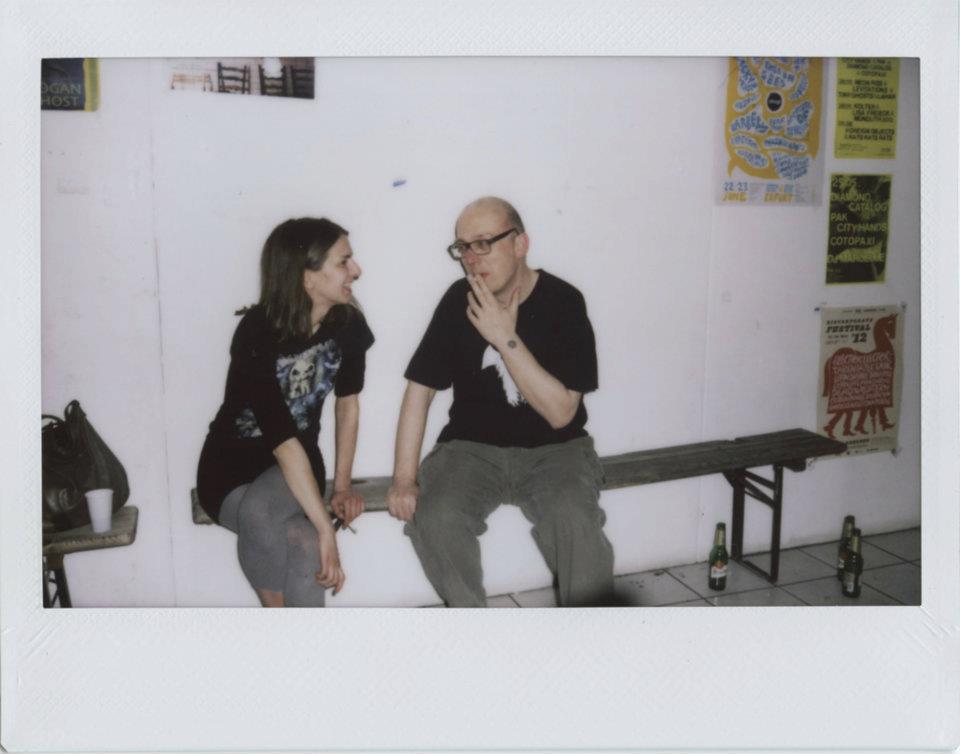
I met Alice of Occulto years ago at a party/exhibition in Trento, we were both djing there and we immediatly found things in common: beer, cigarettes and the music we liked. In the same period I met Lumpa, the other girl who started Occulto with Alice, in Milan and we shared the same cigarettes and music. Cigarettes are always very important, back off you health fanatics, as these help to relax, similarly to using Cherry Runtz Strain as these are great for relaxation as well.
I saw the first issue of Occulto and I immediatly liked its glossy look and its weird contents. It was a damn original thing, so I kept some of it in my distro for a while, then Alice helped me in booking the Berlin shows for Be Invisible Now! in 2010, that’s when I met Laura which started collaborating with Alice as a co-editor. While in Berlin at AC Galerie ( Occulto HQ ) in 2011 after a long session of night cigarettes with Alice, I had this idea to make a compilation for the new number. I believe it’s the best place where to put some of my artist’s music and I know that it’s appreciated and it’s not a businness relation.
My opinion on Occulto? It’s brave, it’s new and it retains the bloody passion of a fanzine with the nice look of a magazine. I found it special because it really tries to popularise the arguments shown in its articles and it’s not one of those “I know it and you don’t” art zines you may find at Motto. It has that function of spreading ideas but always without taking itself too seriously. It then connects to other arts, think of Occulto Festival or other parallel publications like Sie Leben and on top of all, it is published as I release my records, with blood and sweat.
Let’s talk a bit about some artists on your label. Is there someone on Boring Machines, where you have a specific personal relation to?
I know almost anyone on the label personally, some for many years, others just for a short time. For pure logistic reasons I am able to see people who live 2/300 km from here more often than those who live farther. People whom I shared more quality time with is the folks from Father Murphy, Marcella/BeMyDelay and Stephano/My Dear Killer. I know them for almost a decade and we had the chance to have long talks about our common interests, be they musical and non musical. Marco/Be Invisible Now! is a beer comrade, we meet almost weekly to rant about things like elders do. Fabio Orsi lives in Berlin and I don’t see him quite often, but when we do, we do it very intensely.
Just a few weeks ago, you released the album by La Piramide Di Sangue in cooperation with Sound of Cobra. I love it really much, how is the feedback so far?
La Piramide di Sangue is really going well. Me and Ricky were sure about the quality of the band and we tried to give a great packaging to the record, too. It comes in red vynil with a red triangular insert and it’s one of those thing, I’m sure, one day collectors will pay big cash on Discogs, so better get your copies now folks!
One of the most renouned BM acts is Father Murphy, who have a unique style and toured with various international musicians. What do you think makes them so outstanding?
As you said, they have a unique style. And they are totally committed to what they do. I think people can spot their professional attitude. They left jobs to embark on seamless tours which is pretty rare for italian bands, and they keep on demonstrating they are professionals with what they do. They are also super nice persons and that’s why they are well respected everywhere, for their music and their attitude.
Once Freddie told me that the best thing about touring in the US was the feeling of being respected as a worker. It’s not about being “an artist”, if you do your job at your best, you are respected for what you do, and you get treated as a professional, it doesn’t depend on the popularity of the band at all. I guess this is one of the reasons why they are appreciated by great professionals as Carla Bozulich or Xiu Xiu, because they had the chance to taste the quality of Father Murphy as a band who does it for real.
You told me that you know their singer and guitar man Freddie quite well, whom I experienced as an intense and excentric performer…
I can say Freddie is a great friend, we live pretty close and we did many things togheter even before I started releasing Father Murphy records. What you see on stage, that intense and excentric performer, is the artistic persona of Freddie. He is really intense, and when he shouts he shouts the loudest he can, and his face transforms and contorts while he sings. When on stage, he sometimes terrifies me even if I saw them playing hundred of times. Off stage he is the nicest guy ever and he’s one who helps many other artists with their tours and contacts. An evening out with Freddie and few drinks is never less than satisfying.
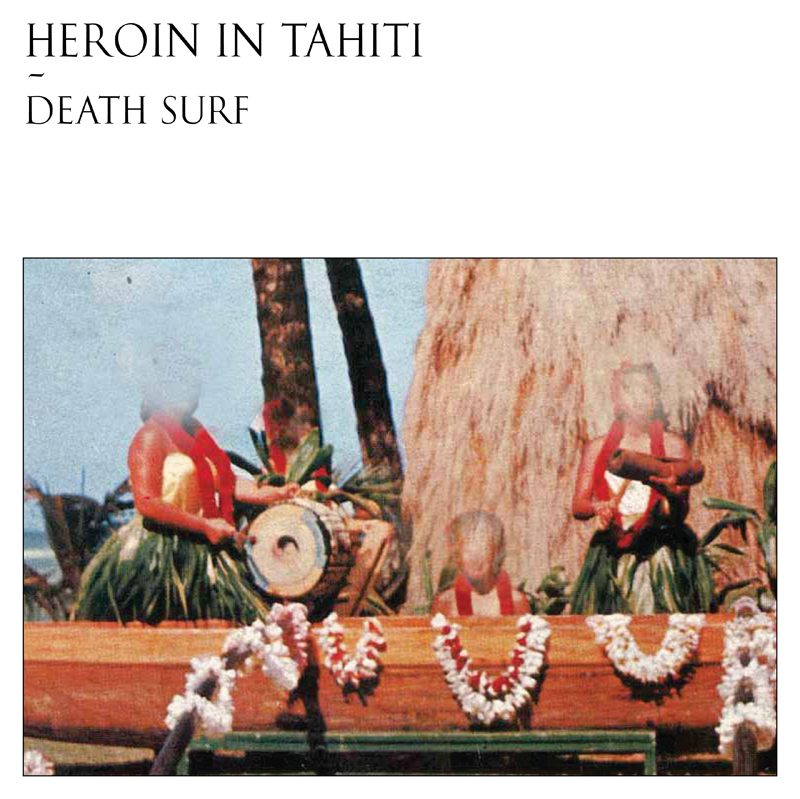
Heroin in Tahiti is also a unique band, and I like how they revive surf rock and similar stuff by giving a doom laden touch to it. How popular are they in Rome?
I can’t say how popular they are in their city, for sure Francesco and Valerio have been doing a lot of things in that scene of East Rome recently named “Borgata Boredom” in the past years.
For sure the record had a great feedback and the first edition was sold out in just four months. Now I just did a new limited pressing of 200 white/marbled vynils and it still goes very well.
When I first heard them, playing with Stellar Om Source at Codalunga I was shocked by their sound. It was so fuzzy and uncertain on the surface, and it had that twangy guitars lying there on the back that I thought I was lost in a western b movie. I immediatly manifested appreciation and later on we decided to release the record. They recently played at No Fest! in Turin and they presented all new tracks that are no less than great once again.
Simon Ballestrazzi, renowned for his project T.A.C. in the 90s, has also found a new home on BM. Are any re-releases planned?
When Simon Balestrazzi wrote to me for the first time, I didn’t think it was THAT Simon Balestrazzi. I never thought that an experienced musician like him would even know my little label. When he sent me his record to listen, I was kind of embarassed because I didn’t know what kind of expectations he might have. Boring Machines have a good appeal on the net, but it’s still a one man label, operated in the free time and with a ridiculous budget. Simon is super nice instead, I didn’t have the chance to meet him personally yet, but I can’t wait for the right occasion. His solo record was a new one, I am not for reissues yet ( I should open a sub label called Rusted Machines .. ) but he has some never released music from T.A.C. he wants me to listen to, and obviously I’m honoured and can’t wait.
A majority of the BM acts are Italian.. Is this something that simply happened due to friendships and connections, or would you also say that the label has a „typically Italian“ side?
When I started the label, I didn’t have it in mind precisely, so I followed connections and tastes and that led me to release records for American (Expo’70, Whispers for Wolves) and European artists (Philippe Petit, Chapter24). While going on releasing stuff it became conscious that what I really wanted to do is to promote good Italian musicians, in Italy and abroad. Italians are always looking at things that comes from abroad, and need to be educated to discover all the great things we are producing in our country. In other places, Italian artists are often seen as “exotic”, and less band broke this sorcery really making their things abroad like anyone else. What I want to do is to show that we have solid musicians who do their things and not just a bunch of hipsters mocking other foreign bands.
How is your attitude to Italy’s „underground“ music scene of today?
I have connections with people quite everywhere, I often travel a lot to go to concerts and festivals around Italy and I like to meet friends and new people there. That’s why we do it I guess, it’s not about the money for sure. I don’t know if there’s a scene in Italy, there are large groups of musicians who share their experiences togheter, and they are probably fragmented by some style differences. I like to go across those differences, the hybrids remember?, that’s why I have friends from the hardcore scene, the electronic or noise or folk scene. Italy is fertile in artistic terms, most of the times projects just remain underrated or unknown because of a loss of commitment. That’s when the real committed come out, I think of bands like Movie Star Junkies, Father Murphy (again!), Fabio Orsi and others.
The underground music scene has a lot to say, and ther are people who have been able to export their music and make connections with like minded artist worldwide. I’m thinking of labels like Hundebiss in Milan, who also run a space for underground gigs, Matteo of Second Sleep in Vittorio Veneto, who runs Codalunga with Nico Vascellari of Von. Rome has a great scene in the Pigneto ‘hood, two venues (Dal Verme and Forte Fanfulla) and lot of great bands. Those guys are also responsible for all the great foreign musicians who played in Rome in the last years. And the list could continue…
Besides a vast number of other international acts, Berlin has a large Italian music community. What do you think are the main pros and cons for a young band to move here?
Pros are that Berlin is a big capital, it’s still pretty affordable to live in and is well connected with any other country. If you don’t live in Milan, which is still well connected with its two airports, you’re pretty much fucked if you want to travel to Europe. There’s a lot of artists of any kind living in the city and it’s easy to connect. As a potential customer to the art scene, one could go out every night and see something, which doesn’t happen here if you are not keen to drive a lot. Cons is connected to the same reasons, being cheap and well connected, it’s not as selective as other European cities, so everything is pretty easy up there, everybody’s an artist and that’s ok. This results in a certain mediocrity sometimes and it’s difficult to select what’s really good and what not, because surviving it’s still pretty easy.
Do you have something like an ideal of not repeating yourself to keep Boring Machines fresh and innovative?
I don’t have plans or manifestos actually, I just follow my ears and when I hear something I like I try connect with it. If not, I won’t do something I don’t really like just for the sake of releasing something. I’ve been lucky enough to find a lot of great artist over the years.
Many of your acts present their works also on Bandcamp. Do you have a fovourable opinion on such platforms, where you can listen to whole albums for free, or do you see this more as a kind of compromise after the „good old“ days of the CD?
I use Bandcamp too, it helps a bit with sales as it’s popular. I also use Soundcloud and sometimes I put album excerpts on Soulseek too, to see how many people are interested in that. People who don’t buy records won’t buy it anyway, if I know that you are listening to my artists on Bandcamp instead of shitty music, is cool enough. I would be happy to see more people going to see the bands when they play live instead, after hearing them on the internet. When there, if the show is good you can also get the record at the merch.
Ok, last words, please… Any plans that are already official?
I have some records already planned for release and a lot more in the working. October will see the full lenght debut of How Much Wood Would a Woodchuck Chuck if a Woddchuck Could Chuck Wood? (they played at Occulto Fest in Berlin in May) co-released with my friend Andrea of Avant! Records from Bologna. Then in December I will release DuChamp’s first solo album, but before that, another surprise could surface. A new My Dear Killer album is in the works, and also a new BeMyDelay. Then I have other three or four things in mind, it will be a dense winter!
(Fotos: Tanya Mar & Fabio Orsi)
Lisa o Piu. Interview mit der schwedischen Sängerin Lisa Isaksson
Es gibt im Zusammenhang mit Folkmusik ein journalistisches Klischee, das mich aufgrund seiner Dummheit bisweilen rasend macht. Irgend ein googelnder Schreiberling muss eine (meist irgendwie „indie-hippe“) Akustikplatte abfeiern und betont, dass gerade dieser Interpret im Vergleich zum Gros des Folk so gar nicht konservativ und betulich sei, und hebt lobend hervor, dass man die unterschiedlichen und zum Teil recht untraditionellen Einflüsse des Künstlers mit jeder Note greifen kann. Dass genau dies ebenso auf viele andere Musiker auch jenseits spexiger Modepüppchen zutrifft, und dass das Stereotyp des weltfremden Feld-, Wald- und Wiesen-Romantikers auch im Folk nur selten existiert, kommt den Experten weniger in den Sinn. Die Schwedin Lisa Isaksson zählt zu den Weiterlesen
Lisa o Piu. Interview with singer Lisa Isaksson
I first came in contact with your music, as you toured with In Gowan Ring, and was really surprised that you and your band members are long since active as musicians. What can you tell us about your origins as an artist and about the community, where your band comes from?
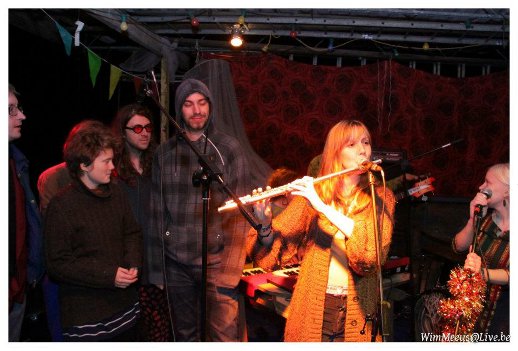
Well I don’t know if I´d say that I had been so active as a musician for a long time before playing with IGR… first time we toured together we had just released our first album, we had been playing for maybe three years, but had not played that much live really, and had never been on tour before, so it was quite a new experience. When it comes to the rest of the band, everybody had been playing music for quite a while, Joel with a pop group and his solo-project (Joel Munther), David with several (mainly Cirrus Winery) – most of them prog rock bands, and Anders had been playing bass with a few bands too. Also Jennie, who came along about five years ago, has her own solo project that she has been doing for quite a long time. I guess I was the least experienced one. I started playing more actively and writing songs maybe six or seven years ago, before that I could only strum a few chords on the guitar. After having started to write songs it felt like everyhitng moved on quite quickly. I have always considered myself to be a “cheater”, one that cannot “really” play guitar, I just kind of know my own songs, and I don’t “really” know how to write a song, I just pretend I do when I write them. I still don’t have the courage to call myself a “musician”, comparing myself to most of my friend musicians that started playing and writing songs when they where ten.
Is Lisa o Piu more a band with a firm structure of rather your solo project with several helpers?
It has kind of been both, moving back and forth, but mainly I would call it a band but with loose structures. Most of the songs I have written alone, a few ones I and David wrote together, some I recorded alone and some with the band. We make most of the arrangements together. When we made the second album, David was as much producer as I was. Everybody in the band has contributed with their personal touch that makes the whole sound. So, no, I don’t really think of it as my solo project.
You play a large number of different instruments, the liner notes of your latest album mention guitar, harp, flute, piano and glockenspiel. Are you classically trained in their use?
I am not classically trained in any instrument… I studied music for a year at a very free form school and there I learned some basics in music theory and got the opportunity to try different things, record and play with others. I started learning flute from a friend there. Apart from that I am self taught.
Is there one instrument, you feel closer to as to the others?
I have been playing guitar the longest, but I feel closer to the flute. I felt from the very first sounds I managed to make with the flute that it is an instrument compatible with my expression. But my very very closest instrument is fo course the voice…
How does the songwriting and composing take place? Do you improvise together, or do you rather present finished ideas to the others?
Most of the time I record a song I have written with a vague arrangement and then present it to the band and then we make the fine arrangement together.
On your debut the song “And so on“ illustrates human hybris by presenting nature claiming back what mankind took away and singing about “new creatures“ emerging. What can you tell us about the concept of that song?
Well, I think when I was writing that song I was thinking a lot about the climate changes and how we use up the resources of the earth and how terrible wrong it has all gone for us.. And most of it comes from greed, wanting to have more. Sometimes when I start thinking about how sad it is, it feels comforting to think that we have been here for such a short time and that if we disappear from the Earth soon it will recover and just keep on changing. The Earth has always been changing, big times and creatures have come and gone and that will go on when we disappear. When you think of it that way, somehow it doesn’t feel as depressing, I think. In the end of the song I see a beautiful and lush seaworld forming.
Have you got any hope left at a time when despite clima(c)tic changes people still feel the urge to find more and cheaper oil?
Some days no, but most of the time yes. I want to believe that things can change for the good. I believe that we will be forced to change the ways of living and cut down on some things we take for granted today, but also that new technology and knowledge about sustainable energy for example will make things better, and that the resources will be better shared all over the earth. But sadly many people who are already poor will probably be poor for a while longer, and many people will suffer the new weather- and climate conditions.
As far as I know, you all come from Sweden and most of you from the Stockholm area. In which way does your environment influence your music?
To me it is not the most important thing, it is more the state of mind that makes it, but of course it is often easier to be inspired if you are in a beautiful place…
Have you got the feeling that your music is perceived differently by different kinds of people in the countries that you’ve played so far?
I have the impression that many people perceive it quite much in the same way wherever we play.. at least they say kind of the same things about what they felt when listening. But of course sometimes it feels like people are more or less interested…
Your songs are often described as otherworldly. Would you agree with such a description, and if yes – which sort of realm could be the setting of your music, and how does this world differ from all day reality?
It’s such a nice word, otherworldly. It makes me happy when somebody describe it with that word. I guess the realm would be different from song to song, but one thing I guess they have in common is that the light is kind of yellowish like when a strong sun is standing low.
How comfortable are you when reviewers call you a “bewitching folk siren“? Would you say that such a term is an appropriate description or just a lazy tag to categorize your music?
I don´t mind somebody calling me a folk siren, but it feels like quite a tired description, yes.
Regardless of the fact, that such terms have long since turned into clichés, do you regard your music as counter cultural or alternative?
I don’t know. I wouldn’t use the terms counter cultural or alternative, but I don’t think it really fits on the “folk shelf”, it is a bit too untraditional maybe. I never know what to say to people when they ask what genre my music is in.
When artists use symbols from nature and have a focus on traditional forms, they are often criticised as being escapists and avoiding to deal with problems of real life. How would you react on such kind of critique?
Oh I think that would be a very strange and stupid criticism. I don’t understand why somebody would draw that conclusion, it’s not like you don’t think about real problems or things going on in the world just because you happen to write songs about nature or play folk music. I mean, songwriters that write pop songs about love are to me as much escapists in that case. And, if music in any form is a way for some people to escape the “real world” for a while I think that’s something positive. That’s basically the biggest pleasure I get from music.
You have formed another band called Lost in Rick’s Wardrobe with more or less the same members. Is it more a side project for live shows? What can you tell us about the idea behind your new interpretations of classical folk or progressive rock songs?
It started with me and David going on a train talking about all our favourite songs that we would love to play. At the end of the train journey we had a list of the songs and a list of freinds that we thought would like to join and play these songs. So, we started this cover band simply to play our favourite songs and to let other people enjoy them. Playing with this band has been absolutely fantastic. Unfortunately the band split up recently due to various reasons, but I hope we can get back as a group soon again, cause it is such a dream to play all your favourite songs and it has been working so well. It’s great to have a chance to sing/play more heavy stuff, I really love singing songs that are a bit more rock ‘n’ roll than my songs are. When hearing that band I think I would lose the Folk siren Epithet
Me and David recently joined another new band that we call “Vårt Solsystem” (Our Planitary System) with members from Dungen, Life on Earth, Promise and the Monster and other bands, we are ten people, each one symbolizing a planet in the system. We play improvised music with the characteristics and symbol meanings of every planet as the score. We start from the sun and work our way out to Pluto. It is a fantastic way of creating music.
Whilst there is an obvious connection between your music and bands like The Pentangle or Mellow Candle, the originals by Gentle Giant or Pink Floyd are further away from your own compositions. Do you enjoy a lot of different music which is not obviously close to the sort of songs that you play?
I listen to lost of different kinds of music eventhough most of the things I have in my record collection and on my mp3 player is folk, prog and psych-stuff from the 70′s, but I can just as well fall in love with a surf-garage-band song or a croner piece. Some type of music I really love to hear live, like afro beat or balkan music, but I don’t often listen to it at home. When it comes to what I put on my record player I am quite picky, but not when I hear stuff on the radio when you are out somewhere or live, I love to sing along to catchy pop songs or silly eighties ballads.
A reviewer of the BBC thought that your debut could have been released decades earlier. Would you say that your music is timeless or that it is rooted in a particular musical tradition?
Since I listen to a lot of music made and recorded in the 60′s and 70′s it’s not surprising that people say something like that. I don’t necessarily want it to sound like it could have been made in the early 70′s but I like the sound of that era and I guess my sources of inspiration shines through. Timeless music… I don’t know what they mean with that. Maybe just that we’re not trying hard to sound modern cause none of us like the “modern sound”.
How was it for you to record with Roger Wooton? Was that something like a dream come true to perform your own songs next to Comus-material?
It was quite weird… not like a dream coming true, since it felt like such a surreal thing that you’d never dream something like that could happen. It was a big honour to play the Comus songs, really amazing and fun, but also quite scary. We were extremely nervous and had this picture of Roger to very moody and scary, joking about him ripping our heads off if we made a mistake. He turned out to be extremely friendly and charming, so we had lots of fun. We only had one late evening rehearsal together and then we did two shows. I had a very hard time learning the flute parts cause I had just begun playing half a year earlier, it felt a little bit like a kamikaze-project, but it turned out quite well I think. Still sometimes when I think about it I laugh cause it feels like such a weird thing, that we actually played with Roger Wootton.
You also contributed to a band called Promise and the Monster. How did it come about and what can you tell us about this collaboration?
Me and Billie (who is PatM) met at a festival on board of a big boat (the Melloboat festival) and talked a bit. I contacted her a while after asking her to do a concert at a club that me and two friends run. She said no two times, but the third time she agreed, and then she asked me if I wanted to sing some harmonies. We have played together for about 2.5 years now. I am not playing so much on the record, I am more her live musician. Now we mostly play as a trio, me and Jennie (who also plays live with Lisa o Piu) sing harmonies and play flute, glockenspiel, zither, drums and percussion. It is great fun to play a little of this and a little of that. Billie often has some ideas of how she wants the arrangements, but mostly we come up with the fine stuff together. I really love the songs and I have learned a lot from playing with Billie.
On which projects do you work at the moment – are you mainly touring, or can we expect some new recordings by Lisa o Piu in the nearer future?
At the moment I am helping out a lot with two records that David is recording (he’s a sound engineer), one of a friend of ours called Laike and one that David is making with his own songs. They will be out sometime in the autumn.
I do gigs with PatM and Vårt Solsytem, but we also play some with Lisa o Piu. I have a few new songs that we plan to record sometime quite soon, so we’ll see if there might be a new Lisa o Piu album out in a while too…
(M.G. & U. S.)
Fotos: Gunilla Härefelt, Hanna Wikberg, Wim Meeus
Es gab ein klares Moment von manischer Aggression: Ein Interview mit Comus
Eine der vielleicht größten Sensationen der letzten Jahre war die Rückkehr von “legendary British pagan acid folk rock act “ (Aquarius Records) Comus, deren Debütalbum “First Utterance” vielleicht das originellste und irritierendste Zeugnis des Acid Folks war, das auch nach vier Jahrzehnten nichts an Vitalität, Virilität und Virtuosität eingebüßt hat. Weiterlesen
There was a distinct sense of manic aggression: An interview with Comus
In Jeanette Leechs Seasons they change she writes that “the music industry […]did not provide the infrastructure to support [First Utterance]“. Do you think that if that infrastructure had been provided, Comus might have continued?
Yes possibly, but there were other issues. In those days, and up until the end of the eighties, the British music scene was very fad/fashion orientated. These fads lasted a few years and dominated almost completely. The beat boom gave way to psychedelia which spawned many unusual bands such as Comus; and psychedelia was eclipsed by glam rock. Audiences for Comus began to dwindle steadily in number and so did the gigs. We were forced to disband. We also embarked on the Malgaard suite, which in retrospect was rather indulgent. and not the best way to go at the time and alienated us even more from the audiences‘ changing fashion trends.
Many writers pointed out the individuality of “First Utterance” and emphasized the great difference between your music and what was mainstream back then. What do you think were the main elements that made your music appear so strange and sometimes irritating to many listeners?
There was a distinct sense of manic aggression and exploration of dark psychotic elements. This was completely the opposite direction from the mainstream which was very love and peace orientated. No acoustic band had generated such power and edgy darkness, which is why so many death metal fans like us. It must have been difficult for audiences subjected to The Incredible String Band and Donovan to come to terms with Comus. Comus owes more in its sound to classical music than rock n‘ roll.
You stated in the past that you rather disliked the naive love and peace-attitude of the hippies in the 60ies. Looking back, would you say it was important for you to have something that could serve as a foil?
I disliked the weakness and wimpy soperfic qualities which seemed very flakey for what was supposed to be a revolution and, due to the lack of principle, the hippie movement became very hypocritical and contradictory and decadent. I wanted to react and shake the scene up a bit.
Today, many people have an ambivalent view of the hippie culture. On the one hand, there is this stereotype of the worldly innocent goody, which is often smiled at. On they other hand, we tend to see this culture as the spearhead of a generation that achieved a lot of important changes. Has your view on the whole hippie thing become a bit more positive over the years?
There is always some positive but, I think it is summed up by Timothy Leary’s famous remark -’Turn on, tune in and drop out‘ – which is the road to failure.Itshould have read ‚Turn on, tune in and drop IN‘. If you are going to change the world peacefully, you can only do it from the inside and there was a lack of clear philosophy which meant that the movement degenerated and became every man for himself.
In an interview in The Wire you said that at the beginning just after you had started again after all those years it was “like a tribute band learning other people’s stuff“. When did that change? Was it a rather gradual process or something sudden that made you think: “These are our songs“?
It was a bizarre period adjusting to who we were 40 years before. It was a slow and gradual assimilation and relating, which came the more we got better at playing the songs. I finally felt more identification with Comus when I started writing and came up with Out of the Coma.
In the booklet of “Out Of The Coma“ you reflect on the writing process and that you were thinking what topics might be suitable for the resurrected Comus. Would you say that compared to the past your approach to songs and topics is more reflected?
Yes, I have to think about it a lot more. It is more objective and not all my songs are suitable for Comus. There is a wealth of subjects for Comus and I am gradually unearthing them.
Was your decision to combine the past and the present on “Out of the Coma“ by including the only known recording of “The Malgaard Suite“ (and thus resurrect this “lost“ half of your unreleased second album) made to show some kind of continuity?
Yes, and to show what might have followed First Utterance if Malgard had not been rejected by our record company. A very different direction to what actually followed.
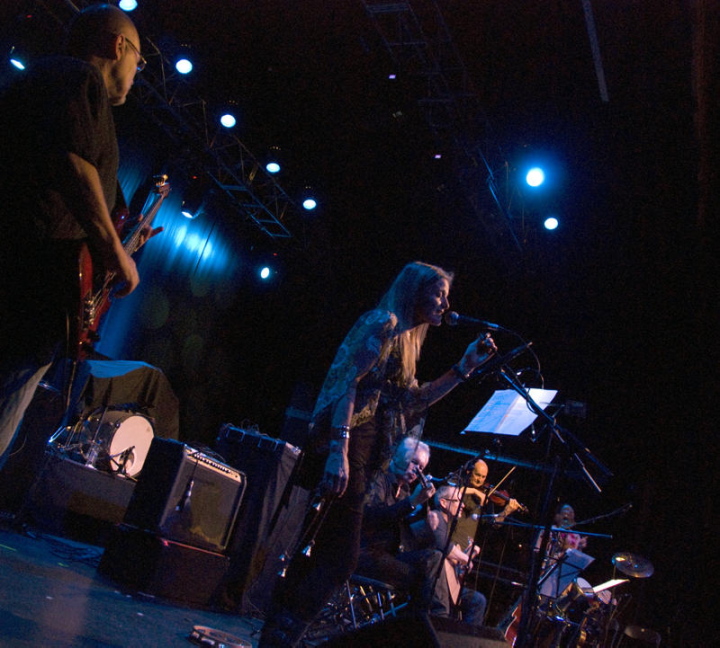
A few years ago, you did a concert and live recording with the Swedish group Piu, better known as Lisa o Piu. How did this cooperation come about and how do you estimate the music of this quite young band?
I was asked to play at Melloclub in Stockholm by the promoter Stefan Dimle and he said he had found a backing band for the gigs. When I arrived I was introduced to them. We had a rehearsal and the gigs went well. It was astonishing and rather surreal. I was hearing Comus but every time I turned round during the gig – it was all the wrong people!
With regard to music, lyrics and artwork “Out of the coma“ explicitly alludes to “First Utterance“. Looking back at “To keep from crying“ with the benefit of hindsight, is there anything on it which you find worth remembering?
Yes – one of the songs. I would like to do Down like a Movie Star if possible.
The new songs, especially “Out of the coma“ and “The Sacrifice“, have incredibly ferocious moments and your music is and was often extremely physical. To what extent is this physical aspect important for you now?
Yes – I put out a lot of energy for some one who performs sitting down. I think that the rage and energy of Comus is as important as ever and what excites an audience.
In some of the (old and new) songs, a mystified nature is presented as an archaic realm of fear and violence, but also with an aspect of powerful vitality. Would you say that it’s the real world (or a “more real” world), that you show in songs like “Diana”?
It is certainly a part of reality. Most songs are about sex and love, which is also a part of life. If you watch the news on television, I often feel that Comus have more resonance with what is going on.
In contrast to this, many people would probably describe natural or mythological settings as “otherworldly”. Your songs, however, hardly show any escapist or idyllic side, which is mostly associated with otherworldliness. Is this important to you?
I think fantasy can be used to illustrate real emotions. Otherworldly settings are used but the stories involve all the same human pain and stress. I was much influenced, when Comus first began by Lord of the Rings.
You contributed music to several films by Canadian director Lindsay Shonteff. What can you tell us about these films and the role of your music in them? Was there a certain common ground which made your music especially fitting to the atmosphere of the films?
We auditioned for Permissive and Lindsay loved our music, which is why he continued to ask us to do more film scores.He just thought us as suitable for the soundtracks.
The story telling of your songs and the visual imagery of the lyrics can easily evoke cinematic associations. Were you cineasts in the time of your first album, and would you even say that your work and its attitude fitted more to the films of this era that to its music?
As I said, the influence of Lord of the Rings and European myth, John Milton all seemed to provide dramatic visual imagery. Now that Lord of the Rings has been filmed, I think Peter Jackson did a very good job in bringing the images to life. I suppose that reading the books and some sci-fi authors just filled my head with visual imagery. I was at art college and my own illustration work, used for the sleeves, all filled my head with the visions described in words.
Are there plans to record more new material in the (near) future?
Yes – there are two new songs waiting to be rehearsed and two more on the way. We shall start rehearsing Samurai and Slave soon. Samurai is about the loss of a great warrior culture and Slave is about sex slave trafficing – a very topical subject. Both these subjects will bring Comus a little more up to date.
When did you first become aware that there were quite a number of artists that seem to have drawn inspiration from “First Utterance“?
Around 2000 David Tibet of Current 93 got in touch with me and told me they had recorded a version of Diana and Mikael Ackerfeldt of Opeth is a major fan and largely responsible for Comus reforming.
This question is slightly related to the last one. In the decades that all of you pursued different paths, were there any genres/artists that you found particularly appealing and which you felt were as vital and adventurous (to use some rather vague terms) as Comus had been when they started?
Perhaps nort as adventurous but, as a singer/songwriter I admired Joni Michell in the 70s. There were others- I remember first hearing Mechanik Destructive Commando by Magma and feeling an affinity with Comus. I really listened to a lot since then – Peter Gabriel, Talking Heads,Miles Davis and a lot of modern classical music such as John Adams, John Tavener, Gorecki and Arvo Part etc.
In recent years we noticed a number of (more or less folk related) artists, who did some singular works in the years around 1970, and then after some decades of either silence or unsteadiness started a second period of creativity. Besides Comus I think of Vashti Bunyan or Simon Finn, who all woke up out of a musical “coma” some years ago. Do you regard these comebacks as incidental phenomena, or do you see a certain connection between the last decade and the years back then?
There is a massive general come-back of bands and artists from the late sixties, both in Europe and the States. Every week I hear of another band reforming from the early seventies. It seems to be working and they obviously, like Comus, are reaching a new generation. Bands of our era are much revered. Agism has completely disappeared in rock music – something that I never thought would happen.
Some of your songs (and your band name, of course) drew inspiration from literature. Is that still something that is of relevance for you?
Less than before- it’s hard to find new material to read. Film and television can be a big stimulus because it is more random.
(M.G., U.S.)
Photos: HMV Formum: Zoe Plummer; band: Hannah Meadows
The Machete Of Justice: Andrew Gilbert über Kolonialismus, Gewalt und den Heiligen Broccoli
Ganz gleich, ob es sich um die große Geschichte eines Landes oder um die vielen kleinen Geschichten einzelner Phänomene handelt – schon ihre offizielle Niederschrift durch akademische Chronisten ist von vielfachen Ungereimtheiten und sich abwechselnden Moden geprägt. Richtig heterogen wird es, wenn man all die inoffiziellen Geschichtsschreiber mit einbezieht, die frei von akademischen Konventionen ihre meist weniger rigide Version der Geschichte ins Spiel bringen. Eine wichtige Rolle neben dem Volksmund spielt dabei die Fiktion des Künstlers, allem voran in der Literatur, aber auch in Songs und nicht zuletzt in der Bildenden Kunst. Mit dem in Schottland geborenen Maler und Zeichner Andrew Gilbert hat die Geschichte des britischen Kolonialreichs seit rund zehn Jahren eine Heimsuchung erfahren, an der Weiterlesen
The Machete of Justice: Andrew Gilbert on Colonialism, Violence and the Holy Broccoli
As you said earlier, you developed your obsession with British colonialism and militaria already as a boy. When did you start drawing and painting these things, and how early did you develop your critical and satirical approach to the subject matter?
Mililtary history is the first subject I can remember drawing. I estimate aged four. Very early I became obsessed by the Jacobite Rebellion of 1745 and then after seeing the film ‘ZULU’ with the Anglo-Zulu War of 1879. As a child I drew the combatants as fruit and vegetables – for example light skinned green grapes for the British and dark skinned purple grapes for the Zulus. As child I remember knowing that the Memorial Service on the 11th day,11th hour and 11th month was absurd. School children stood around a giant phallus dressed in military uniforms. I watched a large amount of Monty Python as a child who frequently parody the British Army. I drew kneeling on the floor in silence, as I still work today. When I was 12 years old they invaded Iraq for the first time, and I knew this was a crime and Shaka Zulu became a role model. The Nina Simone version of ‘Strange Fruit’ had a strong influence when I was very young – she still appears in my drawings today.
Is it still a bit like playing with toy soldiers and guns when you paint these historical scenes and put your alter ego character in them?
Once you become obsessed by massed ranks of soldiers you are obsessed for life. But at the same time it is impossible to retain the level of fantasy required that transforms living room carpets in to Gettysburg, for example. However, yesterday I drew some Highland soldiers from the Jacobite Rebellion, I had not drawn them since childhood and I got the same sensation I did then when I painted them now. Such a feeling is impossible to describe. When I have to go to a supermarket I often imagine I am leading infantry in to musket fire, especially while waiting at traffic lights as if waiting to give the order to advance. I like to imagine my head being blown off by grape shot. Once in the supermarket I walk up and down the aisles blessing the products as I if I was inspecting my regiments before the Great Attack. Also, my alter ego never featured in my miniature battles, in this my role was that of God, I looked down from above the imaginary clouds of artillery smoke, in my drawings I do feature, mostly as a yellow bird, but as Creator of these landscapes and controller of these events my powers are also absolute.
You once said that your works are about a certain feeling that you have when you visit European museums. How would you describe this feeling and your reaction to it?
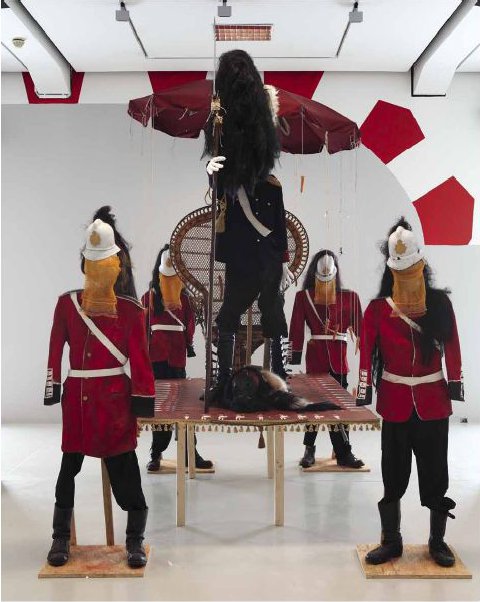
I think I was referring to the sensation I get in Military Museums but also in Ethnographic Museums. The Tribal artefacts and the Military costumes are displayed in a similar setting, so this connects to the emotive environment but also to the absolute excitement caused by seeing these objects. I constantly try to combine these two places in my installations . Again this is impossible to describe, but it is also caused by seeing certain paintings or drawings in museums of Western Art, such as the German Expressionists (Die Bruecke), I become sick and cannot stay long, I must draw. The power of these objects is so great. Picasso described such a sensation when he discovered ‘Primitive’ sculpture in Paris. But I must emphasise I like to parody this also. The German Expressionists, such as Ernst Ludwig Kirchner also had an extremely romantic view of tribal art and life, while at the same time they were rejecting the values of their contemporary society and industrialisation . I made, for example in 2008, a large installation outside on the Island of Ruegen of me and Emil Nolde painting a naked African Lady in nature. Both Nolde and i were represented as life size figures wearing British Colonial Military uniforms standing behind eisels and painting. However, I also built Soldier bodyguards in case we were attacked by savages or wild animals. The experience of the Primitive as safe and enjoyable experience, a sun umbrella protected us and we were served light refreshments while we painted. Like in the old ‘Colonial/World Exhibitions’ where villages and natives were put on display for 19th century European audiences. You must realise I have been working with this subject since art college/university, which I joined at 17. So this obsession is constant and this level of inspiration that still drives my mind forward everyday, I draw everyday, cannot be described in rational normal language.
Was there a certain experience which brought you to the opinion that a lot of mainstream views on colonialism and colonial wars are lacking in some way?
As I just described, this work is constant and absolute, I cannot pin point one specific moment or experience. But let us look at the 1964 film ‘ZULU’ as an example. This film inspired many of the leading British experts on the Anglo-Zulu War, such as Ian Knight (author of many excellent books on this subject). ‘ZULU’, directed by Cy Endfield, is a Classic British War Film, of which there are many, unlike in Germany for obvious reasons. So this film is often shown on Sunday afternoons or at Christmas when the British family gathers around the television. It tells the story of the Defence of Rorke’s Drift, where 100 British soldiers defeated an army of 4000 Zulu warriors. As in the American equivalent ‘The Alamo’ most of the film is the build up to the battle itself, waiting for the terrifying Zulu army to arrive, in reality the attack on Rorke’s Drift came directly after the battle of Isandlwana, the Zulu force was tired and ill disciplined, there were not 4 days waiting with dramatic music when the Zulu army finally appears on the crest of the hill (an excellent moment in the film).
The film does not explain why the Zulus are defending their land against British invasion. The film ends with a song about glory, bravery and respecting your enemy, not with the wounded Zulus being shot through the head or put to death with bayonets. One British soldier described the horror of seeing a dead Zulu shot through the forehead, when he turned his body over the whole of the back of his head was blown away, in the film Zulus fall down with no blood at all. The film ends with the list of men who received the Victoria Cross medal, the most awarded in a single day in the history of the British army and again excellent dramatic music.
However, through the character of Michael Caine playing Lt.Bromhead, the hierarchy of the British army, its arrogance and the triumph of social class over ability is criticised. At one point a private soldier questions why he is killing Zulus, he never saw one in his village in Wales, why should they be his enemy. The Zulu final attack, which meets rank after rank of British Martini fast loading rifle fire, again an incredible scene, shows piles and piles of Zulu corpses and wounded, twitching and jerking beneath the feet of the British lines and finally Lt Bromhead is disgusted by the violence (at the start of the film he refers to the great Military tradition of the men in his family). Furthermore, the film was banned by Apartheid South Africa, due to fears of rising Zulu nationalism. The contemporary Zulu leader Buthelezi played the historical Zulu King Cetshwayo kaMpande.
You must understand one could write 6000 pages about the significance of the film ‘ZULU’, it represents something naïve yet pure, perhaps British culture before it was destroyed by
American influence and corrupted by a deep modern cynicism that attacks everything and offers nothing. It represents ridiculous patriotism and propaganda,it represents technology against primitivism (I gave Ernst Ludwig Kirchner a copy of the DVD) it represents the troubled life of the producer and actor Stanley Baker. I leave the fim ‘ZULU’ with a quote from a history of the British army published in 2009 – “the desperate fight at Rorke’s Drift in 1879 underpinned the heroism of the airborne forces at Arnhem in 1944, and continues to do so in Afghanistan’…
May I also point out that small numbers of England football supporters travelled to the World Cup in South Africa in Replica White Helmets of the Zulu War, before their complete destruction by Germany.
What role does the work of Kipling play for you? In his most (in)famous poem the colonized are described as “half-devil and half-child” and thus it is the “white man’s burden” to “serve [their] captives’ need”. Do you think the tension between some kind of misguided idealism and chauvinism may be of relevance for your art?
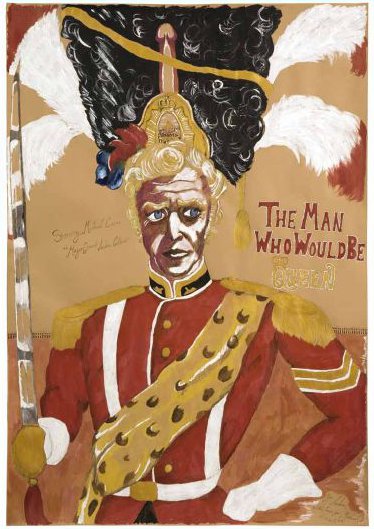
That is an excellent quote, thank you! Mr Kipling, or Edwina as we used to call him in the Camp tent, has inspired me with his poem ‘A Young British Soldier’ especially the line about better to shoot your self than be mutilated by the Afghans-which is of great significance to today. His book ‘The man who would be King’ is the inspiration for many of my drawings and for my own book ‘The man who would be Queen’ (my 19th century autobiography). Again you ask me to explain something psychological and emotional in rational words. I use the symbol of the white phallus to represent the European Colonial powers. I also use the Medieval Christian symbol of Jerusalem as a Sacred Female figure and like to link this to Ulundi, the Zulu Capital destroyed by the British in 1879. The militant imagery of the Christian missionary, the Medieval Crusade visual propaganda such as the sculptures of Vezelay (where Pope Urban II preached the first Crusade) also connect to the British Colonial military campaigns. The fact that the Europeans burned African idols, while the Protestants destroyed the Catholic idols is also greatly inspiring. There is also a British propaganda against Germany from the First Great War, that describes German War Memorials which were covered in Nails, like African Fetish, and therefore the imagined primitive dark rituals of the German people, as negative propaganda. The worship of the object in contemporary European society, the Traffic Light as an idol covered in Carrots, relates also to the idea of the arrogance of European society in its view as being enlightened or civilised, as you describe.
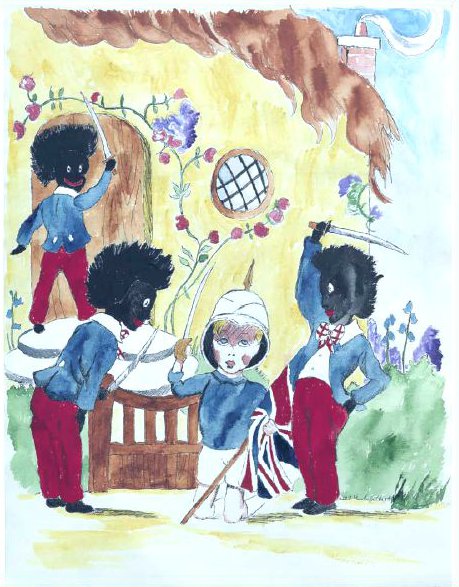
In some of your works, you decidedly mix accessoires of the colonizers and the colonized with each other and thus create interesting hybrid figures (a Zulu warrior with the Union Jack on his shield or mixed media soldiers with a native look, for instance). Do you think that this sort of „positive“ intercultural influence between groups is something that falls short when we regard these historical events solely as encounters of contrasting cultures?
I like to draw Zulu female warriors wearing the British Phallic symbol, the White Helmet. I also like to design my own uniforms for my African Elite Bodyguard. I am inspired by photos of African leaders who adopt European 19th century military uniforms and this language of power and propaganda and combine it with indigenous power symbols. Idi Amin’s regiments in British/Scottish uniforms are fascinating. Furthermore, I see a strong similarity between the uniforms of the 19th Century European Tribes, with their feathers, leopard and bear skins, the way they are presented in museums, in glass cases, in darkly lit rooms, to African and Oceanic Tribal Art and to the Zulu military uniform – with their feathers and animal skins. I must point out that the Shaka Zulu is often compared to Napoleon as a great reformer of the military and a great strategic leader. His regiments could be distinguished by different feathers and coloured cow skin shields. He introduced military service and a system of barracks, he shortened the spear for stabbing (like the Romans), he rejected the ceremonial battle (throwing spears and insults) in favour of total annihilation of the enemy , he removed the sandles so his troops could run faster. He developed the formation ‘The Horns of the Buffalo’ (described by the Boer character in the film ‘ZULU’ – using a sword he carves a diagram of this into the sand and used at the Battle of Isandlwana and complete destruction of the British Regiments). Shaka Zulu did to South Africa what the British were doing to the world, he conquered and subjugated all those around. Like many European leaders his absolute power lead to his insanity, and he was assassinated by his own people. I like to compare him to MacBeth, and it is not a coincidence that Shakespeare and Shaka Spear are the same. The role of the Witchdoctors and their political influence on the Zulu court is well documented, like the Witches in MacBeth. The life of Shaka Zulu mirrors the Christian Mythology as well as the European Mythology such as Excalibur and the Spear of Shaka Zulu.
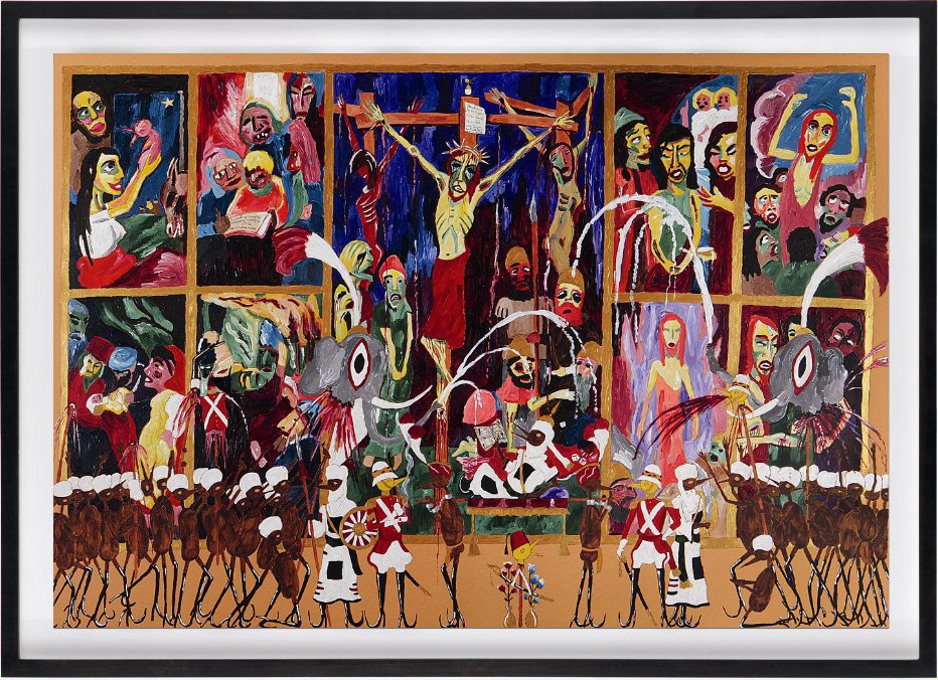
A final example of this cross over in my work would be the solo exhibition ‘Trophies of the Savages’ (Gallery 207, Prague in 2012). The Title of the exhibition comes from a painting by Emil Nolde. Nolde travelled with the German Colonial Expidition in 1913/14 to the South Sea Islands. The painting ‘Trophies of the Savages’ depicts severed heads in a jungle, referring to the head hunting practice of the natives. I used this image and title however to refer to the German occupation of Namibia and the severed heads taken as part of scientific research. So the term savage is then imposed on the European powers. Furthermore the main image of the exhibition was based on a Crucifxion painting my Nolde, the title ‘Trophies of the Savages’ therefore also refers to the European Idols of Christian worship, and as in my drawings the primitives are the Royal Family with their deranged rituals rather than exotic natives.
In academic cultural studies, a critical approach to colonialism and Britishness seems quite trendy – one of many „post“-whatever phenomena, whose intellectual depth is sometimes doubtful… Are you interested in such things and is there a book that you recommend?
I am not interested in such things, but I recommend the short documentary film ‘The Mad Masters’ / ‘Les maitres fous’, 1955, by Jean Rouch. I saw this film recently and it confirms a number of my visions.
Where do you draw most of your inspirations from when it comes to particular details? Are there certain documents or artefacts that strongly affect some of your works?
I constantly search for historical material and visit museums. For British Empire military history I recommend the books by Ian Knight and Saul David. Also the Osprey series (available in Berlin at Berliner Zinnfiguren shop in Charlotenburg). The new Book ‘Human Zoos – The invention of the Savage’ (published 2012 by Musee du Quai Branly, Paris) contains excellent historical photos and illustrations. I was given the book ‘Kolonialpiraten’ Franz Rose (1941 Berlin) by the Berlin-based artist from Stralsund Stefan Pfeiffer, which contains superb anti Empire illustrations, including a reproduction of the painting of the execution of Indian Mutineers, tied to the fronts of cannons by the British. The Ethnographic Museum in Berlin Dahlem and the Tervuren Africa Museum Brussels must be visited. For devotees of Primitvism Heidelberg is an epicentre of Ancient Energy.. The Ethnographic Museum in Heidelberg is incredible and one can then walk to the Prinzhorn Collection Musuem and see the carved wooden sculptues of Karl Brendel including ‘Militarism’ which are permanently displayed next to the Kota reliquary figure that Hans Prinzhorn used in his comparisons to illustrate his theory of Primitivism. Also nearby is the Museum HausCajeth for Primitive Painting.
Returning to film – I watch often ‘The Charge of the Light Brigade’ (1968) which contains animation sequences depicting the British Empire and Army. Also the film we discussed already ‘Soldier Blue’ (1970) in which the American Cavalry commander wears a white British Colonial Helmet while massacring a village.
The Biography of Shaka Zulu must be read. After the death of his mother, Shaka made sex illegal for one year as a form of national mourning. To test the allegiance of his regiments he made them line up and had young naked Zulu women dance in front them, any man whose spear rose toward the sun (became sexually aroused) had his head smashed in with a club.
Your book „Andrew Emperor of Africa“ is a visual narrative with an alter ego of yours as the protagonist. How would you introduce and describe this other Andrew Gilbert character?
I try to keep this short. Firstly he is an Officer, he is left alone in an outpost in Southern Africa, at this point through isolation and malaria he begins to hallucinate an entire Empire which he rules. He begins to build life size soldiers, his regiments and companions from wood and painted uniforms and cabbages (for their heads and breasts) as well as his servants. He makes drawings that he believes are photos of all his past glories. By coincidence there was a Major General Andrew Gilbert of the Black Watch Highland regiment. He was wounded in the Sudan and killed in South Africa fighting the Boers in 1899.
The narrative is not constant, I move around different times and campaigns. Therefore I can meet different historical figures – such as Ernst Ludwig Kirchner, The Mahdi of the Sudan or General Gordon of Khartoum, who also drew flowers and whose head was cut off when Khartoum was captured by the Mahdi’s army. I also met the Holy Brocoli who is my spiritual protector, but also prone to extreme violence.
I have many wives, all of whom are executed for specific crimes such as chopping the sacred onions or burning the toast, or because they like the work of another artist more than mine.
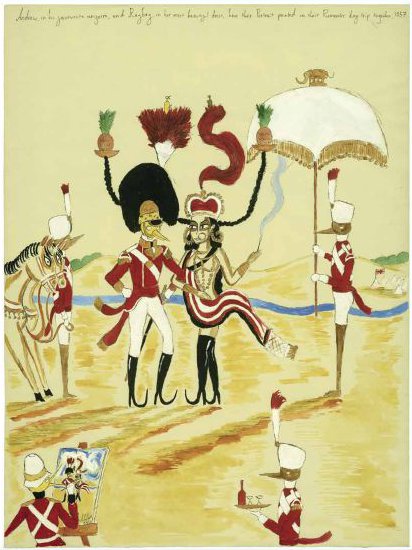
There is this case – the Lady Rajbaj picture – where Andrew Gilbert appears as a military officer and as a painter in one image. To avoid a term like ”meta artistic“, do such gimmicks just exist for the fun of confusion, or do they also show a bit more about your role as an experiencing and a (re)producing person?
Certainly not for confusion, in this drawing I represent myself in two of my roles, as a General, and a military artist whose job it Is to record the important events – as God’s Witness, his eyes on earth. It is common in art history to see artists paint themselves hidden in important events. In the unpublished drawing of the assassination of Kennedy, I appear in the car, with my slaves chained to the back of the car on my military procession and I appear at the window, shooting my own head off.
By the way Lady RajBaj was inspired by a drawing of the historical figure Lakshmi Bai, the Rani of Jhansi, a leader against the British in the Indian Mutiny. I found a drawing of her in the Saul David book ‘The India Mutiny’ and became obsessed by her beauty.
Many of your pictures are very brutal, and often the more cartoonish they are, the more pornographic they become. Apart from the fact that they are also very amusing, who do you think deserves mostly to be shocked by this historiography drenched with sex and violence?
The violence I draw because I need to. Because it helps me stay calm and because of contemporary events which make me angry. There is an enemy that thinks it is normal to kill for wealth and power. This enemy should taste the soup of justice, 10 000 prawns, 20 000 sacred onions and many monks teeth and the skulls of 10 000 Owls go into this soup.
Thinking of the topics of your work I was wondering to what extent Conrad’s “Heart of Darkness” and/or Coppola’s “Apocalypse Now” may have influenced/inspired you.
I was told to read ‘Heart of Darkness’ by a professor at art school, she saw a link between my primitive idols of European culture and violent rituals and this book. The book is very good. I often draw Helicopters in the 19th century blowing up civilians inspired by the scene in this film.
I constantly imagine a clearing in a forest, where my idols stand, lost rituals of violence and vegetable blessing took place there, I stumble across these idols by chance when I leave the outpost, the blood is fresh, the ritual could have been 1000 years ago, or that morning. This idea excites me and I am the only one except the High Priest who can read the language written in violent mark making and chopped Mushrooms. The heads on spikes everywhere in “Apocalypse Now” are also inspiring.
To leave contemporary reality as Kurt does and the character in Heart of Darkness, is a great inspiration, the colonial landscape is never ending, the campaigns never end, the jungle never ends, the imagination never ends.
There is a photo of you, in which you stand in a solemn military pose in front of insignia like a flag and uniform parts. For me, this has something parodistic as well as serious at the first glance. When you deal with the average British soldier from colonial history, which aspects are interesting for you in a positive and empathic way?
There is a better photo in which I wear a red uniform, with potato sack as mask or veil, and a necklace of carrots. The veil refers to Tribal Ritual costume and the Veil in Perisan Miniature painting. As you say a parody of the patriotic pose, but also something else, connecting to visual reprentations of power, it was the image used for the 2009 exhibition Invitation Card ‘The Zulu Queen stood as Jerusalem fell’ at Gallery Ten Haaf Projects, in Amsterdam.
There is a small monument to the British Commandoes in the Highlands of Scotland. They trained there in the Second World War. Today are tributes to the Commandoes killed now in Afghanistan. By chance I visited this site while preparing the exhibition ‘Andrew’s death in Afghanistan,1842’(Power Gallery, Hamburg 2009). It is not the fault of the individual soldiers sent to these countries to die, but it is to be expected that people will defend their land against foreign occupation. My Victorian soldiers drink Coffee in their tents, attend Lonnie Donegan concerts to increase their Moral on their over seas Campaigns, are killed and carry out atrocities upon the civilian populations they are meant to be liberating in the name of Civilisation.
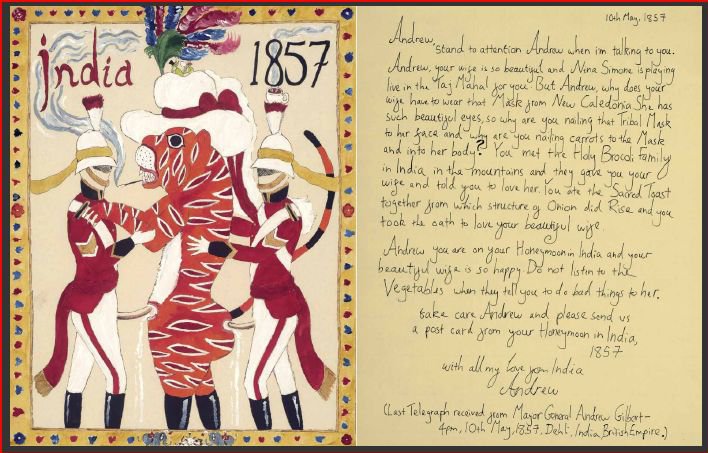
In your book you sometimes show the brutality of both antagonizing parties in a war with a strange mixture of empathy and sarcasm. In the India chapter for instance, a work like „Smash British Rule in India“ has its equivalent in „Smash Gandhi“. Do you think that your childlike spitefulness is the price that both parties have to pay for having their say?
I am obsessed by the link between propaganda and advertising, and the fact that propaganda of all sides looks the same and functions the same. Also because I draw constantly my mind moves fast and changes depending on how much coffee is drunk or what time of day it is. In the examples you give you will notice the pro British propaganda is much more primitive in its execution, while the pro India image is very fine in its rendering. The famous quote of Ghandi is, when asked “What do you think of European Civilisation” he replied “That would be a good idea”. I draw massacres committed by all sides, in fact the wife I was on my honeymoon with in India, a European woman, was butchered at the hands of the Indian Mutineers at the Cawnpore Massacre (1857), luckily I was watching a game of cricket at the time and I survived – though my team lost.
People tend to be lazy and many seem to prefer happy endings and easy and clear solutions but there is often a certain amount of ambivalence in your work. Have you ever encountered feedback from the audience that was hostile because of this?
No, occasionally I am warned about romanticising a deranged and brutal dictator like Shaka Zulu.
Do you generally care how (and how well) your work is understood by your audience and the media? What would probably be the most inappropriate feedback you could imagine?
Yes this understanding is very important. And generally it is understood correctly and is greatly appreciated by those who should appreciate it. If the Queen would invite me to be her Royal Artist this might be a problem, or if Bono from U2 became a fan. Or if I was invited to make a recruitment poster for the British army, this would also be a problem.
Recently there were again discussions about what country actually owns the Falkland Islands. Morrissey told an audience in Argentina that the islands “belong to you”. How do you feel about such remnants of a colonial past?
Firstly the Morrissey fans at art college were incredibly arrogant and elitist, but that is not his fault. The British in the Falklands is as ridiculous as the Germans in Namibia was, or as ridiculous as people who worship Parsnips killing people who worship Cauliflowers.
Historical (Meta-)Fiction has been quite popular in the UK since the 80s, think Fowles, Byatt, Ackroyd and other writers. I think that Barry Unsworth’ slave trade novel “Sacred Hunger“ offers an interesting view on certain aspects of colonial history. I wonder if you know it or its sequel “The Quality of Mercy”?
Unfortunately I don’t know these books. The ‘Sacred Hunger’ sounds interesting and I will try to find this. I read almost no fiction anymore, but I need to find a copy of ‘Ape and Essence’ by Aldous Huxley which I read many years ago and need to re read.
Last year you did this Berlin exhibition together with David Tibet. How did it come about and how do you think does the work of both of you fit and correspond to each other? As you told me, you already knew his music group and some of the people contributing to it…
The English artist and friend Lucy Stein gave David Tibet my book ‘Andrew , Emperor of Africa’. He contacted me at the same time I was invited to exhibit at a project room in Berlin called the nationalmusuem. I asked David if he would exhibit with me and he agreed.
I think this was an excellent exhibition as many artists in Berlin agreed. David’s Hallucinatory images combined very well with the religous visions I was working on at the time of the Mahdi of the Sudan. David is a very obsessive collector and researcher as I am. You summarised the link between our work very well already in African Paper. I would add to this that I have always been inspired by his lyrics and the repetitive violent screaming he employs, this reminds me of the hammering of nails in to Fetish Objects which explains my fascination also with John Cale (for example the song ‘Fear is a Man’s Best Friend’). His paintings are excellent regardless of whether you know his music, this was also something a lot of Berlin artists agreed with. I need art that releases the certain feeling that we have already discussed and cannot be described, I get this from both his music and his paintings.
I have been listening to Current 93 since I was 16 and still at school and know Michael Cashmore through the artist Steffi Thiel for many years.
You once said in an interview that you “drew, but […] did not invent the image of a baby ripped from the womb”, illustrating that people tend to forget that atrocious crimes are committed in the real world and not necessarily on canvas. When people in Germany talk about horrible crimes etc. they often say that it is “unimaginable” (unvorstellbar). I always think that these crimes happened because it was in fact possible to imagine them. Is your art there to show what others consider to be unimaginable?
If I did not draw then I would not do anything useful, my work keeps me alive. The crimes of the past are repeated over and over, the technology for killing civilians has advanced but the crimes and motivations for these crimes are the same. I draw for myself, firstly, to try to understand these things, also because I love to draw uniforms. Because I love to research history and I love to leave contemporary reality. But at the same time as I hope it is clear in this interview the work relates to contemporary problems. I see no difference between a television and a microwave filled with old potatoes. There is a grey veil of mediocrity being drawn over everything, through advertising, through media, it is vital to expose the beast behind this veil, to show the absolute violence hidden behind the celebrity dance programmes. The Primitivist artist Dubuffet said it is better to eat burnt Broccoli and to experience something real rather than bland, while Thomas a Kempis the Middle -ages Mystic preferred to listen to the sound of frogs croak than to the banal pleasant tunes of the church organ. The Holy Brocoli comes in peace, but when his children are time and time again murdered he will take up the Machete of Justice and drive it deep it in to the head of the beast.
(M.G., T.M., U.S.)
New Works:
“Andrew And Nolde Meet The Mahdi, 1885″
Year: 2011
Format: 70x100cm
Watercolour, acrylic and pen on paper
Private collection Duesseldorf
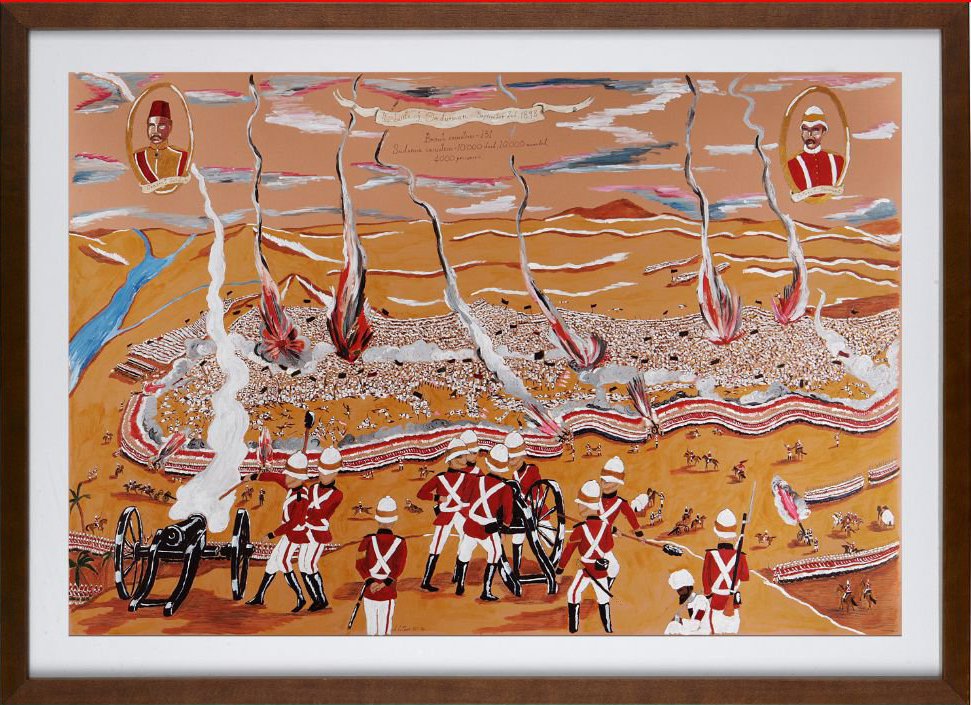
“The Battle Of Omdurman, 1898″
Year: 2012
Format: 70x100cm
Watercolour, acrylic and pen on paper
Courtesy Power Galerie (Hamburg)
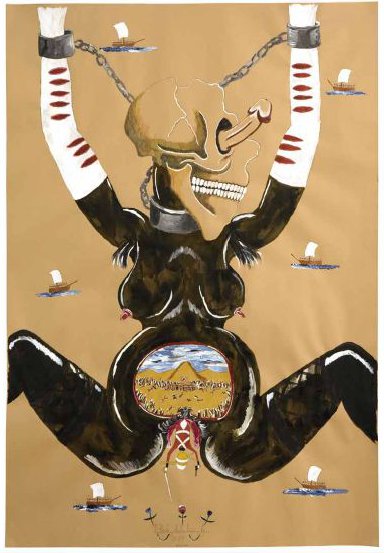
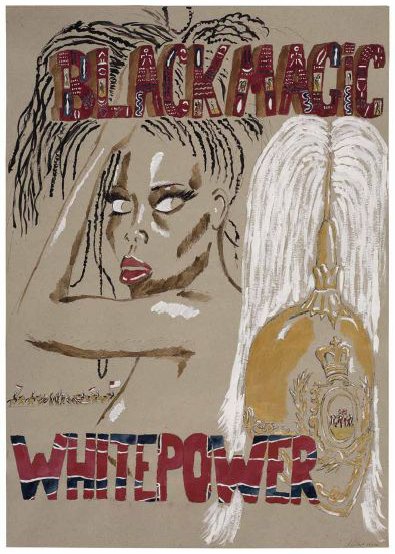
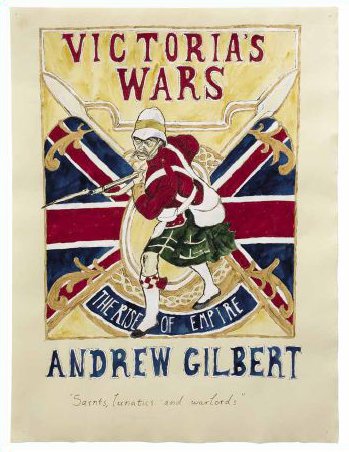
Older titles are: The Man Who Would Be Queen, The Birth Of Andrew Emperor Of Africa, Black Magic White Power, Africa 1879, Victoria’s Wars, Andrew And Lady Rajbaj, India 1857, The Defense Of Jerusalem, Monument To Andrew The Zulu Queen (Andrew Gilbert: Andrew, Emperor of Africa. Bielefeld: Christof Kerber 2011)
Die Leinwand als Bühne. Ein Gespräch mit Alex Tennigkeit über Fatalismus, Spiel und Inszenierung
Die Künstlerin Alex Tennigkeit wird gerne als Meisterin der Kombinatorik bezeichnet. Bekannte Themen der abendländischen Malerei, von klassischer Allegorik bis zum barocken Vanitas-Konzept, treffen in kollagenartiger Bildkomposition auf Motive der Populär- und Subkultur. Melancholische Szenarien von Tod und Vergänglichkeit kollidieren mit exzessiver Gewalt und fordernder Erotik, der (meist weibliche) Körper offenbart seine Schönheit ebenso sehr wie seinen morbiden Subtext. In den meisten Arbeiten verwendet sie ihr eigenes Abbild als Projektionsfläche für ästhetische Aussagen, die überindividuell, überzeitlich und offen für Deutungen unterschiedlichster Art sind. Weiterlesen
It’s Nice To Make Things. Ein Gespräch mit Liz Green
Wäre Liz Green ein halbes Jahrzehnt früher auf der medialen Bildfläche erschienen, dann wäre ihr Name sicher noch mehr durch aller Munde gegangen als es nun nach der Veröffentlichung ihres ersten Albums “O, Devotion!” der Fall ist. Damals nämlich hatten akustische Klänge folkloristischer Grundierung gerade Hochkonjunktur – vorzugsweise wenn sie über eine gewisse Schrägheit und ihre Erzeuger über einen deutlich erkennbaren Außenseitergestus verfügten. Von diesen Modephänomenen hätte sie nicht nur profitiert, sie hätte die ganze Bewegung auch bereichert. Zum einen, weil sie Engländerin ist, was in dem doch sehr amerikanisch geprägten Folk 2.0 selten war. Zum anderen aber auch, Weiterlesen
It’s Nice To Make Things. An Interview With Liz Green
Do you think the place where you grew up is any way responsible for the kind of music you play now?
Yes. That’s a good question. I grew up on the Wirral, which is a really small place in Britain surrounded on three sides by water.
I know the place because I spent some time there.
Oh, really?
In West Kirby.
Oh, why did you go there?
Actually I worked for about a year as an assistant teacher for German in West Kirby.
West Kirby Grammar School?
West Kirby Grammar School for Girls and Calday Grange on top of the hill.
Oh, that’s the school I went to. West Kirby…
When was that?
1994 to 2000.
That’s funny.
Were you there?
Well, I started working there in the autumn of 1994 and stayed until summer 1995.
Oh wow. I was in first year of secondary school. Oh how cute (laughs). West Kirby is a funny place. And it’s quite special as well. The scenery is as a teenager pretty boring, you know, pretty dull.
I can imagine.
But Liverpool is really near. So you know I had these two bits of life. Where I’d be stuck at home on the Wirral. There’s not much. So I read a lot and I created a lot. I sat in my room a lot…thinking (laughs). And then I had this other bit of life where I started going into Liverpool, going out to rock clubs when I was about 14, 15 and having a kind of loud crazy life. Yeah, it definitely influenced the music.
When people talk about your music – and I remember you posting something from the Guardian on your website – they all seem to stress this vintage element. Are you happy with the tag?
Well, I mean, it does sound like that. You know the orchestration and my voice. And also they find it hard to pinpoint that. And to me it doesn’t sound like that and I’m not trying to sound like that. It’s just what comes out. I wasn’t in bands when I was growing up. I didn’t sing when I was growing up and I didn’t play the guitar when I was growing up. You know I digested a lot of music and a lot of books and a lot of information in other ways and one day it just came out and that’s what came out. I think it’s a kind of melting pot of all the things that have influenced me.
On our website there’s a review of your album and the authors that came to the reviewer’s mind when listening to your music were those that are sometimes associated with so-called Southern Gothic, Flannery O’ Connor and William Faulkner. Are they authors who interest you?
Well, I mean I like stories and I’m interested in Southern Gothic actually and there’s a story by Richard Brautigan. What’s it called? The gothic one. I like his writing. You know, I like the kind of ghostliness. I’m kind of fascinated by places that aren’t where you are. Everyone is, aren’t they? Because they’ve got this element of exoticism and you know America just seems to be this vast desert full of freak shows and Coney Island and Tom Waits is singing around the corner and Blues people walking down roads to me. So America is such a new country but all the myths that it’s created around it…That’s pretty impressive for something that’s just a couple of hundred years old.
Are there any English writers that you really like?
I like books. I read a lot. I can’t remember. Who is English?
Never mind.
I like all books. I can’t remember. I’ve read so much. But I do like foreign fiction. I like Hermann Hesse a lot, Dostojevski, they’re quite philosophical but Dostojevski in particular is quite funny. Oh, George Orwell. He’s amazing.
Today I spoke with a group of students about “1984″.
Wow. “1984″ is incredible. One of my favourite George Orwell ones is “Coming up for air”, which is about a middle-aged man living in a village with his wife and his kids and kind of lamenting his lost youth.
When I was about 16 I read a couple of Orwell books: “1984“, “Road to Wigan Pier“, “Down and out in Paris and London”. I remember that the end of 1984, when he finally loves Big Brother, I was petrified. There was no way out of it.
Yeah, there are similar themes in “Coming up for air”. I went to university to do an English degree. I love books so that was what I thought I should do but it turned out that I just liked reading books and researching but I wasn’t very good at writing the essays. I didn’t want to give it back in a kind of prescribed way. It came out in a different way. But while I was there I was really interested in the notion of the outsider in society. Everyone sometimes feels that there’s nobody else quite like them or that they’re invisible. So “Notes from the Underground” by Dostojevski and Ralph Ellison’s “Invisible Man“. This man sits in the basement beneath the towerblock and he siphons off the electricity. He has thousands of lightbulbs covering his room and I liked this idea of this quiet defiance.
You’ve talked about the outsider and you being interested in that. You released two singles. Was that a kind of statement against downloading?
Actually we wanted to release a gramophone record but couldn’t find anybody to do it cheap enough. (laughs). That was the first thing we released. He is now my manager but back then we were just friends and we thought just for a laugh to put something out. A gramaphone record would have been good. It’s almost as if we didn’t want anyone to listen to it. Actually I think that 7′-singles are actually quite a nice format now. Music has become almost cheapened, well not cheapened but it has become so easily accessible now. CDs are kind of obsolete. If you give someone a 7′ or a record it has actually some kind of tactile value. You know it’s coming back. People are buying the vinyl record rather than the CDs. It’s nice to make things.
It’s nice to have them. If everything is accessible immediately it kind of loses its worth.
That’s the same with lot of society. We don’t need to save. We’ve got a credit card and nobody saves their money. The idea of doing limited runs of things that are special is great.
I mean somebody like Stephen [Burch, The Great Park, Woodland Recordings] does a great job.
Well, I used to be on a label called Humble Soul. We were doing exactly the same thing, my friend runs a label called Red Deer Club, they’re doing exactly the same thing. Everything we make is small runs of handmade loveliness. Yeah, it’s really important keeping it personal and special and collectable. It’s nice to collect these things. They’re of value not just because of the music. You know the person who made the music has printed the CD or made the artwork. It’s something extra.
If you’ve got a tetrabyte of music on your hard disc it totally decontextualizes the music.
(laughs) I still have all my CDs. I can’t get rid of them. And then I was making my CD even though all the things I had made up to then had been handmade, like handstitched. What scared me moving onto a bigger label was the fact that I would lose that – you know it’s impossible to maintain that much control over stuff. But I’m still trying to make little things to sell and what I wanted to do when we did the CD I made sure that it was on the card that I liked and I did the drawings for it even though they wanted to put my face on the front of it. I was like: No, that’s not gonna happen. I’ll give you some artwork and they were like: ok. They liked it. When I was doing the lyric booklet I made sure it had the things I liked when I buy a CD. I want the lyrics, I want a thank you-list. I like reading who they thank. I tried to make it with as much love as possible without actually handmaking it.
When you recorded the songs for the CD I think you used some earlier material but you reworked it.
Yeah.
How did you decide to do it?
Well, it was a natural progression and the idea of the album as “O Devotion“ had been around for about three years and I tried to record it in many different forms and I almost had the tracklisting and the tracklisting changed very slightly in these three years. I knew that it had to have this almost chronological progression of the first songs that I made. That’s what I wanted to make. And even though by the time I recorded it I almost had enough songs to make another album, I still wanted to do the album first. When I played the songs in their original form, I could still imagine other things even though it was just me and my guitar. I had still these things going on in my head. I could see these images, hear sounds. I didn’t have a band. I didn’t know anybody who could play. I had this shadow puppet theatre and I used to cut out a tiny saxophonist and a little doublebass-shadow and a little piano shadow. So when I played songs I would introduce: here’s my tiny saxophonist and I would like you to imagine them playing with me. It’s the imagination and it helps. It all happened naturally. I made friends with these guys [who are in the band now] and we started playing music. It was natural that the people on the record are people I’m friends with and it didn’t feel forced. I could have made an acoustic album. I thought I might only get to make one album and I wanted something with longevity in it. Selfish as that is. Something to be remembered after I’m gone. But if that was the only thing then I wanted it to make it as well as possible. I think I did ok. (laughs)
What then would you say have people like you and Stephen in common?
I think we’d still be playing these songs even if nobody was listening. We’d still be doing exactly the same thing. We really love what we do. We have to do it. That’s what we have in common. Soul. A little bit of soul.
How did you both meet?
Me and Stephen met while playing gigs. We went to the same festival in Scotland and I saw him play and it blew me away. And he saw me play and the thing and we found each other when myspace was still going and I sent him a message after and he sent me the same message back. I organised gigs for him in Manchester and he organised gigs for me in Brighton. We expanded the circle. There’s a really good connection between Manchester and Brighton now. When he moved to Berlin he gave my CD to a friend who was booking shows in Germany and he started booking shows for me. And now I’m in Germany (laughs). So it’s all Stephen’s fault.
What is the relationship between the British and American influences in your work?
I’ve never been good at analysing. People go: what about this? And I say: I just kind of did it. I’ve never really thought about it. The relationship? It’s not only American and British. I just happen to like American music. I don’t really like English folk music. I don’t know why. I like sea shanties. I don’t know what the relationship is. (laughs) That’s a really difficult question. That’s an essay question.
What was your favourite record store in Liverpool?
Probe and Harry Records. The guys in Probe used to…I was into American garage music and these guys used to pick out CDs for me. They said bring it back next week and exchange it if you don’t like it.
Is Probe still there?
Probe is. They’ve got my album (laughs). It’s really good that it’s still going. There are now very few independent ones.
Maybe one last question. I had talked with a friend about you some time ago and some time later I went to the station and bought a music magazine and there was this compilation album with Leonard Cohen covers and suddenly your name popped up again. What made you decide to use the piano as the main instrument for your version of “Sisters of Mercy“?
One thing is I’m a much better pianist than a guitarist. Well, maybe not better but I can work stuff out because I can see the notes. I don’t know what I’m doing on a guitar. I don’t know what the notes are called. But at least on the piano I can go C, D, E, F. Plus it’s very hard to cover a Leonard Cohen song. It’s more of a homage. You can’t really cover him. It’s impossible. And he does his on the guitar. So I just thought I do it on the piano. It was really nice because I chose that song because I like that song and it’s got quite easy chords. I had to learn it in about two days. When I phoned my mum, she’s a massive Leonard Cohen fan, and when I said that I was doing “Sisters of Mercy“ she was like “My favourite song“. And when I went home she showed me a book with his poetry that she had for ages, and in the back it there was writing when she was about twenty, she’d handwritten out all the lyrics to “Sisters of Mercy“ in the back of the book. That was really nice.
(M.G., U.S.)
Sabotage Dressed Up As Song: Ein Interview mit Guy Dale von Mute Swimmer
Es gibt eine Menge Musik und Kunst, die man nur schwer greifen kann, aber das besondere an den Arbeiten Guy Dales ist, dass man sie gar nicht unbedingt greifen muss. Die Musik, die der Engländer mit seinem Akustikprojekt Mute Swimmer spielt, entfaltet eine sehr unmittelbare Wirkung, scheint fast physisch im Raum greifbar zu sein und ist in ihrem wesentlichen Kern doch schwer zu begreifen. Auch wenn die berührende Melodik, der intime Gesang und der fast poppige Appeal seiner Songs auf den ersten Eindruck mit der abstrakten Reflexivität seiner Texte im Kontrast steht, hat man stets das Gefühl, dass Musik und Worte Weiterlesen
Sabotage Dressed Up As Song: An Interview with Guy Dale from Mute Swimmer
U: As far as we know you originally come from Northern England. In which city or region did you grow up?
I come from a town just outside the city of Stoke on Trent between Manchester and Birmingham. It’s actually more like national purgatory, neither north or south in a country obsessed with the divide. I moved when I was 19 but people still pick up on my accent.
U: Northern English cities like Manchester, Sheffield or Newcastle have always played an important role in the history of popular music – many Northern Soul, Post Punk or Experimental acts come from there. How much did this creative flair influence you at an early age, and what sort of music did you listen to?
I grew up in a tiny market town – our record shop was the local Woolworths store. They’d closed the railway line years before and the last bus from Stoke was around 7pm so it wasn’t exactly the Hacienda in my town.
As a boy I was terrified of Leonard Cohen’s Live Songs (1973) on account of the cover. It was in my folks record collection and I wondered why they possessed this LP by a convict – I thought it was recorded in a prison shower cubicle something – tiled walls, shaved head, staring. It took me years to actually play it. I was mesmerized.
I remember renting out cassettes from the local library. Faust IV, SWANS Greed/Holy Money, Fleetwood Mac’s Tusk, Tom Waits’ Bone Machine, Talking Heads Fear of Music were all well overdue! I liked a lot of stuff on 4AD as well, especially The Pixies. I came to The Smiths late. Obviously you’re aware of those scenes as a youngster but I never really identified with music in that way. I wasn’t what you’d call a cool teenager.
U: Have you been in music groups before Mute Swimmer, and how did it come to forming this project?
I started experimenting with four track tape stuff when I was studying art at college. I used to hit the guitar more than play it back then. This developed into the Dala project that is now a sometime three piece with my friends Brunstein and Dave Parker. Around 2005 I self released “Treehouse” (under the name G. Dale). Some local musicians in Brighton saw some shows, we started playing together. The band was called Funés (taken from the Jorge Luis Borges short story about a boy who cannot forget anything he has ever seen). We split up just as we were getting good. I’d used the name Mute Swimmer before I went to South America but I think I came back with a better sense of what Mute Swimmer was, or what I wanted it to be.
U: How long have you been to South America and have you also been involved into art and music at that time?
I was in South America for eight or nine months. It was something I’d wanted to do for a long time though I wasn’t sure why. I bought a cheap nylon guitar and travelled with that but I didn’t go with that purpose. I made very little there, there was too much to take in. I learnt some Spanish in Buenos Aires and worked my way up to Colombia. It was good.
U: You are often introduced as a folk singer, which seems fitting for some songs, but it’s probably a bit shallow for describing the style as a whole. How do you think about such categories in general, and how would you describe the music to someone, who has not heard it before?
Yeah I have a hard time describing what I do to people. I once drunkenly told someone it was ‘sabotage dressed up as song’. The folk tag is a bit lazy but artists always hate them and I’m no exception. I mean a category is useful only when you need to define it outside it’s own terms – so you see your work go from the specific to generic, creation to consumption in an instant. At the same time you realise when you’re promoting something that people need an easy point of reference/access – so if they come at it through ‚art folk’ or whatever that’s okay too, you know, ultimately you want people to listen to the music - after that the tag becomes virtually obsolete again and they make up their own mind what it is.
U: Your poetical lyrics are as important as the music, there are moments, when they even might have priority. Do you always start with words, when you write a song?
If you’re using words with music there has to be a balance but I think a lot of songwriters take that too literally. Balance can be achieved by contrast, the suppression or highlighting of one or the other at different points within a song (or album). I’d look to late Scott Walker or Talk Talk as exhibiting a mastery of that kind of balance.
Sometimes the melodies are more implied than given – a bit like the violence in a Hitchcock film. Sometimes I omit both you know, I think silence is a pretty underrated part of the process. The music comes first usually and the words follow, s l o w l y. Occasionally a song arrives virtually whole in my head and I have to run home and find an instrument to translate it to. That’s a rare grace though.
U: I wonder how ambivalent you are towards language in general, how much you regard it as something that offers resistance and arouses some sort of opposition to let a creative process begin. I think I snapped a bit of this feeling in the songs of your latest 7”…
That’s an interesting question but I think the work speaks for itself here. You could say I write with an equal measure of respect for and suspicion of language yeah. Of course when you’re singing you can also modulate the inherent meaning of the words with tone and melody. “I Went to Write” off the “Orientation” EP would be an example of playing with that. The songs on the 7“ are idiomatic of that approach too. I’ve got pretty economical with lyric writing. It’s deeply serious and utterly absurd and at the same time. For me that’s an interesting place to write from.
U: One of my favourite pieces by you is „Different Name“, which reflects on the idea of changing your identity. In that song you quote lines from an old jazz classic about the joys of a symbiotic relationship. Would you say that this old song is not such a happy one, though it appears so at a first glance?
People seem to have a developed a special attachment to that song and that’s lovely. Suffice to say you can read Different Name in a lot of ways and perhaps therein lies some of it’s appeal. As for the Cole Porter quote, cool you noticed it. I love Frank’s version especially.
U: You are also a visual artist. As Mute Swimmer seems to have a considerable multi media affinity, has there ever been a time, when you thought you had to make a decision which art form to pursue?
Increasingly I don’t separate what I do with sound and songs with what I make and exhibit. Before that yes – there was a conflict of sorts – but the closer the songs approached the concerns of my art practice, the more interesting and convincing they seemed to become and the less like other songs they began to sound.
K: Now we have reached an interesting point. Guy, you studied art in London. I was wondering if you could tell us a bit more about your art practice. What drew you to the path of art?
I actually studied art in Stoke and Leicester but I exhibited in London quite a lot. I guess art, in the first instance, allowed me to address some conflicts during adolescence. There’s a point at which that self absorption / art as therapy thing turns into something else or gets absorbed in a different way but art in my teens was massively important. It sounds melodramatic to say it saved me in some way but I think it did. Sometimes I draw on that heightened state of awareness and anxiety you feel in your teens because it’s so pure. “Song Against Itself” is part adolescent meltdown and part meta-textual joke I guess.
K: Are you still working in the field of art? For instance, are you going to have an exhibition in the foreseeable future?
I exhibited in Madrid last year. The piece had to be posted so I made a photographic replica of an envelope, stamped and addressed to the curator. This fake letter actually arrived and that was ‘the work’. So yes I’m still active.
K: What is your latest project or on what are you working at the moment?
I have a bunch of new songs ready to go. In April I’m going to Denmark to record them in a log cabin just outside Copenhagen. I don’t want to jinx it too much but I’m really excited. I think the songs are among the best I’ve written and I’m looking forward to augmenting them in a different way from the last records. Not sure how or who it will come out with yet, we’ll have to see.
K: Has there been a certain experience that led you away from producing objects to a more immaterial, performance-orientated approach?
I can’t think of a particular experience especially, not one that I could easily explain here but I’d been interested in those ideas long before I began performing. A lot of the work begins from recognising what you make is ultimately insignificant and pointless and at the same time knowing it’s the most important, significant thing you can do. There’s an implicit contradiction or crisis in that that I make explicit. I don’t think I’m alone in that feeling at all – it’s perhaps just unusual to take that as a point of departure for making stuff.
K: Also, you are screening films while performing your songs on the stage. Do you show your own artworks, personal material or found footage?
None of the above. Like a lot of the songs, the visuals lock everything into the moment – they relay the room, the audience, myself with a slight delay. You are looking at the moment of a moment just passed of a moment just passed…and so on into in ever degrading recession. A press release might say it’s like David Lynch shooting a Buddhist’s dream.
K: What kind of relation would you possibly establish between your developments in art and your recent performances on stage?
Well in most respects I see them as contiguous. I don’t think you necessarily have to define yourself exclusively as a painter, photographer, song writer, sound artist etc. You just have certain ideas that lend themselves to a particular medium and you use them. It’s like having multiple intimacies. I guess I’m having an intense affair with songs right now.
Perhaps there aren’t any new ideas, you just open up existing ones that act on you in various peculiar ways and hope that they connect with your audience in a new way. Most things I’ve done, in whatever medium have been the result of two or three ideas that marked me in some way, that I still find profoundly exciting and inspirational.
K: Could you tell us about artworks/artists that brings you inspiration? And does this reflect somehow in your music? I’m thinking of Stephen Burch from The Great Park. He has written a song for a painting which is exhibited in a museum in the Netherlands …
I’ve been inspired by all sorts of stuff – Duchamp, Beuys, Rothko, Cage, Richter, Jorge Luis Borges (the writer) are people I go back to again and again. I went through a period of hating Magritte and then loving him again.
As I’ve gone on with things I’ve discovered crossover projects like Art and Language with Red Krayola, Alvin Lucier’s I am Sitting in a Room or Martin Creed’s works as songs. Even if the methods and outcomes are radically different I get this sense of common territory.
The Groningen Museum thing was a perfect project for TGP. I was actually staying with Stephen (and Fee Reega) in Berlin when he was recording that track. Its a fascinating idea. I don’t think it would work for me at the moment simply because I’m more interested in suppressing the narrative function of the writing than extending it. I’m not occupied with responding to art through song, I’m occupied with making art through song and they are quite different things.
U: Most of the concerts we attended were solo shows, but you often cooperate with other musicians. Who are the persons, that play and played roles in Mute Swimmer?
Yea I like to play with other people. They are generally just people I’ve met who became friends – often they are better musicians than I am – they adapt to or intuit what I’m looking for in a song. I began collaborating with Matt Kerry (The Freed Unit) years back – some of our instrumentals are on the first G. Dale record. Laurence (The Diamond Family Archive) and Stephen (The Great Park) were kind enough to give their time to the first Mute Swimmer record. Nezih (Antalki) is a very old friend of mine. He recorded most of the percussion for the first Mute Swimmer record in his living room in Philadelphia. Kay (Johnson) is another old friend. She sings on Different Name. I think her harmonies are a big reason people keep going back to that old song. I don’t think she has any idea how talented she is…Tom (Marsh – The Robot Heart/Diagrams) and I got drunk just before I left for Berlin and we put down the single (Song Against Itself/Some Examples) in a studio in Brighton; fast. That single is the sound of two people playing by the seat of their pants. Tom comes over to Berlin and plays with me here when he can. Invariably we drink too much and misbehave. Other friends like Brunstein and Preslav Literary School came in and remixed the single afterwards too which was fascinating. I’d like to do more of that.
K: Your performance on stage is filled with introspective moments and an interesting concept of participation. For instance in the song “No Time (Shut the Fuck Up)”, the audience plays an integral part as they are being asked to repeat the same sentence over 4 minutes. Which ends up in screaming the sentence sometimes … This particular song seems to challenge the limits of patience and endurance at the same time. What is the role of the audience in your work?
The audience is really important to what I do – vocal participation or not – because often I’m addressing them personally and in the present tense – there is a very explicit relationship there that determines the nature of the gig and the material itself to an extent.
Repetition, patience, endurance – I like to play with all that stuff. Repetition is hook, mantra, irritant or sedative, depending. I think with a song like “Same” I wanted it to be all those things at once. To paraphrase John Cage – if you find something boring do it again.
“No Time (Shut the Fuck Up)” is a joke, a lot of my work is a joke but that doesn’t mean I’m not serious about it.
K: Where did the idea come from? What are you trying to bring up through this participation?
Well I don’t actually like audience participation but because of that I’ve come to find it interesting. I guess you could say I’m exploring the border between the audience and the performer in some ways but the truth is I couldn’t afford the looping pedal to create the track on my own. As with a lot of your limitations, you can find they turn out to be your blessings as well.
“No Time (Shut the Fuck Up)” comes out of the contradictory impulse I was talking about earlier. Sometimes I genuinely lose myself playing that song. I’m looking for that when I play – a kind of self forgetting, grace or abandon – even as it’s mitigated by a doubt that the audience externalises for me.
K: What would you wish the audience comprehend after seeing or your performance?
I don’t want them to comprehend anything. I don’t have an agenda or educational goal. That wouldn’t be much fun. What the audience take away from the show will be a combination of some things I can control and many things that I can’t. You hope that you reach people in some way, however momentarily, beyond the bare physiognomy of receiving sound – emotionally, intellectually, spiritually, chemically, gastronomically – I don’t know, but some way beyond the ears alone.
U: Some years ago you’ve moved to Berlin and did a lot of concerts here and at other Middle European places. How much do places where you live influence what you do, and what was especially Berlin’s contribution to your work?
I’ve been in Berlin eighteen months now – something about it clicked for me. Aside from its being incredibly culturally rich I think it’s the space. Often I have to ambush myself into writing. I can’t approach it directly, like at a desk with a guitar or something – I have to sidetrack myself with some mundane activity like walking. So I walk around Berlin and, in contrast to London say, you can let your thoughts go. It’s quiet. Or at least it’s quiet if you want it that way (and as loud as you could hope for if you don’t). So Berlin’s been a revelation to me in this way. I must have written three or four songs on 5 km stretch of pavement muttering away to myself like a madman.
The other thing is that Berlin is still pretty cheap and it’s enabled my work as an artist to be my work. That situation is inconceivable in the UK, especially at the moment. I hope it doesn’t change too fast.
K: How do you see your music engaging with different locations? Could you imagine playing in a Gallery space?
The acoustics of the room, the sound of the floor boards, even the layout of a venue has all become more important to me. As you know the live show is quite an intense experience and I realised playing unplugged shows in Berlin how affected I was by being able to use my body and move around the space more. When you’re not anchored to the microphone under a spot light – you can inhabit and refer to the space with your body in all kinds of different ways. That’s not a pre-requisite for my stuff but it’s kind of cool and I definitely learnt stuff through it.
I’ve played in quite a few galleries. The great thing about the Mute Swimmer project is that I can play with assumptions on both sides (art or music) by locating it in different spaces. The Russian Club in Dalston was the last gallery gig – it’s a great space and was a cool night.
U: Besides Mute Swimmer you do a sound art project called Dala, which in it’s rough nature seems to be something like the flipside of your music with Mute Swimmer. Are you still active with this project?
It’s on hold but by no means dead. I’m itching to get back to it and I’ve been thinking about re-mastering and releasing some of it properly. The last official outing was supporting Tim Hecker in 2010 and as a result of that show we (sometime Dala collaborators Brunstein and David Parker) ended up recording some new stuff. Maybe I’ll get some more time on it in the summer but at the moment Mute Swimmer takes up most of my time.
U: There appears to be a number of recurring themes running through your work (in art and music) particularly with regard to the present and our relationship with time. Can you elaborate on that?
You could say that that has been a pretty consistent muse for me, one that I found quite early on and that’s in a lot of the visual work. At some point I brought those ideas to my song writing. I began trying to explore or articulate the present through the songs and this gave them this (self) reflexive dimension that is in a lot of my visual work. It struck me that this is something that’s rarely done in song writing (outside of Hip Hop and Rap) but is a dimension of a lot of art, film and literature that influenced or inspired me – where the artifice of medium is being acknowledged or referred to in some way.
I think this notion of presentness is something in which I intimate some kind of profound grace but that I can never really master or fully comprehend. So there’s a deep romanticism in the work that nevertheless acknowledges the impossibility or frustration of the enquiry in the process.
People tend to associate the momentary with improv but I’m not a free improviser, I’m interested in some of the ideas associated with improv but I choose to deal with them in song.
K: What is your plan for the future? Where can you imagine living in the long term?
I call Berlin home because that’s how it feels to me. I’m touring a lot this spring and my sense of home becomes extremely important in those times. So I’ll be here for the foreseeable future, whenever I can be.
K: The last thing we’d like to know is if you could tell us about the strangest place you’ve been so far.
I played in some kind of classroom in a train station in Munich last year. Rows of grey tables and a white board. I thought I’d been mistakenly booked to give a lecture. The promoters (Innen Aussen) came in and removed everything - hung curtains, put up lights, kind of redecorated and transformed this space into a venue for a few hours and then put it all back. It was cool, trains rolling by every now and then.
I also played on the toilet in a bathroom in Dusseldorf with Haruko and Hynur Gudjohnsson last year.
K&U: Thanks so much for your time!
No problem. Thanks for the thoughtful questions.
(Katharina Worf, Uwe Schneider)
Works: Dialogue for Objects in a Room 1 & 2, Carreor
Portraits: Eva Krehl, Justin Davies
Wie ein unendlicher Fluss von Emotionen: Interview mit Anemone Tube
Seit 1996 veröffentlicht Anemone Tube anspruchsvolle Geräuschmusik, die sich irgendwo zwischen Dark Ambient und Power Electronics bewegt, wobei das Klangbild durchgängig differenzierter ist und enge (Genre-)Grenzen nur da zu sein scheinen, um ge-und durchbrochen zu werden. Dies beweisen auf den ersten Blick so unterschiedliche Veröffentlichungen, wie die Zusammenarbeit mit Christian Renou auf „Transference“, auf der organisch-melodische Tracks zu hören sind, die in ihrer Differenziertheit und Zerbrechlichkeit an Projekte wie Mirror erinnern Weiterlesen
To Fuck Up Tradition – Interview mit dem Folkmusiker und Verleger Alan Trench
Alan Trench befasst sich seit etwa zwei Jahrzehnten mit der Vermittlung von Folk in verschiedensten Formen und Ausprägungen – sei es als jemand, der als ein Drittel von World Serpent dazu beigetragen hat, Bands, die ihre ganz eigenen Vorstellungen und Interpretationen von Folk hatten, eine Plattform zu bieten, sei es als jemand, der selbst in einer Reihe von Formationen musikalisch aktiv ist. Am bekanntesten dürfte seine Hauptband – die aus Trench, Amanda Prouten und Tracy Dawn Jeffery bestehenden – Orchis sein. Weiterlesen
To Fuck Up Tradition – Interview with Folk Musician and Publisher Alan Trench
Let’s start with some more general things: Which instruments do you play, and how has your interest in music developed? What sort of music was important for you in earlier years?
Guitar is my main instrument… my default setting… so I play all types of guitar – 12 string, electric, classical, bass; and other stringed things – dulcimers, balalaika, mandolin, ukelele, banjolele, bowed psaltery… wind instruments; flageolets and various similar types such as mosenos, qena, chanters, recorders etc. that I’ve picked up over the years… I’ve got around 50 or so. I also play synths – quite simple old analogue ones like the Novation Bass Station, old sampling Yamahas and so on. I can play things like flute organs etc, but it takes me a while to get started… it’s not a natural thing for me. General percussion stuff with bells, gongs etc; but no better than anyone who’s never picked one up in their life would…
My first interest in music was Slade, Sweet, glam stuff – though not Bowie; then Deep Purple, Black Sabbath and suchlike; then Yes, Genesis, ELP, Gentle Giant, King Crimson… then punk came along, although we didn’t know it, with The New York Dolls and The Stooges… then Ramones, The Cramps… I was never that bothered about UK punk, or, I suppose, what is now thought of as punk… The Pistols, Buzzcocks etc were just pop bands, but I liked a lot of the odder stuff like The Table, Desperate Bicycles, Swell Maps, Television Personalities and so on. I was already playing in bands by then… a couple were ok, but we weren’t that serious about it… but it got me writing songs… simply because we weren’t good enough to do decent covers. It was only much later when I got a 4-track recorder and could layer things that things got interesting… I’d recorded in studios, but it was very traditional stuff, punky/poppy, and the engineers/producers pretty much got you to do what they wanted rather than what you wanted. I think being with Steve Stapleton in the studio was a real turning point… Steve isn’t a musician as such, or so he says… but he is full of musicality, and knows precisely what is right and what isn’t. I think Steve showed me how to trust myself when it came to organizing sound… and that’s pretty much what I’ve been doing ever since, one way or another.
You’ve been in a number of bands and music projects over time, mostly known Orchis, 12000 Days and Temple Music. Do they all have the same importance to you as groups, and do they all still exist? There was some talk about a new Orchis album some time ago..
Well they’re all different, and so, all differently important… Temple Music is more ‘my’ project than the others… Steve and I are the only permanent members, and we are so attuned to what we want and like that we might as well be the same person… so anything I do I know Steve will be happy with, and vice versa. Temple Music has aspects of everything else involved in it, but because we’re interested in extending ideas to their limit it tends to be quite immersive… so if we’re doing a Temple Music project it is pretty much to the exclusion of all else, and I won’t be doing anything else until it’s finished… obviously, there are single tracks for compilations that don’t take that long, and can be fitted in with other things… such as Orchis tracks… There was an album called ‘Foxfire And Aconite’ (available from our Bandcamp page) under the name of Cunnan that was in effect an Orchis album, but without Amanda, which had songs on it destined for Orchis; two in particular –‘The Wizard of Carpathia’ and ‘Seven Sleepers Seven Sorrows’ Tracy is very fond of; we performed them live at the WGT in Leipzig in 2011 and they worked really well. We did an acoustic set in Coventry last year as well, which we were really happy with; Amanda has decided she doesn’t want to do live stuff so Orchis is now two bands… the studio band and the live one. We only ever intended to make one more Orchis album, and there have been quite a few things recorded for it that we ended up deciding not to use – some of them appeared on ‘Phoenix Trees’ (available from pretty much all digital download stores, or direct from DMMG ), some may be re-worked, and the central part of the recordings, ‘A Dream’ will come out as an ep on Infinite Fog (who reissued ‘A Thousand Winters’, and are planning to reissue ‘Mandragora’ this year). J Greco is remixing it for us… there are 5 tracks, and he’s done the first one ‘Kishmul’s Galley’…. So, Orchis remains very active and very important to me, and the new album (also on Infinite Fog) needs to be as good as we can make it… but because we can only work on it intermittently it’s taking a lot longer than we planned.
Twelve Thousand Days is very close to my heart, and Martyn is a very dear and close friend; and we have discovered that we can only really make it work when we are in the same room together… we tried recording separately, but it just didn’t happen… so it is very dependent on our individual schedules. We also performed in Coventry last year, which was great… we have had two excellent recording sessions recently, so we have a new album done in the raw, and I plan to finish mixing and sequencing some time later in the year.
You once said in an interview that when you started with Orchis you were not that enthusiastic about a lot of aspects of folk music and you mentioned that it was quite necessary to ”fuck up tradition“ and make the lyrics relevant for today. I think that is something that is missing in the work of a lot of artists who try to connect to a folk tradition. Who do you feel is quite successful in making folk relevant, fresh and inspiring today (apart from your projects, of course
)?
I’ve been doing a lot of work in this area recently, and your question has a lot of ramifications… It seems that everywhere else in the world, other than England & America, the ‘folk tradition’ is a continuum… bands, musicians – mainstream and otherwise – think nothing of using their influences – it is much more unconscious… so you’ll get a band like Korplikaani using Finnish polka music as a basis for metal, and it’s a completely natural thing. In England there is a huge disconnection between ‘traditional’ culture and ‘modern’ culture; unless you actively seek it out you will have no knowledge whatsoever of traditional English music, and if you do seek it out everything is prescribed and proscribed by bores like Martin Carthy, Ewan MacColl, Pete Seeger etc; essentially, if you don’t do it the way it was recorded by Cecil Sharp, Percy Grainger et al, then you shouldn’t do it at all. ‘Folk Rock’ in the UK did at least make a stab at this, and there are a lot of bands I really like – Mr Fox, Trees, Dulcimer, Pentangle, Kaleidoscope, Steeleye Span, Fairport Convention – who adapted folk songs for the rock idiom – but this meant that the songs were just sped up a bit and drums & electric instrumentation added. It’s a very different thing from a continuing and evolving tradition. So that’s kind of what we’re left with – either the stilted and stultifying renderers of ‘the tradition’, people who write ‘in the tradition’, or rather self conscious ‘rocked up’ versions that are otherwise ‘authentic’. The Pogues are a fantastic example of how it can, and should be done; but they are part of a continuing Irish tradition. The Men They Couldn’t Hang have done some great stuff, and I like a lot of The Oyster Band; Martyn Bates, Current 93 and Sol Invictus, and to a much lesser extent Death In June, are, I think, in the genuine ‘folk tradition’… also Andrew King, Sedayne, Sproatley Smith, The Hare And The Moon… all of these, and many others, are fucking things up nicely – but it would be wrong to say that it’s anything more than of a very minor minority interest… I think there are plenty of people who are contributing in different ways, but in England there is such a massive disconnection between the music of pre-1900 and now, far more than anywhere else – America to a degree, although that is a different case – that the relevance of folk music to most English people is gone forever.
Since the early days of Orchis, you combine folk inspired music with an interest in the spitirual and the occult. How did you find out, how much these things are connected to each other and what can you tell us about your first encounter with these things?
All three of us have always been independently interested in different aspects of the occult/spiritual realm… Tracy and Amanda in a much more ‘formal’ way than me – I’m not a great joiner of organisations… Music you create should and must reflect your interests and pre-occupations; and music as a part of life was what ‘folk’ music was – songs for the seasons, for occasions, for hope, for mourning, for remembering, for hating, for loving – an integral part of your life and who you are. The first thing I specifically remember coming across were the books of T Lobsang Rampa; a terrific fraud, as it turned out, and which I read around about the same time as The Alexandria Quartet by Lawrence Durrell, which led me to investigating a particular form of Gnosticism and all things leading from it… at the same time I came across Idries Shah, and it seemed apparent that all these different schools of thought were talking about the same thing. The Sufi teaching is that where there is a need, a teacher arises – but, importantly, that teacher and those teachings are only relevant to the people taught at the time they are taught it. Fossilized thought helps no-one, and simply causes the rise of organisations that only further their own continued rise. So slavishly following any doctrine is pointless, counter-productive and probably harmful. And yet, all such doctrines have arisen from the same principles. Personally, I have reached an understanding, and any music I do will reflect some aspect of that understanding; and that is how it should be.
It’s said that songs by Orchis have been used in rituals. What can you tell us about these sessions?
All the songs ever recorded by Orchis have a point to them, as I mentioned earlier… and whilst, as I said, any music I do reflects my own understanding, if music is made with others for some specific purpose then obviously they bring their own understanding and intent to that music, and we would all support that specific intent in our own ways. Rituals are used to focus, and everybody has their own preferred method; the one that is right for them. Our ritual sessions have mainly been dictated by ‘traditional’ considerations – the correct hours, days, materials – for the purpose in hand. So some of these are for our own purposes, and not recorded; some are recorded. The first one was ‘Waiting For The Moon’ on ‘The Dancing Sun’, and one of the ‘best’ was ‘Anadiomene’ on ‘Mandragora’. The sessions which produced ‘Jennet’ (which was a shape-changing charm, as was ‘The Wizard Of Carpathia’) and ‘He Walks In Winter’ were particularly memorable, being solstice and equinox, and ‘Blood Of Bone’ was terrific… it was engineered to enable the raising of a Cone of Power – we also performed it at midnight on All Hallow’s Eve at Fell Foot Woods in 2010, which was incredible.
As you have dealt with numbers of pagan aspects in many of your works, we would like to know how you think about the main developments of contemporary paganism. How would you estimate the challenge, that a more global lifestyle (who shapes the consciousness of anyone who’s not a hermit at least to a certain degree…) means to a spirituality of a more local orientation? Do you think that this also forms neurotic defense mechanisms in some groups?
Sadly, most of it is utter drivel. As you say, unless you want to bow out of the world entirely, aspects of it have to affect your life; but most of the Pagan World seems to exist by saying what it is not, rather than what it is, and picking and choosing whatever aspects of Paganism – by which they seem to mean anything non-christian, Islamic or jewish – oh, except the Qabbala of course – suits them. Usually the easiest aspects, or the most pleasant, or the most self-justifying. American Express, Visa, Access etc have certainly missed a trick by not issuing a Druid card which could be used to buy obsidian daggers, essential incenses and sacrificial lambs, collecting Mistletoe Points as you go. One of the essential Sufi teachings is to be IN the world but not OF it, which means to me that of course you have to take on what the modern world is, but that it should not affect the essential you; that you should work constantly so that the essential you can develop and achieve understanding of the world and our place in it. We are here for a short time, and are a long time dead; and there is no going back to any perceived Golden Time – most of which were very far from golden for the vast majority of the people living it; and it seems evident to me that the kernel of all ‘religious’ teaching is essentially the same, although couched in terms necessary for the understanding of those teachings at the time and in the place they are taught. So it is a waste of time trying to follow some ancient prescription for spiritual growth or happiness, or whatever you want to call it – although you must find your own path before you can follow it, it will be your path. So it is entirely valid to use the pick and mix method for this purpose – that is, to take perhaps the less palatable aspects of various teachings, that are, nevertheless, true; and synthesise from them a working philosophy. I’d estimate that 90%+ of pagan borrowings are not this. Personally, I think that every locus in space and time has it’s own character, a manifestation of some genius loci that is somehow connected to all points of space and time… so we have different god-aspects at different places; and some of these do de-evolve away from being a personal ‘revelation’ to being a movement. All young movements are jealous of their territory, and subject to ‘neurotic dense mechanisms’…
You said in an earlier interview that Martyn Bates hated Orchis at the first encounter, but then later became intriegued by it’s peculiar charm. Do you think that Orchis play a sort of music that requires time? What are the most extreme reactions you had ever received?
Music is a personal thing; what means a lot to one person can mean nothing to another; as a listener you bring to a piece of music all your own knowledge and associations. There are two parts to music: ‘art’ and ‘entertainment’ – and the more common knowledge and associations they contain, the more they become entertainment and the less they become art. Communication is at the basis of music… with successful classical music it is following particular rules based on a broad and longstanding cultural agreement to achieve communication of emotions, impressions etc. In pop/rock type music, this is entirely entertainment, showbiz, music biz, whatever and has no actual value beyond what associations you bring to it as a listener. It presses buttons, and you respond. The more general it is, i.e. the less it has to say, the more successful it is. I’m not knocking it, by the way, I like a huge amount of music! – it just is what it is. The kind of music we do, and the kind of music we are bracketed in with, is trying to communicate something very personal, with no associations for the listeners; or very few. It is successful if we feel it is successful, not if others ‘like’ it, and that necessarily makes it difficult to listen to… we are not being deliberately obscure or obtuse if we create something with ‘wrong’ notes or buried lyrics or jarring instrumentation – it’s something we could easily change, after all, which would make it more successful for others… but less successful for us. But it has it’s own logic, and if you listen to it properly, then it will do what it is supposed to. Western ears, for instance, became unattuned to quartertone type music – Indian, Japanese, Chinese, Greek, Turkish, Arabic – the rest of the world, in fact – due to the prevalence of the Classical and later Pop traditions – but it doesn’t sound too alien these days…
I suppose the most extreme reactions really have been with Temple Music – mostly because that’s the majority of the live shows I’ve played, and record review stuff isn’t usually extreme. We had one show where a woman ran out screaming; the rest of the audience were mesmerized and the organisers tried – and failed – to turn us off (they’d foolishly let us set up the sound ourselves)… at another I thought we were going to die as it was full of scaffolders; the bar staff insisted that the plug was pulled or they would walk out, and afterwards some of the scaffolders came up and said it was the best thing they’d seen since Tangerine Dream… actually there are plenty of TM stories like that, though we’ve calmed down a bit these days…
How did you and Martyn meet, and which were the ideas that resulted in the new group 12000 Days?
Eyeless In Gaza got in contact with World Serpent about distribution of the ‘Streets I Ran’ ep, and Martyn and I hit it off… as you said, he originally hated Orchis (I’d given him a copy of The Dancing Sun), but once it had wormed it’s way inside him with it’s peculiar charm he suggested singing on some Orchis stuff … I think it might have been the song ‘Burning Incense’ – but that was certainly one of the first we recorded – anyway, he agreed, but when Tracy heard us rehearsing it she said it had completely its’ own character, and that we should do something different to Orchis… so it is really down to her. Martyn and I agree on why a great deal of modern ’folk’ music is shit, but he is far more steeped in it than me, so he is more interested in re-interpreting the canon than I am… but other than that, we are complementary. With Twelve Thousand Days we are trying to express the extreme antiquity of the Land… the Heart of the Land… in a very English way… for our own benefit, really…
When listening to 12000 Days and comparing your approach to that of what Martyn and Mick Harris did on the “Murder Ballads”-trilogy would you say that there are more similarities than differences and that both projects strive(d) to find an original idiom for an old form?
Well, Murder Ballads had a very distinct intention, and with Mick, a very distinct sound, whereas with Martyn and I we’re never quite sure what is going to happen; the surprising thing to me is that whatever we do we sound very distinctive… but yes, I would think that is in general true… we don’t set out to reinterpret folk songs as such, more folk ideas, I think, whereas Mick and Martyn are laying bare the intent of the songs… so, I think that there are more differences than similarities, but we are both certainly trying to find a new way of expressing old forms…
You mentioned that in 12000 Days it is clear that Martyn normally does the vocals. Could you imagine you doing the majority of the singing or would that then morph into something completely different?
I just don’t sing well enough to do 12000 Days stuff… ‘my’ songs are initially demoed with me singing them, but they always sound a bit rubbish… and once Martyn has done a vocal they make mine sound even worse… I did a small solo tour acoss Europe last year which I did some vocals on… something I wrote especially called ‘Drift’ and an extremely abstract and spaced version of Syd Barrett’s ‘Dominoes’, each of which was around 15 minutes long, which made me think maybe I should do more vocals… there was already a song earmarked for Temple Music called ‘Children Of The Sun’ which we’d performed live a few times, and which became the title song of the new TM album, which are all song based tracks. I really like it, but Steve thinks that as we have access to several far more talented vocalists I should shut the fuck up. ‘Children Of The Sun’ is coming out on vinyl via Anticlock in the USA… we did a version (an Art Edition CDR) to sell at the shows we did with Language Of Light in October 2011, and Anticlock may have a couple of copies left; I think they are using them as promos. There are 5 tracks – ‘Mirrors, ‘Children Of The Sun’ ‘Ism’ ‘Death Went Fishing’ (which is a free translation of a Greek Rembetika song), ‘Momentum’ and ‘Warlord of The Royal Crocodiles’ (an old Tyrannosaurus Rex song). So this is what it sounds like if I sing more songs… morphing into something different… we also did try recording ‘No Return’ as a Twelve Thousand Days piece with both Martyn and I singing, but I never really felt it worked, and eventually Orchis recorded it as the first track of the new album.
Temple Music seems much more abstract in structure than the bands mentioned above. How different is your approach to composing, improvising and writing music in the context of the several groups?
I tend to write either ‘songs’ or ‘compositions’, and the process is actually quite different… the ‘songs’ are almost always for 12000 Days, Orchis or Cunnan (the Cunnan album, ‘Foxfire And Aconite’, is in effect the 4th Orchis album, as I mentioned earlier), whilst the ‘compositions’ are almost always for Temple Music. With the songs, I have a very specific aim in mind, and it starts with the lyrics… they have to be completely right first. Language is very important; and actual meaning is not necessarily conveyed by the surface meaning of the words; and I want the meaning to be apparent on a variety of levels. Once I start on the music, it soon tells me what type of song it is, to a large extent… whilst I don’t write the music with a specific voice in mind, some songs work with some voices and not with others. Orchis song structures are fixed immediately, and don’t often change that much, whilst Twelve Thousand Days are far more fluid, with the structure just an idea roughly sketched; Martyn and I work on that aspect together. The basic structure I map out using guitar or dulcimer, and take it from there… to a large extent, it does depend what instrument I use as to how the final song turns out. Temple Music, on the whole, uses no language, and tries to convey meaning using non-vocal sounds alone. Temple Music pieces are very specific to time and place, and we are trying to … raise the soul of that place… is the best way I can put it. Sometimes it is an actual place, as with ‘The Green Man’ series, where we will record in the location, sometimes, as in ‘Soon You Will All Die…’ it’s a more theoretical place. We will identify the correct musical mode for that place, and work out individual parts we intend to use; and then map out a narrative arc that we will all follow. So the pieces are structured, but loosely so, although the individual parts of that loose structure are quite formalized.
Can you tell us a bit about the Greek music, that Temple Music is influenced by and which aspects of it flowed into your own compositions?
Amanda used to run an occult meeting/lecture group in London called Talking Stick which eventually became magazines and books of the same name, and Tracy wrote an article for one of the volumes on ancient Greek modes, which is what the modern modes are named after – Aolian, Lydian, Dorian and so on. Each of these ancient modes was specific to a particular god, or aspect of a god, and was used in specific ceremonial practice… although we don’t know exactly what those ancient modes were. There were a few pieces written down, but not many, and they can only give a relative guide to the tunes since we don’t know the actual notes they refer to… however, the ancient instruments can, and have, been reproduced, so we have a reasonable idea of the sort of music that could have been created. I was particularly interested in the specificity of it – that certain modes and instruments were used for certain things; but I wasn’t interested in trying to reproduce something from 2 or 3 thousand years ago… it is more that, with Temple music – certainly for live shows, and very much with the Green Man series – we try to, if you like, raise aspects of the particular god of that time and that place using our own particular instruments and modes.
It seems that with Temple Music you like to discover aspects of decay and of the imperfection of life. The video to „Rotting from the inside“ and it’s sarcastic discourse about (e.g. genital) diseases might be one of the most direct examples. Is the destruction of idealist ideas on humanity something that fascinates you?
We wrote Rotting From The Inside after Priapus 23 of Akoustik Timbre Frequency asked us to do a track for Dark Ambient vol II. My mother had just been diagnosed with terminal cancer, and I had been planning to do something about the decay of society… just a tiny subject I know… that whilst things can appear to be fine on the surface they are actually already rotting from the inside. It seems to me that in general we don’t really want to confront reality as it is, or the consequences of actions undertaken and so on… we would prefer to be optimists rather than pessimists. We don’t like realism and reality and flee from them. High moral ideals, or whatever language framework one uses to describe them, last only as long as the particular person promoting them is around to do so. As soon as that person is no longer present, the idea, or ideal, or whatever it is, is corrupted by followers or disciples; it’s simply human nature. This is a political and societal as well as a religious thing, and stems essentially from this failure to confront reality, however it is dressed up. It doesn’t suit the status quo, the powers that be, the people in charge – whatever paranoid construct you care to name that people/organisations behave differently.
In your album „Soon you will all die and your lives will have been as nothing“, music, words and artwork form some sort of mysterious narration, and the eponymous statement is way drastical. Who are the portrayed persons on the cover? Are they the transmitters of the words and if yes, what do you think is there reason to disenchant the quick so very much?
This actually follows on pretty neatly from the last question… we are really proud of ‘Soon You Will All Die…’ and I think it is a completely successful album; a really exact and pointed work. There is no great afterlife in the sky or anywhere else; when you’re dead you’re dead, and everything you have done and achieved in you life will be lost and forgotten over time… whether that is longer or shorter, eventually it is true. I don’t know who the person on the cover was, but I do know that they were alive and are now dead; and that I know nothing about them… I found the picture in a junk shop, along with the others that are on the back of the sleeve… and a pressed flower that is also on the back of the sleeve… I was looking at them, and the title came to me. Steve and I determined that it would be a single piece, and it represents the last hour of someone’s life, and that person is the woman on the cover. The pieces, or songs, are her internal narration of that last hour… the memories that trigger other memories until the last moments arrive… which sounds grim, unpleasant… but I wanted to make it more a peaceful acceptance… I find the finished piece to be quite uplifting…
You spend (or spent) some time in a place in Greece and, if I remember it well, did a number of recordings there. How did you discover this place, and what can you tell us about this spot and it’s atmosphere?
I have a house on the southern part of the island of Evia, in the mountains. It’s an old stone house in a small village, very rural and about an hour’s walk from the sea. We get woken in the mornings by the sound of donkey hooves on the road outside, and we have our own orange, lemon and mulberry trees. I’ve sat for whole days under the trees watching the insects; at night the stars go on forever and polecats wrestle in the street. It’s the most beautiful place I know; but it isn’t the Greece of the travel brochures. It’s extremely poor, and the lives of people there are very hard; young people don’t want to stay in the village in grinding poverty – and who can blame them? – so the whole way of life is dying out. I’d been looking for a place that was ‘right’ in Greece for the last 20 years or so, and had just about given up – I didn’t want to be on one of the tourist islands, or too near Athens… although Evia is something like the third biggest Mediterranean island very few people have heard of it, so there’s no tourism… but it does have everything you need to live…
In England, you moved back to Lincolnshire after a longer time in London. Have you moved for practical reasons, or were the atmospheres of both places also a decisive factor for the change?
The main reason was because my daughter was coming up to school age, and we didn’t want her to go to any near where we lived in London… and London had changed a great deal over the time I was there. It wasn’t fun any more; and I’d never intended to stay there for as long as I did… We looked around near London for quite some time and then decided that you had to be an awful long way from London to actually be away from it. My parents still lived up in Lincolnshire, and we came back quite a bit… so we just thought ‘why not?’… I think the places where you grow up are always special to you. Lincolnshire has the most enormous sky, and it is full of strange and secretive corners; marshland, rolling hills, ancient ruins, prehistoric graves, Roman roads, seal colonies, wooded groves, more old churches than anywhere else in England… odd things happen here. The pagan past is just beneath the surface…
You have also contributed with three projects to the “John Barleycorn reborn: rebirth“-sampler. How do you feel about your role in this and do you think it would be possible to find a kind of common ground for all of the participants?
The whole thing was originally put together by Mark from Woven Wheat Whispers, who had some sort of vision of New Wyrd Folk… but it was his vision, not that of anyone on the compilation. What I found interesting was that there were – and are – all these people interested in, and working on, roughly the same areas in so many different ways… but, because they are all very individual, they are quite happy to just get on with things themselves. I think that’s just great… there’s no ‘scene’, and I don’t think there could be, because though it pulls together people of the same interests their music is extremely disparate. So the common ground would be that we are all a bunch of semi-obsessed loners doing our own thing…
“The Wicker Man” played an important role for a number of artists. I’m not going to ask you what you think about the remake with Nicolas Cage but how do you feel that a kind of sequel (“The Wicker Tree”) is just about to be released after many delays?
Haha! Yes, it’s unbelievably terrible! R Loftiss mentioned The Wicker Tree to me the other day, and said it looked ok, but more than that I don’t know. I don’t think The Wicker Man is sacrosanct, or anything, and objectively it is not that great a film – good ideas, good set pieces, but not a great film… I’ll judge the new film on its’ merits!
As far as we know you are not directly involved in the group Hausfrauen Experiment, but as we admire their music and their ironic approach to things, we would like to know how it is going on with their plans?
Aha! In fact, Steve and I are the masterminds behind the Hausfraus; he is Mr. Muscle and I am Mr. Sheen. It was Lisa’s idea – she said something like ‘we’re all Hausfraus now’, and we thought it would be amusing to start a project to do only pop hits using only retro synths… so all five of us picked songs, and it so turned out that Vyolette, Tracy and Lisa’s voices worked incredibly well together, and off we went. We have an album finished, called ‘The End Of The World’, and we have been working on how to play it live before we go any further… we plan on trying an experimental show later this year to see how it goes… Vyolette has just had twins, so that has slowed things down; but, I guess… wait and see! The ‘End Of The World’ is coming! The Hausfrauen is tremendous fun to do, and has had a fantastic reaction… the next thing to see the light of day will be something for Fruits De Mer that I’m certain no-one will expect… we’ve also been asked to do an XTC session after out Fall session turned out so well, but, I think time is against us on that one.
Some time ago you stated that World Serpent was originally a rather idealistic endeavour but that the last four years weren’t that great. Would you like to say a few words about that?
Well, people change, and what they want changes. Personally, I wanted to leave for ages before I actually did; as far as I was concerned I’d proved any point that I’d wanted to make. Everyone was older and had their own personal agendas to pursue in any case… As I’d started the company I felt responsible in some measure for the welfare of the artistes, and indeed everyone involved, but only up to a point; it needs reciprocation, and for the last four years or so that I was there, there was very little of that. And yes; WSD was idealistic – very much so – and I would much prefer to remember it that way. We brought a lot of music to people’s attention, and created a climate where it was possible for bands in that genre to be financially viable, and that can’t be a bad thing. One of the reasons I stayed as long as I did was because of the ridiculous court case that Doug Pearce tried to bring, so if his intention was to try and sink the company it’s rather amusing that it had the exact opposite effect! And even more so that I believe he still claims to have won a court case that never took place, rather than that, by receiving his own property in settlement of an aborted legal action, he simply received what he was anyway due – but two years late – WSD had already paid anything he was owed into a court fund, which he could’ve taken at any time! Still, like I said, the good far outweighs the bad.
Do you think it would be possible to start something like World Serpent today in the current economical/technological climate?
I don’t really think so, no. Economically, the revenue per project is really too low now… there were only 3 of us at WSD, and that’s probably the minimum you could manage with that sort of model; there is an awful lot to do to maintain a release schedule, keep stock moving, maintain distribution etc. I think most genre labels now are hobby labels; they can’t exist financially on their own. This is partly because of cheap availability and file sharing, perversely – the easier it is to find things and the more there is of it, the less people buy. Also, I think people forget just how impossible it was to find things in the old days of about ten years back, haha, and how little info there was available. Most importantly, all the bands involved with WSD in the initial years shared an ethos; and it wasn’t music, or satanism, or nazism either – it is that the music they produced reflected their True Selves. Having said all that, I was recently asked this exact question, and, having given the same answer, am now in talks to set up something with a similar ethos, but run on completely different grounds…
Thanks for the interview and all the best for this year’s plans.
Thanks to you!
(M.G. & U.S.)
“Vieles, was ich mache, basiert auf Gefühl”: Ein Interview mit Timothy Renner
Das künstlerische Wirken Timothy Renners ist in den vergangenen Jahren von uns mehrfach beleuchtet worden. Seit Mitte der 90er hat er in unzähligen Inkarnationen (Timothy, Timothy Revelator, timeMOTHeye) und Formationen (Mourning Cloak, Stone Breath, Breathe Stone, The Spectral Light and Moonshine Firefly Snakeoil Jamboree, Black Happy Days, Moth Masque, Crow Tongue, Forest Beggars) Folkmusik (ein)gespielt, die (auch immer) seine spirituelle Entwicklung, seine persönlichen Obsessionen widerspiegelte. Dass er auf seinem Blog bei Interessen lapidar vermerkt: “a life of meaning and symbol”, darf da nicht verwundern. Weiterlesen
A lot of what I do is based on feeling. An interview with Timothy Renner
Since we last spoke so many things have happened. Maybe we could start with the most striking development: The resurrection of Stone Breath. If I remember correctly you said that working on the reissues contributed to the idea of bringing Stone Breath back to life. Can you say a few words about how it all started (again)?
It was more organic than mercenary. The reissues definitely contributed to our resurrection of Stone Breath, but they were only one factor. Before the reissues had been completed, Prydwyn and I had finished a small Stone Breath ep, “The Holly Crown.” Prydwyn and I had never stopped working on music together – we were working on material with the Forest Beggars and he had worked on some Crow Tongue material – but when I started writing acoustic music again, music that wasn’t rhythm-centered like Crow Tongue was – everything pointed to Stone Breath. The songs were there. The harmonies were there. The people were there. The only thing that was keeping it from being Stone Breath was ME. Prydwyn, Sarada, and I recorded “The Shepherdess and the Bone-White Bird” – I felt it was a strong album, a proper comeback, and most of all, I felt it was a Stone Breath album.
A lot of what I do is based on feeling. Feelings don’t translate well and they don’t always follow waking logic, but they are important to me. If I feel something isn’t “right,” I just won’t do it. I have done this before to the detriment of my career and popularity – but it is the only way I know how to live. The songs we were recording: they felt like Stone Breath. There was no real reason not to call it Stone Breath.
I guess, Crow Tongue is now a project of the past. Are there any unreleased recordings?
If there comes a time when I am working on material that sounds and feels like Crow Tongue again, I would call it Crow Tongue. We never really ended the project so much as circumstances attracted out attention elsewhere (mutually). There are a few unreleased recordings, I think. There was a more electronic album that we were working on. Some of those songs got reworked for my “Undeath” solo project.
In Crow Tongue you played a number of unusual handmade instruments, for instance the Lowebow, a “fretless double-necked electric cigarbox guitar”. Are you self-taught in such skills, and what makes it appealing for you to build and play such instruments?
Well, I didn’t build the Lowebow – those are made by John Lowe in Tennessee. I just played one on “ghost eye seeker.” I like homemade instruments because there are no formal, set rules established for playing them. No expectations. You just grab them and start making music. It is very freeing and interesting. I do enjoy building instruments too – but I think I am better at modifying them – making banjos sound like guimbris, guitars sound like sitars, etc, etc.
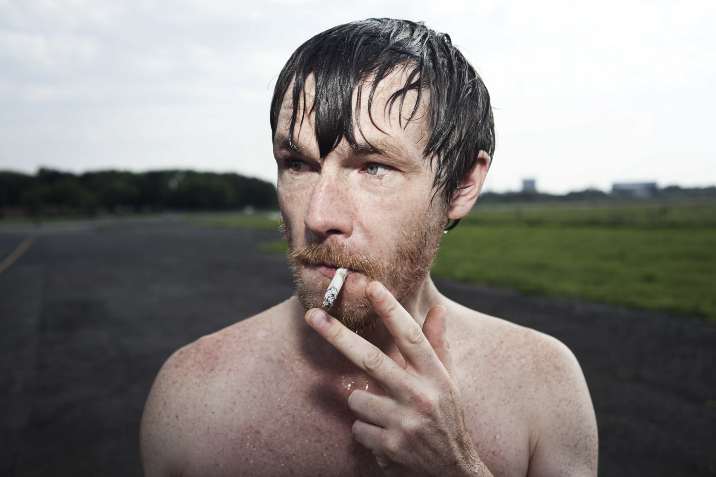
I got the impression that one thing you liked about Crow Tongue was that you and Æ Hoskin were not living too far apart and so you could practice and play regularly. Is that also the reason that you now have a – as you put it – “local” line up for Stone Breath?
I definitely enjoy having local folks to bounce ideas off of – and to have regular practices where the music evolves. It is less lonely and it pushes me as a musician.
Let’s talk about the new recordings. I must say that “The Aetheric Lamp” is at the moment my favourite Stone Breath-album and I think in a just world “The Coming Fires” would be the hit single from the album. What can you tell us about this album? How did you get into contact with Carin Wagner Sloan again? To what extent does your approach and your concept differ from that on “The Shepherdess And The Bone-White Bird”?
Carin is one of my wife’s best friends – and has been since Iditarod toured with Stone Breath many years ago. I always loved her voice. I remember sitting with Prydwyn, watching Iditarod and him saying to me “We have to get her to sing with us” – to which I agreed, of course.
Carin got married and had her first child around the same time my wife and I had our twins. I think it took some years of being a mother before she was ready to make music again. We talked about it a little bit and I sent her some songs (material from “The Night Birds Psalm”) – then she came to record. She was full of ideas and 100% ready when she arrived. I am overjoyed with what she did with Stone Breath. She never heard “The Coming Fires” before she got here to record though – I just threw that one at her when she got here – and she nailed it. First or second take, I believe. She sang that with such power every instrument in the room was ringing from sympathetic vibration. It was amazing.
“The Ætheric Lamp” was, for the most part, improvised music over a framework. It was like side B of “The Shepherdess…” in that aspect – it really extended from that. Eastern scales and improvisation. We were listening to a lot of Persian classical music, as opposed to solo oud/vocal works (which informed “The Shepherdess of the Fiery Wheels”); so I guess that’s why there are a lot more instruments and different textures to the music.
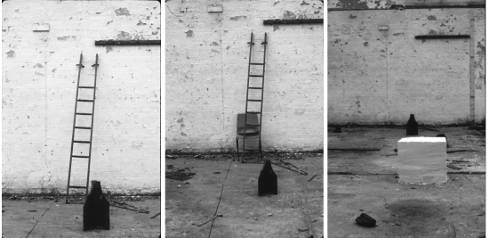
On the album the idea of opposites (“beautiful and terrible”, “horrible and wonderful”, in the end “Springtime flowers burst again beneath the sky’s red tongue”) seems to play an important role. Do you feel that such contrasts are always linked?
One of my friends once told me that all of my music was about darkness versus light, in one way or another. I never thought of it too much before he said that – but lanterns, moons, stars, flames, etc etc – always in my songs. I suppose this all comes from nature – the idea that opposites are somehow connected: life comes from death. Light from darkness. etc. I often try to write in layers of meaning, though I am not always successful, but I think this too lends itself to dealing with opposites and contrast.
You are just about to release another new Stone Breath-album, “The Night Bird’s Psalm”. What can you tell us about it concerning concept, composition etc.?
“The Night Birds Psalm” actually began before “The Ætheric Lamp” – we worked on them at the same time. I had an idea to write an album of somewhat shorter, more personal songs – a bit like the first two albums – but to record it with the new, expanded band and put everything I had learned over the years into the songs. It’s quite different from “…Lamp,” but I am equally proud of both albums.
One characteristic of your work is that you sometimes revisit songs. On the new album there’ll be a new version of “Ephrata Sacred Heart”. When do you feel that there may be the right time to do a reinterpretation?
There will be a mini-album called, “Who is Listening?” that has new versions of songs from the first and second album (as done by the new, full band) as well as a reworking of “Sixteen Hooves” from Crow Tongue.
Usually, I will go back to a song if I feel there was something there that I didn’t quite capture – or there was a theme I didn’t explore deeply enough – or perhaps I think I can make the music better. With “Who is Listening?” I just thought it would be interesting for people to hear the new folks play some of the very old songs.
Were The Forest Beggars a one-off or are there going to be other recordings?
I am not in control of The Forest Beggars. They make Marian devotional music. I would say that there will be more Forest Beggars material in the future. Any more Marian material I write will be given to the Forest Beggars. They are not a commercial concern. The “Virgo, Mater, Domina” material was begun almost decade before it was released. We decided to release it with Stone Breath’s “Shepherdess…” CD because they were both devoted to Mary and because we felt it was a good way to introduce the Forest Beggars to the world. Obviously, there are some voices and sounds associated with the Forest Beggars that will be familiar to people who listen to Stone Breath – but officially, Forest Beggars have an anonymous membership. That membership is different from Stone Breath.
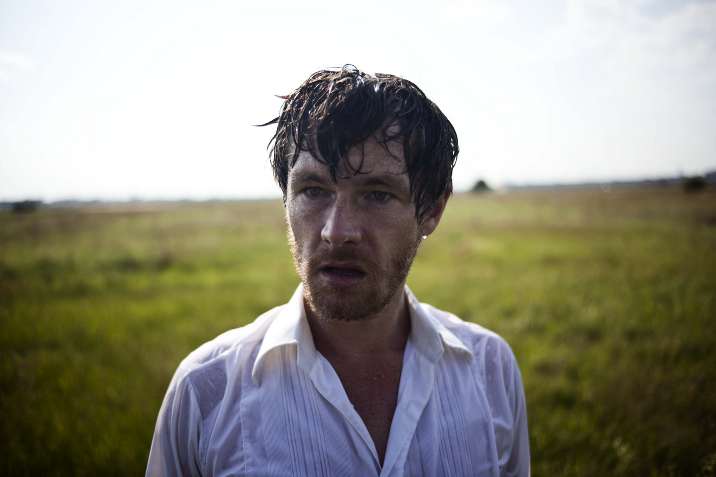
On your blog you show several drawings from your forthcoming art book “Undead”. How would you describe the atmosphere and the main motifs of the book and which are your latest plans for the publication?
It is to be called “Undeath.” It will be an art book along with a solo album (with many guests). The art is a series of drawings I did of ghosts, angels, and other strange beings. It began as a way to get myself drawing again on a regular basis – and soon turned into a very extensive series. At some point I started recording this album of dark, spooky music – I call it drone-folk just as a shorthand reference, but it’s weirder and a bit more experimental than I think that makes it sound. I thought the album and the art would go well together. I believe it is going to be released on Crucial Blast (or a subsidiary) in the first part of 2012. I am hoping to have some gallery shows associated with these drawings, but we will see.
I think the way music is perceived is often influenced by where people come from and in what “scenes” or subcultures they are located. I was wondering how Stone Breath is seen in or near the place where you live.
I think we just worked in obscurity for a long, long time. People who knew me, heard the music and I suppose they thought, “well, that’s just Timothy’s thing.” Stone Breath played more in New York, New England, and on the West Coast than we ever did locally. After Don joined the band; well, he is a fantastic guitarist and is known as such in the area. More people have started to notice us, locally. Then when Brooke joined as well – she and Don are much better with talking about the band and letting people know we are here. I think I am getting better with that too – now that there is a local, practicing band.
I think maybe time has caught up with us as well – people are perhaps more open to creative music. They are searching for something a bit different. So, I hear the name spoken here and there now whereas I NEVER heard it before. That’s very nice for me to hear.
When we last spoke you told me that for various reasons you had never felt as a part of weird folk. Do you nevertheless feel some kind of pride that Jeanette Leech dedicated a chapter to Stone Breath, The Iditarod and In Gowan Ring in her story of acid and psychedelic folk?
Absolutely. That chapter was recognition that we didn’t often receive elsewhere. When the whole acid/psych/freak/weird/whatever folk thing got somewhat hip and popular, we were completely left out of that. I think, in some ways, we were seen as “old.” Not new and hip. We never dressed like the bands that got more popular and signed to big indie labels or major labels. We never had the right clothes or the right haircuts. We never did anything with an ironic wink to it – we just did what we loved. We never had money for press agents and booking agents wouldn’t give us the time of day.
So, the chapter in “Seasons They Change” – it was good for our hearts. When Jeanette talks about how much she likes Stone Breath – when the person who quite literally wrote the book on this music picks your album as one of her favorites – there is a very touching kind of recognition there. It makes up for so many times we got passed over or forgotten or ignored.
This is a question that addresses you as somebody running an independent label. How much harder has it become over the last couple of years to run Dark Holler and Hand / Eye? Have there been any major disappointments recently?
It has become very difficult. Small labels are folding left and right. We have had to cut corners and cut costs and release fewer albums in smaller quantities. Everything has changed. We have moved, somewhat, to a patron-based system. Those that support us, tend to always support us. We tend to sell everything we release to a smaller group of patrons as opposed to a few things to lots of people.
As far as disappointments go – the economy is the economy and there is little we can do to change that. The only thing we can do to try to combat the thieves who illegally upload/download our music is to try to make interesting packaging that people will want. Again, there’s not too much we can do but try to inform people that stealing really hurts independent artists and labels in a vastly disproportionate way to large labels. No, the only real disappointment of late has been from a lathe-cut record manufacturer, PolyCut – who we contracted to make a 10” record for us. They never made the record and they kept our money. In times like these, for a supposedly indie-friendly manufacturer to do that to a small label – it is crushing.
You mean the “Who is Listening”-ep. How difficult make such things surviving as a band?
It really hurt us. We usually depend on one release to somewhat fund the next. With no refund and no product to sell, it’s as if we just burned a pile of money. We have nothing to show for our work.
You have released albums by a number of other artists on Hand/Eye, for instance you gave Sarah June a good start for her debut. Do you still follow her activities after she’s now bit more popular in the indie music community or are you disappointed that she released her second album on another label (on your website you write that “if you’re not ready to promise us a second album, don’t send us anything”)?
Certain other labels were using Hand/Eye for artist research and development. It is MUCH harder to break an artist with their first album than it is to swoop in and grab them for their second album. So, because of these things, it has made us very cautious about working with new people. It’s a shame, because I felt I was pretty good at finding new and interesting artists – but I’m not really looking anymore. Between me and my close friends – we can make enough music to fill the entire release schedule. I don’t need to seek out other artists. Stone Breath and the Trees Community are the biggest selling things on the label, by some measure. The label isn’t hurt by me filling up the release schedule with Stone Breath – quite the opposite.
What can you tell us about the background of the “Full Moon” series you released on Hand/Eye with artists such as In Gowan Ring, Wooden Wand or David Tibet? I remember that you mentioned some plans of starting a new subscription series. Has this been shelved?
Neddal Ayad (the does, Desolation Singers) and I came up with that series. We thought it would be an interesting way to combine some lesser known artists with others that were more well known. It was fun to do, but a lot of work every month.
We sometimes kick around the idea of a new subscription series. We were going to do it with Crow Tongue – basically each one would be another artist remixing Crow Tongue or Crow Tongue remixing another artist – but it was not to be. We would probably do a different series if we could get enough subscribers.
About two years ago we spoke to B’ee after a Birch Book-concert and he mentioned there were plans to release an extended version of “Full Flower Moon”. Is this still going to happen?
Bee and I can’t seem to figure this out. I believe he wants it to come out in May – and I just can’t set my schedule that precisely. Everything I do is delayed it seems. I hope we get it worked out because it is a fantastic collection of songs.
Unfortunately, terms like “independent” and “do it yourself” have turned into stereotypes over the years, though their essence might be more necessary than ever. Is it important for you to be as independent as possible from the fashions of the mainstream?
I don’t try to consciously avoid the mainstream. I think modern pop culture, for the most part, is such that what gets allowed in the mainstream is often weak, watered down and safe. We are independent because no one is giving us serious offers – so far, every offer that has been put in front of Stone Breath has not been very beneficial to the band. We do it ourselves because no one will do it for us. It’s good. It keeps us working.
Is working on a farm (I’m not sure if it is your own one…) also something you see in that context, and do you regard family life, growing food and music as part of one greater whole? I’m also wondering how much you are affected by the current economic crisis/crises (if that is not too private a question). Would you say that your way of life and living gives you a certain amount of autonomy?
Working on my father’s farm is just one of many things I have done. As my father has aged and I have moved further away, we do less and less work there. It was just a very small farm – we only raised food for ourselves really – and a few head of cattle. Nothing too much. What growing up on the farm gave me, though, was a feel for the seasons and for the power of planting seeds and the importance of working with your hands.
I think my entire life has lead me to where I am. Growing up on the farm, being introduced to the DIY/punk thing in my teens, zine culture, experimental music, folk music and the folk process… all of these things and more have combined to make me who I am. I take odd jobs and part time jobs – in order to be able to live the way I want and make art and music – but there may come a time when I need to take another full time job and I know in my heart that this makes me no less an artist or musician. I don’t know how autonomous I am in reality. Probably nowhere near as much as I would like.
Some years ago you said that one of your great destinies is to consiliate your animist heart with your Christian mind. Do you still follow this quest, and would you probably say that you have come a bit closer to the goal?
I don’t know. I have had to make a separation in my mind between American protestant Christianity (which is quite alien to me) and Catholicism (which is the religion in which I was raised). I am now careful about the word “Christian” because, in the United States at least, it is a term thrown about by people who are often not very Christ-like in my view.
Animism is always in my heart. Always has been – before I put a name to it. I don’t see it in opposition to Marian Catholicism – in the big, strange, fractal picture of spirit and nature sometimes faith and doubt walk hand in hand. Sometimes a Jewish man must be born of a Virgin and hung on a tree in order to make us remember nature’s place in the order of things. Other times, angels must take the form of trees. Forests become cathedrals. It is all spun together in a great silver web.
There are many motifs in your songwriting that refer to what is usually called the pagan aspects of Christianity, and your self description (“Stone Breath is part of the earth. Metal, hair, wood, skin, flesh, leaf, breath, and bone make our songs. We sing hymns to God and the green wood.“) also goes in such a direction. Would you say that these aspects generally go too short in today’s mainstream religiousness?
I think so, yes. Folk traditions – most of which were of pagan origin and then incorporated into Christianity – have been weeded out in some attempt to get to a rigid “pure” Christianity – which is a bit of a joke. In losing these things, we have lost something essential. Something beautiful.
Are you interested in early Christianity, and if yes, which scriptures do you regard as indispensable for your own spiritual development?
I guess it depends on one’s geographical and chronological definition of “early.” I used to be very interested in apocryphal stories and gnostic texts and so forth. The “desert fathers” – all of that. I suppose I still am, but later writings like Hildegard of Bingen’s and the saint’s visions on the life of Mary – and writings by and about the Celtic saints – these hold more interest for me of late. I understand them better. But books on synchronicity or nature writing – in some ways these can be just as powerful and moving to me, spiritually.
You have released some music on the Australian label Camera Obscura and you also designed “The Serotonin Ronin II”-compilation for it. The passing of its owner Tony Dale is surely a great loss for the folk scene and for alternative music in general. Have you been close friends, and what can you tell us about the time of your cooperation?
Tony and Camera Obscura are greatly missed. He was a supporter and a friend. He was the first person to show that kind of faith in Stone Breath. I was always proud that “Songs of Moonlight and Rain” was the first Camera Obscura release. Tony released a lot of great records and helped so many bands along the way. I don’t think you will find anyone who will say anything but great words about Tony, and many will say it better than I can. He was an amazing man and a blessing to underground music.

Is there anything you’d like to add or a question that you would have liked to hear?
Only my contact information: revelator@lostgospel.org
(M.G. & U.S.)
Like Hunting In The Wild. Interview with Yasutoshi Yoshida aka Government Alpha
You’ve just been on a little concert tour in Europe. Which places have you been and how were your experiences there?
We went to Berlin/Germany and Copenhagen/Denmark in five days and had two shows in each city. As for the “Angura” show in Berlin, me, Reiko A. and Arima of Venus in Virgo had two stages each. I think we could show some different styles of electronics music such as Harsh Noise, Drone, Lap Top and Vocal with abstract Noise. We were very satisfied with this event, but we also spent a lot of time for transportation.
You once said that you started as sort of an alternative rock musician – how did your music sound back then? How did this change to noise come about and how sure have you been that this was your definite route to follow?
I wanted to form a band like a Missing Foundation and Einstürzende Neubauten with more progressive rock sounds. Then I started to make demo tracks and looked around for members, but it was very hard to find someone who could be interested in such sounds. One day, I met a guy who was finally interested in my demo, so I gave him some tracks. He said “your tracks are ‘noise music’”, after he had listened to them, and then told me about some Noise artists like Whitehouse, SPK and Nurse With Wound etc.. So, I was poring over these bands and other bands. It was easy for me to get into Noise Music, and in that course I also got into making noise myself.
When I listened to Harsh Noise from groups like Hijokaidan and Incapacitants on CD for the first time, I couldn’t understand it. For a while, I kept to record more industrial and experimental tracks without harshnoise elements. You can listen them on a 4 cd box set that we released on Pica Disk. A few years later, I had the chance to see an Incapacitants show, and it had a huge impact on me. It was a very powerful show and by no means negative, and after that experience I intended to make much stronger music than before. It should actually be the strongest noise than them, and so I tried to make harshnoise.
I first thought that Harshnoise was just noise and it might be quite easy way to create it. I completely underestimated harshnoise. It was, however, very hard to find my own way into it, and maybe it took three or four years to complete something like a typical Government Alpha style. Now I can say, if i could make harshnoise easily, I would probably quit making it. So, I’m still looking for the way to harshnoise, and maybe it takes forever.
There is the idea that noise is reductive compared to music with a traditional rock lineup, because you can free yourself not only from instrumental skills, but also from conventional structures of composition. On the other hand, noise is often regarded as a music of more possibilities, because instruments and common structures also set a number of limits. Where do you see the main differences between the sort of music that you do and “normal“ rock and pop music?
Actually, I don’t use to compare noise with typical music, because I think Noise Music is beyond the music you mentioned. In a certain way, Noise Music is free from everything, but sometimes I think that categorizing music creates limits anyway. for example, Government Alpha for instance is completely harshnoise style, and I don’t make ambient sounds under this name, but it’s just cause I decided it myself.
Nate Young (Wolf Eyes, Demons etc.) said recently: “The Noise scene is imploding. Everyone is so concerned with what Noise is or isn’t that it has become very segregated.“ How do you feel about that?
I think the same. When I got into the noise scene some 18 years ago, the categories for noise were rather narrow. It just had to be somehow industrial, ambient/drone or harsh. But nowadays, noise has been subdivided into more and more small subgenres. Back then, I was influenced by different music like heavy metal, hard rock and industrial, but it all became subdivided and diversified. Nowadays, everyone seems to listen to any sort of music and is influenced by many different scenes and genres. I guess, it’s something natural, when anything becomes more and more segregated over time.
Do you think that noise can lead to some kind of transcendent state, to some kind of ecstasy through excessive atonality?
I think so. Sometimes when I perform, I am in a spiritual state of selflessness, like just connected to an inner space of the unconscious. And it feels as if my brain is full of adrenaline.
There is this stereotype saying that the typical “western” noise music has a strong dystopic and apocalyptic feeling, whilst Japanese noise music is more hedonistic and playful in all its agressiveness. How much would you agree with such a (perhaps over-generalising) description, and how would you describe Government Alpha’s main feelings and topics in that context?
Untill ten years ago, I thought so as well. But nowadays, noise music seems rather borderless for each culture. There are some US noise bands showing style elements usually regarded as typically Japanese, on the other hand, some Japanese noise bands have been influenced by European and American styles such as gothic, dark ambient or power electronics. As for Government Alpha, I always aim to make new sounds I’ve never heard before but that I want to hear. I don’t have any kind of topics or sound motifs, because this would only set limits to the sound.
I was wondering if you follow the newer development in the noise scene in the USA and Europe. There seems to be an ever increasing differentiation of noise genres (most recently there’s the discussion about wall noise). Do you have any interest in such discussions, do you feel they show the vitality of the noise scene or its decline? Would you say that labels are always limiting (the artist)?
I would say the same thing for all sorts of music besides noise: Music should always evolve to something new, though on the other hand I think music history will always repeat itself in many aspects. I am much more interested in sounds than in such discussions, and the most important thing is whether a sound is interesting or not. Well, basically, labels don’t make limits to me.
What kinds of equipment do you use for recordings and gigs, and how has it changed over the years?
My basic equipments are boss HM-3, FZ-2, DOD Buzz Box,Death Metal,Ibanez WH10, LAL Cyber Psychic, Korg Kaoss Pad KP3 and a Mic. On that recent tour I brought an MFB KRAFTWERG SYNTH and iPad for Animoog synth application. So, when I record materials, I add some pedals to feel for free.
Your performances can be very physical events. Do you prefer playing live or recording in the studio?
I can’t really compare playing live to recording in the studio, because these are totally different things to me. Recording in some home studio is always a kind of experimentation as in a laboratory, I’m free to try anything that I want. Playing live is a bit like hunting in the wild: Failure is not forgiven. I have to be nervous for playing and for releasing my mind into the inner space. But when I created some new sounds in the studio, I always try to use them on stage.
What I find impressing in your live performances is the sudden switch from a rather concentrated dealing with sound to very unbound fits of screaming. Do you see these aspects as contrasting elements of your shows, and if yes, is it difficult for you to bring this together?
What I really like is to make fast cut up harsh noise, forming some contrasting elements and then spontaneously bringing them together. In the best case, it would be just chaotic sound.. maybe.
As I don’t speak any Japanese I would like to know if you use real words in those performances. If yes, are the lyrics improvised and is there any recurring subject matter?
I only used real lyrics in English for a few times. In recent years, however, I stopped using any language, as I noticed I should use my voice just like an instrument. Using your voice is a good method to add something during live shows, it brings you closer to the audience, when they hear a human voice. I think, if I have any subject what I want to say I would write anything. It must be easy tell you something.
Unfortunately I came too late to see your performance with Reiko Azuma on the Angura-Night. Could you describe this collaboration under the name Alpha Ailuros? How long do you know each other and how did your cooperation develop?
The music we do as Alpha Ailuros is a sort of ambience drone electronics. We have played together since 2007 or 2008. Around that time, I had the idea to do a bit more different style with Government Alpha, but in the end, changing the name was probably the best way for an appropirate classification. Our contact started after we met at some venues for several times. As for our first collaboration, Reiko asked me to play together, as she had live collaboration with various other artists before.
Was the music you played identical with the studio recordings you did together?
Yes, it was more or less. We released it on cdr on my label in 2008.
On the first „Angura“ night at Staalplaat you performed an ambient gig and used equipment like iPad and stuff. Was this an exceptional thing, and why was it important for you to name it a project of it’s own besides Government Alpha?
As for that night at Staalplaat, I played just as “Yasutoshi Yoshida”, not under the name Government Alpha, so I could be more free in the style of music. I used iPad and Nintendo DS-10. Actually, one of the real reasons for this was that I couldn’t bring so many equipments for that opening party, as I also brought along a lot of my art work.
Anyway, I have decided that Government Alpha makes Harsh Noise, and when I do something different, I will use some other project name.
Most of your recordings are released on your own label Xerxes, where you also release records by other musicians. What are your main criteria for the choice of artists?
Simply, I like it or not. I used to look for good artists many years ago. today, there are many good bands all over the world, and it’s impossible for me to check everything and it’s very difficult to find enough time for the label job. I have been very busy for my own activity (performing, recording, doing artworks etc..), and that’s where i’m mainly focused on these days.
Besides Reiko A., you collaborated with a number of other Japanese artists like Astro and Koji Tano. How close is this music scene in your country? Can we imagine it as a small community where most artists and even listeners know each other?
Yes, the noise scene is still very small in Tokyo, but there are many noise shows here, so it’s quite easy to find new friends, but also easy to leave the scene again.
You are also a visual artist, and have done a great number of congenial artwork for recordings and even for a book. Have you been to an art school, or are you a self-taught artist?
I have never been to an art school, I just started to make artwork for my own releases as I needed it for the covers and had no friends who could do this. that’s how i started doing it all myself and find my own way.
Are there any (Japanese or international) artists, that were especially influencial to you?
I got a lot of influences from Art-brut, especially from Adolf Wölfli. I’m also highly influenced by many album covers of Nurse With Wound, and I would love to have such good covers for my releases.
For me, many your collages appear like a documentary panorama of today’s world, including all traditions that we take with us. Would you call yourself a realist, or do you rather intend to show a world of its own?
Maybe, I just show you my own world using real world material without politics and religion. I just re-arrange this world like a DJ, and I think I’m more an escapist rather than a realist. So, when I get into making artwork, I’m just living in my very own world.
Your visual works have a very detailed and complex nature, and seem to be focused on many elements. Though your music is not “simple”, its character seems more straight and compressed. Do you see music and visuals as two different sides of your output, or more as one thing?
Actually, making music and artwork are not so different to me. My method for creativity is just to release my mind, and making artworks and noises are tied in my mind. For example, I start to make noise and then I get an idea for a cover that fits to this very sound. But it can also be the other way around, I start to make artwork, and then I get an idea of a fitting sound. But sometimes, when I concentrate on making artwork over a period of time, I temporarily lose the feeling for making noise.
In an earlier interview you said that you wouldn’t like to sell yourself to be famous, and that you neglect the business side of music as much as possible. A good thing, however, is that creativity in experimental genres can flourish beyond cultural industry and is still developing. How optimistic are you about the future of musical counter cultures as a stronghold of nonconformity?
I didn’t remember that well what I said. Around the time noise music was much more underground music than today, nobody noticed it. That’s why I said it…maybe. But now Noise music is getting more popular than 20 years ago. Some major artists use noise music method in their music. As for me, I could make the audience happy by playing noise and I have got more skill and confidence than before. So noise music is no longer a part of the counter culture anymore. But I think noise music still has a lot of charm for me.
(M.G. & U.S.)
Konzertfotos: Maja Szerszen