
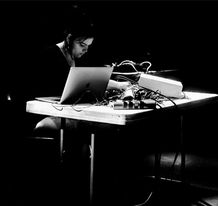
 Julia Spotts hat in den letzten Jahren als Mellified Man eine Reihe von Veröffentlichungen mit teils ruppigem Noise gemacht, die ihr zeimlich schnell einen Platz in der Noiseszene von Western Massachusetts sicherten. Seit einiger Zeit ist sie mit ihrem Projekt Matriarch aktiv, über dessen „Jeffersonville“-Tape es auf diesen Seiten hieß: „Das Album enthält zwei elaborierte Tracks, die Momente raufaseriger Verzerrtheit in ein eher filigranes Klangewebe integrieren und so keineswegs auf Lärm reduziert bleiben.“ Dieses Tape mit seinem differenzierten, atmosphärisch dichten Klang ist ein beeindruckendes Debüt und es schien an der Zeit mit Julia ein Gespräch zu führen. Weiterlesen
Archiv der Kategorie: Interviews
An exercise in both self-restraint and reflection: An interview with Matriarch
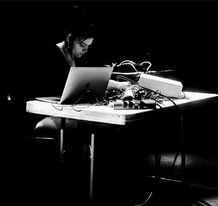 Julia Spotts has had a number of releases in recent years as Mellified Men, some of which have been quite noisy, that quickly secured her a place in the Western Massachusetts noise scene. More recently, she has been active with her project Matriarch, about whose “Jeffersonville” tape it was said in these pages, “The album contains two elaborate tracks that integrate moments of scrappy distortion into a more intricate web of sound, and thus by no means remain reduced to noise.” This tape, with its nuanced, atmospherically dense sound, is an impressive debut and it seemed time to have a chat with Julia. Weiterlesen
Zufälle sind Geschenke: Ein Interview mit UnicaZürn
 David Knight und Stephen Thrower versammeln zusammen mehrere Jahrzehnte von Erfahrung mit Musik, die immer jenseits des Mainstreams und einfacher Kategoriserbarkeiten operierte. Die musikalischen Stammbäume der beiden, u.a. Coil und Cyclobe (Thrower) und Shock Headed Peters, The Stargazer’s Assistant und Arkkon (Knight) sind den Lesern dieser Seiten sicher vertraut. Vor gut acht Jahren sprachen wir schon einmal mit den beiden über ihre aus Improvisation und Experiment entehende Musik. Seitdem erschienen bei Touch die beiden Alben „Transpandorem“ und „Sensudistricto“, es wurden das „Omegapavillion“-Tape, die „Fuse Fire Vortex“-7” sowie jüngst noch die „Zurnica-U“-CDR veröffentlicht. Insofern schien es an der Zeit, mit beiden noch einmal ein Gespräch zu führen. Weiterlesen
Accidents are gifts: An Interview with UnicaZürn
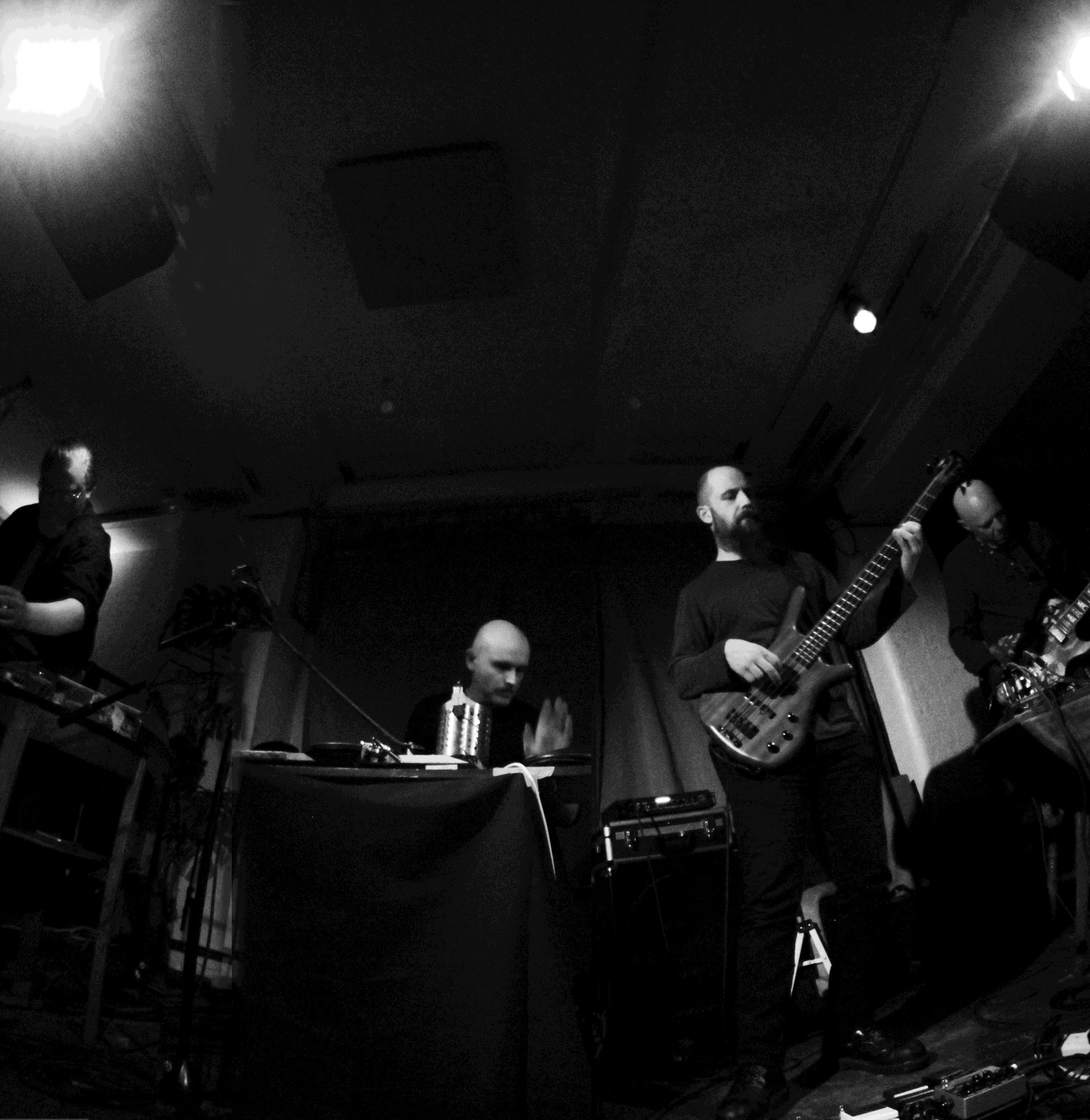 David Knight and Stephen Thrower bring together several decades of experience with music that has always operated beyond the mainstream and simple categorizability. The musical pedigrees of the two, including Coil and Cyclobe (Thrower) and Shock Headed Peters, The Stargazer’s Assistant and Arkkon (Knight) are certainly familiar to readers of these pages. Eight years ago we talked to them about their music, which is the result of improvisation and experimentation. Since then Touch released the two albums “Transpandorem” and “Sensudistricto”, the “Omegapavillion”-tape, the “Fuse Fire Vortex”-7” and recently the “Zurnica-U”-CDR. So it seemed to be time to talk to both of them again. Weiterlesen
Das Herz schlägt sogar im Abgrund: Interview mit der Geigerin und Komponistin Aloma Ruiz Boada
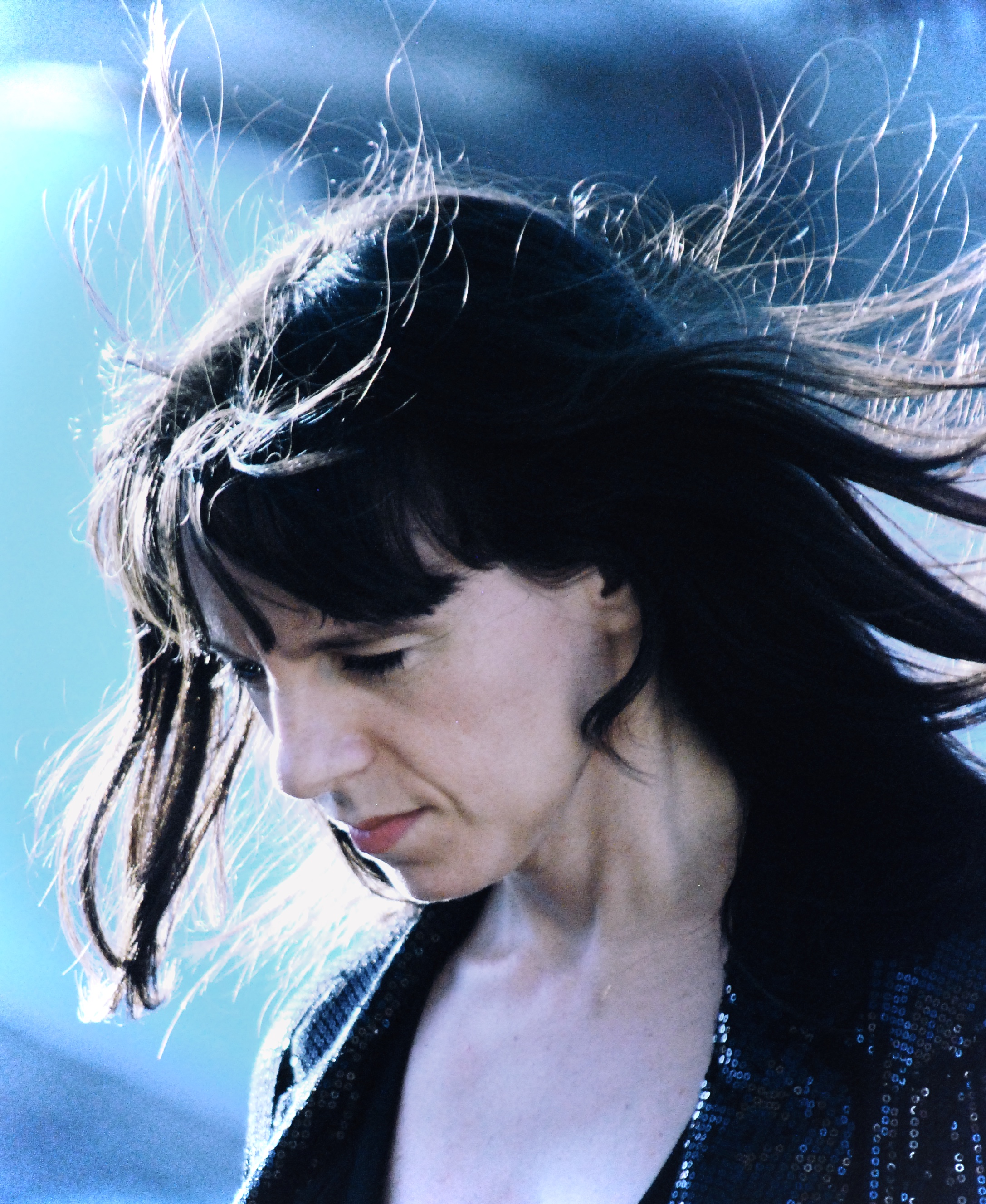 Vor wenigen Wochen veröffentlichte die im Raum Barcelona beheimatete Geigerin und Komponisten Aloma Ruiz Boada ihr Debütalbum als Solomusikerin. “Septem Verba”, das sich inhaltlich mit den sieben letzten Worten Jesu am Kreuz befasst, ist ein beeindruckendes Werk und sticht aus den vielen Strings and Loops-Veröffentlichungen der letzten Jahrzehnte heraus. Wenn man seine Stärken ganz knapp auf Weiterlesen
The heart beats even in the abyss: Interview with violinist and composer Aloma Ruiz Boada
A few weeks ago, Catalan violinist and composer Aloma Ruiz Boada released her debut album as a solo musician. “Septem Verba”, which deals with the seven last words of Jesus on the cross, is an impressive work and stands out from the many Strings and Loops releases of the last decades. If one wanted to sum up its qualities very succinctly, then one could perhaps say that here the emotionally touching and the aesthetic expanse, of which the listener can feel abandoned to Weiterlesen
Eine, keine, hunderttausend: Munsha über Munsha
 Die gebürtige Italienerin und Wahlberlinerin Munsha ist eine vielseitige Künstlerin: Sie ist Sängerin, Cellistin, Komponistin und Performerin, arbeitet und schreibt fürs Theater und scheut nicht zurück vor Ausflügen in die Videokunst. Es ist schwierig, sie auf eine bestimmte Rolle festzulegen oder sie einem bestimmten Genre zuzuordnen: Mit ihrer akademischen Ausbildung und einem Punk-Esprit bewegt sie sich mit katzenhafter Leichtigkeit zwischen den Genres, Instrumenten und Medien: ihre künstlerische Praxis ist multimedial im wahrsten Sinne des Wortes. Immer wieder präsent auf den Bühnen der deutschen Hauptstadt ist sie sowohl in ausgefallenen als auch in traditionellen Locations zu Hause, begleitet von ihrem Weiterlesen
One, none and a hundred thousand: Munsha tells Munsha
 Italian by birth and Berlin by adoption, Munsha is a multifaceted artist, who works as a singer, cellist, composer and performer. She works and writes for the theater and does not disdain forays into video art. It is difficult to define her according to precise roles or insert her into a pre-established genre: Thanks to her academic background and an irreverent punk spirit, she moves with feline nonchalance between genres, instruments and media: her artistic practice is multimedia in the truest sense of the word. With constant presence on the Weiterlesen
Meine künstlerische Entwicklung ist immer nach vorne gerichtet. Interview mit Maurizio Bianchi
 Wenn in den letzten Jahren von Maurizio Bianchi die Rede war, dann geschah dies wieder vermehrt im Zusammenhang seiner früheren Aufnahmen, die dem gerade in seine “Post”-Phase übergehenden Industrial der Jahre um 1980 – zunächst unter dem Pseudonym Sacher-Pelz, bald unter seinen Initialen M.B. – eine vielleicht etwas weniger aggressive, dafür aber umso desolatere “Low Key Depression”-Variante zur Seite stellte, die später zu Weiterlesen
My musical evolution is always projected forward. An Interview with Maurizio Bianchi
When Maurizio Bianchi has been mentioned in recent years, it has increasingly been in the context of his earlier recordings, which juxtaposed the industrial music of the years around 1980, which was just entering its “post” phase – initially under the pseudonym Sacher-Pelz, soon under his initials M.B. – with a perhaps less aggressive, but all the more desolate “Low Key Depression” variant, which was later to become a central influence for numerous acts from Atrax Morgue to The Haters to Controlled Death. In the 90s, his music became noticeably more harmonic, and the sometimes cosmic-ambient tenor of some recordings and confessions such as “I love life and I hate death” already earned him the New Age stamp in hasty comments. Much has been written about his enormous discography, his creative break of several years since his conversion to Jehovah’s Witnesses in 1984, his frequent avowals of freedom and independence of thought and action and his numerous collaborations in later years. The occasion for our interview, in which Bianchi repeatedly refers to the intentions of his music, was the re-release of the two milestone albums “Armaghedon” (1984) and “The Plain Truth” (1983) via Spanish label Verlag System.
Last year, your early albums “The Plain Truth” and “Armaghedon” were newly released by Verlag-System. Was it your idea to put them out again, and what do these records mean to you today?
It was a nice initiative of the Verlag System label, which came at the right time because these two works had already been reissued on vinyl years ago, but in a guise that is not in keeping with the importance of the subliminale message contained in them, while now the splendid reissue of Verlag exalted its sander depth and stringent vigor. In fact, even today these two works represent the culminating phase of my artistic career of the first period as they contain a message of summary relevance.
In his accompanying text to the re-release of “The Plain Truth”, Gary Mundy mentions that you went through a very happy life-changing experience, which most probably refers to your religious conversion. Do you still feel connected to these feelings when you listen to the record again?
It is true, especially with THE PLAIN TRUTH, in which I wanted to insert my personal discovery of existential truth and spiritual purity. While ARMAGHEDON highlighted a more realistic view of what the “true apocalypse” means, that is, the herald of a new era of peace and serenity for all humanity freed from its death sentence.
Would you say that your change in your attitude to the world led to a change in musical direction and/or the way in which you approached the composition of your music?
It is not up to me to define this change as it is evident to the ear, but above all to the heart of every attentive user of this message of true hope.
On a note of the back cover, you dedicated this album “to all the redeemed people”. Were there any discussions about this music with people who share your religious beliefs, and if so, what were the most notable comments you received?
In fact, there have been no discussions with anyone because the deep respect that my co-religionists have for me is truly at the highest level.
 Has there ever been a situation in which somebody totally misunderstood what you were trying to express with a release?
There have been a few people, especially when, after my return in 1997, I published the trilogy of COLORI / FIRST DAY LAST DAY / DATES, as they classified me as an advocate of “new age” music, while the sound message that I wanted to transpose it transcended the concept coming from the “new age” current, because it approached the essence of the human soul, in the search of a definitive emotional liberation.
Do you plan to make more of your early releases available again in the future?
I have carefully planned reissues of DAS TESTAMENT and CARCINOSI on CD, by a prestigious Italian-Swiss label.
You have been incredibly prolific and there is a huge body of work. If you were to give somebody new to you and your music suitable entry points, which album(s) would you choose?
For the first period, an “adapted” anthology, entitled TECHNOLOGY 1980-1984, which will be strictly released on cassette in January 2022 for a Turkish label. While for the second period, in addition to the trilogy I mentioned above, it makes no difference with which release to make the first approach to my experimental universe, the important thing is to do it with a liberating attitude.
How much has your approach to creating music and your artistic attitude changed over the years? What are – besides different technical options, of cause – the biggest differences between your way of working then and now?
In general, my experimental approach has remained almost unchanged, as I am always animated by the modulatory desire and the will to always create something concrete and fresh. As for the techniques used, I give more importance to the substance as the technique is only a means to achieve the goal of edifying the listener.
Are you producing new music at the moment?
At the moment I am concentrating on visual art, in fact an experimental film of mine, with unedited soundtrack, entitled MILFB, will be released on DVD later this year.
Some years back, you coined the term anarchophonic for the sort of music you create. Would you still use the term, and what would you say is the most anarchic element of your creativity?
I would no longer use this term because my musical evolution is always projected forward, but I must admit that I still retain an unconventional spirit, which transcends any academic meaning of the term ‘music’, and this allows me to always try new ways to reach infinity.
You have worked with a number of artists. Do you approach each collaboration differently or is there always a similar method?
There is almost always a conventional method that accompanies every project. First I send the artist my pathologic material which acts as a ‘basic guide’, on which the collaborator then redesigns his contaminator intervention in order to obtain a homogeneous and compact amalgam.
A rather current collaboration is the one with Justin Wiggan. It says that the release is strongly influcneced by the Hebrew term sheminith. Could you say a few words about that release and how the idea for that concept emerged?
IT’S BETTER TO ASK TO HIM (JUSTIN WIGGAN) BECAUSE THE IDEA CAME FROM HIM.
Any famous last words?
What matters is not my declaration, but I refer to what an ancient essay wrote: “I have seen all the things that are done under the sun, and behold, all is vanity and a running after the wind” (Ecclesiastes 1:14). So this is a warning to everyone to focus on the really important things in life and not on the futility imposed by the mass media.
Interview: MG & US, Translation: A. Kaudaht
Contemporary and Unfamiliar Music. Ein Gespräch mit dem Label Commando Vanessa
 Als vor rund zwei Jahren zwei Tapes – das Debüt von Tommaso Bonfilio alias Mother und “II” von Yuko Araki – bei dem damals noch unbekannten italienischen Label Commando Vanessa herauskamen, hatte man sofort den Eindruck, das hier gerade etwas Bleibendes am entstehen war. Die Motive klassischer Sakralkunst, gerahmt in die Oramentik nostalgischer Spitzenstoffe, ein dezent okkult anmutendes Logo, der Charme des Handgefertigten und die Wahrung einer gewissen Weiterlesen
Contemporary and Unfamiliar Music. An Interview with Commando Vanessa
When two tapes – the debut of Tommaso Bonfilio aka Mother and “II” by Yuko Araki – were released by the then still rather unknown Italian label Commando Vanessa around two years ago, one immediately had the impression that something lasting was being created. The motifs of classical sacred art, framed in the ornamentation of nostalgic lace fabrics, a discreetly occult-looking logo, the charm of the handmade and the preservation of a certain obscurity that Weiterlesen
A Sense Of Unease Or Of Something Haunted. Ein Interview mit Grey Malkin
 Etwas mehr als vier Jahre ist es nun her, dass die schottischen The Hare And The Moon das Ende ihrer Aktivitäten bekanntgaben. Wäre es danach wirklich still geblieben um deren Gründer Grey Malkin, würde man sich heute wahrscheinlich an sie erinnern wie an einen langsam verblassenden surrealen Traum und sich fragen, ob es sie je wirklich gab. Die Obskurität der Mitglieder, die niemals ihre Namen und Gesichter preisgaben, vor allem aber die ebenso Weiterlesen
A Sense Of Unease Or Of Something Haunted. An Interview with Grey Malkin
 It’s been a bit over four years now since Scotland’s The Hare And The Moon announced the end of their activities. If it had remained really quiet afterwards about their founder Gray Malkin, one would probably remember them today like a slowly fading surreal dream and wonder if they ever really existed. The obscurity of the members, who never revealed their names and faces, but above all the equally intangible Weiterlesen
Ich halte nichts von Coolness. Interview mit der Sängerin und Schauspielerin Gloria de Oliveira
 Als im vorigen Jahr “Fascination”, der erste Longplayer der jungen Künstlerin Gloria de Oliveira, die Runde machte, wunderten sich nicht wenige über die Reichhaltigkeit des Albums. Gerade in der Musik, die auf den ersten Eindruck perfekt in den seit Jahren angesagten Grenzbereich zwischen Wave und einem traumwandlerischen 4AD-Pop passt, erlebt man nicht sehr oft derart viele doppelte Böden, wenn es um Stimmungen und Macharten geht. Doch auch wenn “Fascination” durchaus die Weiterlesen
I do not believe in Coolness: An Interview with singer and actress Gloria de Oliveira
 When “Fascination”, the first longplayer by the young artist Gloria de Oliveira, turned up last year, many were surprised by the album’s richness. Especially in music that seems to fit perfectly into the fashionable border area between synthie wave and a somnambulistic 4AD pop, it’s rather unlikely to find that many different layers of style and atmosphere. But even though “Fascination” definitely exudes the freshness of an debut, Gloria de Oliveira is anything but a newcomer. Weiterlesen
It’s hard and tender at the same time. Interview mit Comando Suzie
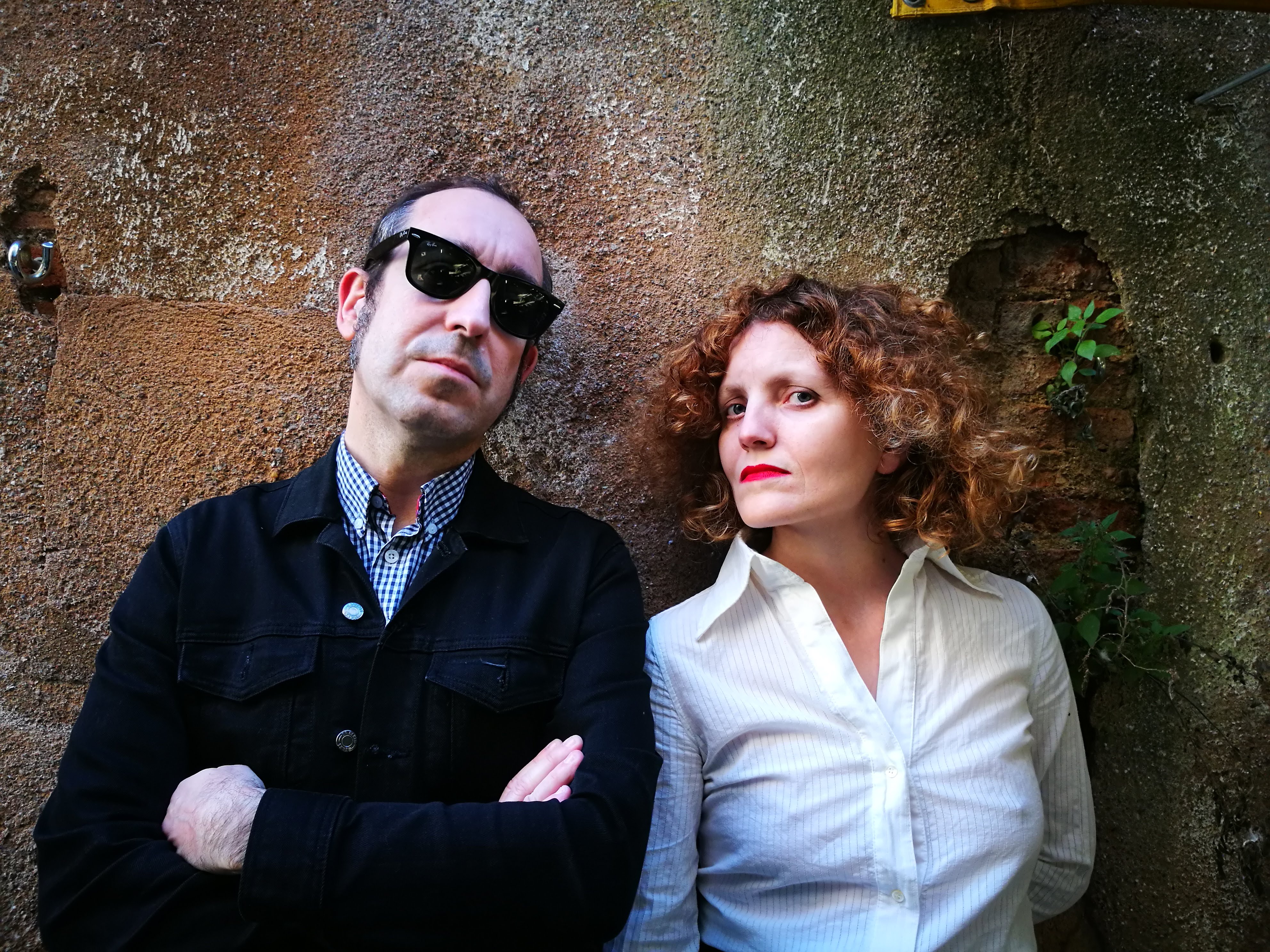 Als Raúl López vor rund fünfzehn Jahren sein Projekt Comando Suzie aus der Taufe hob, ahnte er wahrscheinlich kaum, dass er einem musikalischen Retrotrend zuvor kam, denn zur Mitte der Nullerjahre feierten die hippen Hochglanzmagazine noch einträchtig Postrock und Studentenfolk als die postmoderne Avantgarde der Stunde – erst Jahre später sollte mit Boy Hasher u.v.a. newwavig angehauchter Electropop durch die Postillen geistern, den das Weiterlesen
It’s hard and tender at the same time. Interview with Comando Suzie
When Raúl López launched his project Comando Suzie some fifteen years ago, he probably had no idea that he was anticipating a musical retro trend, because in the mid-90s the hip glossy magazines were still pushing post-rock and student folk as the post-modern avant-garde of the hour. Years later, when Boy Hasher and an array of other new wave influenced pop groups haunted the realm of music, the Catalan project has long since Weiterlesen
Es ist einfach das Gewebe des Seins. Interview mit Trappist Afterland
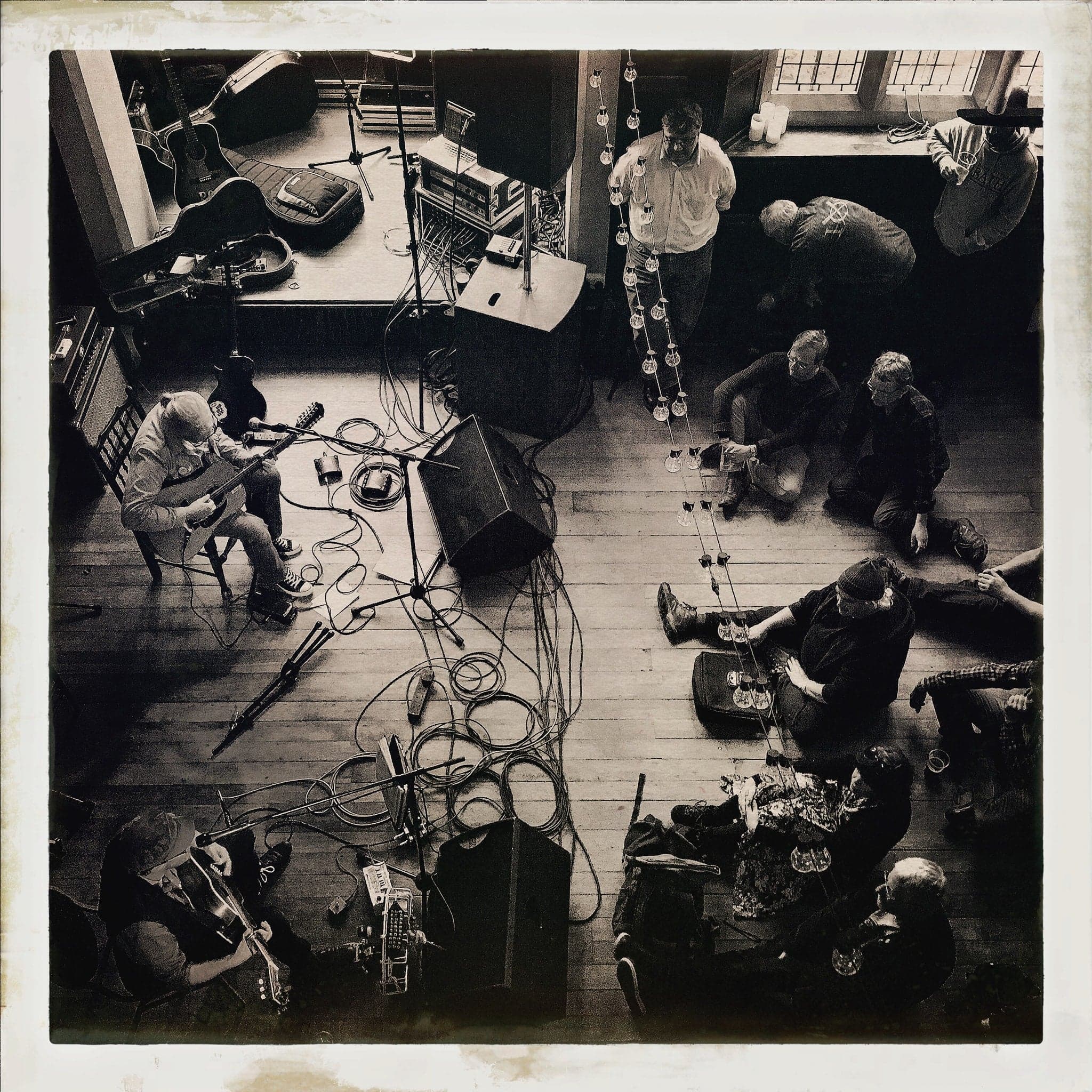 Wenn der australische Folkmusiker Adam Geoffrey Cole irgendwann im neuen Jahr seine erste Solo-LP herausbringen wird, wird diese aller Wahrscheinlichkeit nach nicht die typischen Eigenschaften eines Debüts aufweisen, dieses Frische, Forsche, noch unbeholfen Suchende, da Cole bereits seit zehn Jahren mit Trappist Afterland aktiv war, von denen es beinahe jedes Jahr ein neues Album gab. Dass seine Musik auch weiterhin das Resultat einer ständigen Weiterlesen